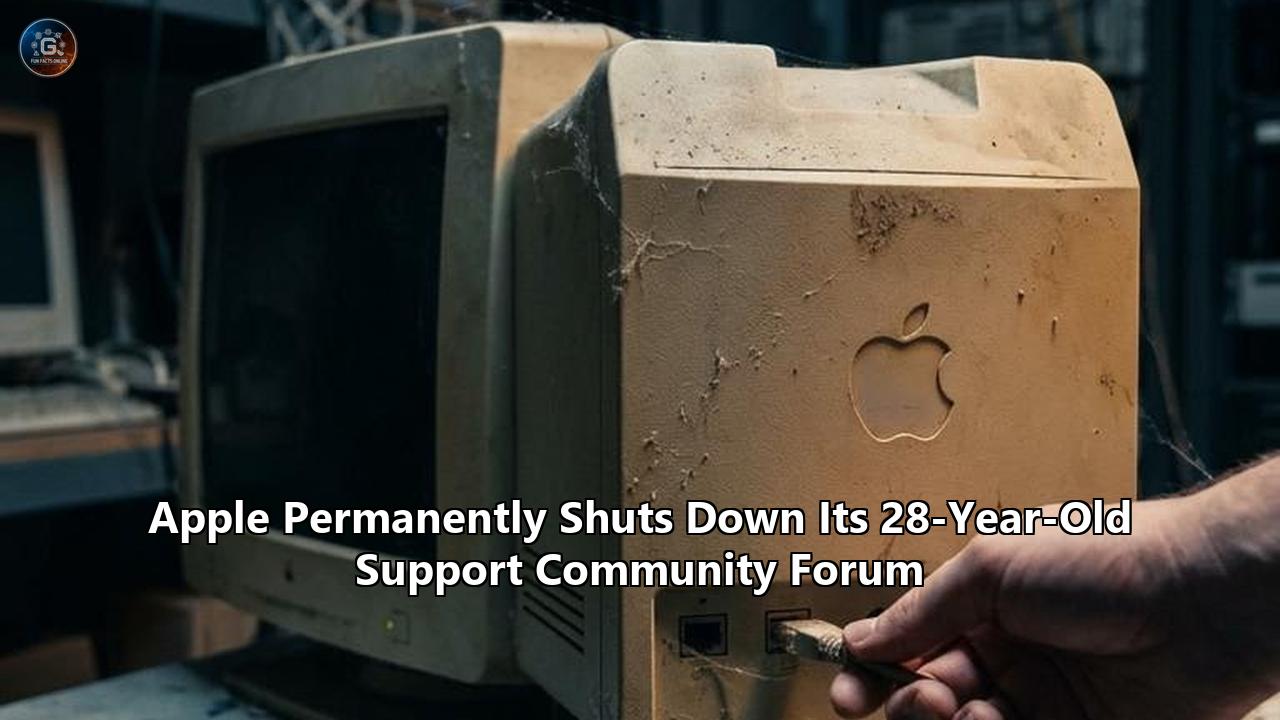
At 5:49 p.m. Pacific Time on November 10, an anonymous user published what would become the final public post on the Apple Support Community. Minutes later, engineers in Cupertino threw the master switch. Without prior warning or advance consultation with the volunteers who maintained it, Apple placed its 28-year-old peer-to-peer technical support forum into an indefinite read-only state.
Visitors arriving at discussions.apple.com were met with an austere system banner: “The Apple Support Community will permanently close on November 20, 2026. Starting today, the site will no longer accept new posts and is available in a read-only state. You can continue to find trusted guidance and support on the official Apple Support site. We want to thank the community members who have contributed their time and expertise to help others with their Apple products.”
Users attempting to authenticate through the familiar sign-in interface were unceremoniously redirected to an internal AppleConnect corporate portal labeled “AC Communities Web – Internal”. The doors were locked from the outside.
In a brief corporate statement, Apple claimed the decision was reached “after a careful evaluation of strategy and customer needs.” That corporate platitude does little to explain the sudden termination of an ecosystem asset that has operated continuously since 1998. The sudden Apple support forum shut down blindsided millions of users, cutting off the single largest repository of consumer hardware and software troubleshooting on the internet. With an operational lifespan spanning dial-up Mac OS 8 installations to modern Apple Silicon architectures, the platform served as the de facto frontline for diagnosing operating system bugs, edge-case hardware faults, legacy enterprise deployments, and unacknowledged manufacturing anomalies.
1998: Apple Tech Exchange launches as user-to-user helpdesk
 │
2000: Rebranded as Apple Discussions; integrated into early web portal
 │
2011: Relaunched as Apple Support Communities on modern enterprise software;
 │    points, reputation tiers (Levels 1–10), and gamification introduced
 │
2022: Simplified to Apple Support Community; Apple Community+ launched
 │
2023: Paid Community Specialists eliminated; social media support slashed
 │
Nov 10, 2026 (5:49 PM PT): Master switch thrown; forum frozen in read-only state
 │
Nov 20, 2026: Permanent shutdown scheduled
The decommissioning exposes a growing crisis across the modern web: the rapid enclosure of public technical commons in favor of gated corporate channels, algorithmic diagnostic chatbots, and strictly controlled brand narratives. What happens when a corporate giant erases the collective troubleshooting labor of its own customer base, and how can independent technologists, archivists, and engineering leaders respond?
Anatomy of an Institution: 28 Years of the Volunteer Helpdesk
To grasp the operational scale of what is being dismantled, one must understand how the Apple Support Community evolved alongside consumer computing itself. When Steve Jobs authorized the creation of the Apple Tech Exchange in 1998, the company was fighting for its survival. The original Bondi Blue iMac had just hit retail shelves, bringing millions of first-time computer buyers into Apple’s orbit. Apple could not afford the overhead of a massive in-house technical support staff for consumer queries, making user-to-user assistance an operational necessity.
In 2000, Apple Tech Exchange became Apple Discussions, evolving from a simple threaded message board into a core pillar of the company's customer support apparatus. By April 2011, as the iPhone transformed Apple into a trillion-dollar consumer electronics giant, the platform was re-engineered and launched as Apple Support Communities. Built on heavy enterprise forum software—initially WebX, then customized deployments of Jive Software, and later Khoros—the platform introduced a meticulous reputation and gamification architecture.
Reputation Tier Structure (Apple Support Communities):
---------------------------------------------------------------------------------
Tier Level     Points Required      Key Privileges / Access Unlocked
---------------------------------------------------------------------------------
Level 1        0 pts                Standard posting, public replies
Level 2        150 pts              Poll creation, signature customization
Level 3        1,000 pts            Custom avatar upload
Level 4        4,000 pts            Direct access to Apple product briefings
Level 5        8,000 pts            Authoring community-wide "User Tips"
Level 6        16,000 pts           Entry into "The Lounge"; Cupertino meetups
Level 7        32,000 pts           Direct reporting channel to community staff
Level 8        48,000 pts           Advanced moderation review participation
Level 9        64,000 pts           Elite technical escalation review
Level 10       80,000+ pts          Top contributor recognition, advisory panels
---------------------------------------------------------------------------------
* Points accrued via community upvotes: Helpful reply (+6 pts), Solved reply (+10 pts)
The backbone of this ecosystem was not Apple’s salaried staff, but an unpaid, self-organizing cadre of superusers. These volunteers logged tens of thousands of hours diagnosing kernel panics, decoding ambiguous crash logs, diagnosing display panel failures, and mapping complex UNIX configuration quirks in macOS. Members like Allan Jones, VikingOSX, and dozens of other Level 10 contributors became household names among system administrators and baffled end-users alike.
When Apple introduced the elite "Apple Community+" initiative in June 2022, it explicitly recognized this group as a premier operational asset. Contributors were flown to Cupertino, invited into private product briefings with Apple engineering directors, and given access to "The Lounge"—a private internal message board where top-tier contributors could flag catastrophic operating system regressions directly to AppleCare program managers.
Now, with a single unceremonious banner, that gamified labor contract has been dissolved. Decades of accrued status, millions of solved support cases, and millions of hours of crowd-sourced engineering triage are slated to disappear into a digital black hole.
The Challenge Revealed: The Evaporation of Long-Tail Technical Knowledge
The impending closure of discussions.apple.com creates a profound structural crisis for the global technology ecosystem. The central challenge revealed by this shutdown is not simply the loss of a discussion board; it is the deliberate destruction of the web's deepest repository of long-tail technical documentation.
                           THE TRIAGE SPECTRUM

  Official Apple Knowledge Base             Apple Support Community
  (support.apple.com)                       (discussions.apple.com)
  ┌───────────────────────────────┐         ┌──────────────────────────────┐
  │ • Happy-path workflows        │         │ • Edge-case kernel panics    │
  │ • High-level setup guides     │   VS    │ • Legacy driver patches      │
  │ • Canned, non-damaging advice │         │ • Unofficial terminal commands│
  │ • Corporate narrative control │         │ • Cross-generational fixes   │
  │ • In-warranty focus           │         │ • Hardware bug pattern recognition
  └───────────────────────────────┘         └──────────────────────────────┘
Official manufacturer documentation operates under strict corporate constraints. Apple’s official Knowledge Base articles (hosted at support.apple.com) are engineered for the happy path. They address standard operating procedures: how to set up an iCloud account, how to pair AirPods, or how to factory reset a device. When these articles address errors, they rarely deviate from safe, non-damaging corporate scripts: restart the device, update the operating system, or make an appointment at an Apple Store Genius Bar.
In stark contrast, the Apple Support Community functioned as an unvarnished mirror of actual consumer computing. It housed solutions to problems corporate documentation could never formally address without inviting product liability or admitting hardware design defects:
- Vintage and Obsolete Hardware Workarounds: When a user needs to recover data from an early 2008 MacBook Pro running Mac OS X 10.6 Snow Leopard that refuses to negotiate modern TLS handshakes, support.apple.com offers nothing; the device is classified as obsolete. The community forum, however, contained detailed, reproducible instructions on patching system certificates via the BSD command line to re-enable network access.
- Pro Audio and Video Edge Cases: High-end creative professionals frequently encounter obscure conflicts between CoreAudio daemon processes, Thunderbolt audio interfaces, and digital audio workstations. The community boards held deep analytical threads detailing which system extensions to unload via Terminal to eliminate buffer underruns—fixes discovered through trial, error, and shared dtrace profiling by professional engineers.
- Legacy Enterprise Deployments: School districts and municipal offices running legacy fleets of iPads and MDM profiles frequently relied on ASC threads to diagnose profile enrollment stalls and payload failures that Apple’s streamlined Enterprise documentation omitted.
- Defect Pattern Recognition: When a manufacturing run suffered from systematic issues—such as cold solder joints, delicate display flex cables, or delaminating anti-reflective screen coatings—the community forum was the first place where hundreds of independent users compared serial numbers, manufacturing plants, and board revisions to prove the issue was systemic rather than user error.
The loss of this archive breaks an uncountable number of inbound hyperlinks. Over nearly three decades, search engines indexed millions of forum threads as the canonical answers to hyper-specific system queries. When discussions.apple.com is wiped or redirected to generic landing pages, millions of algorithmic search pathways will terminate in 404 dead ends or generic marketing pages, effectively lobotomizing the internet's memory of personal computer maintenance.
What Went Wrong: Corporate Enclosure and the Rise of Algorithmic Support
Why would a company sitting on tens of billions of dollars in cash reserves shutter a community platform that provided millions of dollars worth of free, volunteer-driven customer triage? The drivers behind the Apple support forum shut down reflect a broader corporate retreat from public discourse, driven by narrative control, escalating moderation risk, and the pursuit of synthetic, automated customer service.
THE FORUM SHUTDOWN MOSAIC: CONTRIBUTING PRESSURES
┌────────────────────────────────────────────────────────────────────────┐
│ 1. PR & Defect Mitigation                                              │
│    Unfiltered customer threads document hardware/software defects,     │
│    providing evidentiary paper trails for class-action litigators.    │
├────────────────────────────────────────────────────────────────────────┤
│ 2. Moderation Liability & Compliance                                   │
│    Managing millions of global users across dozens of languages        │
│    presents escalating legal exposure under DSA and online safe harbors│
├────────────────────────────────────────────────────────────────────────┤
│ 3. Elimination of Human Support Roles                                  │
│    Preceded by the 2023 purge of social media advisors and YouTube     │
│    support comments, centralizing support into closed channels.        │
├────────────────────────────────────────────────────────────────────────┤
│ 4. Algorithmic Automation Pivot                                        │
│    Shifting customer queries into closed, proprietary LLM chatbots     │
│    and internal diagnostic portals ("Ask for AppleCare").             │
└────────────────────────────────────────────────────────────────────────┘
The Liability of the Open Paper Trail
From a corporate communications perspective, an unmoderated peer support forum is an unpredictable operational liability. For years, user threads acted as the canary in the coal mine for major hardware defects. When the butterfly keyboards on 2015–2019 MacBooks began failing due to dust ingress, Apple did not initially acknowledge the issue. Instead, the evidence accumulated on discussions.apple.com: massive, multi-thousand-reply threads detailing repeat key strikes and unresponsive spacebars.
When class-action litigators sued Apple over the butterfly keyboard defect, the “Stage Light” backlight flex cable failures on MacBook Pros (Flexgate), and the audio integrated circuit detachment on the iPhone 7 (Loop Disease), legal discovery teams routinely cited timestamps, user counts, and internal administrator activity on Apple Support Community threads. The public forum served as irrefutable legal evidence that the company had constructive notice of systemic hardware defects. By terminating the forum, Apple removes a primary digital staging ground for collective consumer grievances.
The Precursor: The 2023 Social Support Purge
This shutdown was not an isolated event. It is the final stage of a multi-year effort to centralize and insulate Apple’s customer support operations. In August 2023, Apple initiated a sweeping internal reorganization that eliminated human-provided support across multiple public platforms.
On October 1, 2023, the @AppleSupport handle on X (formerly Twitter)—which had operated since 2016 and won customer engagement awards—abruptly ended one-on-one direct-message troubleshooting with human technicians. It was replaced with an automated bot that pushed users toward Apple’s proprietary support app or phone lines. Simultaneously, Apple permanently shut down technical support replies within the comments section of its official YouTube Support channel.
Crucially, that same reorganization eliminated the paid Community Specialist role on discussions.apple.com. For over a decade, these Apple employees acted as forum sweepers, stepping into unanswered threads to provide verified Knowledge Base links and maintain operational order. When Apple eliminated the position, hundreds of staff were transferred to phone queues or forced out, leaving the platform entirely dependent on unpaid volunteers and overworked forum moderators. The subsequent surge in unmoderated political arguments, spam campaigns, and low-quality cross-talk steadily degraded the forum experience, creating the very operational friction Apple used to justify its closure.
The Synthetic Triage Pivot
The structural death knell for the support community forum is the tech industry’s wholesale embrace of large language models and synthetic diagnostic agents. Over the past two years, Apple has quietly constructed an AI-driven support infrastructure. Inside AppleCare, technicians have been testing and utilizing "Ask," an internal generative tool that parses internal hardware manuals and diagnostic repositories to generate standardized repair steps for advisors.
Externally, the integration of Apple Intelligence across iOS, iPadOS, and macOS provides the foundation for interactive, device-native troubleshooting. Rather than allowing a user to search Google, land on an open community forum, read divergent opinions, and experiment with custom Terminal commands, Apple wants to guide the user through a tightly enclosed, scripted support channel. The ideal corporate resolution is no longer an open technical dialogue; it is an on-device prompt that identifies a malfunction, performs an automated telemetry diagnostic, and directs the user to purchase an AppleCare+ incident replacement or schedule a component swap at an authorized provider.
In this operational model, the messy, open-ended forum is an outdated relic. It produces uncontrolled text, invites public brand degradation, and lacks the programmatic predictability of an AI-driven triage tree.
Canonical Answers vs. Terminal Hacks: The Cultural Friction of Tech Support
The friction that ultimately doomed the Apple Support Community stems from a fundamental conflict between corporate customer service metrics and open technical discovery.
THE DIALECTIC OF TECHNICAL RESOLUTION
┌─────────────────────────────────────────────────────────────┐
│ CORPORATE DESIDERATA: Deterministic Resolution             │
│ • "Reset SMC/NVRAM"                                         │
│ • "Reinstall current OS version"                            │
│ • "Restore device from backup"                              │
│ • "Visit Genius Bar / Authorized Service Provider"          │
└──────────────────────────────┬──────────────────────────────┘
                               │
                       Operational Conflict
                               │
┌──────────────────────────────▼──────────────────────────────┐
│ COMMUNITY DESIDERATA: Mechanistic Root-Cause Troubleshooting│
│ • Unload corrupt launchd daemon via launchctl               │
│ • Force manual kext reload for non-compliant third-party hub│
│ • Edit com.apple.driver plist keys directly via sudo        │
│ • Solder jumper wire across fractured backlight trace       │
└─────────────────────────────────────────────────────────────┘
Within discussions.apple.com, this tension played out daily. For decades, regular users complained that the platform felt heavily sanitized. Community moderators routinely locked threads that discussed jailbreaking, modifying system plists, utilizing unauthorized third-party display patches, or bypassing operating system artificial installation blocks via patchers like OpenCore Legacy Patcher. If a user posted a hardware schematic or suggested that a component could be desoldered and replaced for $3 instead of paying Apple $800 for a modular main logic board replacement, the post was frequently purged under the catch-all terms of service prohibiting "unauthorized modifications."
Yet despite these draconian boundaries, the community remained irreplaceable because top-level volunteers consistently found clever ways to operate within the margins. They mastered the art of advising users on UNIX permissions, diagnosing specific SSD controller panics through console output, and dissecting subtle memory leaks caused by poorly engineered background daemons.
When users encountered an intractable bug, an official Apple technician was constrained by policy: if an issue was not listed in internal service bulletins, it officially did not exist. The technician’s only sanctioned steps were device wipes, clean operating system installs, and component swaps.
The community, however, had the freedom to acknowledge the unacknowledged. When a point update to macOS broke external monitor scaling on specific DisplayPort topologies, the forum was where engineers, hobbyists, and digital artists pooled display EDID profiles, wrote Ruby and Python override scripts, and shared workarounds that kept creative studios operational weeks before Apple acknowledged the regression in a maintenance update.
By pulling the plug on this environment, Apple eliminates this critical tier of organic troubleshooting. In its place is a vacuum: a corporate channel that provides safety at the expense of depth, and compliance at the expense of technical resourcefulness.
The Scramble to Archive: The Frontline Response to Digital Eviction
With the announcement that discussions.apple.com will permanently close on November 20, 2026, the global preservation and archiving community sprang into immediate crisis response. The window between the sudden read-only freeze and complete platform termination is just nine days—an extraordinarily compressed timeline for preserving an estimated 28 years of hyper-dense, multilingual web discussions.
                     EMERGENCY HARVEST PIPELINE

 discussions.apple.com (Read-Only)
           │
           ├────────────► Distributed Scrape Pods (Archive Team)
           │              • Warcprox / Wget-AT pipelines
           │              • Dynamic JSON payload parsing
           │              • Pagination de-duplication
           │
           ├────────────► Web Archiving Infrastructure
           │              • WARC file generation (ISO 28500)
           │              • SHA-256 integrity hashing
           │              • Payload compression (Gzip/Zstd)
           │
           ▼
 Distributed Preservation Targets
 ┌────────────────────────────────────────────────────────────┐
 │ • The Internet Archive (Wayback Machine)                  │
 │ • Academic Data Repositories & Software Heritage           │
 │ • Self-Hosted Local Mirrors (ZIM format via Kiwix)         │
 └────────────────────────────────────────────────────────────┘
The Engineering Challenges of Scrapes Under Pressure
Preserving the Apple Support Community is not a matter of running a standard web crawler over an HTML directory. The platform is a massive, dynamic enterprise web application featuring:
- Deep Asynchronous Pagination: Under its modern Khoros/Lithium architecture, thread listings, replies, and community user profiles are populated via asynchronous REST API payloads. Simple recursive HTTP crawlers like standard wget fail entirely, capturing only empty placeholder shells.
- Aggressive Rate-Limiting and Anti-Bot Shielding: Apple’s content delivery networks (CDNs) enforce strict token-bucket rate limiting and utilize behavioral bot detection. Crawlers that query the site too rapidly face exponential back-off penalties, HTTP 429 "Too Many Requests" errors, or complete IP blocklisting via Akamai edges.
- Complex Inter-Thread Graphing: An individual troubleshooting case frequently contains dozens of nested cross-references, deep links to specific post IDs, embedded user screenshots, and attached diagnostic crash dumps. Preserving the context requires parsing the underlying relationship between a parent issue and its associated "User Tips."
The Grassroots Mobilization
Within hours of the announcement, members of the Archive Team—a loose collection of rogue archivists, programmers, and systems administrators dedicated to rescuing digital heritage from corporate closures—mobilized an emergency response. Operating in tandem with communities on Reddit (specifically r/DataHoarder) and independent web historians, the group began deploying distributed scraping pipelines.
The preservation pipeline is built around custom instances of grab-site and warcprox, capturing web traffic directly into standard WARC (Web ARChive / ISO 28500) files. These files package the raw HTTP requests, response headers, metadata, and visual payloads into permanent, verifiable digital artifacts.
# Example operational pipeline used by archival pods to capture forum threads:
warcprox --gzip --port=8000 \
         --target-size=1073741824 \
         --prefix=apple-support-community-2026 \
         --warc-admin-artifacts &

grab-site --use-proxy=http://127.0.0.1:8000 \
          --concurrency=4 \
          --delay=350 \
          --warc-max-size=1073741824 \
          --ignore-default-schemes \
          --level=inf \
          --page-requisites \
          --no-check-certificate \
          "https://discussions.apple.com/community/"
Archivists are prioritizing the capture of Level 5+ "User Tips," solved threads containing explicit command-line terminal syntax, and threads addressing hardware that Apple has formally reclassified as "Vintage" or "Obsolete." Once collected, these gigabytes of WARC files are uploaded to the Internet Archive’s storage clusters, with parallel efforts underway to compile the raw text into offline-accessible ZIM files—allowing users to query the historical troubleshooting database via platforms like Kiwix without needing an active internet connection.
Absorbing the Exodus: Independent Communities Prepare for the Influx
As digital archivists scramble to preserve records before the Apple support forum shut down takes final effect on November 20, the operational burden of active customer troubleshooting is shifting entirely onto third-party, community-supported platforms.
For nearly three decades, discussions.apple.com served as a giant pressure release valve for the entire Apple ecosystem. When an iOS update caused battery drain, or an update broke Bluetooth audio peripherals, the immediate influx of tens of thousands of confused users concentrated itself on Apple’s own web properties. Now, that immense operational volume has been cast adrift.
                 POST-SHUTDOWN TRAFFIC MIGRATION

             discussions.apple.com (Terminated)
                             │
     ┌───────────────────────┼───────────────────────┐
     │                       │                       │
     ▼                       ▼                       ▼
 Independent Forums      Social Aggregators      Structured Q&A
 ┌─────────────────┐    ┌─────────────────┐    ┌─────────────────┐
 │ • MacRumors     │    │ • r/apple       │    │ • Ask Different │
 │   Forums        │    │ • r/mac         │    │   (Stack        │
 │ • iFixit Repair │    │ • r/iPhone      │    │    Exchange)    │
 │   Guides        │    │                 │    │                 │
 └─────────────────┘    └─────────────────┘    └─────────────────┘
     │                       │                       │
     └───────────────────────┼───────────────────────┘
                             │
                             ▼
             Independent Community Gatekeepers:
             • Infrastructure scaling & CDN upgrades
             • Moderation capacity expansion
             • Taxonomy & tag re-architecting
Independent tech community leaders are racing to upgrade their systems and adapt their community moderation policies to withstand the coming deluge:
1. MacRumors Forums
The largest independent Apple enthusiast forum on the web—MacRumors Forums—represents the natural sanctuary for displaced power users. Operating primarily on XenForo, the MacRumors community has historically maintained an uneasy symbiosis with Apple Support Community. While discussions.apple.com captured the broad, low-technical-literacy consumer base, MacRumors absorbed developers, power users, and enthusiasts.
In response to the closure, MacRumors forum administrators have expanded their technical support subforums, established fast-track onboarding systems for verified former Level 8–10 Apple Community contributors, and allocated additional edge caching capacity to handle the anticipated surge in inbound organic search traffic.
2. Stack Exchange: Ask Different
For rigorous, non-conversational problem-solving, Ask Different (apple.stackexchange.com) has long maintained the highest standard of technical accuracy on the web. Unlike discussions.apple.com, which allowed sprawling, conversational replies, Ask Different uses Stack Overflow's strict, Wikipedia-style curation model: questions must be objective, and answers must provide verifiable, reproducible solutions.
Ask Different community leaders are preparing for an influx of repetitive consumer questions that were previously absorbed by Apple’s forum. Moderators are updating automated filter heuristics, designing clearer onboarding guidance for non-technical users, and aggressively tagging canonical hardware queries to prevent forum degradation while welcoming displaced Mac experts.
3. The iFixit Community
For issues involving hardware teardowns, micro-soldering, board repairs, and component swapping, iFixit’s Answers Forum has become the primary independent counterweight to Apple’s authorized repair monopoly. While Apple’s official forum banned discussions of independent board-level diagnostics, iFixit celebrates it.
iFixit is leveraging Apple's forum shutdown to emphasize the critical necessity of decentralized repair knowledge. Engineers at iFixit are working to expand their open-access repair guides and enhance troubleshooting trees, ensuring that users seeking hardware fixes are directed toward modular, repairable solutions rather than premature hardware disposal.
The Right-to-Repair Dimension and the Danger of Controlled Monopolies
The decision to terminate the official community forum cannot be decoupled from the broader legislative and economic battle over the Right to Repair. Consumer protection advocates, legal scholars, and repair industry representatives view the move as a strategic consolidation of repair intelligence.
CENTRALIZED CONTROL VS. DISTRIBUTED RESILIENCE
┌────────────────────────────────────────────────────────────────────────┐
│ The Corporate Monopoly Trap:                                           │
│ 1. Discontinue open, public discussion boards.                         │
│ 2. Direct users exclusively to authorized first-party channels.         │
│ 3. Throttle diagnostics behind proprietary internal software.          │
│ 4. Classify out-of-warranty hardware as unfixable.                     │
│ 5. Force device upgrades through artificial software boundaries.       │
└──────────────────────────────────┬─────────────────────────────────────┘
                                   │
                                Opposed By
                                   │
┌──────────────────────────────────▼─────────────────────────────────────┐
│ The Distributed Repair Imperative:                                     │
│ 1. Unfettered public access to historical troubleshooting logs.         │
│ 2. Open-source diagnostic protocols and board schematics.              │
│ 3. Independent validation of manufacturing and firmware bugs.          │
│ 4. Community-driven hardware longevity extending beyond OEM lifespan. │
└────────────────────────────────────────────────────────────────────────┘
When an electronics manufacturer controls the troubleshooting narrative, it controls the lifespan of its products. Public forums acted as a critical, democratizing check against artificial obsolescence. In thousands of documented instances on discussions.apple.com, Apple customer service representatives had informed an end-user that their device was dead—that a logic board was irreparably shorted, or an operating system state was unrecoverable—only for an independent volunteer in the forums to supply a workaround that revived the machine for zero cost.
Kyle Wiens, CEO of iFixit and a prominent advocate for repair legislation, has repeatedly demonstrated that access to technical information is as vital as access to physical spare parts. When a company shuts down a forum, it removes the collective wisdom of thousands of independent technicians who have documented which resistors burn out, which firmware releases cause display driver crashes, and how to safely salvage user data without paying exorbitant first-party recovery fees.
Furthermore, this shutdown arrives at an ironic moment: Apple has spent recent years touting its Self Service Repair program and expanding access to genuine parts and repair manuals, largely in response to aggressive right-to-repair statutes passed in California, New York, Minnesota, and the European Union. Yet, by shuttering its primary community support platform, the company is systematically dismantling the peer-to-peer knowledge network that actually empowers non-professionals to utilize those manuals.
Without an open forum to discuss repair nuances, consumers are pushed back into the corporate fold: guided toward the official Apple Support app, where automated workflows steadily nudge owners of aging devices toward trading them in rather than troubleshooting them.
Technical Solutions: Designing Resilient, Decentralized Knowledge Architecture
The systemic vulnerability highlighted by the Apple Support Community closure is a familiar one: reliance on centralized, corporate-owned infrastructure for vital public knowledge. When a single boardroom vote can erase 28 years of technical history, the fundamental design of enterprise knowledge architecture must be re-evaluated.
For engineering leaders, system administrators, and technology organizations, the lessons of this shutdown require a fundamental transition away from monolithic, hosted community platforms toward resilient, decentralized architectures.
DECENTRALIZED COMMUNITY ARCHITECTURE BLUEPRINT
┌────────────────────────────────────────────────────────────────────────┐
│ Presentation & Ingestion Layer                                         │
│ • Static-Site Frontends (Astro / Hugo / Next.js)                       │
│ • Federated Authentication (OAuth / Passkeys / OpenID Connect)         │
│ • Read-Only Edge Caches (Cloudflare Workers / Fastly VCL)             │
├────────────────────────────────────────────────────────────────────────┤
│ Federation & Distribution Protocol                                     │
│ • ActivityPub / Matrix Federation Nodes                                │
│ • Synchronous P2P Gossip Protocols (IPFS / libp2p)                     │
│ • Immutable Topic Subscriptions                                        │
├────────────────────────────────────────────────────────────────────────┤
│ Long-Term Storage & Preservation Layer                                 │
│ • Deterministic Append-Only Logs                                       │
│ • Automated Periodic WARC Snapshots                                    │
│ • Decentralized Storage Anchors (Filecoin / Arweave / Public Mirrors)  │
└────────────────────────────────────────────────────────────────────────┘
1. The Headless Knowledge Protocol
The catastrophic vulnerability of traditional forums lies in the tight coupling of the presentation tier, the database, and the corporate domain name. When the host pulls the domain offline, the database ceases to exist for the open web.
Modern knowledge architectures must adopt a headless, decoupled approach:
- Static-First Archival Exporting: Organizations should build automated, static builds of their community knowledge bases. Software like Discourse and NodeBB should be paired with CI/CD pipelines that generate immutable, pre-rendered static HTML mirrors (via tools like Astro or Hugo) stored on neutral, distributed storage networks (e.g., Cloudflare R2, AWS S3, or decentralized protocols like Arweave).
- Decoupled Identity: Community reputations and contribution points should not reside exclusively in a proprietary corporate database. Utilizing decentralized identifiers (DIDs) or verifiable credentials, top-tier contributors can own cryptographically signed proofs of their technical expertise that remain portable across forums, preventing companies from erasing decades of community labor overnight.
2. Federated Community Infrastructure via ActivityPub
The ultimate safeguard against corporate platform termination is federation. Platforms built on protocols like ActivityPub (such as Lemmy or Discourse with federation plugins) decouple community discussions from single infrastructure owners.
In a federated architecture, if a central company decides to decommission its forum node, neighboring nodes run by academic institutions, user groups, and independent repair organizations retain the complete historical transaction log of conversations. Threads continue to be indexed, discovered, and expanded, rendering the concept of a unilateral corporate blackout obsolete.
3. The Enterprise Playbook for Graceful Platform Retirement
For technology companies that must decommission legacy platforms, the precipitous shutdown of the Apple Support Community provides a masterclass in how not to navigate a digital transition. When technical platforms reach end-of-life status, enterprise engineering managers must implement responsible decommissioning protocols:
ENTERPRISE DECOMMISSIONING ROADMAP
┌─────────────────────────────────────────────────────────────────┐
│ PHASE 1: Notice & Grace Period (90–180 Days)                   │
│ • Advance public notification across all user communication tiers│
│ • Clear articulation of rationale and post-retirement roadmap    │
│ • Explicit commitments regarding archive preservation           │
├─────────────────────────────────────────────────────────────────┤
│ PHASE 2: Freeze & Export Availability (30–60 Days)              │
│ • Transition platform to read-only state                        │
│ • Provide bulk GDPR/CCPA data export portals for user content    │
│ • Release full, sanitized database dumps to public archivists   │
├─────────────────────────────────────────────────────────────────┤
│ PHASE 3: Static Archival & Canonical Redirects (Permanent)      │
│ • Convert dynamic forum routes into ultra-light static HTML     │
│ • Maintain granular HTTP 301 redirects to preserving repositories│
│ • Guarantee sub-resource URI persistence to prevent web rot     │
└─────────────────────────────────────────────────────────────────┘- Extended Grace Periods: Rather than imposing a nine-day shock timeline, organizations must provide a minimum of six months between the announcement and the read-only freeze, giving users, archivists, and downstream aggregators sufficient bandwidth to migrate critical data.
- Permanent Static Mirroring: Decommissioning a dynamic community should never mean deleting its underlying content. Because maintaining a static, read-only HTML mirror requires negligible compute and storage overhead (often costing less than a few hundred dollars a year on modern object storage), enterprise operators have an ethical obligation to maintain static snapshots of historical threads rather than returning hard HTTP 404 errors.
- Preservation of Canonical URLs: When threads are decommissioned, URLs should be maintained via permanent HTTP 301 redirects that point directly to corresponding topics in static archives or validated replacements, preventing the sudden degradation of the web’s organic link graph.
Corporate Support in the Post-Forum Era
The broader technology sector must treat the Apple support forum shut down as a cautionary tale about the fragile nature of digital commons in an increasingly enclosed internet.
When the clock strikes midnight on Friday, November 20, 2026, discussions.apple.com will terminate operations. Unless Apple quietly implements a permanent static archive behind the scenes—a step the company has notably refused to confirm in its public disclosures—decades of collective computing insight will vanish from the public web.
                               THE NOVEMBER 20 CLIFF

              Present Status: Read-Only Freeze (Nov 10 – Nov 20)
                                        │
                                        ▼
                      Nov 20, 2026: Permanent Site Deletion
                                        │
             ┌──────────────────────────┴──────────────────────────┐
             ▼                                                     ▼
     Pessimistic Scenario                                  Optimistic Scenario
 ┌───────────────────────────────┐                     ┌───────────────────────────────┐
 │ • Total Domain Wipe           │                     │ • Static Archive Deployment   │
 │ • Millions of 404 dead links  │                     │ • URLs preserved via 301s     │
 │ • Organic search results broken│                    │ • Read-only historical access │
 │ • 28 years erased permanently │                     │ • Decoupled from corporate auth│
 └───────────────────────────────┘                     └───────────────────────────────┘
What takes its place is a customer support landscape that is undeniably more efficient for the corporate bottom line, but deeply impoverished for the end-user. The replacement model is clean, controlled, and corporatized: an Apple Support app that speaks in polite, curated scripts; an internal Genius Bar queue that measures success by turnaround velocity rather than investigative depth; and an oncoming wave of conversational AI agents programmed to explain away device flaws while guiding users toward new hardware leases.
Yet the engineering instinct that built the Apple Support Community cannot be extinguished by shutting down a server. Computing has always progressed through the messy, collaborative, open-ended exchange of solutions between people who refuse to accept that a piece of hardware is dead simply because a company says so.
As the threads go dark on Apple's corporate servers, that collaborative spirit will migrate. It will take root in the subreddits, on the XenForo forums of MacRumors, within the structured directories of Ask Different, and across independent federation nodes. The community will continue to troubleshoot, debug, patch, and repair. But it will do so with eyes wide open—fully aware that when you build your knowledge within a corporate walled garden, the owner can evict you whenever it decides the flowers are no longer worth watering.
Critical Milestones and What to Watch Next
- November 20, 2026: The definitive closure deadline. Observers will monitor whether discussions.apple.com issues complete HTTP 404/410 Gone errors, redirects all traffic to the generic support.apple.com homepage, or launches an unannounced, static read-only archive.
- Search Engine De-indexing Rates: Over the coming months, telemetry tools will measure the rate at which Google, DuckDuckGo, and Bing drop millions of dead Apple Support Community links from their search indices, assessing the collateral damage inflicted on everyday technical search queries.
- Archival Corpus Releases: The Archive Team and independent researchers will publish final checksums and download mirrors for the emergency WARC datasets captured during the 9-day freeze window, creating permanent torrent distribution points for the historical database.
- The First Systemic Hardware Bug Test: The true resilience of the post-forum diaspora will be tested when Apple ships its next major operating system release or hardware line. With discussions.apple.com dead, the speed with which independent platforms aggregate bug patterns will determine whether the open web can still hold trillion-dollar hardware manufacturers accountable.
Reference:
- https://www.macrumors.com/2026/11/10/apple-support-community-closing-november-20/
- https://timesofindia.indiatimes.com/technology/tech-news/apple-support-community-is-closing-on-november-20-heres-what-changes-for-users/articleshow/135739701.cms
- https://www.techradar.com/computing/internet/apple-pulls-the-plug-on-its-support-community-forums-after-28-years-hub-for-iphone-and-mac-advice-will-permanently-close-on-november-20
- https://shattered.io/apple-support-community-closing-nov-20-apple-tech-exchange-1998-2026/
- https://www.pcmag.com/news/apple-to-shut-down-its-support-community-forum-next-week
- https://9to5mac.com/2026/11/10/end-of-an-era-apple-support-community-forums-will-permanently-close-on-november-20/
- https://www.macobserver.com/news/apple-support-community-closing-november-20/
- https://discussions.apple.com/verify-human/verify.html?next=/thread/2544117
- https://discussions.apple.com/verify-human/verify.html?next=/community/older-software
- https://discussions.apple.com/verify-human/verify.html?next=/thread/6434381
- https://www.reddit.com/r/apple/comments/vnmnbh/apple_community_launches_to_recognize_and_reward/
- https://apple.slashdot.org/story/26/11/11/1655250/apple-is-killing-its-support-community-forum-next-week
- https://www.reddit.com/r/DataHoarder/comments/1xtdnaf/apples_support_forums_will_permanently_close_on/
- https://en.softonic.com/articles/apple-support-community-closes-after-28-years-answering-questions
- https://www.macworld.com/article/3282552/apple-suddenly-shutters-its-support-community-forums-and-wont-say-why.html
- https://www.fastcompany.com/91640201/apple-support-community-shutdown-why-closing-it-makes-sense
- https://www.macrumors.com/2023/08/30/apple-social-media-support-report/
- https://gigazine.net/gsc_news/en/20230831-apple-social-media-support-stop/
- https://appleinsider.com/articles/23/08/30/apple-is-eliminating-the-social-media-support-roles-from-twitter-and-others
- https://www.engadget.com/2313147/apple-shuts-down-support-community-forum/