For decades, climate scientists and livestock nutritionists tracking agricultural greenhouse gases faced a persistent biological paradox inside the cow stomach: while methanogenic archaea are the direct producers of methane gas, removing or altering them rarely yields permanent results without harming the host animal.
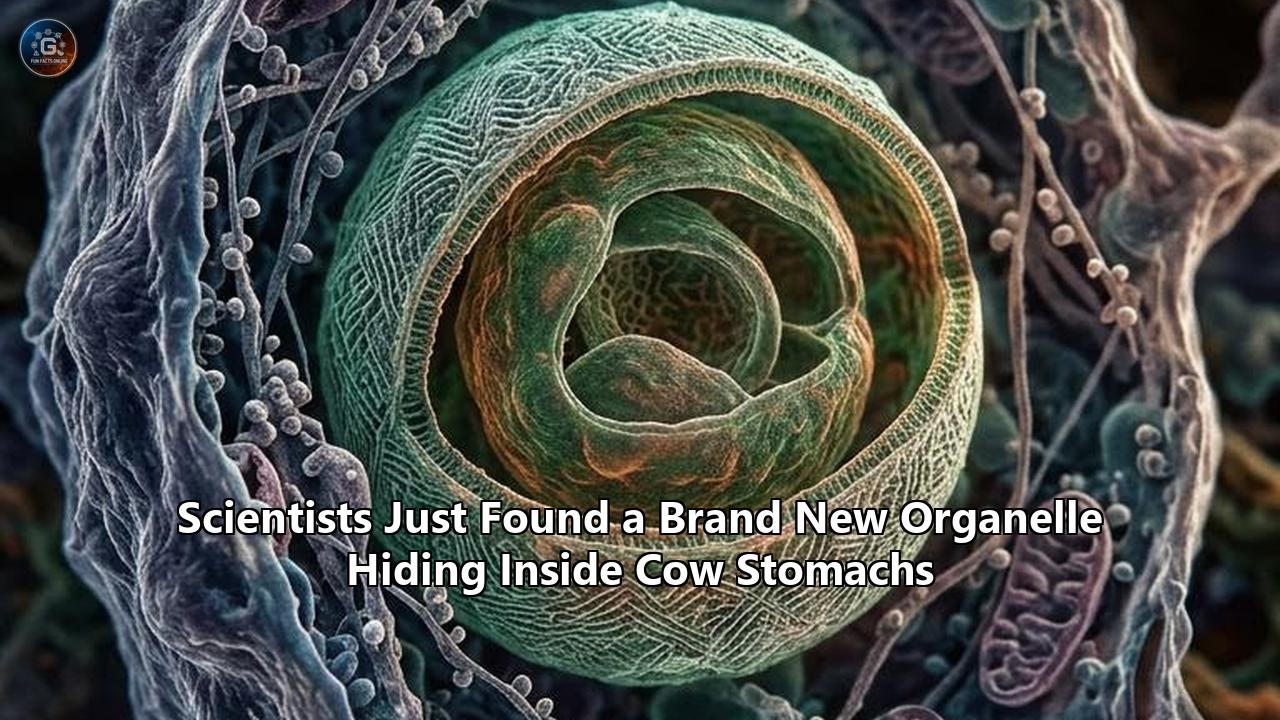
A study published in Science by an international research team led by the Chinese Academy of Sciences’ Institute of Hydrobiology, alongside researchers at Ohio State University and partner institutions, has revealed the hidden biological engine driving this process. Tucked inside the single-celled protozoa that inhabit the rumen—the cow’s primary fermentation chamber—scientists identified a previously unknown single-membraned organelle dubbed the hydrogenobody.
This structural discovery inside microbial cells explains how predatory gut microbes accelerate planetary warming. By generating dense plumes of molecular hydrogen ($H_2$) while simultaneously scrubbing away toxic trace oxygen, this new cow stomach organelle creates ideal micro-environments for methane-producing archaea to thrive.
The identification of the hydrogenobody does more than fill a long-standing hole in evolutionary biology. It fundamentally shifts the strategy for agricultural decarbonization. Rather than attempting to suppress methanogens at the end of the chemical pipeline, scientists now have a clear target at the very source of hydrogen production.
                                 THE RUMEN MICROBIAL INTERACTION

   +-----------------------------------------------------------------------------------+
   |                                 RUMEN CILIATE CELL                                |
   |                                                                                   |
   |   +---------------------------------------------------------------------------+   |
   |   |                           HYDROGENOBODY ORGANELLE                         |   |
   |   |                                                                           |   |
   |   |   [Oxygen Reductase]  ---> Consumes Trace O2 (Protects Anaerobic Zone)    |   |
   |   |   [[FeFe]-Hydrogenase] ---> Converts Pyruvate/Ferredoxin into H2 Gas       |   |
   |   +---------------------------------------------------------------------------+   |
   |                                         |                                         |
   |                                         | (Direct H2 Transfer)                    |
   |                                         v                                         |
   |   +---------------------------------------------------------------------------+   |
   |   |                        ENDOSYMBIOTIC METHANOGEN                           |   |
   |   |                                                                           |   |
   |   |   CO2 + 4 H2  ========================================>  CH4 (Methane)    |   |
   |   +---------------------------------------------------------------------------+   |
   +-----------------------------------------------------------------------------------+
                                                                   |
                                                                   v
                                                     [Expelled via Eructation / Burp]
The Hydrogenobody: Architectural Features and Metabolic Mechanics
To appreciate why the discovery of the hydrogenobody has reshaped microbial biology, one must look at the cellular architecture of the rumen microbiome. The cow’s rumen is a 50-gallon bio-reactor operating under strict anaerobic conditions, processing over 100 pounds of plant material daily. Within this dense liquid suspension, single-celled eukaryotic ciliates constitute up to 50% of total microbial biomass.
Until now, scientists assumed rumen ciliates synthesized hydrogen through double-membraned organelles known as hydrogenosomes—evolutionary cousins of the mitochondrion. However, high-resolution electron cryo-tomography and multi-omics sequencing revealed that the new cow stomach organelle operates on entirely different biological rules.
+------------------------+--------------------------+--------------------------+--------------------------+
| Feature                | Mitochondrion            | Classical Hydrogenosome  | Hydrogenobody (New)      |
+------------------------+--------------------------+--------------------------+--------------------------+
| Membrane Architecture  | Double membrane          | Double membrane          | Single membrane          |
+------------------------+--------------------------+--------------------------+--------------------------+
| Primary Organisms      | Aerobic Eukaryotes       | Anaerobic Protists       | Rumen Ciliates           |
|                        |                          | (e.g., Trichomonas)      | (e.g., Dasytricha)       |
+------------------------+--------------------------+--------------------------+--------------------------+
| Primary Function       | ATP via Oxidative        | ATP + H2 Production      | H2 Generation &          |
|                        | Phosphorylation          |                          | O2 Scavenging            |
+------------------------+--------------------------+--------------------------+--------------------------+
| Terminal Electron      | Oxygen (O2)              | Protons (H+)             | Protons (H+) &           |
| Acceptor               |                          |                          | Trace O2                 |
+------------------------+--------------------------+--------------------------+--------------------------+
| Primary Enzymes        | Cytochrome C Oxidase,    | Pyruvate:Ferredoxin      | [FeFe]-Hydrogenase,      |
|                        | ATP Synthase             | Oxidoreductase (PFOR)    | Oxygen Reductase         |
+------------------------+--------------------------+--------------------------+--------------------------+
| Genome Presence        | Own genome (mtDNA)       | Mostly lost              | None (Fully nuclear)     |
+------------------------+--------------------------+--------------------------+--------------------------+
| Spatial Distribution   | Distributed in cytoplasm | Distributed in cytoplasm | Clustered at cilia bases |
+------------------------+--------------------------+--------------------------+--------------------------+
Dual Biochemical Engine
Unlike hydrogenosomes, which rely solely on proton reduction to eliminate excess electrons generated during carbohydrate breakdown, the hydrogenobody contains a unique enzymatic pairing:
- $[FeFe]$-Hydrogenases: High-efficiency enzymes that reduce protons ($2H^+ + 2e^- \rightarrow H_2$) at rates orders of magnitude faster than bacterial alternatives.
- Oxygen Reductases: Enzymes that rapidly convert localized trace oxygen into water ($O_2 + 4H^+ + 4e^- \rightarrow 2H_2O$).
This dual metabolic capability solves a fundamental puzzle in rumen ecology. Plant matter and water ingested by cattle introduce continuous micro-pockets of dissolved oxygen into the rumen. Because methanogenic archaea are obligate anaerobes—poisoned by even minute traces of oxygen—they cannot survive in open fluid.
The hydrogenobodies cluster directly underneath the ciliate cell membrane, right at the base of the hair-like cilia. In this spatial position, they act as metabolic shields. By scrubbing oxygen at the cell boundary, they maintain a pristine, oxygen-free micro-environment while simultaneously pumping out $H_2$ gas. Methanogens cluster around these cilia, consuming the hydrogen fuel instantly before it can dissipate into the surrounding fluid.
Vestibuliferida vs. Entodiniomorphida: The Ciliate Lineage Split
The discovery of the hydrogenobody was made possible by constructing a comprehensive ciliate genome catalog—assembling 450 high-quality genomes across 65 species as part of the international Protist 10,000 Genomes Project (P10K). This genomic mapping uncovered a sharp divergence between two major orders of rumen ciliates: Vestibuliferida and Entodiniomorphida.
                RUMEN CILIATE ECOLOGICAL DIVERGENCE

      VESTIBULIFERIDA                    ENTODINIOMORPHIDA
   (e.g., Dasytricha, Isotricha)        (e.g., Entodinium caudatum)
   +---------------------------+        +---------------------------+
   |  * Densely covered in     |        |  * Cilia localized to     |
   |    cilia across body      |        |    oral zone only         |
   |  * Massive density of     |        |  * Sparse distribution of |
   |    hydrogenobodies        |        |    hydrogenobodies        |
   |  * High H2 output per     |        |  * Focused on engulfing   |
   |    unit of cell mass      |        |    starch and bacteria    |
   |  * Strongly correlated    |        |  * Moderate correlation   |
   |    with HIGH methane      |        |    with methane output    |
   +---------------------------+        +---------------------------+
                 |                                    |
                 v                                    v
     PRIMARY TARGET FOR MITIGATION        NEUTRAL / BENEFICIAL DIGESTIVE
      (High Risk, Low Benefit)                 (High Value to Host)
Vestibuliferida: The High-Emission Phenotype
Species belonging to Vestibuliferida (such as Dasytricha ruminantium and Isotricha prostoma) resemble dense, furry spheres under light microscopy. Because their entire outer cell surface is lined with cilia, their sub-membrane layer is packed with hydrogenobodies.
Multi-omics analyses of 100 dairy cows revealed that animals harboring high relative abundances of Vestibuliferida produced significantly more methane per kilogram of feed consumed. In sheep trials, individuals classified as "high methane emitters" exhibited nearly100-fold higher concentrations of Dasytricha--- compared to low-emitting counterparts consuming identical diets.
Entodiniomorphida: Fiber Breakdown Without the Hydrogen Plume
Conversely, Entodiniomorphida species (such as Entodinium caudatum) display cilia restricted almost exclusively to their oral apparatus. Their lower surface density of cilia correlates directly with a reduced abundance of hydrogenobodies. These ciliates specialize in engulfing whole starch granules and plant fibers, slowing down bacterial fermentation and preventing acute lactic acidosis in high-grain feeding systems.
This taxonomic contrast demonstrates that not all gut protozoa are equal contributors to climate change. The primary driver of livestock emissions is not ciliate biomass alone, but specifically the density of the new cow stomach organelle operating within Vestibuliferida lineages.
Comparing Methane Mitigation Strategies: Defaunation vs. Targeted Organelle Inhibition
The identification of the hydrogenobody forces a critical re-evaluation of livestock methane mitigation strategies. For decades, livestock scientists explored defaunation—the complete eradication of all protozoa from the rumen using chemical surfactants, heavy metals, or dietary lipids.
Now, with precise cellular maps of the hydrogenobody, researchers can compare the blunt-instrument approach of defaunation against targeted biochemical blockades.
+------------------------------------+------------------------------------+------------------------------------+
| Evaluation Vector                  | Complete Rumen Defaunation         | Targeted Hydrogenobody Blockade    |
+------------------------------------+------------------------------------+------------------------------------+
| Methane Reduction Efficacy         | 20% to 35% reduction               | Estimated 30% to 50% reduction     |
+------------------------------------+------------------------------------+------------------------------------+
| Impact on Fiber Degradation        | Negative (-10% to -20% neutral     | Neutral (Preserves cellulolytic    |
|                                    | detergent fiber digestibility)     | *Entodiniomorphida* activity)     |
+------------------------------------+------------------------------------+------------------------------------+
| Microbial Ecosystem Stability      | Low (Causes severe biomass shock   | High (Selectively targets H2       |
|                                    | and bacterial overgrowth)          | production without killing host)   |
+------------------------------------+------------------------------------+------------------------------------+
| Host Protein Supply (Flow to ID)   | Increased (+15% to +25% bacterial  | Moderate increase (Eliminates      |
|                                    | protein flow to small intestine)   | protozoal recycling loss)          |
+------------------------------------+------------------------------------+------------------------------------+
| Application Safety & Toxicity      | High risk (Chemical agents like    | Targeted small-molecule or peptide |
|                                    | dioctyl sodium sulfosuccinate toxic) inhibitors with low host toxicity |
+------------------------------------+------------------------------------+------------------------------------+
| Adaptation / Resistance Risk       | High (Microbiome shifts to fill    | Moderate (Requires monitoring for  |
|                                    | vacant ecological niches)          | hydrogenase mutations)             |
+------------------------------------+------------------------------------+------------------------------------+
The Tradeoffs of Total Defaunation
Removing protozoa entirely from the rumen yields a clear thermodynamic benefit: without ciliates, predation on bacteria decreases, allowing more microbial protein to pass into the cow's small intestine for absorption. Methane emissions drop by 20% to 35% because the primary $H_2$ source is removed.
However, total defaunation comes with severe operational tradeoffs:
- Fiber Loss: Protozoa produce crucial xylanases and cellulases that break down tough plant cell walls. Defaunated animals display significant drops in fiber digestibility, requiring higher-density feed rations to maintain weight gain.
- Microbial Instability: Without predatory ciliates regulating bacterial populations, bacterial blooms lead to rapid, uncontrolled starch fermentation, spiking volatile fatty acid production and increasing the risk of ruminal acidosis.
- Toxicity and Infeasibility: Agents used to achieve defaunation—such as alkanet oils, copper sulfate, or synthetic detergents—often suppress feed intake or prove toxic to the cow when administered long-term.
The Precision Advantage of Hydrogenobody Blockades
Targeting the new cow stomach organelle directly, rather than killing the ciliate host, presents a far more refined biological solution.
By developing small-molecule inhibitors that selectively bind to the unique $[FeFe]$-hydrogenases or single-membrane oxygen reductases of the hydrogenobody, researchers can shut down the $H_2$ pipeline while keeping the ciliate cell alive. The protozoan continues to digest plant fiber and regulate bacterial populations, but its role as a metabolic catalyst for methanogens is neutralized.
Evaluating Market Competitors: Exogenous Additives vs. Organelle-Focused Tech
To understand where hydrogenobody-targeted therapies fit within the broader agricultural landscape, we must compare them against existing market solutions: chemical methanogenesis inhibitors like 3-NOP (Bovaer) and bio-active plants like Red Seaweed (Asparagopsis taxiformis).
+------------------------+--------------------------+--------------------------+--------------------------+
| Solution Category      | 3-Nitrooxypropanol       | Asparagopsis taxiformis  | Hydrogenobody Targeted   |
|                        | (3-NOP / Bovaer)         | (Red Seaweed)            | Molecules (Emerging)     |
+------------------------+--------------------------+--------------------------+--------------------------+
| Direct Target          | Methanogen Enzyme:       | Methanogen Enzyme:       | Ciliate Organelle:       |
|                        | Methyl-coenzyme M        | Methyl-coenzyme M        | [FeFe]-Hydrogenase &     |
|                        | Reductase (MCR)          | Reductase (MCR)          | Oxygen Reductase         |
+------------------------+--------------------------+--------------------------+--------------------------+
| Point of Intervention  | Terminal Methane         | Terminal Methane         | Upstream Hydrogen        |
|                        | Synthesis                | Synthesis                | Production               |
+------------------------+--------------------------+--------------------------+--------------------------+
| Average Mitigation %   | 28% - 32% (Dairy)        | 60% - 80% (Feedlot)      | Projected 35% - 50%      |
|                        | 45% (Beef Feedlot)       |                          | (Systemic)               |
+------------------------+--------------------------+--------------------------+--------------------------+
| Primary Technical      | Rapid metabolic decay;   | Bromoform toxicity;      | Target delivery across   |
| Bottleneck             | requires continuous TMR  | active ingredient loss;  | single-membrane barrier  |
|                        | intake                   | scale-up farming costs   | in ciliate cytoplasm     |
+------------------------+--------------------------+--------------------------+--------------------------+
| Rumen Hydrogen         | Accumulates free H2 gas  | Accumulates free H2 gas  | Redirects metabolic H2   |
| Response               | (risk of feedback        | (risk of feedback        | into propionate/butyrate |
|                        | inhibition)              | inhibition)              | pathways                 |
+------------------------+--------------------------+--------------------------+--------------------------+
| Pasture Application    | Ineffective (Short       | Ineffective (Requires    | Potential for slow-     |
| Viability              | half-life in rumen)      | daily intake)            | release bolus / vaccine  |
+------------------------+--------------------------+--------------------------+--------------------------+
1. 3-Nitrooxypropanol (3-NOP)
3-NOP works by inactivating methyl-coenzyme M reductase (MCR), the nickel-containing enzyme that executes the final step of methanogenesis inside archaea.
- The Advantage: 3-NOP is non-toxic, breaks down into naturally occurring compounds (nitrate and 1,3-propanediol) in the rumen, and consistently cuts emissions by roughly 30%.
- The Downside: 3-NOP has a short half-life in the rumen environment. It must be continuously ingested in a Total Mixed Ration (TMR) system, making it virtually useless for the 70% of global cattle that graze on open pasture. Furthermore, because it blocks methane without stopping $H_2$ production, dissolved hydrogen gas accumulates in the rumen fluid. High $H_2$ partial pressures create thermodynamic feedback loops that inhibit microbial fermentation efficiency.
2. Red Seaweed (Asparagopsis taxiformis)
Asparagopsis contains bromoform, a halogenated organic compound that reacts with vitamin B12-dependent enzymes inside methanogens to halt methane formation.
- The Advantage: Highly potent, capable of reducing methane burps by up to 80% at low inclusion rates (under 1% of total dry matter intake).
- The Downside: Bromoform is a known ozone-depleting substance and suspected carcinogen. Delivering stable, standardized bromoform concentrations in commercial feed is difficult due to rapid volatilization during drying and storage. Environmental concerns surrounding industrial-scale seaweed farming present further hurdles.
3. Organelle-Targeted Therapeutics
Interventions aimed at the new cow stomach organelle work upstream of both 3-NOP and seaweed. Rather than allowing hydrogen gas to be generated and trying to prevent methanogens from using it, hydrogenobody inhibitors stop $H_2$ synthesis at the source.
When $H_2$ production inside the ciliate is suppressed, reduced nicotinamide adenine dinucleotide (NADH) and reduced ferredoxin must be re-oxidized through alternative pathways. The rumen microbiome shifts naturally toward the synthesis of propionate—a volatile fatty acid that the cow absorbs through its rumen wall and converts directly into glucose in the liver.
In short: blocking terminal methanogenesis wastes potential metabolic energy; blocking hydrogenobody $H_2$ production re-routes that energy directly into host meat and milk production.
Host Breeding vs. Microbiome Intervention: A False Dichotomy?
The discovery of the hydrogenobody brings clarity to a long-standing debate in livestock genetics: should agricultural producers select for "low-methane cows" through selective breeding, or engineer the rumen microbiome directly?
                      STRATEGIC DEPLOYMENT MATRIX

                     PERMANENCE OF EFFECT
                              ^
                              |
     GENOMIC SELECTION        |       TARGETED HYDROGENOBODY
     (Host Breeding)          |       INHIBITORS
     - Slow (1-2%/year)       |       - Fast-acting
     - High Heritability      |       - Reversible / Dose-dependent
     - Low Operational Cost   |       - Medium-High Operational Cost
                              |
     -------------------------+-----------------------------------> SPEED OF
                              |                                    IMPLEMENTATION
     PASTURE VACCINES         |       EXOGENOUS FEED ADDITIVES
     - Targets Ciliate / HB   |       (3-NOP, Seaweed)
     - Highly Scalable        |       - Requires Daily Feeding
     - Difficult Target Delivery|      - Non-permanent
                              |
The Limits of Host Genomics
Selective breeding programs targeting low residual methane emissions have achieved modest success, yielding 1% to 2% annual reductions in methane output per generation. However, breeding for low methane often comes at the cost of unintended metabolic trade-offs, such as reduced milk fat synthesis or altered body condition scores.
Genomic sequencing revealed why host genetic selection is slow: cattle genetics influence methane emissions primarily by altering the internal anatomy and flow dynamics of the rumen. Cows with smaller rumens and faster particulate passage rates harbor fewer Vestibuliferida ciliates simply because these large protists are washed out before they can reproduce.
Synergy via Combined Selection
The identification of hydrogenobodies bridges this gap. Breeders no longer need to rely on indirect proxy traits like rumen volume. Instead, genomic tools can screen cattle for host genetic markers that suppress Vestibuliferida attachment and retention while maintaining optimal rumen volume and fiber digestibility.
Simultaneously, targeted therapeutics—such as long-acting ruminal boluses or oral immunizations targeting hydrogenobody membrane proteins—can be deployed across herds without needing to alter the host animal's genome.
The Thermodynamics of Rumen Fermentation: Why Source Inhibition Matters
To understand why shutting down the new cow stomach organelle is mathematically and biochemically superior to downstream methane blocking, we must examine the energetic balances of carbohydrate degradation in the rumen.
                               CARBOHYDRATE FERMENTATION PATHWAYS

                                      [ Plant Fibers / Cellulose ]
                                                   |
                                                   v
                                             [ Hexose / Glucose ]
                                                   |
                                                   v
                                               [ Pyruvate ]
                                                   |
       +-------------------------------------------+-------------------------------------------+
       |                                           |                                           |
       v                                           v                                           v
[ Acetate Pathway ]                       [ Propionate Pathway ]                      [ Butyrate Pathway ]
Pyruvate -> Acetate + CO2 + 2 H2          Pyruvate + 4 H -> Propionate + H2O         2 Pyruvate + 4 H -> Butyrate + 2 CO2
(Generates Free H2)                       (SINK: Consumes Net H2)                     (SINK: Consumes Net H2)
       |                                           |                                           |
       +------------> HYDROGENOBODY <--------------+                                           |
                           |                                                                   |
                           v                                                                   v
                     Excess H2 Gas                                                     Absorbed by Cow Wall
                           |                                                           (Direct Energy / Fat)
                           v
                     METHANOGEN
                           |
                           v
                    Methane (CH4)
                  (Wasted Energy)
When rumen microbes ferment plant cellulose into hexose sugars and then into pyruvate, they must dispose of excess reducing equivalents (NADH and reduced ferredoxin).
Microbes utilize three major volatile fatty acid (VFA) pathways:
$$\text{1. Acetate Pathway: } \text{C}_6\text{H}_{12}\text{O}_6 + 2\text{H}_2\text{O} \longrightarrow 2\text{CH}_3\text{COOH} + 2\text{CO}_2 + 4\text{H}_2$$
$$\text{2. Propionate Pathway: } \text{C}_6\text{H}_{12}\text{O}_6 + 4\text{H} \longrightarrow 2\text{CH}_3\text{CH}_2\text{COOH} + 2\text{H}_2\text{O}$$
$$\text{3. Butyrate Pathway: } \text{C}_6\text{H}_{12}\text{O}_6 \longrightarrow \text{CH}_3\text{CH}_2\text{CH}_2\text{COOH} + 2\text{CO}_2 + 2\text{H}_2$$
Notice the critical biochemical difference: the acetate pathway generates net free hydrogen, whereas the propionate pathway consumes net hydrogen.
The Energetic Penalty of Methanogenesis
When hydrogenobodies actively produce $H_2$, methanogens convert that hydrogen into methane gas via:
$$\text{CO}_2 + 4\text{H}_2 \longrightarrow \text{CH}_4 + 2\text{H}_2\text{O} \quad (\Delta G^\circ = -131 \text{ kJ/mol})$$
Methane gas contains roughly $55.5 \text{ MJ/kg}$ of energy. When a dairy cow belches out methane, it loses between 5% and 12% of its total Gross Energy Intake (GEI) directly into the atmosphere.
If downstream inhibitors (like 3-NOP) block methanogenesis without stopping hydrogenobodies from generating $H_2$, the partial pressure of $H_2$ in the rumen fluid rises from a normal $0.1 \text{ kPa}$ to over $10 \text{ kPa}$. This high $H_2$ concentration triggers thermodynamic feedback inhibition on microbial hydrogenase enzymes, slowing down pyruvate oxidation and overall feed digestion.
The Advantage of Source Inhibition
By inhibiting the new cow stomach organelle, $H_2$ generation is arrested at the ciliate level. Pyruvate cannot be converted into acetate and free $H_2$. Instead, microbial metabolic flux is forced down the propionate pathway.
Propionate is absorbed directly through the rumen epithelium into the portal vein. The cow's liver converts propionate into glucose via gluconeogenesis:
$$2 \text{ Propionate} + \text{ATP} + \text{CO}_2 \longrightarrow \text{Glucose}$$
Inhibiting the hydrogenobody doesn't just reduce emissions—it captures energy that would otherwise be belched out as gas and converts it into metabolic fuel for milk production and muscle growth.
Key Remaining Questions and Biological Frontiers
While the identification of the hydrogenobody represents a major milestone in rumen microbiology, it raises fundamental questions that researchers around the world are now rushing to answer:
1. What Is the Evolutionary Origin of the Single Membrane?
All previously known energy-generating or hydrogen-producing organelles in eukaryotes (mitochondria, hydrogenosomes, mitosomes) are surrounded by double membranes—a structural hallmark of their endosymbiotic bacterial heritage.
The hydrogenobody’s single membrane presents an evolutionary mystery:
- Did it arise autogenously from the host ciliate’s endoplasmic reticulum or peroxisomal system, coopting bacterial $[FeFe]$-hydrogenase genes via horizontal gene transfer?
- Or is it the radically degraded remnant of an ancient eukaryotic endosymbiont that lost its inner membrane over evolutionary time?
Unraveling this origin story will reshape our understanding of eukaryotic cell evolution and organelle genesis.
2. Can We Target the Single Membrane for Drug Delivery?
A single membrane is far easier to penetrate with targeted molecules than a double-membrane structure. Structural biologists are now analyzing the lipid bilayer and membrane-bound transport proteins of the hydrogenobody to design highly specific lipophilic peptides or small-molecule drugs that can accumulate selectively inside the organelle.
3. How Will Rumen Ecosystems Adapt Over Time?
Microbial ecosystems are notoriously resilient. If targeted therapies successfully shut down hydrogenobodies within Vestibuliferida ciliates, will free-living hydrogen-producing bacteria (such as Ruminococcus albus) expand to fill the void?
Long-term continuous-culture trials and live-animal studies are underway to determine whether ecosystem feedback loops could restore $H_2$ production over time.
Global Policy Implications and Commercial Timelines
The discovery of the hydrogenobody comes at a crucial moment for international climate policy. More than 150 nations have signed the Global Methane Pledge, committing to cut anthropogenic methane emissions by 30% below 2020 levels by the year 2030. Because agricultural livestock accounts for roughly one-third of all human-caused methane emissions, meeting this target is impossible without addressing cattle belches.
                     CHRONOLOGY OF METHANE MITIGATION RESEARCH

   1960s - 1980s               2000s - 2015                2020 - 2025                2026 AND BEYOND
+-----------------+        +-----------------+        +-----------------+        +-----------------+
| First Rumen     |        | Direct Chemical |        | Commercial      |        | Discovery of    |
| Defaunation     | =====> | Methanogen      | =====> | Additives       | =====> | HYDROGENOBODY   |
| Experiments     |        | Targeting       |        | (3-NOP,         |        | (Precision      |
| (Toxic, Blunt)  |        | (3-NOP, MCR)    |        | Asparagopsis)   |        | Upstream Target)|
+-----------------+        +-----------------+        +-----------------+        +-----------------+
Commercialization Pipeline
Agri-tech startups and multinational animal health corporations are already pivoting toward organelle-targeted platforms:
- Phase 1 (2026–2027): High-throughput screening of existing compound libraries against isolated hydrogenobody $[FeFe]$-hydrogenase enzymes.
- Phase 2 (2027–2028): In-vitro rumen simulation trials testing selective suppression of Vestibuliferida species without disrupting Entodiniomorphida fiber breakdown.
- Phase 3 (2028–2030): In-vivo animal trials evaluating slow-release ruminal boluses and targeted feed additives in grazing cattle systems.
By opening up the inner compartment of the ciliate cell, scientists have turned what was once an intractable climate challenge into a precise biochemical target. The discovery of the new cow stomach organelle marks the transition of livestock climate science from blunt ecological manipulation to targeted cellular engineering.
References
- Xie, F., et al. (2026). Rumen ciliate genomics reveal a novel single-membrane hydrogenobody driving livestock methane emissions. Science, 392(6796), eadj8492.
- Institute of Hydrobiology, Chinese Academy of Sciences. (2026). Protist 10,000 Genomes Project (P10K): Rumen Ciliate Genomic Catalog and Organelle Identification. CAS Press Release.
- Ohio State University Department of Animal Sciences. (2026). Metabolic interactions between rumen protozoa and methanogenic archaea*. Research Report.
Reference:
- https://english.cas.cn/newsroom/research-news/202606/t20260612_1161824.shtml
- https://www.academicjobs.com/en-us/research-publication-news/hydrogenobody-organelle-in-cow-gut-drives-methane-or-academicjobs-15397
- https://www.quantamagazine.org/a-new-way-that-a-cows-inner-world-shapes-earths-atmosphere-20260727/
- https://www.smithsonianmag.com/smart-news/why-do-cows-burp-up-so-much-planet-warming-methane-a-newly-discovered-structure-in-their-gut-microbes-could-be-a-culprit-180988664/
- https://www.eurekalert.org/news-releases/1125794
- https://www.sciencenews.org/article/cows-methane-burps-may-be-fueled-by-a-newfound-organelle-in-gut-microbes
- https://www.reddit.com/r/climatechange/comments/1t2xfc9/how_a_newly_discovered_organelle_could_help/