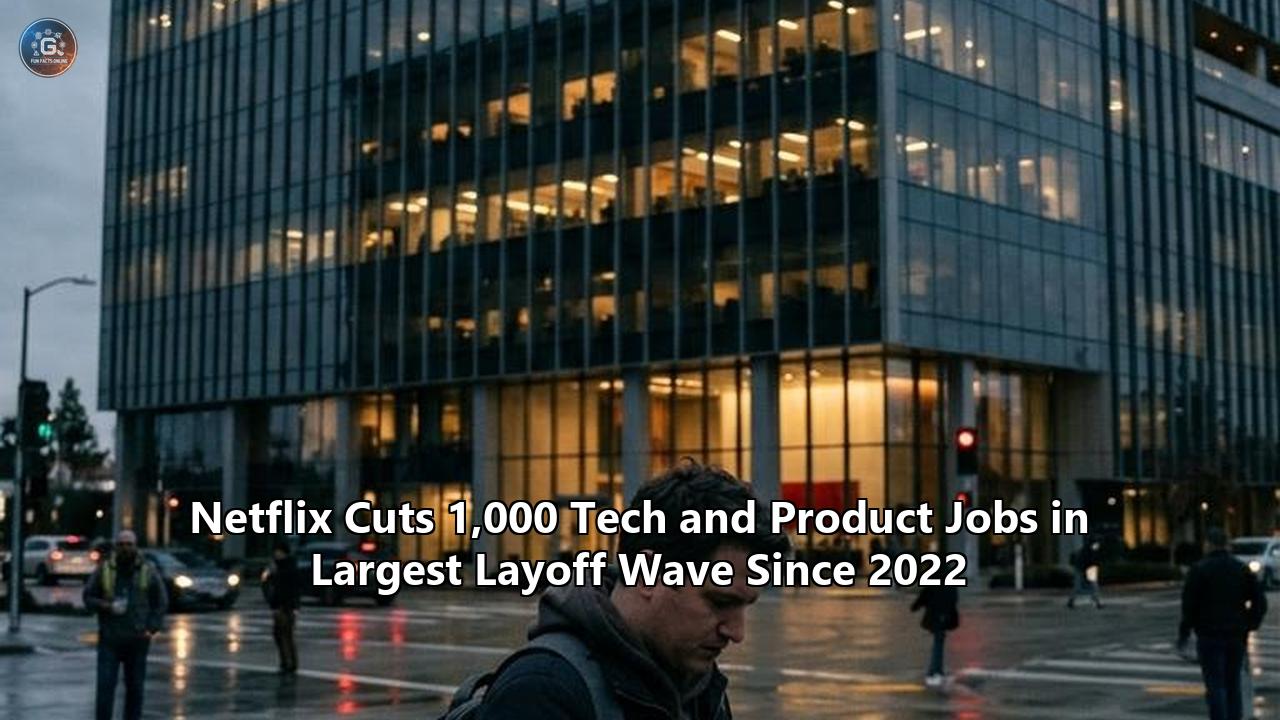
On Wednesday, October 14, an unscheduled message landed in the inboxes of Netflix’s 16,000 employees worldwide. Signed jointly by co-Chief Executive Officers Ted Sarandos and Greg Peters, the internal memo delivered a blunt directive: the company was immediately eliminating roughly 1,000 corporate positions, representing approximately 6% of its global workforce. It stands as the largest single workforce reduction in the streaming pioneer’s 29-year history.
The scale of the cut eclipsed the company’s painful 2022 retrenchment, when 450 jobs disappeared in the wake of its first quarterly subscriber contraction in a decade. But this time, the corporate geography of the cull revealed an entirely different strategic crisis. Rather than trimming fringe creative initiatives or production support, the axe fell squarely on the company's core technological and operational engines: product development, software engineering, enterprise data systems, human resources, and corporate legal divisions. Concurrently, high-profile studio leaders were pushed out, including Vice President of Film Doug Belgrad, just hours before news surfaced that Chief Content Officer Bela Bajaria would step down to make way for former Disney executive Peter Rice.
The announcement blindsided Silicon Valley and Hollywood alike. Netflix is neither unprofitable nor in immediate solvency distress. In its most recent reported quarter, the platform logged $3.4 billion in net income on $12.6 billion in revenue—a 13% year-over-year revenue climb—and reaffirmed its full-year 2026 forecast projecting more than $51 billion in top-line receipts alongside an operating margin target of 31.5%.
The central paradox confronting industry observers is stark: Why would an entertainment behemoth commanding 328 million subscribers and generating billions in free cash flow suddenly purge 1,000 high-earning technologists, software architects, and product leads?
The explanation does not reside in standard quarterly belt-tightening. An examination of internal operations, confidential staff communications, ratings intelligence, and financial disclosures reveals a multi-layered reckoning. Behind the polished corporate rhetoric of "operational discipline" lies an acute exhaustion of Netflix's core growth engines: a plateauing of domestic watch-time, the relentless erosion of living-room attention by social video platforms, a quiet dismantling of Silicon Valley’s most famous corporate culture, and a costly, aggressive capital pivot toward live sports and generative artificial intelligence.
Inside the Wednesday Purge: When the "Keeper Test" Failed
Across Netflix hubs in Los Gatos, Hollywood, London, Amsterdam, and Singapore, the morning of October 14 played out with unsettling speed.
"Our mission—to entertain the world—is ambitious, and delivering on it requires us to be disciplined about where we prioritise our people and resources," Sarandos and Peters wrote in the companywide memo obtained by news outlets. The executives maintained that the business remained "strong and growing," but emphasized that preserving long-term financial health required "focused choices across the business so we can keep delivering for our members, partners, employees, and investors."
Within minutes of the memo’s distribution, internal communications channels fractured. On corporate Slack rooms, icons blinked offline in clusters. Access to Google Workspace, internal Git repositories, and proprietary production dashboards vanished for hundreds of engineers before direct managers had conducted one-on-one exit meetings.
For decades, Netflix cultivated a workplace ethos distinct from the paternalistic benefits structures of Google or Meta. Codified in the famous 2009 culture presentation authored by co-founder Reed Hastings and former chief talent officer Patty McCord, the company explicitly rejected the notion of being a "family." Instead, it framed itself as a professional sports team, demanding "high talent density" and enforcing the uncompromising "Keeper Test": If an employee were thinking of leaving, would their manager fight hard to keep them? If the answer was no, the employee was given a swift, generous cash severance to clear room for a star player.
Yet the October 14 dismissals broke the psychological contract that sustained that model. Workers let go in this wave did not receive poor performance ratings; entire product pods, localized engineering squads, and legal review teams were excised wholesale.
"For a culture built on the implicit understanding that high performers are rewarded and protected, these cuts weaken that promise for everyone who stayed," says Jason Schloetzer, an associate professor of business administration at Georgetown University who closely tracks corporate governance. "When you cut 1,000 people across technical and product divisions during a period of record profitability, it signals to the workforce that exceptional performance is no longer an insurance policy. The metric has shifted from individual capability to structural cost elimination."
Netflix declined to detail the exact departmental breakdown or specific severance schedules, stating only that severance packages would comply with national employment frameworks across its international offices. But among those ousted were senior software architects who had spent close to a decade fine-tuning the platform’s encoding algorithms and global distribution networks.
The Hidden Attention Ceiling: The Squeeze from YouTube
To understand why Netflix cut its technical core, one must follow the trail to the metric the company has fought hardest to conceal: raw viewer engagement.
Between 2022 and 2025, Netflix pulled two extraordinary operational levers that created a temporary illusion of limitless momentum. First, it cracked down on password sharing, forcing tens of millions of borrower households to convert into paid primary accounts. Second, it launched an ad-supported subscription tier, opening an entirely new revenue canal from price-sensitive consumers.
These maneuvers juiced quarterly earnings and kept Wall Street cheering. However, both were non-repeatable monetization adjustments. They solved pricing extraction, not time spent.
The warning signs surfaced clearly in late 2024, when corporate leadership made a disclosure change: beginning with the 2025 fiscal year, Netflix ceased regular reporting of subscriber tallies and quarterly Average Revenue Per User (ARPU). At the time, Wall Street skeptics, including Needham & Company senior analyst Laura Martin, questioned whether the move was designed to mask an approaching saturation limit in high-margin markets.
The private ratings data vindicates those suspicions. According to independent measurement from Nielsen’s Gauge report, the battle for the American television screen has quietly tipped away from premium streaming. In recent tracking, Google’s YouTube captured 14% of total television viewing time in the United States. Netflix, by contrast, slipped to 7.8%—down from 8.8% twelve months prior.
Even more alarming for executives in Los Gatos is international data. Research conducted by Digital i across 20 primary global markets revealed that while the average daily viewing time per YouTube user account climbed from 87.2 minutes in 2024 to 99.1 minutes in 2025, daily engagement per Netflix account fell from 100.5 minutes down to 93.4 minutes.
The company's expensive summer film catalog failed to reverse the slide. Nielsen data indicates that Netflix’s five most-watched English-language scripted feature film releases registered their lowest cumulative hours watched over their first eight weeks of release compared to the top summer slates of 2023, 2024, and 2025.
This reality punctured executive confidence. Speaking candidly at the Bloomberg Screentime conference on September 30, just two weeks before pulling the trigger on the layoffs, Sarandos dropped his customary optimism: "Overall we're not growing as fast as I want us to, and we're working on making that move faster."
The audience was not merely churning; it was drifting toward free, creator-driven, short- and mid-form video platforms that require none of the multi-million-dollar episodic production budgets that Netflix carries on its balance sheet.
U.S. TV Screen Share: The Attention Battle (Nielsen Gauge Data)
┌───────────────────────────────────────────────┐
│ YouTube:      ██████████████ 14.0%            │
│ Netflix:      ████████ 7.8% (Down from 8.8%)  │
│ Other Cable:  ████████████████████ 20.1%      │
│ Broadcast:    ████████████████████ 20.3%      │
└───────────────────────────────────────────────┘

Daily Engagement Per Account (Digital i Tracking across 20 Markets)
┌───────────────────────────────────────────────┐
│ 2024:                                         │
│   • Netflix: 100.5 mins                       │
│   • YouTube:  87.2 mins                       │
│ 2025-2026:                                    │
│   • YouTube:  99.1 mins (+13.6%)              │
│   • Netflix:  93.4 mins (-7.1%)               │
└───────────────────────────────────────────────┘
Tracing the Evidence Trail: From the Strategic Adjustments of the Netflix Layoffs 2024 to an Outright Purge
The internal shock over the 1,000 lost positions overlooks how methodically the stage was set. While management presented the cuts as a sudden response to market discipline, the operational shifts were seeded two years earlier during the precursor Netflix layoffs 2024 cycle.
In that period, the streaming giant had largely returned to profitability after its 2022 scare, but the executive suite quietly began re-evaluating headcounts across specialized divisions. During the Netflix layoffs 2024 adjustments, cuts were smaller, surgically targeted, and dispersed: dozens of communications coordinators, studio facility managers, and animation specialists were systematically eased out. Management framed those actions as modest efficiency corrections following the prolonged Writers Guild of America and SAG-AFTRA strikes.
Yet underneath those initial moves, financial leadership was benchmarking a far more aggressive cost-containment metric. An analysis of internal spending blueprints shows that during the Netflix layoffs 2024 window, the company’s operating margin hovered around 29.5%. To appease Wall Street institutions that were already beginning to punish streaming multiples, leadership promised a steady march past 31.5%.
Workforce and Margin Trajectory: 2022 to Present
┌──────┬────────────┬──────────────────┬────────────────────────┐
│ Year │ Headcount  │ Operating Margin │ Major Catalyst         │
├──────┼────────────┼──────────────────┼────────────────────────┤
│ 2022 │ ~12,800    │ 17.8%            │ 450 jobs cut; subs drop│
│ 2024 │ ~14,000    │ 29.5%            │ Restructuring post-SAG │
│ 2025 │ ~16,000    │ 30.2%            │ Ad tier scaling        │
│ 2026 │ ~15,000    │ 31.5% (target)   │ 1,000 cuts; tech hit   │
└──────┴────────────┴──────────────────┴────────────────────────┘
When organic subscriber growth ran into demographic ceilings in North America—where monthly ARPU sat at an industry-high $17.20, compared with just $7.29 in Asia-Pacific—the math turned unforgiving. Netflix could not simply raise prices on existing accounts without triggering customer defection, even with its industry-low 2% churn rate.
As one former product director affected by the October purge observed: "The groundwork laid during the Netflix layoffs 2024 showed finance that the business could operate with leaner creative and marketing teams without breaking the platform. What we saw this week was the logical, brutal conclusion of that realization applied to the engineering side: if growth slows, you trim your most expensive overhead, and that overhead sits in software and product management."
The Technical Autopsy: Why Product and Engineering Became Expendable
For over fifteen years, Netflix was revered as a primary beacon of software engineering excellence. The company pioneered cloud-native architecture, migrating its entire infrastructure to Amazon Web Services long before enterprise IT considered the public cloud safe. It invented Chaos Monkey—a software tool designed to deliberately crash production servers to test system resilience—and built Open Connect, its custom, globally distributed Content Delivery Network (CDN) that caches petabytes of video directly inside internet service provider facilities.
Why, then, would the company target these exact technical ranks for elimination?
The reality within tech organizations is that video streaming, at its base architectural level, is a solved engineering problem.
"A decade ago, transcoding video files at scale, optimizing variable bitrate streams for cellular networks, and managing seamless global failover required elite, custom-built engineering systems," explains an enterprise cloud architect who consulted with Netflix’s Los Gatos technical infrastructure teams. "Today, that foundational infrastructure is mature, highly automated, and extraordinarily stable. You do not need an army of principal engineers earning $600,000 base salaries to maintain a video player and content recommendation pipelines."
Over time, Netflix’s product development division suffered from the organizational malady common across Silicon Valley: managerial layering and feature proliferation.
Insiders describe a product organization that had expanded to optimize increasingly minor user experiences. Engineering pods spent quarters running multivariate A/B testing on whether a movie title preview should trigger after 1.2 seconds or 1.5 seconds, or whether a category badge should feature rounded or squared borders.
The Legacy vs. Pivot Tech Stack Allocation
┌────────────────────────────────────────────────────────┐
│ LEGACY INFRASTRUCTURE (TARGETED FOR CUTS)              │
│   • Video Transcoding & Playback Optimization          │
│   • UI/UX Multivariate A/B Testing Pods                │
│   • Generic Collaborative Filtering Recommendation     │
│   • In-house Bespoke Core HR and Compliance Tooling     │
├────────────────────────────────────────────────────────┤
│ REALLOCATED CAPITAL (GROWTH PRIORITIES)                │
│   • Real-Time Low-Latency Live Streaming Ingestion     │
│   • Server-Side Ad Insertion (SSAI) & Ad Tech Stack    │
│   • Generative AI Pre-Visualization & In-House Assets  │
│   • Automated Localization, Dubbing & Trailer Gen      │
└────────────────────────────────────────────────────────┘
When user engagement was skyrocketing, spending hundreds of millions of dollars on granular UX experimentation was defensible. When engagement plateaued, that organizational bloat became unsustainable.
Furthermore, as Netflix expanded its advertising-supported tier, the technical requirements shifted completely away from pure streaming delivery toward ad-tech infrastructure: programmatic ad servers, dynamic insertion engines, and brand measurement APIs. Rather than building every ad-tech component internally, Netflix partnered with established external ad exchanges and marketing technology vendors. The engineers who built Netflix's proprietary recommendation rails were not necessarily the specialists required to run high-concurrency, real-time programmatic ad auctions.
The internal technology organization had effectively split in two: an indispensable, lean core running operational data centers and security, and an expansive secondary layer of product experimenters whose marginal utility had cratered. When Sarandos and Peters scanned their expense ledgers for non-content savings to preserve margins, the secondary technical tier was directly in the crosshairs.
The Capital Pivot: The $587 Million AI Bet and Live Sports Contracts
Layoff announcements typically suggest financial austerity. But the October 14 cuts were accompanied by an aggressive reallocation of capital.
The internal memo made this pivot explicit, stating that Netflix would "continue to invest aggressively in high impact areas to improve our service and further drive growth and innovation."
Where is that capital flowing? The evidence points to two specific bets: live interactive programming and generative artificial intelligence.
Only months before sending pink slips to 1,000 full-time staff, Netflix executed a series of massive capital outlays. In March, the company paid $587 million in cash to acquire InterPositive, an artificial intelligence production startup founded by actor and filmmaker Ben Affleck. The purchase sparked quiet fury among creative guilds and rank-and-file workers alike, a tension that boiled over onto social platforms following the layoffs.
"This is the same company that paid over half a billion dollars in cash to purchase an AI startup," noted one widely shared post on X from an impacted corporate worker. "There is money for algorithmic generative experiments, but no money to retain 1,000 human beings who built the product."
The InterPositive acquisition was not an isolated experimental venture. Internal tracking indicates that generative AI toolchains have been systematically introduced across more than 300 active Netflix productions. The company is aggressively deploying automated systems for:
- Pre-visualization of complex visual effects sequences, cutting months off storyboard cycles.
- Automated voice-cloning, hyper-realistic dubbing, and contextual language localization.
- Background asset generation for animation and post-production clean-up.
- Algorithmic generation of promotional clips, thumbnail imagery, and targeted trailers customized to individual user viewing profiles.
The capital reallocation reflects a ruthless calculation: by substituting human-intensive post-production, translation, and interface design with machine learning pipelines, Netflix projects it can eliminate millions in ongoing overhead. The 1,000 job cuts in HR, tech, and product development mirror this dynamic: why support human resource teams and engineering groups to manage workflows that an enterprise AI infrastructure can automate?
The Capital Migration: Where the Eliminated Payroll Is Flowing
┌───────────────────────────────────┬──────────────────────────────────┐
│ Divested Overhead (Layoffs)       │ Capital Destinations             │
├───────────────────────────────────┼──────────────────────────────────┤
│ • ~1,000 Full-Time Positions      │ • $587M InterPositive AI Buyout  │
│ • HR & Talent Acquisition Staff   │ • $5B WWE Raw 10-Year Rights Deal│
│ • Redundant Core Product Managers │ • NFL Christmas Day Global Rights│
│ • Legacy Streaming Stack Engs     │ • Proprietary Ad-Tech Live Pipes │
└───────────────────────────────────┴──────────────────────────────────┘
Simultaneously, the streamer is pouring vast sums into live event rights. Netflix committed more than $5 billion over ten years to lock up WWE Raw, secured rights for marquee NFL Christmas Day games, and staged massive live boxing exhibitions.
Live events achieve what traditional binge-drops cannot: they command appointment television, force millions of viewers to tune in simultaneously, and provide guaranteed inventory for advertisers. But live broadcasting requires an entirely different technical stack—one built around ultra-low latency, distributed real-time ingest, dynamic server-side ad insertion, and concurrency spikes—rather than the static library distribution networks on which thousands of traditional Netflix engineers spent their careers.
Wall Street's Ledger: Defending the 31.5% Operating Margin
Beyond technical re-engineering, the October workforce cuts were accelerated by mounting financial pressures in public equity markets.
Netflix shares trade around $70, reflecting a steep decline of more than 40% over the trailing 12 months. The equity sell-off was triggered in part by investor trepidation following Netflix’s aborted overtures to acquire Warner Bros. Discovery—an ambitious media mega-merger that fell apart before David Ellison's Skydance ultimately completed its own consolidation with Paramount. The market reacted with skepticism to any signal that Netflix might resort to debt-fueled legacy media acquisitions to sustain its size.
NFLX Stock Trajectory (Past 12 Months)
┌────────────────────────────────────────────────────────┐
│ $120 ┼                                                 │
│ $105 ┼  ───╮                                           │
│  $90 ┼     ╰──╮                                        │
│  $75 ┼        ╰──╮      ╭╮         ╭─╮                 │
│  $60 ┼           ╰──────╯╰─────────╯ ╰─── Current ~$70 │
│      └───────────────────────────────────────────────  │
│        Trailing 12-Month Decline: -42.8%               │
└────────────────────────────────────────────────────────┘
With the company scheduled to deliver its third-quarter earnings report on October 20, Sarandos and Peters faced an urgent imperative: demonstrate to institutional investors that operating discipline remains absolute.
"Netflix's layoffs show that even the top streaming companies are not immune to stagnation and financial difficulties," says Ross Benes, a senior analyst at market research firm Emarketer. "When revenue growth slows from hyper-expansion to mature single- or low double-digits, management must prove it can protect operating margin. Eliminating 1,000 jobs is an immediate, mathematically certain way to show Wall Street you are serious about hitting that 31.5% target."
The arithmetic of a 1,000-person cut across product, tech, and corporate divisions is straightforward. Given Netflix’s historically high compensation packages—where senior software engineers and corporate counsel frequently command total annual compensation ranging between $450,000 and $700,000 in cash—eliminating 1,000 corporate positions strips roughly $400 million to $550 million in recurring annual overhead out of operating expenses.
In a fiscal environment where the streamer expects full-year revenue of $51.0 billion to $51.4 billion, that $500 million saving represents the precise margin cushion needed to ensure operating margins climb from 29.5% up to the promised 31.5% threshold without requiring unattainable subscription price hikes.
The Broader Entertainment Bloodbath: A Synchronized Retreat
Netflix does not exist in an operational vacuum. Its workforce reduction is part of a broad contraction rippling across media and technology companies.
The entertainment industry is enduring its most volatile structural adjustment since the advent of broadcast television. Just weeks before Netflix’s memo went out:
- Skydance completed its merger with Paramount, with co-CEOs David Ellison and Ynon Kreiz confirming that aggressive redundancies will be executed to extract $6 billion in promised operational synergies. A study by the Los Angeles County Department of Economic Opportunity projected up to 4,500 local entertainment and technical jobs could disappear in the consolidation.
- Universal Music Group initiated an expansive round of layoffs across its U.S. and U.K. divisions, cutting veteran executives at Def Jam and Interscope to finalize its restructuring.
- Walt Disney, operating under Chief Executive Officer Josh D'Amaro, eliminated 1,000 roles in April and followed up with an additional 300 cuts centered heavily in—echoing Netflix—human resources and technology systems.
- Amazon stripped more than 30,000 roles across its retail, cloud, and media units over the past twelve months as it redirected capital toward generative AI data center infrastructure.
Industry Layoff Tally: Recent Technical and Media Retrenchment
┌─────────────────────────┬──────────────┬────────────────────────────┐
│ Company                 │ Jobs Cut     │ Primary Focus              │
├─────────────────────────┼──────────────┼────────────────────────────┤
│ Netflix                 │ ~1,000       │ Tech, Product, HR, Legal   │
│ Disney                  │ ~1,300 (YTD) │ HR, Technology, Studio Ops │
│ Skydance-Paramount      │ ~4,500 (Proj)│ Merged Redundancies        │
│ Amazon                  │ ~30,000      │ Enterprise, Cloud, Media   │
│ Universal Music Group   │ Hundreds     │ Regional Labels & Ops      │
└─────────────────────────┴──────────────┴────────────────────────────┘
The underlying driver across these companies is identical: the post-2020 thesis that direct-to-consumer streaming subscriptions could indefinitely fund boundless production and massive technology staffs has collapsed. The entertainment ecosystem has entered a zero-sum phase where every hour spent watching short clips on Instagram or YouTube is an hour stolen from a scripted series that cost $15 million an episode to produce.
The Human Reality: An Unforgiving Labor Landscape
For the workers who received severance notifications on October 14, the timing could hardly be worse.
The technology and entertainment employment markets have tightened dramatically over the past two years. A mid-level product manager or back-end engineer laid off in 2021 could reasonably expect multiple competing offers within weeks, often accompanied by signing bonuses and equity grants. In 2026, tech job openings across North America and Western Europe have contracted to multi-year lows.
Compounding the problem is the specialized nature of the roles eliminated. Corporate counsel, talent sourcers, and entertainment-specific software engineers face an industry where virtually every major studio and tech conglomerate is shedding headcount rather than hiring.
"Legal and HR roles tied directly to entertainment production and tech development are among the hardest positions to place right now," notes an executive recruiter specializing in digital media. "Companies aren't staffing up talent acquisition because they aren't hiring. They aren't staffing up production legal because they're making fewer greenlit shows. These workers are exiting into a frozen market."
Even for the roughly 15,000 employees who survived the cuts, the emotional and psychological landscape inside Netflix has irrevocably shifted. The storied company culture—one that famously offered unlimited vacation, zero corporate expense policies, and market-top compensation—now feels uncomfortably similar to the traditional corporate conglomerates it once disrupted.
What Comes Next: Critical Tests for the New, Leaner Netflix
As the dust settles on this 1,000-person cut, the company approaches several critical milestones that will prove whether the restructuring was a calculated operational reset or a symptom of deep structural decay.
1. The October 20 Earnings Scrutiny
Management must face Wall Street analysts on its third-quarter earnings call. While the headline revenue and operating income numbers are expected to meet internal guidance, institutional investors will demand concrete metrics on user engagement, churn, and the financial performance of the ad-supported tier. If Sarandos and Peters fail to demonstrate that the new, leaner organization can accelerate viewer time spent, the stock's year-long slide may deepen.
2. Live Broadcast Stress Tests
With hundreds of specialized engineering and reliability roles eliminated, Netflix’s infrastructure faces severe operational tests. The company’s upcoming slate of high-concurrency live events—including global NFL broadcasts on Christmas Day and weekly multi-hour WWE Raw live streams—leaves zero margin for technical error. Any catastrophic buffering or service blackout during an NFL broadcast would severely damage the streamer's efforts to win billions in premium brand advertising.
3. The Creative Exodus and Leadership Shakeup
The departure of Chief Content Officer Bela Bajaria and the arrival of Peter Rice marks a fundamental changing of the guard in Hollywood. Bajaria championed an era of populist, hyper-global content that yielded massive hits like Squid Game and Wednesday. Rice, known for rigorous operational oversight and traditional studio discipline during his tenure at Fox and Disney, inherits a creative division that must now operate with reduced development budgets and fewer corporate layers. How the creative community responds to Netflix’s tightening purse strings and its open embrace of generative AI tools will dictate the quality of its programming pipeline through 2027.
4. Progress on Major Physical Capital Projects
Despite cutting 6% of its global workforce, Netflix is moving forward with massive physical capital commitments. Construction continues on the company’s $1 billion state-of-the-art production campus at Fort Monmouth in New Jersey, spanning nearly 300 acres. Concurrently, the company is expanding its physical entertainment footprint through the rollout of "Netflix House" venues in Philadelphia and Las Vegas. Management must convince stakeholders that it can fund billion-dollar physical real estate developments while simultaneously claiming it could not afford to retain 1,000 corporate software engineers and operations personnel.
The 1,000 layoffs of October 14 close an era for Netflix. The company is no longer the insurgent Silicon Valley disruptor using venture-like scale and boundless engineering payrolls to conquer traditional Hollywood. It is now a mature, fully institutionalized media conglomerate facing the identical constraints, margin pressures, and structural attention battles that have challenged the entertainment industry for generations. The code has been deployed, the platform is built, and the growth ceiling has arrived; what remains is the cold, calculated arithmetic of preserving the bottom line.
Reference:
- https://www.whatjobs.com/news/netflix-to-lay-off-roughly-1000-employees-or-6-of-workforce/
- https://www.thestreet.com/employment/netflix-cut-1000-jobs-here-why-and-how-it-impacts-your-subscription
- https://lamag.com/hollywood/widespread-layoffs-plague-the-entertainment-industry/
- https://thesouthfirst.com/business-tech/netflixs-biggest-layoffs-ever-is-shareholder-value-to-blame/
- https://www.newscaststudio.com/2026/10/15/netflix-layoffs-1026/
- https://communitynews.org/sections/business-cns/netflix-cuts-1-000-jobs-worldwide-while-fort-monmouth-studio-work-continues/
- https://www.cbsnews.com/news/netflix-workforce-layoffs-cuts/
- https://www.siliconrepublic.com/business/streaming-giant-netflix-cuts-1000-jobs-over-organisational-changes
- https://www.youtube.com/watch?v=RJed6G0w31M
- https://www.latimes.com/entertainment-arts/business/story/2026-10-15/after-nearly-buying-warner-bros-netflix-is-laying-off-1-000-workers-what-happened
- https://thedesk.net/2026/10/netflix-cuts-1000-jobs-as-slowing-growth-raises-concerns-about-streaming-business/
- https://www.peoplematters.in/news/strategic-hr/netflix-layoffs-hr-technology-product-and-legal-teams-affected-by-1000-job-cuts-52746
- https://www.metaintro.com/layoffs/netflix
- https://www.tradingview.com/news/investorplace:6cca56489094b:0-netflix-layoffs-2024-what-to-know-about-the-latest-nflx-job-cuts/
- https://www.facebook.com/derin.adio/posts/netflix-is-cutting-about-1000-jobs-and-the-reason-given-is-slower-growthon-octob/10163856133800698/