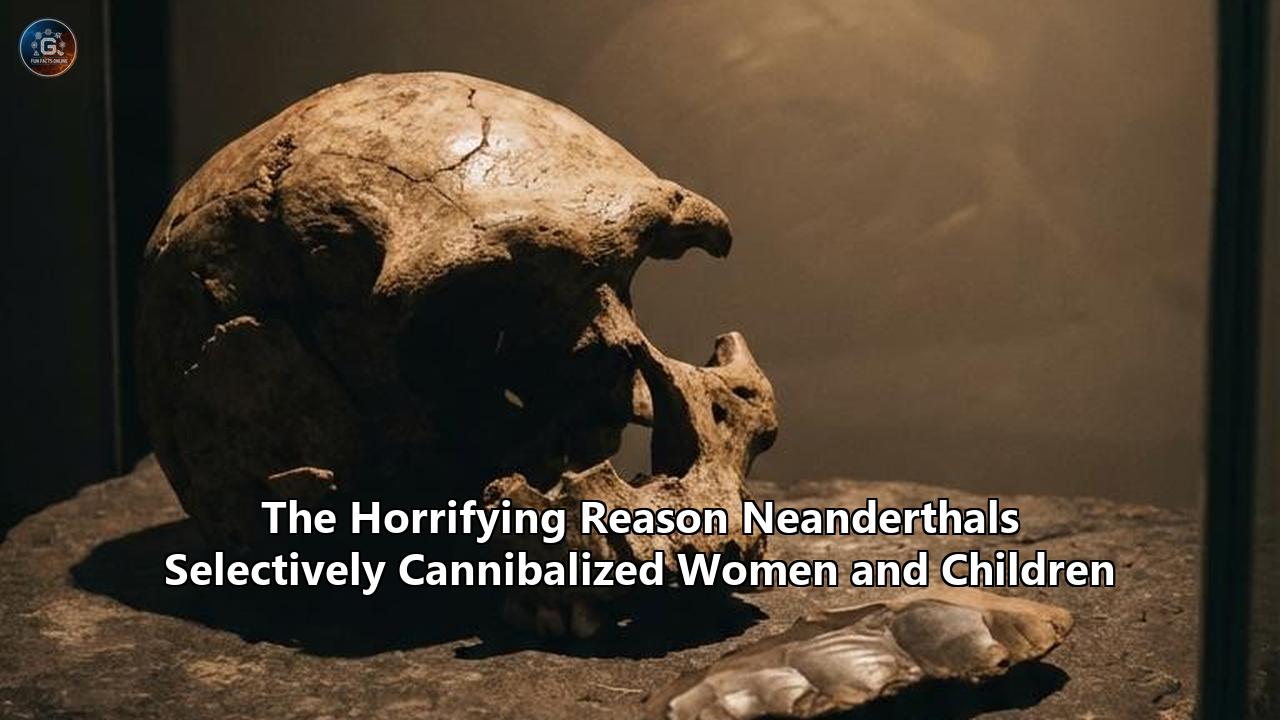
A highly fragmented collection of bones inside the Troisième caverne of Goyet, a dark and winding limestone cave system in modern-day Belgium, has just rewritten the final, violent chapters of Neanderthal history. Published in late 2025 in the journal Scientific Reports, an exhaustive forensic and genomic analysis of 101 skeletal fragments has revealed a horrific reality: between 41,000 and 45,000 years ago, a local group of Neanderthals systematically hunted, butchered, and consumed the women and children of a rival Neanderthal group.
Biological anthropologist Quentin Cosnefroy from the University of Bordeaux, alongside an international team of geneticists and archaeologists, utilized advanced nuclear DNA sequencing and isotopic profiling to establish the biological identities of the victims. The remains belonged to exactly six individuals: four adult or adolescent females, and two male children. The adult women were genetically unrelated to one another, and crucially, they were not local to the Goyet region.
"We cannot determine exactly why these individuals were targeted, but the composition of the assemblage — four adult females and two immature individuals — is too specific to be accidental," Cosnefroy noted following the study’s release.
The skeletal remains show no signs of ceremonial burial or post-mortem ritual defleshing. Instead, they bear the violent, utilitarian signatures of a slaughterhouse. Stone tool cut marks track precisely across muscle attachment sites, indicating rapid and efficient skinning and dismemberment. The long bones of the lower limbs—the femurs and tibias—were deliberately shattered using heavy stone percussors to extract the calorie-dense marrow inside. Some of the fragmented human bones were even recycled immediately, used as "retouchers" to sharpen the very flint blades that had just stripped their flesh.
This discovery shatters the long-standing assumption that Neanderthals only resorted to consuming their own kin during times of catastrophic starvation. Instead, this new Neanderthal cannibalism evidence points to a dark, strategic practice known as exocannibalism—the targeted killing and eating of individuals from outside a local social group. The victims were treated indistinguishably from the local deer and wild horses dragged into the cave, hunted for their meat, their marrow, and perhaps, for the territorial dominance their deaths secured.
To understand how paleoanthropologists arrived at this chilling conclusion, one must trace a century-long timeline of scientific denial, slow technological escalation, and the eventual unearthing of a prehistoric pressure cooker.
1868 to the 1990s: The Era of Denial and Misinterpreted BonesThe physical evidence of Neanderthal violence has sat in museum drawers for more than a century, hidden by both crude 19th-century excavation methods and a scientific community highly reluctant to view early hominins as cannibals.
In 1868, Belgian geologist Edouard Dupont first excavated the Goyet cave system. Dupont was a pioneer of his time, but his methods were blunt. He unearthed tons of sediment, pulling thousands of animal bones and stone tools from the earth, entirely missing the highly fragmented human remains mixed within the debris. The shattered pieces of Neanderthal women and children were boxed up, cataloged as generic animal fragments, and stored deep within the archives of the Royal Belgian Institute of Natural Sciences.
At the same time, across Europe, early paleoanthropologists were finding other strange anomalies. In 1899, Croatian paleontologist Dragutin Gorjanović-Kramberger excavated the Krapina cave site, discovering hundreds of fragmented, burned, and cut-marked Neanderthal bones. Kramberger suggested cannibalism, but his peers quickly shouted him down. The prevailing sentiment of the late 19th and early 20th centuries demanded a clear, linear progression of human nobility. Neanderthals were either depicted as dim-witted, ape-like brutes incapable of complex social behavior, or they were romanticized as noble, primitive ancestors. Cannibalism fit neither narrative. The cut marks at Krapina were largely dismissed as the result of cave bear trampling, secondary burial rites, or post-depositional shifting of sharp rocks.
For decades, the standard interpretation held firm: if a Neanderthal bone was broken, the earth broke it. If a Neanderthal bone was cut, it was a ceremonial mortuary practice. Researchers simply could not stomach the idea that hominins processed each other for protein.
1999: The Undeniable Marks at Moula-GuercyThe timeline of denial abruptly ended in the final year of the 20th century. During excavations at the Moula-Guercy cave system in the Rhône valley of southeastern France, a team led by Alban Defleur unearthed a deposit dating back roughly 100,000 years.
Unlike the chaotic early digs of the 19th century, Moula-Guercy was excavated with surgical precision. The researchers found 78 Neanderthal bone fragments perfectly intermingled with the remains of red deer. When analyzed under scanning electron microscopes, the truth became impossible to ignore.
The cut marks on the Neanderthal remains were identical in depth, angle, and location to the cut marks on the deer. The hominin skulls were smashed open precisely at the braincase. The jawbones were split to access the marrow within the mandible. The fleshy muscles of the thighs and calves had been expertly sliced away. Defleur’s analysis proved that the Neanderthals at Moula-Guercy knew exactly how to dismantle a hominin body for maximum caloric yield.
This specific, undeniable Neanderthal cannibalism evidence forced a massive shift in the scientific consensus. Cannibalism was real. However, the interpretation quickly pivoted to a more palatable theory: survival cannibalism. Scientists theorized that during severe climatic downturns, isolated Neanderthal groups were pushed to the absolute brink of starvation. In a frozen, unforgiving landscape, they were forced to consume their own dead kin simply to survive the winter. It was viewed as a tragic ecological necessity rather than an act of malice.
2006 to 2010: The Starving Family of El SidrónThe survival cannibalism theory was dramatically reinforced a few years later deep within the El Sidrón cave system in the Asturias region of northern Spain. Between 2006 and 2010, researchers unearthed the remains of 12 Neanderthals—three adult males, three adult females, three adolescents, and three infants.
Genomic analysis eventually revealed that the adults were closely related, comprising a single extended family group. Every single individual in the El Sidrón group had been butchered. Their bones displayed deep, V-shaped transverse cuts where muscles had been severed. Their skulls were crushed.
Crucially, an examination of the victims' teeth provided the apparent motive. The dental enamel of the El Sidrón Neanderthals showed severe hypoplasia—deep horizontal bands that form when a body experiences extreme malnutrition and physiological stress during childhood development. They were starving.
The scientific community coalesced around this narrative. From Moula-Guercy to El Sidrón, early Neanderthal cannibalism evidence consistently pointed inward. Endocannibalism—the consumption of one's own group members—was accepted as a grim reality of the Middle Paleolithic environment. They ate their dead to stay alive. No one suspected that Neanderthals were actively hunting rival groups for food.
2016: The Goyet Bones ResurfaceThe narrative began to fracture in 2016. Hélène Rougier, a paleoanthropologist from California State University, Northridge, alongside Patrick Semal, curator of the anthropological collections at the Royal Belgian Institute of Natural Sciences, decided to reopen Edouard Dupont's dusty 19th-century collections.
Combing through thousands of mislabeled animal bone fragments from the Goyet cave, Rougier and Semal meticulously identified 101 pieces that were actually hominin. It was a monumental task of comparative anatomy. Upon closer inspection, they realized they had stumbled upon the largest assemblage of cannibalized Neanderthal remains in Northern Europe.
A full third of the Goyet hominin bones displayed heavy human modification. There were deep notches from stone blades, percussive impact pits from heavy hammerstones, and longitudinal fractures indicative of fresh-bone breakage. The bones had been broken while the marrow was still greasy and yellow.
Even more startling was the utilitarian disrespect shown to the remains after consumption. Four of the human bone fragments had clearly been used as soft hammers to retouch the edges of stone tools, a task normally reserved for horse jaws or deer ribs.
"The 101 bone remains from at least six individuals were only recently recognized," Semal noted. Yet, in 2016, the limits of technology meant Rougier and Semal could only identify what had happened, not who was involved. The Goyet bones were heavily fragmented, lacking complete skulls or intact pelvises that could easily indicate sex, age, or origin. The assumption lingered that, much like El Sidrón, this was another tragic case of a starving family consuming its own.
2020 to 2024: The Isotopic and Genomic EscalationThe critical turning point that led to the current horrifying revelation did not happen in the dirt of a cave, but in the sterile environment of the genomics lab. The period between 2020 and 2024 saw an explosion in the capabilities of paleogenetics and isotopic profiling.
To solve the cold case of the Goyet cave, researchers realized they needed to reconstruct the biological profiles of victims who existed only as splinters of shattered bone. The team initiated a massive, multi-tiered forensic extraction process.
First, they utilized high-throughput nuclear DNA sequencing. Because DNA degrades over tens of thousands of years into tiny, damaged fragments, researchers had to piece together millions of base pairs to read the genetic code. The nuclear DNA successfully identified the biological sex of the victims: four females and two males.
Second, they sequenced the mitochondrial DNA (mtDNA), which is passed down strictly along the maternal line. The mtDNA revealed a crucial piece of the puzzle: the four adult females possessed distinctly different maternal lineages. They were not sisters, nor were they a mother and her daughters. This fractured the "starving family" hypothesis completely.
Third, the team turned to biogeochemistry, specifically sulfur and strontium isotope analysis. Isotopes are variants of chemical elements that possess different atomic weights. As animals and hominins drink water and eat plants or herbivores, the specific isotopic signature of the local bedrock and soil is incorporated into their growing bones and tooth enamel. By vaporizing tiny samples of the Goyet bones and running them through a mass spectrometer, the researchers read the chemical map of the victims' lives.
The results were undeniable. The isotopic ratios of the six victims did not match the strontium and sulfur signatures of the Namur Province surrounding the Goyet cave. They shared a similar diet to the local group, but they had lived, hunted, and grown up in a completely different geographic region.
November 2025: The 'Outsider' Hypothesis and Targeted PredationArmed with this suite of biological data, Quentin Cosnefroy and his team published the devastating synthesis of the Goyet massacre in late 2025.
The researchers combined the genetic and isotopic data with a rigorous 3D morphological analysis of the internal structure of the surviving long bones. By utilizing micro-CT scans to measure the cortical bone thickness, they discovered that the female victims were highly anomalous compared to typical Neanderthal morphology. They were exceptionally gracile. Standing roughly 1.50 meters (4 feet 11 inches) tall, their femurs and tibias were thin-walled and lacked the heavy, robust structural markers associated with the intense muscularity and high mobility typical of Neanderthals.
Isabelle Crevecoeur, research director at the French National Centre for Scientific Research (CNRS) and co-author of the study, highlighted the stark reality of the findings. "The composition - women and children, without adult men - cannot be coincidental: it reflects a deliberate selection of victims by the cannibals," Crevecoeur explained.
This was not a random encounter between two equally matched hunting parties. The complete absence of adult males among the victims, combined with the presence of unrelated, physically slight women and children from a foreign territory, suggests a highly asymmetric conflict.
The researchers concluded that the local Goyet Neanderthals engaged in active exocannibalism. They either ambushed a vulnerable foraging party of outsiders, or they raided a neighboring camp, specifically abducting or killing the women and children while avoiding the adult males. The bodies of the outsiders were then transported back to the Troisième caverne of Goyet.
Once inside the cave, the victims were processed with terrifying efficiency. The specific focus on extracting marrow from the lower limbs indicates they were treated as a highly caloric nutritional resource. "The processing of human remains followed the same patterns as prey animals," the study authors wrote, dismissing any lingering notions of burial rituals or symbolic behavior.
The Final Millennia: A Prehistoric Pressure CookerTo comprehend why a group of Neanderthals would deliberately hunt and eat the women and children of their neighbors, one must understand the rapidly deteriorating world they inhabited between 41,000 and 45,000 years ago.
This era marks the late Middle Paleolithic to Upper Paleolithic transition, representing the final millennia of the Neanderthals before their complete extinction. The climate of Northern Europe was violently unstable, characterized by sudden, extreme drops in temperature that altered the migratory patterns of the megafauna they relied upon for survival.
Simultaneously, Neanderthal populations were experiencing severe biological decline. Genetic isolation, vast geographic distances between groups, and high rates of inbreeding were weakening their demographic resilience.
Adding to this ecological pressure cooker was a new, unprecedented threat: the arrival of Homo sapiens. While there is no direct evidence that early modern humans were involved in the slaughter at Goyet, their encroachment into surrounding territories was shrinking the habitable world. Neanderthals were being squeezed into smaller, overlapping ranges.
Under these conditions of extreme territorial tension, neighboring Neanderthal groups likely ceased viewing one another as potential mates or distant kin. Instead, outsiders became competitors for vanishing resources.
Primatologists note that this behavior closely mirrors the lethal raiding tactics observed in modern chimpanzees. When chimpanzee communities face territorial restriction, patrols of adult males will systematically hunt down and kill members of neighboring groups, occasionally engaging in cannibalism. The goal is twofold: to secure immediate caloric gain and to inflict devastating demographic damage on a rival population by eliminating their reproductive females and future generation.
By bringing the slaughtered outsider women and children back to the Goyet cave, the local Neanderthals were not simply securing a meal. They were asserting violent dominance over their shrinking territory, using exocannibalism as a brutal tool of intergroup competition. "The Goyet site provides food for thought," Patrick Semal remarked regarding the clear ethno-archaeological parallels between this ancient violence and modern primate territoriality.
The Unresolved Horizon: What Lies Beneath the Next Layer?The revelations from the Goyet cave force a profound reassessment of the Neanderthal extinction narrative. If lethal intergroup tension and targeted exocannibalism were common responses to the pressures of the late Pleistocene, the Neanderthals may have accelerated their own demise long before the climate or Homo sapiens dealt the final blow.
The immediate scientific horizon is now focused on applying these same rigorous analytical techniques to other long-excavated, highly fragmented bone collections across Europe.
Researchers are currently looking eastward to the Vindija Cave in Croatia, another site bearing heavily processed Neanderthal remains from the same terminal time period. By utilizing the exact sulfur and strontium isotopic profiling that cracked the Goyet case, scientists hope to determine if the Vindija remains represent isolated survival cannibalism, or if they reveal another hidden massacre of outsiders.
Simultaneously, paleogeneticists are pushing the boundaries of DNA recovery. The next major milestone will involve attempting to sequence the "predator DNA" left behind at the crime scenes. When Neanderthals cracked human femurs with their teeth, or when they scraped the bones, they likely left microscopic traces of their own salivary or epidermal DNA. If researchers can successfully extract the DNA of the cannibals from the bite marks on the victim's bones, they could map the exact genetic distance between the aggressors and their prey.
There is also the looming, unresolved question of inter-species conflict. As Homo sapiens expanded their footprint across Europe during this exact 41,000 to 45,000-year window, did they witness these brutal Neanderthal territorial wars? Or worse, does undiscovered Neanderthal cannibalism evidence await us that includes the remains of early modern humans caught in the crossfire?
The Troisième caverne of Goyet has proven that our prehistoric cousins were capable of highly organized, selective violence. The image of the noble, passive Neanderthal quietly fading into the snows of the Ice Age is gone. In its place stands a much darker, far more human reality: a species fighting a desperate, brutal war for survival, where the most vulnerable neighbors were viewed as nothing more than prey.
Reference:
- https://gizmodo.com/new-evidence-suggests-neanderthals-cannibalized-outsider-women-and-children-2000691018
- https://www.livescience.com/archaeology/human-evolution/neanderthals-cannibalized-outsider-women-and-children-45-000-years-ago-at-cave-in-belgium
- https://www.sciencedaily.com/releases/2026/04/260411022044.htm
- https://scitechdaily.com/41000-year-old-bones-reveal-chilling-pattern-of-neanderthal-cannibalism/
- https://www.naturalsciences.be/en/science/news/cannibals-targeted-neanderthal-women-and-children
- https://www.futura-sciences.com/en/terrifying-but-real-neanderthal-cannibalism-targeted-women-and-children-and-the-evidence-is-piling-up_21833/
- https://www.jpost.com/archaeology/article-879891
- https://archaeologymag.com/2025/11/neanderthals-were-consumed-45000-years-ago/
- https://www.psychologie-aktuell.com/news/aktuelle-news-psychologie/news-lesen/neanderthals-cannibalized-outsider-women-and-children-45000-years-ago-at-cave-in-belgium.html