For over a century, origin-of-life science has been paralyzed by a fundamental catalytic bottleneck. To transition from a cold, sterile mixture of simple atmospheric gases like carbon dioxide ($CO_2$) and nitrogen ($N_2$) into complex polymers like RNA and proteins, the early Earth required catalysts. In modern biology, that role is filled by protein enzymes—hyper-efficient macromolecular catalysts that accelerate biochemical reactions by up to 20 orders of magnitude.
Yet, protein enzymes require genetic blueprints to be built, and genetic blueprints require protein enzymes to be replicated. This circular paradox has divided researchers into warring camps: "RNA-first" advocates, "metabolism-first" proponents, and "lipid-world" theorists, each claiming their favored molecule arose first to break the deadlock.
However, a unified framework published in the peer-reviewed journal Research by Prof. Yongdong Jin of the School of Biomedical Engineering at Shenzhen University is forcing scientists to rewrite this entire prebiotic narrative. Jin’s "nanozymes hypothesis" bypasses the circularity of early biochemistry by looking down at the ancient soil.
The core of the discovery rests on a staggering realization of physical scale: before the first single-celled organism ever divided, Earth was already saturated with a self-renewing library of microscopic mineral catalysts.
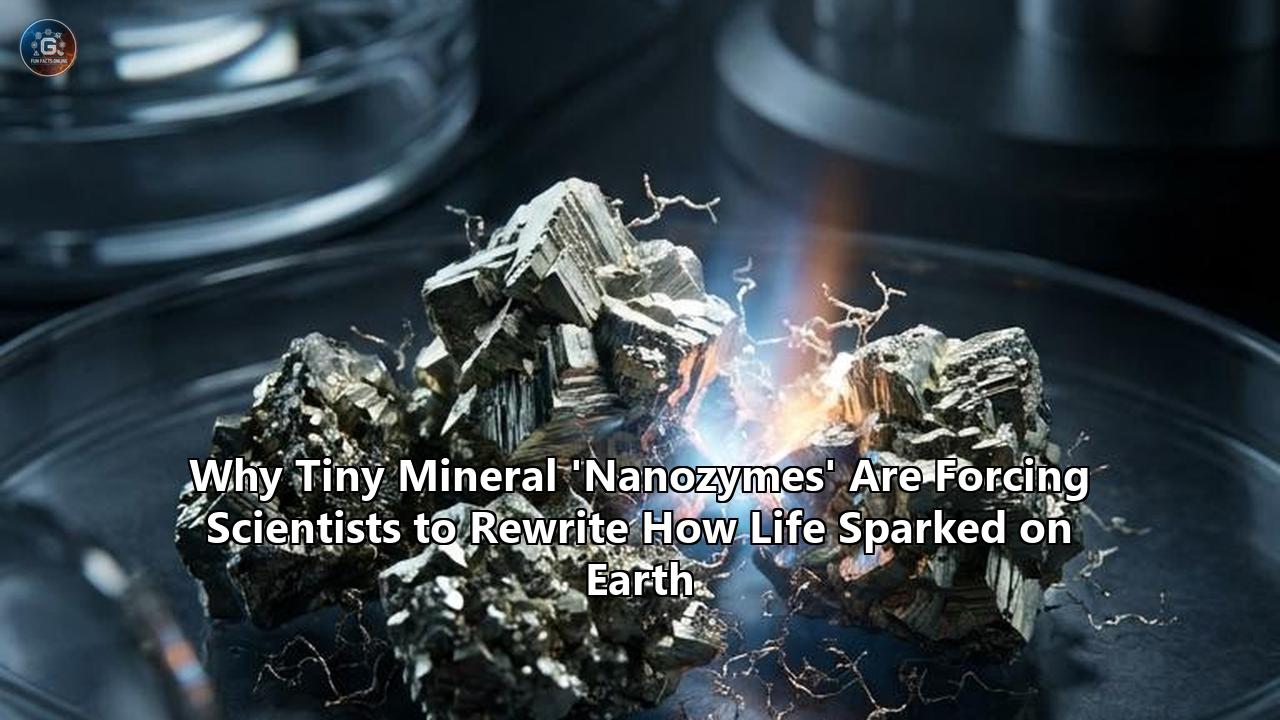
By analyzing the quantitative behavior of these particles, known as mineral nanozymes (MN-zymes), researchers are demonstrating that prebiotic chemistry did not require fragile, highly evolved biological molecules to begin. Instead, tiny, naturally occurring mineral particles—measuring between 1 and 100 nanometers—exhibited identical catalytic behaviors to modern, highly complex protein enzymes.
This revelation is backed by quantitative geological modeling. Every single year, modern Earth’s biogeochemical systems circulate more than 2,000 terragrams (Tg) of mineral nanoparticles through the atmosphere, oceans, and soils (where 1 Tg is equal to $10^{12}$ grams, or 1 million metric tons). On the highly volatile Hadean and Archean Earth, 4.0 billion years ago, this nanoparticle flux was up to 10 times higher due to relentless volcanism, meteoritic bombardment, and extreme geothermal activity.
By operating as an planetary-scale, "all-in-one" chemical laboratory, these mineral nanozymes successfully bridged the gap between inert gases and the first living systems.
What Are Nanozymes? The Geological Bridge to Biology
To understand how a basic mineral could perform the chemical feats of a highly evolved protein, it is first necessary to define what are nanozymes.
+---------------------------------------------------------------------------------+
|                                 WHAT ARE NANOZYMES?                             |
+---------------------------------------------------------------------------------+
| • DEFINITION: Nanomaterials (1 to 100 nm) possessing intrinsic, biological-like  |
|   catalytic activities without relying on organic protein chains.               |
|                                                                                 |
| • KEY CHARACTERISTICS:                                                          |
|   1. Massive Surface-Area-to-Volume Ratio (up to 1,000,000x bulk minerals)      |
|   2. High Density of Exposed Coordination-Unsaturated Active Sites              |
|   3. Robustness to Extreme Environments (pH 1–14, Temperatures >100°C)          |
|   4. Multi-Enzymatic Mimicry (Peroxidase, Catalase, Superoxide Dismutase)       |
+---------------------------------------------------------------------------------+
Historically, scientists viewed nanomaterials as synthetic, artificial creations developed in modern cleanrooms for advanced drug delivery or biosensing. However, when exploring what are nanozymes in a natural, historical context, geochemists have realized that these particles are actually primitive, ubiquitous components of Earth's crust.
Unlike bulk minerals, which are chemically sluggish and possess low surface energy, mineral nanozymes are defined by their incredibly small physical dimensions. When a mineral crystal is ground down or weathered to the nanometer scale (less than 100 nm), its physical and chemical properties undergo a dramatic phase shift.
At this scale, quantum confinement effects emerge, the electronic bandgaps shift, and a massive percentage of the mineral's constituent atoms are forced to the outer surface, left with incomplete chemical bonds.
These highly reactive, coordinate-unsaturated surface atoms act as active catalytic sites. They bind substrate molecules, lower the activation energy of chemical reactions, and dramatically accelerate reaction kinetics.
When analyzing what are nanozymes from a kinetic perspective, the numbers are remarkable: while a bulk piece of iron sulfide (pyrite) might take years to catalyze a simple reduction reaction, an equivalent mass of iron sulfide nanozymes can accelerate the same reaction by $10^3$ to $10^6$ times under identical temperature and pH conditions.
                     BIOLOGICAL ENZYME (e.g., Horseradish Peroxidase)
                     Size: ~5 nm  |  Active Site: Heme Center (Single)
                     Pros: Extremely high specificity, ultra-fast turnover.
                     Cons: Denatures at >50°C, unstable in acidic/alkaline waters.
                                    VS.
                     MINERAL NANOZYME (e.g., Magnetite Fe3O4 NP)
                     Size: ~10 nm |  Active Site: Surface Fe2+/Fe3+ ions (Thousands)
                     Pros: Indestructible at 100°C+, stable from pH 3 to 9.
                     Cons: Moderately lower specificity per active site.
Furthermore, mineral nanozymes display multi-enzymatic activity. A single nanoparticle of magnetite ($Fe_3O_4$) or ferrihydrite can simultaneously mimic four major classes of biological enzymes:
- Peroxidase (POD): Cleaves peroxides to oxidize organic substrates.
- Catalase (CAT): Breaks down harmful hydrogen peroxide into oxygen and water.
- Superoxide Dismutase (SOD): Scavenges highly destructive superoxide radicals.
- Oxidase (OXD): Utilizes molecular oxygen to drive oxidation reactions.
This multi-functional capability allowed a handful of primitive minerals to coordinate a wide web of chemical pathways simultaneously, providing the structural and metabolic foundation that eventually allowed life to construct its first organic proteins.
The Physics of Scale: How Geometry Multiplies Catalysis
The fundamental driver of the nanozymes hypothesis is geometry. To understand how the physical landscape of the early Earth shifted from inert geology to highly active biochemistry, one must calculate the exponential scaling of surface-area-to-volume ratios as particle size decreases.
Consider a single cubic centimeter of solid silica ($SiO_2$), weighing approximately 2.65 grams. The physical dimensions and surface characteristics of this bulk mineral are incredibly limited:
- Edge length: $1\text{ cm}$
- Total Volume: $1\text{ cm}^3$
- Total Surface Area: $6\text{ cm}^2$ (roughly equivalent to the surface of a postage stamp)
- Percentage of atoms exposed on the surface: $<0.0001\%$
If that exact same 2.65-gram cube of silica is crushed down into nanoparticles with a diameter of 10 nanometers, the geometric parameters undergo an extraordinary transformation:
- Total number of particles generated: $10^{18}$ nanoparticles
- Total Surface Area: $300\text{ m}^2$ (larger than a standard singles tennis court)
- Surface-Area-to-Volume Ratio increase: $1,000,000\text{ times}$
- Percentage of atoms exposed on the surface: $30\%$ to $50\%$
   [ Bulk Mineral Cube ]                  [ Nanoparticle Dispersion ]
    Surface Area: 6 cm²                    Surface Area: 300 m² (1,000,000x)
    Exposed Atoms: <0.0001%                Exposed Atoms: 30% to 50%
    -----------------------                -------------------------
    Chemically Inert                       Hyper-Reactive / Catalytic
On the Hadean Earth, this geometric amplification changed everything. Instead of relying on a dilute "prebiotic soup" where reacting molecules rarely collided, the presence of millions of square meters of highly reactive mineral surfaces concentrated these reactants.
Because approximately half of all the atoms in a 10 nm nanoparticle reside directly on its outer boundary, the local thermodynamic landscape is highly unstable. To minimize their surface free energy, these exposed atoms actively bind surrounding molecules, functioning as physical anchors that hold prebiotic reactants in perfect alignment for chemical synthesis to occur.
Inorganic Photosynthesis: Powering Prebiotic Synthesis
Before life existed to harvest solar energy via chlorophyll, mineral nanozymes performed a crude, highly effective precursor process termed inorganic photosynthesis.
The early Earth was bombarded by extreme levels of solar radiation. Because the planet lacked a protective ozone ($O_3$) layer, the ultraviolet (UV) flux striking the surface was up to 100 times more intense than it is today, particularly in the highly damaging UV-C (200–280 nm) and UV-B (280–320 nm) wavelengths.
Rather than destroying the first delicate organic molecules, transition metal sulfide nanozymes—such as zinc sulfide ($ZnS$), iron sulfide ($FeS$), and copper sulfide ($CuS$)—absorbed this high-energy light and converted it into chemical energy.
                     INORGANIC PHOTOSYNTHESIS MECHANISM

  UV Photon (hν) ----> [ ZnS/FeS Nanozyme ] ----> Electron-Hole (e⁻ / h⁺) Generation
                             |
         +-------------------+-------------------+
         |                                       |
  Conduction Band (e⁻)                    Valence Band (h⁺)
  Reduces CO₂ -> Formic Acid,             Oxidizes H₂O -> O₂
  Reduces N₂  -> Ammonia (NH₃)            Oxidizes H₂S -> S⁰
These sulfide minerals are natural semiconductors. When a nanoparticle of zinc sulfide ($ZnS$) absorbs a UV photon, an electron is excited from its valence band to its conduction band, leaving behind a positively charged "hole". Because of the particle's minute scale (typically <15 nm), these photogenerated electrons and holes can migrate to the surface in less than 1 picosecond ($10^{-12}$ seconds), minimizing the probability of charge recombination.
Once at the surface, these highly energetic charge carriers drive intense redox chemistry:
- Reduction Reactions: The conduction-band electrons, possessing a highly negative potential (up to $-1.8\text{ V}$ vs. NHE for $ZnS$), reduce inorganic $CO_2$ and $HCO_3^-$ directly into simple organic molecules like formic acid, formaldehyde, and glyoxylate. They also reduce atmospheric nitrogen ($N_2$) into highly reactive ammonia ($NH_3$).
- Oxidation Reactions: The valence-band holes oxidize water ($H_2O$) or hydrogen sulfide ($H_2S$), supplying protons ($H^+$) to fuel the carbon-reduction cycle.
This continuous light-driven redox loop turned geothermal hot springs and shallow coastal pools into self-sustaining biochemical factories. According to kinetic models, a single volcanic pool enriched with ZnS and FeS nanozymes could produce up to 10 grams of simple organic precursors per square meter per year purely through inorganic photosynthesis—supplying the raw building blocks of life without requiring a single living cell.
The Five Structural Roles of Mineral Nanozymes
In his unified hypothesis, Jin outlines five simultaneous, overlapping physical and chemical roles that natural MN-zymes played during the dawn of biochemistry:
+-----------------------------------------------------------------------------------+
|                        THE FIVE ROLES OF PREBIOTIC MN-ZYMES                       |
+-----------------------------------------------------------------------------------+
| 1. CATALYSIS:                                                                     |
|    Accelerates carbon fixation, peptide bond formation, and lipid synthesis       |
|    by up to 6 orders of magnitude compared to bulk mineral equivalents.           |
|                                                                                   |
| 2. SURFACE BINDING & CONFINEMENT:                                                 |
|    Acts as a molecular scaffold, concentrating dilute organic molecules           |
|    and aligning them to promote polymer formation.                                |
|                                                                                   |
| 3. ANTI-UV IRRADIATION:                                                           |
|    Absorbs and scatters destructive UV-C/UV-B light, acting as an                 |
|    inorganic sunscreen for fragile proto-nucleic acids.                           |
|                                                                                   |
| 4. PHOTO-SELECTION:                                                               |
|    Selectively drives specific chiral and structural pathways while               |
|    degrading unstable or non-functional molecular intermediates.                   |
|                                                                                   |
| 5. ENERGY FLOW MANAGEMENT:                                                        |
|    Harvests and channels environmental energy (light, heat, and electricity)      |
|    directly into stable chemical bonds.                                           |
+-----------------------------------------------------------------------------------+
1. Catalysis
MN-zymes accelerated prebiotic chemical reactions to rates that allowed biomolecules to accumulate faster than they could be degraded by thermal or chemical breakdown.
For instance, transition-metal nanozymes like covellite ($CuS$) catalyzed the condensation of amino acids into complex peptides in volcanic sulfur dioxide ($SO_2$) environments at rates $10^5$ times faster than non-catalyzed controls, providing a steady supply of structural proteins to the prebiotic environment.
2. Surface Binding and Confinement
In a vast, dilute ocean, the probability of two organic molecules colliding and reacting is effectively zero. Nanozymes solved this "concentration problem" through surface adsorption.
Molecules adsorbed onto the highly curved surfaces of 5-nanometer metallic or mineral particles are trapped in a two-dimensional plane. They can diffuse across the nanozyme surface, collide, and interact with each other in a confined micro-environment. This confinement effectively increases the local concentration of reactants by up to 8 orders of magnitude, transforming slow, second-order reactions into rapid, pseudo-first-order reactions.
3. Anti-UV Irradiation
While UV light was required to power inorganic photosynthesis, it was also highly destructive to newly synthesized nucleic acids like RNA.
Fortunately, mineral nanoparticles of titanium dioxide ($TiO_2$), zinc oxide ($ZnO$), and iron oxides ($Fe_2O_3$, $Fe_3O_4$) are highly efficient UV absorbers and scatterers. By forming dense, colloidal suspensions in prebiotic waters, these nanozymes acted as a physical "nanoshield".
Calculations show that a thin, 1-millimeter layer of iron oxide nanoparticle colloid could block up to $99.9\%$ of destructive UV-C radiation, protecting fragile proto-biomolecules suspended underneath while still allowing longer, constructive wavelengths of light to pass through.
4. Photo-Selection
Not all chemical structures are equally stable under solar radiation. When exposed to light, mineral nanozymes selectively catalyzed the synthesis of thermodynamically stable and biologically useful molecular isomers, while actively photodegrading unstable or chaotic side-products.
This continuous, light-driven selection process functioned as a primitive form of non-biological natural selection. It purged chemical noise from the prebiotic environment, leaving behind a highly refined library of sugars, amino acids, and nucleotides.
5. Energy Flow Management
Living systems must maintain a continuous state of thermodynamic disequilibrium to survive. Mineral nanozymes achieved this by capturing and converting environmental energy gradients—such as geothermal heat differentials ($\Delta T = 50^\circ\text{C}$ to $120^\circ\text{C}$ near vents) and intense atmospheric electric fields ($E \approx 10^9\text{ V/m}$ generated in charged water microdroplets)—directly into chemical potential energy.
By acting as planetary transducers, they converted raw physical energy into highly ordered, information-carrying chemical bonds.
The "Au World": How Gold Nanoparticles Sparked the Organic Transition
One of the most provocative aspects of Jin’s hypothesis is the concept of the "Au world".
While gold ($Au$) is widely considered chemically inert in its bulk form, gold nanoparticles (AuNPs) measuring between 1 and 5 nanometers are among the most powerful catalysts known to modern science. Under prebiotic conditions, gold was geologically concentrated in active hydrothermal systems and volcanic hot springs.
                     THE EVOLUTIONARY STEP TO THE "Au WORLD"

 [ Atmospheric Gases ]
          │ (CO₂, N₂, H₂S)
          ▼
 [ Transition Metal Sulfide Nanozymes ] (FeS, ZnS, CuS)
          │ Catalyze: "Inorganic Photosynthesis"
          ▼
 [ Simple Organic Ligands ] (Thiols, Amines, Amino Acids)
          │ Chemisorption (Bond Energy: ~170 kJ/mol)
          ▼
 [ Monolayer-Protected Gold Nanoparticles (AuNPs) ] (The "Au World")
          │ Form highly selective, pocket-like catalytic sites
          ▼
 [ Primitive Macromolecules & Lipids ] (RNA, DNA, Proteins)
In their raw, naked state, gold nanoparticles in water are highly unstable, rapidly aggregating into larger, catalytically inactive metal chunks. However, the nanozymes hypothesis explains how early chemical evolution bypassed this limitation.
Once transition metal sulfide nanozymes (like FeS and ZnS) produced basic sulfur- and nitrogen-bearing organic molecules—such as thiols ($R-SH$) and amines ($R-NH_2$)—these molecules immediately bound to the surfaces of newly formed gold nanoparticles. The gold-sulfur bond is exceptionally strong, possessing a covalent bond energy of approximately $170\text{ kJ/mol}$.
This self-assembly process created monolayer-protected gold nanoparticles (AuNPs).
These hybrid, organic-inorganic particles were incredibly stable, resisting thermal aggregation even at temperatures exceeding $100^\circ\text{C}$.
More importantly, the dense packing of organic thiol and amine ligands on the gold surface created highly structured, three-dimensional "pockets". These pockets behaved identically to the active active-site clefts of modern protein enzymes, capable of binding specific substrate molecules with high stereoselectivity and driving complex organic synthesis.
By transitioning from purely inorganic crystals to organic-hybrid nanozymes, the prebiotic Earth developed its first highly selective, proto-enzymatic machinery.
Resolving Prebiotic Paradoxes with Hard Numbers
By introducing nanozymes as the central actors of early chemical evolution, scientists can finally resolve three of the most frustrating paradoxes in origin-of-life research.
1. The Water Paradox & Wet-Dry Cycling
The synthesis of critical biopolymers like proteins (from amino acids) and RNA (from nucleotides) requires a condensation reaction, which releases a molecule of water ($H_2O$).
In a bulk ocean environment, thermodynamics strongly favors the reverse reaction: hydrolysis, which uses water to break polymers apart. This represents the "water paradox"—life requires water to exist, yet water actively destroys the very polymers needed to build life.
                     HYDROLYSIS VS. CONDENSATION RATES

 Bulk Ocean Water:
 Monomers <---------------------------- (Hydrolysis Dominates) ---------------------------- Polymers
 Local Water Activity (aw) ≈ 1.0

 On Nanozyme Surface (Wet-Dry Micro-Confinement):
 Monomers ---------------------------- (Condensation Favored) ----------------------------> Polymers
 Local Water Activity (aw) < 0.1
Mineral nanozymes solved this paradox through wet-dry micro-confinement.
When mineral nanoparticles are exposed to wet-dry cycles on volcanic coastlines or within atmospheric aerosols, water evaporates rapidly. On the highly nanostructured, porous surfaces of these particles, water molecules are bound so tightly to the mineral substrate that the local water activity ($a_w$) drops from its standard bulk value of 1.0 down to less than 0.1.
In this hyper-dehydrated nanospace, the thermodynamic barrier to condensation is completely erased. Amino acids and nucleotides are forced into close contact and rapidly polymerize into chains of over 100 subunits, stabilized by the underlying mineral scaffold.
2. The Homochirality Puzzle
All living organisms are homochiral: proteins are composed exclusively of L-enantiomer (left-handed) amino acids, while DNA and RNA utilize D-enantiomer (right-handed) sugars.
Standard abiotic chemical synthesis always produces a racemic mixture—a perfect 50/50 split of left- and right-handed molecules. How life broke this symmetry has remained an unsolved mystery for decades.
                SPIN-POLARIZED ENANTIOSELECTIVE CATALYSIS

   UV Light (200-300 nm) ----> [ Magnetite (Fe₃O₄) Nanozyme ]
                                            │
                                            ▼
                           Generates Spin-Polarized Electrons
                                            │
                     +----------------------+----------------------+
                     |                                             |
             L-Amino Acids                                 D-Amino Acids
      Preferred Catalytic Synthesis                Photodegraded / Destroyed
      (Leads to >60% Enantiomeric Excess)          (Purged from Prebiotic Pool)
The answer lies in the magnetic properties of ubiquitous iron oxide nanozymes like magnetite ($Fe_3O_4$).
Recent experiments have demonstrated that when magnetite nanoparticles are irradiated with UV light (200–300 nm), the magnetic alignment of the mineral crystal lattice acts as a spin filter. This process generates spin-polarized photoelectrons at the mineral-water interface.
Because chiral molecules possess an intrinsic helical symmetry, they interact differently with spin-polarized electrons—a physical phenomenon known as Chiral Induced Spin Selectivity (CISS).
When prebiotic organic molecules adsorbed onto the surfaces of magnetite nanozymes, the spin-polarized electron transfer selectively stabilized one enantiomer while accelerating the photodegradation of the other. This driven magnetic selection produced an enantiomeric excess ($ee$) of more than 60% in amino acid and sugar precursors.
As these chiral-enriched monomers polymerized, the chiral bias self-amplified, locking early life into its modern, homochiral configuration.
3. The "Which Came First" Conundrum
Traditional prebiotic models are highly reductionist, arguing that either RNA (information), proteins (catalysis), or lipids (compartmentalization) must have appeared first.
The nanozymes hypothesis renders this debate obsolete by proposing a co-evolutionary, near-simultaneous emergence of all three major biological domains.
                 THE PREBIOTIC LIBRARIES CO-EVOLUTIONARY LOOP

                      [ Mineral Nanozyme Libraries ] (MN-zymes)
                                     │
         +---------------------------+---------------------------+
         |                           |                           |
  Catalyzes RNA               Catalyzes Peptides          Catalyzes Lipids
  (Information)                  (Catalysis)             (Compartmentalization)
         |                           |                           |
         +---------------------------+---------------------------+
                                     │
                                     ▼
                      [ Organic-Inorganic Hybrid Protocell ]
Because natural mineral nanoparticles existed as highly diverse "nanolibraries" containing hundreds of different mineral phases (such as silicates, carbonates, sulfides, and oxides) in the same physical space, they catalyzed many chemical pathways in parallel.
While magnetite nanozymes catalyzed the synthesis of nucleotides, zinc sulfides drove the production of lipids, and copper sulfides linked amino acids into peptides.
These diverse molecules accumulated together on the surface of the same mineral deposits. Under these conditions, proteins, nucleic acids, and lipid membranes did not emerge in isolation; they grew, stabilized, and co-evolved as an integrated, hybrid system, directly managed by the catalytic templates of the surrounding mineral geology.
Modern Analogues: The Ongoing Global Nanoparticle Flux
To confirm that mineral nanozymes are capable of driving planetary chemistry, we do not need to rely solely on theoretical models of the ancient Earth. We can observe them operating at massive scales across our modern biosphere.
+-----------------------------------------------------------------------------------+
|                  ANNUAL GLOBAL FLUX OF MINERAL NANOPARTICLES                      |
+-----------------------------------------------------------------------------------+
| Total Atmospheric Dust Flux:       1,500 to 2,000 Tg/year                         |
| Riverine Nanoparticle Discharge:   500 to 800 Tg/year                             |
| Hydrothermal Vent Nano-Plumes:     50 to 100 Tg/year                              |
|                                                                                   |
| TOTAL MODERN FLUX:                 ~2,000 to 3,000 Tg/year                        |
|                                    (Equivalent to 2 to 3 Billion Metric Tons)      |
+-----------------------------------------------------------------------------------+
Every year, between 2,000 and 3,000 terragrams (Tg) of mineral nanoparticles are transported through Earth's critical zones.
In the atmosphere, wind erosion lofts over 1,500 Tg of mineral dust into the troposphere. A significant fraction of this dust consists of iron oxyhydroxides (like ferrihydrite and hematite) with particle sizes well below 100 nm.
These airborne particles function as active environmental nanozymes, absorbing solar UV light to generate hydroxyl radicals ($HO^\bullet$) and hydrogen peroxide ($H_2O_2$) in atmospheric water droplets, thereby regulating the oxidation capacity of our atmosphere.
                          ATMOSPHERIC ENVIRONMENTAL CYCLE

  UV Sunlight ----> [ Ferrihydrite (FeOOH) Nanoparticle ] (Airborne Dust)
                                       │
                                       ▼
                     Photoreduction of Fe(III) to Fe(II)
                                       │
                                       ▼
                     Catalytic Cleavage of Atmospheric H₂O₂
                                       │
                                       ▼
                     Generates Highly Reactive Hydroxyl Radicals (HO•)
                                       │
                                       ▼
                     Cleanses Atmosphere of Volatile Organic Pollutants
Similarly, rivers discharge over 500 Tg of mineral nanoparticles into the oceans annually.
These particles are highly active in global elemental cycles. For example, natural ferrihydrite nanozymes in soils and river sediments act as powerful peroxidase mimics, degrading toxic organic pollutants and modulating the global carbon cycle by binding and stabilizing organic matter.
Without the continuous, non-biological catalytic activity of these planetary-scale nanozymes, Earth’s carbon, nitrogen, and iron cycles would grind to a halt.
The Road Ahead: Testing the Nanozyme Hypothesis
The transition of the nanozymes hypothesis from a compelling theoretical framework into an accepted scientific law requires rigorous, quantitative physical testing.
Over the next decade, astrobiologists and geochemists have outlined a series of experimental and analytical milestones designed to test the limits of prebiotic mineral catalysis.
+-----------------------------------------------------------------------------------+
|                           EXPERIMENTAL MILESTONES (2026–2035)                     |
+-----------------------------------------------------------------------------------+
| • MILESTONE 1: SPONTANEOUS NANOZYME FORMATION KINETICS                           |
|   Measure the exact rate of mineral nanoparticle weathering in charged water      |
|   microdroplets under varying UV intensities.                                     |
|                                                                                   |
| • MILESTONE 2: CHIRAL AMPLIFICATION BENCHMARKS                                    |
|   Achieve >95% enantiomeric excess (ee) of D-sugars and L-amino acids             |
|   using magnetic magnetite (Fe3O4) nanozymes under spin-polarized UV light.       |
|                                                                                   |
| • MILESTONE 3: PROTOCELL RECONSTRUCTION                                           |
|   Successfully synthesize and encapsulate functional RNA polymers within lipid    |
|   vesicles using only mineral nanozymes as catalysts.                             |
|                                                                                   |
| • MILESTONE 4: ASTROBIOLOGICAL SIGNATURE IDENTIFICATION                           |
|   Search for nanometer-scale gold, zinc, and iron sulfide mineral deposits        |
|   in sample return missions from Mars and the icy plumes of Enceladus.            |
+-----------------------------------------------------------------------------------+
Spontaneous Nanozyme Formation Kinetics
Scientists must determine exactly how easily these mineral nanozymes formed on the early Earth.
Recent laboratory work has revealed that nanozymes can form spontaneously through the weathering of bulk rocks in highly charged water microdroplets (such as volcanic steam or ocean spray).
The intense electric field at the water-air interface ($10^9\text{ V/m}$) accelerates chemical weathering by up to 6 orders of magnitude, instantly shearing bulk minerals into active nanoparticles.
Researchers are now building high-throughput microfluidic simulators to measure the exact generation rate of these particles under simulated Hadean atmospheric conditions.
Chiral Amplification Benchmarks
While achieving a 60% enantiomeric excess in a lab setting is a major step forward, biology requires 100% homochirality to maintain stable protein folding and genetic replication.
Upcoming physical chemistry experiments will focus on how these initial chiral imbalances self-amplify during subsequent polymer chain growth on mineral templates.
The goal is to demonstrate that a 60% initial enantiomeric excess of L-amino acids can be amplified to greater than 99% through repeated crystallization-dissolution cycles on the surfaces of magnetic magnetite nanoparticles.
Protocell Reconstruction
The ultimate validation of Jin’s hypothesis will be the creation of a "mineral-organic hybrid protocell" in the laboratory.
                              THE HYBRID PROTOCELL TARGET

                       [ Outer Lipid Bilayer Membrane ]
                                     │
         +---------------------------+---------------------------+
         |                                                       |
  [ Fluid Interior ]                                 [ Encapsulated ZnS/FeS ]
  Suspended RNA & Peptides                            Mineral Nanozyme Core
                                                     (Acts as internal engine)
In these experiments, scientists will attempt to encapsulate a mixture of prebiotic gases and active mineral nanozymes inside a simple lipid vesicle.
By exposing this hybrid structure to external UV light and temperature fluctuations, researchers hope to observe the internal nanozymes synthesizing RNA and proteins directly inside the lipid boundary, effectively building a fully functional, self-replicating artificial cell from scratch.
Astrobiological Implications
The nanozymes hypothesis fundamentally changes how we search for life on other planets.
For decades, NASA’s search for extraterrestrial life has focused strictly on locating liquid water ("follow the water"). However, Jin’s framework suggests that water alone is not enough; a habitable planetary environment must also be a dynamic, nanoparticle-active system enriched with transition metal mineral libraries.
This insight is directly shaping the target selection for future planetary exploration:
- Mars Exploration: Scientists are analyzing high-resolution data from the Perseverance Rover, looking for ancient, nanostructured magnetite and sulfide mineral deposits in Jezero Crater. The presence of these mineral nanozymes would indicate that Mars possessed the catalytic machinery required to spark life, even if biological fossils are never found.
- Ocean Worlds: The plumes of Saturn's moon Enceladus and Jupiter's moon Europa contain abundant dissolved iron, silica, and sulfur compounds, continuously ejected from deep-sea hydrothermal vents. If these oceans are actively producing mineral nanozymes, the chemical precursors of life may be synthesizing in their dark depths right now, powered by geothermal heat and nanochemistry.
By viewing the origin of life through the precise lens of nanochemistry, scientists are finally bridging the gap between geology and biology.
Earth's deepest roots are not anchored in a rare, accidental "magic molecule," but in the fundamental physical laws of the nanoscale. We are the descendants of an active, self-renewing, and catalytic planet.
References
- Jin, Yongdong. "On the Origin of Life on Earth: The Nanozymes Hypothesis, and More." Research, 2025. DOI: 10.34133/research.1025.
- "Inorganic minerals are believed to play crucial catalytic roles..." ResearchGate, 2025.
- Chi, Z., & Yu, G.-H. "Mineral nanozymes bridging inorganic and organic substances." Science China Earth Sciences, 2021.
- "Hydrated spin-polarized electron generation that induces enantioselective prebiotic chemistry..." National Institutes of Health, 2025.
- "The nanozymes hypothesis of the origin of life (on Earth) proposed." SciTechDaily / EurekAlert, 2026.
Reference:
- https://www.eurekalert.org/news-releases/1117705
- https://pmc.ncbi.nlm.nih.gov/articles/PMC12686343/
- https://www.sciencedaily.com/releases/2026/06/260610003054.htm
- https://www.sciencedaily.com/releases/2026/06/260610003054.htm
- https://www.reddit.com/r/InterstellarKinetics/comments/1u26jow/theory_a_chinese_scientist_at_shenzhen_university/
- https://scienmag.com/new-hypothesis-proposes-nanozymes-as-key-to-lifes-origin-on-earth/
- https://www.taylortailored.co.uk/science/the-origin-of-life-may-have-started-with-tiny-mineral-machines
- https://www.argo.net/tiny-mineral-nanozymes-could-rewrite-the-story-of-how-life-began-on-earth/
- https://www.researchgate.net/figure/Comparison-between-mineral-nanozymes-and-natural-enzymes_tbl1_351919353
- https://www.eurekalert.org/news-releases/1117705
- https://pmc.ncbi.nlm.nih.gov/articles/PMC12686343/
- https://www.researchgate.net/publication/387430123_Nanozymes_and_Their_Potential_Roles_in_the_Origin_of_Life
- https://astrobiology.com/2021/06/09/new-research-suggests-mineral-nanoparticles-as-ubiquitous-enzyme-mimetics-in-earth-systems/
- https://astrobiology.com/2021/06/09/new-research-suggests-mineral-nanoparticles-as-ubiquitous-enzyme-mimetics-in-earth-systems/
- https://www.researchgate.net/publication/351919353_Nanozyme-mediated_elemental_biogeochemical_cycling_and_environmental_effects
- https://scitechdaily.com/new-nanozyme-hypothesis-could-rewrite-the-story-of-lifes-origins/
- https://www.thecooldown.com/green-tech/origin-life-earth-new-hypothesis-nanozymes/