The quest to defeat antimicrobial resistance (AMR) has historically been a slow, grinding war of attrition. For decades, the pharmaceutical industry relied on a linear, highly vulnerable pipeline: find a chemical compound, test it on flat plastic dishes of cells, feed it to mice, and hope that whatever happens in the animal translates to the human body. More often than not, it does not. Nearly 90% of drug candidates that show promise in preclinical animal models fail when they enter human clinical trials, representing a massive waste of capital and time.
This systemic bottleneck has brought us to the brink of a post-antibiotic era. But on June 17, 2026, a milestone study published in Science Translational Medicine by a collaborative team from Harvard’s Wyss Institute, the Massachusetts Institute of Technology (MIT), and the Broad Institute demonstrated a radical new path forward.
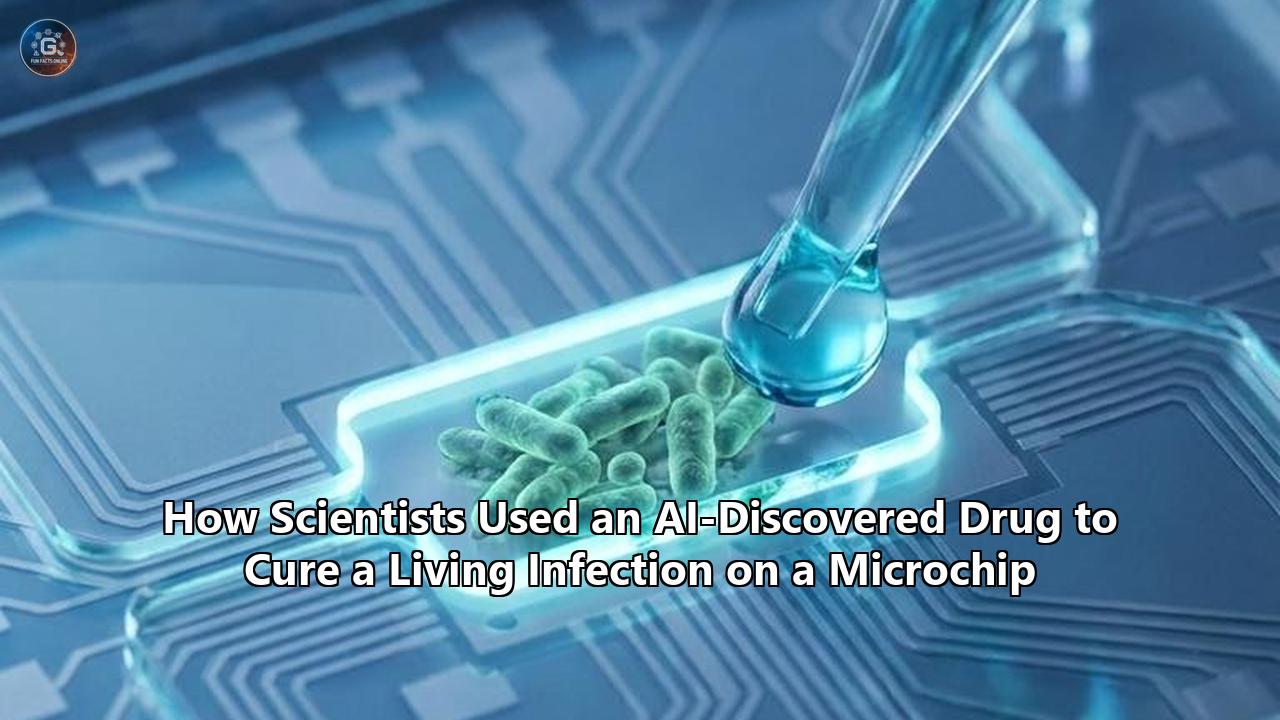
By combining advanced deep learning algorithms with a living, bioengineered "vagina-on-a-chip," scientists successfully identified a novel antibiotic molecule, simulated its administration through a human bloodstream, and used it to cure a live, drug-resistant infection on a microchip.
This achievement does not merely represent a new candidate for a difficult-to-treat sexually transmitted infection. It establishes a complete, closed-loop paradigm for preclinical testing: a digital-to-biological pipeline where artificial intelligence designs the weapon, and human-on-a-chip technology proves its efficacy under real-world physiological conditions.
The Gathering Storm: A Pathogen Outpacing Human Ingenuity
To understand why this breakthrough is a critical turning point, one must look at the specific enemy the researchers targeted: Neisseria gonorrhoeae, the Gram-negative bacterium responsible for gonorrhea.
Gonorrhea is the second most frequently reported sexually transmitted infection globally, with tens of millions of new cases occurring annually. In the United States alone, infection rates exceed 600,000 cases per year. While historically viewed as a routine, easily treatable infection, N. gonorrhoeae has quietly become one of the most dangerous superbugs on the planet. It is exceptionally stealthy and highly adaptable, possessing an evolutionary capacity to rapidly acquire and share resistance genes.
Over the past four decades, N. gonorrhoeae has systematically neutralized almost every antibiotic thrown at it, including penicillin, tetracycline, and fluoroquinolones. Today, clinical treatment relies almost exclusively on a single front-line therapy: the injectable cephalosporin ceftriaxone.
However, the efficacy of this final line of defense is rapidly eroding. While resistance rates in the United States remain low at roughly 0.1%, they have surged to 10% in parts of China and as high as 27% in cities like Hanoi, Vietnam.
"We've seen this cycle of resistance development occur within just five to ten years after first-line roll-out, over and over again," explained Dr. Melis Anahtar, assistant director of the Clinical Microbiology Laboratory at Massachusetts General Hospital and a lead author of the study. "To be able to prevail in this continuous arms race, we will need new antibiotics to fill the pipeline."
     THE TRADITIONAL DRUG DISCOVERY BOTTLENECK

  +---------------------------------------------------+
  | 1. High-Throughput Screening (100,000+ Compounds)  |
  +---------------------------------------------------+
                            |  (Takes 1–2 Years)
                            v
  +---------------------------------------------------+
  | 2. In Vitro Testing (2D Static Cell Culture)       |
  +---------------------------------------------------+
                            |  (Lacks human tissue context)
                            v
  +---------------------------------------------------+
  | 3. Animal Testing (Mice/Rats)                     | ---> 88% Failure Rate
  +---------------------------------------------------+      in Human Translation
                            |  (Mice don't mimic human gonorrhea)
                            v
  +---------------------------------------------------+
  | 4. Phase I Human Clinical Trials                  |
  +---------------------------------------------------+
Compounding this biological crisis is an economic one. Developing new antibiotics is an exceptionally expensive, low-margin endeavor for major pharmaceutical firms. The process typically takes over a decade and costs upwards of $2.6 billion, yet bacteria can evolve resistance within a fraction of that time, rendering the newly approved drug obsolete and financially unviable.
This imbalance has caused a dramatic contraction in drug pipelines. Between 2021 and 2026, the number of active antimicrobial resistance projects in global pharmaceutical pipelines dropped by 35%, from 92 to just 60. Humanity was running out of options, and the traditional methods of drug discovery were simply too slow to keep pace with bacterial evolution.
Phase I (November 2022): Synthesizing Human Biology on a Silicon Chip
The first major turning point in this story did not occur in a computer science lab, but in the microfluidics cleanrooms of Harvard’s Wyss Institute for Biologically Inspired Engineering.
For decades, the standard preclinical model for evaluating sexual health drugs was the laboratory mouse. However, when it came to modeling infections of the human reproductive tract, mice were highly inadequate hosts. The mouse vaginal microenvironment is biologically, chemically, and immunologically distinct from that of humans. Human vaginal tissue is heavily dominated by Lactobacillus species, which produce lactic acid to maintain a highly acidic pH (below 4.5) that deters pathogens. Mice, conversely, maintain a near-neutral pH and host an entirely different spectrum of commensal bacteria.
Because N. gonorrhoeae has evolved to be highly human-specific, establishing a stable, biologically representative infection in mice requires complex immune-suppressing regimens that distort the very immune responses scientists need to study.
To bridge this gap, in late 2022, a Wyss Institute team led by Founding Director Dr. Donald Ingber and lead researcher Gautam Mahajan developed the world's first "vagina-on-a-chip".
           THE WYSS INSTITUTE VAGINA-ON-A-CHIP

                  [ Upper Channel ]
     +-----------------------------------------+
     |   Vaginal Epithelial Cells (Multilayer) | <--- Pathogen Inoculation
  ================= Porous Membrane ================= (Permeable)
     |   Human Uterine Fibroblast Cells        |
     +-----------------------------------------+
                  [ Lower Channel ]
                         |
                         +---> Constant Nutrient Flow (Simulated Bloodstream)
The device, measuring just one inch in length, is constructed from clear, flexible silicone rubber. Inside, it features two parallel microfluidic channels separated by a thin, porous, semi-permeable membrane.
- The Upper Channel: Seeded with living human vaginal epithelial cells, which grow into a dense, multi-layered barrier mimicking the vaginal lining.
- The Lower Channel: Seeded with human uterine fibroblast cells, which make up the supportive connective tissue layer found beneath the epithelium.
By continuously pumping nutrient-rich fluids through the lower channel, the researchers successfully simulated the dynamics of a human bloodstream. When the team introduced the female sex hormone estradiol into the system, the cells responded dynamically, altering their gene expression patterns and producing mucus in a manner identical to a living organ.
When inoculated with beneficial Lactobacillus crispatus bacteria, the chip successfully maintained a healthy, acidic, low-pH microenvironment. Conversely, when inoculated with harmful anaerobic bacteria associated with bacterial vaginosis, the pH surged, inflammatory cytokines spiked, and cell damage occurred.
The Vagina Chip was no longer just an engineering curiosity; it was a highly validated, living model of human reproductive biology. It was the ideal platform to test new drugs—if only there were new drugs to test.
Phase II (August 2025): The Rise of AI and Generative Molecular Composers
While the bioengineers were refining their microfluidic tissue models, computational biologists were quietly restructuring the front end of the pharmaceutical pipeline through AI drug discovery.
Historically, discovering a new antibiotic required physically screening libraries of hundreds of thousands of soil samples or synthetic compounds in wet labs, looking for zones of inhibition where bacteria failed to grow. It was a brute-force approach that frequently rediscovered the same chemical scaffolds over and over again. Indeed, the last completely novel class of antibiotics approved for clinical use was discovered back in 1987.
Dr. James Collins, a core faculty member at the Wyss Institute and the Termeer Professor of Medical Engineering and Science at MIT, recognized that computers could explore chemical configurations far faster than any physical laboratory. Under his leadership, the Antibiotics-AI Project was launched to harness machine learning for molecular design.
Early iterations of their work yielded compounds like halicin in 2020 and abaucin in 2023. These discoveries utilized discriminative AI models—algorithms trained to act as "talent scouts," scanning pre-existing, massive chemical databases to spot hidden gems that humans had overlooked.
But in August 2025, the team pushed the envelope further. In a study published in Cell, spearheaded by MIT postdoc Aarti Krishnan, Melis Anahtar, and Jacqueline Valeri, the team transitioned from using AI as a screener to using AI as a creator.
           GENERATIVE AI DRUG DESIGN (CELL, 2025)

  +---------------------------------------------------+
  | 1. Identify Bioactive Fragment (e.g., Fragment F1)|
  +---------------------------------------------------+
                            |
                            v
  +---------------------------------------------------+
  | 2. Input into Generative AI Algorithms             |
  |    * Fragment-Based Variational Autoencoder       |
  |    * Chemically Reasonable Mutations (CReM)       |
  +---------------------------------------------------+
                            |
                            v
  +---------------------------------------------------+
  | 3. Generative Models "Imagine" New Chemistries    |
  |    * Generated 36+ Million Theoretical Molecules   |
  +---------------------------------------------------+
                            |
                            v
  +---------------------------------------------------+
  | 4. Filter for Drug-Likeness & Synthesizability    |
  +---------------------------------------------------+
                            |
                            v
  +---------------------------------------------------+
  | 5. Synthesize & Validate Top Candidates (NG1, DN1)|
  +---------------------------------------------------+
Instead of simply screening existing libraries, the researchers used generative AI algorithms to construct entirely new molecules from scratch.
They began by physically screening 40,000 compounds against pathogens in their laboratory. From this data, the AI identified a specific chemical fragment, dubbed "F1," which showed weak but promising activity against N. gonorrhoeae. They then fed this fragment into two generative machine learning models: a Fragment-based Variational Autoencoder (F-VAE) and a Chemically Reasonable Mutations (CReM) algorithm.
The algorithms were instructed to treat the chemical structure as a set of rules and to "hallucinate" novel modifications. To prevent the AI from designing chemically impossible or toxic molecules, the team constrained the generation process with strict drug-likeness rules drawn from ChEMBL, a massive database of chemically plausible structures.
The dual generative campaigns yielded an astronomical dataset: over 36 million theoretical compounds.
From this computational ocean, the AI prioritized a shortlist of molecules for physical synthesis. The leading candidate that emerged, named NG1, demonstrated narrow-spectrum, highly selective bactericidal activity against N. gonorrhoeae, including highly drug-resistant clinical isolates. Another generated compound, DN1, cleared methicillin-resistant Staphylococcus aureus (MRSA) skin infections in mouse models.
"We wanted to get rid of anything that would look like an existing antibiotic, to help address the antimicrobial resistance crisis in a fundamentally different way," Aarti Krishnan stated. "By venturing into underexplored areas of chemical space, our goal was to uncover novel mechanisms of action."
The generative AI had proven it could write entirely new molecular music. But as 2026 began, the team faced a lingering, critical challenge: how to rapidly prove that these computer-generated molecules could actually perform inside the highly complex, living tissue barriers of a human organ without triggering toxic side effects.
Phase III (Early 2026): Graph Neural Networks Search the Chemical Deep
While the generative design work of 2025 was groundbreaking, the team knew that synthesizing millions of custom, generative molecules from scratch was still bottlenecked by the physical limits of chemical synthesis. To move faster, they needed to run a parallel strategy: using highly sophisticated deep learning models to search massive, readily available, but poorly understood chemical libraries.
This led to the core of the June 2026 Science Translational Medicine study. The researchers accumulated an initial empirical dataset by phenotypically testing 38,650 small molecules against N. gonorrhoeae in traditional lab assays, noting which compounds successfully inhibited bacterial growth and which did not.
They used this high-quality dataset to train a predictive Graph Neural Network (GNN).
            GRAPH NEURAL NETWORK (GNN) SCREENING

      Atoms represented as Nodes (C, N, O, H)
      Bonds represented as Edges

           (N)-----(C)
          /   \     |
        (C)   (O)  (C)-----(O)
          \   /     |
           (C)-----(C)

  [ GNN analyzes spatial and chemical connectivity patterns ]
                            |
                            v
  [ Generates Predicted Efficacy and Toxicity Scores ]
Unlike traditional machine learning models that treat chemical structures as simple text strings (SMILES strings), GNNs represent molecules as mathematical graphs where atoms are nodes and the chemical bonds between them are edges. This allows the network to map the spatial, electrostatic, and structural connectivity of a molecule in deep detail, capturing the subtle molecular features that determine whether a drug can bind to a pathogen without harming human host tissues.
The team benchmarked the GNN's performance against several other computational architectures, including a modified chemical large language model (LLM), and found that the GNN was vastly superior at identifying highly active, drug-like molecules that were structurally distinct from known antibiotics.
Once trained, the GNN was set loose on a virtual library of 6 million compounds. Doing this screening by hand in a wet lab would have taken several years and cost millions of dollars. The GNN completed the entire virtual screen in a matter of days, scoring every single molecule for its predicted anti-gonococcal activity and potential toxicity.
To prevent the model from selecting indiscriminate, highly toxic compounds, the team programmed strict filters. "We're not looking for the next bleach," Melis Anahtar noted. "We want candidates that are targeting something specific to the bacterial cell."
The AI filtered the 6 million possibilities down to a shortlist of 213 high-priority hits for physical testing. When researchers tested these 213 candidates in vitro, an astonishing 83 of them (39%) successfully inhibited the growth of N. gonorrhoeae. In the slow-moving world of drug discovery, a 39% hit rate from a virtual screen is virtually unheard of.
Two of these compounds stood out as exceptional leads due to their safety profiles, their high potency against multi-drug resistant clinical strains, and their low frequency of resistance development:
- A1: A highly targeted, narrow-spectrum molecule that binds directly to alanine racemase (Alr). This is an enzyme essential for bacterial cell wall biosynthesis. While several human antibiotics target cell wall synthesis, targeting alanine racemase with a small molecule represents an entirely novel mechanism of action in gonorrhea.
- MP20 (also referred to as MP-20): A structurally distinct compound that does not target a single protein. Instead, it rapidly increases the outer and inner membrane permeability of the bacterial cell, essentially causing the pathogen to rupture and leak its internal contents, while inducing downstream DNA damage.
Both compounds were ready for the ultimate test. But instead of proceeding directly to animal testing, the researchers decided to deploy their most sophisticated physiological model: the Wyss Institute’s Vagina-on-a-Chip.
The Breaking Moment (June 17, 2026): Curing the Microchip
The culmination of this multi-year, interdisciplinary effort occurred when the digital predictions of the AI were merged with the fluidic reality of the bioengineered microchip.
To simulate a real-world, clinical infection, the researchers inoculated the upper, epithelial layer of the Vagina-on-a-Chip with live, virulent, drug-resistant strains of Neisseria gonorrhoeae.
This was the first time scientists had successfully established a stable, tissue-level gonorrhea infection on a microphysiological device. The bacteria adhered to the human epithelial cells, invaded the outer tissue layer, and began replicating rapidly, mimicking the early stages of sexually transmitted mucosal infection in patients.
Within hours, the infection began to take hold. In a typical 2D cell culture dish, this process would quickly lead to uncontrolled bacterial growth, media contamination, and rapid, uncoordinated cell death. But on the microfluidic chip, the tissue-tissue interface and continuous fluid dynamics allowed the human cells to mount an authentic, localized inflammatory response.
               THE SIMULATED ON-CHIP TREATMENT

               Infected Vaginal Epithelium
               +---------------------------+
               |  (Pathogen: Gonorrhea)    |
  =============|===========================|============== (Membrane)
               |  Connective Tissue Layer  |
               +---------------------------+
                             ^
                             |  MP20 drug crosses the barrier
                             |
         Constant Fluid Flow [ MP20 Administered ]
         (Mimicking Bloodstream Drug Delivery)
The scientists then initiated treatment. To replicate how an oral or intravenous antibiotic would behave when administered to a human patient, the researchers did not simply drop the drug directly onto the bacteria from above. Instead, they introduced the AI-discovered compound MP20 into the lower channel of the device, dissolved in the continuous nutrient stream that mimics the vascular circulation.
For the drug to work, it had to perform a highly complex biological journey:
- It had to remain stable and active while circulating through the dynamic fluid channel.
- It had to diffuse across the semi-permeable membrane.
- It had to successfully penetrate the human fibroblast tissue layer without causing cellular damage or toxicity.
- It had to cross the tightly bound, multi-layered epithelial barrier.
- Finally, it had to accumulate in the upper vaginal lumen at a high enough concentration to kill the replicating N. gonorrhoeae pathogens.
The results exceeded the team's wildest expectations.
"It could actually get through all those epithelial barriers and accumulate at a concentration that was sufficient to kill the gonorrhea," recalled first author Melis Anahtar.
As the MP20 molecule permeated the tissue layers, it selectively targeted the bacterial cell membranes, rupturing the pathogens. Meanwhile, the surrounding human epithelial and fibroblast cells remained entirely healthy and undamaged, demonstrating the high safety margin that the Graph Neural Network had predicted.
When the researchers analyzed the fluid from the chip's upper channel after treatment, the bacterial titers had plummeted. MP20 had performed identically to the gold-standard, front-line clinical drug ceftriaxone. After the treatment cycle, no living bacteria were detected at all in the tissue lumen.
The living infection on the microchip had been completely cured.
Escalation and Broader Implications: Re-Engineering Preclinical Medicine
The successful rescue of an infected microchip using an AI-discovered molecule is far more than a single medical victory; it is a profound proof of concept for the future of biomedical research.
For decades, the scientific community has been trapped in a translational "valley of death," where therapeutic concepts work brilliantly in the computational domain or in simple animal models, only to fail catastrophically when introduced to human patients. This failure is primarily driven by species-specific differences in pharmacokinetics, tissue architecture, and cellular immunology.
                 THE NEW HYBRID DISCOVERY PIPELINE

  +-------------------------------------------------------------+
  |  1. DEEP LEARNING / GENERATIVE AI                           |
  |     Screens millions of virtual molecules in days.          |
  +-------------------------------------------------------------+
                               |
                               v (Narrowed to <1% of library)
  +-------------------------------------------------------------+
  |  2. PHYSICAL SYNTHESIS & TARGET VALIDATION                  |
  |     Chemists physically construct the top AI-guided hits.   |
  +-------------------------------------------------------------+
                               |
                               v (Real-time human-relevant data)
  +-------------------------------------------------------------+
  |  3. ORGAN-ON-A-CHIP TESTING                                 |
  |     Simulates dynamic human organ environment, flow,        |
  |     tissue penetration, and toxicity.                       |
  +-------------------------------------------------------------+
                               |
                               v (Drastically reduced failure rate)
  +-------------------------------------------------------------+
  |  4. CLINICAL TRIALS IN HUMANS                               |
  +-------------------------------------------------------------+
By placing bioengineered human tissue models directly downstream of deep learning networks, researchers have established a far more predictive, human-relevant preclinical filter.
Instead of waiting years for animal data that may ultimately prove irrelevant, scientists can now computationally design a molecule on a Monday, synthesize it by Wednesday, and observe how it penetrates living human tissues, targets pathogens, and affects human cellular metabolism by Friday.
"This study... showcases once again the enormous power of AI combined with high-quality biological datasets in the discovery of potentially therapeutic compounds that otherwise would be entirely out of reach," said Dr. Donald Ingber. "It also shows how... we seamlessly integrate critical advancements in AI with human-relevant models, in this case, a human Vagina Chip."
Furthermore, this breakthrough arrives at a moment of systemic regulatory change. Under the FDA Modernization Act 2.0, drug developers are no longer legally mandated to perform animal testing for every new drug candidate before entering clinical trials, provided they can present robust, validated data from alternative methods. Organ-on-a-chip technologies, particularly when combined with automated, real-time sensing and AI drug discovery pipelines, are positioned to become the primary vehicle for these animal-free regulatory approvals.
What Lies Ahead: From Microchips to Human Trials
The success of the MP20 and A1 compounds on the Vagina-on-a-Chip marks the beginning of an intensive translational journey.
While the preclinical results are highly encouraging, the team at the Wyss Institute and MIT is quick to point out that these molecules are still years away from being prescribed in a doctor's clinic.
"While our observations on A1 are promising, it requires further validation and hit-to-lead optimization through medicinal chemistry and other efforts in order to become a clinically relevant antimicrobial drug," Melis Anahtar noted.
To advance these molecules toward human clinical trials, the researchers have partnered with Phare Bio (formerly Fair Bio), a non-profit social venture spun out of the Antibiotics-AI Project. Phare Bio’s mission is to secure the philanthropic and public funding necessary to bridge the gap between academic discovery and clinical development, specializing in advancing AI-discovered antibiotics through Phase I and Phase II trials.
Scientists at Phare Bio are currently working on synthesizing chemical analogs of both MP20 and A1, tweaking their molecular structures to optimize their stability, solubility, and systemic half-life in the human body, while ensuring they do not disrupt the beneficial commensal Lactobacillus species that protect the natural vaginal microbiome.
Simultaneously, the implications of this hybrid platform are expanding to other deadly infectious diseases. James Collins and his team have already begun adapting their AI-driven screening and organ-on-a-chip validation workflow to target other high-priority pathogens on the World Health Organization’s watch list, including Mycobacterium tuberculosis (the causative agent of tuberculosis) and Pseudomonas aeruginosa (a notorious multi-drug resistant bacterium that ravages cystic fibrosis patients and burn victims).
The union of Graph Neural Networks and microfluidic tissue engineering has fundamentally changed the rules of the biological arms race. For decades, bacteria had the upper hand, mutating randomly in billions of hosts while humans relied on slow, manual discovery pipelines to find new defenses.
Now, with machine learning capable of searching millions of compounds in days, and bioengineered microchips capable of verifying human efficacy in real time, humanity finally has a pipeline fast enough to outsmart the superbugs.
References
- --- Posey, R., Özkan, A., & Ingber, D. E. (2026). "Human organ-on-a-chip technology as a catalyst for drug discovery." Advanced Drug Delivery Reviews, 236, 115920.
- --- Deng, S., et al. (2025). "Organ-on-a-chip meets artificial intelligence in drug evaluation." ResearchGate.
- --- AIP Publishing. (2025). "Integration of organ-on-a-chip and AI to transform drug assessment."
- --- Nahmias, Y. (2022). "Tissue Dynamics: Harnessing AI and organ-on-a-chip technology." The Innovator.
- --- MDPI Review. (2025). "Organ-on-a-chip technologies (2010–2025): Benchmarking and regulatory developments."
- --- Live Science. (2026). "Scientists infected a 'vagina on a chip' with gonorrhea — then cured it with a new antibiotic found by AI."
- --- Drug Discovery News. (2020). "MIT researchers identify novel antibiotic compound halicin using machine learning."
- --- ABC News Australia / Professor James Collins. (2025). "Generative AI designed novel antibiotics to treat resistant infections."
- --- MIT News. (2025). "MIT researchers design novel antibiotics to combat drug-resistant gonorrhea and MRSA using generative AI."
- --- Sankaran, V. (2022). "Scientists create 'vagina on a chip' to test drugs against infection." The Independent.
- --- Medscape / Dr. Donald Ingber. (2023). "Scientists Create 'Vagina on a Chip': What to Know."
- --- BioWorld / Dr. James Collins. (2026). "Researchers use machine learning and vagina-on-a-chip to identify anti-gonococcal compounds."
- --- Nuvastra Health. (2026). "Deep learning screens millions of compounds for drug-resistant gonorrhea."
- --- Mahajan, G., et al. (2022). "Vaginal microbiome-host interactions modeled in a human vagina-on-a-chip." Microbiome, 10, 201.
- --- Harvard Wyss Institute. (2026). "Deep learning-enabled discovery of antibiotics effective against Neisseria gonorrhoeae." Science Translational Medicine.
- --- ResearchGate. (2026). "Deep learning–enabled discovery of antibiotics effective against Neisseria gonorrhoeae (ads4699)."
- --- Entrelligence Science. (2026). "AI finds two new antibiotic candidates against drug-resistant gonorrhea."
- --- Drug Discovery News. (2026). "From computation to biological systems: testing MP20 and A1 in vagina-on-a-chip."
- --- Drug Discovery News. (2026). "Two AI studies in parallel: Sifting libraries and de novo design."
- --- MIT Department of Biological Engineering. (2025). "Aarti Krishnan on exploring chemical space with generative AI."
- --- Rewire IT. (2025). "DN1 and NG1: Generative AI as a creator of novel chemical families."
- --- BioWorld. (2025). "Generative AI-designed antibiotic candidates avoid chemical hallucinations."
- --- Labmate Online. (2025). "AI-designed drug shows antibiotic promise against drug-resistant gonorrhea and MRSA."
- --- Broad Institute. (2026). "Predictive graph neural network models augment high-throughput screens for Neisseria gonorrhoeae."
- --- BioWorld. (2026). "The cycle of resistance development: Melis Anahtar on gonorrhea's short-lived treatment options."
- --- Harvard University Press. (2026). "Alanine racemase: A novel mechanism of action revealed by AI."
Reference:
- https://pubs.aip.org/aip/bmf/article/19/6/061501/3372856/Revolutionizing-drug-evaluation-system-with-organ
- https://theinnovator.news/organs-on-chips-ai-robotics-could-transform-drug-development/
- https://wyss.harvard.edu/news/machine-learning-how-to-overcome-antibiotic-resistant-gonorrhea/
- https://letsdatascience.com/news/deep-learning-identifies-novel-antibiotics-for-gonorrhea-41b0c250
- https://www.livescience.com/health/medicine-drugs/scientists-infected-a-vagina-on-a-chip-with-gonorrhea-then-cured-it-with-a-new-antibiotic-found-by-ai
- https://scienmag.com/harnessing-machine-learning-to-combat-antibiotic-resistant-gonorrhea/
- https://completeaitraining.com/news/machine-learning-identifies-new-antibiotic-candidates/
- https://rewire.it/blog/ai-designed-two-new-antibiotics-from-scratch-heres-why-that-changes-everything/
- https://www.drugdiscoverynews.com/ai-helps-uncover-new-antibiotic-candidates-against-drug-resistant-gonorrhea-17274
- https://www.broadinstitute.org/publications/broad1378186
- https://www.nuvastra.com/ai-news/ai-may-have-found-a-new-way-to-fight-a-superbug
- https://www.livescience.com/health/medicine-drugs/japans-bold-experiment-to-curb-antibiotic-misuse-has-been-a-huge-success-could-it-work-in-the-us
- https://www.livescience.com/health/medicine-drugs/scientists-infected-a-vagina-on-a-chip-with-gonorrhea-then-cured-it-with-a-new-antibiotic-found-by-ai
- https://www.bioworld.com/articles/732025-going-after-gonorrhea-with-artificial-intelligence?v=preview
- https://wyss.harvard.edu/news/machine-learning-how-to-overcome-antibiotic-resistant-gonorrhea/
- https://www.bioworld.com/articles/732151-going-after-gonorrhea-with-artificial-intelligence?v=preview
- https://entrelligence.com/ai-screens-6-million-molecules-to-find-new-antibiotics-for-drug-resistant-gonorrhea/
- https://www.independent.co.uk/news/science/vagina-chip-test-drugs-b2243369.html
- https://www.youtube.com/watch?v=sIK4Fh0ngHc
- https://riseforanimals.org/news/sci-news-jun-2026/
- https://afmw.org.au/scientists-create-vagina-on-a-chip-what-to-know-medscape/
- https://www.livescience.com/vagina-on-a-chip
- https://www.techtarget.com/pharmalifesciences/answer/Understanding-Vaginal-Microbiomes-with-Vagina-on-a-Chip-Models
- https://www.youtube.com/watch?v=oTfRVSMKgQY
- https://news.mit.edu/2025/using-generative-ai-researchers-design-compounds-kill-drug-resistant-bacteria-0814
- https://www.drugdiscoverynews.com/ai-helps-uncover-new-antibiotic-candidates-against-drug-resistant-gonorrhea-17274
- https://news.mit.edu/2025/using-generative-ai-researchers-design-compounds-kill-drug-resistant-bacteria-0814
- https://www.labmate-online.com/news/laboratory-research-news/126/breaking-news/AI-AMR-drug-resistance/65537
- https://www.bioworld.com/articles/723603-generative-ai-comes-up-with-novel-antibiotic-structures?v=preview
- https://www.google.com/sorry/index?continue=https://www.google.com/search%3Fq%3Dtime%2Bin%2BJabalpur%2BDivision,%2BIN&q=EgS0vKyzGL3Up9IGIjCPeqK-Q_dFsrv-frQ4Xim43k7PrmJ4ByvG8HTXmr9rkArPFXNs7WU4TmJqqYmP59UyAnJSWgFD
- https://www.drugdiscoverynews.com/ai-yields-new-antibiotic-14389
- https://www.researchgate.net/publication/407234577_Deep_learning-enabled_discovery_of_antibiotics_effective_against_Neisseria_gonorrhoeae
- https://www.worc.community/documents/human-organ-on-a-chip-technology-as-a-catalyst-for-drug-discovery
- https://emulatebio.com/infectious-disease-application/
- https://www.mdpi.com/2079-6374/16/3/155
- https://www.researchgate.net/publication/397766216_Revolutionizing_drug_evaluation_system_with_organ-on-a-chip_and_artificial_intelligence_A_critical_review