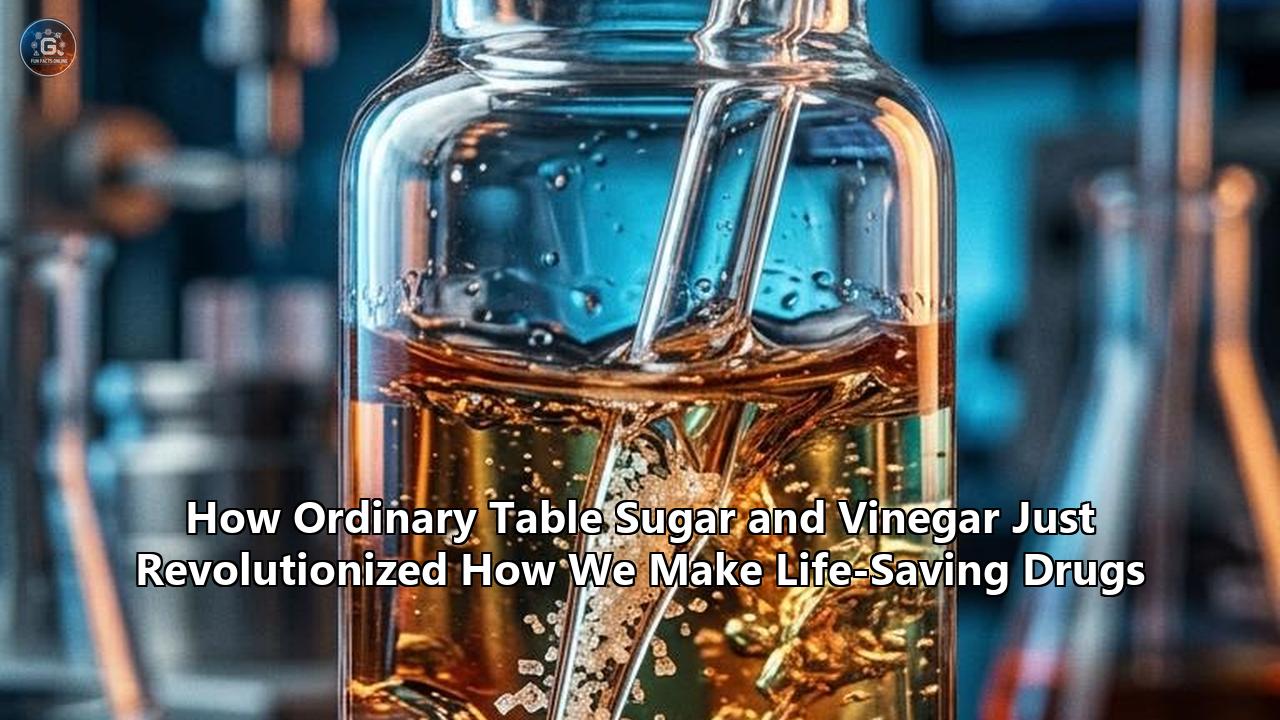
In late June 2026, a research paper published in the journal Nature quietly sent shockwaves through the global pharmaceutical supply chain. Scientists at Scripps Research in La Jolla, California, and the University of Bristol in the United Kingdom had achieved what many organic chemists previously considered a pipe dream: synthesizing some of the world’s most sophisticated, multi-billion-dollar blockbuster drugs using ordinary, over-the-counter dextrose powder and household vinegar.
The breakthrough, co-led by synthetic chemistry pioneers Professor Phil S. Baran of Scripps and Professor Varinder Aggarwal of Bristol, targets a class of medicines known as SGLT2 inhibitors. These drugs—including dapagliflozin (Forxiga), canagliflozin (Invokana), and empagliflozin (Jardiance)—are the frontline defense for more than 500 million people globally suffering from type 2 diabetes, heart failure, and chronic kidney disease. Together, they rake in upwards of $20 billion annually for patent holders.
Yet, despite their life-saving utility, these drugs are notoriously difficult, slow, and expensive to manufacture. Their synthesis has traditionally required a multi-step chemical marathon involving hazardous reagents, extreme cryogenic cooling, and strict air-free environments. By contrast, the Baran and Aggarwal teams demonstrated that they could build the core active pharmaceutical ingredient (API) of these blockbusters in just two steps, performing the key reaction in a simple beaker at room temperature.
To prove the ultimate robustness of their chemistry, the researchers bypassed highly purified laboratory reagents altogether. Instead, they bought a $5 tub of dextrose powder from a local pharmacy and a bottle of standard household vinegar, successfully scaling up the synthesis of these vital medicines. This marks a massive milestone in sugar vinegar drug manufacturing, bringing a level of simplicity and accessibility that could fundamentally disrupt how life-saving therapeutics are synthesized on a global scale.
The Tyranny of the Protecting Group: Why Sugars are a Chemist’s Nightmare
To appreciate why this "kitchen-pantry" approach is so monumental, one must understand the grueling reality of carbohydrate chemistry.
   Traditional Synthesis (15-20 Steps)                      New Two-Step Synthesis
+---------------------------------------+               +----------------------------+
| Raw Sugar                             |               | Raw Sugar (Dextrose)       |
|   | (Add Protecting Groups to -OH)    |               |   |                        |
| Step 1: Benzyl caps...                |               |   | (Mix with Vinegar +     |
| Step 2: Acetyl shields...             |               |   |  Tosylhydrazide)       |
| Step 3: Silyl blocks...               |               |   |                        |
| ...                                   |               | Step 1: Glycohydrazide     |
| Step 12: Anomeric Carbon Activation   |               |         Crystalline Intermediate
| Step 13: Coupling Reaction            |               |   |                        |
| Step 14: Acid wash (strip caps)...     |               |   | (Nickel Catalyst +     |
| Step 15: Hydrogenation...             |               |   |  Aryl Partner)         |
|   v                                   |               |   v                        |
| Target C-Glycoside Drug               |               | Target C-Glycoside Drug    |
+---------------------------------------+               +----------------------------+
Carbohydrates like glucose, fructose, and galactose are among the most abundant and biologically vital molecules on Earth. However, to a synthetic chemist, they are an absolute nightmare to manipulate. A single sugar molecule is covered in reactive oxygen-hydrogen clusters known as hydroxyl (-OH) groups. Every single one of these hydroxyl groups is a highly reactive nucleophile.
If a chemist attempts to react an unprotected sugar molecule with a complex aromatic compound to forge a drug, the reagents will indiscriminately attack every hydroxyl group in sight. The result is not a pure pharmaceutical, but a useless, tar-like sludge of side-products.
For nearly a century, the only workaround was a strategy known as "protecting group manipulation". Before performing the desired reaction, chemists had to systematically block—or "cap"—every single hydroxyl group they didn't want to react. The step-by-step choreography was incredibly tedious:
- React the sugar with bulky chemical shields (such as benzyl or acetyl groups) to selectively block specific hydroxyls.
- Perform additional steps to leave only the target carbon—the C1 "anomeric" carbon—unprotected.
- Execute the actual chemical reaction to bond the sugar to the drug's active backbone.
- Strip away all the protective caps using harsh acids, toxic metals, or hydrogen gas.
This protection-deprotection dance routinely added 15 to 20 individual steps to a synthetic pathway. Every single step represents a drop in overall yield, a massive increase in toxic chemical waste, and millions of dollars in engineering overhead.
The problem is particularly acute when manufacturing "C-glycosides". In nature, sugars are typically bonded to other molecules via an oxygen atom (an O-glycoside bond). However, the human body is packed with glycoside hydrolase enzymes designed to seek out and immediately shred these oxygen-linked sugars.
To make a sugar-based medicine that survives inside the body, chemists must replace that linking oxygen atom with a carbon atom, creating a C-glycoside. Because carbon-carbon bonds are incredibly stable, the body's enzymes cannot break them down, allowing the drug to perform its therapeutic function. Yet, forging this carbon-carbon bond at the crowded anomeric carbon without destroying the rest of the fragile sugar ring has historically required highly reactive organometallic reagents, sub-zero cryogenic manufacturing plants, and a mountain of protecting groups.
At the heart of this shift in sugar vinegar drug manufacturing is a concept known as "protecting-group-free" synthesis. By utilizing the natural chemical selectivity of simple, household ingredients, the Baran and Aggarwal teams have bypassed this entire decades-old paradigm.
Behind the Scenes: The "Ah-Ha" Collision of 1930s Chemistry and Modern Radical Synthesis
The journey to this discovery was far from straightforward. Professor Varinder Aggarwal's laboratory at the University of Bristol had spent years trying to couple native, unprotected sugars directly with aromatic rings. They were repeatedly stymied by the sheer fragility of the sugar ring, which warped, degraded, or polymerized under standard coupling conditions.
"After several unsuccessful attempts, we found that a particular coupling method—originally developed by Professor Phil Baran’s group at Scripps—worked exceptionally well with these sugars," Aggarwal recalled.
The Scripps lab had been pioneering a modern platform of "redox-neutral cross-coupling" using organic reagents called sulfonyl hydrazides. When Baran and Aggarwal joined forces, they realized that the answer to their modern synthetic roadblock was actually buried in a nearly forgotten chemical procedure dating back to the 1930s.
In the 1930s, long before the advent of high-resolution Nuclear Magnetic Resonance (NMR) spectroscopy or mass spectrometry, analytical chemists had a massive problem: they could not easily identify different sugars because they often existed as sticky, amorphous syrups. To characterize them, chemists would mix the native sugars with arenesulfonyl hydrazides (like tosylhydrazide) in a mild acid.
This classic, low-tech reaction possessed an extraordinary property: the sulfonyl hydrazide selectively attacked the C1 (anomeric) carbon of the unprotected sugar, completely ignoring all other reactive hydroxyl groups. Because of this unique selectivity, a clean, stable, crystalline solid known as a glycohydrazide would spontaneously precipitate directly out of the solution. Chemists could simply filter the crystals, dry them, and measure their melting point to identify the sugar. No chromatography, no high-pressure separations, and absolutely no protecting groups were required.
               [Selectivity comparison at the molecular level]

       Unprotected D-Glucose                      Targeted Reaction (This Study)
             OH   OH                                    OH   OH
          HO---\ /---OH                              HO---\ /---OH
                |                                          |
                O                                          O
               / \                                        / \
            HO/   \--- [Multiple reactive sites]       HO/   \--- [Selective attack here]
                                                                  C1 (Anomeric Carbon)
                                                                   |
                                                                  TsNHNH2 (via Vinegar)
                                                                   v
                                                              Crystalline Glycohydrazide
The Baran and Aggarwal teams had a realization: what if these easily accessible, crystalline glycohydrazides were not just analytical relics from the pre-WWII era? What if they were the ultimate, hidden vehicles for modern radical chemistry?
By taking these stable 1930s intermediates and feeding them into Baran's 2020s transition-metal coupling platform, the researchers found they could instantly generate carbon radicals at the C1 position, bypassing the need for any shielding groups. The genius of this approach to sugar vinegar drug manufacturing lies in its ability to harness the inherent thermodynamic preferences of the molecules themselves, letting natural crystallization do the heavy lifting that expensive synthetic steps used to perform.
Inside the Molecular Machinery: How the Two-Step Reaction Works
The technical elegance of this new chemical pathway is best understood by breaking down what happens inside the reaction vessel at a molecular scale. The entire sequence is compressed into two incredibly efficient phases:
Phase 1: The Condensation (The "Sugar and Vinegar" Step)
The synthesis begins by dissolving native, unprotected sugar—such as D-glucose—in ordinary acetic acid (the chemical name for vinegar) or a 70% aqueous vinegar solution.
[D-Glucose] + [Tosylhydrazide] ---> (via Acetic Acid/Vinegar) ---> [Glycohydrazide Intermediate] (Precipitates)To this mixture, chemists add tosylhydrazide ($\text{TsNHNH}_2$), a cheap, bench-stable nitrogen reagent. The mild acidity of the household vinegar serves as a gentle proton shuttle, protonating the hemiacetal hydroxyl group at the C1 position of the sugar ring.
Because the C1 carbon is the only electrophilic carbon on the sugar scaffold, the nitrogen-based tosylhydrazide selectively attacks this exact coordinate. The water molecule is extruded, and a highly stable, crystalline glycohydrazide is formed.
As the reaction progresses, the glycohydrazide molecules organize into a highly ordered crystal lattice that is completely insoluble in the vinegar-water mixture. The product literally snows out of the liquid. Because only the target intermediate crystallizes, impurities and unreacted starting materials remain dissolved in the liquid phase.
Chemists can isolate the pure crystalline precursor simply by pouring the mixture through a standard filter paper and washing it with a cheap solvent. This entirely eliminates "column chromatography"—the slow, solvent-intensive, and highly expensive purification technique that typically acts as a major bottleneck in pharmaceutical factories.
Phase 2: The Radical Cross-Coupling (The "Nickel Catalyst" Step)
Once the crystalline glycohydrazide is isolated, it is dissolved in a reaction flask alongside the desired coupling partner, such as an aryl halide (the carbon-ring molecule that forms the "active" non-sugar tail of the drug).
                                  [Nickel Catalyst]
[Glycohydrazide] + [Aryl Halide] -------------------> [C-Aryl Glycoside Drug] + N2 (g) + Sulfinate
                                      Heat
Rather than using costly, complex photoredox setups or highly sensitive electrochemical cells, the researchers introduce a cheap, abundant transition metal: nickel. When the mixture is gently heated, a series of rapid, coordinated electron transfers occur:
- Coordination: The nickel catalyst coordinates with the nitrogen-nitrogen backbone of the glycohydrazide intermediate.
- Nitrogen Extrusion: Under gentle thermal conditions, the nickel catalyst triggers a rapid, intramolecular collapse. The carbon-nitrogen and nitrogen-sulfonyl bonds break, releasing harmless nitrogen gas ($\text{N}_2$) and a sulfinate salt.
- Radical Generation: The extrusion of nitrogen leaves behind a highly reactive, transient carbon radical exactly at the C1 (anomeric) carbon. Because this radical is incredibly localized, it exists only for microseconds.
- Selective Coupling: Despite its high reactivity, this carbon radical does not interact with the neighboring, unprotected hydroxyl groups. Instead, it immediately couples with the nickel-bound aryl partner. The nickel catalyst completes the cycle, forging the crucial carbon-carbon (C-C) bond to yield the final C-glycoside drug.
One of the most remarkable technical achievements of this process is its stereoretention. Typically, radical intermediate reactions are chaotic; the flat radical carbon can be attacked from either the top or bottom face, resulting in an equal mixture of two mirror-image molecules (isomers). In medicine, only one specific isomer works; the other is usually inactive or toxic.
Because of the specific spatial geometry of the glycohydrazide ring and the highly coordinated nature of the nickel transition metal template, the coupling reaction overrides inherent thermodynamic biases. It forces the reaction to occur with near-perfect stereoselectivity, delivering the biologically active isomer of the drug without requiring any downstream stereoisomeric separation.
Inside the "Walmart Demo": Demolishing the Cryogenic Barrier
To demonstrate the sheer ruggedness of this new chemical route, Phil Baran's lab at Scripps Research did something highly unconventional for an academic chemistry lab: they published a video of their process using materials purchased from retail stores.
            [Traditional Synthesis Environment vs. Sugar-Vinegar Platform]

+-----------------------------------------+     +-----------------------------------------+
|      TRADITIONAL CRYOGENIC REACTOR      |     |         SUGAR-VINEGAR BEAKER            |
|                                         |     |                                         |
|  * Extreme cold required (-78°C)        |     |  * Room temperature / Gentle heating    |
|  * Explosive pyrophoric reagents        |     |  * Non-pyrophoric, stable reagents      |
|  * Pure, bone-dry organic solvents      |     |  * Water and household vinegar          |
|  * Sealed, nitrogen-purged glovebox     |     |  * Open-air, standard laboratory glassware |
|  * Massive electricity consumption      |     |  * Minimal carbon footprint             |
+-----------------------------------------+     +-----------------------------------------+
Traditionally, the industrial synthesis of SGLT2 inhibitors like dapagliflozin requires extreme cryogenic conditions. Because the reactions rely on pyrophoric (spontaneously air-igniting) organolithium reagents—such as n-butyllithium—factories must cool massive chemical reactors down to -78°C or lower to control the reaction and prevent explosive runaways. These setups require highly specialized, spark-proof, nitrogen-blanketed steel reactors, massive energy-intensive cooling systems, and specialized chemical training.
In the Scripps demonstration, a researcher dissolved cheap, Walmart-purchased dextrose powder ($5/pound) directly into a beaker of ordinary 70% distilled white household vinegar. They added tosylhydrazide, stirred the mixture on a standard benchtop stir plate at room temperature, and watched as the crystalline intermediate precipitated cleanly out of the household vinegar.
Once filtered, the intermediate was successfully coupled with the appropriate aryl partner under gentle heating with a nickel catalyst.
"This removes the engineering barrier to activating the radical precursor," Baran explained. "You don't need more complicated techniques like photochemistry, electrochemistry, or stoichiometric metal salts—none of which are as easy to scale up."
The implications of this demonstration are profound. By replacing pyrophoric lithiums, specialized gloveboxes, and liquid nitrogen cooling systems with a process that can run in a simple heated tank, the physical capital required to manufacture these drugs is dramatically reduced.
Geopolitics, Patents, and the Open-Source Drug Revolution
While the chemical breakthroughs are fascinating, the true global impact of this discovery lies in a bold political decision made by the research teams: they chose not to patent the synthetic pathway.
In the modern pharmaceutical industry, a drug's high price is heavily guarded by a dense web of patents. Even after the primary patent on an active compound expires, brand-name pharmaceutical companies routinely file dozens of secondary "process patents". These patents cover specific chemical pathways, solvent systems, crystallizations, and purification steps. By locking up every practical, cost-effective way to make the drug, companies can legally block generic competition for decades.
By publishing their entire, highly optimized two-step process in Nature without filing a patent, Baran and Aggarwal have permanently placed this chemical intellectual property into the global public domain.
This creates a massive geopolitical shift, particularly for middle- and low-income countries where SGLT2 inhibitors are urgently needed but remain largely unaffordable.
| Drug Name | Brand Name | Annual Global Sales | Primary Medical Indications |
|---|---|---|---|
| Dapagliflozin | Forxiga / Farxiga | ~$8 Billion | Type 2 Diabetes, Heart Failure, Chronic Kidney Disease |
| Empagliflozin | Jardiance | ~$10 Billion | Type 2 Diabetes, Cardiovascular Risk Reduction, Heart Failure |
| Canagliflozin | Invokana | ~$2 Billion | Type 2 Diabetes, Diabetic Nephropathy |
SGLT2 inhibitors are no longer viewed as just diabetes drugs; they are recognized as wonder-drugs for cardiovascular and renal health, significantly reducing hospitalizations and mortality in patients with heart failure and kidney disease. Yet, in regions like Sub-Saharan Africa, Latin America, and parts of South Asia, the high cost of brand-name imports has severely restricted patient access.
By utilizing open-source sugar vinegar drug manufacturing techniques, generic pharmaceutical manufacturers in countries like India, China, and Brazil can immediately adopt this chemical blueprint. Because the raw materials are as cheap as sugar and vinegar, and the process requires zero high-tech equipment, local manufacturers can bypass expensive patent-protected supply chains. This is poised to dramatically slash the cost of producing generic gliflozins, allowing local health systems to manufacture and distribute these life-saving pills for pennies on the dollar.
Clean Chemistry: Slashing the Heavy Environmental Cost of Pharma
Beyond lowering prices for patients, the sugar-and-vinegar platform addresses one of the chemical industry's dirtiest secrets: the staggering environmental footprint of pharmaceutical manufacturing.
In the chemical sector, environmental efficiency is often measured by the E-factor (Environmental Factor), which calculates the mass of waste generated per kilogram of desired product.
$$\text{E-Factor} = \frac{\text{Mass of Total Waste (kg)}}{\text{Mass of Active Pharmaceutical Ingredient (kg)}}$$
While bulk oil refining has an E-factor of less than 0.1 (producing minimal waste per kilogram of fuel), the pharmaceutical industry is notoriously inefficient, with E-factors routinely ranging from 25 to over 100. This means that for every single kilogram of active medicine synthesized, factories generate up to 100 kilograms of hazardous waste—mostly composed of chlorinated organic solvents, toxic reagents, spent acids, and heavy metal byproducts.
The traditional synthesis of SGLT2 inhibitors is a primary offender. Because it relies on up to 20 separate chemical transformations, it generates massive streams of toxic waste:
- Protecting Reagents: Reagents like benzyl chloride, silyl chlorides, and acetic anhydride are used once to block hydroxyl groups and are immediately discarded as waste.
- Chlorinated Solvents: Reactions require large quantities of dichloromethane, tetrahydrofuran (THF), and toluene, which require specialized, energy-intensive disposal processes.
- Pyrophoric Solvents: Heavy, flammable alkanes are needed to manage the unstable, cryogenic organometallic steps.
The new sugar-vinegar platform sanitizes this equation in three fundamental ways:
1. Biodegradable, Non-Toxic Solvent Systems
The first step of the reaction uses water and acetic acid (vinegar) as the primary solvent. Unlike dichloromethane or DMF, vinegar is completely biodegradable, non-toxic, and can be easily neutralized into harmless acetate salts before disposal.
2. Elimination of Protecting Groups
By reacting native, unprotected sugars directly, the mass of raw material required is slashed. There are no protective caps to purchase, synthesize, or throw away, resulting in a dramatic reduction in the E-factor.
3. Clean Byproducts
The only major byproducts of the coupling reaction are molecular nitrogen gas ($\text{N}_2$), which safely venting into the atmosphere (making up 78% of the air we breathe anyway), and benign sulfinate salts. The energy footprint is also drastically reduced by eliminating the need to cool massive industrial reactors to sub-zero temperatures.
Looking Ahead: The Next Frontiers of the Radical Sugar Platform
The synthesis of SGLT2 inhibitors is only the opening chapter of this chemical paradigm shift. The successful merger of 1930s condensation chemistry with modern radical coupling has unlocked an entirely new playbook for building sugar-based therapeutics.
               [The Unlocked Glyco-Architecture Frontier]

                          C2 Functionalization
                                   |
           C3 Modification <--- [D-Glucose] ---> C1 (Anomeric) Coupling [SGLT2]
                                   |
                          C6 Functionalization
In their Nature paper, the Baran and Aggarwal teams demonstrated that this chemistry is not limited to the C1 anomeric carbon of glucose. They successfully attached diverse chemical groups to other positions on the sugar scaffold (positions C2 through C6). This capability allows researchers to synthesize complex carbohydrate structures that were previously considered completely out of reach or too expensive to pursue.
Among the highly anticipated future applications of this platform are:
- Antiviral nucleoside analogs: Many of the world’s most effective antiviral drugs (such as those used to treat HIV, hepatitis C, and COVID-19) are modified sugars. This platform could drastically lower their production costs.
- Targeted Cancer Therapeutics: Cancer cells are notoriously hungry for sugar, consuming glucose at a much faster rate than healthy cells. By using this chemistry, scientists can easily attach toxic "warhead" molecules to unprotected sugars, creating trojan-horse drugs that selectively target tumor cells.
- Vaccine Adjuvants and Natural Products: The researchers successfully applied their method to synthesize complex, natural carbohydrate compounds like salmochelins (critical iron-scavenging molecules used in infectious disease research) and neopetrosins.
Despite the overwhelming excitement, several key milestones must be reached before these open-source medications hit pharmacy shelves.
First, regulatory agencies like the FDA and EMA maintain exceptionally strict guidelines regarding trace metal impurities in active pharmaceutical ingredients. Because this new method relies on a nickel catalyst, generic manufacturers must rigorously validate their purification protocols to ensure that every single atom of the nickel catalyst is successfully removed from the final drug crystals.
Second, the reaction kinetics of large-scale, continuous-flow systems using vinegar must be fully optimized. While the "Walmart demo" worked beautifully on a decagram scale, chemical engineers must now translate these batch reactions into continuous-flow reactors capable of churning out metric tons of APIs.
Ultimately, the breakthrough led by Baran and Aggarwal proves that the future of cutting-edge medicine does not always require increasingly complex, expensive, and exotic technology. Sometimes, the key to solving the most frustrating challenges in modern medicine is simply to look back at the elegant, low-tech chemistry of the past—and realize that the ultimate solution is already sitting in our kitchen pantries.
Reference:
- https://www.eurekalert.org/news-releases/1134124
- https://www.technologynetworks.com/tn/news/everyday-ingredients-simplify-the-manufacturing-of-sugar-based-drugs-414134
- https://www.europeanpharmaceuticalreview.com/simplified-c-glycosides-synthesis-could-transform-diabetes-drug-manufacturing/2135839.article
- https://research-information.bris.ac.uk/files/491177394/TEXT-03122026_Clean.pdf
- https://knowridge.com/2026/07/scientists-discover-a-simple-way-to-make-important-diabetes-drugs-using-sugar-and-vinegar/
- https://maillist.au.dk/hyperkitty/list/[email protected]/message/YGO5HXQUVCSZN2ZMNDSDOZGCD3FOUEKV/attachment/4/chemrxiv.15001005_v1.pdf
- https://www.technologynetworks.com/tn/news/everyday-ingredients-simplify-the-manufacturing-of-sugar-based-drugs-414134
- https://www.sciencesnail.com/science/previous/18
- https://www.bristol.ac.uk/news/2026/june/new-study-shows-table-sugar-could-hold-a-cheaper-key-to-making-vital-drugs.html
- https://chemrxiv.org/doi/pdf/10.26434/chemrxiv.15001684
- https://www.bristol.ac.uk/news/2026/june/new-study-shows-table-sugar-could-hold-a-cheaper-key-to-making-vital-drugs.html
- https://www.europeanpharmaceuticalreview.com/simplified-c-glycosides-synthesis-could-transform-diabetes-drug-manufacturing/2135839.article
- https://knowridge.com/2026/07/scientists-discover-a-simple-way-to-make-important-diabetes-drugs-using-sugar-and-vinegar/
- https://pmc.ncbi.nlm.nih.gov/articles/PMC9964938/
- https://www.youtube.com/watch?v=zkeF95bpELs