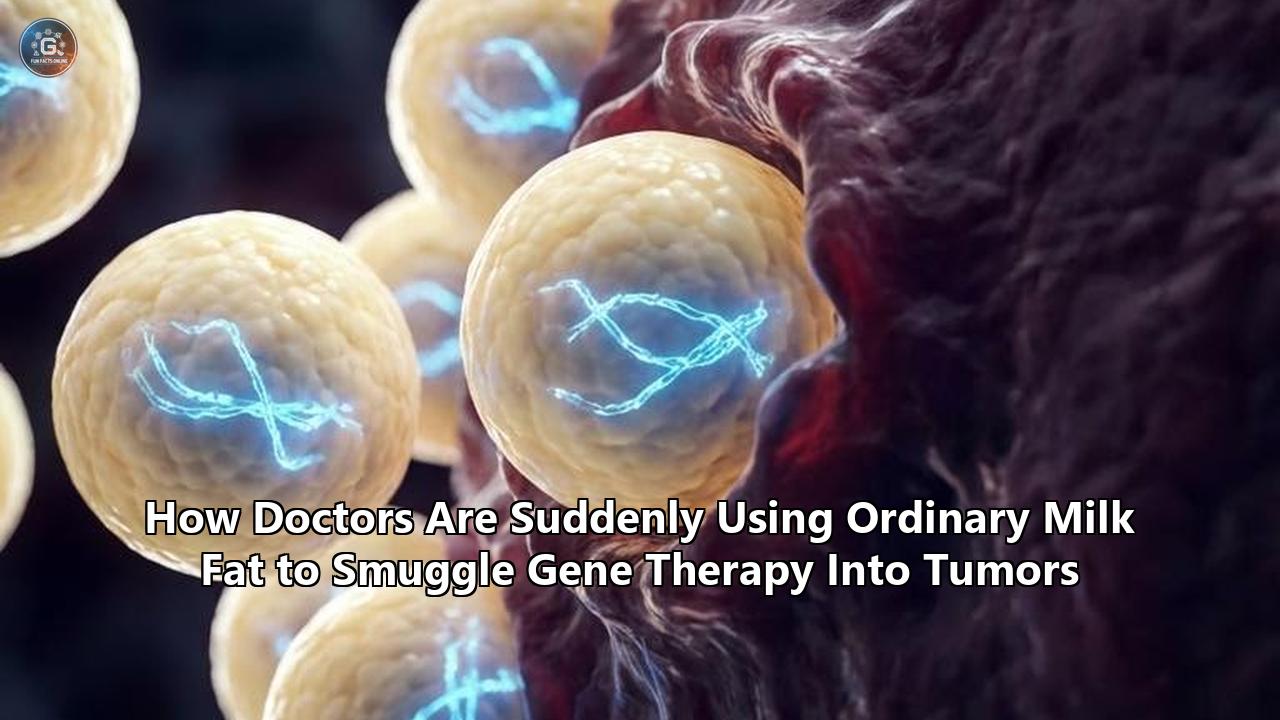
In the oncology wards and biotechnology laboratories of early 2026, a highly unconventional drug delivery vector has rapidly moved from the fringes of theoretical biology to the center of clinical oncology. Researchers have successfully begun utilizing bovine milk extracellular vesicles—specifically, the exosomes and nanostructured lipids found in ordinary cow's milk—to smuggle silencing RNA (siRNA) and highly toxic chemotherapeutics directly into solid tumors. Recent in vivo models, including studies targeting treatment-resistant melanoma and colorectal adenocarcinoma, have demonstrated that loading therapeutic nucleic acids into milk-derived lipid structures inhibits tumor growth by over 80%, drastically outperforming standard synthetic delivery mechanisms.
This is not a dietary intervention; it is a highly engineered pharmacological hijacking. Scientists are isolating nanometer-sized vesicles from defatted bovine milk, stripping them of their natural genetic payload, and aggressively packing them with synthetic gene therapies designed to shut down cancer cell replication. By exploiting the natural evolutionary design of milk fat and its associated membrane proteins, oncologists are bypassing the human immune system, crossing the formidable blood-brain barrier, and depositing fragile genetic material directly into the cytoplasm of malignant cells.
This development serves as a profound case study in the current trajectory of nanomedicine. For decades, the pharmaceutical industry has poured billions into engineering synthetic lipid nanoparticles (LNPs) from the ground up, a brute-force approach that culminated in the mRNA delivery systems of the early 2020s. Yet, those synthetic models remain plagued by systemic toxicity, liver accumulation, and rapid immune clearance when used repeatedly for chronic conditions like cancer. The sudden pivot to dairy-derived biological carriers reveals a fundamental shift in pharmacological strategy: rather than inventing a stealth delivery vehicle from scratch, medicine is now opting to hijack a delivery system that mammalian evolution spent 200 million years perfecting.
The Fragile Cargo Problem: Why RNA Needs a Vault
To understand why researchers are turning to bovine milk, one must first dissect the physical and chemical barriers that have paralyzed systemic gene therapy. The core premise of RNA interference (RNAi) and targeted gene therapy is elegantly simple: identify the specific mutated genes driving a tumor’s unchecked growth—such as the AURKA oncogene in colorectal cancer or the KRAS mutation in pancreatic cancer—and introduce a mirror-image strand of RNA to silence that gene's expression, effectively turning off the cancer's engine.
The biochemistry of silencing a gene is well-established. The bottleneck is logistics.
Naked, unprotected RNA is highly unstable. If injected directly into the human bloodstream, it encounters ribonuclease (RNase) enzymes that shred the genetic material within seconds. Even if the RNA survives the bloodstream, it faces the reticuloendothelial system—a network of immune cells, particularly the macrophages in the liver and spleen, designed to filter out foreign biological material. Finally, if the RNA reaches the tumor microenvironment, it must cross the lipid bilayer of the cancer cell membrane, a fortress that naturally repels negatively charged nucleic acids.
To solve this, the pharmaceutical industry developed synthetic lipid nanoparticles. These microscopic bubbles of fat encapsulate the RNA, shielding it from enzymes and immune cells. To prevent immune detection, synthetic LNPs are typically coated in polyethylene glycol (PEG), a process known as PEGylation. While PEGylated LNPs successfully delivered acute, short-term mRNA therapies, utilizing them for oncology presents severe limitations. Cancer requires repeated, high-dose intravenous administrations, not just a two-dose regimen. With repeated exposure, the human body develops anti-PEG antibodies, triggering an accelerated blood clearance (ABC) phenomenon. The immune system learns to recognize the synthetic stealth coating, intercepts the nanoparticles, and dumps them into the liver. This not only prevents the gene therapy from reaching the tumor but also induces severe hepatotoxicity and systemic inflammation.
The clinical reality is stark: we have the genetic keys to shut down various tumors, but the synthetic vehicles we use to deliver those keys are triggering the body's alarm systems before they reach the target. This logistical failure forced researchers to abandon synthetic construction and look toward natural biological systems that routinely traffic fragile genetic material between distinct mammalian bodies without triggering an immune response.
Evolution’s Stealth Nanoparticle
Milk is biologically unique. It is not merely a collection of macronutrients; it is a highly complex, bioactive communication system designed to transfer immunological information and developmental instructions from a mother to an infant. Because the infant gastrointestinal tract is a harsh, highly acidic environment filled with digestive enzymes, evolutionary pressures forced mammalian biology to develop an indestructible biological safe.
These safes are milk exosomes and milk fat globule membranes (MFGM). Ranging from 50 to 150 nanometers in diameter, these naturally occurring lipid bilayer vesicles are secreted by the mammary gland cells. Inside these vesicles, raw milk naturally carries microRNAs (miRNAs), messenger RNAs, and bioactive proteins.
When researchers began studying the structural integrity of these bovine milk exosomes, the findings were highly relevant to pharmacology. The lipid bilayer of a milk exosome is uniquely enriched with sphingomyelin, cholesterol, and specific membrane proteins. In human biology, certain surface proteins function as a "don't eat me" signal to macrophages. When an immune cell encounters a biological vesicle bearing the right protein signature, it reads the signal and allows the vesicle to pass freely, rather than engulfing and destroying it. Furthermore, the vesicles are highly resistant to degradation by stomach acid, bile salts, and pancreatic enzymes.
By utilizing these naturally occurring vesicles, the emerging field of milk fat gene therapy solves the exact problems plaguing synthetic LNPs. Because bovine milk exosomes are non-immunogenic and highly biocompatible, they do not trigger the anti-PEG antibody response. They can be administered repeatedly without the liver aggressively sequestering them. They naturally circulate in the blood for extended periods, allowing them to exploit the Enhanced Permeability and Retention (EPR) effect—the phenomenon where the leaky, disorganized blood vessels surrounding a rapidly growing tumor allow nanoparticles to slip into the tumor microenvironment and become trapped there.
Case Evidence: Melanoma and the Colorectal Blockade
The transition from theoretical biology to applied oncology has been heavily documented in recent quarters. Two specific clinical vectors—melanoma and colorectal adenocarcinoma—serve as prime examples of how this biomimetic approach is altering treatment paradigms.
Melanoma remains one of the most aggressive and treatment-resistant malignancies. Traditional chemotherapeutic agents, such as dacarbazine (DTIC), present severe dose-dependent toxicities. In recent trials, researchers isolated exosomes from bovine milk using ultracentrifugation and loaded them with a combination of Dihydroartemisinin (DHA) and targeted biological agents via sonication. The physical force of these loading mechanisms temporarily opens pores in the milk lipid membrane, allowing the synthetic RNA and drugs to flood in before the membrane reseals itself.
The resulting nanoparticle formulation (Exo-DHA) achieved a highly efficient drug entrapment rate of nearly 74%. When tested in vivo on melanoma-bearing mice, the results demonstrated a stark divergence from standard therapies. The milk-derived delivery system achieved an 83.2% inhibition of tumor growth, drastically outperforming both free DHA (63.5%) and the clinical standard DTIC (71.2%). More critically, the metastasis suppression was significantly enhanced. The milk exosomes effectively navigated the tumor microenvironment, bound to the melanoma cells, and initiated endocytosis. Once inside, the acidic pH of the tumor cell's endosome triggered the vesicle to break apart, releasing the payload directly into the cytosol. Western blot analyses of the targeted tumors confirmed a massive increase in the expression of pro-apoptotic proteins (Bax) and a simultaneous crash in the levels of anti-apoptotic and metastatic proteins, specifically Bcl-2, Survivin, and MMP-9.
A parallel breakthrough occurred in the treatment of colorectal cancer. Researchers targeted the AURKA oncogene, a gene whose overexpression is deeply implicated in the progression and poor clinical outcomes of colorectal adenocarcinoma. Standard delivery of siRNA targeting AURKA had repeatedly failed due to rapid systemic degradation. By utilizing defatted bovine milk centrifuged at 22,000 x g to isolate the specific extracellular vesicles, oncologists created a biocompatible, scalable nanocarrier. The milk vesicles delivered the siRNA directly to the colorectal cancer cells, achieving profound gene silencing without causing any measurable cytotoxicity to healthy surrounding tissue or triggering an inflammatory cytokine release.
In assessing the mechanics of milk fat gene therapy, the primary advantage observed in these trials is target specificity without synthetic modification. The lipid bilayer structure of the milk exosome naturally fuses with the lipid bilayer of the cancer cell. The therapeutic index—the ratio between the toxic dose and the therapeutic dose—is exponentially widened.
Breaching the Ultimate Fortress: The Blood-Brain Barrier
While delivering targeted siRNA to peripheral tumors like melanoma and colorectal cancer represents a major logistical victory, the true test of any nanocarrier is the central nervous system. The blood-brain barrier (BBB) is a highly selective semipermeable border of endothelial cells that prevents solutes in the circulating blood from crossing into the extracellular fluid of the central nervous system. It is designed to protect the brain from pathogens and toxins, but it also blocks approximately 98% of all small-molecule drugs and nearly 100% of large-molecule neurotherapeutics.
Glioblastoma, the most aggressive and lethal form of brain cancer, has remained largely untouchable by modern gene therapy because synthetic LNPs simply bounce off the BBB.
Bovine milk exosomes, however, cross the blood-brain barrier naturally. Mammalian biology developed this mechanism so that maternal milk could deliver developmental signals directly to the infant brain. Researchers studying targeted drug delivery have mapped the exact pathways these vesicles take. They discovered that when subjects ingest or are injected with milk exosomes, the genetic material contained within them accumulates in the brain tissue at highly concentrated levels.
Oncologists are currently exploiting this pathway to treat glioblastomas. By loading cow's milk exosomes with siRNA designed to shut down the mutated IDH1 gene—a primary driver of certain brain tumors—researchers can achieve what synthetic pharmacology could not. The milk vesicles bind to the endothelial cells of the blood-brain barrier, trigger transcytosis, and are shuttled directly into the brain's parenchyma.
The success of this approach is prompting a radical shift in manufacturing strategy. Currently, laboratory cultures of MAC-T cells (which are genetically similar to cow's milk cells) are used to produce these exosomes in vitro, but the yield is far too small for commercial pharmaceutical application. To meet the anticipated clinical demand, researchers are advancing "biopharming"—the genetic modification of livestock to produce pharmaceutical-grade therapeutics. The long-term objective currently underway is the development of genetically engineered cattle that naturally secrete milk exosomes pre-loaded with specific RNA therapeutics conducive to maximal delivery to human brain tumors. A single cow can produce an ample volume of milk daily, providing an almost inexhaustible, highly scalable biological factory for nanocarrier production.
The Lactadherin Paradox: Exploiting a Tumor’s Natural Ally
A critical layer of this case study involves the deep biological irony at the center of the mechanism. The efficacy of milk fat delivery systems is inextricably linked to specific proteins embedded in the milk fat globule membrane (MFGM), most notably a glycoprotein called lactadherin, or Milk Fat Globule-Epidermal Growth Factor 8 (MFG-E8).
In human biology, lactadherin is heavily involved in tissue regeneration, angiogenesis, and the clearance of apoptotic (dead) cells by phagocytes. However, over the past decade, oncologists have identified lactadherin as a potent driver of cancer progression. It is overexpressed in highly aggressive malignancies, particularly triple-negative breast cancer (TNBC) and prostate cancer. Lactadherin stimulates cell proliferation through the PI3K/AKT/mTORC1 signaling pathway, acting as a powerful engine for tumor growth and metastasis.
Furthermore, cancer cells naturally produce their own extracellular vesicles coated in lactadherin to communicate with one another, suppress the local immune response, and prepare metastatic niches in distant organs. The presence of lactadherin allows the tumor's vesicles to bind easily to alpha-v beta-3 (αvβ3) integrins on target cells.
This creates a profound paradox in the application of dairy-derived nanocarriers. By using bovine milk fat vesicles—which naturally contain bovine lactadherin—oncologists are essentially using a protein known to promote cancer as the steering wheel to deliver a cancer-killing payload. It is a biological Trojan Horse in the purest sense. The tumor cells, specifically in breast and prostate cancers, possess a high density of the receptors that lactadherin binds to. When the milk fat vesicle enters the tumor microenvironment, the cancer cells recognize the lactadherin on the vesicle's surface as a friendly, pro-growth signal. The tumor cell eagerly binds to the vesicle and absorbs it, expecting a delivery of nutrients and growth factors. Instead, it receives a lethal dose of silencing RNA or targeted chemotherapy.
This mechanism highlights a core principle in modern targeted therapy: rather than trying to engineer a synthetic homing beacon to find a tumor, pharmacology is vastly more effective when it disguises a weapon as the exact biological signal the tumor is already actively seeking. The transition from synthetic lipids to milk fat gene therapy requires exploiting the tumor's own metabolic greed and reliance on local signaling networks.
Biomimicry vs. Synthetic Engineering: The Broader Lesson
The sudden viability of milk fat gene therapy reveals a structural pivot in how the biotechnology sector conceptualizes problem-solving. The previous era of drug delivery was defined by synthetic engineering. We created complex polymers, engineered liposomes, and designed ionizable cationic lipids to force our therapeutics into the body. This approach treated the human immune system as an obstacle to be evaded or suppressed.
The results of that era were mixed. While the mRNA vaccines proved the synthetic concept could work for acute, short-term administration, the chronic toxicity of these synthetic carriers hit a hard ceiling in oncology. The synthetic lipids, precisely because they were non-biological, aggregated in the liver, caused hepatocyte stress, and triggered the complement system—a cascade of inflammatory immune responses.
The emerging era of nanomedicine, as perfectly illustrated by the repurposing of bovine milk vesicles, is defined by biomimicry and biological hijacking. Rather than viewing the immune system as a wall to break down, researchers are looking for the biological couriers that already have security clearance.
Extracellular vesicles derived from milk, colostrum, and even certain plant sources are native to the mammalian ecosystem. The human body has interacted with bovine milk fat structures for thousands of years. We evolved specialized transport mechanisms in the gut to absorb them. Our immune system evolved to tolerate them to facilitate the absorption of maternal immunity during infancy. By simply emptying the contents of these naturally occurring vesicles and refilling them with synthetic gene therapies, we bypass billions of dollars in synthetic research and development.
This biomimetic approach solves the heterogeneity problem of tumor targeting. Tumors are highly chaotic environments, varying wildly in their pH, oxygen levels, and vascular density. Synthetic nanoparticles often fail because they are rigid in their design; they operate optimally under very specific physiological parameters. Biological vesicles, however, evolved to survive fluctuating environments. Bovine milk exosomes maintain their structural integrity across varying pH levels, from the highly acidic environment of the stomach to the slightly alkaline environment of the intestines, making them highly resilient when navigating the hostile, hypoxic, and acidic microenvironment of a solid tumor.
Manufacturing the Biological Nanoparticle
While the biological mechanics of milk-derived delivery systems are elegant, the operational reality of manufacturing them presents an entirely new set of industrial challenges. The traditional pharmaceutical supply chain is built on chemical synthesis—creating identical molecules in sterile stainless-steel bioreactors. Shifting to an agricultural-biological hybrid model requires a complete recalculation of quality control, scaling, and standardization.
The process of creating these therapeutics begins with raw bovine milk, or in some highly specialized cases, bovine colostrum, which contains exceptionally high concentrations of immune-regulating exosomes. The milk must be defatted and subjected to rigorous differential ultracentrifugation. First, low-speed centrifugation removes the large fat globules, cellular debris, and heavy casein proteins. Subsequent high-speed spins—often reaching 100,000 x g in ultracentrifuges—force the microscopic exosomes and nanostructured lipids to pellet at the bottom of the tube.
Once isolated, these vesicles are largely heterogeneous. Unlike synthetic lipid nanoparticles, which can be manufactured to an exact uniform size, biological exosomes vary widely in size, lipid composition, and surface protein density depending on the breed of the cow, its diet, the stage of lactation, and even the season.
This heterogeneity is the primary obstacle to regulatory approval. Regulatory bodies require biological therapeutics to have precise, repeatable characterizations. If a batch of exosomes from one herd of cattle has a higher concentration of lactadherin than a batch from another herd, the pharmacokinetic profile of the drug will change. The tumor uptake rate will fluctuate.
To solve this, the industry is adopting advanced microfluidic sorting and acoustic wave separation technologies to filter the raw biological output into highly uniform batches based on exact size and zeta potential (surface charge). Furthermore, surface engineering is being employed post-isolation. Researchers are chemically conjugating specific ligands to the surface of the milk exosomes. For example, by enriching the bovine milk exosomes with an iRGD peptide—a specific tumor-penetrating sequence—and utilizing hypoxia-sensitive lipids, researchers have created custom-guided vesicles that selectively transport drugs deep into the hypoxic core of triple-negative breast cancer tissues, drastically reducing the survival rate of the malignant cells.
This fusion of natural biological harvesting and post-harvest synthetic modification represents the future blueprint for nanomanufacturing. It combines the massive, low-cost scalability of the dairy industry with the precision targeting of modern molecular biology.
The Epigenetic Complication
Any rigorous analysis of this case study must address the potential secondary effects of utilizing cross-species biological material. Milk is not inert. Alongside the synthetic siRNA that oncologists load into these vesicles, bovine milk exosomes naturally carry their own cargo of bovine microRNAs (miRNAs).
These natural miRNAs are epigenetic modifiers. They are designed to enter the recipient's cells and alter gene expression to promote growth and immune development in a calf. Some of the signature miRNAs found in cow's milk, such as miR-125b, miR-30d, and miR-21, have been shown to influence human cellular pathways. Specifically, these miRNAs can suppress p53 (the body’s primary tumor suppressor gene) and attenuate the proteasomal degradation of mTOR, a critical pathway driver.
This introduces a highly complex variable into the therapeutic equation. While the loaded synthetic siRNA is effectively silencing the target oncogene (like AURKA or KRAS), the residual bovine miRNAs native to the exosome could theoretically be promoting cellular growth pathways elsewhere in the body. The endocrine and epigenetic impact of persistent cow milk signaling is already heavily scrutinized in the context of prostate and breast cancer pathogenesis.
Critics of milk fat gene therapy point to this exact dynamic, arguing that utilizing a pro-growth biological vector to deliver an anti-growth therapeutic requires extreme precision. To mitigate this, advanced depletion techniques are being utilized. Before the exosomes are loaded with therapeutic cargo, they are subjected to specific treatments designed to obliterate the native bovine nucleic acids while leaving the lipid bilayer and essential surface proteins intact. The goal is to create a "ghost vesicle"—a biologically perfect vehicle stripped entirely of its original passenger and driver, ready to be commandeered by the synthetic therapy.
The Clinical and Economic Horizon
The rapid progression of milk-derived nanocarriers from agricultural byproduct to advanced oncological weapon provides several distinct markers to watch over the next 36 to 48 months.
First, the clinical trial landscape will begin to shift heavily toward oral administration of gene therapies. Because milk exosomes evolved specifically to survive the gastrointestinal tract and be absorbed into systemic circulation via the intestinal epithelium, they offer the holy grail of oncology: an orally bioavailable biologic. The ability to administer complex gene therapies or highly toxic chemotherapeutics via an oral capsule, rather than requiring patients to sit through hours of intravenous infusions in a clinical setting, would fundamentally alter the economics and accessibility of cancer care. Early animal models have already demonstrated that orally administered, paclitaxel-loaded milk exosomes effectively suppress tumor xenografts without the severe systemic toxicity associated with IV paclitaxel.
Second, the biotechnology sector will likely see a wave of strategic acquisitions and partnerships between traditional pharmaceutical giants and agricultural science institutions. The intellectual property surrounding the isolation, purification, and loading of dairy exosomes is rapidly being patented. Companies that hold the proprietary methods for scaling exosome extraction from raw milk will become critical bottlenecks in the supply chain. We will see the emergence of specialized "pharmaceutical dairy" operations, where herds of cattle are genetically optimized, specifically diet-controlled, and monitored not for fluid milk yield, but for exosome concentration and lipid membrane uniformity.
Finally, the regulatory framework governing biological nanocarriers will be forced to evolve. The current guidelines for synthetic lipid nanoparticles and liposomes are insufficient for regulating highly complex, biologically derived extracellular vesicles. Regulatory agencies will need to establish new standards for acceptable load heterogeneity, batch-to-batch variation, and the acceptable limits of native biological cargo in the final therapeutic product.
The sudden pivot to dairy-derived delivery systems is far more than a curious scientific anecdote; it is a profound correction in the trajectory of pharmacology. It acknowledges that the complexity of mammalian biology cannot easily be replicated in a chemistry lab. By choosing to co-opt the billions of years of research and development that evolution has already performed, the medical community is moving past the limitations of synthetic brute force. The milk fat globule, once viewed merely as a source of dietary calories, has been recognized for what it truly is: nature’s perfect, immune-evading, targeted delivery vehicle. The task now is no longer learning how to build a better nanoparticle, but learning how to effectively pack the ones we already have.
Reference:
- https://jotbody.com/bovine-milk-exosomes-a-game-changer-in-melanoma-therapy/
- https://pmc.ncbi.nlm.nih.gov/articles/PMC12396431/
- https://www.mdpi.com/1424-8247/19/1/168
- https://ianrnews.unl.edu/nebraska-led-project-examines-milk-possible-cancer-fighter
- https://www.frontiersin.org/journals/immunology/articles/10.3389/fimmu.2022.967505/full
- https://pmc.ncbi.nlm.nih.gov/articles/PMC11040677/
- https://pmc.ncbi.nlm.nih.gov/articles/PMC10298983/
- https://www.mdpi.com/1422-0067/25/19/10712
- https://encyclopedia.pub/entry/23567
- https://pmc.ncbi.nlm.nih.gov/articles/PMC6372256/
- https://www.oaepublish.com/articles/jtgg.2021.37