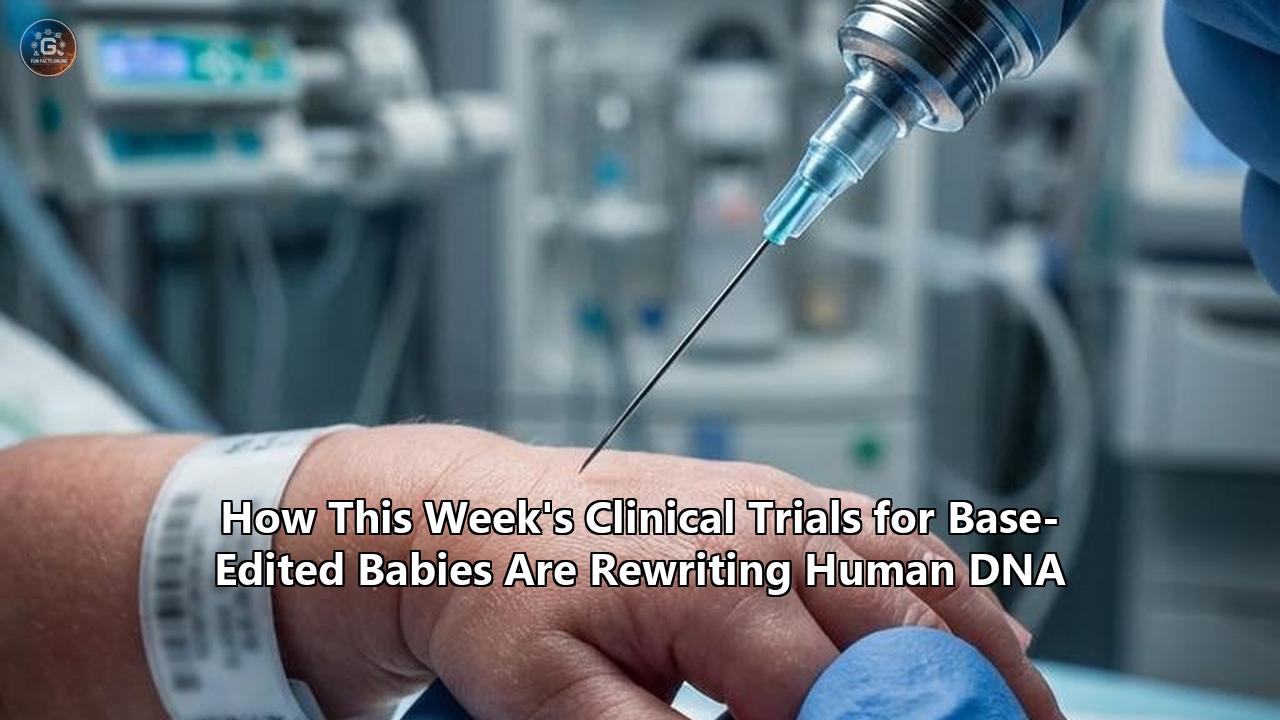
This week, the United States Food and Drug Administration (FDA) and the European Medicines Agency (EMA) jointly authorized the initiation of the first multi-center, platform-based base editing clinical trials for infants and neonates. Operating under a novel regulatory framework designed for customized genetic medicines, these trials target severe, often fatal metabolic and respiratory diseases caused by single-letter mutations in human DNA.
The announcement shifts the application of bespoke genetic medicine from isolated, experimental "N-of-1" emergency interventions into a standardized clinical pathway. Medical centers spanning from the Children's Hospital of Philadelphia (CHOP) to Great Ormond Street Hospital in London are now actively enrolling newborns—and, in a highly monitored secondary cohort, third-trimester fetuses—who carry precise genetic misspellings that would otherwise dictate a severely abbreviated lifespan.
Rather than utilizing traditional gene therapy, which typically relies on viral vectors to deliver functional copies of a missing gene, these trials employ lipid nanoparticles to deliver a highly sophisticated molecular machine directly into the patient's liver or lung cells. Once inside, this machinery does not sever the DNA double helix. Instead, it chemically converts a single errant DNA base—for instance, changing a mutant cytosine (C) into a functional thymine (T)—permanently correcting the disease at its root code.
The authorization of these trials is not an isolated event. It is the culmination of a ten-year escalation in molecular biology, biotechnology manufacturing, and regulatory philosophy. Tracing the timeline from the initial conceptualization of base editors to this week's clinical rollout reveals exactly how the scientific community dismantled the technical and ethical barriers standing between a fatal genetic diagnosis and a definitive cure.
The Baseline: The Pathology of a Single Typo
To understand the escalation of this technology, one must first understand the sheer scale of the problem it attempts to solve. The human genome consists of approximately three billion base pairs of DNA. The four letters of this genetic alphabet—adenine (A), cytosine (C), guanine (G), and thymine (T)—spell out the instructions for every protein in the human body.
In thousands of known genetic diseases, a single incorrect letter out of those three billion is sufficient to cause catastrophic biological failure. Point mutations are responsible for the majority of human genetic variants associated with disease. For example, in severe carbamoyl-phosphate synthetase 1 (CPS1) deficiency, a rare urea cycle disorder that features prominently in this week's trial protocols, a microscopic spelling error disables the liver's ability to produce an essential enzyme.
Without that enzyme, the infant's body cannot break down the nitrogenous byproducts of protein metabolism. Ammonia rapidly accumulates in the bloodstream, crosses the blood-brain barrier, and acts as a potent neurotoxin. For an infant born with this deficiency, consuming normal breast milk or formula becomes a lethal act. Prior to the advent of precision genetic editing, the only viable long-term survival strategy was highly restrictive, low-protein diets combined with a continuous regimen of nitrogen-scavenging drugs, ultimately serving as a temporary bridge to a high-risk liver transplant.
Other point mutations yield similarly devastating results. In certain variants of cystic fibrosis, a premature stop codon halts the production of the CFTR protein, leading to thick, obstructive mucus in the lungs and pancreas. The pathology of these diseases is set in motion long before birth, and the damage compounds rapidly in the first days and weeks of life. Intervening after the infant has suffered neurological damage from ammonia, or after the lungs have sustained structural damage, severely limits the potential for a full recovery. The medical imperative has always been clear: the earlier the intervention, the better the outcome.
2016–2017: Retiring the Scissors for the Pencil
The chronological path to treating these infants began nearly a decade ago, rooted in a fundamental limitation of the first generation of CRISPR technology. When CRISPR-Cas9 first emerged as a programmable genetic tool, it was widely compared to a pair of molecular scissors. The Cas9 enzyme, guided by a customizable RNA sequence, would locate a specific segment of DNA and slice entirely through both strands of the double helix.
This double-strand break relied on the cell's own repair mechanisms to stitch the DNA back together. While highly effective for disrupting or "knocking out" a problematic gene, repairing a specific single-letter mutation through this method was inefficient and fraught with risk. The cellular repair process, known as non-homologous end joining, is error-prone. It frequently results in unpredictable insertions or deletions of DNA letters at the cut site. In a developing infant, introducing random genetic noise into liver or lung cells poses an unacceptable risk of triggering oncogenesis (cancer) or other unforeseen cellular dysfunctions.
The critical turning point occurred in 2016 at the Broad Institute of MIT and Harvard. A team led by chemical biologist David Liu engineered a fundamentally new approach. If CRISPR-Cas9 was a pair of scissors, Liu's team sought to invent a pencil and an eraser.
They achieved this by taking a deactivated version of the Cas9 enzyme—one that could still navigate to a precise location in the genome but could no longer cut the DNA strands. To this deactivated Cas9, they tethered a naturally occurring enzyme called a deaminase. When the guide RNA brought this complex to the target mutation, the Cas9 opened the DNA helix just enough for the deaminase to access the sequence. The deaminase then performed a localized chemical reaction, removing an amino group from a specific target letter.
The first iteration, known as a cytosine base editor, successfully converted a cytosine (C) into a uracil (U), which the cell reads and replicates as a thymine (T). Shortly after, the team developed an adenine base editor, capable of converting an adenine (A) into an inosine (I), which the cell reads as a guanine (G). Together, these tools theoretically placed the majority of known human pathogenic point mutations within reach of a permanent, targeted fix, all without the chaotic risks associated with double-strand DNA breaks.
The initial publication of these findings triggered an immediate escalation in preclinical research. The chemical architecture existed, but deploying it within the chaotic, dynamic environment of a living mammal presented an entirely different tier of complexity.
2018–2021: The Fetal Environment as a Therapeutic Window
The next phase of development required proving that base editors could function safely inside complex organs. The focus rapidly shifted to prenatal and neonatal models, driven by the biological advantages inherent in early human development.
In 2018, researchers at the Perelman School of Medicine at the University of Pennsylvania and CHOP, co-led by Kiran Musunuru, established a vital preclinical precedent. They recognized that administering gene therapies after birth often triggers severe immune responses, as the mature human immune system tends to recognize the viral vectors or the editing enzymes as foreign invaders, attacking them before they can complete their work.
However, the fetal immune system is heavily tolerogenic; it is designed to accept foreign proteins so the fetus does not reject maternal cells. Furthermore, fetal cells are highly proliferative. Editing a small population of liver progenitor cells early in gestation allows those corrected cells to multiply and populate the growing organ naturally, potentially curing the disease before the animal takes its first breath.
Musunuru's team successfully utilized a cytosine base editor in utero on a mouse model of hereditary tyrosinemia type 1 (HT1), a lethal metabolic liver disease. By delivering the base editor prenatally, they altered a specific gene to prevent the accumulation of toxic metabolites, effectively rescuing the mice from neonatal death. They also demonstrated that similar in utero editing could permanently lower cholesterol levels by modifying the PCSK9 gene in healthy mice.
These 2018 experiments validated the biological rationale for early intervention, but they relied on adenoviral vectors for delivery. Viral vectors, while effective at penetrating cell membranes, carry inherent risks, including prolonged expression of the editing enzyme and the potential for integrating viral DNA into the host genome. To move toward human clinical trials, the delivery mechanism had to escalate away from viruses and toward transient, synthetic carriers.
Between 2019 and 2021, the field aggressively optimized lipid nanoparticles (LNPs)—microscopic bubbles of fat designed to encapsulate fragile mRNA. LNPs would eventually gain global prominence during the COVID-19 pandemic as the delivery vehicle for mRNA vaccines. For the gene-editing community, LNPs offered a perfect delivery system for base editors. They would deposit the mRNA instructions into the cell, the cell would manufacture the base editor, the edit would occur, and within a few days, the machinery would completely degrade, leaving behind only the corrected DNA.
2022: The Ex Vivo Bridge
Before these synthetic, transient editors could be deployed systematically inside the bodies of infants, the medical community needed proof of safety in a human subject. This transitional milestone was reached in 2022, though it occurred outside the human body—a process known as ex vivo editing.
In the United Kingdom, a teenager named Alyssa was battling relapsed T-cell acute lymphoblastic leukemia. Conventional treatments, including chemotherapy and a bone marrow transplant, had failed. Her specific cancer involved malignant T-cells, and the standard CAR-T cell therapy—which programs a patient's own immune cells to attack cancer—was ineffective because the engineered T-cells would simply attack each other.
Researchers at Great Ormond Street Hospital utilized base editing to perform a highly complex multiplex edit on donor T-cells. Using base editors, they systematically deactivated several genes in the donor cells, rendering them invisible to Alyssa's immune system, resistant to standard chemotherapy, and incapable of attacking one another, all while programming them to hunt down her leukemic cells.
Because the editing occurred in a laboratory on cells in a petri dish, researchers could meticulously sequence the DNA to ensure no off-target edits had occurred before infusing the cells into Alyssa. The treatment was a profound success, putting her seemingly incurable cancer into remission.
Alyssa's case proved that base editing was safe and effective in human cells. It bridged the gap between animal models and human application. But the ultimate goal of the metabolic and respiratory researchers remained unfulfilled: they needed to perform the edit in vivo—inside the living body of a patient—and they needed to do it for congenital diseases where ex vivo cellular manipulation was biologically impossible. You cannot remove an infant's liver, edit it in a lab, and put it back. The machinery had to be injected directly into the bloodstream.
2024–2025: The Six-Month Sprint to Save KJ Muldoon
The theoretical and preclinical timelines suddenly collapsed into urgent reality in the summer of 2024. The catalyst was a newborn named KJ Muldoon, born with severe CPS1 deficiency.
KJ's specific mutation was a single-letter error in the genetic code that dictates the production of the CPS1 enzyme in the liver. At five months old, despite intense dietary restrictions and continuous medication to scavenge the toxic ammonia from his blood, he was placed on the liver transplant list. The mortality rate for his condition in infancy was approximately 50 percent.
KJ's medical team at CHOP, including Rebecca Ahrens-Nicklas, recognized that waiting for a liver transplant might prove fatal, or the accumulated ammonia might cause irreversible neurological damage before a donor organ became available. Because KJ's mutation was a single base error, it was theoretically reversible using the exact base-editing techniques David Liu's lab had invented and Kiran Musunuru's lab had tested in mice.
What followed was an unprecedented escalation in the speed of medical translation. The Innovative Genomics Institute (IGI) at UC Berkeley, operating under a project called the Beacon for CRISPR Cures, mobilized alongside researchers at CHOP, Penn, and private biotechnology partner Danaher.
The team utilized a concept they called a "cookbook" for rapid, on-demand CRISPR cures. Because the base-editing machinery (the LNP delivery vehicle and the mRNA encoding the deaminase) had already been extensively optimized and characterized for safety, the only variable that needed to be customized for KJ was the guide RNA—the microscopic homing sequence that would direct the editor specifically to his unique mutation.
In a staggering compression of the typical drug development timeline, the consortium designed the bespoke guide RNA, tested its efficacy and safety in human cells and specially bred mouse models (which a partner laboratory produced in a matter of weeks), manufactured clinical-grade LNPs containing the customized therapy, and navigated the FDA's emergency compassionate use authorization protocols.
The entire process, from genetic diagnosis to the initiation of treatment, took exactly six months.
When KJ was just over six months old, he received his first intravenous infusion of the customized lipid nanoparticles. The LNPs traveled through his bloodstream and were absorbed by his liver cells. Inside the cells, the base editor was constructed, sought out the single errant letter in the CPS1 gene, and chemically converted it. To ensure safety, the clinical team started with a very low dose, escalating to a higher dose three weeks later.
The results, published in the New England Journal of Medicine on May 15, 2025, represented a definitive turning point in medical history. KJ suffered no severe adverse immune reactions to the LNPs or the editor. Biochemical markers indicated that his liver had begun processing ammonia effectively. Within weeks, he was able to increase his dietary protein intake and significantly reduce his dependence on nitrogen-scavenging medications. Even when he contracted a common cold—an event that typically triggers a lethal spike in ammonia in CPS1 patients—his body managed the metabolic stress independently.
KJ Muldoon became the first person in history to receive an in vivo, personalized base-editing treatment. The success proved the physical viability of the mechanism, but it immediately triggered a vast regulatory and economic dilemma.
Late 2025: The Regulatory Escalation and the "Cookbook"
The scientific triumph of the Muldoon case exposed a structural flaw in the traditional pharmaceutical regulatory system. It cost millions of dollars and required the synchronized effort of several elite academic and corporate institutions to save one child. There are thousands of rare, "N-of-1" genetic mutations that cause severe disease. If every single bespoke base-editing therapy had to undergo the standard ten-year, phased clinical trial process mandated for novel drugs, the technology would be economically unscalable and virtually useless to the general population.
Through late 2025, the conversation escalated from biological feasibility to regulatory architecture. The NIH's Somatic Cell Genome Editing program, which had partially funded the CHOP/Penn research, began aggressively advocating for a platform-based approval model.
The argument hinged on the modularity of the CRISPR system. The lipid nanoparticle envelope and the mRNA encoding the base editor remain identical across different treatments. Only the 20-nucleotide sequence of the guide RNA changes. Proponents argued that the FDA and EMA should regulate the platform itself. Once the delivery and the editing enzyme are proven safe, altering the guide RNA to target a different mutation in the liver should not require a completely new Phase 1 safety trial.
By January 2026, the momentum for this shift was undeniable. MIT Technology Review listed "Base-edited babies" as one of the 10 Breakthrough Technologies of 2026, explicitly noting that clinical trials for these bespoke gene-editing drugs were planned and that regulatory approvals for the modular components were imminent.
Simultaneously, researchers were pushing the boundaries of the delivery mechanisms. A landmark 2025 study published in PNAS demonstrated that systemic in utero administration of nanoparticles containing adenine base editors could successfully reach the developing lungs and gastrointestinal tracts of fetal mice, providing durable correction of the cystic fibrosis transmembrane conductance regulator (CFTR) gene. This research proved that LNPs could be targeted to organs beyond the liver, setting the stage for treating multiorgan congenital diseases before birth.
These two forces—the urgent need for a scalable regulatory pathway and the expanding data on multi-organ in utero LNP delivery—collided to produce the framework for the sweeping trials announced this week.
This Week: Inside the New Trial Architecture
The base editing clinical trials authorized this week by the FDA and EMA represent the formal operationalization of the "cookbook" platform. The trials are uniquely structured to test not just a single drug, but the modular regulatory concept itself.
The protocol is divided into carefully escalated cohorts. The first cohort involves neonates diagnosed with severe, early-onset metabolic disorders originating in the liver, including broader variants of CPS1 deficiency and Ornithine Transcarbamylase (OTC) deficiency. Because the liver effectively absorbs lipid nanoparticles administered intravenously, this cohort builds directly upon the pharmacokinetic data gathered during the KJ Muldoon emergency intervention.
The trial design is unprecedented. Rather than enrolling patients with the exact same mutation, the trial enrolls patients with the exact same class of disease, utilizing customized guide RNAs for each specific patient while maintaining the exact same LNP and editor formulation. The primary endpoint is to prove that changing the guide RNA does not alter the biodistribution or the safety profile of the lipid nanoparticles, thereby validating the platform-approval concept.
The second cohort represents a massive leap forward in both clinical ambition and medical ethics. Building upon the 2018 tyrosinemia models and the recent 2025 cystic fibrosis data, this arm of the trial will administer the base-editing LNPs in utero to third-trimester fetuses diagnosed via prenatal sequencing with severe cystic fibrosis and specific congenital lung diseases.
For the fetal cohort, the delivery is performed via ultrasound-guided umbilical vein injection, a procedure whose physical risks are comparable to a standard fetal blood transfusion. The clinical hypothesis being tested is that early intervention, prior to the accumulation of thick mucus and the subsequent inflammatory damage in the fetal lungs and pancreas, will result in a child born entirely free of the phenotypic symptoms of cystic fibrosis.
Furthermore, the trial protocols mandate stringent, multi-year monitoring to address the most persistent concern in genome editing: off-target effects. While base editors do not cut the DNA, they can occasionally deaminate adjacent, non-target letters, or cause minor transcriptome-wide RNA edits. Advances in whole-genome sequencing allow trial monitors to sample the patients' blood and tissue post-infusion, analyzing billions of base pairs to confirm that no oncogenes have been inadvertently activated.
The Forward Vector: Unresolved Variables and Next Steps
The initiation of these base editing clinical trials permanently alters the trajectory of pediatric and maternal-fetal medicine. The transition from an experimental, single-patient success into a systematic, multinational trial confirms that molecular correction is no longer theoretical. However, the exact parameters of how this technology will scale globally remain highly complex.
First, the scientific community maintains a strict ethical firewall between somatic editing and germline editing. The treatments administered in this week's trials target somatic cells—the liver, the lungs, the gastrointestinal tract. Changes made to these cells are not passed down to the patient's future children. This is a fundamental distinction from the widely condemned actions of He Jiankui, who engineered CRISPR babies in 2018 by editing embryos, thus altering the human germline.
Yet, the in utero cohort introduces a unique variable. When delivering lipid nanoparticles systemically to a developing fetus, researchers must be absolutely certain that the LNPs do not inadvertently penetrate the fetal gonads and edit developing reproductive cells. Preclinical data in primates and mice indicates that LNPs do not cross into germ cells at therapeutic doses, but longitudinal human data from these active trials will be required to definitively prove this barrier holds in human biology.
Second, the expansion of the platform relies on the development of new tissue-targeting mechanisms. Currently, LNPs naturally accumulate in the liver, making metabolic diseases the logical starting point. Getting LNPs to efficiently penetrate the blood-brain barrier for neurological disorders, or target muscle tissue for muscular dystrophy, requires re-engineering the lipid envelopes with specific targeting ligands. Parallel base editing clinical trials focusing on hereditary deafness are already utilizing localized administration, injecting the editors directly into the inner ear to repair mutations in the auditory nerves. Systemic delivery to the brain and muscles represents the next immediate frontier for biotechnology companies involved in the current trials.
Finally, the economics of on-demand genetic medicine remain largely unresolved. While the regulatory platform approval drastically reduces the time and cost of developing bespoke guide RNAs, the manufacturing of clinical-grade lipid nanoparticles and the intensive genomic sequencing required for each patient currently costs hundreds of thousands of dollars per intervention. The success of this week's trials will force healthcare systems and insurers to develop new reimbursement models that account for the upfront cost of a permanent cure versus the lifelong expense of managing a chronic, severe genetic disease.
The story of base-edited therapeutics is no longer just a narrative of chemical discovery or animal models. With infants actively receiving customized molecular corrections in hospitals this week, the timeline has officially merged with standard medical practice. The data generated over the next twelve months will not only determine the survival of the enrolled neonates but will establish the exact regulatory and biological blueprints required to render a vast category of congenital human diseases entirely obsolete.
Reference:
- https://www.nih.gov/news-events/nih-research-matters/infant-rare-disease-receives-customized-gene-therapy
- https://www.smithsonianmag.com/smart-news/a-baby-with-a-rare-disease-is-the-first-to-receive-personalized-gene-therapy-180986652/
- https://www.pnas.org/doi/10.1073/pnas.2418731122
- https://www.chemistry.harvard.edu/news/2025/06/new-research-science-gives-humans-more-say-over-their-destinies
- https://penntoday.upenn.edu/news/study-prenatal-gene-editing-dna-utero
- https://pmc.ncbi.nlm.nih.gov/articles/PMC8713252/
- https://pmc.ncbi.nlm.nih.gov/articles/PMC6249685/
- https://pmc.ncbi.nlm.nih.gov/articles/PMC9202471/
- https://innovativegenomics.org/news/first-patient-treated-with-on-demand-crispr-therapy/
- https://www.nih.gov/news-events/news-releases/infant-rare-incurable-disease-first-successfully-receive-personalized-gene-therapy-treatment
- https://www.reddit.com/r/TrueReddit/comments/1qawmhf/10_breakthrough_technologies_2026/
- https://www.hedweb.com/hedethic/philosophyforum2021.html
- https://www.coherentmarketinsights.com/market-insight/hereditary-deafness-market-4854