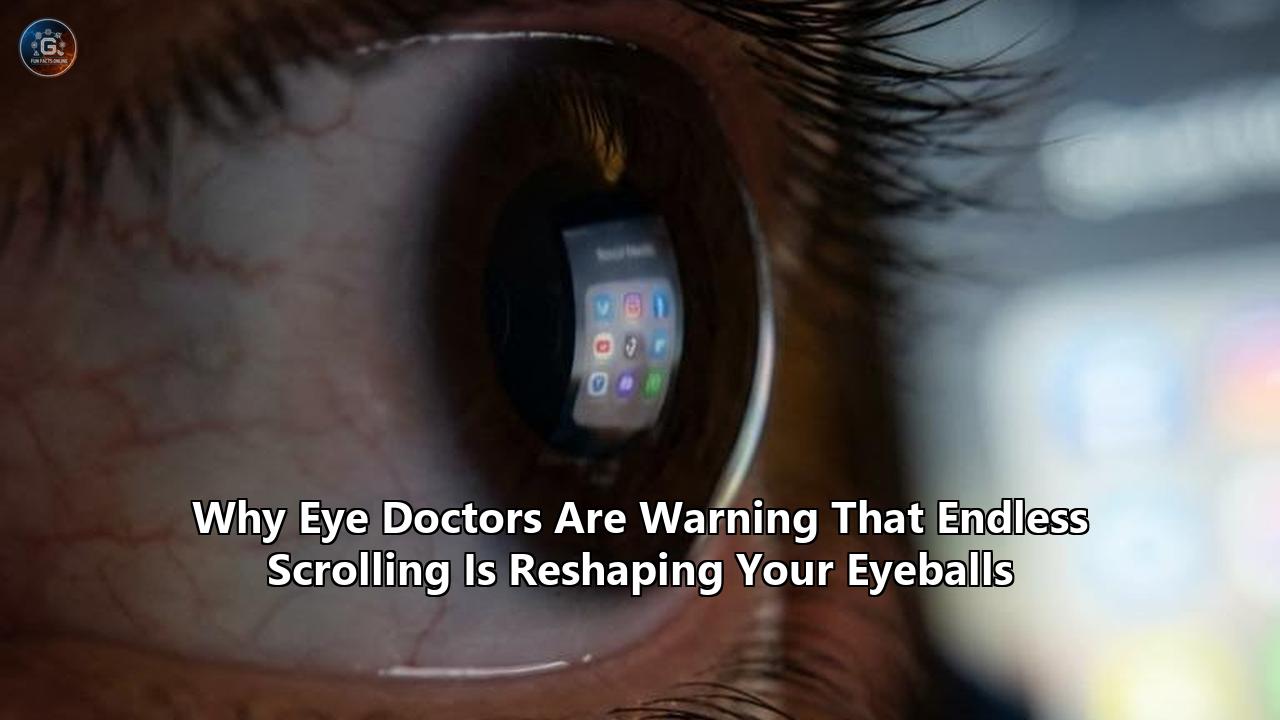
For decades, the clinical consensus within ophthalmology held a comforting assumption: once a human reached their early twenties, the physical dimensions of their eyeballs locked into their final adult shape. Visual acuity might slowly degrade with age, but the architectural structure of the eye—specifically its axial length from the cornea to the retina—was considered structurally stable after puberty.
That biological baseline is now fracturing under the weight of modern digital consumption.
A wave of large-scale clinical data published throughout late 2025 and early 2026 has forced a total reevaluation of adult ocular health. At the American Optometric Association (AOA) Conference, researchers led by Dr. Alvin Munsamy presented undeniable biometric evidence that the continuous, close-proximity viewing required by mobile devices is causing physical anatomical changes in young adults. Using objective application-tracking software and dry autorefraction on adults aged 18 to 30, investigators found a direct, dose-dependent relationship between mobile screen exposure and the physical elongation of the eyeball.
This axial elongation is the mechanical driver of myopia (nearsightedness). As the eyeball stretches front-to-back, the lens can no longer focus incoming light directly onto the retina, causing the focal point to land in front of it. The resulting blurriness is just the first symptom of a structural deformity. We are now witnessing a localized epidemic of adult-onset axial elongation, a demographic shift that eye care professionals are directly attributing to the sustained ocular mechanics required by social media consumption.
The medical community is no longer just treating temporary digital fatigue. They are confronting a scenario where the relentless visual demands of digital platforms are actively reshaping the physical geometry of human vision.
The Biomechanics of the Infinite Feed
To understand why this anatomical shift is happening, one must first dismantle the mechanics of human vision and how they interact with modern software design.
When a person looks at an object in the distance, the ciliary muscles inside the eye relax, pulling the suspensory ligaments taut and flattening the crystalline lens. This resting state requires virtually zero muscular exertion. However, when focus is shifted to a smartphone held eight to twelve inches from the face, a complex mechanical process called accommodation occurs. The ciliary muscles must contract violently. This contraction releases the tension on the zonular fibers, allowing the lens to bulge into a more spherical shape, which increases its refractive power to keep the close-up text sharp.
Historically, humans engaged in near-work through reading printed books or writing. These activities certainly required accommodation, but they were static. The eyes locked onto a fixed plane, moved linearly across a page, and benefited from predictable, ambient light.
The modern smartphone interface—specifically the infinitely scrolling vertical feeds of short-form video platforms—demands an entirely different, vastly more punishing ocular workload.
Researchers at the SRM Institute of Science and Technology recently engineered a portable system to measure the real-time visual activity of users consuming different types of digital media. They monitored blink rates, inter-blink intervals, and pupil diameter variations over hour-long sessions of e-book reading, long-form video watching, and short-form social media scrolling.
The data isolated the specific effects of scrolling on eyes. The continuous, rapid-fire consumption of short-form videos forces the eye into a state of sustained hyper-arousal. Because the content is not static, the eye must constantly re-evaluate its focal depth. Furthermore, social media feeds are characterized by violent, unpredictable shifts in brightness, contrast, and color intensity from one post to the next.
This visual chaos triggers erratic pupil fluctuations. The pupil is forced to dilate and constrict repeatedly as the user swipes through videos of varying luminance. The SRM Institute study found that this specific type of media consumption reduced the human blink rate to dangerously low levels. A normal, resting human blinks roughly 15 times per minute. During active scrolling, that rate plummets to fewer than five blinks per minute, and the blinks that do occur are often incomplete micro-blinks that fail to distribute the lipid layer of the tear film across the cornea.
The consequence is a dual-front assault on the eye: intense, unrelenting ciliary muscle contraction combined with severe evaporative dry eye. The combination of these stressors, sustained over hours, tricks the brain and the localized ocular tissue into a state of adaptive remodeling. The eye, sensing the chronic demand for extreme near-focus, begins to remodel its own scleral envelope. The sclera thins and stretches, elongating the eye to permanently reduce the muscular effort required for near vision.
The eye is effectively mutating to survive the digital environment, sacrificing distance vision to optimize for the smartphone screen.
The Dose-Response Reality of Digital Exposure
The sheer volume of exposure is what transitions this from a temporary strain to a permanent physiological alteration.
In a massive systematic review and meta-analysis published in JAMA Network Open, researchers led by Dr. Young Kook Kim at the Seoul National University College of Medicine analyzed data from 45 studies encompassing more than 335,000 participants. The objective was to quantify the exact tipping point where screen time translates into measurable ocular damage.
The findings established a severe dose-response curve. The data revealed that every single one-hour increment of daily digital screen time increases the odds of myopia by 21%. More alarmingly, the risk curve is not linear; it accelerates violently. The researchers identified a specific window of vulnerability: myopia risk surges significantly between one and four hours of daily screen time, eventually doubling for individuals who exceed the four-hour threshold.
When the AOA investigators analyzed the specific habits of their university cohort, the numbers far exceeded these thresholds. Daily mobile device screen exposure averaged nearly 7.5 hours (447 minutes), while weekly exposure topped 34 hours. The investigators noted that weekly cumulative exposure posed an even higher risk than isolated daily spikes, proving that the cumulative burden of near-work is what ultimately breaks down the eye’s structural integrity.
This data invalidates the previous clinical belief that adult eyes are immune to environmentally induced myopia. The physical lengthening of the eye (axial elongation) observed in these adults directly correlated with their objective screen time metrics. The adults who spent the most time staring at their phones literally had longer eyeballs than those who did not.
Dispelling the Blue Light Misdirection
As digital eye strain became a ubiquitous complaint, a massive consumer industry emerged offering a heavily marketed solution: blue light-blocking glasses and screen filters. For years, consumers were led to believe that the high-energy visible (HEV) blue light emitted by light-emitting diodes (LEDs) was the primary mechanism destroying their eyesight.
Clinical ophthalmology has spent the last year aggressively dismantling this narrative. The American Academy of Ophthalmology (AAO) recently issued definitive guidance clarifying that the amount of blue light emitted by consumer electronics has never been shown to cause physical damage to the human retina or accelerate age-related macular degeneration.
The clinical experiments that originally sparked the blue light panic involved exposing isolated cells in petri dishes, or nocturnal animals, to intense, highly concentrated beams of blue light that in no way mimicked the output of a smartphone screen.
While late-night blue light exposure does actively suppress the pineal gland's production of melatonin—thereby disrupting circadian rhythms and severely degrading sleep architecture—it is not the cause of myopia or digital eye strain.
The effects of scrolling on eyes are mechanical, not phototoxic.
When a user experiences burning eyes, blurred vision, and frontal headaches after a three-hour scrolling session, they are not feeling the burn of blue light radiation. They are experiencing asthenopia (severe eye fatigue) caused by ciliary muscle spasm, combined with the friction of a desiccated cornea scraping against the inside of the eyelid due to a depressed blink rate.
Focusing public health efforts on blue light filters has functioned as a dangerous misdirection. It provided consumers with a false sense of security, encouraging them to maintain toxic levels of prolonged near-work under the assumption that a yellow-tinted piece of plastic was protecting their vision. As the JAMA study explicitly noted, simply reducing screen brightness or slapping a filter over a display does nothing to alter the focal distance or the muscular demand placed on the eye.
Cybersickness and the Neurological Toll
The damage inflicted by infinite scrolling extends beyond the localized tissues of the eye, triggering systemic neurological distress. The visual cortex and the vestibular system (the inner ear apparatus responsible for balance) operate in a constant, delicate synchronization. When you walk, your eyes see the movement, and your vestibular fluid registers the physical acceleration.
Endless scrolling hijacks this system, creating a profound sensory conflict.
As a user rapidly flicks through full-screen, high-definition videos on platforms like TikTok or Instagram Reels, the eyes process massive amounts of high-speed motion data. The visual cortex signals to the brain that the environment is moving rapidly. However, the vestibular system, registering that the user is sitting motionless on a couch, sends contradictory signals.
This visual-vestibular mismatch triggers a localized manifestation of motion sickness known in clinical circles as cybersickness.
According to the sensory conflict theory, the brain erroneously interprets this specific type of sensory contradiction as a symptom of neurotoxin ingestion—essentially, the brain thinks it is hallucinating due to poisoning. In response, it triggers the body's defense mechanisms against intoxication: nausea, dizziness, cold sweats, and severe fatigue.
The SRM Institute study provided brutal empirical data on this phenomenon. Following just one hour of scrolling through short-form social media video content, a staggering 83% of participants reported experiencing acute psychophysiological disorders. These symptoms included severe mental exhaustion, elevated anxiety, and subsequent sleep disturbances. Nearly 60% of the cohort developed physical symptoms ranging from localized neck pain to moderate-to-severe eyestrain.
The visual system is not isolated; it is a direct extension of the brain. Forcing the optic nerve to process the erratic, high-velocity luminance and motion changes of algorithmic social media feeds induces a state of chronic neurological stress.
The Clinical Trajectory of High Myopia
The physical elongation of the eyeball is not merely a cosmetic issue or a minor inconvenience that can be waved away with a stronger optical prescription. Axial elongation fundamentally compromises the structural integrity of the eye, initiating a cascade of severe, potentially blinding complications later in life.
A normal adult eye has an axial length of roughly 23.5 millimeters. In individuals with high myopia—driven by years of excessive near-work and screen time—the eye can stretch to 26 millimeters or more.
This stretching has devastating mechanical consequences. The retina, the delicate layer of light-sensitive tissue lining the back of the eye, does not stretch elastically. As the sclera (the white outer wall) elongates, the retina is pulled taut. It becomes progressively thinner and more fragile.
This physical thinning drastically increases the risk of multiple severe ocular pathologies:
Myopic Maculopathy: As the eye stretches, the macula—the central area of the retina responsible for high-resolution, straight-ahead vision—can begin to split or atrophy. The mechanical tension causes the underlying blood vessels to rupture, leading to subretinal hemorrhages and irreversible central vision loss. Retinal Detachment: A thinned, stretched retina is highly susceptible to peripheral tears. Once a tear occurs, the vitreous fluid inside the eye can seep underneath the retina, peeling it away from the back wall of the eye like wet wallpaper. Retinal detachment is a surgical emergency that, if left untreated, results in total blindness. Glaucoma: The deformation of the eyeball alters the internal fluid dynamics and the physical structure of the optic nerve head. Highly myopic eyes have a significantly higher susceptibility to primary open-angle glaucoma, a silent disease that slowly destroys peripheral vision through optic nerve damage.By accelerating the onset of axial elongation in young adults, the current digital consumption habits are setting a demographic time bomb. An individual who develops a -5.00 diopter prescription by age 25 due to occupational and recreational screen time is at a exponentially higher risk of experiencing devastating vision loss in their 50s and 60s compared to someone with stable, normal vision.
The Problem With "Screen Time" Metrics
One of the primary challenges revealed by the latest clinical data is the failure of generic "screen time" as a useful health metric. For years, public health officials treated all screen exposure as fundamentally equal. The 2026 data proves this approach is wildly inaccurate.
The mechanism of injury is dictated by the specific type of visual engagement.
Watching a movie on a television positioned ten feet away involves a screen, but it requires almost zero ciliary muscle accommodation, and the ambient lighting of the room provides spatial context that prevents visual-vestibular mismatch.
Reading a document on a desktop monitor positioned two feet away requires moderate accommodation, but the static nature of the text allows for predictable eye tracking and a relatively stable blink rate.
Scrolling through a social media feed on a smartphone held eight inches from the face, however, represents the absolute zenith of ocular toxicity. It combines maximum accommodative demand (due to extreme proximity) with maximum neurological demand (due to erratic, algorithmic content switching) and maximum tear film evaporation (due to blink suppression).
The JAMA Network Open researchers specifically warned that simply "reducing screen time" is an ineffective prevention strategy if the user merely replaces smartphone scrolling with another intense near-vision task, like reading a physical book very closely. The cumulative burden of near-work is the true enemy.
Clinical Countermeasures: How Experts Are Fighting Back
Faced with an unprecedented surge in adult structural vision changes, the optometric and ophthalmologic communities are deploying a multi-tiered approach to mitigate the damage.
The Evolution of the 20-20-20 Rule
For years, eye care providers recommended the 20-20-20 rule: every 20 minutes, look at something 20 feet away for 20 seconds. While this remains foundational advice, experts are now aggressively updating this protocol to address the specific effects of scrolling on eyes.
Modern clinical guidance now emphasizes the "blink rehabilitation" aspect of the break. Because the inter-blink interval stretches so severely during social media consumption, users are instructed not just to look away, but to perform intentional, full ocular closures. The updated protocol requires the user to close their eyes completely for three full seconds to physically force the meibomian glands to express the lipid oils required to stabilize the tear film.
Pharmacological and Optical Interventions
In pediatric myopia management, low-dose atropine eye drops have been used successfully to paralyze the accommodation reflex slightly and halt axial elongation. With the new data showing adult eyeballs continuing to lengthen, researchers are beginning to evaluate the efficacy of adult pharmacological interventions.
More immediately, optometrists are increasingly prescribing specialized multifocal contact lenses and anti-fatigue spectacle lenses for young adults. These lenses feature a slight magnification boost in the lower portion of the lens. When the user looks down at their smartphone, the lens artificially assumes a portion of the focusing burden, relieving the ciliary muscles from having to maintain a maximum contraction state.
The Management of Pseudomyopia
Clinicians are also becoming highly attuned to identifying accommodative spasm, or "pseudomyopia". When a user spends six hours staring at a phone, the ciliary muscles can quite literally lock up, cramping into a contracted state. When the user finally looks up, their distance vision is blurry, not because the eyeball has elongated yet, but because the muscle is refusing to relax.
If an optometrist measures the patient's vision while the muscle is locked, they might erroneously prescribe a stronger distance glass. Wearing this stronger glass then forces the eye to work even harder during the next screen session, accelerating the actual physical elongation of the eye. To combat this, experts are increasingly utilizing cycloplegic drops during adult eye exams to temporarily paralyze the focusing muscle, revealing the eye's true anatomical prescription before writing a new script.
Technological Solutions: Can Devices Fix The Damage?
As the clinical data surrounding the effects of scrolling on eyes becomes undeniable, the technology sector is facing mounting pressure to engineer software-level mitigations. Device manufacturers are slowly acknowledging that the interfaces they designed to maximize engagement are physically damaging their users.
Proximity Sensors and Screen Distance Alerts
Because the intensity of accommodative strain increases exponentially the closer an object is to the face, maintaining a safe viewing distance is the most critical mechanical defense against myopia.
Leading device manufacturers have recently integrated ambient depth-sensing technology to combat this. By utilizing the same infrared dot-projectors used for facial recognition, modern operating systems can continuously calculate the exact distance between the user's cornea and the screen. If the user holds the device closer than 12 inches for an extended period, the operating system throws up an opaque warning screen that cannot be bypassed until the user physically pushes the device further away.
This forced behavioral modification targets the exact mechanism of injury identified in the AOA and JAMA studies: prolonged, ultra-close near work.
Interface Pacing and E-Ink Integration
To combat the plummeting blink rates and pupil fluctuations caused by rapid-fire video scrolling, specialized third-party accessibility developers are experimenting with "pacing" algorithms. These tools artificially inject micro-pauses or fluid blank spaces between short-form videos, breaking the hypnotic visual loop and triggering a natural blink reflex.
Furthermore, the resurgence of high-refresh-rate E-ink displays offers a hardware-level solution for heavy readers. Unlike LCD or OLED screens which blast light directly into the user's eye, E-ink relies on ambient reflected light, perfectly mimicking the optical properties of physical paper. While unsuitable for high-definition video feeds, these displays drastically reduce the accommodative stress of prolonged text consumption.
The Environmental Antidote: The Return to Natural Illuminance
Perhaps the most profound realization to emerge from the recent flurry of myopia research is the identification of the eye's natural defense mechanism: sunlight.
For years, researchers noted that children who spent more time outdoors had significantly lower rates of myopia, regardless of how much time they spent reading. The exact mechanism remained debated until recently. It is now understood that exposure to the high-intensity ambient light of the outdoors stimulates the retina to release a massive cascade of dopamine.
This retinal dopamine acts as a structural regulator for the sclera. It chemically signals the eye to stop growing, actively inhibiting the stretching process that causes axial elongation.
The modern digital lifestyle is catastrophic not just because it forces the eye into extreme near-focus, but because it confines the user indoors, starving the retina of the dopamine required to maintain structural rigidity. The lighting inside a typical office or bedroom maxes out at roughly 500 lux. A cloudy day outdoors provides upward of 10,000 lux, while direct sunlight can exceed 100,000 lux.
In response to the JAMA Network Open study, public health experts are pivoting away from simply demonizing screen time. The new mandate is a chemical one: the eye requires a minimum of two hours of outdoor illuminance per day to generate enough dopamine to counteract the structural degradation caused by smartphone use.
The Dutch population-based study highlighted this moderation effect perfectly. Researchers tracking teenagers found that continuous smartphone use severely worsened the spherical equivalent of refraction and axial length—but crucially, this negative association vanished in students who maintained high outdoor exposure. The outdoor light acted as a chemical shield, buffering the eye against the mechanical strain of the screen.
This realization is prompting a radical shift in how we structure daily life. Experts are advocating for "green time" to offset "screen time." This involves taking digital devices outside. The human eye is perfectly capable of enduring intense near-work without permanently elongating, provided it is bathed in the ambient lux levels that trigger dopamine regulation.
The Broader Societal Implications
The restructuring of human eyeballs carries immense economic and societal weight. The World Health Organization has already projected that half the global population will be myopic by 2050, with nearly one billion people suffering from high myopia.
The economic burden of this shift is staggering. It encompasses the direct costs of continuous optical correction—glasses, advanced contact lenses, refractive surgeries—as well as the catastrophic secondary costs of treating the blinding pathologies associated with elongated retinas. Treating myopic macular degeneration and retinal detachments requires highly specialized surgical interventions, placing an immense strain on global healthcare infrastructures.
Furthermore, the psychophysiological symptoms detailed in the SRM Institute study—anxiety, sleep disruption, and chronic physical fatigue—are severely degrading workforce productivity and general quality of life. The digital tools designed to connect and entertain us are fundamentally incompatible with our baseline ocular hardware.
What to Watch For Next
As we move deeper into 2026, the intersection of digital consumption and ocular health is approaching a critical regulatory and technological juncture.
Expect to see a rapid acceleration in the development of biometric wearables capable of monitoring axial length and ocular strain in real time. Just as smartwatches currently alert users to irregular heart rhythms, future iterations of augmented reality hardware and intelligent eyewear will likely feature embedded sensors that track ciliary muscle fatigue, warning users to disengage before structural damage occurs.
Clinically, the optometric field will likely standardize routine axial length biometry for adult patients. Historically, measuring the physical length of the eyeball was reserved for cataract surgery preparation or severe pediatric myopia management. Given the new reality of adult-onset elongation, baseline biometric measurements will become a standard component of the annual adult eye exam, allowing doctors to track physical deformation year over year.
Finally, the design philosophy of digital platforms will face intense scrutiny. The current UI/UX paradigms—infinite vertical scrolling, auto-playing high-contrast videos, and the elimination of natural stopping cues—are now clinically recognized as occupational hazards to the visual system. We may see the emergence of "ocular-safe" design standards, prioritizing interface pacing, automated focal distance adjustments, and visually restful color palettes.
The human eye is an incredibly adaptive organ, but it is currently losing an evolutionary arms race against the smartphone. The structural deformation of the adult eye is no longer a theoretical risk; it is a documented, clinical reality unfolding in real time. Halting this epidemic requires more than a simple adjustment to screen brightness. It demands a fundamental overhaul of our relationship with digital proximity, a relentless commitment to ambient light exposure, and a strict adherence to the biomechanical limits of human vision.
Reference:
- https://www.hcplive.com/view/strong-association-between-smartphone-use-and-myopia-according-to-new-study
- https://www.calverteyecenter.com/3-effects-of-long-term-digital-eye-strain-and-screen-usec828a312
- https://medicaldialogues.in/mdtv/ophthalmology/videos/can-just-an-hour-of-scrolling-reels-lead-to-eye-strain-study-provides-insights-153771
- https://southwesteye.com/blog/excessive-screen-time-on-eyes-effects-how-to-fight-back/
- https://www.myopiaprofile.com/articles/digital-screen-time-myopia-risk
- https://www.aao.org/eye-health/tips-prevention/digital-devices-your-eyes
- https://visionscienceacademy.org/how-good-your-eyes-are-at-scrolling-web-pages/
- https://pubmed.ncbi.nlm.nih.gov/34625399/
- https://pmc.ncbi.nlm.nih.gov/articles/PMC12070634/
- https://www.quora.com/Do-myopia-increases-with-high-usage-of-smartphone
- https://www.reviewofoptometry.com/article/smartphone-usage-again-associated-with-myopia-development
- https://www.jbph.org/article/details/impact-of-screen-time-reduction-and-outdoor-activities-on-myopia-progression-in-school-aged-children