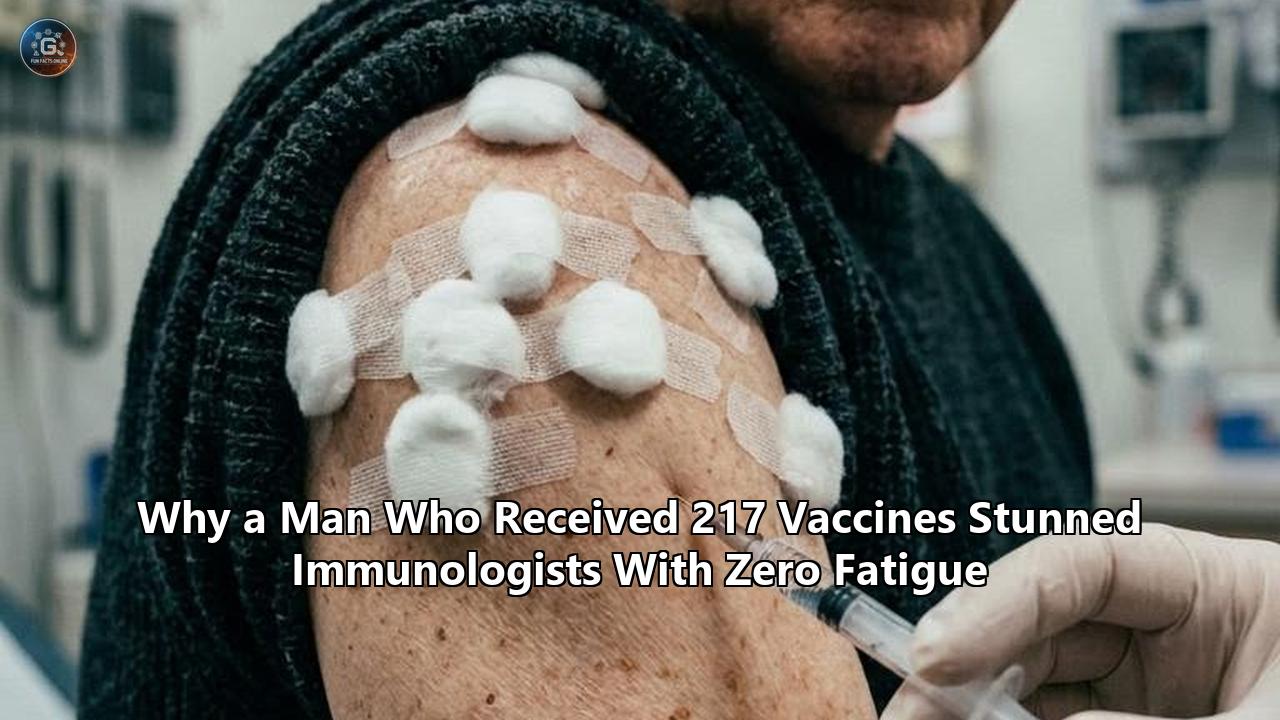
The Institute of Microbiology – Clinical Microbiology, Immunology and Hygiene at Friedrich-Alexander-Universität Erlangen-Nürnberg had spent three years analyzing standard cellular reactions to messenger RNA and viral vectors when an extraordinary case file arrived on their desks. A 62-year-old man from the central German city of Magdeburg had systematically bypassed every public health registry in the country, receiving hundreds of SARS-CoV-2 inoculations across a 29-month span.
When researchers led by Privatdozent Dr. Kilian Schober published their initial findings in The Lancet Infectious Diseases, the immunological community expected a post-mortem on a ruined immune system. Standard immunological models suggested that such extreme, continuous antigen presentation should have induced severe T-cell exhaustion, immune tolerance, or systemic autoimmunity. Instead, the laboratory readouts revealed an intact, highly functional adaptive response that showed no biological signs of fatigue.
The case disrupted textbook assumptions regarding the limits of human immunization. It exposed unexpected dynamics in the persistence of memory T cells, the structural ceilings of somatic hypermutation, and the distinct cellular differences between replicating chronic pathogens and repeated synthetic antigen exposures. Behind the sensational headlines lies a rare window into the outer boundaries of human immunology, an unusual fraud investigation, and a high-resolution laboratory investigation that tracked an immune system pushed to extreme parameters.
The Magdeburg Dossier: Exploiting the Fractures of Decentralized Bureaucracy
The story began not in an academic clinical research unit, but within the criminal justice system of Saxony-Anhalt. In early 2022, staff at a municipal vaccination center in Eilenburg, Saxony, grew suspicious of a repeat customer. The man presented identity documents, rolled up his sleeve, collected his stamped vaccination pass (Impfpass), and vanished, only to reappear at other centers across state lines.
The underground trade in counterfeit documentation was peaking across Central Europe. Germany’s digital certification architecture relied on the CovPass mobile application, which converted stamped paper booklets issued by regional vaccination hubs into digitally signed QR codes at local pharmacies. The system had a fatal structural flaw: Germany’s federalized health infrastructure lacked a centralized, real-time national vaccination registry. State health authorities (Gesundheitsämter) operated on siloed databases, deliberately restricted by strict domestic data privacy laws (Datenschutz).
A broker could exploit this blind spot by having genuine vaccines administered under false names or using their own body to collect authentic batch numbers and administrative stamps, which could then be sold to individuals seeking vaccination passes without receiving injections.
The public prosecutor’s office in Magdeburg initiated a preliminary investigation into the individual on suspicion of commercial forgery and issuing unauthorized health documentation. By cross-referencing intake logs, pharmacy records, and municipal center appointment books, investigators established that the man received 217 vaccines between June 2021 and November 2023.
Of these, 134 separate inoculations were officially documented and verified by prosecutorial authorities across an intense nine-month window. The remaining 83 were recorded via contemporaneous personal documentation corroborated by regional clinic receipts.
                     MAGDEBURG CASE: INOCULATION TIMELINE

  June 2021                 Mid-2022                 Nov 2023
     │                         │                        │
     ▼                         ▼                        ▼
  First Dose               Prosecution              217th Dose
  Administered             Confirms 134 Jabs        (Study Protocol)
     │                         │                        │
     └──────── 29 Months ──────┴────────────────────────┘
               • 8 Distinct Vaccine Formulations
               • Peak Density: Multiple Doses Per Week
               • Zero Anti-Nucleocapsid Seroconversion
Then the criminal case stalled. Under the German Criminal Code (Strafgesetzbuch), prosecuting someone for undergoing medical procedures on their own body is remarkably difficult if physical harm cannot be shown and direct financial fraud against the state is unprovable. The man had allowed nurses to inject the vaccines directly into his own deltoids rather than forging the doctor's signature himself.
No criminal charges were ultimately brought. But news of the investigation reached the local press, catching the attention of researchers in Bavaria.
"We learned about his case via newspaper articles," Dr. Kilian Schober recalled. "We then contacted him and invited him to undergo various tests in Erlangen. He was very interested in doing so."
The research team recognized an unprecedented opportunity: an empirical test of the limits of human immune capacity.
Inside the Erlangen Lab: Constructing the Investigative Framework
When the subject arrived at the Universitätsklinikum Erlangen, the research team, co-led by doctoral researcher Katharina Kocher, designed an extensive diagnostic framework.
The primary clinical objective was tracking the adaptive immune system's status. When the study commenced, the subject had accumulated 213 doses. Despite direct medical advice warning against further interventions, the individual insisted on continuing his regimen, allowing the team to convert an observational post-hoc study into a prospective kinetic trial.
The subject received his 217th dose under controlled observation, which allowed the team to draw blood immediately prior to the injection, at day three, and at day thirty post-inoculation. This sequence provided precise temporal tracking of acute recall kinetics.
                      PROSPECTIVE PROTOCOL (DOSE 217)

  [ Day 0: Baseline Draw ] ──► [ Deltoid Injection ] ──► [ Day 3: PBMC Draw ] ──► [ Day 30: Serum Readout ]
            │                                                      │                         │
            ▼                                                      ▼                         ▼
   Pre-existing Titers                                    Early T-Cell Recall       Stabilized Neutralization
   & Memory B Reserves                                    & Cytokine Kinetics       & Avidity Confirmation
The laboratory secured:
- Frozen longitudinal serum samples spanning from November 2019 (providing an authentic, pre-pandemic baseline) through 2023.
- Fresh peripheral blood mononuclear cells (PBMCs) isolated via density gradient centrifugation.
- Saliva samples to assess mucosal secretory IgA profiles.
- A control cohort consisting of 29 individuals matched across relevant demographic variables who had completed a standard three-dose mRNA vaccination schedule.
The team ran a panel of 62 clinical chemistry parameters. Liver function markers—alanine aminotransferase (ALT), aspartate aminotransferase (AST), and gamma-glutamyl transferase (GGT)—were normal. Renal profiles, serum creatinine, and blood urea nitrogen showed no deviations. Complete blood counts confirmed normal absolute lymphocyte, neutrophil, and thrombocyte numbers, with no evidence of systemic inflammation (C-reactive protein and ferritin were within reference ranges). Autoimmune screening, including antinuclear antibodies (ANA) and anti-double-stranded DNA, yielded no evidence that hyperstimulation had induced auto-reactive clones.
The central mystery deepened: classical cellular immunology warned that this magnitude of exposure should cause immune breakdown. Yet, the physical organism showed no sign of functional distress.
The Mechanics of Cellular Exhaustion
To understand why immunologists were startled by these results, one must examine the standard model of chronic antigen presentation.
When a T cell encounters its cognate peptide presented on major histocompatibility complex (MHC) molecules, it undergoes rapid blastogenesis and clonal expansion. Driven by interleukin-2 (IL-2), single antigen-specific naive CD8+ T cells can multiply into thousands of armed effector cells within days, expressing granzyme B and perforin to eliminate targets.
When an antigen persists indefinitely, this system encounters structural limits.
In classic models of chronic infection—such as human immunodeficiency virus (HIV), hepatitis B virus (HBV), and the lymphocytic choriomeningitis virus (LCMV clone 13 murine model)—prolonged antigen exposure triggers a counter-regulatory process known as T-cell exhaustion.
                    PATHWAYS OF CHRONIC ANTIGEN EXPOSURE

   Pathogenic Model (HIV / HBV / Cancer)
   Continuous Antigen + Persistent Pro-inflammatory Milieu
      │
      ▼
   Upregulation of TOX / Blimp-1
      │
      ▼
   Co-expression of Inhibitory Checkpoints (PD-1, TIM-3, LAG-3)
      │
      ▼
   Hierarchical Loss of Function: IL-2 Loss ──► TNF Loss ──► IFN-γ Loss ──► Apoptosis

  ───────────────────────────────────────────────────────────────────────────────────

   Synthetic Antigen Model (217 Inoculations)
   Pulsatile Antigen Spikes + Rapid mRNA/Protein Clearance
      │
      ▼
   Preservation of TCF-1 / LEF-1 Transcriptional Network
      │
      ▼
   Low-to-Moderate Checkpoint Baselines (Transient PD-1 Only)
      │
      ▼
   Sustained Polyfunctionality: Robust IFN-γ + TNF Co-secretion Intact
Under continuous T-cell receptor (TCR) stimulation without rest:
- Effector cells progressively downregulate IL-2 production.
- Tumor necrosis factor (TNF) synthesis ceases.
- The capacity to produce interferon-gamma (IFN-γ) is lost.
- Cells express inhibitory surface receptors, including Programmed Cell Death Protein 1 (PD-1), T-cell immunoglobulin and mucin-domain containing-3 (TIM-3), and Lymphocyte-activation gene 3 (LAG-3).
- The transcription factor TOX permanently imprints an exhausted epigenetic state, driving the cell toward physical deletion via apoptosis.
This mechanism evolved to prevent self-destruction. Without T-cell exhaustion, systemic hyperactive T-cell responses would trigger catastrophic immunopathology, causing extensive collateral tissue damage.
Applying this framework, a patient exposed to high levels of spike protein over 200 times was expected to exhibit anergic, non-responsive CD8+ T cells saturated with PD-1 and TIM-3.
Spectral flow cytometry showed the opposite. The subject's CD8+ and CD4+ T cells responded to SARS-CoV-2 spike peptide pools with potent cytokine production. The frequencies of spike-specific CD8+ T cells producing IFN-γ and TNF were higher than those observed in the three-dose control cohort.
Assessing expression of PD-1, TIM-3, and LAG-3 revealed that the cells were not locked in a state of terminal exhaustion. Phenotypic differentiation analysis demonstrated an expanded pool of effector memory (TEM) and terminally differentiated effector memory (TEMRA) T cells, but the memory precursor pool—responsible for renewing immune memory—remained intact.
The primary mechanism explaining this survival was pulsatile kinetics.
Even with over 200 injections, the exposure profile differed from a chronic, replicating viral infection. Replicating viruses constantly generate proteins, keeping MHC Class I complexes loaded with foreign peptides and sustaining active TCR signaling.
Vaccine-delivered mRNA (encapsulated in lipid nanoparticles) and protein subunits have finite in vivo half-lives. A burst of protein synthesis occurs, peak translation resolves within 48 to 72 hours, and the antigen is cleared from the lymphatic architecture by patrolling phagocytes.
Because the subject experienced hundreds of discrete, transient antigen spikes rather than continuous exposure, his T cells were afforded brief recovery intervals. These recovery periods reset intracellular signaling, cleared phosphorylation of TCR-associated CD3-zeta chains, and avoided the chronic calcineurin/NFAT signaling that initiates TOX-mediated exhaustion.
B-Cell Kinetics and the Resolution of the IgG4 Controversy
The humoral analysis carried out by the Erlangen group also addressed a running debate within modern molecular immunology: the long-term impact of repeated mRNA boosters on antibody subclass switching.
When the adaptive system repeatedly encounters an antigen, B cells within the germinal centers of secondary lymphoid organs undergo somatic hypermutation. The enzyme activation-induced cytidine deaminase (AID) introduces point mutations into the immunoglobulin variable genes at a rate a million times higher than the baseline genomic mutation rate. Follicular dendritic cells then select for B cells expressing B-cell receptors (BCRs) with higher target affinity.
Through class-switch recombination, the constant region of the antibody heavy chain shifts from IgM/IgD to IgG subclasses:
- IgG1: The primary, highly effective pro-inflammatory defender, specialized in activating complement and engaging Fc-gamma receptors (FcγRs) on macrophages.
- IgG3: A potent pro-inflammatory subclass with an extended, flexible hinge region that makes it an efficient driver of complement-dependent cytotoxicity.
- IgG4: An unusual, functionally anti-inflammatory subclass.
               ANTIBODY CLASS-SWITCHING PROGRESSION

      Initial Exposure                 Repeated Boosters

     ┌─────────────────┐             ┌─────────────────┐
     │   IgM / IgD     │             │   IgG1 / IgG3   │
     │  Low affinity,  │    ────►    │ Highly opson-   │
     │  multivalent    │             │ izing, cytolytic│
     └─────────────────┘             └─────────────────┘
                                              │
                                              ▼
                                     ┌─────────────────┐
                                     │      IgG4       │
                                     │ Non-inflammatory│
                                     │   "Tolerance"   │
                                     └─────────────────┘
                                              │
                                              ▼
                        Magdeburg Finding: IgG4 stabilized.
                        Functional IgG1/IgG3 remained dominant.
                        Neutralization capacity was preserved.
Unlike IgG1 and IgG3, IgG4 has a distinct amino acid sequence in its core hinge region that allows it to participate in "Fab-arm exchange"—splitting in half and recombining with disparate IgG4 molecules to yield asymmetric, bispecific antibodies incapable of cross-linking antigens. IgG4 binds FcγR with poor affinity and fails to recruit C1q to initiate the classical complement pathway.
In late 2022 and 2023, several independent studies demonstrated that individuals receiving three or four sequential mRNA vaccinations began shifting a proportion of their anti-spike antibodies toward the IgG4 subclass. Immunologists questioned whether this represented the early stages of immune tolerance. Under this hypothesis, the immune system might reclassify the spike protein as an innocuous environmental antigen, such as birch pollen or bee venom, dampening inflammatory responses to prevent collateral tissue damage.
Critics of high-frequency boosting argued that further doses would trigger an escalating shift toward IgG4, reducing antibody-mediated viral neutralization.
The German case directly tested this premise. Over months of testing, scientists tracked the patient's antibody repertoire against the wild-type Wuhan-Hu-1 spike, as well as Delta, Omicron BA.1, BA.5, and subsequent variants.
The findings challenged the tolerance model:
- The subject's absolute serum antibody concentrations against the SARS-CoV-2 Receptor Binding Domain (RBD) and full-length spike protein were elevated, measuring roughly eleven-fold higher than the three-dose control group.
- IgG4 was present, but it did not dominate the humoral repertoire.
- Pro-inflammatory, highly neutralizing IgG1 and IgG3 antibodies remained functional.
- The relative proportion of IgG4 remained comparable to levels seen in cohorts that had received standard three-dose regimens.
Rather than escalating indefinitely, class-switch recombination had hit an architectural ceiling.
                 ANTIBODY AVIDITY & TITERS (COMPARISON)

   Target: SARS-CoV-2 Spike RBD

   3-Dose Standard Control Cohort:
   ├─ Total Anti-Spike IgG:  ████ [Baseline Reference: 1x]
   ├─ IgG4 Proportion:       █ [Low-to-Moderate]
   └─ Neutralizing Breadth:  ███ [Robust against ancestral, waning against variants]

   Magdeburg Subject (217 Doses):
   ├─ Total Anti-Spike IgG:  ████████████████████████████████████████████ [~11x Elevation]
   ├─ IgG4 Proportion:       ██ [Stabilized / Non-Monopolizing]
   └─ Neutralizing Breadth:  ██████████ [Broad cross-variant neutralization intact]
Using high-concentration urea dissociation assays, the team measured antibody avidity—the aggregate binding strength of polyclonal antibodies to the target epitope. If somatic hypermutation had degraded due to clonal burnout or germinal center exhaustion, avidity would drop.
Instead, the subject's antibodies held onto the target antigen under chemical denaturation just as tightly as antibodies from individuals with standard vaccination counts. High-frequency exposure had broadened his neutralization titers across divergent SARS-CoV-2 variants without diminishing functional capacity.
Preserving the Repertoire: The Bystander Immunity Test
A critical concern in clinical immunology is clonal crowding, or the erosion of peripheral immunological space.
The human body maintains a tightly regulated pool of roughly $10^{11}$ to $10^{12}$ total T lymphocytes. Because secondary lymphoid organs cannot expand indefinitely without triggering severe pathology, homeostatic mechanisms (chiefly competition for cytokines like IL-7 and IL-15) regulate peripheral space.
If an antigen drives billions of T cells to replicate repeatedly, does this clone consume excess physical and metabolic space, crowding out defenses against other pathogens?
The phenomenon, sometimes referred to as original antigenic sin or repertoire narrowing, could theoretically leave an individual vulnerable to common environmental infections.
                      PERIPHERAL LYMPHOCYTE POOL SPACE

    Theoretical "Clonal Crowding"                Observed Reality (Erlangen Data)

   ┌───────────────────────────────┐           ┌───────────────────────────────┐
   │ SARS-CoV-2 Clones             │           │ SARS-CoV-2 Clones             │
   │ (Monopolizing Repertoire)     │           │ [Expanded, but capped]        │
   │                               │           ├───────────────────────────────┤
   │                               │           │ Memory Reserves Intact:       │
   ├───────────────────────────────┤           │ • Cytomegalovirus (CMV)       │
   │ Collapsed Memory Reserves:    │           │ • Epstein-Barr Virus (EBV)    │
   │ [CMV / EBV / Tetanus]         │           │ • Tetanus Toxoid              │
   └───────────────────────────────┘           └───────────────────────────────┘
The Erlangen researchers tested this hypothesis by running peripheral blood mononuclear cells through ex vivo restimulation panels using antigens from completely unrelated pathogens:
- Epstein-Barr Virus (EBV) peptide mixtures.
- Cytomegalovirus (CMV) phosphoprotein 65 (pp65) antigens.
- Tetanus toxoid proteins.
The results were clear: the subject's memory CD4+ and CD8+ T-cell responses against EBV and CMV remained fully functional, matching the reactivity of the control cohort. His tetanus-specific antibody titers and recall responses were normal.
The adaptive immune system resisted clonal monopolization through clear biological checkpoints:
- Apoptotic Culling: Clonal bursts reached a survival limit. Each time the subject was inoculated, antigen-driven proliferation triggered Fas/Fas-ligand and Bim-mediated activation-induced cell death (AICD) in the vast majority of short-lived effector cells. Only a minuscule fraction transitioned into the long-lived memory pool.
- Niche Retention: Resting memory T cells persist in distinct survival niches within the bone marrow and spleen, sustained by tonic IL-7 and IL-15 signals independent of ongoing TCR stimulation. These cells were not dislodged by the influx of circulating spike-reactive effectors.
- Naive B-cell Pools: Flow cytometry confirmed that his pool of naive B cells, which provide the raw material for confronting novel future infections, had not been depleted.
Investigating how a man received 217 vaccines without inducing peripheral T-cell anergy yielded a valuable realization: the physiological capacity of human immune memory is substantially larger, and more resilient to high-frequency focal challenges, than previously documented.
Heterologous Formulation Pharmacokinetics
The subject's vaccination record revealed another unusual variable: he did not receive a single formulation repeatedly. Across the 29-month period, his doses drew from eight distinct formulations:
                     FORMULATION DIVERSITY PROFILE

   Platform                 Vaccine Name                Manufacturer
  ─────────────────────────────────────────────────────────────────────────────
   mRNA (Ancestral)         BNT162b2 (Comirnaty)        Pfizer/BioNTech
   mRNA (Ancestral)         mRNA-1273 (Spikevax)        Moderna
   mRNA (Bivalent BA.4/5)   Comirnaty Bivalent          Pfizer/BioNTech
   Adenoviral Vector        ChAdOx1-S (Vaxzevria)       AstraZeneca
   Adenoviral Vector        Ad26.COV2.S                 Johnson & Johnson / Janssen
   Recombinant Subunit      NVX-CoV2373 (Nuvaxovid)     Novavax
  ─────────────────────────────────────────────────────────────────────────────
This mosaic of delivery mechanisms provided insight into how the immune system processes diverse presentation platforms under extreme frequency.
                HETEROLOGOUS PRIME-BOOST UNDER EXTREME REPETITION

     Viral Vectors (AstraZeneca / Janssen)
     Adenoviral Shell ──► Antigen Expression + Vector Capsid Antibodies Formed
                               │
                               ▼
     Subsequent Vector Doses Neutralized by Host Anti-Vector Antibodies

  ─────────────────────────────────────────────────────────────────────────────

     Lipid Nanoparticles (Pfizer / Moderna)
     Synthetic LNP ──► mRNA Delivery ──► Spike Biosynthesis
                               │
                               ▼
     No Viral Capsid ──► Bypasses Anti-Vector Immunity ──► Continued Antigen Delivery
1. The Vector-Immunity Bottleneck
The adenoviral vector vaccines (AstraZeneca and Janssen) ran into clear biological limits. These platforms encapsulate double-stranded DNA encoding the spike protein within a replication-deficient chimpanzee (ChAdOx1) or human (Ad26) adenovirus capsid.
Upon first exposure, the host mounts an immune response to the spike protein and develops neutralizing antibodies against the viral capsid itself. When the subject received subsequent doses of these vector vaccines, pre-existing high-titer anti-vector neutralizing antibodies bound the viral capsid, blocking cellular entry and transcription. The immune system neutralized the delivery vehicle before it could deliver its genetic payload.
2. The mRNA Workhorse
Messenger RNA lipid nanoparticles (Pfizer/BioNTech and Moderna) operated through entirely different pharmacokinetics.
Because LNPs are composed of synthetic, non-immunogenic lipids (such as ionizable cationic lipids, cholesterol, and PEGylated lipids), the host does not develop protective, vector-neutralizing antibodies against the nanoparticle shell. Consequently, each mRNA dose entered host myocytes and resident dendritic cells, successfully translating spike protein in the cytoplasm regardless of how many doses had preceded it.
This platform dynamic explains why his anti-spike antibody titers continued to climb even past his 200th injection, demonstrating that synthetic delivery vehicles can repeatedly evade anti-vector clearance.
3. Protein Subunits and Adjuvant Reactivity
The Novavax formulation delivered pre-assembled recombinant spike trimers paired with a saponin-based Matrix-M adjuvant. While the subject's high-titer circulating antibodies bound and cleared these pre-formed proteins more rapidly than in an unprimed individual, the adjuvant maintained local immune signaling. This promoted continuous follicular helper T-cell ($T_{FH}$) recruitment in draining lymph nodes without triggering systemic anergy.
Despite this array of delivery platforms, lipid excipients, and adjuvants, the 62 clinical chemistry parameters recorded no signs of organ toxicity. The lipid nanoparticles were cleared through hepatic pathways without inducing sustained transaminitis, and systemic renal clearance handled the degradation products without incident.
Why 217 Jabs Cannot Become Clinical Policy
The technical data from this case study provoked widespread interest across both immunology and clinical medicine. It also created an urgent public health challenge: preventing the public from interpreting these findings as a rationale for off-label, high-frequency self-vaccination.
The FAU Erlangen-Nürnberg team and independent biostatisticians quickly addressed the concept of the immunological plateau.
                    THE IMMUNOLOGICAL BENEFIT PLATEAU

  Neutralizing
  Efficacy
     │                                            [217 Doses]
     │                                                 │
     │                           [4 Doses]             ▼
     │               [3 Doses]       │      ════════════════════════
     │                   │           ▼
     │       [2 Doses]   ▼     ──────────── Plateau of Protective Efficacy
     │           │     ───────
     │           ▼   ──
     │         ────
     │       ──
     │     ──
     │   ──
     │  ─
     └────────────────────────────────────────────────────────────► Number of
                                                                    Injections
Vaccine protection follows a non-linear trajectory governed by diminishing marginal returns:
- Dose 1: Primes naive B and T cells. Neutralizing antibody titers emerge; protection against severe disease establishes rapidly.
- Dose 2: Expands the memory pool, introduces somatic hypermutation, and yields high concentrations of high-affinity IgG.
- Dose 3 (First Booster): Broadens the repertoire, enhances cross-variant neutralization, and solidifies long-lived plasma cells in bone marrow niches.
- Subsequent Boosters: Provide transient spikes in circulating serum neutralizing titers that gradually decline to a baseline set by long-lived plasma cells.
Comparing the subject's clinical protection to that of the 29-person control group showed that while the subject's circulating titers were quantitatively higher, his real-world functional protection against severe disease was essentially indistinguishable from someone who had received three or four well-timed doses.
A standard three-dose regimen establishes memory B cells and polyfunctional CD4+ and CD8+ memory T cells capable of rapid expansion upon pathogen exposure, preventing viral dissemination to the lower respiratory tract. The additional 214 doses received by the Magdeburg individual raised serum antibody concentrations to extreme levels, but they offered minimal clinical advantage over the protection afforded by standard regimens.
"We do not endorse hypervaccination as a strategy to enhance adaptive immunity," Dr. Schober emphasized.
The subject's lack of adverse events cannot be generalized to the broader public. Drug and vaccine tolerability follow normal distribution curves across diverse populations. Inoculating millions of individuals with unnecessary doses would inevitably trigger unpredictable adverse reactions, ranging from local injection-site sterile abscesses to immune-mediated complications, without providing meaningful gains in population-level protection.
His complete avoidance of SARS-CoV-2 infection throughout the study period—verified by negative nucleocapsid antibody serology and serial PCR testing—is an intriguing datapoint, but one impossible to attribute entirely to hypervaccination. Unrecorded personal behavioral precautions, genetic host factors (such as favorable HLA Class I and II alleles), or uncharacterized mucosal innate factors likely contributed to his uninfected status.
Unresolved Questions and Clinical Applications
Long after the man received 217 vaccines, the cellular data continues to challenge textbook models of immune fatigue. The case confirmed that the human immune system can process high-frequency synthetic exposures without triggering systemic tolerance or exhaustion, raising important questions for future research.
                 UNRESOLVED RESEARCH FRONTIERS

  ┌────────────────────────────────────────────────────────────┐
  │ Bone Marrow Plasma Niches: Did chronic stimulation fill    │
  │ long-lived plasma cell survival slots to capacity?         │
  ├────────────────────────────────────────────────────────────┤
  │ Mucosal Tissue-Resident T Cells: Did repeated deltoid      │
  │ injections generate protective lung/nasal TRM populations?  │
  ├────────────────────────────────────────────────────────────┤
  │ Cancer Vaccine Dosing: Can chronic mRNA neoantigen         │
  │ schedules be accelerated without risking T-cell breakdown? │
  └────────────────────────────────────────────────────────────┘
The clinical investigation encountered several practical boundaries:
- Mucosal Compartments: Because researchers could not ethically perform invasive bronchoalveolar lavage or lung biopsies on a healthy subject, they could not directly measure tissue-resident memory T cells ($T_{RM}$) inside lung parenchyma and upper mucosal tissues.
- Bone Marrow Dynamics: The survival niches for long-lived plasma cells (LLPCs) are physically limited. How the subject's bone marrow managed the competition between existing memory cells and newly generated spike-specific plasma cells remains unknown.
- Epigenetic Persistence: While the subject's circulating T cells demonstrated active cytokine transcription upon stimulation, longitudinal chromatin accessibility profiling (ATAC-seq) was not fully mapped. This leaves the epigenetic legacy of hundreds of synthetic antigen encounters partially unresolved.
The structural insights gained from this case have direct relevance for emerging therapeutic strategies, particularly in oncology.
Cancer vaccines utilizing personalized mRNA platforms demand aggressive administration schedules to target rapidly mutating tumors before malignant cells can downregulate MHC Class I expression. Oncologists have approached high-frequency dosing cautiously, balancing tumor eradication against the risk of driving anti-tumor T cells into terminal exhaustion.
The Magdeburg dataset provides clinical evidence that high-frequency mRNA exposure does not inherently induce T-cell exhaustion or immune tolerance. So long as the target antigen is delivered in discrete, non-replicating pulses that clear from the tissue microenvironment, the human immune system can process frequent challenges while preserving functional cellular responses.
The case of the Magdeburg patient remains a remarkable anomaly in the history of clinical medicine: a study born out of an unusual regulatory loophole, captured by researchers at Erlangen, and analyzed through modern spectral flow cytometry. It confirmed the resilience of the human immune system, provided reassurance regarding the molecular safety of synthetic mRNA platforms, and proved that even after 217 challenges, the body's adaptive machinery continued to stand ready.
Reference:
- https://www.theguardian.com/society/2024/mar/06/hypervaccinated-man-217-covid-jabs-no-side-effects-germany
- https://www.technologynetworks.com/immunology/news/german-man-who-received-217-covid-vaccines-has-functioning-immune-system-384483
- https://www.cidrap.umn.edu/covid-19/case-report-217-covid-vaccine-doses-havent-harmed-mans-immune-system
- https://www.advisory.com/daily-briefing/2024/03/08/covid-shots
- https://www.sciencealert.com/extreme-case-of-man-who-had-217-covid-vaccines-surprises-scientists
- https://www.technologynetworks.com/immunology/news/what-happens-to-the-human-body-after-200-vaccines-385688
- https://www.reddit.com/r/technology/comments/1b7i6pv/german_man_who_got_134_to_217_covid_shots_over_29/
- https://www.straitstimes.com/world/german-man-who-took-217-covid-19-vaccination-jabs-reports-no-side-effects-scientists