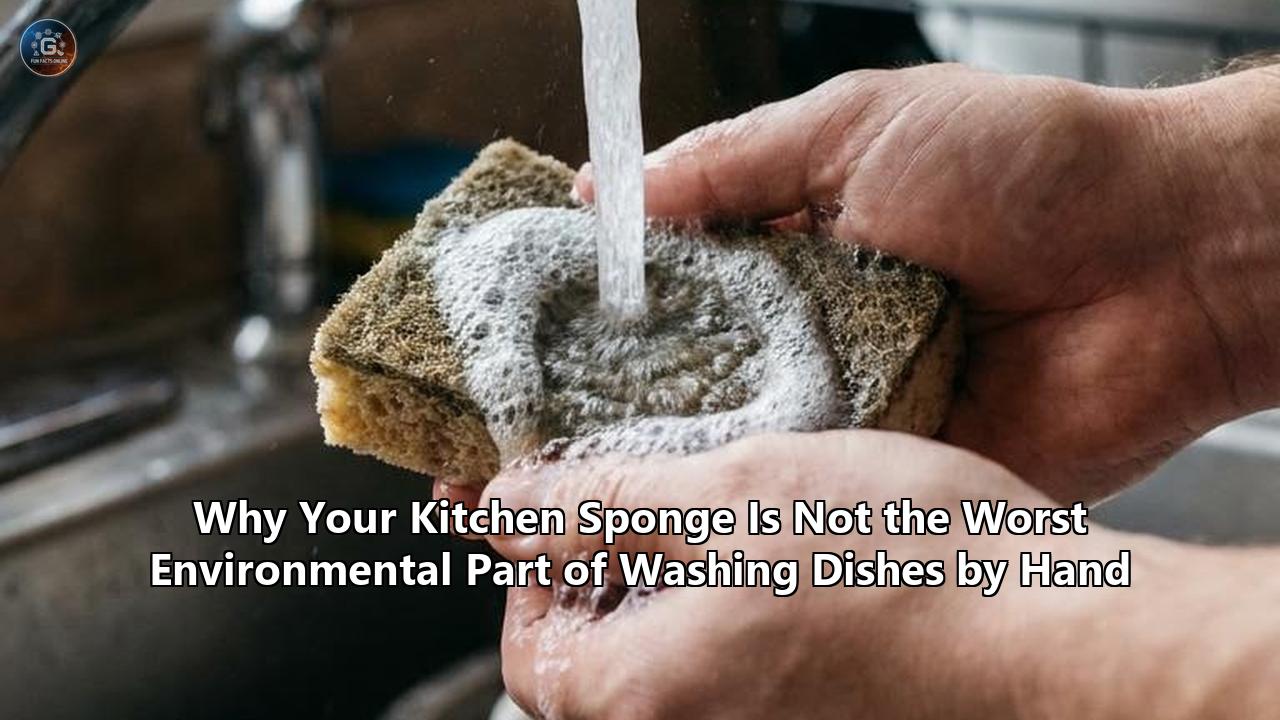
The humble yellow-and-green sponge sitting beside the kitchen sink has emerged as a focal point in the battle against household plastic pollution. In early 2026, a study published in the journal Environmental Advances by a research team at the University of Bonn revealed that conventional synthetic kitchen sponges shed millions of microscopic plastic fibers over their operational lifespans. Led by researchers Leandra Hamann, Christina Galafton, Peter T. Rühr, Alexander Blanke, and Nils Thonemann, the study combined real-world citizen science in Germany and North America with controlled laboratory testing using an automated scrubbing device named "SpongeBot".
The findings are striking: depending on the material composition, kitchen sponges shed between 0.68 and 4.21 grams of microplastics per person annually. Extrapolated across a country like Germany, this equates to up to 355 tonnes of microplastics entering municipal wastewater systems every year.
Yet, the most significant revelation of the Bonn study is not the volume of plastic shed by these scrubbing pads. Instead, it is how little this plastic contributes to the overall environmental impact of dishwashing when contrasted with the resources consumed to make that wash happen. Through a comprehensive Life Cycle Assessment (LCA), the researchers discovered that between 85% and 97% of the total environmental burden of washing dishes by hand is driven by water consumption and the energy required to heat that water.
This revelation complicates the green cleaning narrative. For years, environmentally conscious consumers have prioritized swapping synthetic polyurethane sponges for natural loofahs, wooden brushes, or cellulose cloths. While these product substitutions reduce plastic waste, they do virtually nothing to address the far larger, invisible ecological threat: the thermal energy and water volumes pouring down the kitchen drain. This impact analysis explores who is affected by this misdirection, what changes when we reevaluate household chores through a scientific lens, and what the short- and long-term consequences are for global sustainability efforts.
The Microplastic Pipeline: How Sponges Wear Down
To understand why the kitchen sponge has captured so much public anxiety, it is necessary to examine the physical degradation of these tools. Conventional kitchen sponges are composite items. They typically feature a soft absorbent layer made from polyurethane foam and a coarse, abrasive scouring pad composed of polyester or nylon fibers.
When these materials are subjected to repeated friction, hot water, and chemical surfactants, the polymer chains break down. The mechanical stress of scrubbing dishes—simulated with high precision by the Bonn team’s SpongeBot—physically shears off tiny fragments of these synthetic matrices.
Conventional Sponge Degradation Pathway:
[Polyurethane Foam + Polyester Scourer]
       │
       ▼ (Friction + Hot Water + Detergent)
[Mechanical Shearing & Micro-Fracturing]
       │
       ▼
[0.68g – 4.21g Microplastics per Person/Year]
       │
       ├────────────────────────┐
       ▼ (95-99% Captured)      ▼ (1-5% Escaped)
[Wastewater Sludge]        [Aquatic Ecosystems]
       │                        │
       ▼ (Fertilizer Use)       ▼
[Agricultural Soils]       [Marine Food Web]
According to the 2026 study, the rate of shedding is highly dependent on sponge quality and material density. Sponges constructed with lower-grade plastics or thinner fiber networks degrade far more rapidly, disintegrating into the wastewater system.
At the household level, a few grams of microplastics may seem negligible, but at scale, the volume becomes a serious municipal challenge. When these particles wash down the kitchen sink, they enter municipal wastewater treatment plants. Highly advanced modern treatment systems are remarkably efficient, capturing between 95% and 99% of microplastics before treated water is released back into natural waterways.
However, even a 1% leakage rate across millions of households means several tonnes of microplastics bypass filtration systems annually, accumulating in local river systems, lakes, and marine environments. Furthermore, the microplastics that are successfully captured do not disappear; they become concentrated in sewage sludge. In many agricultural systems, this treated sludge is applied to fields as fertilizer, transferring kitchen microplastics directly into terrestrial soils and food webs.
While these synthetic fibers present undeniable ecological risks, focusing solely on the sponge ignores the broader energy-water nexus that underpins the entire process of cleaning.
The Thermal Giant: Why Water Heating Dominates the LCA
The physical reality of washing dishes by hand is that it is a highly energy-intensive thermodynamic process. Water has an extraordinarily high specific heat capacity of approximately $4.184 \text{ Joules per gram per degree Celsius}$ ($4.184 \text{ J/g}^\circ\text{C}$). This means that raising the temperature of water requires more energy than almost any other common substance on Earth.
When a person turns on the tap to wash dishes, they rarely use cold water. To cut through grease, animal fats, and baked-on starches, they rely on hot water, typically ranging from 40°C to 55°C (104°F to 131°F). Generating this thermal energy requires a home water heater, which is usually powered by natural gas, fuel oil, or electricity drawn from a regional grid.
To grasp the scale of this energy draw, consider the common "running tap" method of manual dishwashing, where the faucet is left open to stream hot water over dishes as they are scrubbed and rinsed.
- A standard kitchen faucet flows at approximately 1.5 to 2.2 gallons per minute (gpm).
- If a consumer leaves the tap running for 15 minutes while washing up after dinner, they will consume between 22.5 and 33 gallons of water.
- To heat 30 gallons of water from an intake temperature of 10°C (50°F) to a washing temperature of 45°C (113°F) requires roughly $4.4 \text{ kilowatt-hours}$ ($kWh$) of energy.
For context, running a highly efficient Energy Star-certified automatic dishwasher for a full cycle consumes between 1.0 and 1.5 kWh of electricity and uses fewer than 4 gallons of water.
Consequently, the running tap method of manual dishwashing is one of the most carbon-intensive daily chores in the modern home. The energy used to heat the water for a single 15-minute manual wash under a running tap can easily exceed the energy required to run a television for 30 hours, power a modern refrigerator for three days, or charge an electric vehicle to travel 15 miles.
When analyzing the overall environmental impact of dishwashing, this thermal footprint dwarfs the physical raw materials of the cleaning process. The carbon dioxide emitted by generating those 4.4 kWh of energy—especially on electricity grids still reliant on coal or natural gas—creates a systemic climate footprint that far outweighs the localized impact of a worn-out polyurethane sponge.
The Stakeholder Matrix: Who is Impacted?
To understand how this ecological misdirection propagates, we must systematically examine the different groups affected by the dishwashing debate.
| Stakeholder Group | Direct Impact of Current Practices | Behavioral & Structural Bottlenecks | Required Transformation |
|---|---|---|---|
| Consumers | Suffer from cognitive overload; prioritize visible plastic reduction (purchasing natural sponges) while ignoring invisible carbon footprint of hot water. | High hot-water habits; lack of awareness regarding the thermal intensity of the running tap. | Adoption of the "two-basin" method; washing at lower temperatures with enzymatic detergents. |
| Sponge & Cleanser Manufacturers | Face pressure to produce biodegradable, plastic-free alternatives; market "eco-friendly" products that do not address the use-phase energy. | Greenwashing opportunities; focusing marketing on material sustainability rather than user behavior. | Development of high-performance natural-fiber scrubbers; formulation of detergents optimized for cold-water cleaning. |
| Wastewater Utilities | Must manage influx of microplastics from synthetic sponges and high thermal energy loads in wastewater. | Filtration limitations; sewage sludge contamination which prevents safe agricultural recycling. | Investment in advanced tertiary filtration; public campaigns on water reduction and source control. |
| Appliance Manufacturers | Compete against consumer perceptions that manual washing is inherently more "natural" and eco-friendly. | High initial cost of energy-efficient appliances; consumer reluctance to use long "eco" cycles. | Designing smart dishwashers with lower water-usage thresholds and optimized mechanical agitation. |
Consumers and the "Visual Bias"
The primary reason for the focus on the kitchen sponge is psychological. Humans are highly responsive to visible waste. When a consumer throws away a shredded, greasy synthetic sponge, they are making a conscious, tactile decision to discard plastic. They can see the physical waste sitting in their trash can.
Conversely, the greenhouse gas emissions rising from the coal-fired power plant or the gas burner heating their water are invisible. This creates a cognitive disconnect: a consumer may feel environmentally responsible because they purchased a $6 organic loofah sponge, yet they will undo that ecological benefit within the first two minutes of leaving the hot water faucet running.
Industry and the Retail Landscape
For the consumer goods industry, the focus on plastic-free products represents a lucrative market segment. The rise of "eco-friendly" kitchen tools—bamboo dish brushes, compostable Swedish dishcloths, and natural coconut scrubbers—allows brands to charge premium prices.
However, because these products are marketed in isolation, manufacturers rarely educate consumers on how to use them sustainably. A loofah sponge paired with a continuous stream of heated tap water still results in a massive net negative for the environment.
Municipal Wastewater and Utilities
Municipalities bear the downstream consequences of both issues. High volumes of hot wastewater running into sewers accelerate chemical reactions, leading to increased microbial activity, concrete corrosion, and the accumulation of fats, oils, and grease (FOG).
Simultaneously, the continuous rain of microplastics from synthetic sponges forces wastewater plants to continuously upgrade their filtration infrastructure, driving up municipal taxes and energy consumption.
What Changes? The Scientific Reevaluation of Dishwashing
When we shift the analytical lens from raw materials to a rigorous, life cycle-based perspective, our understanding of domestic ecology undergoes a fundamental change. Evaluating the environmental impact of dishwashing requires looking past the sink basin to the entire industrial, municipal, and atmospheric systems linked to a single chore.
Life Cycle Assessment (LCA) System Boundary for Dishwashing:

[Raw Material Extraction] ──► [Sponge & Soap Production] ──► [Transportation]
                                                                 │
                                                                 ▼
[Municipal Water Treatment] ──► [Water Heating (Home)] ────► [USE PHASE] (Hotspot)
                                                                 │
                                                                 ▼
[Landfill/Composting] ◄──────── [Wastewater Filtration] ◄──── [Drain Discharge]
The Life Cycle Assessment (LCA) Methodology
In a traditional environmental assessment, researchers measure only the "cradle-to-gate" impact—the resources required to manufacture an item and deliver it to store shelves. If we only look at cradle-to-gate metrics, a plastic sponge is obviously worse than a natural alternative.
However, a true Life Cycle Assessment includes the use phase and the end-of-life phase. As the 2026 Bonn University study and prior studies by the University of Michigan have demonstrated, the use phase is the absolute environmental hotspot of dishwashing, accounting for up to 97% of the total carbon, water, and energy footprint.
This systemic perspective shifts the primary objective of green cleaning. The goal is no longer simply "use zero plastic," but rather "minimize energy and water transfer." This realization completely changes the calculus of manual versus machine dishwashing.
Systematic Showdown: Manual vs. Machine Dishwashing
For decades, a debate has persisted in eco-conscious circles: is it better to wash dishes by hand, or should we use an automatic dishwasher? Historically, the manual method was assumed to be superior because it did not require a heavy, complex steel-and-plastic machine that would eventually end up in a landfill.
However, as dishwasher technology has advanced, the data has swung decisively in favor of machine washing, with one notable behavioral exception.
In a landmark study led by the University of Michigan's Center for Sustainable Systems, researchers Gabriela Porras and Greg Keoleian compared the lifetime environmental impacts of manual and machine dishwashing. They analyzed greenhouse gas emissions, water consumption, energy use, and solid waste generation across the entire life cycle of both options, factoring in real-world human habits.
Greenhouse Gas Emissions over 10-Year Lifecycle (Estimated):
┌─────────────────────────────────────────────────────────┐
│ Manual (Running Tap Method):                  ~3,420 kg │ ░░░░░░░░░░░░░░░░░░░░░░░
├─────────────────────────────────────────────────────────┤
│ Machine (Typical Behaviors w/ Pre-Rinse):     ~1,900 kg │ ░░░░░░░░░░░░
├─────────────────────────────────────────────────────────┤
│ Machine (Best Practices - No Pre-Rinse, Eco): ~1,610 kg │ ░░░░░░░░───
├─────────────────────────────────────────────────────────┤
│ Manual (Two-Basin Method):                    ~1,100 kg │ ░░░░░───
└─────────────────────────────────────────────────────────┘
The Michigan study highlighted three distinct dishwashing scenarios, each yielding vastly different environmental profiles:
1. The Running Tap (The Worst-Performing Method)
This is the most common manual dishwashing method globally. The user turns on the faucet, adjusts it to a comfortable hot temperature, and leaves it running while scrubbing each plate, glass, and fork under the steady stream.
- Water Use: Approximately 20 to 25 gallons per load.
- Energy Use: Up to 3.5 kWh of energy to heat the water.
- Environmental Profile: This method produces more than double the greenhouse gas emissions of an automatic dishwasher and uses up to five times as much water.
2. The Standard Automatic Dishwasher (The Practical Winner)
Modern dishwashers are closed-loop thermodynamic systems. They do not run water continuously. Instead, they pull in a small volume of cold water (roughly 1 to 1.5 gallons per fill), heat it internally using highly efficient heating elements located directly in the wash tub, filter it continuously, and spray it over the dishes using rotating arms. A full cycle usually involves one pre-wash, one main wash, and two rinses, consuming a total of only 3.5 to 5 gallons of water.
- Water Use: 3 to 4.5 gallons per cycle.
- Energy Use: 1.0 to 1.8 kWh (mostly used by the internal heater to raise water temperature).
- Environmental Profile: When operated at full load and without pre-rinsing dishes in the sink, a standard dishwasher reduces the carbon footprint of cleaning dishes by more than 70% compared to typical manual hand-washing.
3. The Two-Basin Manual Method (The Hidden Champion)
The only scenario where manual hand-washing beats an automatic dishwasher is when the consumer employs the disciplined, traditional two-basin method.
- The Setup: The consumer plugs both sides of a double sink (or uses two separate washing tubs). Basin one is filled with hot, soapy water for soaking and scrubbing. Basin two is filled with clean, cold water for rinsing.
- The Process: The dishes are scraped clean of food, scrubbed in the warm soapy basin, dipped and rinsed in the cold basin, and placed on a rack to air dry.
- Water Use: 1.5 to 3 gallons total.
- Energy Use: Under 0.5 kWh (only enough to heat the single basin of soapy water).
- Environmental Profile: This method produces 18% lower greenhouse gas emissions than an automatic dishwasher running on recommended best practices.
The problem is that very few modern consumers actually practice the two-basin method. It requires physical space, patience, and a deviation from the convenient, fast-paced habits that dominate modern domestic life. Without this behavioral discipline, washing dishes by hand remains an ecological failure compared to simply loading a machine.
The Chemical Dimension: Surfactants, Enzymes, and Cold-Water Cleaning
The discussion of the environmental impact of dishwashing is incomplete without addressing the chemical formulation of the soap itself. When a consumer washes dishes, the primary goal of the detergent is to lower the surface tension of water, allowing it to wet surfaces more easily, and to emulsify fats so they can be rinsed away.
The Surfactant Dilemma
The active cleaning agents in dishwashing liquid are surfactants. Traditionally, these surfactants have been derived either from petrochemicals (fossil fuels) or from oleochemicals (plant oils like palm kernel or coconut oil).
While plant-derived surfactants are often marketed as "natural" and "biodegradable," their production carries a massive ecological footprint. Palm oil cultivation is a primary driver of deforestation, habitat destruction, and biodiversity loss in Southeast Asia.
An LCA of manual dishwashing detergent reveals that the sourcing of these raw materials represents a major hotspot for land transformation and agricultural land occupation, offsetting some of the benefits of using biodegradable formulas.
Phosphates and Eutrophication
Historically, dishwashing detergents relied heavily on phosphates. Phosphates acted as water softeners, preventing mineral deposits from interfering with the surfactant action.
However, when phosphates entered waterways through domestic drainage, they acted as powerful fertilizers for aquatic plants, triggering massive algal blooms. These blooms block sunlight and deplete dissolved oxygen as they decompose, creating "dead zones" where fish and other aquatic life cannot survive.
While the European Union banned phosphates in household detergents in 2013, and North American regulations have severely restricted their use, many conventional detergents sold globally still rely on synthetic chelating agents and non-biodegradable polymers that present long-term ecotoxicological risks.
Eutrophication Process from Detergent Runoff:
[Phosphate-Laden Detergent Down Drain] ──► [Wastewater Bypass / Outfall]
                                                 │
                                                 ▼
[Rapid Algal Growth (Algal Bloom)] ◄─────── [Nutrient Enrichment in Lake/River]
       │
       ├────────────────────────┐
       ▼ (Daytime)              ▼ (Decomposition Phase)
[Sunlight Blocked]         [Oxygen Depletion (Anoxia)]
       │                        │
       ▼                        ▼
[Aquatic Plants Die]       [Fish and Marine Life Die (Dead Zone)]
The Enzymatic Revolution
To reduce both the chemical and thermal footprints of dishwashing, chemical engineers have increasingly turned to biological enzymes. Enzymes are naturally occurring proteins that act as catalysts, accelerating chemical reactions without being consumed themselves.
In modern dish detergents, three main classes of enzymes are used:
- Amylases: Break down starches (such as pasta, rice, and potatoes) into soluble sugars.
- Proteases: Break down proteins (such as egg, meat, and dairy residues) into peptide chains and amino acids.
- Lipases: Target and break down hydrophobic fats, oils, and greases.
The critical advantage of enzymes is their thermal efficiency. Unlike conventional surfactants, which require high heat to melt solid fats, enzymes are designed to work highly effectively at lower, ambient temperatures.
By incorporating specialized enzyme blends into dish soaps, manufacturers can theoretically enable consumers to wash dishes in lukewarm or even cold water (dropping from the typical 40°C to 23°C).
This single chemical innovation could eliminate up to 80% of the carbon footprint associated with manual dishwashing by removing the need for energy-intensive water heating altogether.
Short-Term Consequences: Immediate Action and Household Realignments
The immediate consequence of aligning household behavior with these scientific findings is a shift in how we approach the kitchen sink. For individuals looking to reduce their ecological footprint today, the roadmap is clear, practical, and heavily behavior-based.
1. Ditch the Running Tap
If you do not own an automatic dishwasher, you should immediately transition to the two-basin method.
If your kitchen only has a single sink, you can easily replicate this by purchasing a cheap washbasin to sit inside the sink. Fill the basin with warm, soapy water for washing, scrub all the dishes, pile them to the side, and then use a brief, low-flow cold spray to rinse them all at once. This simple habit shift reduces water consumption by up to 85% and slashes carbon emissions by two-thirds.
2. Stop Pre-Rinsing Dishes
For those who do own a dishwasher, the most common environmental error is "double washing"—rinsing dishes under hot running tap water before loading them into the machine.
Modern dishwashers are equipped with soil sensors that measure how dirty the water is during the initial rinse cycle; they adjust the water volume and temperature accordingly. Pre-rinsing not only wastes tens of gallons of heated water at the sink, but it also tricks the dishwasher’s sensors into running a shorter, less intensive cycle than is actually required to clean the dishes.
Simply scrape solid food waste into the compost bin and load the plates directly into the machine.
3. Lower the Water Temperature
If you must wash a single item by hand under the faucet, use cold or lukewarm water whenever possible.
Cups used for water, bowls used for fruit, and knives used for cutting vegetables do not require hot water or heavy degreasing. Save hot water exclusively for greasy pots, pans, and meat-contact surfaces.
4. Extend the Sponge Lifespan
To address the microplastic aspect of the equation without generating excessive solid waste, consumers should avoid discarding sponges prematurely.
A kitchen sponge does not need to be thrown away the moment it begins to smell. You can sanitize a synthetic or natural sponge by:
- Running it through a standard cycle on the top rack of your dishwasher.
- Boiling it in a pot of water for five minutes.
- Soaking it in a diluted vinegar or bleach solution.
By doubling the lifespan of a sponge, you halve its lifetime microplastic release and reduce the demand for new plastic manufacturing.
Long-Term Consequences: Systemic Transitions and the Future of Kitchen Design
Looking toward the future, the integration of these environmental insights will likely drive systemic transformations across energy infrastructure, product manufacturing, and home appliance design.
Long-Term Systemic Evolution of Dishwashing:
┌───────────────────────────┐     ┌───────────────────────────┐
│     Current State         │     │     Future State (2030+)  │
├───────────────────────────┤     ├───────────────────────────┤
│ • Fossil-fueled grids     │     │ • 100% Renewable grids    │
│ • Continuous running taps │     │ • Smart, low-flow sinks   │
│ • High microplastic shed  │ ───►│ • Bio-composite sponges   │
│ • High-heat surfactants   │     │ • Cold-active enzymes     │
│ • Carbon-heavy footprint  │     │ • Near-zero carbon impact │
└───────────────────────────┘     └───────────────────────────┘
The Decarbonization of the Grid
The environmental math of dishwashing is not static; it is deeply tied to the carbon intensity of regional energy grids.
As municipal electrical grids transition from coal and natural gas to renewable sources like wind, solar, and geothermal, the carbon footprint associated with heating water will drop precipitously.
If a household has rooftop solar panels and uses an electric water heater or a heat pump system, the carbon footprint of their dishwashing water heating drops to virtually zero.
Crucially, as the energy grid becomes cleaner, the relative importance of different lifecycle phases will shift. Once water heating is no longer a major source of greenhouse gas emissions, the physical materials of the kitchen—including the microplastics shed by synthetic sponges—will emerge as the dominant environmental concern.
Therefore, transitioning to biodegradable, plastic-free sponges remains a highly valuable long-term goal, even if it is currently overshadowed by water heating energy.
Innovations in Sponge Material Science
As consumer awareness grows and regulatory scrutiny on microplastics intensifies, the cleaning products industry is moving away from polyurethane-and-polyester composites.
Researchers are developing high-performance, fully biodegradable scrubbing alternatives. Some of the most promising materials include:
- Cellulose: Derived from wood pulp or cotton fibers, cellulose is highly absorbent and naturally biodegradable, though historically less durable than polyurethane.
- Sisal and Coir: Rough fibers harvested from agave plants and coconut husks, which provide excellent abrasive action without shedding synthetic microplastics.
- Mycelium-Based Sponges: Grown from the root structures of fungi, these agricultural byproducts can be molded into durable, compostable scrubbing pads that naturally biodegrade at the end of their useful life.
The Rise of "Smart Sinks" and Automated Kitchens
The traditional kitchen sink has remained virtually unchanged for over a century: a basin, a faucet, and a drain.
In the coming decades, we may see the kitchen sink evolve into an active, resource-managing appliance. "Smart sinks" could feature integrated dual-basin systems with automated water recycling, built-in heat exchangers that capture energy from outgoing warm wastewater to heat incoming fresh water, and integrated microplastic filtration systems built directly into the drain assembly.
Additionally, future dishwashers will likely feature even more advanced closed-loop filtration, allowing them to clean an entire load of dishes using less than two gallons of water, rendering hand-washing completely obsolete from an environmental perspective.
Redefining Green Cleaning
The 2026 Bonn University study serves as an essential course correction for household sustainability. It forces us to confront a fundamental truth of environmental science: the most visible problems are not always the most damaging.
The kitchen sponge, with its shedding fibers and synthetic green scouring pad, is an easy target for our collective plastic anxiety. It is tangible, disposable, and easily replaced.
Yet, when we zoom out to evaluate the total environmental impact of dishwashing, we find that our daily behavioral choices—the physical energy required to heat gallons of tap water and the careless habit of letting the faucet run continuously—constitute the true ecological hotspot of this daily chore.
The Complete Environmental Impact Hierarchy of Dishwashing:
┌────────────────────────────────────────────────────────┐
│ 1. Water Heating Energy (85% - 97% of total impact)    │ ◄── Primary Focus
├────────────────────────────────────────────────────────┤
│ 2. Direct Water Consumption Volumes                    │
├────────────────────────────────────────────────────────┤
│ 3. Detergent Chemical Formulations & Surfactants       │
├────────────────────────────────────────────────────────┤
│ 4. Sponge Microplastics & Solid Waste                  │ ◄── Secondary Focus
└────────────────────────────────────────────────────────┘
Ultimately, achieving a genuinely sustainable household requires reconciling these two dimensions of pollution.
We should certainly swap our synthetic sponges for compostable natural alternatives to protect our marine life and soils from microplastics. But more importantly, we must change how we use the faucet.
Whether by adopting the disciplined two-basin method or by fully trusting our automatic dishwashers to do their job without a pre-rinse, the greatest environmental victory in the kitchen is not the sponge we buy, but the water we save.
Reference:
- https://www.sciencedaily.com/releases/2026/06/260601025356.htm
- https://www.reddit.com/r/InterstellarKinetics/comments/1ttvl5e/warning_kitchen_sponges_release_up_to_421_grams/
- https://scitechdaily.com/scientists-say-washing-dishes-with-a-sponge-has-a-concerning-side-effect/
- https://www.implasticfree.com/plastic-free-sponges/
- https://www.sciencedaily.com/releases/2026/06/260601025356.htm
- https://www.thecooldown.com/green-tech/kitchen-sponge-microplastics-research-study/
- https://www.researchgate.net/publication/396740310_Lowering_the_environmental_impact_of_dishwashing_and_laundry_in_Europe_an_LCA_perspective
- https://www.pressherald.com/2024/12/24/dishwashing-decisions-affect-sustainability/
- https://www.researchgate.net/figure/Life-cycle-GHG-emissions-for-typical-household-dishwashing-Natural-gas-water-heating-and_fig1_339222159
- https://www.greenfi.com/resources/sustainable-dishwashing
- https://news.umich.edu/fighting-climate-change-at-the-sink-a-guide-to-greener-dishwashing/
- https://pmc.ncbi.nlm.nih.gov/articles/PMC5044932/
- https://www.creative-enzymes.com/resource/enzyme-dishwasher-detergents-are-they-worth-it-_183.html
- https://www.myappliances.co.uk/integrated-dishwashers/dishwasher-guides-and-advice/the-environmental-impact-of-dishwashing-handwashing-vs-dishwashers
- https://www.mdpi.com/2071-1050/14/16/10302
- https://pubmed.ncbi.nlm.nih.gov/23907994/
- https://css.umich.edu/publications/research-publications/life-cycle-comparison-manual-and-machine-dishwashing-households
- https://www.researchgate.net/publication/230423905_Assessment_of_European_energy_and_carbon_profiles_of_manual_and_automatic_dishwashing
- https://www.astutis.com/astutis-hub/blog/earth-friendly-water-methods
- https://homecourt.co/en-gb/blogs/dish-soap/the-environmental-cost-eco-friendly-dishwashing-soap-vs-traditional-ones
- https://blogs.canterbury.ac.uk/sustainability/how-reducing-our-hot-water-usage-effects-your-carbon-footprint-and-what-we-can-do-to-reduce-it/