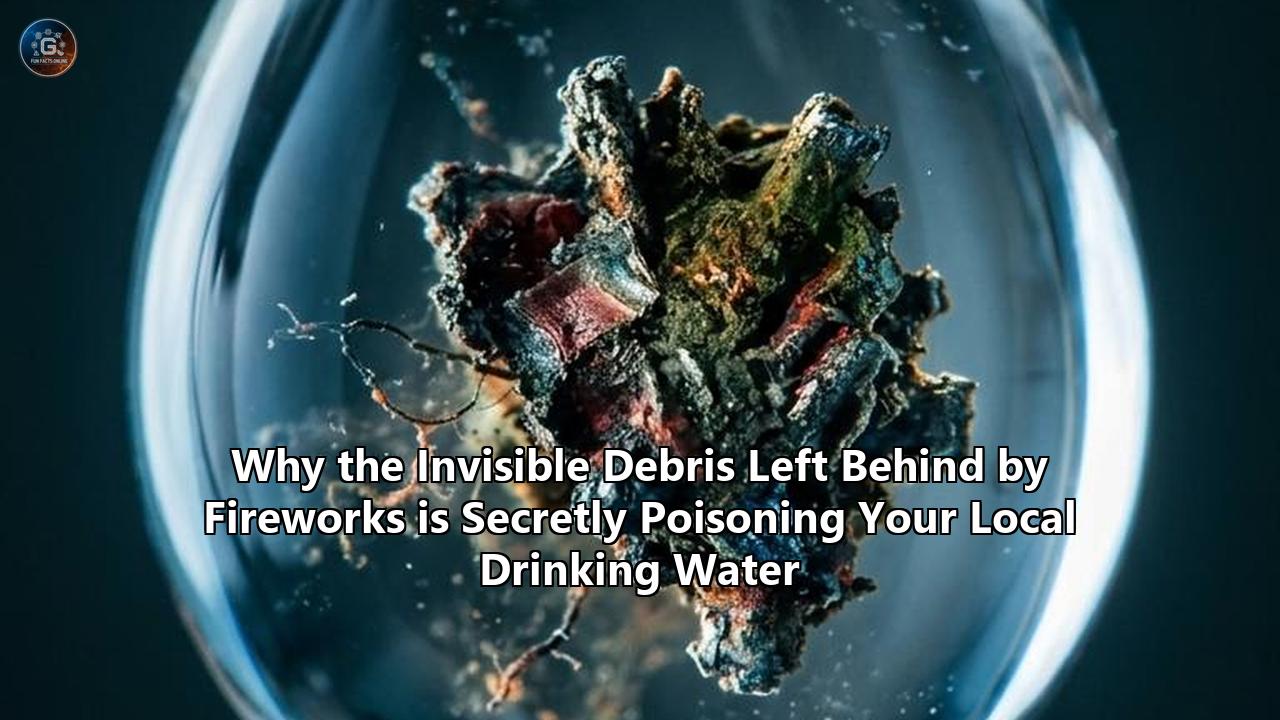
The smoke from the nation's summer pyrotechnics has cleared, but a far more persistent and invisible threat is settling into the waterways that feed America’s municipal water systems. While millions of spectators watched dazzling bursts of green, crimson, and deep blue, they were also witnessing a massive, unmonitored chemical deposition event. Newly published scientific research and a major federal regulatory battle are focusing unprecedented attention on the invisible chemical trail left behind by fireworks—specifically, how these displays contaminate local reservoirs, lakes, and rivers with toxic compounds that traditional municipal water filtration systems are powerless to remove.
The scientific and regulatory landscape surrounding this issue shifted dramatically on January 6, 2026, when the U.S. Environmental Protection Agency (EPA) proposed a national drinking water standard for perchlorate, setting a health-based goal of 20 parts per billion (ppb). Perchlorate is a highly soluble, toxic chemical used as the primary oxidizing propellant in fireworks. The EPA's proposal followed a decade of fierce litigation led by the Natural Resources Defense Council (NRDC), which culminated in a unanimous ruling by the U.S. Court of Appeals for the District of Columbia Circuit declaring the agency’s prior attempts to avoid regulating the compound illegal.
Compounding this regulatory push is a wave of new environmental science published in mid-2026. In a study published in Environmental Science & Technology, researchers revealed that spent pyrotechnic debris does not merely float harmlessly on the surface of water bodies. Instead, this debris undergoes complex molecular-level reactions, leaching high concentrations of heavy metals and toxic organic compounds into freshwater ecosystems while actively stripping out beneficial, naturally occurring molecules.
As the fight over federal water regulations reaches a critical juncture, public health advocates, toxicologists, and water utility managers are confronting a harsh reality: our annual celebrations are leaving behind a toxic legacy that flows directly from our watersheds into our kitchen sinks.
The Anatomy of Fallout: What We Put in the Sky, We Put in the Water
To understand how fireworks water pollution occurs, it is necessary to examine the chemistry of a modern pyrotechnic shell. A firework is essentially a highly engineered chemical bomb designed to explode in precise sequences. To achieve this, manufacturers pack shells with a volatile mixture of propellants, binders, color-producing metal salts, and oxidizers.
+-------------------------------------------------------------+
|                ANATOMY OF A PYROTECHNIC SHELL               |
+-------------------------------------------------------------+
|                                                             |
|     / \     <- Lift Charge (Black Powder & Perchlorates)    |
|    /   \                                                    |
|   |  *  |   <- Stars (Metal Salts for Color)                |
|   | * * |      - Barium (Green)                             |
|   |  *  |      - Strontium (Red)                            |
|   |     |      - Copper (Blue)                              |
|    \   /                                                    |
|     \_/     <- Time-Delay Fuse                              |
|                                                             |
+-------------------------------------------------------------+
|  FALLOUT: Uncombusted Perchlorate + Heavy Metals + Plastics |
|  ===> Direct deposition into nearby reservoirs & streams    |
+-------------------------------------------------------------+
To create the brilliant colors that light up the night sky, specific heavy metals are added to the mix:
- Barium salts produce vivid greens.
- Strontium compounds generate deep reds.
- Copper salts yield brilliant blues.
- Sodium and calcium create yellows and oranges.
- Antimony, aluminum, and magnesium are used to create glittering sparkles and loud cracking noises.
To launch these heavy metals hundreds of feet into the air and trigger a secondary explosion, fireworks rely on an incredibly powerful oxidizer. Historically, black powder was the propellant of choice, but modern commercial displays utilize perchlorate salts (typically potassium perchlorate or ammonium perchlorate). Perchlorates provide the rapid, intense oxygen release required to create a loud bang and disperse the metal salts evenly.
The environmental issue arises because fireworks are inherently inefficient combustion devices. When a shell detonates, a substantial portion of the chemical mixture fails to burn completely. Instead of vaporizing, uncombusted perchlorates, partially burned fuel, charred paper casings, plastic components, and metal salts rain down over the surrounding landscape.
When fireworks displays are staged over or near bodies of water—a common practice designed to minimize wildfire risks and double the visual impact through water reflections—this chemical fallout deposits directly into water resources.
Molecular Perturbations: The ACS Discoveries of 2026
For decades, the environmental focus on fireworks was centered on air quality—specifically the dense plumes of fine particulate matter ($PM_{2.5}$) that cause immediate respiratory distress in vulnerable populations. However, a study published in Environmental Science & Technology has exposed a highly complex, aquatic chemical reaction that takes place long after the smoke has cleared.
The study, titled "Molecular-Level Perturbations of Dissolved Organic Matter Driven by Episodic Firecracker Residue Leaching," was led by researchers Guan-Lin Chen, Meng Du, Chen Qian, and Han-Qing Yu. The team set out to investigate exactly what happens when the physical debris left behind by fireworks—including spent cardboard, charred clay plugs, plastic casings, and uncombusted chemical residues—interacts with lake and river water.
Through laboratory simulations and field-derived water samples, the researchers discovered that spent firecracker residue behaves like a highly active toxic sponge. When submerged in water, the debris rapidly leaches substantial quantities of metal ions, including potassium and manganese, alongside dissolved organic matter such as simple phenols and toxic sulfur-containing compounds. Phenols and sulfur compounds are notorious for their toxicity to aquatic life and their ability to cause foul odors and tastes in drinking water.
More surprisingly, the researchers found that the solid, charred residue of the firework itself acts as an adsorbent. It absorbs larger, more complex dissolved organic molecules that are already naturally present in the aquatic environment. This dual action—flooding the water with toxic, low-molecular-weight chemicals while stripping away natural organic compounds—significantly alters the base chemistry of the water body.
According to the authors, these sudden chemical shifts can severely disrupt local microbial communities and broader aquatic ecosystems. Microscopic organisms form the absolute foundation of freshwater food webs and are critical to the natural self-purification processes of lakes and rivers. When these microbial communities are suppressed or altered by firework-induced chemical spikes, it can trigger harmful algal blooms, reduce dissolved oxygen levels, and create a cascading ecological imbalance that degrades water quality long before the water ever reaches a treatment plant.
Perchlorate: The Silent Thyroid Disrupter
While heavy metals and organic phenols present severe ecological concerns, the chemical causing the greatest alarm among public health officials and federal regulators is perchlorate.
Perchlorate ($ClO_4^-$) is an extraordinarily stable, highly mobile, and persistent inorganic ion. Unlike many organic pollutants that bind tightly to soils or evaporate into the atmosphere, perchlorate is highly hydrophilic. Once it dissolves in a lake, reservoir, or groundwater aquifer, it remains in solution indefinitely, traveling alongside water currents and easily bypassing natural filtration barriers.
In the human body, perchlorate poses a unique and insidious physiological threat. Because of its chemical structure and charge, the perchlorate ion closely mimics iodide ($I^-$). When humans ingest contaminated drinking water, perchlorate binds to the sodium-iodide symporter (NIS), a specialized protein in the thyroid gland that is responsible for absorbing iodine from the bloodstream.
By blocking the uptake of iodine, perchlorate effectively starves the thyroid of the raw material it needs to synthesize crucial hormones, namely thyroxine (T4) and triiodothyronine (T3).
                       HOW PERCHLORATE DISRUPTS HEALTH

     [ Healthy Thyroid ]                   [ Perchlorate Contamination ]

       Bloodstream                            Bloodstream
          |                                      |
     ( Iodide Ion )                         ( Perchlorate )   ( Iodide )
          |                                      |               |
          v                                      v               x (Blocked)
    +-----------+                          +-----------+
    |  Thyroid  |                          |  Thyroid  |
    |  Gland    |                          |  Gland    |
    +-----------+                          +-----------+
          |                                      |
          v                                      v
     Produces T3 & T4                       Hormone Production
     Hormones (Normal)                      Suppressed (Hypothyroidism)
"We have serious concerns about exposure, especially during critical windows of development," explains Dr. Todd Anderson, Professor of Environmental Toxicology at Texas Tech University. "Thyroid hormones are the master regulators of fetal and infant brain development, skeletal growth, and overall metabolic function. If a pregnant mother, a developing fetus, or a newborn baby is deprived of adequate thyroid hormones, even temporarily, the neurological consequences can be permanent".
Clinical studies have linked maternal thyroid hormone deficiency caused by perchlorate exposure to:
- Reduced IQ scores in children.
- Delays in motor skill development.
- Increased risk of attention deficit hyperactivity disorder (ADHD).
- Cognitive and learning disabilities.
In adults, chronic perchlorate exposure can lead to hypothyroidism, goiter (enlargement of the thyroid gland), fatigue, weight gain, and systemic metabolic disruption. Because of these severe health risks, the American Academy of Pediatrics and multiple independent scientific panels have repeatedly petitioned the federal government to establish strict, enforceable limits on perchlorate in public drinking water systems.
Unmasking the Scale: Key Case Studies
For years, opponents of strict water regulations argued that fireworks displays were too brief and localized to cause widespread drinking water contamination. However, long-term monitoring projects and targeted localized studies have thoroughly debunked this claim, proving that fireworks water pollution leaves a durable chemical footprint.
1. The Mount Rushmore Legacy (South Dakota)
One of the most damning pieces of evidence regarding the persistence of firework-derived water pollution comes from Mount Rushmore National Memorial. Between 1998 and 2009, the National Park Service hosted massive, highly publicized Independence Day fireworks displays at the iconic site.
Due to growing concerns over water quality, the U.S. Geological Survey (USGS) and the National Park Service conducted an exhaustive, multi-year study between 2011 and 2015, analyzing 106 water samples and 11 soil samples within the monument’s boundaries.
The results, published in a landmark USGS report, were startling:
- Even though the fireworks shows had been completely discontinued in 2009, perchlorate remained highly concentrated in the local soil and water years later.
- The maximum perchlorate concentration in a local stream sample reached 54 µg/L (ppb).
- A local groundwater well, which serves as a drinking water source for park staff and millions of annual visitors, registered perchlorate levels at 38 µg/L (ppb).
- In stark contrast, all control samples collected from groundwater and streams located just outside the memorial boundary—where fireworks had never been launched—registered perchlorate levels of less than 0.2 µg/L (ppb).
"The lack of alternative perchlorate sources in the area, such as military bases or agricultural lands using specialized fertilizers, combined with the physical presence of firework debris, confirmed that past fireworks were the sole source of this contamination," stated Galen Hoogestraat, the lead USGS scientist on the study. The Mount Rushmore case study provided undeniable proof that firework-derived chemical deposits can pool in soils, slowly leach into local groundwater aquifers, and contaminate drinking water supplies for over a decade after the pyrotechnics end.
2. Upper Saranac Lake (New York)
While Mount Rushmore represents a large-scale, historical accumulation of chemicals, a June 2025 study on Upper Saranac Lake in New York's Adirondack region demonstrated how rapidly a single, modern community display can alter water chemistry.
Many residents living along the shores of Upper Saranac Lake rely directly on the lake's water for their private drinking supply. In 2024, the Upper Saranac Foundation, in partnership with the University of Nevada, established a precise monitoring protocol to measure perchlorate levels before and after the annual July 4th fireworks display.
The team’s findings highlighted the immediate chemical pulse of a holiday display:
- Before the Fireworks (June 28): Lake perchlorate levels were virtually non-existent, measured at a baseline of 0.050 ppb.
- One Day After the Fireworks (July 5): Perchlorate levels surged to 0.421 ppb—a dramatic 840% increase in concentration overnight.
- One Week Later (July 12): Levels began to decline due to natural mixing and microbial degradation, settling at 0.118 ppb, which was still more than double the original baseline.
While the 0.421 ppb peak remains below federal safety advisory limits, the rapid, nearly ten-fold spike demonstrated that even a modest community fireworks show over a large freshwater lake injects an immediate, highly concentrated pulse of toxic chemicals directly into a drinking water source. For communities with multiple displays throughout the summer, or those situated on smaller, shallower reservoirs, this seasonal loading can lead to cumulative, dangerous chemical concentrations.
The Water Treatment Blind Spot: Why Municipal Plants Can't Help
The average consumer assumes that the municipal water treatment facility supplying their home is fully equipped to filter out any chemical that might wash into the local reservoir. Unfortunately, this is a dangerous misconception.
Most drinking water treatment plants utilize a multi-step purification process designed to address traditional contaminants. This process typically includes:
- Coagulation and Flocculation: Adding chemicals to the water that bind with dirt and other dissolved particles, forming larger particles called "floc."
- Sedimentation: Allowing the heavy floc particles to settle to the bottom of the treatment basin.
- Filtration: Passing the clear water through layers of sand, gravel, and charcoal to remove remaining suspended particles, organic matter, and some microscopic pathogens.
- Disinfection: Adding chlorine, chloramines, or ozone to kill any remaining bacteria, viruses, and parasites.
While this sequence is highly effective at preventing waterborne diseases like cholera and removing visible sediment, it is entirely blind to highly soluble inorganic ions like perchlorate ($ClO_4^-$) and dissolved heavy metals.
The perchlorate ion is extremely stable and possesses a low charge density, meaning it does not bind to the standard chemical coagulants used in municipal water treatment. It does not settle out during sedimentation, it is not trapped by standard sand or anthracite filters, and it is completely unaffected by chlorine disinfection. In fact, standard water treatment processes pass perchlorate through completely untouched.
                 THE MUNICIPAL WATER FILTER BLIND SPOT

  Raw Water Input -> [ Coagulation ] -> [ Sedimentation ] -> [ Sand Filtration ] -> [ Chlorine Disinfection ] -> Tap Water

  Contaminants:
  - Sediment ......... (Trapped) --------> (Filtered Out) -----------------------------> Clean Water
  - Bacteria/Viruses . (Trapped) --------> (Filtered Out) ------> (Deactivated) --------> Safe Water
  - Perchlorate (ClO4-) -------------------------> PASSES UNTOUCHED --------------------> TOXIC WATER
  - Heavy Metals --------------------------------> PASSES UNTOUCHED --------------------> TOXIC WATER
This dynamic was illustrated in a study examining Kyoto, Japan’s water infrastructure. Researchers tracked perchlorate concentrations in Kyoto’s Keage Water Purification Plant following a major annual fireworks display held over Lake Biwa, the primary source water for the city.
Immediately following the display, perchlorate levels in the lake's source water intake surged to 22.3 µg/L (ppb). Because the Keage Water Purification Plant lacked the specific, highly specialized technology required to capture dissolved perchlorate, the chemical passed straight through the facility’s filtration and chlorination systems. As a result, the tap water distributed directly to Kyoto’s residential homes registered elevated perchlorate levels of 13.6 µg/L (ppb), demonstrating that municipal plants frequently serve as passive conduits for pyrotechnic toxins.
The High Cost of Clean Water
To actually remove perchlorate and dissolved heavy metals from drinking water, municipal utilities must install advanced, highly expensive treatment technologies.
Currently, there are only three primary methods capable of removing these ions, and each carries significant financial and operational hurdles:
1. Single-Pass Ion Exchange (IX) Resins
Ion exchange is the most common technology selected by water utilities for perchlorate removal. The process involves running contaminated water through pressure vessels packed with specialized, positively charged synthetic resin beads. As the water passes through, the resin beads chemically capture the negatively charged perchlorate ions, releasing harmless chloride ions in their place.
While highly effective, single-pass ion exchange is incredibly expensive. Once the resin beads become saturated with perchlorate, they cannot be easily regenerated or cleaned on-site. The entire volume of resin must be removed, disposed of as hazardous waste, and replaced with fresh, virgin resin. For a medium-sized water utility, the ongoing operational costs of replacing ion exchange resins can easily reach hundreds of thousands of dollars annually, a cost that is invariably passed down to consumers in the form of higher water bills.
2. Reverse Osmosis (RO) Systems
Reverse osmosis involves forcing water under extreme pressure through semi-permeable membranes that block the passage of ions larger than water molecules, effectively stripping out perchlorates, heavy metals, and other micro-pollutants.
The drawbacks of RO are twofold: energy consumption and waste generation. Operating a high-pressure RO plant requires immense amounts of electricity, which significantly increases a utility's carbon footprint and operational budget. Furthermore, RO systems produce a massive "reject stream"—a highly concentrated, toxic liquid waste containing all the filtered perchlorates and metals. Water utilities are then faced with the difficult and costly challenge of safely disposing of millions of gallons of toxic brine, which cannot simply be dumped back into local surface waters.
3. Biological Fluidized Bed Reactors (FBR)
Biological treatment utilizes specialized, naturally occurring anaerobic bacteria that use perchlorate as an electron acceptor, effectively "eating" the toxin and breaking it down into harmless chloride and oxygen gas.
While biological treatment is highly effective and generates minimal chemical waste, municipal water utilities are extremely hesitant to use it for drinking water. Introducing live bacteria cultures into a public drinking water system carries inherent biological risks. If the bioreactor malfunctions, pathogenic bacteria or excess organic carbon could escape into the municipal water main, leading to widespread bacterial contamination or severe taste and odor issues.
Because of these massive financial and engineering barriers, the vast majority of water treatment plants in the United States have not installed these systems. Consequently, if a community's source reservoir is subjected to fireworks water pollution, the resident population has virtually no defense against these toxins at their kitchen taps.
The 2026 Regulatory Battle: Industry vs. Public Health
The mounting body of evidence surrounding fireworks water pollution has pushed the federal government into a high-stakes regulatory and legal battle.
The regulatory history of perchlorate in drinking water is a saga of bureaucratic delays, political shifts, and aggressive legal maneuvers:
- 2011: Under the Obama administration, the EPA formally published a "Regulatory Determination" concluding that perchlorate met all the statutory criteria under the Safe Drinking Water Act to be regulated as a dangerous national drinking water contaminant.
- 2016: After the EPA repeatedly missed statutory deadlines to finalize a safety standard, the NRDC sued the agency, securing a court-approved consent decree that forced the EPA to issue a formal drinking water limit by 2019.
- 2020: Under the Trump administration, the EPA abruptly reversed course. Citing a revised health impact analysis, the agency withdrew its 2011 regulatory determination, declaring that perchlorate did not occur with enough frequency or at high enough levels to justify federal regulation. The decision effectively shelved all federal oversight of perchlorate, to the relief of the defense industry and pyrotechnic manufacturers who faced massive cleanup liabilities.
- May 2023: The U.S. Court of Appeals for the D.C. Circuit ruled unanimously that the Trump EPA’s withdrawal of the perchlorate regulation was entirely illegal. The court declared that once the EPA formally determines a chemical poses a public health risk, it lacks the statutory authority to simply withdraw that determination to avoid setting a safety limit.
- January 6, 2026: In compliance with the court’s order and a subsequent revised consent decree, the EPA officially proposed a national drinking water standard for perchlorate, setting a Maximum Contaminant Level Goal (MCLG) of 20 ppb.
The January 2026 proposal has drawn heavy criticism from both sides of the debate. Environmental advocacy groups argue that a 20 ppb limit is dangerously high and fails to protect the most vulnerable populations.
In formal public comments submitted to the EPA in March 2026, the NRDC argued that the EPA had intentionally weakened the proposed standard by shelving its own internal research. Specifically, the NRDC revealed that the EPA had quietly halted a comprehensive, national field study designed to examine the exact link between community fireworks displays and localized perchlorate spikes in drinking water reservoirs.
According to the NRDC, the preliminary data from that aborted study showed that fireworks displays routinely cause localized spikes that far exceed the 20 ppb proposed standard, particularly in smaller lakes and aquifers. Critics contend that by hiding this data, the EPA avoided setting a more stringent, protective standard—such as California’s 6 ppb limit or Massachusetts’ highly protective 2 ppb standard.
On the other side of the aisle, water utility associations and chemical manufacturers are lobbying fiercely to block or weaken the rule before it is finalized in August 2027. The American Water Works Association (AWWA) has argued that the cost of upgrading thousands of municipal water treatment plants to filter out perchlorate will place an unsustainable financial burden on local communities, particularly smaller rural towns with limited tax bases.
Mapping the Frontier: The $2.5 Million EPA Study
Recognizing the massive gaps in our understanding of how pyrotechnic chemicals move through our drinking water systems, the EPA has turned to academia for answers. In April 2026, the federal government officially awarded a $2,499,579 research grant to Texas Tech University to lead a comprehensive, nationwide investigation into fireworks-related perchlorate contamination.
The project, titled "Quantification and Modeling of Perchlorate Impacts from Fireworks on Drinking Water Sources," is led by Principal Investigator Dr. Andrew Jackson, Chair of the Department of Civil, Environmental, and Construction Engineering at Texas Tech.
This massive, three-year initiative is bringing together a coalition of leading environmental researchers from across the country, including scientists from:
- University of California, Berkeley
- Georgia State University
- University of Delaware
- Pennsylvania State University
- University of Nevada, Las Vegas
The primary goal of the study is to move beyond localized, anecdotal monitoring and establish a precise, predictive mathematical model. The research team wants to give water utility managers a tool to calculate exactly how much perchlorate will enter their specific water system based on the size of a planned fireworks display, the volume of the adjacent water body, and local weather patterns.
"If you have a massive water source, like Lake Michigan, you really can’t set off enough fireworks to cause a measurable, systemic health issue," explains Dr. Jackson. "Conversely, a small backyard fireworks show won't heavily impact a small body of water. The problem is that nobody knows where the line is. We don't know at what point a fireworks display crosses the threshold from a harmless community celebration into a toxic contamination event".
                 THE TEXAS TECH RESEARCH MATRIX (2026-2029)

           Field Sites                      Monitoring Vectors
     +-----------------------+           +-----------------------+
     | - Two major rivers    | --------> | - Direct air sampling |
     | - Three public lakes  |           | - Deposition plates   |
     | - One groundwater site|           | - Post-rain runoff    |
     +-----------------------+           | - Bacterial decay     |
                                         +-----------------------+
                                                     |
                                                     v
                                       [ Predictive Computer Model ]
                                                     |
                                                     v
                                      "Will this display poison the
                                         local drinking water?"
To build this model, the research team is actively monitoring six highly diverse field sites across the United States—two rivers, three lakes, and one groundwater site. Researchers are collecting high-resolution water and soil samples before, during, and after major Independence Day and New Year’s Eve celebrations.
Crucially, the study is also focusing on a heavily overlooked source of recurring pollution: periodic fireworks displays held at minor and major league baseball stadiums situated along urban rivers. While a city might only host one large July 4th display, stadium-based fireworks occur dozens of times throughout the spring and summer, creating a continuous, chronic deposit of toxic chemicals into vulnerable urban watersheds.
The Texas Tech study is also investigating the role of natural biological attenuation. "We know that certain species of anaerobic bacteria will naturally consume perchlorate in the environment," says Dr. Jackson. "As part of this project, we are studying how quickly these bacteria can break down the chemicals under different environmental conditions. This will help water managers determine if they can rely on natural biology to clean up the water, or if they must intervene with costly mechanical filtration".
Drones vs. Pyrotechnics: Communities Forced to Choose
As the scientific evidence of fireworks water pollution mounts, local governments are finding themselves caught in a difficult cultural and environmental debate. For generations, fireworks have been the undisputed symbol of American patriotism and festive celebration. Now, cities must decide whether traditional pyrotechnics are worth the invisible damage they inflict on public health and natural resources.
This conflict is playing out vividly in coastal southern California. Two neighboring cities in Orange County highlight the stark divide over how to handle the modern pyrotechnics dilemma:
+--------------------------------------------------------------------------+
|                       A TALE OF TWO CITIES (2026)                        |
+--------------------------------------------------------------------------+
|                                                                          |
|     [ LAGUNA BEACH ]                             [ LAGUNA NIGUEL ]       |
|                                                                          |
|     - Tried Drone Show in 2024                   - Abandoned Fireworks   |
|     - Returned to Fireworks in 2025/2026          Permanently            |
|     - Reason: Heavy citizen pushback             - Chose High-Tech       |
|       for "traditional" show                      Drone Displays         |
|     - Result: Local ocean and groundwater        - Result: Zero Chemical |
|       deposition of heavy metals & perchlorate    Deposition in Water    |
|                                                                          |
+--------------------------------------------------------------------------+
Laguna Beach: The Traditionalist Pushback
In 2024, amid growing concerns over coastal water pollution and the deposition of heavy metals into the local marine protected area, Laguna Beach decided to replace its traditional over-the-ocean fireworks display with a state-of-the-art coordinated drone light show.
While the drone show was praised by environmental groups, it met with immediate and intense backlash from a vocal segment of residents and local business owners, who argued that the silent drones lacked the visceral thrill, booming sound, and "authentic spirit" of a traditional July 4th celebration. Under heavy pressure, city officials capitulated. Laguna Beach returned to traditional pyrotechnics for its 2025 display and has maintained fireworks for the summer of 2026, accepting the localized chemical deposition as the price of keeping community traditions alive.
Laguna Niguel: The Eco-Centric Transition
Just a few miles inland, the city of Laguna Niguel chose a completely different path. Facing similar environmental data regarding the long-term accumulation of perchlorate in regional groundwater basins, city commissioners voted to permanently retire municipal fireworks displays.
For the 2026 summer season, Laguna Niguel hosted a spectacular, multi-thousand-drone light show over its local lake. By coordinating hundreds of illuminated, synchronized drones, the city was able to paint massive, animated 3D patriotic imagery across the night sky, accompanied by a synchronized musical soundtrack broadcast via local radio and mobile apps.
"The response from our community has been overwhelmingly positive," stated a Laguna Niguel city representative. "We are proving that you can celebrate our nation’s independence in a way that is visually stunning, completely fire-safe, and, most importantly, keeps toxic chemicals out of the water that our children drink".
What Lies Ahead: Key Milestones to Watch
The intersection of pyrotechnics, public health, and environmental preservation is heading toward a series of critical milestones over the next few years.
As the battle over fireworks water pollution intensifies, there are several key developments to watch:
- The August 2027 EPA Deadline: Under the terms of the court-approved consent decree, the EPA is legally required to finalize its national primary drinking water regulation for perchlorate by August 2027. Public health advocates will continue to lobby for a standard significantly lower than the proposed 20 ppb, while water utility associations are expected to mount a fierce legal challenge to block the rule based on compliance costs.
- The Conclusion of the Texas Tech Study (2029): The modeling data and field results compiled by Dr. Andrew Jackson and his nationwide academic coalition will represent the most comprehensive scientific assessment of fireworks water pollution ever conducted. Once published, this predictive model will likely serve as the scientific blueprint for municipal governments planning public events, potentially leading to localized bans or restrictions on over-the-water displays.
- The Evolution of "Green" Pyrotechnics: In response to growing environmental pressure, chemical manufacturers are attempting to develop "eco-friendly" fireworks that replace perchlorate oxidizers with nitrogen-rich, clean-burning compounds. However, these green alternatives remain highly expensive, chemically volatile, and are not yet widely available for commercial displays.
- The Rapid Advance of Drone Technology: As drone manufacturing costs continue to fall and battery life improves, drone light shows are becoming increasingly accessible and complex. The cultural shift away from traditional pyrotechnics will likely accelerate as more cities realize that the lifetime cost of drone systems is far lower than the potential multi-million-dollar clean-up costs associated with perchlorate water treatment.
Ultimately, the invisible fallout of our celebrations can no longer be ignored. Every time we light up the sky with dazzling pyrotechnic displays, we are making a silent trade-off, depositing long-lasting, thyroid-disrupting chemicals directly into the water resources we depend on for survival. As science continues to expose the molecular-level cost of our holiday displays, the choice facing communities across the country is becoming increasingly stark: preserve an archaic, toxic tradition, or protect the long-term purity of our drinking water.
Reference:
- https://www.environmentenergyleader.com/stories/new-fireworks-research-confirms-contamination-risks,131838
- https://www.sciencedaily.com/releases/2026/07/260701205009.htm
- https://www.psu.edu/news/research/story/researchers-investigate-effect-perchlorate-fireworks-drinking-water
- https://iwaponline.com/wpt/article/14/3/695/69039/Flow-behavior-of-perchlorate-from-a-source-lake-to
- https://www.nrdc.org/court-battles/nrdc-v-us-epa-perchlorate
- https://www.nrdc.org/press-releases/court-rules-epa-must-regulate-perchlorate
- https://mavensnotebook.com/2026/07/07/acs-three-discoveries-spark-awareness-of-fireworks-environmental-impact/
- https://scitechdaily.com/fireworks-may-pollute-the-air-and-water-more-than-you-think/
- https://digitalrepository.unm.edu/wr_sp/86/
- https://www.hklaw.com/en/insights/publications/2023/05/the-dc-circuit-overrules-epa-on-regulating-perchlorate
- https://www.epa.gov/research-grants/assessing-perchlorate-occurrence-ambient-waters-following-usage-fireworks-grant
- https://usfoundation.net/newsfeed/fireworks-and-water-quality-a-closer-look-at-perchlorate-in-upper-saranac-lake/
- https://www.depts.ttu.edu/entx/Department/Personnel/Faculty/Todd-Anderson/documents/6-8-23_Todd_Anderson-TTU_study_on_impact_of_fireworks_in_Drinking_Water.pdf
- https://www.usgs.gov/news/national-news-release/fireworks-likely-caused-water-contamination-mount-rushmore
- https://pubmed.ncbi.nlm.nih.gov/34124609/
- https://www.researchgate.net/publication/351125254_Estimating_costs_for_nitrate_and_perchlorate_treatment_for_small_drinking_water_systems
- https://pmc.ncbi.nlm.nih.gov/articles/PMC8193740/
- https://www.apwa.org/advocacy/court-rules-epa-must-regulate-perchlorate-in-drinking-water/
- https://www.epa.gov/system/files/documents/2025-02/final-court-and-statutory-mandated-drinking-water-actions.pdf
- https://www.ttu.edu/now/posts/2023/05/texas-tech-taking-lead-on-two-and-one-half-million-dollar-epa-grant.php
- https://seagrant.umn.edu/events/practical-water-wisdom-potential-impact-fireworks-lakes-and-other-waters
- https://www.epa.gov/research-grants/assessing-perchlorate-occurrence-ambient-waters-following-usage-fireworks-grant