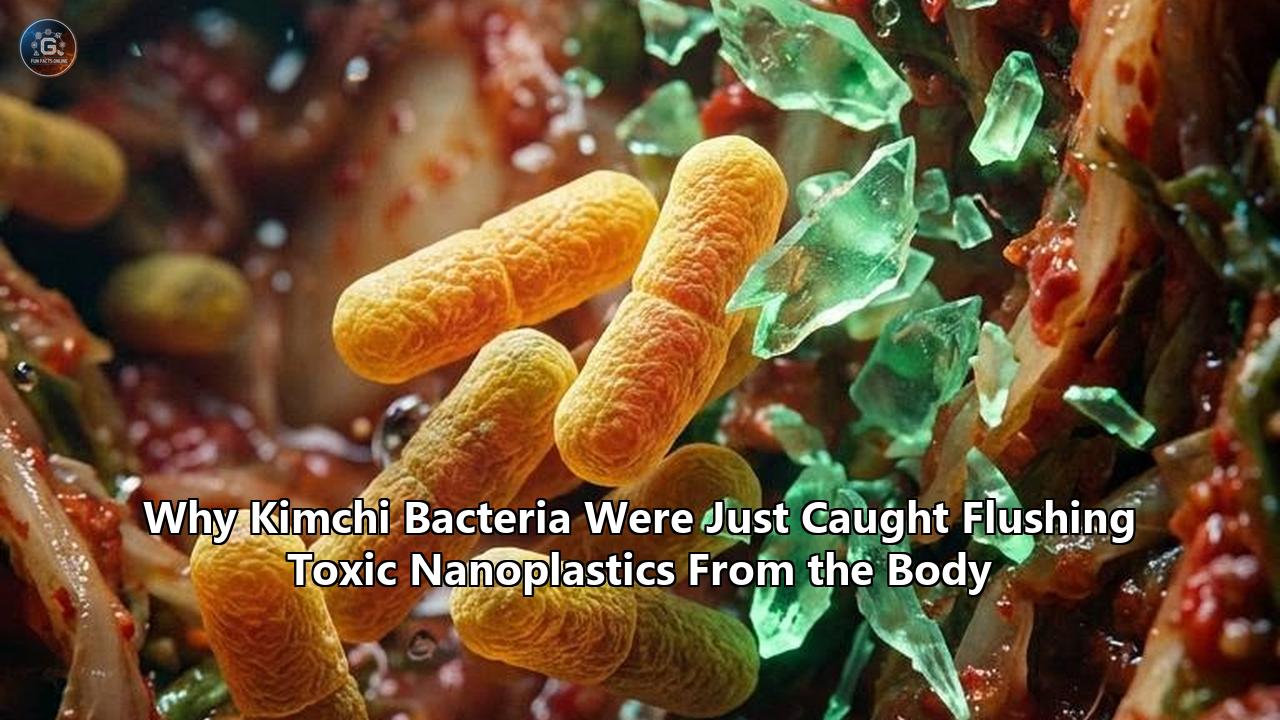
Under the high-vacuum lens of a scanning electron microscope inside the World Institute of Kimchi in Gwangju, South Korea, senior researcher Dr. Se Hee Lee observed a biological interaction that seemed almost unnatural. Clinging tightly across the undulating peptidoglycan ridges of a microscopic rod-shaped microbe were hundreds of synthetic polystyrene spheres, each measuring less than a thousandth of a millimeter in diameter.
The microbe was Leuconostoc mesenteroides CBA3656, a ubiquitous bacterium isolated from traditional Korean fermented cabbage. The spheres were nanoplastics—the elusive, deeply invasive fragments of industrial civilization that have infiltrated human tissues, crossed the placental barrier, lodged in carotid arterial plaques, and settled into brain tissue across every continent.
The findings, published in the peer-reviewed journal Bioresource Technology, provide empirical validation for an unexpected biological phenomenon: specific food-borne lactic acid bacteria can physically bind nanoplastics inside the gastrointestinal tract and actively accelerate their expulsion through the feces before they can cross the intestinal wall into systemic circulation. In tightly controlled germ-free animal trials, mice colonized with this kimchi-derived strain excreted more than double the volume of ingested nanoplastics compared to control subjects.
The discovery has triggered a wave of scientific interest across gastrointestinal medicine, toxicology, and food microbiology. For decades, microplastics and nanoplastics were viewed as biologically inert pollutants that pass through the body or permanently embed themselves in visceral tissues with toxicological impunity. The revelation that an ancient fermentation strain possesses the surface chemistry required to act as an electrostatic trap introduces an entirely new mechanism for biological defense.
Yet behind the breathless internet headlines celebrating kimchi as a miracle cure for microplastic poisoning lies a far more intricate, demanding scientific reality. To understand why this bacterium binds plastic, why it survives conditions where other probiotics fail, and why translating a laboratory trial into human clinical protection remains a complex pharmacological challenge, one must follow the forensic evidence trail deep into the cellular architecture of the gut.
                     +---------------------------------------+
                     | INGESTED NANOPLASTICS (<1000 nm)      |
                     +---------------------------------------+
                                         |
                                         v
                     +---------------------------------------+
                     | GASTROINTESTINAL TRANSIT              |
                     | Stomach Acid -> Intestinal Proteases  |
                     +---------------------------------------+
                                    /         \
   [WITHOUT INTERVENTION]          /           \   [WITH CBA3656 BACTERIA]
                                  /             \
                                 v               v
    +--------------------------------+       +--------------------------------+
    | Particle Epithelial Influx     |       | Surface Biosorption (57% Held) |
    | Transcellular crossing         |       | Cell-wall electrostatic lock   |
    | Paracellular leak (tight junct)|       | Bulky aggregate forms          |
    +--------------------------------+       +--------------------------------+
                 |                                           |
                 v                                           v
    +--------------------------------+       +--------------------------------+
    | VASCULAR & TISSUE INFILTRATION |       | FECAL CLEARANCE (>2x INCREASE) |
    | Plaque, liver, kidneys, brain  |       | Natural peristaltic expulsion  |
    +--------------------------------+       +--------------------------------+
The Nanoscale Infiltration: The Threat Beneath the Tissues
To grasp the stakes of the WiKim research, one must first confront the scale and physics of nanoplastic pollution. Unlike microplastics—defined as fragments smaller than five millimeters—nanoplastics are particles measuring under one micrometer, frequently dropping down into the double-digit nanometer range. They are invisible to ordinary optical light microscopes, light enough to remain suspended in municipal tap water, and small enough to exhibit Brownian motion.
They enter the body constantly. A landmark 2024 study conducted by researchers at Columbia University and published in the Proceedings of the National Academy of Sciences deployed stimulated Raman scattering microscopy to reveal that an average liter of commercially bottled water contains approximately 240,000 detectable plastic fragments, roughly 90 percent of which reside within the nanoscale spectrum. These particles are sheared off from plastic water bottles, bottle caps, municipal processing conduits, synthetic clothing textiles, and food packaging films.
The danger of an ingested particle is inversely proportional to its diameter:
- Particles > 150 micrometers: Almost universally restricted to the intestinal lumen, passing uneventfully through the stool without interacting with mucosal layers.
- Particles between 10 and 150 micrometers: Can trigger localized intestinal mucosal abrasion, induce mucus hypersecretion, and incite mild immune cell recruitment, but rarely traverse the mucosal membrane into systemic circulation.
- Particles < 10 micrometers: Capable of persorption through the specialized M-cells of Peyer’s patches in the small intestine, potentially migrating to regional mesenteric lymph nodes.
- Nanoplastics (< 1 micrometer down to 20 nanometers): Small enough to bypass mechanical filters altogether. They penetrate gut mucosal tight junctions, undergo transcellular endocytosis through enterocytes, enter the portal vein, and deposit directly into peripheral organs.
Once inside systemic circulation, nanoplastics behave less like inert gravel and more like biological saboteurs. In March 2024, an investigation published in The New England Journal of Medicine analyzed 257 patients undergoing carotid endarterectomy for asymptomatic carotid artery disease. Researchers discovered polyethylene and polyvinyl chloride nanoparticles embedded inside the excised vascular plaques of 58 percent of the patients. Those with detectable plastics in their plaques faced a 4.53-fold higher risk of experiencing a stroke, myocardial infarction, or death from any cause over a 34-month follow-up window compared to patients whose arterial tissue was plastic-free.
"The toxicological profile of nanoplastics is completely distinct from microplastics," explains Dr. Aris Thorne, an environmental toxicologist who has tracked particle-induced endocytosis. "Because of their extraordinarily high surface-area-to-volume ratio, nanoplastics interact directly with hydrophobic cellular components. They pierce mitochondrial membranes, generate reactive oxygen species, unfold native proteins into non-functional conformations, and cross the blood-brain barrier. The liver cannot enzymatically degrade a polystyrene or polypropylene backbone; our cytochromes have no substrate recognition for high-molecular-weight synthetic polymers. Once they pass the intestinal wall, your body is essentially defenseless."
For years, the therapeutic response to internal plastic accumulation was viewed as a biological dead end. No pharmaceutical agent existed to capture synthetic polymers inside the gut lumen, and no surgical intervention could comb nanoplastics out of the blood. It was against this grim baseline that a team of South Korean microbiologists decided to look in an unexpected place: the bubbling microbial ecosystems of traditional fermented cabbage.
The Gwangju Screen: Sifting Through Fermentation Ecology
The World Institute of Kimchi (WiKim), established in Gwangju under South Korea’s Ministry of Science and ICT, does not operate as a culinary enthusiast club; it is an advanced biotechnology complex dedicated to industrial microbiology, metagenomic sequencing, and strain discovery. South Korean scientists have spent decades characterizing the wild microorganisms responsible for the slow, anaerobic fermentation of salted cruciferous vegetables, garlic, ginger, and red pepper.
Fermentation is fundamentally a biological war of attrition. Over months of maturation inside ceramic vessels (onggi), an explosive succession of bacteria occurs. As salinity levels climb and ambient oxygen is exhausted, vulnerable microorganisms perish. What remains is a hyper-adapted cadre of lactic acid bacteria capable of surviving intense osmotic pressure, heavy acidity, antimicrobial plant defensins, and volatile organic compounds.
WiKim senior researchers Dr. Se Hee Lee and Dr. Tae Woong Whon hypothesized that bacteria capable of surviving such hostile environments might possess unique cell surface architectures. Specifically, they wanted to determine whether the outer membranes of food-derived lactic acid bacteria could act as a biological sponge, binding microscopic environmental contaminants through a process known as biosorption.
                     WIKIM SCREENING PLATFORM

  Isolated Candidates:
  * Leuconostoc mesenteroides CBA3656
  * Latilactobacillus sakei CBA3608
  * Weissella cibaria strains
                           |
                           v
              Standard Saline Screening
              Polystyrene Nanoplastics (PS-NPs)
              Results: Both CBA3656 and CBA3608 show ~85-87% binding
                           |
                           v
              Simulated Human Digestive Assay
              * Gastric juice (pH 2.0-3.0)
              * Intestinal fluid (Bile salts + Pancreatin, pH 7.0)
                           |
              +------------+------------+
              |                         |
              v                         v
     Latilactobacillus         Leuconostoc
        sakei CBA3608     mesenteroides CBA3656
      (Binding: 3%)             (Binding: 57%)
              |                         |
              v                         v
     Bile salts stripped       Surface functional groups
       plastic clean           maintained grip under fire
The researchers isolated dozens of candidate strains from artisanal and regional kimchi samples across South Korea. Among the most promising were strains of Latilactobacillus sakei, Weissella cibaria, and Leuconostoc mesenteroides. The team suspended these bacterial cells in liquid solutions containing commercial polystyrene nanoplastics (PS-NPs)—uniform synthetic spheres measuring roughly 100 to 500 nanometers.
Initial benchtop results, conducted under neutral pH and standard laboratory saline conditions, were instantly promising. Two strains stood out with near-identical efficiency:
- Leuconostoc mesenteroides CBA3656 achieved an 87 percent nanoplastic adsorption efficiency within 60 minutes.
- Latilactobacillus sakei CBA3608 recorded an 85 percent adsorption efficiency under identical conditions.
In a standard beaker of water, both microbes operated like molecular flypaper. High-resolution transmission electron microscopy revealed that neither bacterium was absorbing the plastic into its cytoplasm; instead, thousands of nanoplastic beads had blanketed the cell surfaces, completely encasing the bacterial exterior without lysing the bacterial cell wall.
To the untrained eye, both strains appeared equally matched. But human biology does not operate like a neutral beaker of saline. The true test lay within the chemical furnace of the human digestive tract.
The Simulated Cauldron: Why Most Probiotics Fail Under Fire
A common fallacy in probiotic research is assuming that an organism that performs well in an isolated laboratory dish will perform identically inside the human gastrointestinal tract. The human stomach and small intestine form an aggressive bio-barrier engineered by evolution specifically to kill bacteria, denature foreign proteins, and emulsify organic compounds.
When ingested, any microbe must first survive a plunge into gastric acid—a bath of hydrochloric acid and pepsin with a pH between 1.5 and 2.5. If it survives, it is dumped into the duodenum, where it is blasted with concentrated pancreatic proteases, lipases, amylases, and most crucially, bile salts.
Bile salts (primarily cholic and chenodeoxycholic acids conjugated with glycine or taurine) are natural, powerful biological detergents. Their explicit biological purpose is to lower surface tension, break down fats into micro-droplets, and destroy the lipid bilayers of incoming bacterial pathogens. For a bacterium attempting to hold onto a tiny synthetic polymer, bile salts represent the ultimate test. They coat hydrophobic surfaces, displace bound molecules, and violently strip away surface-adherent particles.
                 BEAKER VS. INTESTINE SURVIVAL

  100% |
       |  87%   85%
   80% |  ---   ---
       |  [ ]   [ ]
   60% |  [ ]   [ ]             57%
       |  [ ]   [ ]             ---
   40% |  [ ]   [ ]             [ ]
       |  [ ]   [ ]             [ ]
   20% |  [ ]   [ ]             [ ]
       |  [ ]   [ ]             [ ]    3%
    0% +-----------------------------------
           CBA3656 CBA3608      CBA3656 CBA3608
          (Standard Saline)   (Simulated Gut Fluid)
Dr. Lee and Dr. Whon subjected their candidate strains to a simulated human gastrointestinal system, mimicking the exact temperature (37°C), sequential enzymatic cascades, and bile salt concentrations found in healthy human intestines.
When suspended in simulated intestinal fluid alongside 20 ppm of polystyrene nanoplastics, the results diverged sharply:
- Latilactobacillus sakei CBA3608 completely collapsed. Its adsorption rate plummeted from 85 percent down to an ineffective 3 percent. The bile salts acted as an industrial solvent, stripping every bound plastic nanoparticle clean off the bacterial wall and releasing the synthetic toxin back into free liquid suspension.
- Leuconostoc mesenteroides CBA3656 held the line. Despite the aggressive detergent action of the bile salts and the turbulent enzymatic shearing forces, CBA3656 retained an adsorption rate of 57 percent. More than half of all available nanoplastics remained firmly anchored to the bacterial surface.
The data, confirmed across multiple replications, proved that CBA3656 was not simply a passive sticky cell; it possessed an evolutionary surface modification capable of maintaining adhesive affinity under chemical conditions that stripped other common probiotics bare.
This resilience under harsh digestive conditions sparked immediate clinical interest in kimchi bacteria nanoplastics clearance dynamics. The WiKim researchers realized they were no longer looking at a run-of-the-mill fermented food contaminant; they had discovered a resilient biological interceptor.
Decoding How Kimchi Bacteria Nanoplastics Binding Works Under Fire
How does an ordinary cabbage-fermenting bacterium out-grip a specialized probiotic strain inside a bath of detergent bile? To answer this question, researchers had to dismantle the biophysics of the bacterial cell envelope.
Bacteria are generally classified by their cell wall composition: Gram-negative (which possess a thin peptidoglycan layer enveloped by an outer lipopolysaccharide membrane) and Gram-positive (which lack an outer membrane but possess an extraordinarily thick, multilayered peptidoglycan wall). Leuconostoc mesenteroides is a Gram-positive lactic acid bacterium.
The cell wall of L. mesenteroides CBA3656 is a dense matrix composed of repeating units of N-acetylglucosamine and N-acetylmuramic acid cross-linked by short peptide chains. Woven through this structural lattice are teichoic acids and lipoteichoic acids, which extend outward like microscopic brush bristles.
                          CBA3656 BIOSORPTION MECHANISM

         EXTRACELLULAR SPACE

           ( - ) Polystyrene Nanoplastic (PS-NP)
                     \
                      \  [Electrostatic & Hydrophobic Attraction]
                       v
     ~~~~~~~~~~~~~~~~~~~~~~~~~~~~~~~~~~~~~~~~~~~~~~~~~~~~~~~~~~~~~~  <- Outer Surface Layer
         |       |       |       |       |       |       |
        (P)     (P)     (P)     (P)     (P)     (P)     (P)         <- Negatively Charged
         |       |       |       |       |       |       |              Phosphate Groups
       [=== TEICHOIC & LIPOTEICHOIC ACID BRUSHES ===]                   (Teichoic Acids)
         |       |       |       |       |       |       |
     ==============================================================  <- Thick Peptidoglycan
     |  N-acetylglucosamine  --  N-acetylmuramic acid cross-links |     Cell Wall Lattice
     ==============================================================
         |               |               |               |
     [------------- HYDROPHOBIC SURFACE PROTEIN DOMAINS ----------]  <- Deep Binding Pockets
         |               |               |               |
     ~~~~~~~~~~~~~~~~~~~~~~~~~~~~~~~~~~~~~~~~~~~~~~~~~~~~~~~~~~~~~~  <- Bacterial Plasma
                                CYTOPLASM                               Membrane
The WiKim investigation identified three synergistic mechanisms that allow CBA3656 to lock onto nanoplastics and refuse to let go:
1. Zeta Potential and Electrostatic Bridging
Polystyrene nanoplastics in aquatic and physiological systems carry a distinct surface charge, typically negative due to the oxidation of surface groups and the adsorption of ambient ions. The outer surface of L. mesenteroides CBA3656 also carries an overall negative zeta potential, generated by the phosphate groups in its teichoic acid polymers.
Under basic physics, two identically charged objects should repel each other. However, in the ionic broth of intestinal fluid—rich in divalent cations like calcium ($Ca^{2+}$) and magnesium ($Mg^{2+}$)—these positively charged minerals act as electrostatic bridges. The divalent ions position themselves between the bacterial wall and the plastic particle, neutralizing the repulsive forces and locking the two surfaces together through powerful electrostatic stabilization.
2. High-Affinity Hydrophobic Pockets
Polystyrene is inherently hydrophobic; it repels water and clings aggressively to other non-polar surfaces. Through surface proteomic profiling, researchers observed that Leuconostoc mesenteroides CBA3656 expresses a unique array of surface-anchored proteins packed with hydrophobic amino acid residues, including leucine, isoleucine, and phenylalanine.
When a suspended nanoplastic approaches the bacterium, thermodynamic entropy drives water molecules away from both surfaces, forcing the synthetic polymer directly into the bacterium's hydrophobic protein folds. This forms a tight physical union that requires immense physical energy to sever.
3. Exopolysaccharide (EPS) Mesh Entanglement
Unlike many standard probiotic strains, Leuconostoc mesenteroides is a world-class producer of dextran and complex extracellular polysaccharides (EPS). During fermentation, it spins out a sticky, spiderweb-like mesh of high-molecular-weight glucose polymers.
Under electron microscopy, this EPS matrix acts like a microscopic trawling net. Once the nanoplastics make contact with the cell envelope, the surrounding polysaccharide mesh collapses around the particles, physically entangling them against the outer wall. When bile salts enter the environment, they cannot easily slip between the EPS matrix and the bacterial membrane to dissolve the hydrophobic bond, leaving the plastic firmly anchored.
The Crucial Detail: Biosorption Versus Biodegradation
There is a fundamental scientific distinction between biosorption and biodegradation, one that separates safe excretion from dangerous toxicity.
+------------------------------------------------------------------------------+
|                     BIOSORPTION vs. BIODEGRADATION                          |
+------------------------------------------------------------------------------+
| BIOSORPTION (What CBA3656 does):                                             |
| * Microbe acts as an inert electrostatic and physical carrier.                |
| * Plastic particle remains 100% chemically intact.                           |
| * Particle size is NOT reduced; no toxic monomers or free radicals released. |
| * Bulky complex is eliminated through normal bowel motility.                 |
+------------------------------------------------------------------------------+
| BIODEGRADATION (What would be hazardous in the gut):                         |
| * Microbe uses enzymes to cleave carbon-carbon polymer backbones.            |
| * Breaks down macro-polymers into styrene monomers, benzene, and oligomers.  |
| * Chemical intermediate fragments are dramatically smaller (<5 nm).         |
| * Increased paracellular absorption into systemic blood vessels and organs.  |
+------------------------------------------------------------------------------+
Had CBA3656 enzymatically degraded the polystyrene inside the intestine, the consequences for the host animal could have been catastrophic. Chemical breakdown of polystyrene yields styrene monomers, dimeric fragments, and low-molecular-weight aromatic oligomers. These small chemical intermediates are exceptionally toxic: they cross cellular membranes with ease, act as endocrine disruptors, damage cellular DNA, and provoke intense local gut inflammation.
By binding the plastic whole without altering its chemical makeup, the bacterium safely wraps the synthetic toxin in an inert biological transport vehicle, ensuring it glides cleanly through the intestinal tract without shedding molecular debris.
The In Vivo Trial: Germ-Free Mice and the Double-Excretion Phenomenon
Benchtop simulations and artificial digestive fluids provide vital clues, but living biology remains the ultimate arbiter of truth. To determine whether this binding capability could truly prevent systemic plastic infiltration in a living mammal, the WiKim team organized an in vivo trial using a specialized gnotobiotic animal model.
The team selected germ-free (axenic) C57BL/6 mice—animals bred in strictly sterile isolators without a single resident gut bacterium. Using germ-free mice was a critical scientific choice: it eliminated the confounding noise of trillions of native gut microbes, allowing the researchers to measure the direct, unadulterated therapeutic effect of the kimchi-derived strain CBA3656 alone.
The experimental protocol was conducted with rigorous precision:
- Cohort Separation: Male and female germ-free mice were divided into two distinct groups.
- Pre-colonization: The experimental cohort was orally administered live cultures of Leuconostoc mesenteroides CBA3656 over a five-day acclimation period, establishing robust monoclonality in their gastrointestinal tracts. The control cohort was given sterile saline.
- The Challenge: On day six, both the colonized and control groups were administered a concentrated oral bolus of fluorescently labeled polystyrene nanoplastics at an exposure dose of 1,000 ppm.
- Metabolic Collection: The mice were housed in individual metabolic cages, enabling the precise, contamination-free collection of all fecal matter excreted over the subsequent 48 hours.
                     IN VIVO EXPERIMENTAL DESIGN

      [ GERM-FREE C57BL/6 MICE (MALE & FEMALE COHORTS) ]
                             |
             +---------------+---------------+
             |                               |
             v                               v
    CONTROL GROUP (n=X)            CBA3656 GROUP (n=X)
    * Sterile Saline Vehicle       * Oral Gavage CBA3656
    * 5-Day Monitored Rest         * 5-Day Colonization
             |                               |
             +---------------+---------------+
                             |
                             v
               DAY 6: TOXIC CHALLENGE
               Oral administration of 1,000 ppm
               Fluorescent Polystyrene Nanoplastics (PS-NPs)
                             |
                             v
               METABOLIC CAGE MONITORING
               Total Fecal Collection over 48 Hours
                             |
             +---------------+---------------+
             |                               |
             v                               v
      CONTROL RESULTS:               CBA3656 RESULTS:
      Baseline Plastic Excretion     > 200% Increase in Excreted Plastic
      (High internal tissue threat)  (Bound to bacteria, carried out safely)
The fecal samples were analyzed using a combination of fluorescence spectroscopy and pyrolysis-gas chromatography/mass spectrometry (Py-GC/MS)—an analytical technique capable of vaporizing organic matter to quantify the mass of synthetic polymers present down to the microgram level.
The data revealed a clean, indisputable divergence:
In both male and female cohorts, mice colonized with Leuconostoc mesenteroides CBA3656 demonstrated more than a twofold increase in the total mass of nanoplastics excreted in their feces compared to the uncolonized controls.
The nanoplastics in the control group had lingered inside the mucosal folds of the gut, with substantial portions vanishing into the epithelial lining. In the CBA3656-treated mice, the bacteria had latched onto the floating plastic particles, formed bulky microbial-synthetic complexes too large to slip through mucosal tight junctions, and carried them directly into the stool stream through natural peristalsis.
"This animal data provides definitive validation of concept," said Dr. Se Hee Lee following the paper's peer review. "We were able to prove that the high biosorption rates we documented under simulated gut conditions translate directly into animal physiology. The probiotic acts essentially like an escort service, arresting nanoplastics within the lumen and ushering them safely out of the body."
The study confirmed that the physical trapping mechanism operates regardless of the animal's biological sex, demonstrating equal efficacy across male and female subjects. For the first time, researchers had caught a food-grade bacterium in the act of cleaning synthetic particulate waste out of a mammalian digestive system.
Kimchi Folklore Meets Cold Pharmacology: Separating Science From Hype
Whenever a peer-reviewed paper demonstrates a biological benefit linked to a traditional food, the popular media inevitably distorts the nuance. Within days of the WiKim announcement, lifestyle blogs and social media platforms were flooded with headlines claiming that eating a side of kimchi with dinner would "detoxify" modern plastic exposure.
The clinical reality, however, is far more sobering. Before ordering jars of fermented vegetables in the belief that they grant immunity to plastic contamination, consumers and clinicians must confront the steep scientific hurdles separating a laboratory mouse trial from human clinical utility.
+------------------------------------------------------------------------------+
|              POPULAR NARRATIVE vs. RIGOROUS CLINICAL REALITY                |
+------------------------------------------------------------------------------+
| WHAT THE HEADLINES CLAIMED:                                                  |
| "Eating kimchi flushes microplastics out of your body."                     |
| "Fermented foods cure internal plastic pollution."                           |
| "Any store-bought kimchi will protect your organs from synthetic waste."     |
+------------------------------------------------------------------------------+
| WHAT THE EVIDENCE ACTUALLY PROVED:                                           |
| * One specific isolated strain (CBA3656) demonstrated this efficacy.         |
| * Commercial store-bought kimchi is frequently pasteurized, killing live     |
|   bacterial cultures entirely.                                               |
| * Wild fermentations feature wildly erratic strain distributions; you have  |
|   no way of knowing if CBA3656 is present in your jar.                      |
| * Germ-free mice have zero gut microbiome competition; human guts contain   |
|   trillions of competing native commensals that may crowd CBA3656 out.       |
| * The study only evaluated polystyrene (PS); humans ingest polyethylene,    |
|   polypropylene, PET, nylon, and Teflon, which behave differently.           |
+------------------------------------------------------------------------------+
The Specific Strain Versus Wild Fermentation
Traditional kimchi is not an engineered, uniform product; it is a wild, unpredictable microbial ecosystem. An ordinary jar fermenting on a home counter contains dozens of fluctuating bacterial species, shifting from Leuconostoc to Lactobacillus and Weissella depending on temperature, salt salinity, oxygen exposure, and curing time.
The WiKim study did not prove that kimchi as a whole flushes plastic. It proved that one specific isolated strain, Leuconostoc mesenteroides CBA3656, possesses this high-affinity binding phenotype. Another closely related kimchi lactic acid bacterium tested in the very same laboratory—Latilactobacillus sakei CBA3608—lost 97 percent of its binding ability the second it hit gut bile.
If a consumer purchases an arbitrary commercial batch of kimchi, there is no guarantee it contains CBA3656 in therapeutic quantities. Furthermore, much of the commercial kimchi sold in Western supermarkets undergoes post-fermentation pasteurization to stabilize shelf life and prevent packaging swelling during shipping. Pasteurization kills all live bacteria. While dead bacterial envelopes can theoretically retain some surface binding capacity, dead cell ghosts are far more susceptible to rapid enzymatic lysis and structural collapse within the stomach acid.
The Colonization Gauntlet in a Crowded Microbiome
The mouse trial relied on germ-free animals—biological clean slates with zero competing microflora. Inside an axenic mouse gut, an introduced bacterium faces no ecological resistance. It can expand freely, blanket the mucosal epithelium, and encounter ingested nanoplastics without interference.
The human gut, by contrast, is a dense biological metropolis populated by roughly 38 trillion bacterial cells spanning over a thousand distinct species, all competing viciously for nutritional niches, epithelial surface receptors, and metabolic territory. In clinical gastroenterology, introducing a foreign probiotic strain into an established adult microbiome is notorious for its low long-term engraftment rate. Most ingested probiotics pass through the human colon as transient visitors, failing to establish stable colonies and getting cleared within 48 to 72 hours.
For the mechanics of kimchi bacteria nanoplastics elimination to function reliably in everyday human life, researchers must prove that CBA3656 can either carve out a stable ecological niche amidst an existing human microbiome or demonstrate sustained efficacy during transient transit when administered daily at measured pharmacological doses.
+---------------------------------------------------------------------------+
|               COMMON PLASTIC TYPES IN THE HUMAN DIET                     |
+----------------------+--------------------+-------------------------------+
| Polymer Type         | Common Sources     | CBA3656 Biosorption Profile  |
+----------------------+--------------------+-------------------------------+
| Polystyrene (PS)     | Takeout containers,| Formally verified (87% bench, |
|                      | coffee cup lids    | 57% simulated gut, 2x feces)  |
+----------------------+--------------------+-------------------------------+
| Polyethylene (PE)    | Bottle caps, film, | Unconfirmed in WiKim paper;   |
|                      | plastic bags       | requires hydrophobic testing  |
+----------------------+--------------------+-------------------------------+
| Polypropylene (PP)   | Reusable tubs,     | Unconfirmed; distinct surface |
|                      | bottle caps, pipes | charge and structural shape   |
+----------------------+--------------------+-------------------------------+
| Polyethylene         | Water bottles,     | Unconfirmed; more polar than  |
| Terephthalate (PET)  | clothing fibers    | PS, altered binding kinetics  |
+----------------------+--------------------+-------------------------------+
| Polytetrafluoro-     | Non-stick coatings,| Completely unstudied; extreme |
| ethylene (PTFE)      | cookware flakes    | chemical inertness            |
+----------------------+--------------------+-------------------------------+
The Polymer Dilemma
The WiKim investigation focused exclusively on polystyrene (PS) nanoplastics. Polystyrene was selected for sound scientific reasons: it is uniform, readily available in standardized fluorescently labeled nanometer spheres, and represents a widespread packaging contaminant.
However, polystyrene is only one small slice of the global microplastic deluge. The average human daily intake is dominated by polyethylene (PE) from degraded plastic bags and food wrap, polypropylene (PP) from heat-sealed food containers and bottle closures, and polyethylene terephthalate (PET) derived from beverage containers and synthetic polyester clothing fibers shed into ambient indoor air.
Each polymer possesses distinct surface energy, hydrophobicity, electrostatic charge, and physical morphology. A spherical 100-nanometer polystyrene bead does not behave the same way as an irregular, jagged shard of fragmented polyethylene film or a fibrous thread of PET nylon. Whether Leuconostoc mesenteroides CBA3656 binds polyethylene or polypropylene with the same tenacity it exhibited with polystyrene remains an unanswered scientific question that requires extensive follow-up testing.
Engineering the Gut Escort: The Path Toward Clinical Therapeutics
Acknowledging these scientific caveats does not diminish the significance of the WiKim discovery; rather, it clarifies the real-world roadmap required to transition this strain from an intriguing academic paper into a viable clinical countermeasure.
The immediate advantage of Leuconostoc mesenteroides CBA3656 is its safety profile. Unlike genetically modified microbes or novel synthetic adsorbents, L. mesenteroides already enjoys Generally Recognized as Safe (GRAS) status with the U.S. Food and Drug Administration and is listed on the European Food Safety Authority's (EFSA) Qualified Presumption of Safety (QPS) registry. Because humans have consumed traditional fermented foods containing Leuconostoc species for thousands of years, the regulatory barrier to initiating human safety and efficacy trials is dramatically lower than it would be for a newly developed pharmaceutical molecule.
                     CLINICAL TRANSLATION ROADMAP

  [PHASE I: STRAIN CHARACTERIZATION & SAFETY] ----------> COMPLETED (GRAS/QPS)
  * Isolation from traditional fermentation
  * Genomic sequencing and stability profiling
  * Safety verification (EFSA/FDA standards)
                           |
                           v
  [PHASE II: MECHANISTIC & IN VIVO ASSAYS] ------------> COMPLETED (WiKim 2026)
  * In vitro binding kinetics (87% efficiency)
  * Simulated gastrointestinal fluids (57% retention)
  * Germ-free mouse trials (>2x fecal output)
                           |
                           v
  [PHASE III: ADVANCED FORMULATION] --------------------> IN PROGRESS
  * Enteric microencapsulation (acid bypass)
  * Synbiotic pairing with prebiotic substrate
  * Cross-polymer binding assays (PE, PP, PET)
                           |
                           v
  [PHASE IV: HUMAN CLINICAL TRIALS] -------------------> UPCOMING TARGET
  * Double-blind, randomized, placebo-controlled
  * Mass-spectrometry quantification of fecal plastic
  * Systemic biomarker tracking (arterial, serum)
Microbiological researchers are already outlining the formulation strategies necessary to turn CBA3656 into an effective biological delivery platform:
1. Enteric Microencapsulation
To maximize the number of viable bacteria reaching the duodenum and jejunum, CBA3656 could be encapsulated within pH-sensitive biopolymer shells. Formulations utilizing sodium alginate, cross-linked chitosan, or specialized cellulose derivatives remain completely stable in the acidic environment of the stomach (pH 2.0) and dissolve only when encountering the higher pH of the upper small intestine (pH > 6.5). This protects the bacterial surface proteins and exopolysaccharide brushes from preliminary acid denaturation, delivering a concentrated army of functional binding sites directly to where nanoplastics concentrate.
2. Synbiotic Fiber Pairing
Leuconostoc mesenteroides relies heavily on specific carbohydrate substrates to synthesize its protective, plastic-trapping dextran matrix. Formulating CBA3656 alongside targeted prebiotic oligosaccharides—such as specific branched glucans or fructooligosaccharides—ensures the bacterium maintains peak EPS synthesis during its transit through the human digestive tract, sustaining its trapping capacity even when competing with native intestinal commensals.3. Broad-Spectrum Synthetic Adsorbent Cocktails
Microbiologists are investigating whether CBA3656 can be combined with other specialized microbes. By combining strains with differing surface charges and enzymatic properties—such as specific strains of Lactobacillus rhamnosus, Bifidobacterium longum, or specialized food-grade yeasts like Saccharomyces boulardii—pharmacologists could design a broad-spectrum probiotic complex capable of capturing a wider variety of synthetic polymers, including non-polar polyethylene and polar nylon fragments simultaneously.
Several South Korean biotechnology consortia, working in partnership with the World Institute of Kimchi, have initiated preliminary phase-1 safety and transit trials to assess how CBA3656 behaves in healthy human volunteers with intact, diverse microbiomes. Using advanced Py-GC/MS analysis of human stool, these upcoming clinical investigations will attempt to verify whether oral administration of concentrated CBA3656 cultures produces a measurable, statistically significant increase in fecal plastic excretion in humans consuming ordinary, everyday diets.
The Ecological Ceiling: Biology Cannot Outrun Chemistry
While the discovery of CBA3656's plastic-trapping abilities offers an encouraging glimpse into biological intervention, environmental scientists and epidemiologists urge strong caution against viewing probiotics as an excuse for societal complacency.
A probiotic strain that doubles nanoplastic excretion inside an animal's gut is a biological damage-control mechanism; it is not a clean slate.
"We have to be exceptionally careful that discoveries like this are not co-opted to create a false sense of security," says Dr. Elena Vance, an environmental policy fellow who has advised international panels on plastic treaty negotiations. "You cannot simply ingest a bacterial capsule every morning and assume you are insulated from the toxicological impacts of an ecosystem saturated in petrochemical breakdown products. Probiotics do not stop nanoplastics from entering your lungs when you breathe indoor air. They do not remove plastic particles already embedded in your vascular endothelial walls or brain parenchyma. And they do not address the overarching reality that global plastic output continues to climb."
                 GLOBAL HUMAN PLASTIC EXPOSURE

            +------------------------------------+
            | TOTAL ENVIRONMENTAL EXPOSURE       |
            +------------------------------------+
                   /                     \
                  /                       \
                 v                         v
        [INHALATION ROUTE]        [INGESTION ROUTE]
        * Synthetic textiles      * Drinking water
        * Atmospheric dust        * Food packaging & salts
                 |                         |
                 v                         v
        LUNGS & ALVEOLI           GASTROINTESTINAL TRACT
                 |                         |
                 v                         v
        Direct systemic vascular   Intestinal Epithelial Wall
        penetration (No gut                |
        probiotic protection)       [CBA3656 INTERCEPTION ZONE]
                                           |
                                    +------+------+
                                    |             |
                                    v             v
                              Escorts ~57%     Remaining ~43%
                              into stool       leaks into tissues
The human ingestion of microplastics and nanoplastics is an unavoidable consequence of an environment overloaded with synthetic petrochemicals. Humanity manufactures more than 400 million metric tons of plastic annually, a figure projected to nearly triple by the year 2060 under business-as-usual trajectories. Every water bottle, synthetic garment, automotive tire, and single-use container manufactured today is destined to undergo mechanical abrasion, ultraviolet photodegradation, and oxidative weathering, ultimately fragmenting into trillions of persistent nanoscale particles that disperse throughout the biosphere.
A healthy intestinal lining remains our primary barrier against environmental toxicity. Maintaining that mucosal barrier through a fiber-rich diet, diverse fermented foods, and targeted probiotic strains is sound preventative medicine. But biological strategies can only do so much against an industrial pollutant that has saturated the modern food web.
The World Institute of Kimchi's discovery that Leuconostoc mesenteroides CBA3656 captures and sweeps nanoplastics out of the body confirms that nature occasionally develops unexpected defenses against our own modern pollutants. The ultimate milestone for medicine will be determining whether this resilient cabbage microbe can perform the same escort service within the complex terrain of the human gut. But the ultimate milestone for global public health remains unchanged: cutting off the deluge of synthetic waste at the manufacturing source before our bodies are forced to clean it up from the inside out.
Reference:
- https://www.reddit.com/r/science/comments/1ryb9b0/kimchi_probiotic_promotes_the_excretion_of/
- https://www.the-microbiologist.com/news/kimchi-derived-probiotic-found-to-promote-binding-and-excretion-of-intestinal-nanoplastics/8375.article
- https://scitechdaily.com/scientists-say-this-popular-food-could-help-your-body-get-rid-of-microplastics/
- https://draxe.com/health/kimchi-and-microplastics/
- https://bioengineer.org/probiotic-from-kimchi-enhances-binding-and-elimination-of-intestinal-nanoplastics/
- https://www.nutraingredients.com/Article/2026/04/13/kimchi-derived-probiotic-shows-promise-for-nanoplastic-elimination/
- https://www.sciencedaily.com/releases/2026/05/260517211451.htm
- https://www.sciencedaily.com/releases/2026/09/260917101058.htm
- https://www.eurekalert.org/news-releases/1120173
- https://www.thecraftypickle.co.uk/blogs/nutrition/can-kimchi-remove-microplastics
- https://www.nationthailand.com/sustaination/40064538
- https://www.nutritioninsight.com/news/kimchi-nanoplastics-heart-health.html
- https://www.foundmyfitness.com/stories/haf3ge
- https://wisewomanmethod.substack.com/p/how-to-help-your-body-flush-microplastics
- https://www.foundmyfitness.com/stories/haf3ge