While modern concrete bridges, highways, and seawalls routinely show signs of structural degradation after just a few decades, ancient Roman structures like the Pantheon and the aqueducts of Europe have survived for over 2,000 years. The long-standing mystery of why ancient Roman concrete outlasts modern materials has taken a decisive turn.
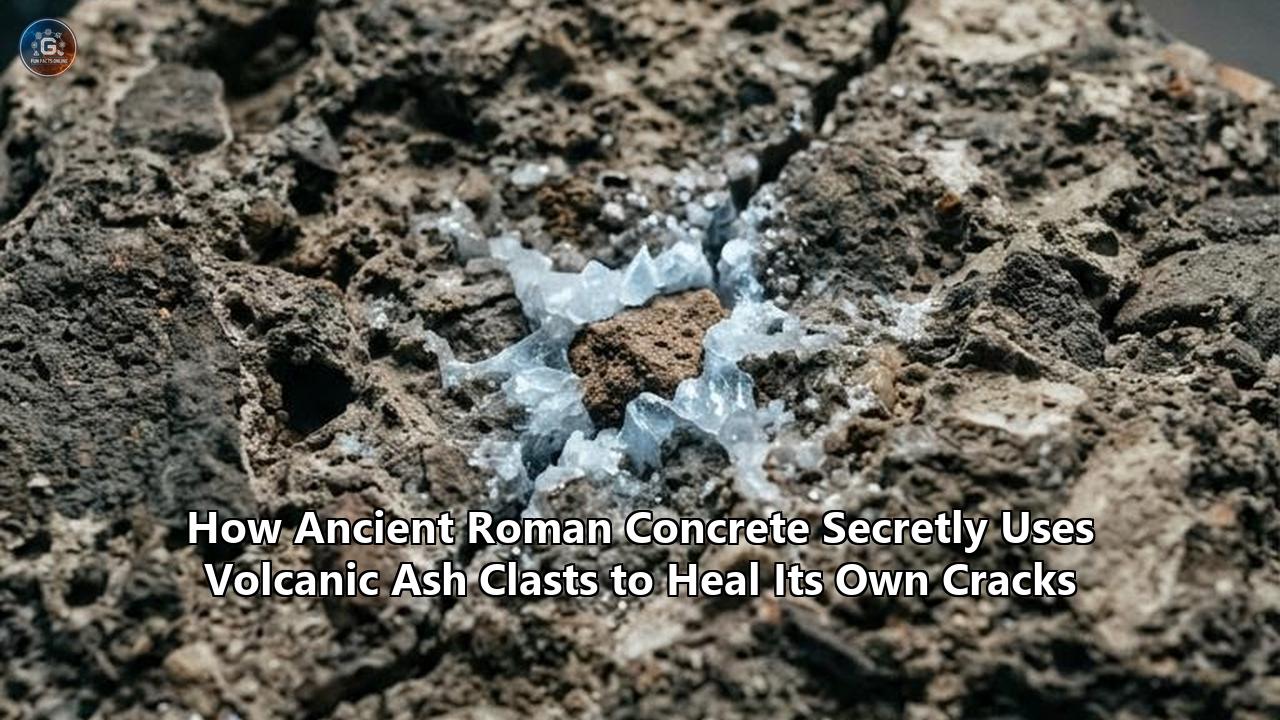
Research led by the Massachusetts Institute of Technology (MIT), published in Science Advances, revealed that white, millimeter-sized mineral inclusions ubiquitous in ancient mortar—long dismissed as signs of sloppy mixing or poor raw materials—are actually active functional components. These tiny inclusions, known as "lime clasts," give the material the ability to repair its own micro-cracks before structural failures can spread.
Recent archaeological excavations at an unfinished construction site in Pompeii's Regio IX, published in Nature Communications, provided direct physical proof of this technique in action. Excavators uncovered unmixed piles of dry quicklime sitting beside volcanic ash, confirming that Roman builders prepared their materials using an intense, high-temperature process known as "hot mixing".
This combination of historical archaeology and advanced spectroscopy has unlocked the exact chemical recipe that allowed Roman infrastructure to endure for millennia—and offers a blueprints to lower the modern construction industry’s massive carbon footprint.
The Flaw in Modern Cement vs. The Roman Approach
To understand how ancient concrete repairs itself, it helps to look at why modern concrete fails.
Modern concrete relies on Portland cement, a material developed in the 19th century. Portland cement is manufactured by heating limestone and clay to approximately 1,450 degrees Celsius (2,640 degrees Fahrenheit) in massive kilns. This process produces clinker, which is pulverized into a fine powder and mixed with sand, gravel (aggregates), and water.
When water is added to Portland cement, a chemical reaction called hydration occurs. The mix binds together to form a solid matrix dominated by calcium-silicate-hydrate (C-S-H) gel.
While modern concrete gains high compressive strength quickly, it suffers from a fundamental vulnerability: rigidity. Over time, physical loads, thermal expansion, moisture ingress, and freeze-thaw cycles create microscopic fractures within the C-S-H matrix. Water then seeps into these micro-cracks. In reinforced concrete, this water reaches the internal steel rebar, causing it to rust, expand, and shatter the concrete from the inside out—a process known as concrete spalling. Modern concrete structures typically require heavy maintenance within 30 to 50 years and complete replacement after a century.
MODERN CONCRETE FAILURE CYCLE:
Micro-cracks form  ==> Water enters crack  ==> Rebar corrodes & expands  ==> Concrete shatters (Spalling)

ROMAN CONCRETE SELF-HEALING CYCLE:
Micro-cracks form  ==> Fractures target lime clasts  ==> Water dissolves reactive calcium  ==> Recrystallization seals crack
Ancient Roman concrete (opus caementicium) was manufactured differently. It consisted of three primary components:
- A binder: Quicklime or slaked lime derived from burned limestone.
- A pozzolanic volcanic additive: Volcanic ash, primarily gathered from deposits around Pozzuoli on the Bay of Naples or local Roman volcanic districts.
- Coarse aggregates: Volcanic tuff, pumice, broken brick, or basalt rock.
For decades, material scientists believed that Roman builders mixed their lime with water first to create a wet paste—a process called slaking—before combining it with volcanic ash and aggregates. That was the method described by the Roman architect Vitruvius in his 1st-century BCE treatise De Architectura.
However, chemical analysis of real Roman concrete tells a different story.
Decoding "Hot Mixing": How Reactive Nodes Form
When MIT Associate Professor Admir Masic and his team analyzed 2,000-year-old mortar samples from the ancient city wall of Privernum near Rome, they focused on the small white lumps peppered throughout the material. Modern engineers had historically assumed these lime clasts were simply the result of incomplete stirring.
"The idea that the presence of these lime clasts was simply attributed to low quality control always bothered me," Masic noted during the release of the findings. "If the Romans put so much effort into making an outstanding construction material, following all of the detailed recipes that had been optimized over the course of many centuries, why would they put so little effort into ensuring the production of a well-mixed final product?"
Using high-resolution multiscale imaging and Raman spectroscopy, the researchers examined the chemical structure of these clasts. They discovered that the white lumps were composed of various polymorphs of calcium carbonate ($CaCO_3$), formed under extreme heat and low-water conditions.
This provided clear evidence of "hot mixing".
Hot Mixing Chemical Sequence:

1. Dry Preparation:
   Quicklime (CaO) + Volcanic Ash (Pozzolan) mixed dry.

2. Exothermic Water Addition:
   CaO + H₂O  ==>  Ca(OH)₂ + Heat (Exothermic reaction > 100°C)

3. Clast Formation:
   Extreme heat prevents total dissolution ==> Reactive "Lime Clasts" are preserved in the matrix.
In hot mixing, builders do not slake the lime beforehand. Instead, they add quicklime (calcium oxide, $CaO$) directly to the volcanic ash and aggregate dry mix before pouring in water.
When water encounters quicklime, it triggers an intense exothermic chemical reaction:
$$\text{CaO (quicklime)} + \text{H}_2\text{O (water)} \longrightarrow \text{Ca(OH)}_2 \text{ (slaked lime)} + \text{Heat}$$
This reaction generates temperatures exceeding 100 degrees Celsius (212 degrees Fahrenheit) within the wet concrete.
The high temperatures alter the hydration process. First, the heat allows for the formation of high-temperature-associated chemical compounds that would not form at room temperature. Second, the elevated temperature significantly speeds up the curing time, allowing construction to proceed faster.
Crucially, the hot mixing process prevents the quicklime from fully dissolving or homogenizing into the wet mortar. Instead, it creates brittle, highly reactive calcium-rich nodules—the lime clasts—suspended throughout the hardened concrete matrix.
These clasts act as dormant chemical reservoirs waiting for structural damage to activate them.
The Mechanical Chemistry of Self-Healing
The underlying science behind roman concrete self healing capabilities relies on an intentional chemical trap. The self-repair mechanism unfolds in a sequence triggered by structural stress and environmental exposure:
Crack Formation              Water Ingress             Calcium Dissolution             Recrystallization
--------------              -------------             -------------------             -----------------
Micro-fracture propagates   ==> Moisture seeps into  ==> Water dissolves reactive    ==> Calcium reacts with CO₂
through brittle clast.          the micro-crack.          calcium inside the clast.       to form CaCO₃ (Calcite).
                                                                                          Crack is sealed shut.
1. Targeted Fracture Propagation
Because lime clasts are chemically distinct and mechanically more brittle than the surrounding pozzolanic matrix, they create localized mechanical weaknesses at a microscopic scale. When physical stress, earth tremors, or thermal expansion cause micro-cracks to form in the concrete, the fractures naturally take the path of least resistance. They travel directly through the lime clasts rather than routing around them.
2. Water Ingress and Calcium Dissolution
When environmental moisture—such as rainwater, groundwater, or seawater—enters the newly formed micro-crack, it comes into direct contact with the fractured surface of the lime clast. The clast contains highly reactive, un-slaked calcium compounds. The incoming water rapidly dissolves these calcium deposits, creating a calcium-saturated aqueous solution within the fissure.
3. Recrystallization and Carbonation
As the calcium-rich solution fills the crack, it interacts with dissolved carbon dioxide ($CO_2$) in the water or atmosphere. This triggers a precipitation reaction that forms calcium carbonate ($CaCO_3$), or calcite crystals:
$$\text{Ca}^{2+} + \text{CO}_3^{2-} \longrightarrow \text{CaCO}_3 \downarrow$$
The growing calcite crystals span the gap across the fracture, physical bonding the internal walls of the crack back together.
4. Secondary Pozzolanic Reactions
Simultaneously, the dissolved calcium reacts with the reactive silica and alumina present in the adjacent volcanic ash matrix. This secondary pozzolanic reaction generates additional calcium-silicate-hydrate (C-S-H) gels, the same binding material that gives concrete its structural strength.
In laboratory tests conducted by the MIT team, researchers produced samples of hot-mixed Roman concrete, deliberately cracked them to a width of 0.5 millimeters, and ran water through the fractures. Within 2 weeks, the water stopped flowing. High-resolution microscopic imaging showed that the cracks were fully healed and sealed with newly formed calcite crystals.
By contrast, control samples made with standard modern concrete recipes or without quicklime showed zero self-repair, allowing water to continuously stream through the open cracks.
While modern bio-based self-healing concretes rely on embedded bacterial spores—which can be fragile, expensive, and degrade over time—the chemistry of roman concrete self healing remains functional as long as there are unreacted lime clasts within the matrix.
The Archaeological Breakthrough at Pompeii
For centuries, historians were puzzled by conflicting accounts in classical literature. Vitruvius, writing in De Architectura, explicitly recommended slaking lime in water for months before using it in construction to prevent cracking. His writings led generations of historians to assume Roman concrete was cold-mixed using slaked lime.
However, other historical texts hinted at a different reality. Pliny the Elder, writing in his Naturalis Historia a century later, noted the intense heat produced when mixing dry lime with water.
The debate was resolved when archaeologists excavating an ancient building site in Pompeii's Regio IX district uncovered a snapshot of an active Roman construction project.
REGIO IX EXCAVATION FINDINGS (POMPEII):
+-----------------------------------------------------------------------+
|  Pile A: Unmixed Quicklime (CaO)                                     |
|  Pile B: Volcanic Ash (Pozzolanic material from Mount Vesuvius)        |
|  Site State: Abandoned during construction in 79 CE                   |
|  Conclusion: Confirms dry-state pre-mixing prior to water addition.   |
+-----------------------------------------------------------------------+
When Mount Vesuvius erupted in 79 CE, it buried the construction site in volcanic ash, preserving the tools and raw materials mid-process. Analyses led by researchers from the Archaeological Park of Pompeii, MIT, and international institutions identified distinct, unmixed dry piles of quicklime sitting alongside stockpiles of volcanic ash.
The physical layout showed that Roman workers did not bring pre-slaked wet lime paste to the site. Instead, they transported dry quicklime, mixed it dry with volcanic ash on location, and added water immediately before placing the mortar into forms.
This on-site evidence directly supported the spectroscopic analysis: Roman builders were actively employing hot mixing at scale.
Seawater and Volcanic Ash: The Dual Engine of Longevity
While lime clasts provide the primary mechanism for self-repairing micro-cracks, they work alongside another unique chemical process: the marine resistance of Roman concrete.
Roman harbors, breakwaters, and piers built in the 1st century BCE—such as those at Portus Julius near Naples—have endured continuous wave action and marine erosion for over two millennia. Modern concrete immersed in seawater usually corrodes within decades as sulphate salts attack the binder.
Research led by Dr. Marie Jackson, a research associate professor of geology at the University of Utah, revealed how seawater interacts with Roman volcanic mortar.
SEAWATER PERMEATION EFFECT:
Seawater percolates through open pores
                 │
                 ▼
Dissolves volcanic glass within pozzolan ash
                 │
                 ▼
Precipitates rare interlocking minerals:
  • Aluminous Tobermorite [Ca₅Si₆O₁₆(OH)₂·4H₂O]
  • Phillipsite [KCa(Al₃Si₅O₁₆)·6H₂O]
                 │
                 ▼
Result: Concrete gains mechanical strength over centuries instead of degrading.
When seawater percolates through the porous matrix of Roman marine concrete, it dissolves the volcanic glass fragments present in the pozzolanic ash. This process creates an alkaline environment that allows rare crystalline minerals to precipitate inside the matrix:
- Aluminous Tobermorite ($\text{Ca}_5\text{Si}_6\text{O}_{16}(\text{OH})_2 \cdot 4\text{H}_2\text{O}$): A rare, plate-like calcium-silicate-hydrate mineral that requires heat to form. It reinforces the concrete matrix, acting like interlocking microscopic plates that prevent cracks from expanding.
- Phillipsite: A zeolite mineral that grows inside the voids left by dissolved volcanic glass, reinforcing the internal structure.
Instead of destroying the concrete, exposure to seawater continually triggers the growth of these mineral plates. The structure grows stronger over centuries of marine exposure.
Industrial Applications and Carbon Reduction
The discovery of the self-repairing mechanism in ancient materials comes at a critical time for the global construction industry.
GLOBAL CEMENT INDUSTRY IMPACT:
• Carbon Footprint: ~8% of global CO₂ emissions.
• Annual Production: Over 4 billion metric tons globally.
• Infrastructure Lifespan: Modern structures often require repair in 30–50 years.
• Roman Concrete Lifespan: Self-healing structures endure 2,000+ years.
Concrete is the second most consumed material on Earth after water. The production of Portland cement alone accounts for roughly 8 percent of global carbon dioxide emissions.
This high carbon footprint stems from two main sources:
- Calcination emissions: Heating limestone ($CaCO_3$) releases carbon dioxide directly ($CaCO_3 \rightarrow CaO + CO_2$).
- Thermal emissions: Reaching kiln temperatures of 1,450°C requires burning massive amounts of fossil fuels.
Adopting formulas inspired by roman concrete self healing principles can reduce this environmental impact in two key ways:
1. Extending Service Lifespan
If the operational lifespan of bridges, dams, roads, and buildings can be extended from 50 years to 150 or 200 years through self-repairing properties, the global demand for new cement production would drop significantly. Fewer structures would need to be demolished, rebuilt, or heavily maintained.
2. Reducing Portland Cement Content
Replacing a significant fraction of traditional Portland cement with pozzolanic materials (such as industrial fly ash, slag, or natural volcanic ash) lowers the energy required for binder production. When combined with hot-mixed quicklime additives, these blended cements gain high durability without relying entirely on carbon-intensive Portland clinker.
| Feature | Modern Portland Cement Concrete | Ancient Roman Concrete (Opus Caementicium) |
|---|---|---|
| Primary Binder | Pulverized Portland Cement Clinker | Quicklime ($CaO$) + Volcanic Ash (Pozzolan) |
| Mixing Process | Ambient temperature wet mixing | High-temperature "Hot Mixing" (exothermic) |
| Internal Microstructure | Homogeneous C-S-H matrix | Heterogeneous matrix containing active "Lime Clasts" |
| Cracking Response | Fractures spread, exposing steel rebar to corrosion | Fractures hit lime clasts and dissolve reactive calcium |
| Self-Healing Limit | $\approx 0.2 - 0.3 \text{ mm}$ (without bio-additives) | Up to $0.6 \text{ mm}$ automatically via calcite precipitation |
| Seawater Vulnerability | High (sulphate attack, rebar corrosion) | Low (triggers growth of Aluminous Tobermorite) |
| Design Lifespan | 50 – 100 years | 2,000+ years |
Modern Commercialization and Scaling Challenges
Efforts to bring self-healing Roman-inspired formulas to market are gaining momentum. Startups and material science researchers are translating these ancient chemical principles into commercial products.
Professor Admir Masic co-founded D30 Concrete, a venture aimed at commercializing hot-mixed concrete formulations for modern construction projects. Other companies are exploring blended pozzolanic cements that incorporate reactive calcium nodes designed to heal cracks under ambient rain conditions.
However, scaling these formulations across the modern construction sector involves several technical and regulatory challenges:
CHALLENGES TO MASS ADOPTION:
1. Equipment Adaptation: Ready-mix plants must manage hot mixing exotherms safely.
2. Building Codes: Current ASTM/EUROCODE standards rely on short-term compressive testing.
3. Supply Chain Limitations: High-quality natural pozzolans (volcanic ash) are geographically restricted.
Thermal Management in Modern Equipment
In modern ready-mix concrete plants, uncontrolled heat generation can cause equipment damage or worker safety hazards. Quicklime reacts violently when exposed to water, generating steam and rapid pressure increases. Commercial batch plants must adjust their mixing sequences and temperature monitoring to control this exothermic reaction safely.
Updating Building Codes
Modern structural engineering standards (such as ASTM standards in the United States or Eurocodes in Europe) evaluate concrete performance based on 28-day compressive strength. Ancient Roman concrete gains strength gradually over months and years through long-term pozzolanic reactions and mineralization. Updating standards to account for self-healing capability and long-term durability metrics remains an ongoing task for regulatory bodies.
Pozzolan Availability
While ancient Rome had access to abundant volcanic ash from Mount Vesuvius and the Alban Hills, modern manufacturers must source alternative pozzolans. Researchers are evaluating industrial byproducts—such as calcined clays, rice husk ash, and ground granulated blast-furnace slag—as substitutes for natural volcanic ash to ensure scalable supply chains.
What Comes Next for Self-Healing Concrete
The rediscovery of ancient concrete chemistry represents a shift in material science. Rather than designing materials that are purely static and rigid, civil engineers are moving toward dynamic, self-repairing systems.
Testing commercial formulations based on roman concrete self healing chemistry is moving from academic laboratories into field applications. Initial pilot projects are focusing on infrastructure exposed to harsh conditions, including marine seawalls, retaining walls, highway barrier panels, and underground foundations.
Researchers are also exploring how hot-mixed formulations interact with modern 3D concrete printing technologies. The thermal kinetics of hot mixing cause concrete to set faster. This rapid setting behavior makes the mix well-suited for extruded 3D-printed layers, which require materials to hold their shape quickly without collapsing.
By decoding a 2,000-year-old architectural secret, scientists have shown that the key to building durable, low-carbon infrastructure for the future was sitting inside the walls of the Pantheon all along.
Reference:
- https://www.youtube.com/watch?v=IMuvGvMNst4
- https://www.facebook.com/NatGeoUK/videos/more-than-1000-years-after-the-fall-of-the-roman-empire-structures-like-the-pant/1994274364565782/
- https://maintenanceworld.com/2023/06/01/the-lost-recipe-of-self-healing-concrete-a-maintenance-dream/
- https://news.mit.edu/2023/roman-concrete-durability-lime-casts-0106
- https://www.goodnewsnetwork.org/secrets-behind-romes-self-healing-concrete-leads-scientist-to-launch-roman-style-concrete-business/
- https://www.youtube.com/watch?v=5zQEQvABHMg
- https://www.architectureanddesign.com.au/editorial/features/how-to-make-2000-year-old-ancient-roman-self-healing-concrete
- https://www.theguardian.com/science/2023/jan/06/self-healing-roman-concrete-could-aid-modern-construction-study-suggests
- https://cimsa.com.tr/en/concrete-cracks-self-healing-ancient-roman-concrete/
- https://www.reddit.com/r/EverythingScience/comments/107cfov/secret_ingredient_found_to_help_ancient_roman/