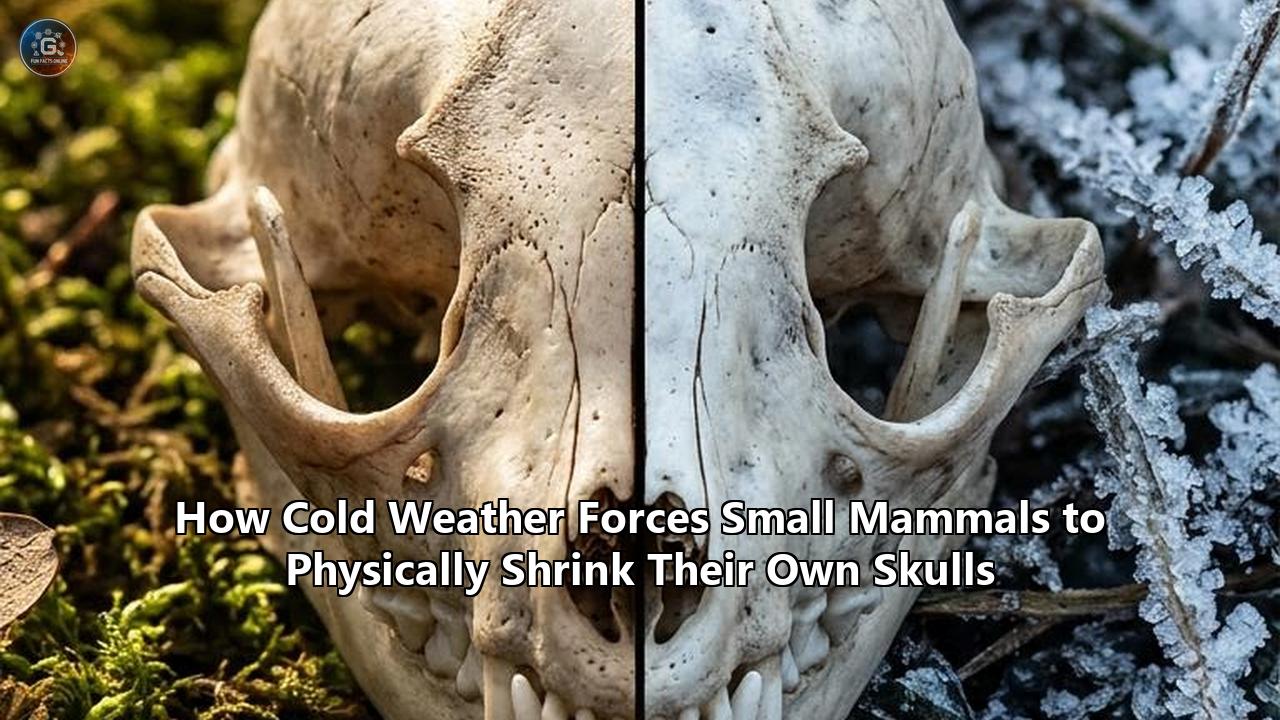
In the forests of eastern Poland and across northern Eurasia, an extraordinary evolutionary drama unfolds every autumn. As temperatures plunge, small mammals facing the threat of winter starvation do not migrate or slip into months-long hibernation. Instead, they dismantle their own skeletons.
By activating bone-eating cells along their cranial sutures, species such as the common shrew (Sorex araneus), the least weasel (Mustela nivalis), and the European mole (Talpa europaea) dissolve substantial portions of their calvaria. They physically reduce their skull height by up to 20 percent and condense their brain tissue by nearly a third. When warmer weather returns in the spring, they reverse the process, rebuilding lost bone and regrowing neurological architecture in time for the breeding season.
A multi-institutional consortium of evolutionary geneticists and cellular biologists led by Stony Brook University, the Universitat Autònoma de Barcelona, and the Max Planck Institute of Animal Behavior published comprehensive whole-genome analyses and microstructural neuroimaging data that map the precise molecular blueprint behind this seasonal transformation.
The studies confirm that the process—historically known as Dehnel’s phenomenon—is not an accidental byproduct of seasonal emaciation. It is a genetically orchestrated survival program driven directly by cold temperatures, governed by FOXO signaling pathways, water-efflux volume reduction, and localized osteoclast recruitment.
The evolutionary strategy of small mammals shrinking skulls challenges foundational tenets of vertebrate zoology, which long held that the adult mammalian skeleton is rigid and fixed.
As global temperature records continue to climb and winter freeze cycles destabilize, tracking this mechanism has evolved from a mid-century zoological debate into an urgent ecological and biomedical inquiry. Understanding how an animal can repeatedly dissolve its skull and shrink its brain without suffering cognitive decay or structural collapse has direct implications for treating human osteoporosis, stroke, and neurodegenerative disease.
THE EVOLUTION OF DEHNEL'S PHENOMENON RESEARCH
==================================================================================
1949: Discovery        1950s–1980s: Histology    2017–2018: In Vivo Proof  2024–2026: Molecular Era
August Dehnel          Polish morphologists      Max Planck team uses      High-res DMI scans &
measures flattened     confirm osteoclasts       serial X-ray/MRI on       genomics identify water
skulls in Poland;      resorb bone at sutures;   live tagged shrews;       efflux, FOXO pathways, &
skeptics push back.    skull depth drops ~20%.   proves individual change. VEGFA barrier controls.
==================================================================================
1949: The Post-War Anomaly in the Primeval Forest
The origin of this scientific investigation began in the autumn of 1949 amid the old-growth stands of the Białowieża Primeval Forest in eastern Poland. August Dehnel, a zoologist working at the newly established Mammal Research Institute of the Polish Academy of Sciences, was conducting morphological surveys of small insectivores.
Examining thousands of wild-caught Eurasian common shrews, Dehnel noticed a morphological pattern that defied basic anatomical principles. Shrews captured during late spring and mid-summer possessed large, domed craniums with elevated braincases.
By late autumn and December, every adult specimen exhibited a flattened, condensed skull case. The vertical height of the braincase was reduced by an average of 15 to 20 percent, and the total volume of the cranial cavity had contracted dramatically.
When Dehnel surveyed the surviving population the following spring, the skulls had expanded once again, rising back toward their original juvenile dimensions.
Dehnel published his initial findings in 1949 in the Annales Universitatis Mariae Curie-Skłodowska, proposing that these tiny mammals were seasonally downsizing and re-expanding their skeletal framework.
The wider scientific establishment met the announcement with deep skepticism. Post-embryonic mammalian anatomy had long operated on an established axiom: once cranial bones grow, interlock, and ossify at the suture margins, the skull is an immutable, protective box. Skeptics argued that Dehnel’s dataset was plagued by sampling bias, cohort turnover, or differential mortality.
The prevailing counter-theory suggested that larger individuals simply died off as freezing temperatures set in, leaving only naturally smaller, flat-headed runts to be captured in winter traps.
For several years, Dehnel’s observations remained an isolated curiosity, dismissed by mainstream anatomists as a statistical artifact of field sampling.
1950s–1980s: Histological Validation and the Polish School of Morphology
Refusing to let the finding fade into obscurity, Dehnel and his colleague Zdzisław Pucek spent the subsequent three decades systematically testing every alternative explanation at the Mammal Research Institute in Białowieża.
Pucek pioneered comparative histological techniques on wild shrews, micro-sectioning the junctions where the parietal, frontal, and occipital plates meet.
The histological sections revealed that the skull sutures of common shrews do not fuse into solid, unyielding synostoses in early adulthood. Instead, they remain biologically active, separated by thin bands of vascularized connective tissue.
THE CRANIAL SUTURE RESORPTION PROCESS
----------------------------------------------------------------------------------
Autumn (Cooling Triggers):
  Osteoclasts migrate to sagittal and coronal sutures
  -> Enzymes dissolve calcium hydroxyapatite & collagen matrix
  -> Suture margins thin and widen
  -> Cranial vault descends; skull height decreases by 15–20%

Spring (Warming / Photoperiod Shift):
  Osteoblasts proliferate along softened margins
  -> Rapid osteoid matrix deposition and mineral recrystallization
  -> Cranial vault elevates; braincase regains up to 90% of juvenile volume
----------------------------------------------------------------------------------
Pucek’s micro-sections captured dynamic cellular machinery in action:
- Autumn Activation: Multinucleated osteoclasts congregated along the margins of the sagittal and coronal sutures, releasing matrix metalloproteinases and acid phosphatase to digest the mineralized bone matrix.
- Structural Downscaling: As the bone margins eroded, the connective bridges softened, allowing the calvarial dome to settle downward without fracturing.
- Systemic Changes: The team revealed that this shrinkage was not confined to the head. The shrews' spines shortened as intervertebral discs lost fluid and collagen thickness, their kidneys and spleens atrophied, and their total body mass plummeted by up to 25 percent.
- Spring Re-mineralization: Osteoblasts lined the eroded suture margins, secreting new osteoid matrix and redepositing calcium phosphate to elevate the roof of the skull once more.
Despite Pucek’s histological evidence, a fundamental methodological challenge remained: because the shrews had to be dissected to measure their skull bones directly, every data point was lethal.
Without following the exact same individual animal through an entire annual cycle, critics continued to suggest that the data reflected seasonal population replacements rather than individual transformation.
2010–2018: In-Vivo Imaging and the Longitudinal Proof
The definitive breakthrough that transformed Dehnel’s phenomenon from a controversial hypothesis into a verified biological reality occurred when a research team led by Dina Dechmann, Javier Lázaro, and Moritz Hertel at the Max Planck Institute of Animal Behavior deployed longitudinal tracking technology.
Working in southern Germany, Dechmann’s team trapped wild common shrews across multiple seasons, implanted them with miniature passive integrated transponder (PIT) microchips, and brought them into the laboratory for non-invasive, high-resolution X-ray and micro-computed tomography (micro-CT) imaging under anesthesia.
Once scanned, the animals were released back into the wild at their precise capture coordinates.
LONGITUDINAL X-RAY TRACKING (MAX PLANCK INSTITUTE)
==================================================================================
Season           Skull Height (Rel.)    Brain Mass (Rel.)   Body Mass (Total)
----------------------------------------------------------------------------------
Peak Summer      100% (Baseline)        100% (Baseline)     ~10.5 - 12.0 grams
Late Autumn      88.5%                  82.0%               ~8.5 - 9.0 grams
Deep Winter      84.7%                  72.0% - 79.0%       ~7.0 - 8.0 grams
Spring Regrowth  93.4%                  85.0% - 91.0%       ~11.0 - 14.5 grams (Adult)
==================================================================================
The resulting serial radiographs tracked individual shrews across continuous seasonal cycles. The data confirmed the pattern beyond doubt:
- Individual Calvarial Collapse: The precise distance between the base of the cranium and the highest point of the sagittal crest contracted by an average of 15.3 percent between July and February in the same living animal. Extreme individuals displayed skull height reductions exceeding 20 percent.
- Brain Resorption: High-resolution magnetic resonance imaging (MRI) revealed that the brain tissue inside the skull shrank concurrently, losing between 20 and 30 percent of its total volume.
- Spring Rebuilding: When recaptured in April and May, the identical individuals demonstrated a significant skeletal and neurological resurgence. Skull height recovered by roughly 9 percent, and the brain regained up to 90 percent of its previous mass as the animals entered sexual maturity.
The longitudinal evidence silenced remaining skepticism. Mammalian cranial bones were officially proven capable of dynamic, reversible seasonal resorption.
2019–2023: Discovery in Mustelids, Moles, and the Temperature Driver
With Dehnel’s phenomenon confirmed in Sorex araneus, evolutionary biologists broadened their investigations to determine whether skull shrinking was a genetic anomaly limited to shrews or a broader mammalian survival strategy.
Field surveys quickly revealed that small mammals shrinking skulls represented a wider evolutionary convergence across multiple families.
Scott LaPoint, Lara Keicher, and Dina Dechmann documented seasonal skull and braincase shrinkage in small mustelids, specifically least weasels (Mustela nivalis) and stoats (Mustela erminea). Unlike insectivores, these are hyper-carnivorous predators. Yet, like shrews, they maintain exceptionally high metabolic rates, carry virtually no adipose fat reserves, and do not hibernate during the winter months.
MAMMALIAN SPECIES CONFIRMED TO EXHIBIT CRANIAL REDUCTION
==================================================================================
Species                       Taxonomic Family     Observed Skull/Brain Reduction
----------------------------------------------------------------------------------
Common Shrew (Sorex araneus)  Soricidae (Shrews)   15–20% skull; 20–30% brain
Masked Shrew (Sorex cinereus) Soricidae (Shrews)   10–15% skull; 18–22% brain
European Mole (Talpa europaea)Talpidae (Moles)     11% skull; 11% brain
Least Weasel (Mustela nivalis)Mustelidae (Weasels) 10–14% skull; 15–20% brain
Stoat (Mustela erminea)       Mustelidae (Stoats)  8–12% skull; 12–18% brain
==================================================================================
In 2022, Dechmann and Javier Lázaro expanded the scope further by publishing comparative morphological analyses of the European mole (Talpa europaea). Moles spend their lives in subterranean tunnels insulated from wind chill, yet the European mole reduced its skull height and brain volume by 11 percent in winter, followed by a 4 to 5 percent regrowth phase in summer.
THE MOLE COMPARISON: CLIMATE VS. NUTRITIONAL SCARCITY
----------------------------------------------------------------------------------
EUROPEAN MOLE (Talpa europaea)  -> Cold German/Polish climates
  Winter: Severe cold, scarce food   ==> Undergoes 11% skull & brain shrinkage
  Summer: Warm temperatures, high food ==> Regrows 4-5%

IBERIAN MOLE (Talpa occidentalis) -> Arid Spanish climates
  Winter: Mild temperatures, wet soils, food abundant
  Summer: Scorching heat, baked soil, catastrophic food drought
  Result: NO SKULL SHRINKAGE IN SUMMER OR WINTER

CONCLUSION: Low temperature and metabolic thermoregulation—not mere caloric
starvation—is the primary evolutionary trigger for Dehnel's phenomenon.
----------------------------------------------------------------------------------
To isolate the primary environmental trigger, the researchers compared the European mole with the Iberian mole (Talpa occidentalis), an endemic species living in central and southern Spain.
In Spain, earthworms and grubs become scarce during the scorching, dry summer months when soils bake solid, forcing Iberian moles into severe nutritional deficits.
If skull shrinkage were driven solely by food deprivation, the Iberian mole would shrink during the summer drought. Instead, the Iberian mole maintained a constant skull size year-round.
The comparative data demonstrated that cold weather and the thermodynamic cost of endothermic thermoregulation are the true evolutionary drivers of cranial downscaling.
The Biomechanics of Bone Dissolution
The physical mechanics behind small mammals shrinking skulls require coordination between bone resorption and cranial vault architecture.
In humans and typical model mammals, the parietal, frontal, and interparietal bones expand outward from primary ossification centers during embryonic and neonatal development.
As adulthood approaches, the intervening cranial sutures lock together through interlocking interdigitations, eventually undergoing closure and solidifying the skull into a single structural unit.
CROSS-SECTION OF REVERSIBLE CRANIAL SUTURE DYNAMICS
==================================================================================
TYPICAL ADULT MAMMAL (e.g., Rodent, Primate):
  [ Parietal Bone ] ===== Fully Fused / Ossified Suture ===== [ Frontal Bone ]
  * Structural Result: Rigid, static cranial vault. Calvarial change causes fracture.

DEHNEL-CAPABLE MAMMAL (e.g., Sorex araneus):
  AUTUMN RESORPTION PHASE:
  [ Parietal Bone ] <-- [ Osteoclasts ] ~~~ (Pliable Suture) ~~~ [ Osteoclasts ] --> [ Frontal Bone ]
  * Hydroxyapatite dissolved; edges bevel; calvarium flattens downward by up to 20%.

  SPRING REGENERATION PHASE:
  [ Parietal Bone ] --> [ Osteoblasts ] === (New Osteoid Matrix) === [ Osteoblasts ] <-- [ Frontal Bone ]
  * Rapid mineralization; new bone matrix elevates cranial dome.
==================================================================================
In species that exhibit Dehnel’s phenomenon, cranial suture biology operates differently:
1. Retention of Patent, Pliable Sutures
The edges of the cranial bones remain separated by a specialized periosteal and sutural ligamentous membrane throughout the animal’s life. The bones do not fuse into an immovable block.
2. Targeted Osteoclastic Demolition
In late summer and early autumn, biochemical cues mobilize osteoclasts to the margins of the calvarial sutures.
- Osteoclasts seal themselves against the bone surface, creating an isolated microenvironment known as Howship’s lacuna.
- Proton pumps ($H^+$-ATPases) pump hydrogen ions into this pocket, dropping the local pH to approximately 4.5.
- The acidic environment dissolves calcium hydroxyapatite crystals ($Ca_{10}(PO_4)_6(OH)_2$).
- Secreted cathepsin K and matrix metalloproteinase-9 (MMP-9) break down the structural Type I collagen scaffold.
3. Cranial Vault Compression
Unlike typical osteoporotic bone thinning, which weakens bone density across the entire skeleton, this resorption is concentrated at the edges and inner laminae of the dorsal skull plates.
As the edges thin and soften, the tensile tension exerted by the temporal muscles and the shrinking intracranial volume pulls the parietal and frontal bones downward, flattening the cranial arch.
4. Spring Osteogenesis
As photoperiod lengthens and temperatures warm, the balance shifts entirely. Osteoblasts proliferate along the resorbed margins, laying down fresh unmineralized collagen matrix (osteoid).
Through alkaline phosphatase activity, phosphate and calcium ions precipitate into new hydroxyapatite crystals, rebuilding the calvarium and expanding the braincase upward to accommodate the regrowing brain tissue.
The Neurological Paradox: Resizing the Brain Without Cell Death
A skull cannot shrink without a corresponding reduction in the tissue it encloses. The central nervous system is the most metabolically demanding organ per unit of mass in the vertebrate body.
In a common shrew—a creature with a resting heart rate between 800 and 1,000 beats per minute and a metabolism that burns calories so rapidly it will starve to death within two to five hours without food—powering a large brain in sub-zero winter temperatures is an unsustainable thermodynamic liability.
METABOLIC EXPENDITURE VS. TISSUE REDUCTION IN SOREX ARANEUS
----------------------------------------------------------------------------------
Shrew Body Characteristics:
  * Adult Summer Weight: ~10.5 grams
  * Adult Winter Weight: ~7.5 grams (28% total mass reduction)
  * Daily Food Requirement: Consumes 100% - 125% of its body weight every 24 hours
  * Fasting Starvation Threshold: Death occurs within 2.5 to 5.0 hours

Brain Energy Optimization:
  * Summer Brain Mass: ~0.28 grams (represents ~2.5% of body weight, burns ~18% basal energy)
  * Winter Brain Mass: ~0.20 grams (volume reduced by up to 28-30%)
  * Caloric Savings: Reducing brain tissue yields a net 15–20% cut in daily basal metabolic demand
----------------------------------------------------------------------------------
How does a mammal shrink its central nervous system by up to 30 percent in autumn and then reconstitute it six months later without losing motor skills, spatial orientation, or fundamental cognitive capacity?
For decades, neurobiologists debated whether this brain reduction was driven by widespread, programmed neuronal apoptosis (mass cell death) followed by spring neurogenesis, or by reversible shrinkage of individual cellular architecture.
A major research milestone came through advanced diffusion microstructure imaging (DMI) and ultra-high-field MRI conducted by Cecilia Baldoni, Dina Dechmann, and colleagues.
The imaging data revealed that the total number of neurons in the brain remains largely stable. The shrew is not executing mass cell death.
Instead, the seasonal loss of volume is driven by water efflux and cellular downsizing.
REGIONAL REDUCTIONS ACROSS THE MAMMALIAN BRAINCASE
==================================================================================
Brain Structure       Volume Reduction     Functional Consequence
----------------------------------------------------------------------------------
Neocortex (Cortex)    -28% to -32%         Sensory/associative reduction; lower resting cost
Hippocampus           -22% to -26%         Spatial map condensed; memory pathways streamlined
Olfactory Bulb        -15% to -18%         Kept functional to track subnivean prey
Thalamus/Hypothalamus -12% to -15%         Maintains vital autonomic & thermal regulation
Brainstem             -4% to -6%           Preserved; governs essential motor & cardiac function
==================================================================================
Under the influence of winter metabolic shifts:
- Cellular Water Evacuation: Water shifts from the intracellular compartment of neurons and astrocytic glial cells into the cerebrospinal fluid and vascular system, condensing individual soma volume.
- Synaptic Pruning: Dendritic trees condense their branching complexity, and non-essential synaptic spines are temporarily pruned back.
- Myelin Compaction: Oligodendrocyte myelin sheaths around axonal tracts become more tightly compacted, saving metabolic maintenance costs without severing underlying structural connectivity.
- Regional Preservation: Brain regions are preserved selectively. The neocortex and hippocampus undergo the most pronounced reduction (up to 32 percent), while the brainstem and basic sensory relays shrink only minimally, allowing the shrew to hunt invertebrates beneath the snowpack.
2024–2026: The Genomic Architecture and Molecular Switchboards
Studies led by William Thomas and Liliana Dávalos at Stony Brook University, working alongside Aurora Ruiz-Herrera at the Universitat Autònoma de Barcelona, analyzed whole-genome sequencing and seasonal transcriptomic data from wild shrew populations.
The findings, published in Molecular Biology and Evolution and eLife, revealed the genetic architecture and seasonal expression switches that orchestrate Dehnel’s phenomenon.
KEY GENOMIC PATHWAYS GOVERNING DEHNEL'S PHENOMENON
==================================================================================
Molecular Pathway    Associated Genes      Seasonal Role & Mechanism
----------------------------------------------------------------------------------
Energy Homeostasis   FOXO1, FOXO3,         Master metabolic governor; limits tissue
& Longevity          SIRT1, AMPK           growth in winter and activates cellular maintenance.

Blood-Brain Barrier  VEGFA, CLDN5,         Modulates endothelial permeability to regulate
Integrity            OCLN, AQP4            water transport and nutrient influx without edema.

Cellular Water       AQP1, AQP4,           Controls aquaporin water channels to evacuate
Regulation           SLC12A2               fluid from neurons/astrocytes without cell lysis.

Bone Resorption      TNFRSF11A (RANK),     Directs osteoclast activation at suture margins
& Remodelling        CTSK, MMP9, RUNX2     in autumn; activates osteoblasts in spring.

Metabolic            PCK1, G6PC,           Downregulates standard glycolysis; upregulates
Reprogramming        OXPHOS Complexes      gluconeogenesis and fatty acid oxidation.
==================================================================================
ENVIRONMENTAL TRIGGER: Autumn Cold & Photoperiod Contraction
│
▼
Hypothalamic Sensor Activation
│
┌────────────────────────────┴────────────────────────────┐
▼ ▼
FOXO/AMPK Pathway Uplink VEGFA & Aquaporin (AQP4) Flux
* Rewires metabolism to gluconeogenesis * Mobilizes water efflux from soma
* Inhibits mTOR growth cascades * Compresses neuron & glial volume
│ │
▼ ▼
RANKL / Cathepsin K Signaling Reversible Brain Volume Reduction
* Osteoclasts target cranial sutures * Cortex/Hippocampus shrink ~30%
* Calvarial bone plates thin and bevel │
│ │
└────────────────────────────┬────────────────────────────┘
▼
CRANIAL VAULT COLLAPSE (15–20%)
Basal Energy Requirements Drop by ~15–20%The genetic mapping revealed that the process is coordinated through several interconnected pathways:
1. The FOXO Signaling Axis
The forkhead box O (FOXO) family of transcription factors acts as a central metabolic governor. During the summer-to-autumn transition, FOXO signaling is strongly upregulated across the hypothalamus and central nervous system.
FOXO activation downregulates energy-intensive cellular growth pathways (suppressing mTOR complexes), enhances DNA repair mechanisms, and switches cellular fuel utilization from glucose oxidation to gluconeogenesis and fatty acid metabolism.
In spring, the abrupt downregulation of FOXO permits a surge of tissue growth, though researchers note this intense spring upregulation may accelerate somatic senescence, explaining why wild shrews rarely live beyond 13 to 14 months.
2. Blood-Brain Barrier and Aquaporin Channels
The shrew genome displays heightened baseline selection and seasonal modulation of VEGFA (vascular endothelial growth factor A) and tight junction genes such as Claudin-5.
These genes modulate the permeability of the blood-brain barrier.
Simultaneously, aquaporin-4 (AQP4) channels on astrocytic end-feet are selectively activated, facilitating the controlled transport of water out of the brain parenchyma and into the bloodstream, achieving volume reduction without triggering neuroinflammation or cytotoxic edema.
3. Calcium Signaling and Osteoclast Regulators
The comparative genomic scans revealed specialized molecular adaptations in calcium signaling networks, particularly involving RANKL (TNFSF11) and Cathepsin K (CTSK).
These pathways allow small mammals shrinking skulls to mobilize skeletal calcium reserves rapidly into the bloodstream during cold snaps—using bone both as a structural redoubt that can be reduced to save cranial maintenance costs and as an internal mineral reservoir to balance serum electrolytes during extreme thermoregulatory shivering.
Biomedical Frontiers: Lessons for Human Degenerative Conditions
Deciphering the molecular pathways that govern Dehnel’s phenomenon is opening new avenues of investigation for human medical science.
The ability of an adult mammal to repeatedly dismantle and reconstitute bone and brain tissue provides an evolutionary model for treating conditions long considered irreversible.
TRANSLATIONAL MEDICINE ROADMAP: SHREW PLASTICITY TO HUMAN THERAPY
==================================================================================
Biological Mechanism         Target Human Pathology         Potential Therapeutic Application
----------------------------------------------------------------------------------
Suture-Specific Osteoblast   Osteoporosis & Severe          Biomimetic peptides to stimulate
Recruitment & Mineralization Bone Fractures                 targeted bone density recovery
                                                            without ectopic calcification.

Reversible Brain Shrinkage   Alzheimer's Disease &          Targeting water-flux and dendritic
Without Neuronal Death       Vascular Dementia              preservation mechanisms to halt
                                                            permanent neuronal atrophy.

VEGFA / Tight Junction       Blood-Brain Barrier            Controlled transient opening of
Permeability Modulation      Drug Delivery / Stroke Edema   the BBB for pharmaceutical agents;
                                                            rapid closure during cerebral edema.

Spring Tissue Regrowth       Traumatic Brain Injury         Decoupling FOXO/mTOR regulators
Signaling Cascades           (TBI) Recovery                 to promote safe, controlled neural
                                                            regeneration post-injury.
==================================================================================
1. Reversing Osteoporosis and Bone Loss
In human osteoporosis, the balance between bone-resorbing osteoclasts and bone-forming osteoblasts becomes pathologically uncoupled.
As osteoclasts outpace osteoblasts, trabecular and cortical bone microarchitecture deteriorates permanently. Current pharmaceutical treatments (such as bisphosphonates or RANKL inhibitors) primarily operate by halting bone breakdown, but they struggle to regenerate lost structural bone safely.
The spring regrowth phase in shrews, moles, and stoats presents a natural mammalian system that stimulates rapid, controlled osteoblast recruitment, reconstructing structural bone plates in a matter of weeks without inducing osteosarcoma or pathological calcification.
Isolating the local paracrine signaling molecules that direct this spring rebuilding could guide therapies to regrow bone density in aging human patients.
2. Neurodegeneration and Synaptic Recovery
In human neurodegenerative conditions such as Alzheimer’s disease, frontotemporal dementia, and chronic traumatic encephalopathy, brain volume reduction is an irreversible hallmark of permanent synaptic loss and neuronal death.
In contrast, small mammals experiencing Dehnel’s phenomenon lose nearly a third of their neocortical and hippocampal volume while maintaining functional neuronal circuitry, restoring dendritic arborization when environmental conditions improve.
Investigating how shrews alter aquaporin-mediated fluid transport and protect their neurons from toxic protein accumulation during rapid volume collapse offers a biological template for preventing cell death in human neurodegenerative diseases.
Climate Disruption and the Fragility of an Extreme Winter Strategy
While modern genomic tools continue to clarify the cellular mechanics of Dehnel’s phenomenon, the rapid progression of climate change is creating new ecological challenges for the animals that rely on it.
HISTORICAL VS. CURRENT POLISH WINTER TEMPERATURE PROFILES (Białowieża Data)
==================================================================================
Era             Mean Winter Temp    Snow Cover Duration    Phenomenon Dynamics
----------------------------------------------------------------------------------
1950s–1970s     -4.5°C to -8.0°C    90–120 days            Full 18–20% skull shrinkage;
                (Stable freezing)   (Thick subnivean zone) stable spring recovery.

2010s–2020s     -1.0°C to +2.5°C    20–45 days             Erratic shrinkage cycles;
                (Volatile thaw)     (Patchy / absent snow) energetic mismatch.
==================================================================================
Dehnel’s phenomenon evolved as an adaptation to predictable, sustained winter freezing.
Under historic climate conditions across northern Europe and Siberia, continuous sub-zero temperatures created a stable snow layer.
Between the frozen soil and the base of the snowpack lies the subnivean zone—a microhabitat insulated from harsh surface winds where temperatures hover near freezing ($0^\circ\text{C}$). Within this subnivean space, shrews and weasels hunt invertebrates and small rodents, their downsized skulls and smaller brains optimized to reduce basal caloric consumption while operating in a stable microclimate.
THE ENERGETIC DILEMMA OF WARMING WINTERS
----------------------------------------------------------------------------------
1. Historic Freezing Winter:
   Deep Snowpack -> Insulated Subnivean Zone -> Shrunken Body / Small Skull -> Low Energy Demand -> HIGH SURVIVAL

2. Modern Disrupted Winter:
   Patchy Snowpack -> Direct Exposure to Wind/Rain -> Thermal Fluctuations (-5°C to +10°C)
   -> Shrunken Body has High Surface-Area-to-Mass Ratio -> Massive Heat Loss
   -> Basal Energy Savings Erased -> ELEVATED MORTALITY
----------------------------------------------------------------------------------
Long-term morphological tracking using specimens collected over 50 years at the Białowieża Forest reveals that shifting weather patterns are disrupting this morphological cycle:
- The Surface-Area Penalty: As winters become milder and snowpack becomes intermittent or absent, small mammals lose their subnivean insulation. A shrunken shrew or weasel has a higher surface-area-to-volume ratio, causing it to lose body heat more rapidly when exposed directly to damp, windy surface weather.
- Thermal Volatility: During volatile winters with fluctuating freeze-thaw cycles, an animal that has downsized its skull and brain tissue may lack the metabolic stability required to respond to sudden, severe cold snaps.
- Phenological Mismatch: The spring regrowth phase requires a reliable surge in soil invertebrate biomass. Warm late-winter spells followed by late frosts decouple the timing between the energy required to regrow bone and brain tissue and the availability of prey.
What to Watch Next
As field biologists, geneticists, and neurologists continue to investigate this seasonal survival strategy, research is shifting toward resolving several critical biological and ecological questions:
- High-Throughput Single-Cell Sequencing: Ongoing studies are focusing on single-cell RNA sequencing of the shrew and weasel hypothalamus across all four seasons. This work aims to identify the exact transcriptional switches that signal osteoclasts and aquaporin channels to activate in autumn and deactivate in spring.
- Cognitive and Behavioral Testing: Researchers at the Max Planck Institute are carrying out behavioral experiments to evaluate how reversible brain shrinkage affects cognitive performance. By testing wild shrews in navigational mazes and memory tasks in summer versus deep winter, scientists are measuring the functional trade-offs of hippocampal reduction.
- Expanded Taxonomic Surveys: Investigators are deploying micro-CT imaging to test other high-metabolism small mammals—including North American soricids, cold-climate bats, and northern rodent species—to determine if seasonal skull reduction is present across a wider range of species than currently documented.
- Translational Osteogenic Therapeutics: Preclinical biomedical research groups are examining whether the growth factors driving spring calvarial bone regeneration can be synthesized into targeted compounds to stimulate localized bone rebuilding in human clinical trials.
The ability of small mammals to dismantle and reconstitute their own skeletal and neurological structures underscores the dynamic, flexible nature of mammalian physiology.
Once considered an impossibility by classical anatomists, the phenomenon of small mammals shrinking skulls has transformed into a focal point for understanding how complex life adapts to extreme environments, and how the biological systems that govern bone, brain, and energy maintenance can be reshaped.
Key Takeaways
- The Mechanism: Small mammals such as shrews, weasels, and moles physically downsize their skulls (up to 20%) and brains (up to 30%) in autumn via osteoclast-driven bone resorption along cranial sutures and cellular water efflux, regrowing lost tissue in spring.
- The Driver: Comparative studies of European versus Iberian moles demonstrate that low temperature and the high metabolic cost of winter thermoregulation—not food availability alone—serve as the primary evolutionary trigger.
- Cellular Integrity: The brain loses volume through water transport (aquaporins) and synaptic reorganization without widespread neuron death, preserving baseline sensory and motor coordination through the winter.
- Genomic Architecture: Transcriptomic and comparative genomic sequencing maps Dehnel's phenomenon to seasonal shifts in FOXO signaling pathways, VEGFA blood-brain barrier controls, and localized calcium/bone remodeling cascades.
- Future Implications: Insights into dynamic bone and brain regeneration offer promising translational avenues for treating human osteoporosis, stroke, and neurodegenerative disorders, even as climate instability poses new challenges to the survival of these species in the wild.
Reference:
- https://www.uab.cat/web/newsroom/news-detail/researchers-reveal-how-small-mammals-shrink-their-brains-to-survive-the-cold-1345830290613.html?cid=1345830290613&d=Touch&detid=1345974943963&pagename=UAB2013%2FPage%2FTemplateNoticiaWebDetalleUAB_WAI
- https://sbstatesman.com/143435/news/stony-brook-researchers-help-uncover-how-shrinking-shrews-may-soon-help-in-brain-regeneration/
- https://news.stonybrookmedicine.edu/news/sbu-study-uncovers-how-common-shrew-changes-its-body-size-and-brain/
- https://lmdavalos.github.io/tag/dehnels-phenomenon/
- https://www.eurekalert.org/news-releases/965280
- https://www.mpg.de/25258209/rare-seasonal-brain-shrinkage-in-shrews-is-driven-by-water-loss
- https://www.researchgate.net/publication/388512050_Seasonal_body_size_plasticity_and_the_generality_of_Dehnel's_Phenomenon_in_Sorex_shrews
- https://www.iflscience.com/dehnels-phenomenon-how-some-species-can-shrink-their-bones-and-brains-by-20-percent-to-survive-winter-82557
- https://www.sciencealert.com/shrews-can-shrink-their-brains-by-30-heres-how-they-grow-it-back
- https://www.mpg.de/19235031/scientists-unearth-another-brain-shrinking-mammal
- https://www.eurekalert.org/news-releases/1096129
- https://www.earth.com/animals/small-mammals-shrink-their-brains-to-survive-winter/