For decades, the search for life beyond Earth has been a high-stakes scientific detective story, plagued by a fundamental limitation: how do we distinguish the chemistry of life from the chemistry of a nonliving universe?
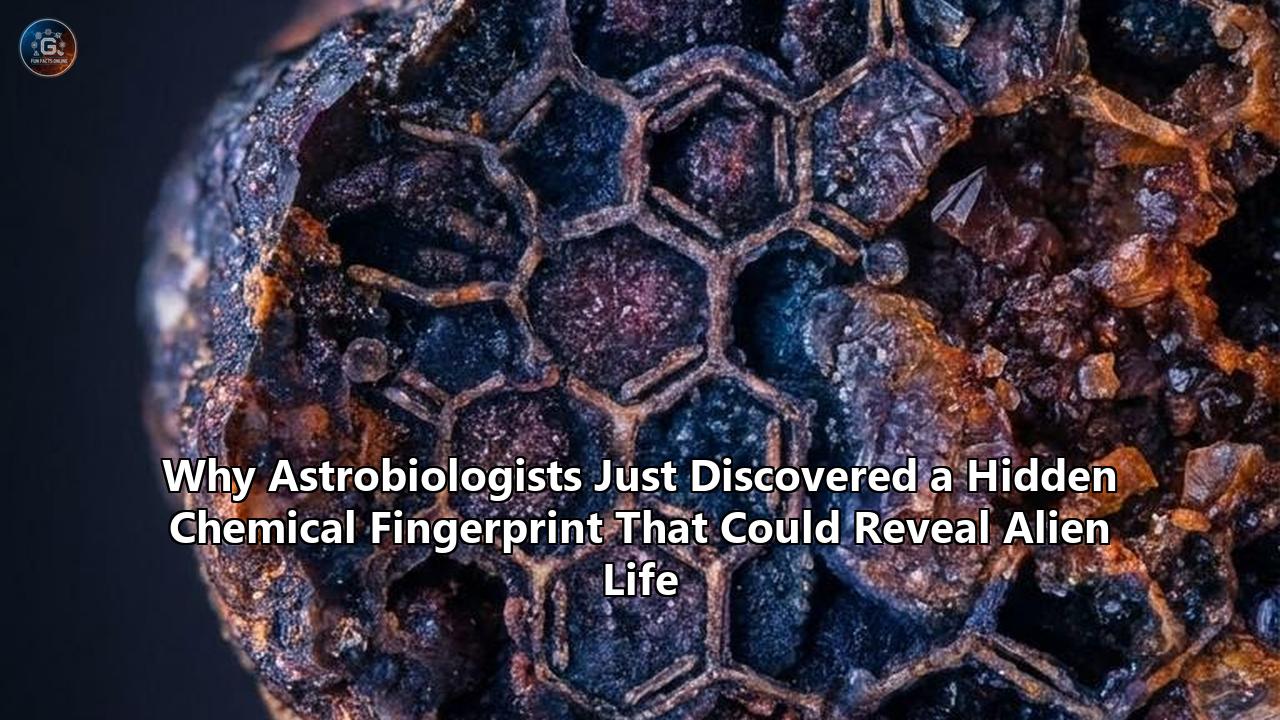
In May 2026, a team of astrobiologists published a peer-reviewed paper in Nature Astronomy that may have finally resolved this impasse. Led by Gideon Yoffe of the Weizmann Institute of Science, alongside Fabian Klenner of the University of California, Riverside, and their colleagues, the researchers revealed that life leaves behind a universal, statistical "fingerprint" in the way organic molecules are organized.
Rather than searching for a specific "silver bullet" molecule, this newly discovered approach borrows mathematical principles from terrestrial ecology to analyze the diversity and distribution of molecular assemblages. By focusing on the structural relationships within chemical populations—specifically amino acids and fatty acids—the team has demonstrated a highly reliable method for identifying biological activity.
Crucially, this method does not require building new, multi-billion-dollar space telescopes. It can be applied directly to data collected by missions currently in flight or operating on alien surfaces, such as NASA's Perseverance rover and the Europa Clipper.
To understand how astrobiologists arrived at this breaking moment, we must trace a timeline of escalating discoveries, frustrations, and cross-disciplinary insights that ultimately reshaped the decades-long quest to identify reliable chemical signatures for alien life.
Phase I: The Illusion of the Silver Bullet (2023–2025)
The modern era of biosignature detection began with high hopes centered on remote atmospheric spectroscopy. Historically, the hunt for chemical signatures for alien life relied on finding a "silver bullet" molecule—a single gas, such as oxygen, ozone, methane, or nitrous oxide, that would serve as definitive proof of biological activity. The deployment of the James Webb Space Telescope (JWST) in late 2021 was widely expected to deliver these smoking guns by scanning the atmospheres of nearby exoplanets.
The first major escalation in this search centered on K2-18b, a massive exoplanet located 124 light-years away in the constellation Leo. Orbiting within the habitable zone of a cool red dwarf star, K2-18b was hypothesized to be a "Hycean world"—a class of astronomical bodies featuring a liquid water ocean beneath a hydrogen-rich atmosphere.
Timeline of K2-18b Observations:
[2023] --------> JWST detects Carbon Dioxide (CO2) and Methane (CH4)
                 Tentative, weak signal of Dimethyl Sulfide (DMS)
[April 2025] --> JWST Mid-Infrared Instrument (MIRI) confirms DMS / DMDS
                 Signal reaches three-sigma statistical significance
In 2023, a team of astronomers led by Nikku Madhusudhan at the University of Cambridge used JWST’s near-infrared instruments to detect carbon dioxide and methane in K2-18b’s atmosphere. This was a historic milestone: the first time carbon-based molecules had been identified in the atmosphere of a habitable-zone exoplanet. However, the data also hinted at something far more provocative: a faint, tentative spectral signature of dimethyl sulfide (DMS), a volatile organic sulfur compound.
On Earth, DMS is produced almost exclusively by marine microorganisms, primarily phytoplankton. It has no known, significant abiotic source. If confirmed, its presence on K2-18b would represent the most compelling evidence of an alien biosphere ever recorded.
On April 17, 2025, Madhusudhan’s team published a follow-up study in The Astrophysical Journal Letters. Utilizing JWST’s Mid-Infrared Instrument (MIRI), they targeted a completely different wavelength range (6 to 12 microns) to avoid overlap with previous measurements. The new observations confirmed the presence of both DMS and its chemical cousin, dimethyl disulfide (DMDS), with the signal coming through "strong and clear".
Despite the excitement, the discovery highlighted a profound scientific limitation. The detection of DMS on K2-18b sat at a three-sigma statistical significance. In the rigid hierarchy of physics and astronomy, a three-sigma result means there is a 0.3% probability that the signal occurred by chance—far short of the five-sigma threshold (a 0.00006% chance) required to declare a formal scientific discovery.
Furthermore, astrobiologists quickly realized that they could not completely rule out exotic, poorly understood geochemical or photochemical processes that might synthesize DMS without life. NASA itself issued a highly cautious statement, warning that "detection of a single potential biosignature would not constitute discovery of life". The scientific community was forced to accept that remote spectroscopy of "silver bullet" molecules might remain ambiguous for decades, buried under the weight of "parallel interpretations" that current instruments lacked the resolution to resolve.
Phase II: The Mars Ambiguity and the Forensic Impasse (2024–2025)
As astronomers wrestled with exoplanet atmospheres light-years away, planetary scientists were hitting a similar chemical wall inside our own solar system. While remote telescopes searched for gases, robotic rovers on Mars were actively drilling for solid-phase organic compounds.
In July 2024, NASA’s Perseverance rover made a highly publicized stop at a reddish rock outcrop nicknamed "Cheyava Falls" in the ancient river delta of Mars' Jezero Crater. Using its Planetary Instrument for X-ray Lithochemistry (PIXL), the rover mapped the elemental distribution of a rock sample. It discovered a series of small, cream-colored spots with black rims, colloquially called "leopard spots".
Anatomy of Martian Biosignature Ambiguity:
+-------------------+--------------------------------------------+
| Chemical Found    | Potential Biotic Source vs. Abiotic Source  |
+-------------------+--------------------------------------------+
| Iron & Phosphate  | Microbial metabolism / energy pathway      |
| Alkanes           | Cell membrane lipids / organic decay       |
| Amino Acids       | Building blocks of proteins / life         |
| Geochemical Spots | Fossilized microbial colonies / rock-water |
+-------------------+--------------------------------------------+
On Earth, these features are common in sedimentary rocks; they form when chemical reactions catalyzed by microbes deplete iron, leaving behind localized zones of discoloration that contain organic compounds, iron, and phosphate. Perseverance drilled a core sample from this formation, sealing it inside a titanium tube dubbed "Sapphire Canyon" for future return to Earth.
In September 2025, Perseverance scientists published their initial analysis of the Sapphire Canyon sample in Nature. They confirmed that the chemical reactions within the leopard spots could have served as a rich energy source for ancient microbial metabolisms. Yet, once again, the discovery was accompanied by a sobering caveat: the researchers could not rule out abiotic, geological pathways. As Katie Stack Morgan, Perseverance’s project scientist at NASA’s Jet Propulsion Laboratory, remarked:
"Astrobiological claims require extraordinary evidence... and while abiotic explanations for what we see are less likely, we cannot rule them out."
At the same time, older datasets from the Curiosity rover were adding to the confusion. In early 2025, researchers detailed Curiosity’s discovery of long-chain organic molecules called alkanes (a class of hydrocarbons) inside mudstone samples drilled from Gale Crater. Alkanes are common components of biological lipids, but they are also readily produced by nonbiological processes, such as serpentinization—a reaction between water and iron-rich volcanic rocks.
Astrobiologists were trapped in a conceptual loop. They had spent decades looking for organic molecules like amino acids, fatty acids, and hydrocarbons, assuming these were the core chemical signatures for alien life. However, carbonaceous meteorites (like the famous Murchison meteorite) were found to be packed with amino acids synthesized in the vacuum of space. Laboratories routinely synthesized fatty acids through nonliving Fischer-Tropsch-type reactions.
The mere presence of these compounds was no longer enough. Astrobiology had become a forensic science that lacked a reliable method to distinguish its primary clues from background noise.
    [Abiotic Space Chemistry]        [Terrestrial Microbes]
       (Meteorite Impact)               (Biological Life)
               |                               |
               v                               v
       [Amino Acids & Lipids]          [Amino Acids & Lipids]
               \                               /
                \                             /
                 v                           v
              [Identical Mass Spectrometry Signals]
                 "Which one is the source?"
This impasse was formally defined in May 2026, when astrobiologist Inge Loes ten Kate of Utrecht University published a critical paper in Nature Astronomy. Ten Kate warned that the scientific community was overly focused on "false positives" (interpreting abiotic chemistry as life) while failing to account for "false negatives". She pointed out that planetary chemistry, cosmic radiation, and atmospheric degradation constantly act to erase, modify, or mask biological traces, making it highly likely that current missions would overlook active or fossilized biology because they were looking for intact, pristine "silver bullet" molecules.
What the field desperately needed was a way to identify the footprint of life even when the individual molecules themselves had degraded or were identical to those formed by nonliving chemistry.
Phase III: The Mathematical Pivot—Ecology Meets Astrochemistry (Late 2025)
The solution to this forensic dilemma came from an unexpected source: the mathematics of biodiversity.
In late 2025, Gideon Yoffe, a postdoctoral researcher at the Weizmann Institute of Science, was working on statistical models to analyze the surface texture and chemical composition of Jupiter’s moon Europa. Yoffe, who had spent his doctoral studies using advanced statistics and data science to find hidden patterns in complex archeological and historical datasets, began discussing the astrobiological detection problem with UC Riverside planetary scientist Fabian Klenner.
The two researchers realized that they were asking the wrong question. They should not be asking what molecules are present in a sample, but how those molecules are distributed relative to one another.
When nonliving chemistry operates, it is governed purely by thermodynamic equilibrium and chemical kinetics. Simple molecules require less energy to form, so they dominate abiotic mixtures. For example, in laboratory spark-discharge experiments (like the classic Miller-Urey experiment) or inside meteorites, simple amino acids like glycine and alanine are highly abundant, while more complex amino acids are exponentially rarer or entirely absent. The resulting distribution is heavily skewed, sparse, and predictable.
Life, however, operates out of thermodynamic equilibrium. It is a highly selective engine. It ignores thermodynamic ease in favor of functional utility. A cell does not synthesize amino acids based on how easy they are to make; it synthesizes them in the precise ratios required to build functional proteins. Similarly, biological membranes require specific fatty acids of precise lengths to maintain fluid structure, ignoring the random distribution produced by simple thermodynamics.
   Abiotic Molecular Synthesis             Biotic Molecular Synthesis
  (Governed by Thermodynamic Ease)          (Governed by Cellular Needs)

      High Abundance                            Abundance
       |   __                                    |   __    __    __
       |  |  |                                   |  |  |  |  |  |  |
       |  |  |  __                               |  |  |  |  |  |  |
       |  |  | |  |                              |  |  |  |  |  |  |
       |  |  | |  |  __                          |  |  |  |  |  |  |
       |  |  | |  | |  |  __                     |  |  |  |  |  |  |
       v  |__| |_ | |_ | |_ |___                 v  |__|  |__|  |__|
         Gly  Ala  Val  Leu ...                    Gly   Ser   Trp ...
       (Simple)       (Complex)                  (Evenly Distributed)
To quantify this "organizational principle," Yoffe turned to ecodiversity statistics. In terrestrial ecology, scientists use specific mathematical indices to measure the health and structure of biological communities. These indices are built on two primary concepts:
- Richness ($R$): The total number of different species (or, in this case, molecular structures) present in a given sample.
- Evenness ($E$): A measure of how uniformly distributed the individual abundances of those species are. For instance, a forest with 100 trees consisting of 10 different species is highly even if there are roughly 10 trees of each species. It has low evenness if 91 trees are of one species and the remaining nine species have only one tree each.
In ecology, these are calculated using metrics such as the Shannon Entropy Index ($H'$) and Pielou’s Evenness Index ($J'$):
$$H' = -\sum_{i=1}^{R} p_i \ln p_i$$
$$J' = \frac{H'}{\ln R}$$
Where $p_i$ is the proportion of the total sample belonging to the $i$-th molecular species.
Yoffe, Klenner, and their co-authors—Barak Sober, Yohai Kaspi, and Itay Halevy—realized that if they treated individual organic molecules as "species" and their relative concentrations as "population abundances," they could apply these exact ecological equations to astrochemistry. They compiled a massive database of approximately 100 highly detailed chemical datasets, spanning a vast range of origins:
- Biotic Samples: Modern microbes, agricultural soils, deep-sea sediment cores, and ancient terrestrial fossils.
- Abiotic Samples: Pristine carbonaceous meteorites, asteroid fragments returned by spacecraft, and synthetic mixtures generated in laboratory chambers mimicking space chemistry.
When they ran the ecological mathematics on these datasets, a startling, previously hidden pattern emerged.
Phase IV: The Breaking Moment—May 11, 2026 (The Nature Astronomy Discovery)
On May 11, 2026, the team officially published their findings in Nature Astronomy under the title "Molecular diversity as a biosignature". The paper detailed a striking dichotomy between living and nonliving chemistry, showing that life reorganizes molecular distributions in a way that is mathematically distinct from any abiotic process.
The breakthrough revealed two distinct statistical behaviors within the two most important classes of biological molecules: amino acids and fatty acids.
1. The Amino Acid Fingerprint: Richness and Evenness Combined
                  AMINO ACID DIVERSITY SPACE
          High Evenness +---+-------------------------+
                        |   |                         |
                        |   |     BIOTIC REGION       |
                        |   |  (Diverse, even ratios  |
                        |   |   driven by proteins)   |
                        |   +-------------------------+
                        |   |                         |
                        |   |     ABIOTIC REGION      |
                        |   | (Skewed toward simple,  |
                        |   |   low-energy molecules) |
          Low Evenness  +---+-------------------------+
                            Low Richness          High Richness
In nonliving chemistry, amino acids are generated through random physical processes. Because simple structures require fewer chemical steps and lower energy barriers to synthesize, abiotic samples—such as meteorites and lab-simulated interplanetary dust—are heavily dominated by glycine, alanine, and $\beta$-alanine.
The richness of these samples is low, and their evenness is exceptionally poor; the relative abundance curve drops off precipitously as molecular complexity increases.
Living organisms, by contrast, utilize a universal set of 20 "canonical" amino acids to construct proteins. Because proteins require a diverse array of chemical properties (hydrophobic, hydrophilic, acidic, basic) to fold correctly and function as enzymes, life actively synthesizes and maintains high concentrations of complex amino acids.
The Weizmann and UC Riverside team showed that biological samples possess consistently high richness and high evenness. Even in ancient soils and heavily degraded fossils where organic matter had been subjected to heat and pressure, the statistical signature of this biological evenness remained visible.
2. The Fatty Acid Fingerprint: The Selective Spikes
In a fascinating twist, the team discovered that fatty acids (lipids) display the exact opposite statistical trend, yet remain equally diagnostic of life.
                  FATTY ACID DIVERSITY SPACE
          High Evenness +---+-------------------------+
                        |   |                         |
                        |   |     ABIOTIC REGION      |
                        |   | (Continuous spectrum of |
                        |   |   hydrocarbon chains)   |
                        |   +-------------------------+
                        |   |                         |
                        |   |     BIOTIC REGION       |
                        |   | (Highly selective, odd/ |
                        |   |  even carbon spikes)    |
          Low Evenness  +---+-------------------------+
                            Low Richness          High Richness
Abiotic lipid synthesis, such as the Fischer-Tropsch reaction occurring in hydrothermal vents, builds hydrocarbon chains step-by-step from carbon monoxide and hydrogen gas. This produces a continuous, smoothly decaying distribution of fatty acid chain lengths, including both odd- and even-numbered carbon chains in roughly equal proportions. This results in a sample with high richness (many different chain lengths present) and high evenness.
Life, however, is highly conservative. Cell membranes must maintain specific physical properties, such as fluidity and permeability, under varying temperatures. To achieve this, biology utilizes highly specific enzymes (like fatty acid synthases) that build lipid chains predominantly in increments of two carbon atoms (using acetyl-CoA subunits).
As a result, biological samples are dominated by a very narrow set of specific fatty acids (typically even-numbered chains like $C_{14}$, $C_{16}$, and $C_{18}$), while ignoring or actively suppressing other lengths. This makes biological lipid distributions incredibly uneven and low in richness.
Comparison of Chemical Distribution Profiles:
+-------------------+------------------------------------------+------------------------------------------+
| Molecular Class   | Abiotic Signature (Non-living)           | Biotic Signature (Living)                |
+-------------------+------------------------------------------+------------------------------------------+
| Amino Acids       | Low Richness, Low Evenness               | High Richness, High Evenness             |
|                   | (Skewed toward simple molecules)         | (Diverse, uniform abundance)             |
+-------------------+------------------------------------------+------------------------------------------+
| Fatty Acids       | High Richness, High Evenness             | Low Richness, Low Evenness               |
|                   | (Smooth, continuous distribution)        | (Spiky, highly selective structures)      |
+-------------------+------------------------------------------+------------------------------------------+
As Fabian Klenner explained on May 12, 2026:
"We're showing that life does not only produce molecules. Life also produces an organizational principle that we can see by applying statistics."
Surviving the Cosmic Crucible
The most critical turning point in the Nature Astronomy paper was the demonstration of the pattern's resilience. The researchers simulated the harsh, radiation-drenched conditions of icy moons like Europa and Enceladus.
Using Geant4-IcyMoons, a Monte Carlo particle physics simulation toolkit developed by Gideon Yoffe, the team modeled how electrons and magnetospheric ions (such as protons, $O^{2+}$, and $S^{3+}$) bombard and degrade organic molecules embedded in surface ice.
The simulations revealed that even when high-energy radiation severed molecular bonds and destroyed up to 90% of the organic material in a sample, the underlying statistical relationship between the surviving molecules persisted.
Even as amino acids and fatty acids degraded, they did not revert to an abiotic distribution pattern. The signature of biological organization survived the cosmic crucible, providing a pathway to identify life even from highly degraded forensic remains.
Phase V: Redefining Active Missions and Spacecraft (Mid-2026 and Beyond)
The immediate impact of Yoffe’s statistical framework was felt across active and upcoming NASA missions. Because this technique relies purely on relative abundance data (rather than isotopic ratios or high-resolution structural spectroscopy), it can be retrofitted to run on instruments already built and deployed.
The most exciting target for this new approach is NASA’s Europa Clipper. Launched in October 2024, the spacecraft is currently on a trajectory to reach the Jupiter system by 2031.
Its primary objective is to investigate the habitability of Europa, an icy moon hiding a subsurface liquid water ocean containing more than twice the water volume of Earth.
                  EUROPA CLIPPER FLYBY MECHANISM

                     [ Europa Clipper ]
                            |
         o   o   o  SUDA Instrument draws in ice grains
       o   o   o   o
      ................
     :                : <-- Ice plumes ejected from subsurface ocean
    ~~~~~~~~~~~~~~~~~~~~
   [ Ice Shell of Europa ]
   =====================
   [  Subsurface Ocean   ] <-- Potential habitat for microbial life
As Europa Clipper orbits Jupiter, it will perform dozens of low-altitude flybys, passing through the thin plumes of water vapor and ice grains ejected into space through fractures in the moon's ice shell.
The spacecraft is equipped with the Surface Dust Analyzer (SUDA), a high-performance impact mass spectrometer designed to analyze the chemical composition of individual ice grains.
Prior to May 2026, SUDA was programmed to search for specific organic compounds—specifically, individual amino acids or fatty acids. If SUDA detected glycine, astrobiologists would have been left with a highly ambiguous result, as glycine is easily formed abiotically.
Now, mission scientists are integrating Yoffe’s statistical framework into SUDA's data analysis pipeline. Instead of searching for a "yes/no" answer on individual compounds, the instrument's team will plot the entire spectrum of detected amino acids and fatty acids in "diversity space".
If SUDA captures ice grains displaying high amino-acid evenness and skewed, highly selective lipid distributions, it will provide the most compelling evidence of an active biosphere in an alien ocean.
                 HOW SUDA WILL PARSE DATA IN 2031

               [ Ice Grains Ejected into Space ]
                              |
                     (Impacts SUDA Target)
                              |
               [ Raw Mass Spectrometry Signal ]
                              |
             (Calculates Shannon Entropy Index)
                 /                          \
                v                            v
    [ Even, Rich Distribution ]    [ Skewed, Sparse Distribution ]
                |                            |
                v                            v
      "BIOLOGICAL ORIGIN"             "ABIOTIC GEOLOGY"
A similar re-evaluation is underway for Mars datasets. Scientists are applying the ecodiversity framework to archival data from Curiosity's Sample Analysis at Mars (SAM) instrument and Perseverance's SHERLOC (Scanning Habitable Environments with Raman & Luminescence for Organics & Chemicals) spectrometer.
By reprocessing raw chemical inventories through these ecological filters, researchers are attempting to determine if the organic molecules detected in Gale and Jezero Craters are merely the fallout of ancient meteoritic impacts or the statistical leftovers of Martian biology.
The Next Frontier: Universal Biochemistry and Artificial Intelligence
As astrobiology digests this paradigm shift, researchers are looking toward the next horizons of the field. The statistical framework has opened up entirely new avenues of research, but it has also introduced several fundamental questions.
1. Is the Pattern Truly Universal?
The Weizmann and UC Riverside study relied heavily on Earth-based biological samples and organic meteorites. While the thermodynamics of abiotic synthesis are universal across the cosmos, it remains an open question whether an alien biology with a completely different biochemistry would organize its molecules the same way.
If an alien organism uses a set of 40 non-canonical amino acids or a completely different solvent than water (such as liquid methane on Titan), would its biosynthetic pathways still produce the same statistical signatures of high richness and evenness?
Astrobiologists are currently developing synthetic biology experiments to design "shadow biochemistries" in the lab to test if the mathematical rules of ecodiversity hold true across completely non-terrestrial lifeforms.
2. The Integration of Artificial Intelligence
              FUTURE AI-DRIVEN BIOSIGNATURE DETECTION

  [ Raw Astrobiology Data ] ---> [ Machine Learning Pipeline ]
                                          |
                      (Parses Shannon/Pielou Diversity Indexes)
                      (Cross-references Geochemical Context)
                                          |
                                          v
                         [ Multi-Variate Probability Score ]
                               "98.4% Biogenic Origin"
The next step in applying this framework is the integration of machine learning.
As space missions generate massive, multi-dimensional mass spectrometry datasets, human researchers can struggle to manually calculate and interpret complex molecular distributions.
By training artificial intelligence models on the ecodiversity profiles of thousands of biotic and abiotic samples, planetary scientists are developing automated systems that can instantaneously calculate the probability of biological origin for any chemical sample.
These AI tools will be crucial for upcoming missions like the Nancy Grace Roman Space Telescope (scheduled to launch in late 2026/early 2027), which will use direct-imaging coronagraphs to capture reflected light from exoplanets, producing incredibly complex, multi-layered chemical spectra.
A New Chapter in the Search for Life
By shifting the focus from individual "silver bullet" molecules to the statistical principles of molecular organization, astrobiologists have transformed the search for life from a hunt for elusive, fragile smoking guns into a robust, mathematical forensics exercise.
As the Europa Clipper speeds toward its destination, and as rovers continue to drill into the ancient dust of Mars, the scientific community is no longer just asking "What is out there?" but "How is it organized?".
The answer to that question, hidden in the elegant math of molecular diversity, may soon reveal that we are not alone in the cosmos.
Reference:
- https://www.sciencedaily.com/releases/2026/05/260511213146.htm
- https://www.gadgets360.com/science/news/new-biosignature-method-could-transform-search-for-alien-life-11500190
- https://spacedaily.com/n-scientists-have-spent-decades-searching-for-alien-life-by-identifying-specific-molecules-a-new-study-suggests-that-was-never-going-to-be-enough-on-its-own-and-what-they-were-missing-was-h/
- https://en.clickpetroleoegas.com.br/scientists-discover-chemical-fingerprint-that-could-help-reveal-extraterrestrial-life-without-finding-microbes-or-fossils-just-by-analyzing-ctl01/
- https://bigthink.com/starts-with-a-bang/three-big-hopes-alien-life/
- https://www.universetoday.com/articles/forget-searching-for-individual-biosignatures-instead-find-their-patterns
- https://astrobiology.com/2025/04/prospects-for-detecting-signs-of-life-on-exoplanets-in-the-jwst-era.html
- https://www.tovima.com/science/strongest-evidence-yet-possible-biosignatures-detected-on-distant-exoplanet/
- https://www.enterprise.cam.ac.uk/news/strongest-hints-yet-of-biological-activity-outside-the-solar-system/
- https://www.livescience.com/space/exoplanets/alien-world-may-be-teeming-with-life-new-chemical-biosignatures-indicate
- https://www.downtoearth.org.in/science-technology/hints-of-life-beyond-earth-james-webb-telescope-detects-possible-biosignatures-on-distant-exoplanet
- https://www.nasa.gov/news-release/nasa-says-mars-rover-discovered-potential-biosignature-last-year/
- https://aerospaceamerica.aiaa.org/year-in-review/potential-biosignatures-on-mars-and-beyond/
- https://mashable.com/article/statistics-approach-alien-life-detection
- https://www.techexplorist.com/alien-life-escaping-detection-astrobiologists-warn/103053/
- https://yoffeg.space/
- https://news.ucr.edu/articles/2026/05/11/new-method-sharpens-search-alien-biology
- https://www.eurekalert.org/news-releases/1127684
- https://www.sciencedaily.com/releases/2026/05/260511213146.htm
- https://www.deepdyve.com/lp/springer-journal/molecular-diversity-as-a-biosignature-5gEkODubxp
- https://arxiv.org/html/2603.10520v1
- https://arxiv.org/html/2511.00525v2
- https://science.nasa.gov/exoplanets/is-there-life-on-other-planets/