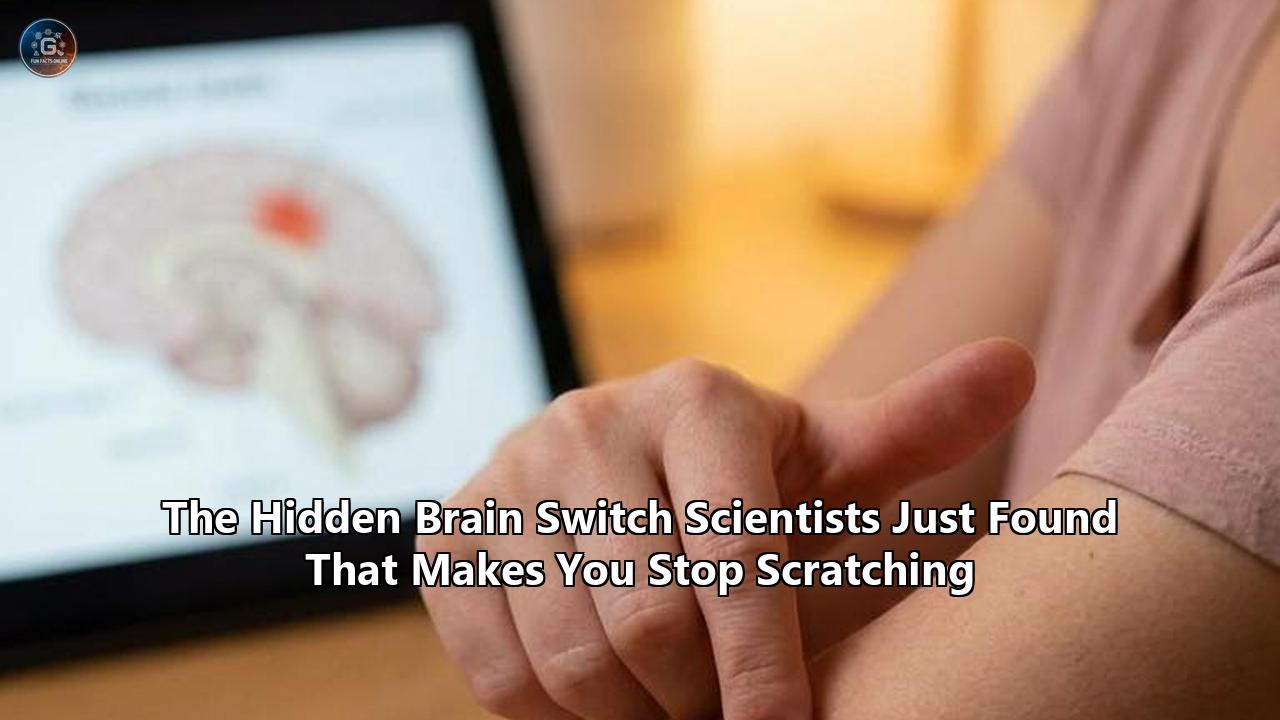
At the 70th Biophysical Society Annual Meeting in San Francisco this past February, a team of researchers from the University of Louvain presented a finding that fundamentally rewrites our understanding of one of the body's most maddening sensations. They identified the exact molecular switch that tells the brain when an itch has been adequately scratched.
For decades, medical science treated the urge to scratch as a localized skin problem. If a patient presented with chronic pruritus—a relentless, agonizing itch that often accompanies conditions like severe eczema, psoriasis, or chronic kidney disease—dermatologists attacked the inflammation at the surface. Yet, millions of patients continue to scratch until they bleed. The failure wasn't in the topical creams; it was in our fundamental misunderstanding of the nervous system's internal feedback loop.
Now, scientists have mapped the biological "brakes" of the scratching mechanism. The discovery centers on an ion channel known as TRPV4. Found in specific sensory nerve cells, this molecule acts as a critical negative feedback signal. When you drag your fingernails across a mosquito bite, TRPV4 is the biological messenger that fires a signal up the spinal cord to the brain, declaring the action satisfactory. Without it, the sensation of relief never arrives.
Complementing this breakthrough, a parallel study published just days later in Cell Reports by researchers at the Indian Institute of Science (IISc) mapped the exact brain circuit in the lateral hypothalamus that governs how stress and emotional states override or amplify the itch sensation. Together, these two discoveries elevate the study of pruritus from a peripheral dermatological concern to a complex neurobiological frontier. They reveal that the inability to cease clawing at one's skin is not a failure of willpower, but a mechanical breakdown of a highly specific neural circuit.
The Anatomy of an Unending Sensation
To appreciate the gravity of a faulty internal braking system, one must first dissect the architecture of an itch. Historically, pruritus was dismissed by the medical establishment as merely a low-level variant of pain. If pain was a shout, itch was a whisper.
Clinical neurology eventually proved this false. Itch and pain are transmitted by distinct, albeit overlapping, neural superhighways. When a pruritogen—a chemical or mechanical trigger like a mosquito's saliva, a stray wool fiber, or an inflammatory histamine—contacts the skin, it binds to high-affinity receptors on the nerve endings of primary sensory neurons. These neurons fire signals into the dorsal root ganglia and then into the dorsal horn of the spinal cord. From lamina I of the dorsal horn, the signal crosses to the contralateral side and rockets up the spinothalamic tract into the brain, lighting up regions associated with sensation, emotion, and motor response.
The brain's immediate, almost involuntary command is to deploy the fingers. Scratching is an evolutionary defense mechanism, refined over millions of years to physically dislodge disease-bearing parasites or toxic botanicals from the skin.
When a healthy nervous system executes this loop, the mechanical act of scraping the skin induces mild, localized pain. This temporary pain signal effectively short-circuits the itch signal in the spinal cord—a phenomenon neurologists call "gate control theory." You scratch, the brain registers the mild pain, the itch vanishes, and a wave of satisfaction follows.
But for patients suffering from chronic itch, this loop is broken. The gate never closes. Patients desperately seeking strategies on how to stop scratching often find themselves trapped in a cycle where the mechanical damage of scratching only induces further inflammation, triggering more pruritogens, and amplifying the neural distress signal. The skin is shredded, yet the brain remains starved for the signal of relief.
Until the Louvain researchers presented their findings, no one knew exactly what generated that specific chemical sigh of relief.
An Accidental Discovery in the Pain Lab
Roberta Gualdani, a professor at the University of Louvain in Brussels, did not set out to cure chronic itch. Her laboratory was primarily focused on pain phenotypes. The team was investigating TRPV4 (Transient Receptor Potential Vanilloid 4), a member of a vast family of ion channels that sit embedded in the cell membranes of sensory neurons.
Ion channels operate like highly secure, microscopic gateways. When triggered by specific physical or chemical changes—such as shifts in temperature, pressure, or tissue stress—they open, allowing ions to flood into the cell. This influx of ions generates the electrical spike that travels down the nerve. TRPV4 has long been recognized as a mechanosensor, helping the body detect physical pressure.
Gualdani's team engineered a highly specific genetic mouse model. Rather than knocking out the TRPV4 gene across the entire animal—which was the fatal flaw of previous, messier studies that yielded confusing results—they selectively deleted TRPV4 exclusively in sensory neurons. They wanted to see how the absence of this pressure sensor affected the mice's perception of pain.
"We were initially studying TRPV4 in the context of pain," Gualdani explained during the Biophysical Society presentation. "But instead of a pain phenotype, what emerged very clearly was a disruption of itch, specifically, how scratching behavior is regulated."
The researchers introduced mechanically evoked itch stimuli to the mice. What they observed was deeply paradoxical. The mice lacking neuronal TRPV4 actually initiated scratching bouts less frequently than their wild-type counterparts. The channel's absence made them somewhat less sensitive to the initial tickle.
However, once a mutant mouse started scratching, it became locked in a relentless motor loop. The bouts lasted agonizingly long. The animals simply could not stop.
The Negative Feedback Loop
The Louvain team utilized advanced calcium imaging and behavioral assays to trace the exact function of the missing ion channels. They found that TRPV4 is heavily expressed in Aβ low-threshold mechanoreceptors (Aβ-LTMRs)—the specific neurons classically associated with the sensation of light touch.
The data revealed a complex, dual reality about TRPV4. In skin cells (keratinocytes), the channel helps generate the sensation of itch. But deep within the mechanosensory neurons, it performs a totally different job: it is the biological brake.
"When we scratch an itch, at some point we stop because there's a negative feedback signal that tells us we're satisfied," Gualdani noted. "Without TRPV4, the mice don't feel this feedback, so they continue scratching much longer than normal."
Every time fingernails drag across the epidermis, the physical pressure of the scratch activates the TRPV4 channels inside the Aβ-LTMR neurons. The channels snap open, ions rush in, and a localized "mission accomplished" signal fires into the spinal cord. This negative feedback mechanism directly suppresses the ongoing itch transmission.
The mutant mice lacked this specific channel in their sensory neurons. Therefore, no matter how hard or how long they scratched, the physical pressure never translated into an electrical "stop" signal. Their spinal cords remained blind to the physical relief occurring at the surface of the skin.
This finding completely reframes chronic pruritus. It suggests that in patients with conditions like severe eczema or end-stage renal disease, the intense, prolonged scratching might not be driven entirely by an excess of itch signals from the skin. Instead, it may be caused by a degradation or dysfunction of the TRPV4-mediated negative feedback loop. The patients are scratching relentlessly because their central nervous system is deaf to the relief, providing the first biological instruction manual for how to stop scratching at a molecular level.
The Stress-Itch Axis: A Signal Hijacked
While the Belgian team isolated the peripheral braking system, a second major breakthrough occurring simultaneously in India exposed how the brain's emotional command centers manipulate this very circuitry.
On February 24, 2026, researchers from the Indian Institute of Science (IISc) published a paper in Cell Reports mapping a highly specific neural circuit that links psychological stress directly to the physical sensation of itch.
Clinical dermatologists have long observed that psychological distress exacerbates skin conditions. Patients universally report that their eczema flares up during a divorce, or their psoriasis worsens during finals week. Yet, the exact anatomical wiring connecting a tight deadline to an itchy forearm remained largely speculative.
Arnab Barik, an assistant professor at the IISc Centre for Neuroscience, alongside lead author Jagat Narayan Prajapati, focused their investigation on the lateral hypothalamic area (LHA). Deep within the brain, the LHA is an ancient, evolutionary command center responsible for regulating survival behaviors, stress, motivation, and emotional states.
The IISc researchers used genetically engineered mice to isolate a specific population of neurons within the LHA that fire rapidly during moments of acute stress.
Evolutionary biology dictates a strict hierarchy of sensory priorities. If a predator is actively chasing you, your brain cannot afford to be distracted by a mosquito bite. Acute stress must, by design, suppress lower-tier sensory inputs. Barik's team wanted to prove this mechanical suppression.
They ran behavioral experiments where mice were exposed to short-term, acute stressors. Exactly as evolutionary theory predicted, the acutely stressed mice completely ignored chemically induced itch triggers. The acute stress had chemically deleted the itch.
To prove the LHA was responsible, the researchers artificially manipulated the circuit using optogenetics—a technique where light is used to turn specific neurons on or off. When they manually activated these "stress neurons," the mice immediately scratched less. When they silenced the exact same neurons, the stress no longer provided any itch relief. The circuit was definitively responsible for dampening the physical sensation.
"We show that a specific circuit in the lateral hypothalamus can suppress itch during acute stress, revealing how the brain directly links emotional states to sensory perception," Barik stated upon the paper's publication.
The Chronic Stress Short-Circuit
If acute stress suppresses itch, why do stressed-out humans break out in hives and scratch themselves raw?
The IISc team uncovered a dark twist in the circuitry when they shifted their focus from acute, temporary stress to long-term, chronic stress. Using mice induced with long-term, psoriasis-like inflammation, they monitored the same LHA stress-sensitive neurons.
Under the weight of chronic distress, the system broke. The neurons in the lateral hypothalamus underwent a pathological adaptation. Instead of suppressing the sensory input, they became hyper-excitable. They began firing erratically, not just failing to dampen the itch, but actually synchronizing their activity with the scratching behavior itself.
Chronic stress physically rewires the brain's natural ability to filter out pruritic signals. The LHA neurons, exhausted and miscalibrated by continuous stress, abandon their post as sensory gatekeepers. This neurological breakdown explains why psychological therapy, stress reduction, and anxiety management are not just supplementary suggestions for dermatology patients, but essential interventions targeted at a specific hypothalamic failure.
When combined with the TRPV4 findings, a unified, deeply complex picture of chronic scratching emerges. A patient experiencing a severe eczema flare-up while under immense psychological strain is fighting a multi-front neurological collapse. The skin is firing inflammatory distress signals; the exhausted lateral hypothalamus is failing to filter those signals out; and the TRPV4 ion channels in the sensory neurons are failing to register the physical relief of the scratching itself.
The brain is screaming "itch," and the brakes have completely disintegrated.
The Flaw in the Current Pharmacological Arsenal
The revelation of these dual neural mechanisms—the peripheral TRPV4 brake and the central LHA filter—exposes exactly why the current standard of care for chronic itch is so woefully inadequate.
When dermatologists advise patients on how to stop scratching, the standard protocol relies heavily on topical steroids, systemic immunosuppressants, and oral antihistamines.
Antihistamines, the most common over-the-counter remedy, block the action of histamine, a chemical released by mast cells during an allergic reaction. This works perfectly for a mosquito bite or a mild case of hives. But chronic pruritus in conditions like uremia, liver disease, or severe atopic dermatitis is largely non-histaminergic. The itch is not being generated by histamine, meaning the antihistamines do absolutely nothing except make the patient drowsy.
More advanced treatments have attempted to block the itch signals by utilizing broad-spectrum neurological depressants or targeting various ion channels indiscriminately.
The Louvain study highlights the severe danger of this scattershot approach. Because TRPV4 plays a dual role—generating itch in the skin cells but acting as the crucial "stop" signal in the mechanosensory neurons—deploying a systemic TRPV4 antagonist could be disastrous.
If a pharmaceutical company develops a pill that broadly blocks all TRPV4 channels in the body, it might successfully turn off the itch generators in the keratinocytes. But it would simultaneously destroy the negative feedback loop in the Aβ-LTMR neurons. If the drug's effect on the skin wears off even slightly before its effect on the deep neurons, the patient would be left with a muted itch but absolutely no biological mechanism to feel relief. They could scratch endlessly, causing catastrophic tissue damage, without ever satisfying the neural loop.
"The findings suggest that TRPV4's role in itch is more complex than previously thought," Gualdani warned. "This dual role has important implications for drug development."
This requires a massive pivot in precision medicine. Future therapeutics cannot simply act as systemic sledgehammers. Pharmacologists must engineer targeted delivery systems—topical agents that bind only to the TRPV4 receptors in the epidermal keratinocytes, neutralizing the itch trigger, but physically cannot penetrate deep enough to cross into the sensory neurons where the braking system resides.
Alternatively, researchers might seek agonists—drugs that artificially stimulate the TRPV4 channels in the Aβ-LTMR neurons, essentially tricking the spinal cord into believing the skin is being scratched, delivering the chemical relief without requiring the patient to physically damage their skin.
Redefining Pruritus as a Neurological Condition
These discoveries force a structural reorganization of how medical science categorizes skin conditions. Chronic itch is rapidly moving out of the strict purview of dermatology and demanding the attention of neurobiologists.
Historically, patients who complained of relentless itching without an obvious, severe visible rash were often subjected to skepticism. Their symptoms were deemed psychosomatic, or they were diagnosed with "neurotic excoriation"—a label that places the blame squarely on the patient's psyche.
By identifying the exact location of the molecular brakes in the sensory neurons, and mapping the stress-induced failures in the lateral hypothalamus, researchers have validated the physiological reality of these patients. The sensation is not imagined; it is the result of quantifiable, observable hardware failures in the nervous system.
At the IISc, Barik noted that understanding the brain's interaction with the skin gives scientists a distinct framework to develop therapies addressing the central mechanisms of the disease. "Most current treatments for chronic itch are peripheral—they treat the symptoms, not the cause," he stated.
The brain imaging data aligns with this shift. Functional MRI studies of active scratching reveal that the act heavily involves the brain's reward system, including the ventral tegmentum of the midbrain. Scratching an itch triggers a dopamine release. When the TRPV4 brake fails to signal the end of the bout, the brain's reward center continues to demand the motor action, much like the neurochemistry of addiction. The patient is neurologically compelled to continue.
The Next Milestones in Itch Relief
The path from the Biophysical Society presentation to a pharmacy shelf is steep, but the roadmap is clearer than it has been in decades.
The immediate next phase of research will require transitioning these findings from murine models into human tissue studies. While the nervous systems of mice and humans share significant evolutionary architecture, the precise expression levels of TRPV4 in human Aβ-LTMRs must be mapped.
Researchers will also be closely watching the development of new topical drug-delivery mechanisms. Nanoparticle encapsulation could offer a way to deliver TRPV4 blockers strictly to the outermost layers of the epidermis. If clinical trials can demonstrate that these topicals relieve itch without triggering the relentless, brake-less scratching seen in Gualdani’s knockout mice, it will validate the dual-role hypothesis in human subjects.
Simultaneously, neuroscientists will attempt to trace the exact neural path from the spinal cord's negative feedback reception up to the specific cortical regions that register conscious relief. Where, exactly, does the TRPV4 signal terminate in the brain? Does it interact directly with the lateral hypothalamus circuits identified by the IISc team?
Understanding the precise neural circuitry that dictates how to stop scratching offers an unprecedented roadmap for millions of patients currently suffering in silence. The era of treating chronic itch with generic anti-inflammatories and willpower is ending. The focus has shifted to the molecular gates and hypothalamic circuits that silently run our sensory lives. The brakes have finally been found; the next challenge is learning how to repair them.
The timeline for these targeted neuro-dermatological treatments points toward early-stage clinical trials within the next four to five years. Until then, the validation that this relentless drive to scratch is a measurable, biological circuit failure offers its own profound form of relief. The burden of the unending itch is no longer a mystery of the mind, but a tangible puzzle of the nerves, and the pieces are finally falling into place.
Reference:
- https://www.sciencedaily.com/releases/2026/05/260509210654.htm
- https://scitechdaily.com/scientists-discover-why-we-know-when-to-stop-scratching-an-itch/
- https://neurosciencenews.com/itch-scratch-feedback-loop-30160/
- https://www.eurekalert.org/news-releases/1116395
- https://www.thehindu.com/sci-tech/science/iisc-researchers-find-out-how-the-brain-suppresses-itch-during-stress/article70668126.ece
- https://timesofindia.indiatimes.com/city/bengaluru/stress-switch-indian-institute-of-science-study-finds-how-brain-scratches-the-itch/articleshow/128726576.cms
- https://scholarship.miami.edu/esploro/outputs/journalArticle/Brains-reward-circuits-mediate-itch-relief/991031598624502976
- https://www.sciencedaily.com/releases/2025/12/251213042402.htm
- https://www.futurity.org/itching-brain-1377772-2/
- https://pmc.ncbi.nlm.nih.gov/articles/PMC1451220/
- https://pubmed.ncbi.nlm.nih.gov/38973668/