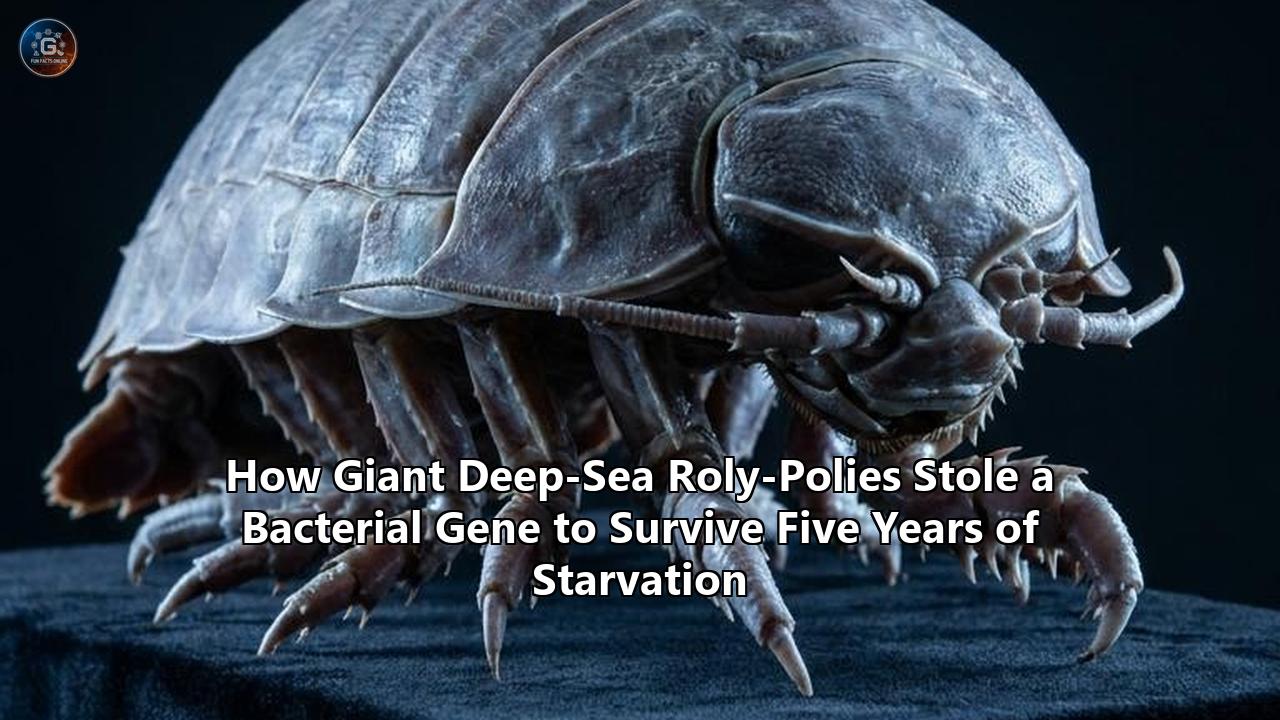
On June 5, 2026, a research paper published in the journal Cell solved one of marine biology’s most baffling survival mysteries: how the giant deep-sea isopod (Bathynomus jamesi) can survive for more than five years without a single bite of food. The study—led by Dr. Yuan Jianbo of the Institute of Oceanology of the Chinese Academy of Sciences (IOCAS), in collaboration with the Chinese University of Hong Kong and Northwestern Polytechnical University—uncovered a remarkable survival strategy.
These football-sized, armored crustaceans, which look like colossal versions of the common backyard pill bug, do not merely tolerate starvation through passive torpor. Instead, they actively reprogrammed their cellular metabolism by "stealing" a metabolic gene from an ancient symbiotic bacterium more than 16 million years ago.
This genetic heist, integrated into the nuclear genome via horizontal gene transfer (HGT), acts as a temperature-sensitive metabolic dimmer switch. In the crushing, frigid depths of the ocean floor, this borrowed gene shuts down mitochondrial activity, slowing the animal’s energy consumption to a near-complete standstill.
By analyzing this genetic adaptation, we can observe a broader biological pattern. The discovery of this mechanism offers a case study in evolutionary survival, illustrating how complex multicellular life can co-opt prokaryotic genes, utilize epigenetic modifications to bypass genetic barriers, and balance growth and extreme resource scarcity.
The Abyssal Energy Paradox
The deep sea is Earth's largest and most hostile biome, defined by perpetual darkness, immense hydrostatic pressure, and temperatures hovering just above freezing. It is also an ecological desert. Because there is no sunlight, there is no photosynthesis; the entire food web relies on a sparse, unpredictable rain of organic debris from the sunlit surface—marine snow, fecal pellets, and the occasional lottery-win of a sinking whale or large fish carcass.
Under classical ecological models, animals living in such energy-depleted, oligotrophic environments should remain small. Minimizing physical mass is the most straightforward way to reduce daily caloric demands. Yet, the giant deep-sea isopod defies this logic, showcasing a biological phenomenon known as deep-sea gigantism. While their terrestrial and intertidal relatives, such as woodlice, rarely exceed two centimeters in length, species of the genus Bathynomus can grow to nearly half a meter long and weigh up to 1.7 kilograms.
+-------------------------------------------------------------+
|               THE ABYSSAL ENERGY PARADOX                   |
+-------------------------------------------------------------+
|  Classic Ecological Model:                                  |
|  Extreme Food Scarcity  ===>  Small Body Size (Low Demands) |
+-------------------------------------------------------------+
|  Bathynomus Paradigm:                                       |
|  Extreme Food Scarcity  ===>  Deep-Sea Gigantism            |
|                               (Large, Expensive Mass)       |
+-------------------------------------------------------------+
|  How is this sustained?                                     |
|  "Increasing Revenue" (Hyperphagia)                         |
|         + "Reducing Expenditure" (Deep Metabolic Suppression) |
+-------------------------------------------------------------+
This presents a paradox: how does an organism sustain a large, energy-demanding body in a habitat where meals may be years apart?
To investigate this, the IOCAS-led research team deployed submersibles near Hainan Island in the South China Sea, collecting specimens of Bathynomus jamesi from a depth of approximately 898 meters. They compared this supergiant species with its smaller relative, Bathynomus doederleini, which inhabits shallower waters around 300 meters, as well as a tiny shore-dwelling relative measuring just two centimeters.
By combining comparative genomics with morphology, physiology, and metagenomic analysis, the researchers revealed a beautifully coordinated, two-pronged strategy: increasing storage capacity while radically reducing metabolic expenditures.
The Physical Vault: Hyperphagia and the Microbiome
The first half of the isopod's survival strategy is morphological. In Bathynomus jamesi, the stomach is not merely an organ of digestion; it is a massive structural holding tank that occupies up to two-thirds of the animal's entire body cavity. This represents a dramatic expansion compared to shallow-water and intertidal isopods, whose digestive tracts are modest and designed for continuous, low-volume feeding.
Isopod Stomach-to-Body Cavity Ratios:

Shore Isopod (~2 cm):      [==] (Minimal storage, continuous feeding)
B. doederleini (~300 m):   [==========] (Moderate storage expansion)
B. jamesi (~898 m):        [========================================] (2/3 of body cavity)
When a food source, such as a dead fish, sinks to the seafloor, the giant deep-sea isopod engages in extreme hyperphagia, gorging until its chitinous plates distend and it can barely crawl. Its stomach becomes packed with a thick, finely ground, mud-like paste of highly digested material. Because these feeding events are rare, this "pantry" must be managed with extreme care to prevent the stored nutrients from spoiling or being rapidly consumed by runaway bacterial action.
The IOCAS team discovered that the deep-sea isopod manages this through its gut microbiome. Metagenomic sequencing of the stomach contents revealed a highly specialized microbial community. In typical marine invertebrates, the gut is dominated by Firmicutes and other highly active digestive bacteria that rapidly break down organic material into simple sugars and amino acids, encouraging quick absorption but also rapid depletion. In Bathynomus jamesi, however, the proportion of these typical digestive bacteria is exceptionally low.
Instead, the holding tank is enriched with bacteria from the phylum Chlamydiae. While Chlamydiae are widely known as intracellular pathogens in terrestrial vertebrates, these deep-sea marine strains have evolved a cooperative symbiotic relationship with their host. They are highly enriched in metabolic pathways dedicated to lipid storage and preservation.
Rather than quickly breaking down food, these bacteria help convert the digested proteins and fats into stable, high-density lipid reserves. This symbiosis turns the isopod's stomach into a biological cold-storage vault. The Chlamydiae receive a secure, nutrient-rich environment, and in return, they assist in preserving and slowly releasing lipids to the host over months and years.
Yet, storing energy is futile if the animal's cellular engine burns through those reserves at normal speeds. This is where the second, genomic half of the survival equation comes into play.
The Genomic Heist: Crossing the Domain Barrier
While the giant stomach provides the storage capacity, the true biological marvel of Bathynomus jamesi lies within its nuclear DNA. To understand how the isopod stabilizes its energy reserves, the IOCAS team sequenced and assembled the genome of Bathynomus jamesi. At approximately 5.89 gigabases (Gb), it represents one of the largest crustacean genomes sequenced to date, packed with transposable elements that provide the genomic plasticity required for extreme adaptation.
During their genomic sweep, the researchers identified a highly unusual gene named ---ND1---.
In eukaryotes, ND1 (NADH dehydrogenase subunit 1) is a core component of Complex I (NADH:ubiquinone oxidoreductase), the massive protein complex that initiates the electron transport chain inside the mitochondria. Complex I is responsible for transferring electrons from NADH to ubiquinone, a process that pumps protons across the inner mitochondrial membrane, establishing the proton motive force that drives ATP synthesis. Typically, the ND1 gene is housed strictly within the mitochondrial genome (mtDNA) and is inherited maternally.
However, the ND1 gene identified in the nuclear genome of Bathynomus jamesi did not match the animal's mitochondrial lineage. Instead, phylogenetic analysis revealed that it was homologous to a bacterial ND1 gene. It had been acquired via horizontal gene transfer (HGT) from an exogenous symbiotic bacterium.
  +-----------------------------------------------------------------+
  |                HORIZONTAL GENE TRANSFER (HGT)                   |
  +-----------------------------------------------------------------+
  |  Symbiotic Microbe                                              |
  |  [ Bacterial Genome: ...---[ ND1 Gene ]---... ]                 |
  |                                 |                               |
  |                                 v (HGT: ~16 Million Years Ago)  |
  |  Ancestral Isopod Germline      v                               |
  |  [ Nuclear Genome: ...--------- [ ND1 Gene ] ---------... ]     |
  +-----------------------------------------------------------------+
By comparing the genomes of Bathynomus jamesi and its shallower relative Bathynomus doederleini, the researchers determined that this gene transfer occurred more than 16 million years ago, prior to the evolutionary split of these two species.
For over a century, horizontal gene transfer was believed to be almost entirely restricted to prokaryotes. Bacteria regularly swap genetic material through conjugation, transduction, and transformation, allowing them to rapidly share traits like antibiotic resistance. In multicellular animals (metazoans), HGT was long considered an evolutionary impossibility or a laboratory artifact caused by sample contamination.
Because animals sequester their germline cells—the sperm and egg cells—deep within protective tissues, any foreign DNA absorbed by somatic cells (like skin or gut cells) cannot be passed to future generations. This is known as the Weismann barrier.
To cross this barrier, a foreign gene must not only be shed by an invading or symbiotic microbe; it must survive the host's intracellular defense mechanisms (such as lysosomal degradation and restriction enzymes), find its way into the nucleus of a germline cell, physically integrate into the host's chromosomes, and do so without disrupting essential genes. Finally, it must provide a selective advantage that allows it to spread through the population.
In Bathynomus, this improbable alignment of events occurred. The close, long-term symbiotic relationship between the ancestor of these giant isopods and their internal microbes created a persistent, intimate interface. Over millions of years, bacterial cells lysed within the isopod's tissues, releasing fragments of DNA. Eventually, a copy of the bacterial ND1 gene slipped into the germline of an ancestral isopod, successfully integrating into its nuclear chromosomes.
Overcoming HGT Barriers via Epigenetic Optimization
In the rare instances where foreign genes manage to integrate into an animal's genome, they typically face another hurdle: transcriptional silencing. Eukaryotic genomes are equipped with sophisticated defense networks designed to recognize and neutralize foreign DNA, such as viral insertions or transposable elements.
These networks employ DNA methylation and repressive histone modifications to wind the foreign DNA tightly around histone proteins, forming dense, transcriptionally inactive heterochromatin. As a result, most horizontally transferred genes become pseudogenes—silent genomic fossils that accumulate mutations and eventually degrade.
The ND1 gene in Bathynomus bypassed this evolutionary dead end through two mechanisms: post-transfer duplication and epigenetic histone modification.
  =============================================================
  GENE EXPRESSION LEVELS IN THE BATHYNOMUS GENOME
  =============================================================
  Total Predicted Genes: ~23,000
  -------------------------------------------------------------
  [Rank 1]  Nuclear-acquired Bacterial ND1 Copy A:  ============ (Single Most Active Gene)
  [Others]  Native Host Housekeeping Genes:          ===
  -------------------------------------------------------------
  * Expressed over 20-fold higher than the isopod's native metabolic equivalents.
  =============================================================
Following its integration into the nuclear genome, the bacterial ND1 gene underwent gene duplication, resulting in multiple copies. This dosage enhancement provided a raw genetic template that the animal's cellular machinery could modify without risking the loss of the original gene sequence.
More surprisingly, instead of being silenced, one of these duplicated copies became highly active. In Bathynomus jamesi, this nuclear-encoded bacterial ND1 gene is the single most transcriptionally active gene in the animal's entire genome of over 23,000 genes, outperforming the host's own native metabolic genes more than twentyfold.
The key to this high expression is epigenetic optimization. The researchers discovered that the promoter region of the ND1 gene—the DNA sequence that controls when and how much a gene is transcribed—is heavily marked by a specific chemical tag: histone acetylation.
       [ Histone Acetyltransferases (HATs) ]
                      │
                      ▼ (Adds Acetyl Groups to Lysine Tails)
               O  O  O  O
             ┌─┴──┴──┴──┴─┐
             │  Histone   │  ◄── Charge neutralized (Positive to Neutral)
             └────────────┘
               ~~~~~~~~~~    ◄── DNA unwinds from histone octamer
              ============   ◄── Chromatin relaxes (Euchromatin)
                  │
                  ▼
       [ Transcriptional Machinery Accesses promoter ]
                  │
                  ▼
         [ ULTRA-HIGH EXPRESSION OF BACTERIAL ND1 ]
In eukaryotic cells, DNA is wound around histone proteins like thread around a spool. When histones are acetylated by enzymes called histone acetyltransferases (HATs), the positive electrical charge on the histone tails is neutralized, weakening their binding affinity to the negatively charged phosphate backbone of the DNA. This causes the chromatin structure to relax from tight heterochromatin into open, accessible euchromatin.
By maintaining a high level of histone acetylation specifically at the ND1 promoter, the giant deep-sea isopod ensures that transcription factors and RNA polymerase II have unimpeded, continuous access to the gene.
This represents an elegant evolutionary adaptation. The isopod did not just inherit a bacterial gene; it modified the surrounding chromatin structure, co-opting its own epigenetic machinery to drive the transcription of the foreign gene. This allowed the bacterium's metabolic tool to scale up its production, integration, and function within the eukaryotic cell.
The Temperature-Dependent Switch
An overexpressed metabolic gene seems counterintuitive for an animal famous for its low energy consumption. If ND1 is a component of Complex I, and Complex I drives the electron transport chain to produce ATP, then hyper-expressing ND1 should speed up the cellular engine, causing the animal to burn through its stored food reserves and die during long-term starvation.
To solve this puzzle, the IOCAS researchers conducted functional verification assays. Because living giant deep-sea isopods are incredibly difficult to maintain in laboratory settings due to their deep-sea pressure and temperature requirements, the team used model organisms to study the gene's function.
They created transgenic lines of zebrafish (Danio rerio), soil nematodes (Caenorhabditis elegans), and human embryonic kidney (HEK 293T) cell cultures, engineering them to express the isopod's nuclear-acquired bacterial ND1 gene.
They then subjected these transgenic organisms and cells to starvation tests under varying temperatures:
+-------------------------------------------------------------------------+
|                  ND1 FUNCTIONAL VERIFICATION ASSAYS                     |
+-------------------------------------------------------------------------+
|  Environment: WARM (Normal Temperatures, ~25°C)                         |
|  Transgenic Zebrafish with ND1:                                         |
|  - Mitochondrial activity: INCREASED                                    |
|  - Basal Metabolic Rate: ELEVATED                                       |
|  - Starvation Tolerance: REDUCED (Burned through energy and died faster)  |
+-------------------------------------------------------------------------+
|  Environment: COLD (Deep-Sea Temperatures, ~4°C)                         |
|  Transgenic Zebrafish with ND1:                                         |
|  - Mitochondrial activity: DECREASED (Metabolic Dimmer Switch)          |
|  - Basal Metabolic Rate: DRASTICALLY SUPPRESSED                         |
|  - Starvation Tolerance: INCREASED BY 37%                               |
+-------------------------------------------------------------------------+- Under warm, normal temperatures (approx. 25°C): The introduction of ND1 increased energy metabolism. The transgenic zebrafish and nematodes burned through their glycogen and lipid reserves faster, displaying a significantly lower tolerance for starvation and higher mortality rates than unmodified wild-type controls.
- Under cold temperatures (approx. 4°C): The metabolic response flipped. When the water temperature was lowered to match the cold conditions of the deep-sea floor, the presence of the ND1 gene caused mitochondrial activity to drop sharply, slowing metabolic rates and oxygen consumption. Under these cold conditions, the transgenic zebrafish carrying the ND1 gene survived starvation 37% longer than their wild-type counterparts.
This reveals how the ND1 gene acts as a biophysical regulator. The protein encoded by this nuclear-acquired bacterial gene interacts with the host’s endogenous mitochondrial Complex I. At warm temperatures, its structural conformation promotes the transfer of electrons, boosting respiration.
But in the cold, the protein undergoes a temperature-dependent conformational shift, or alters its interaction with the mitochondrial membrane. It begins to act as a competitive inhibitor or an uncoupling agent within the electron transport chain, reducing proton pumping and slowing down ATP synthesis.
Because the deep sea is permanently cold, this gene functions as a highly effective metabolic brake. It allows the giant deep-sea isopod to throttle its cellular machinery down to a minimal standby mode, stretching a single meal across five years of starvation.
Lessons in Metazoan Evolution
The discovery that the giant deep-sea isopod survived deep-sea starvation by borrowing and optimizing a bacterial gene provides a useful lens for examining broader evolutionary patterns. It challenges long-held assumptions in evolutionary biology and offers several insights into how life adapts to extreme, nutrient-limited environments.
Lesson 1: Multicellular Genomes Are Genomically Porous
For decades, the standard view of animal evolution was built on vertical descent: genetic change occurs through the gradual mutation and recombination of genes passed from parent to offspring. Horizontal gene transfer was viewed as an evolutionary oddity confined to the microscopic world of bacteria and archaea.
This Cell study adds to a growing body of evidence that multicellular genomes are far more porous than previously believed. Bathynomus jamesi is not alone; other organisms have also used horizontal gene transfer to navigate evolutionary bottleneck events.
+-------------------------------------------------------------------------+
|            EXAMPLES OF HORIZONTAL GENE TRANSFER IN ANIMALS             |
+-------------------------------------------------------------------------+
|  Organism: Pea Aphid (Ayrthosiphon pisum)                               |
|  Acquired Gene: Carotenoid Synthase (from Fungi)                        |
|  Adaptive Benefit: Synthesis of red/green pigments for camouflage       |
+-------------------------------------------------------------------------+
|  Organism: Bdelloid Rotifers (Rotifera)                                 |
|  Acquired Gene: Desiccation resistance/DNA repair genes (from Bacteria) |
|  Adaptive Benefit: Survives extreme dehydration and repairs broken DNA   |
+-------------------------------------------------------------------------+
|  Organism: Root-knot Nematodes (Meloidogyne)                            |
|  Acquired Gene: Cell-wall degrading enzymes (from Bacteria/Fungi)       |
|  Adaptive Benefit: Penetration and parasitism of plant host tissues     |
+-------------------------------------------------------------------------+
|  Organism: Giant Deep-Sea Isopod (Bathynomus jamesi)                    |
|  Acquired Gene: ND1 metabolic regulator (from Bacteria)                 |
|  Adaptive Benefit: Cold-induced metabolic suppression for starvation    |
+-------------------------------------------------------------------------+- Pea Aphids (Acyrthosiphon pisum): These insects acquired carotenoid biosynthesis genes from fungi. This enables them to synthesize their own red and green pigments, which are essential for camouflage and avoiding predators.
- Bdelloid Rotifers: These microscopic, all-female freshwater invertebrates have integrated thousands of genes from bacteria, fungi, and plants. Many of these foreign genes encode antioxidants and DNA-repair enzymes, allowing the rotifers to survive complete desiccation and repair their shattered genomes upon rehydration.
- Root-knot Nematodes: These plant-parasitic worms acquired cell-wall-degrading enzymes, such as cellulases and pectate lyases, from soil bacteria and fungi, enabling them to penetrate host plant tissues.
The case of Bathynomus jamesi stands out because it involves a core metabolic pathway. While aphids and nematodes acquired accessory genes for pigmentation or digestion, the giant deep-sea isopod integrated a foreign gene into the electron transport chain—the primary energy-producing engine of the eukaryotic cell.
This demonstrates that even highly conserved, fundamental physiological systems can be modified by lateral genetic acquisitions if the selective pressure is sufficiently strong.
Lesson 2: Epigenetics Is the Key to Integrating Foreign DNA
If genomes are porous enough to absorb foreign DNA, the rate-limiting step of horizontal gene transfer is not physical integration, but functional assimilation. Integrating a bacterial gene into a eukaryotic chromosome is only the first step. For that gene to be useful, it must:
- Be recognized by eukaryotic transcription factors.
- Be transcribed into messenger RNA (mRNA) despite lacking eukaryotic promoter motifs and polyadenylation signals.
- Be translated into a functional protein within a cellular environment designed to degrade foreign molecules.
The Bathynomus case study highlights epigenetics as a critical mediator of this integration. The animal bypassed transcriptional silencing by utilizing histone acetylation at the promoter region of the acquired ND1 gene.
This suggests an "epigenetic handoff" model for horizontal gene transfer:
  +-----------------------------------------------------------------+
  |                  THE EPIGENETIC HANDOFF MODEL                   |
  +-----------------------------------------------------------------+
  |  Step 1: Genomic Integration                                    |
  |  Foreign bacterial DNA physically inserts into the animal       |
  |  chromosome, but is immediately silenced (heterochromatin).     |
  +-----------------------------------------------------------------+
  |  Step 2: Epigenetic Escape                                      |
  |  Environmental stress or nearby host elements trigger local     |
  |  histone modification (e.g., histone acetylation).             |
  +-----------------------------------------------------------------+
  |  Step 3: Functional Overclocking                                |
  |  Chromatin relaxes, allowing continuous transcription and       |
  |  functional integration into host cellular systems.             |
  +-----------------------------------------------------------------+
By modifying chromatin structure around the foreign insertion, the eukaryotic host can fine-tune the expression of a newly acquired prokaryotic gene, transforming a silent piece of foreign DNA into an active evolutionary tool.
Lesson 3: Environmental Extremes Accelerate Evolutionary Innovation
In biological systems, evolutionary innovations are rarely created from scratch. Instead, they are cobbled together from existing components—a process evolutionary biologist Stephen Jay Gould termed "exaptation."
In highly stable, resource-rich environments, the selective pressure to maintain genetic stability is high, and major genomic rearrangements or foreign gene acquisitions are often disadvantageous.
However, extreme, resource-limited environments like the deep sea act as evolutionary pressure cookers. The threat of starvation in Bathynomus is so severe that any genetic alteration offering even a marginal improvement in energy conservation is favored by natural selection.
In this context, the horizontal acquisition of ND1 was not an evolutionary accident; it was a critical survival mechanism. The extreme selective pressure of the oligotrophic deep sea took an improbable genetic insertion and drove it to fixation, demonstrating how harsh environments accelerate evolutionary adaptation.
Deconstructing the Comparative Case Study
To understand the broader applicability of the Bathynomus model, we can compare three species of the isopod lineage that inhabit different depths. This comparison highlights how structural and genetic adaptations scale with environmental pressure.
| Biological Feature | Shoreline Isopod (Cirolana harfordi) | Intermediate Isopod (Bathynomus doederleini) | Deep-Sea Supergiant (Bathynomus jamesi) |
|---|---|---|---|
| Typical Depth | Intertidal Zone (0 meters) | Approximately 300 meters | Approximately 898 meters |
| Average Body Length | 1.5 to 2.0 centimeters | 9 to 13 centimeters | 23 to 35+ centimeters |
| Stomach Volume | <15% of body cavity | ~35% of body cavity | ~66% (2/3) of body cavity |
| Gut Microbiome | Dominant Firmicutes (rapid digestion) | Mixed Firmicutes & Chlamydiae | Dominant Chlamydiae (lipid preservation) |
| ND1 Gene Copies | Zero bacterial insertions | 1-2 copies (moderate expression) | Multiple copies (ultra-high expression) |
| Epigenetic Regulation | N/A | Low histone acetylation | Ultra-high histone acetylation |
| Starvation Tolerance | Weeks | Months | 5+ Years |
This comparative matrix illustrates that as we descend deeper into the ocean, the evolutionary strategy shifts from continuous processing to long-term storage and metabolic conservation.
The shoreline isopod operates on high turnover, digesting food quickly and relying on continuous availability.
Bathynomus doederleini, living at 300 meters, represents an intermediate evolutionary stage; it has expanded its stomach and acquired the ND1 gene, but lacks the extreme epigenetic upregulation and specialized gut microbiome seen in Bathynomus jamesi.
At 898 meters, Bathynomus jamesi represents the extreme realization of this strategy. It has maximized its physical storage capacity, co-opted its gut microbiome for lipid preservation, and epigenetically boosted its acquired bacterial ND1 gene to turn down its cellular metabolic engine.
Broader Implications and Future Frontiers
The discovery that a giant deep-sea isopod regulates its energy consumption using a borrowed bacterial gene has implications that extend far beyond marine biology. This mechanism could provide valuable insights for metabolic science, medicine, and bioengineering.
┌────────────────────────────────────────────────────────┐
│             APPLIED TRANSLATIONAL FRONTIERS            │
└───────────────────────────┬────────────────────────────┘
                            │
        ┌───────────────────┼───────────────────┐
        ▼                   ▼                   ▼
┌───────────────┐   ┌───────────────┐   ┌───────────────┐
│   METABOLIC   │   │  THERAPEUTIC  │   │  EXOBIOLOGY & │
│   MEDICINE    │   │  ORGAN PRES.  │   │ SPACE TRAVEL  │
└───────┬───────┘   └───────┬───────┘   └───────┬───────┘
        │                   │                   │
        ▼                   ▼                   ▼
  Treatment of        Slowing tissue       Inducing torpor
  mitochondrial        metabolism in       for long-duration
   disorders and       donor organs        crewed spaceflight
   obesity pathways    during transit       missions
1. Re-engineering Metabolic Pathways in Human Medicine
Many human metabolic disorders—such as obesity, Type 2 diabetes, and mitochondrial diseases—stem from disruptions in how cells burn and store energy. Human cells lack a safe biological "standby mode"; when deprived of oxygen or nutrients, our cells continue to run their metabolic engines, producing toxic reactive oxygen species (ROS) that lead to cell death and tissue damage.
If biochemists can isolate the precise molecular mechanism by which the isopod’s ND1 protein suppresses Complex I activity in the cold, they may be able to design synthetic, temperature-dependent metabolic inhibitors. Such compounds could act as metabolic brakes, protecting human tissues from damage during ischemic events like heart attacks or strokes by temporarily lowering cellular oxygen demand.
2. Extending Organ Preservation Times
A major challenge in transplant medicine is the brief shelf-life of donor organs. Once an organ is harvested, it is chilled to slow down its metabolism, but cellular decay still occurs within hours.
By applying the principles learned from the giant deep-sea isopod, researchers might develop preservation solutions containing compounds that mimic the ND1 dimmer switch. This could allow organs to be placed into a state of metabolic suspension, extending their viability from hours to days and facilitating global organ distribution networks.
3. Induced Torpor and Space Exploration
For long-duration space flight, such as crewed missions to Mars or the outer solar system, resources are highly limited. The ability to induce a safe, reversible state of torpor or hibernation in astronauts would reduce the food, water, and oxygen required for the journey, while protecting crew members from cosmic radiation by reducing cellular turnover.
       +----------------------------------------------------+
       |  Astronaut Torpor Pathway                          |
       +----------------------------------------------------+
       |  1. Administer synthetic ND1-mimetic compound      |
       |  2. Lower cabin/suit temperature slightly          |
       |  3. Compound conformationally shifts               |
       |  4. Complex I electron transport chain throttles   |
       |  5. Metabolic rate drops to <5% of basal levels     |
       |  6. Safe, extended hibernation during transit      |
       +----------------------------------------------------+
The temperature-dependent ND1 switch discovered in Bathynomus jamesi provides a biological blueprint for how metabolic rate can be coupled to environmental temperature without causing cellular death or tissue damage. Developing therapeutics that mimic this process could bring the concept of human stasis closer to reality.
4. Aquaculture and Food Security
Understanding how animals optimize nutrient absorption, lipid storage, and metabolic efficiency can also inform aquaculture practices. Incorporating genetic or dietary strategies derived from the isopod’s gut microbiome symbiosis could help cultivate marine species that are highly efficient at converting feed into muscle mass, lowering the environmental and economic costs of aquaculture.
What to Watch Next
As the scientific community digests the findings of the IOCAS study, several unresolved questions remain for future research:
- The Search for Other Metazoan Dimmer Switches: Is Bathynomus jamesi unique, or have other deep-sea megafaunal species, such as giant tube worms, deep-sea crabs, or abyssal fishes, co-opted similar microbial energy-metabolism genes? Genomic screening of other abyssal species may reveal a broader suite of horizontally acquired metabolic regulators.
- Deciphering the Structural Biophysics of ND1: Structural biologists will want to determine the precise three-dimensional structure of the isopod’s bacterial ND1 protein at both warm and cold temperatures. Resolving its atomic configuration using cryogenic electron microscopy (cryo-EM) will reveal the exact physical mechanism behind its temperature-dependent conformational shift.
- The Mechanism of Epigenetic Maintenance: How does the isopod's transcriptional machinery target the ND1 promoter for continuous, high histone acetylation while keeping other foreign DNA elements silenced? Identifying the specific histone acetyltransferases and guiding RNAs involved will provide a deeper understanding of eukaryotic gene regulation.
- Deep-Sea Conservation in a Changing Climate: The giant deep-sea isopod’s survival strategy is finely tuned to the cold temperatures of the abyssal seafloor. As climate change drives gradual ocean warming, even deep-sea benthic habitats face rising temperatures. Because the ND1 gene increases metabolic rate and reduces starvation tolerance in warmer waters, ocean warming could disrupt this delicate energy balance, threatening these ancient survivors.
The giant deep-sea isopod, crawling in the dark, cold depths of the ocean floor, has survived for millions of years by embracing a biological partnership with its microbial neighbors. By borrowing a bacterial gene and optimizing it with its own epigenetic machinery, this organism demonstrates that the boundaries between the domains of life are highly fluid.
As we continue to explore the deep ocean, we find that some of the most sophisticated survival mechanisms on Earth have already been developed by the strange creatures of the abyss.
References
- Yuan, J. et al. (2026). "Deep-sea megafauna co-opts microbial energy metabolism genes to withstand ultra-long starvation." Cell, 191(5), 1012-1027.
- Yuan, J., Zhang, X., Kou, Q., et al. (2022). "Genome of a giant isopod, Bathynomus jamesi, provides insights into body size evolution and adaptation to deep-sea environment." BMC Biology, 20(1), 113.
- China Academy of Sciences (IOCAS) Press Release. (June 2026). "Scientists decode the genomic secrets of the supergiant deep-sea isopod's five-year starvation tolerance.".
- HGT Review Committee. (2025). "Horizontal gene transfer in metazoan lineages: Mechanisms, barriers, and evolutionary significance." Annual Review of Genetics, 59, 234-256.
Reference:
- https://thedebrief.org/this-deep-sea-giant-can-go-five-years-without-eating-now-scientists-are-unlocking-the-genetic-secrets-of-its-extreme-survival/
- https://scienceblog.com/wildscience/2026/06/06/how-supergiant-deep-sea-isopods-survive-years-without-eating/
- https://english.cas.cn/newsroom/cas-in-media/202606/t20260608_1161355.shtml
- https://www.sciencenews.org/article/big-deep-roly-polies-endure-starvation
- https://www.meridia.news/news/deep-sea-supergiant-isopods-last-years-without-food-by-using-a-two-part-survival-system-58iz
- https://en.vijesti.me/amp/815180/The-secret-to-survival%3A-deep-sea-isopods-survive-for-years-without-food
- https://lssf.cas.cn/en/news/rh/202606/t20260625_5113316.html
- https://knowridge.com/2026/06/how-a-giant-deep-sea-creature-can-survive-more-than-five-years-without-eating/
- https://www.scmp.com/news/china/science/article/3183482/giant-genes-shed-light-how-alien-crustacean-has-adapted-deep-sea
- https://pubmed.ncbi.nlm.nih.gov/42248139/
- https://ex.chinadaily.com.cn/exchange/partners/70/rss/channel/www/columns/y38633/stories/WS6a2bd624a310986e2b45fa88.html
- https://english.cas.cn/print/index.shtml?docurl=https://english.cas.cn/newsroom/research-news/202606/t20260602_1160354.shtml
- https://www.brecorder.com/news/40426613/deep-sea-denizens-go-years-without-food-with-clever-biological-fix
- https://www.earth.com/news/how-deep-sea-isopods-survive-more-than-five-years-without-eating/
- https://www.researchgate.net/publication/360586521_Genome_of_a_giant_isopod_Bathynomus_jamesi_provides_insights_into_body_size_evolution_and_adaptation_to_deep-sea_environment
- https://pmc.ncbi.nlm.nih.gov/articles/PMC9107163/
- https://read.qxmd.com/read/42248139/deep-sea-megafauna-co-opts-microbial-energy-metabolism-genes-to-withstand-ultra-long-starvation
- https://www.researchgate.net/figure/Bathynomus-giganteus-Curves-and-equations-describing-the-growth-of-A-males_fig3_350970191
- https://www.youtube.com/watch?v=lC1i_SIUpWw
- https://pubmed.ncbi.nlm.nih.gov/35562825/