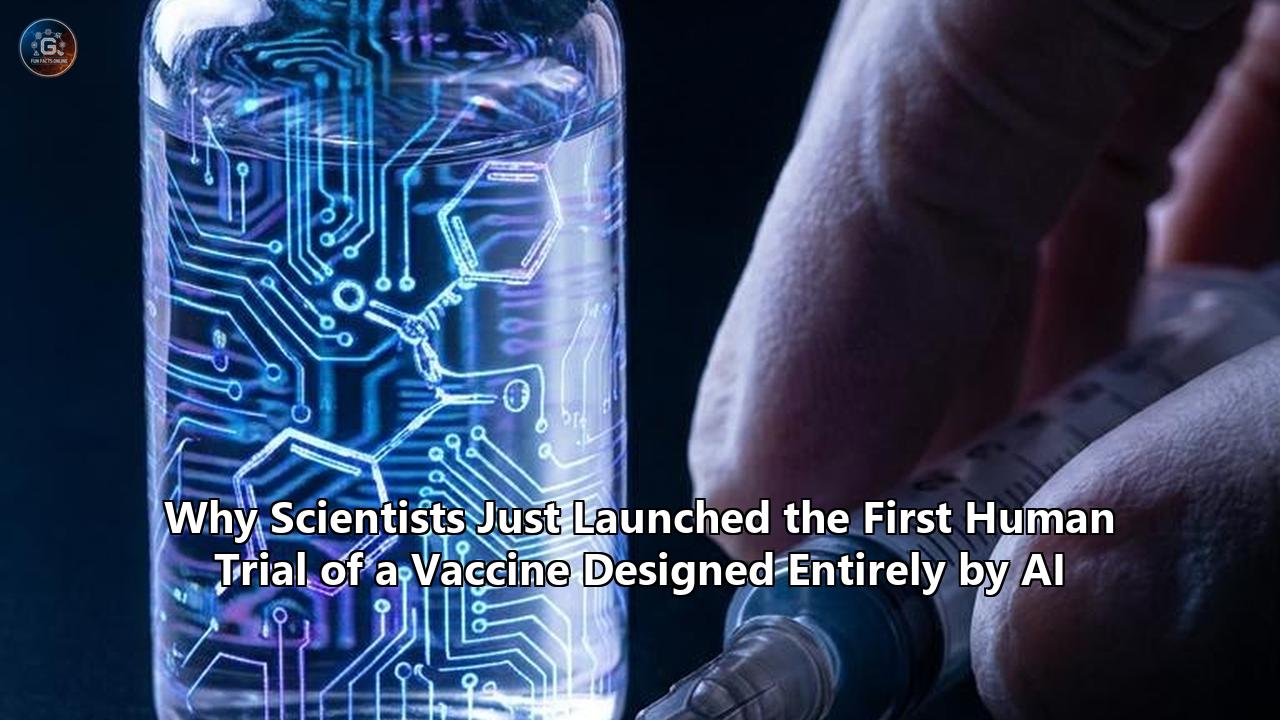
In a landmark development for global public health and computational biology, scientists have successfully completed the first-in-human clinical trial of a vaccine whose active ingredient was designed entirely by artificial intelligence. On June 5, 2026, researchers from the University of Cambridge and its biotechnology spinout company, DIOSynVax, announced that their experimental "universal" coronavirus vaccine, designated pEVAC-PS, proved safe, well-tolerated, and capable of triggering immune responses against multiple distinct coronaviruses in a Phase I clinical trial.
The trial, whose peer-reviewed results were published in the Journal of Infection, evaluated the vaccine across 39 healthy adult volunteers aged 18 to 50 at clinical research facilities in Cambridge and Southampton, United Kingdom. Rather than training the immune system to recognize a single, specific variant of a virus, the AI-designed vaccine acts as a broad-spectrum shield. It successfully stimulated immune responses not only against SARS-CoV-2 (the virus responsible for the COVID-19 pandemic) and the original 2003 SARS-CoV-1 virus, but also against related sarbecoviruses circulating in animal reservoirs that have not yet spilled over into the human population.
This clinical milestone marks a conceptual transition in how humanity prepares for infectious threats. Historically, vaccine development has been a retrospective, reactive race—identifying a newly emerged pathogen, isolating its physical structure, and racing to manufacture a matching booster before the pathogen mutates again. By employing machine learning algorithms to analyze thousands of viral genomes, the research team bypassed this cycle entirely. They engineered a synthetic "super-antigen" that represents genetic and structural elements common to an entire family of viruses, creating a single shot designed to resist future mutational drift.
The implications of this trial extend far beyond coronaviruses. The successful human validation of the pEVAC-PS platform provides a blueprint for targeting other highly mutable, pandemic-threat virus families, such as influenza and filoviruses like Ebola. As the biotech sector shifts its attention to Phase II trials, understanding the intricate science, the complex computational design, and the clinical nuances of this AI-designed platform is essential to grasping why this event represents a massive leap forward in pandemic preparedness.
The "Dog Chasing Its Tail" Problem: Why Traditional Vaccines Struggle
To understand the necessity of an AI generated vaccine, one must first examine the limitations of the traditional vaccine paradigm. The human immune system relies on exposure to foreign proteins—known as antigens—to learn how to identify and neutralize invading pathogens. An antigen acts as a molecular "most-wanted poster." When a vaccine introduces a harmless version or piece of this antigen (such as the spike protein of a coronavirus), immune cells inspect its specific shape, generate targeted antibodies, and establish memory cells to mount a rapid defense upon real exposure.
However, viruses are dynamic, evolving targets. Pathogens like coronaviruses and influenza reproduce rapidly and error-prone replication mechanisms lead to frequent mutations. When a virus mutates, the physical shape of its surface proteins changes. If those changes occur in the specific regions targeted by existing antibodies, the virus can bypass immunological defenses. This phenomenon, known as vaccine escape, renders older immunizations less effective.
Traditional Reactive Cycle:
[New Variant Emerges] ➔ [Isolate Variant] ➔ [Redesign Vaccine] ➔ [Manufacture & Distribute] ➔ [Virus Mutates] ➔ (Repeat Cycle)
The COVID-19 pandemic laid bare the systemic vulnerabilities of this reactive loop. Although mRNA technology allowed scientists to design and manufacture vaccines with unprecedented speed, the virus consistently outpaced the distribution of variant-specific boosters. As the virus mutated from the ancestral strain through Alpha, Delta, Omicron, and a dizzying array of subsequent subvariants, global healthcare systems were locked in an endless, costly effort to update, test, and distribute updated formulations.
"We've converted vaccine development from being reactive to being future-proof," explained Professor Jonathan Heeney, lead researcher on the project and head of the Laboratory of Viral Zoonotics at the University of Cambridge. "It means we can escape the constant cycle of chasing virus variants circulating in humans and updating the vaccines to try to catch up, like a dog chasing its tail."
In the conventional workflow, creating an antigen requires copying a genetic sequence directly from a physically isolated circulating virus. This strain-specific focus means the resulting vaccine is highly specialized but immunologically rigid. If a new variant emerges with significant alterations to its spike protein, or if a completely different zoonotic coronavirus jumps from animals to humans, existing vaccines provide minimal cross-protection. The objective behind pEVAC-PS was to build a proactive defense: a single, optimized antigen that remains effective against variants that do not yet exist in nature.
The Computational Core: How AI Constructs a "Super-Antigen"
The active ingredient of the pEVAC-PS vaccine is not a replica of any naturally occurring viral protein. Instead, it is a synthetic, computationally optimized structure referred to by researchers as a "super-antigen." To generate this molecule, scientists turned to advanced machine learning models capable of processing genetic data at a scale and depth impossible for human researchers.
The design process of this AI generated vaccine occurred in several highly integrated computational stages:
                  +-----------------------------------------+
                  |  1. Global Genomic Surveillance Data    |
                  |     (Thousands of Sarbecovirus Sequences)|
                  +------------------------------------+----+
                                                       |
                                                       v
                  +-----------------------------------------+
                  |  2. Evolutionary Alignment Algorithm     |
                  |     (Identify Conserved Core Elements)   |
                  +------------------------------------+----+
                                                       |
                                                       v
                  +-----------------------------------------+
                  |  3. Structural Fit Filtration            |
                  |     (Reject Hyper-Variable Mutations)    |
                  +------------------------------------+----+
                                                       |
                                                       v
                  +-----------------------------------------+
                  |  4. Epitope Grafting & Protein Folding   |
                  |     (Simulate Stable 3D Super-Antigen)   |
                  +------------------------------------+----+
                                                       |
                                                       v
                  +-----------------------------------------+
                  |  5. Codon Optimization                   |
                  |     (Maximize Human Cell Translation)    |
                  +-----------------------------------------+
1. Global Genomic Sequence Aggregation
The machine learning pipeline began by "hoovering up" vast amounts of genetic sequence data from global pathogens. The researchers compiled genetic sequences of the entire Sarbecovirus subgenus—a lineage of coronaviruses that includes SARS-CoV-1, SARS-CoV-2, and hundreds of related viruses circulating in bats, pangolins, and other wildlife. This sequence library represented a vast map of how these viruses have mutated across different host species and geographic regions over decades.
2. Identifying Conserved Regions (Genetic Anchors)
A virus cannot mutate every part of its structure with equal ease. While some surface proteins are highly tolerant of changes, other structural regions are functionally immutable. For instance, the machinery a coronavirus uses to fuse with a host cell membrane or maintain its structural integrity must retain specific biochemical properties. If the virus mutates these critical "core features," it loses its ability to replicate or infect cells.
The AI system analyzed the aligned genomic sequences to identify these highly conserved regions. By calculating the evolutionary conservation score of every amino acid position across the entire family of viruses, the algorithm isolated the precise structural elements that the pathogen cannot afford to change.
3. Sifting Out the "Decoy" Epitopes
In natural infections, highly mutable viruses often display prominent, immunodominant regions that act as immunological decoys. These decoy regions trigger a strong antibody response, but because they are highly variable, the virus quickly mutates them away, rendering the host's antibodies useless.
The AI model was programmed to detect and filter out these hyper-variable regions. Instead, it focused on "cryptic" or conserved epitopes—highly stable regions that are often physically shielded or less prominent in a wild virus, but which represent the Achilles' heel of the pathogen family.
4. Synthetic Antigen Stitching and 3D Structural Simulation
Once the conserved, protective targets (epitopes) were identified, the algorithm faced a complex structural puzzle: how to combine these disparate, non-contiguous protein fragments into a single, cohesive, and stable three-dimensional protein that the human body can manufacture.
Using deep learning models specialized in protein-structure prediction (similar to AlphaFold), the system simulated how different synthetic configurations would fold in three-dimensional space. The AI designed an entirely novel, synthetic backbone protein and computationally "grafted" the key conserved epitopes onto its surface. This ensured that when human cells produced the synthetic super-antigen, the critical viral targets would be perfectly presented to the immune system in their biologically active shapes.
5. Codon Optimization for Host Expression
Finally, generative algorithms optimized the genetic sequence of the super-antigen to ensure maximum compatibility with human cellular machinery. Because different organisms prefer different genetic codons to produce the same amino acids, the AI adjusted the synthetic gene sequence (codon optimization) to maximize protein expression efficiency within human host cells, ensuring a robust training signal for the immune system.
By relying on this multi-layered computational workflow, the researchers compressed what traditionally takes years of empirical wet-lab screening and trial-and-error design into a fraction of the time. The resulting digital blueprint was subsequently synthesized as a physical DNA plasmid, ready for preclinical and clinical evaluation.
Clinical Deep-Dive: Deciphering the pEVAC-PS Trial Data
While computational design is powerful in theory, the human body is an incredibly complex biological environment that cannot be fully simulated. For any AI generated vaccine, real-world clinical testing remains the ultimate arbiter of safety and efficacy.
Trial Design and Demographics
The Phase I clinical trial of pEVAC-PS (registered under clinical trial ID ISRCTN87813400) was designed as an open-label, dose-escalation study. Conducted between December 2021 and September 2023, the study recruited healthy adult volunteers aged 18 to 50 who met strict safety and health criteria.
| Trial Parameter | Specification |
|---|---|
| Study ID | ISRCTN87813400 |
| Participants | 39 Healthy Volunteers |
| Age Range | 18–50 Years Old |
| Dosing Schedule | 2 Doses (Day 0 and Day 28) |
| Dose Escalation Cohorts | 0.2 mg, 0.4 mg, 0.8 mg, and 1.2 mg |
| Primary Endpoints | Safety, Reactogenicity, Tolerability |
| Secondary Endpoints | Humoral (Antibody) and Cellular (T-cell) Immune Responses |
A key contextual detail of the trial cohort was their pre-existing immunological history: all 39 volunteers had already received at least two or three doses of conventional, licensed COVID-19 vaccines prior to enrolling, and none had a recent confirmed infection. This reflects the real-world immunological landscape of the post-pandemic era, where almost every human adult possesses some degree of hybrid immunity.
Safety and Tolerability Profiles
The primary objective of any Phase I trial is to determine if a novel candidate is safe to inject into humans. In this regard, the pEVAC-PS vaccine achieved exemplary results.
Across all four dose levels (from the lowest 0.2 mg dose up to the highest 1.2 mg dose), the vaccine was exceptionally well tolerated. Participants reported only typical, mild-to-moderate local reactions common to vaccination, such as brief soreness at the administration site or mild fatigue. Crucially, there were zero serious adverse events, systemic safety concerns, or unexpected inflammatory responses recorded during the entire multi-year monitoring period. This clean safety profile successfully validated the fundamental biocompatibility of the synthetically designed super-antigen.
Immunogenicity: Modest but Cross-Reactive
The secondary endpoints of the trial evaluated how well the AI generated vaccine trained the volunteers' immune systems. The findings, published in the Journal of Infection, revealed an immunological profile that was both encouraging and scientifically nuanced:
- Modest Overall Antibody Increase: The vaccine generated a modest increase in neutralizing antibody levels compared to the baseline levels already present in the participants. The researchers noted that because the cohort already possessed high levels of pre-existing antibodies from their previous COVID-19 vaccinations, it was biologically difficult to drive those antibody levels significantly higher—a well-known phenomenon in immunology referred to as "antigenic imprinting" or "original antigenic sin."
- Broad Cross-Reactive Binding: Crucially, the trial demonstrated that the antibodies generated by the vaccine possessed broad, cross-reactive binding capabilities. Unlike standard boosters, which only bind tightly to a specific variant, the antibodies generated by pEVAC-PS successfully recognized and bound to key conserved structures across a wide spectrum of sarbecoviruses. This included the original SARS-CoV-1 virus and closely related zoonotic bat coronaviruses that have not yet crossed the species barrier into humans.
- Proof-of-Concept Validation: While the neutralising activity was not highly robust in this highly pre-immunized cohort, the evidence of cross-reactive binding to conserved antigens confirmed that the AI's structural predictions were correct. The human immune system could read the synthetic "super-antigen" instructions and successfully produce antibodies designed to target the common core of the entire virus family.
Intradermal, Needle-Free DNA Delivery: Solving Global Logistics
Beyond the molecular structure of the antigen itself, the clinical trial of pEVAC-PS validated a parallel advance in how vaccines are delivered to patients. Rather than using a conventional needle and syringe to inject the vaccine into muscle tissue (intramuscular injection), the trial utilized a needle-free, microfluidic jet injection system to deliver a DNA-based formulation directly into the skin (intradermal delivery).
This delivery architecture addresses two of the most significant challenges facing global vaccination campaigns: logistics and immunological efficiency.
+-------------------------------------------------------------------------+
|                  How Intradermal Jet Injection Works                    |
|                                                                         |
|  [High-Pressure Device] ➔ [Hair-Thin Liquid Stream] ➔ [Penetrates Skin] |
|                                                                         |
|  * Immunological Advantage: Targets Langerhans & Dendritic Cells        |
|  * Logistical Advantage: Thermostable DNA Plasmids (No Cold-Chain)      |
|  * Practical Advantage: Needle-Free (No Needle-Phobia, Zero Sharp Waste)|
+-------------------------------------------------------------------------+
The Immunological Advantage of the Skin
Traditional vaccines are typically injected deep into the deltoid muscle of the arm. While convenient, muscle tissue contains relatively few immune cells. Muscle cells must produce the vaccine antigen, which then relies on passing immune cells to notice and carry the training signals to the lymph nodes.
The skin, by contrast, is an active immunological organ. The outer layers of the skin (the dermis and epidermis) are packed with highly specialized immune cells, specifically Langerhans cells and dendritic cells. These cells act as highly efficient "sentinels" of the immune system. When a vaccine is delivered intradermally, these resident sentinel cells immediately engulf the vaccine platform, process the antigen, and rapidly migrate to local lymph nodes to initiate a robust, long-lasting antibody and T-cell response. By targeting this immunological hotspot, researchers can often achieve equal or superior immune responses using a smaller overall dose of vaccine.
The Physics of Needle-Free Jet Injection
To deliver the pEVAC-PS plasmid DNA directly into this skin layer, the clinical trial utilized the PharmaJet Tropis device. This needle-free system utilizes a spring-powered mechanism to force a liquid stream of the vaccine through a microscopic nozzle.
The resulting stream is hair-thin and travels at high velocity, allowing it to penetrate the outer layer of the skin in milliseconds without requiring a physical needle. This delivery method offers several distinct advantages:
- Elimination of Needle Phobia: A significant portion of the global population experiences needle apprehension, which can contribute to vaccine hesitancy. A needle-free system provides a less intimidating, virtually painless alternative.
- Reduction of Medical Waste: Millions of needles and syringes are disposed of daily, posing a biohazard risk and requiring specialized medical waste management. Jet injectors eliminate the risk of accidental needle-stick injuries to healthcare workers and significantly reduce the volume of hazardous medical waste.
- No Risk of Cross-Contamination: Because there is no needle to reuse, the risk of transmitting blood-borne pathogens in resource-poor clinics is completely mitigated.
Solving the Cold-Chain Crisis with DNA Plasmids
One of the most persistent bottlenecks during the rollout of first-generation mRNA vaccines was their extreme temperature sensitivity. Because mRNA is a highly fragile molecule, those vaccines required specialized ultra-low-temperature freezers (ranging from -20°C to -80°C) to prevent degradation. This cold-chain requirement created massive distribution disparities, particularly in rural, remote, or economically developing regions lacking reliable electricity and high-tech cold storage infrastructure.
To solve this, DIOSynVax formulated pEVAC-PS as a DNA plasmid vaccine. Plasmids are small, circular DNA molecules that are chemically and structurally far more stable than fragile single-stranded mRNA.
DNA plasmid vaccines are highly thermostable. They do not require ultra-cold freezers and can remain stable for long periods at standard refrigeration temperatures (2°C to 8°C), and even at room temperature for temporary periods. By combining a highly stable DNA backbone with a needle-free jet injector, this platform represents a vaccine system that can be easily transported, stored, and administered in challenging environments worldwide.
The Proactive Pipeline: Expanding to Flu, Ebola, and "Disease X"
The successful Phase I safety trial of pEVAC-PS is not an isolated achievement; it is a proof-of-concept for an entirely new modality of vaccine engineering. Because the underlying AI and machine learning design pipeline is pathogen-agnostic, researchers can apply this "super-antigen" framework to virtually any rapidly mutating or emerging viral threat.
                     Pathogen-Agnostic AI Pipeline

+-------------------------+      +-------------------------+
|     Input Data:         | ➔    |     AI Machine Learning |
|  Viral Genomes (Global) |      |     Antigen Synthesis   |
+-------------------------+      +------------+------------+
                                              |
     +----------------------------------------+-------------------------------------+
     |                                        |                                     |
     v                                        v                                     v
+-------------------------+      +-------------------------+      +-------------------------+
|  Pan-Sarbecovirus       |      |  Pan-Influenza          |      |  Pan-Filovirus          |
|  (pEVAC-PS)             |      |  (H5Nx Bird Flu)        |      |  (Ebola & Marburg)      |
+-------------------------+      +-------------------------+      +-------------------------+
Next-Generation Influenza Vaccines
Influenza remains one of the most persistent global health challenges. Because flu viruses mutate continuously (antigenic drift) and can rapidly swap genetic segments with animal flu strains (antigenic shift), public health authorities must reformulate the flu shot every single year. This process is speculative and prone to mismatches; if the circulating flu strains do not align with the strains predicted months earlier, the seasonal vaccine's efficacy drops precipitously.
DIOSynVax is currently applying its computational platform to develop a "supra-seasonal" influenza vaccine. By scanning thousands of historical influenza strains, the AI has designed synthetic antigens that target the conserved, immutable regions of the influenza hemagglutinin and neuraminidase proteins.
Additionally, the team has progressed a "pan-Bird Flu" (H5Nx) vaccine candidate into preclinical development. Avian influenza strains, such as H5N1, have caused widespread devastation in global poultry and wild bird populations, and sporadic spillovers into mammalian species have raised serious pandemic concerns. An AI-designed universal influenza vaccine could provide broad-spectrum immunity against multiple clades of bird flu, establishing a vital preemptive barrier against a devastating human outbreak.
Targeting the Ebola Family
Filoviruses, which include the highly lethal Ebola and Marburg viruses, represent another high-priority target for the platform. Traditional Ebola vaccines, such as those deployed during outbreaks in West Africa and the Democratic Republic of the Congo (DRC), are strain-specific—typically targeting the Zaire ebolavirus species. However, other highly lethal species, such as the Sudan ebolavirus or Bundibugyo ebolavirus, are not covered by these existing formulations, leaving populations vulnerable during localized outbreaks.
By feeding the genomic sequences of all known filoviruses into the machine learning models, researchers can design synthetic antigens that combine conserved structures across multiple species. A single, broad-spectrum filovirus vaccine would allow healthcare agencies to rapidly deploy stockpiles during an outbreak, regardless of which specific Ebola species has emerged.
Preparedness for "Disease X"
Perhaps the most significant value of an AI generated vaccine platform lies in its ability to prepare humanity for "Disease X"—the term used by the World Health Organization to describe a hypothetical, unknown pathogen that could cause a future severe pandemic.
In the past, preparing for an unknown virus was impossible. With this technology, however, governments and scientific consortia can proactively build and store digital libraries of synthetic antigens for every major family of viruses known to infect mammals (such as paramyxoviruses, bunyaviruses, and arenaviruses). If a novel virus from one of these families begins to spill over into humans, scientists do not need to wait months to isolate and study the pathogen. They can instantly retrieve the pre-calculated, broad-spectrum antigen blueprint from their digital archives and immediately initiate manufacturing, potentially halting a localized outbreak before it escalates into a global catastrophe.
Safety Guardrails and the Ethics of AI-Designed Biology
The integration of artificial intelligence into vaccine design represents an extraordinary scientific triumph, but it also introduces novel safety, regulatory, and ethical considerations. Designing biological proteins using computer simulations requires rigorous oversight to prevent unintended consequences.
1. Model Provenance and the "Black Box" Problem
For traditional drugs and vaccines, regulatory bodies like the U.S. Food and Drug Administration (FDA) or the UK's Medicines and Healthcare products Regulatory Agency (MHRA) require complete transparency regarding how a compound was derived and its exact chemical composition. Machine learning models, particularly deep neural networks, are often criticized for their "black box" nature—it can be highly difficult to trace exactly why an algorithm made a specific design choice or chose a particular amino acid configuration.
To secure regulatory approval, biotech firms must establish "model provenance." This means maintaining absolute version control, documented training data inputs, and reproducible algorithmic pipelines. Regulators must be able to audit the design process to confirm that the AI did not introduce erratic or unpredictable modifications to the synthetic protein.
2. Preventing Molecular Mimicry (Autoimmune Risks)
When an AI model is tasked with designing a synthetic protein from scratch, it must ensure that the novel sequence does not accidentally mimic any proteins naturally found in the human body. If a vaccine antigen structurally resembles a self-protein, the resulting antibodies could mistakenly attack the patient's own tissues, leading to severe autoimmune disorders (a phenomenon known as molecular mimicry).
Modern AI design pipelines incorporate highly rigorous negative-selection filters. The synthetic sequences generated by the AI are systematically compared against comprehensive databases of the human proteome. Any synthetic antigen that displays sequence or structural homology to human proteins is immediately rejected by the algorithm, ensuring that the vaccine exclusively trains the immune system to target foreign, pathogen-specific structures.
3. Biosecurity and Dual-Use Risks
The same generative AI models used to design protective, universal vaccines can theoretically be manipulated to design more dangerous pathogens. This is known as "dual-use" risk. For example, a malicious actor could prompt a protein-design AI to optimize a viral spike protein to bind more tightly to human receptors, bypass existing antibodies, or increase environmental stability, creating a highly transmissible bioweapon.
To address this existential threat, the international scientific community has established strict biosecurity guardrails. Leading computational biology platforms and cloud-computing providers require identity verification, mandatory safety screening of all DNA synthesis orders, and strict access controls on protein-design software. Ensuring that these digital design tools remain secure and subject to international oversight is as critical to global security as regulating nuclear material.
The Horizon: What to Watch for Next
The successful Phase I trial of pEVAC-PS represents a significant milestone, but it is the first chapter in a long-term regulatory and scientific journey. As the biotech sector and global health agencies look to the future, several critical milestones will determine how quickly this AI generated vaccine technology becomes a routine part of modern medicine:
- Phase II Clinical Trial Execution: DIOSynVax is currently preparing to transition the pEVAC-PS platform into a larger Phase II clinical trial. This study will recruit a cohort of "upwards of 200 or more people" to further evaluate the vaccine's safety and, crucially, its ability to induce protective, neutralizing immune responses across a wider and more diverse demographic population.
- Commercial and Industry Partnerships: The integration of AI into pharmaceutical pipelines has triggered a massive influx of capital. In recent years, pharmaceutical giants such as Eli Lilly, AstraZeneca, and Novartis have signed multi-billion-dollar deals with AI-driven drug discovery firms. The real-world validation of pEVAC-PS is expected to accelerate these corporate partnerships, providing the manufacturing and distribution scale needed to bring these candidates to market.
- Regulatory Paradigm Shifts: Regulatory agencies are actively evolving their frameworks to accommodate computationally designed therapeutics. Rather than requiring entirely new, multi-year clinical trials for every minor variant update, regulators are exploring "platform-based approvals." Under this model, once a parent platform (such as the pEVAC DNA plasmid backbone and jet-delivery system) is approved, minor computational adjustments to the encoded antigen could be fast-tracked, similar to how seasonal influenza vaccines are updated annually without repeating full-scale clinical trials.
The milestone achieved by the University of Cambridge and DIOSynVax is a powerful reminder of how technology can reshape human resilience. By shifting our approach from reactive strain-chasing to proactive, computationally designed immunity, the global scientific community is building a future where the next pandemic might not just be managed, but prevented entirely.
Key Takeaways from the pEVAC-PS AI Vaccine Milestone
- Historical First: pEVAC-PS is the first vaccine in human history whose active ingredient (antigen) was designed entirely by artificial intelligence and successfully validated in human clinical trials.
- A Universal Target: Unlike conventional COVID-19 boosters that target specific, circulating variants, the AI-designed vaccine targets highly conserved structural elements shared across the entire Sarbecovirus family.
- Flawless Safety Profile: The Phase I trial involving 39 healthy adults demonstrated a 100% safety and tolerability profile with zero serious adverse events.
- Cross-Reactive Efficacy: The trial confirmed that the synthetic "super-antigen" successfully triggered broad, cross-reactive antibodies capable of recognizing multiple different coronaviruses, including animal strains with pandemic potential.
- Logistical Excellence: Formulated as a highly stable DNA plasmid and delivered via a needle-free microfluidic jet, the vaccine is highly thermostable and optimized for rapid global deployment without the need for complex cold-chains.
Reference:
- https://www.pcmag.com/news/researchers-successfully-trial-ai-designed-vaccine-for-the-first-time
- https://cryptobriefing.com/cambridge-ai-designed-vaccine-human-trials/
- https://www.sciencedaily.com/releases/2026/06/260605023357.htm
- https://globalhealthcaremagazine.com/news/ai-designed-vaccine-for-viruses/
- https://sana.sy/en/miscellaneous/2321903/
- https://www.freemalaysiatoday.com/category/leisure/2026/06/08/ai-designed-vaccine-clears-first-human-trial-but-questions-remain
- https://www.aicerts.ai/news/ai-vaccine-development-hits-human-trials/
- https://pharmaphorum.com/news/first-human-trial-backs-ai-designed-universal-vaccine
- https://www.sciencedaily.com/releases/2026/06/260605023357.htm
- https://www.nihr.ac.uk/news/new-universal-vaccine-technology-could-protect-future-virus-outbreaks
- https://diosynvax.com/technology/
- https://qazinform.com/news/scientists-test-ai-designed-universal-coronavirus-vaccine-f91c1b
- https://www.ndtv.com/health/breakthrough-universal-coronavirus-vaccine-designed-by-ai-passes-human-trial-11602079/amp/1
- https://pubmed.ncbi.nlm.nih.gov/42155675/
- https://drkumardiscovery.com/posts/phase-needle-free-dose-escalation-clinical-pevac-ps-candidate/
- https://www.independent.co.uk/news/health/ai-artificial-intelligence-vaccine-virus-antigen-science-b2989896.html
- https://lifeboat.com/blog/2026/06/ai-designed-universal-coronavirus-vaccine-passes-first-human-trial
- https://healthcare-digital.com/news/how-is-diosynvax-using-ai-to-develop-a-universal-vaccine
- https://intuitionlabs.ai/pdfs/generative-ai-in-mrna-vaccine-development-covid-19-case-study.pdf