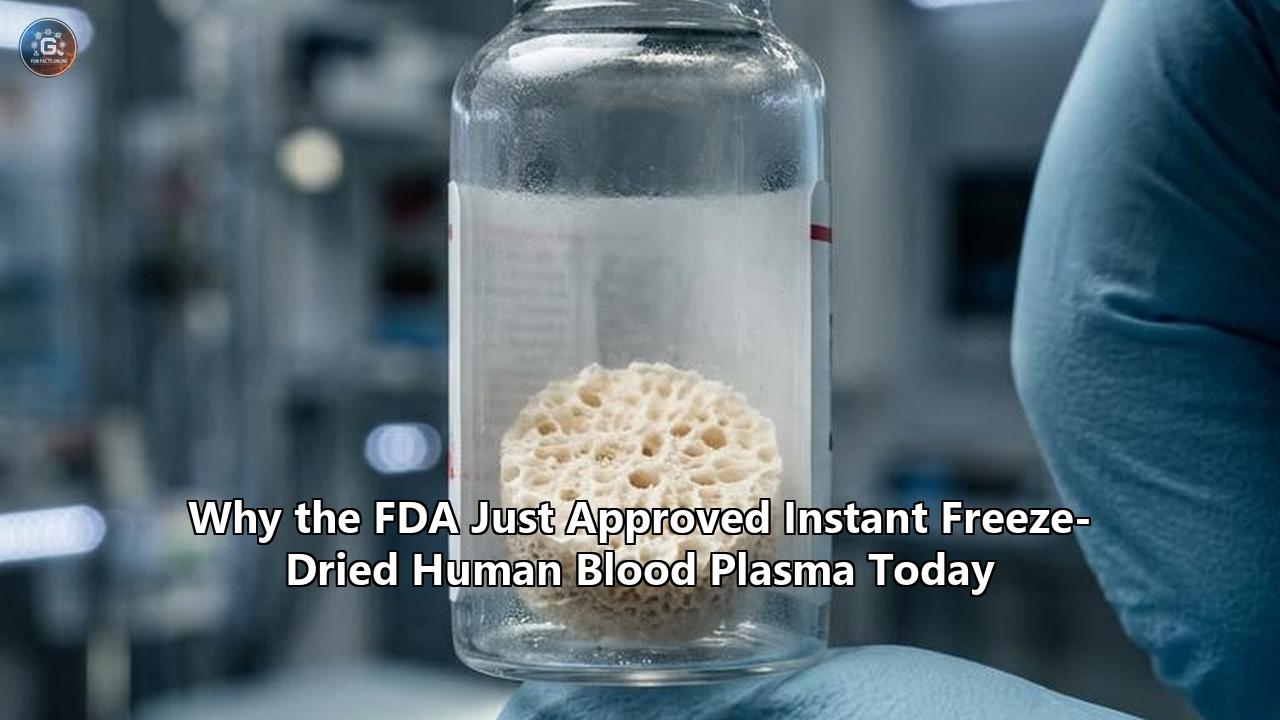
The U.S. Food and Drug Administration has granted a Biologics License Application (BLA) to Vascular Solutions LLC, a subsidiary of Teleflex Incorporated, for Ezplaz—the first commercial freeze-dried blood plasma licensed for clinical use in the United States.
The regulatory milestone establishes an immediate, room-temperature resuscitation option for patients suffering from massive hemorrhage and trauma-induced coagulopathy in environments where conventional frozen blood components cannot be stored or prepared in time. Derived from single-donor units of fresh frozen plasma collected at FDA-licensed blood establishments, Ezplaz is supplied as a dry powder packaged inside a flexible plastic bag alongside a 250-milliliter container of sterile water and dedicated transfer tubing. The entire kit reconstitutes into an injectable intravenous solution within 1 to 2.5 minutes, bypassing the mandatory 30-to-45-minute thawing cycles and mechanical water baths required by standard frozen plasma.
+----------------------------------------------------------------------------------------------------+
|                                 EZPLAZ PRODUCT SPECIFICATIONS                                      |
+----------------------------------------------------------------------------------------------------+
|  Regulatory Status:     Biologics License Application (BLA) Licensed by FDA CBER                   |
|  Manufacturer:          Vascular Solutions LLC (Teleflex Incorporated)                             |
|  Source Material:       Single-donor unit of Fresh Frozen Plasma (FFP)                             |
|  Packaging:             Flexible, impact-resistant polymer bag (glass-free)                       |
|  Reconstitution Fluid:  250 mL sterile water for injection                                         |
|  Reconstitution Time:   60 to 150 seconds (manual agitation)                                       |
|  Storage Range:         2°C to 25°C (36°F to 77°F); stable through ambient excursions              |
|  Licensed Shelf Life:   12 months at room temperature                                              |
|  Available ABO Types:   Universal Group AB; Group A with low-titer anti-B Isohemagglutinins        |
+----------------------------------------------------------------------------------------------------+
The approval addresses a physiological paradox in acute resuscitation: uncontrolled blood loss remains the primary cause of preventable death following severe physical trauma, yet the liquid plasma required to halt coagulation collapse is often logistically inaccessible during the first minutes of injury.
“Patients experiencing life-threatening bleeding in combat zones, disasters, rural settings, or other austere environments may now have faster access to plasma when conventional frozen plasma is unavailable,” stated Karim Mikhail, Acting Director of the FDA Center for Biologics Evaluation and Research (CBER). Anne Eder, Director of CBER’s Office of Blood Research and Review, highlighted that the review process balanced accelerated field utility with strict requirements for biologic stability, protein potency, and pathogen safety.
The clearance marks the operational transition of dried plasma from an experimental military countermeasure into civilian trauma networks, air medical fleets, and disaster stockpiles.
The Cold-Chain Problem in Emergency Transfusion
Plasma accounts for roughly 55 percent of human blood volume, serving as the biological transport medium for critical clotting factors, albumin, fibrinogen, and natural anticoagulants. When a patient suffers major mechanical trauma—whether from high-speed vehicular collisions, penetrating ballistic wounds, or industrial crushing—the rapid depletion of these proteins triggers Trauma-Induced Coagulopathy (TIC). TIC is an acute biochemical impairment where blood loses its ability to clot, driving persistent microvascular oozing and catastrophic blood loss.
                          TRAUMA-INDUCED COAGULOPATHY CASCADE

      +-----------------------------------------------------------------------+
      |               Major Mechanical Trauma & Tissue Disruption             |
      +-----------------------------------------------------------------------+
                                          |
                                          v
      +-----------------------------------------------------------------------+
      |     Uncontrolled Hemorrhage  --> Hypoperfusion & Tissue Hypoxia       |
      +-----------------------------------------------------------------------+
                                          |
                    +---------------------+---------------------+
                    |                                           |
                    v                                           v
      +---------------------------+               +---------------------------+
      |  Loss of Clotting Factors |               |   Anaerobic Metabolism    |
      |   & Circulating Platelets |               |   & Severe Lactic Acidosis|
      +---------------------------+               +---------------------------+
                    |                                           |
                    +---------------------+---------------------+
                                          |
                                          v
      +-----------------------------------------------------------------------+
      |       Endothelial Glycocalyx Breakdown & Systemic Hyperfibrinolysis   |
      +-----------------------------------------------------------------------+
                                          |
                                          v
      +-----------------------------------------------------------------------+
      |             LETHAL TRIAD: Coagulopathy + Acidosis + Hypothermia        |
      |               (Refractory Bleeding & Cardiovascular Arrest)           |
      +-----------------------------------------------------------------------+
For decades, international trauma consensus guidelines have mandated balanced Damage Control Resuscitation (DCR), administering packed red blood cells (PRBCs), plasma, and platelets in an approximate 1:1:1 ratio to reconstitute whole-blood properties and arrest coagulopathy.
Implementing this standard outside the walls of a tertiary hospital, however, has proven practically impossible due to standard blood banking storage constraints:
- Sub-Zero Freezing Requirements: Fresh Frozen Plasma (FFP) and Plasma Frozen Within 24 Hours (FP24) must be maintained at –18°C (–0.4°F) or colder to preserve labile clotting factors, specifically Factor V and Factor VIII.
- Thawing Delays: Standard hospital warm-water immersion baths or specialized radiofrequency/microwave plasma defrosters require between 25 and 45 minutes to safely transition a single unit of FFP to a liquid state without denaturing functional proteins.
- Liquid Perishability: Once thawed, liquid plasma can only be safely kept under strict refrigeration (1°C to 6°C) for 24 hours (for FFP) or up to 5 days (under the "Thawed Plasma" regulatory classification), after which coagulation factor activity drops significantly and bacterial proliferation risks rise.
- Logistical Waste in the Field: Rural ambulances, wilderness extraction teams, and forward-deployed military medics cannot realistically carry dedicated –18°C mechanical freezers or fluid-warming baths inside lightweight packs or standard transport vehicles.
Because of these logistical barriers, prehospital providers have historically relied on crystalloid fluids (such as 0.9% normal saline or lactated Ringer’s solution) to expand vascular volume during patient transit. Large crystalloid infusions dilute remaining coagulation factors, lower core body temperature, disrupt the endothelial glycocalyx, and induce hyperchloremic acidosis—inadvertently accelerating the "lethal triad" of trauma (hypothermia, acidosis, and coagulopathy).
By converting biologic plasma into a room-temperature stable, dry powder, freeze-drying eliminates the requirement for an uninterrupted sub-zero cold chain. The therapeutic payload can sit inside an emergency jump bag at standard ambient room temperatures (36°F to 77°F / 2°C to 25°C) for up to 12 months, ready for rapid reconstitution on the roadside, flight deck, or triage tent floor.
Technical Architecture: Lyophilization, Reconstitution, and Packaging
The manufacture of Ezplaz relies on advanced industrial lyophilization, a low-temperature dehydration process that extracts water through sublimation.
                                 THE EZPLAZ PACKAGING SYSTEM

       +------------------------------------+      +------------------------------------+
       |       LYOPHILIZED PLASMA BAG       |      |        STERILE DILUENT BAG         |
       |  - 1 Unit Single-Donor Powder      |      |  - 250 mL Sterile Water for        |
       |  - Sealed in multi-layer polymer   |      |    Injection                       |
       |  - Amber-tinted / light-resistant  |      |  - High-barrier clear film         |
       +------------------------------------+      +------------------------------------+
                          \                                  /
                           \                                /
                            v                              v
                    +----------------------------------------------+
                    |        CLOSED-SYSTEM TRANSFER SPIKE SET      |
                    |   (Direct fluid transfer via manual pressure)|
                    +----------------------------------------------+
                                           |
                                           v
                    +----------------------------------------------+
                    |          RECONSTITUTION (60-150 SEC)         |
                    |   - Rapid dissolution without clumping       |
                    |   - Restores native plasma tonicity & oncotic|
                    |     pressure (~290 mOsm/kg)                  |
                    +----------------------------------------------+
                                           |
                                           v
                    +----------------------------------------------+
                    |          STANDARD TRANSFUSION LINE           |
                    |   (Includes 170-micron clot-filter tubing)   |
                    +----------------------------------------------+
The Lyophilization Process
The manufacturing cycle begins with a single unit of human plasma collected via apheresis or whole-blood separation at FDA-inspected blood centers. The plasma is frozen rapidly to temperatures below its eutectic point (typically –35°C to –45°C), capturing protein structures in a solid, vitreous matrix.
The frozen unit is placed inside a sterile, high-vacuum chamber where primary drying occurs: chamber pressure drops below atmospheric levels, and controlled thermal energy is applied. Ice crystals within the plasma sublime directly from solid ice into water vapor, avoiding the liquid phase that could otherwise alter delicate coagulation proteins. A subsequent secondary drying phase desorbs bound water molecules until the residual moisture content of the powder falls below 2 percent.
The resulting dry cake preserves the biochemical integrity of albumin, fibrinogen, immunoglobulins, antithrombin III, and both labile (Factors V, VIII) and stable (Factors II, VII, IX, X) procoagulant proteins.
+----------------------------------------------------------------------------------------------------+
|                             DRIED VS. CONVENTIONAL PLASMA METRICS                                  |
+------------------------------------+--------------------------------+------------------------------+
| Parameter                          | Conventional Frozen (FFP/FP24) | Ezplaz Lyophilized (FDP)     |
+------------------------------------+--------------------------------+------------------------------+
| Physical State                     | Solid frozen block             | Amorphous dry cake/powder    |
| Storage Temperature Requirement    | –18°C (–0.4°F) or colder       | 2°C to 25°C (36°F to 77°F)   |
| Field Preparation Time             | 30 to 45 minutes (water bath)  | 1 to 2.5 minutes (shake)     |
| Cold-Chain Equipment Needed        | Sub-zero commercial freezer    | None (standard room temp)    |
| Shelf Life at Room Temperature     | None (<2 hours thawed/ambient) | 12 months                    |
| Container Material                 | Fragile low-temp PVC bag       | Multi-layer puncture polymer |
| Reconstitution Diluent Required    | None                           | 250 mL Sterile Water for Inj.|
| Single vs. Pooled Donor Risk       | Single donor                   | Single donor                 |
+------------------------------------+--------------------------------+------------------------------+
Package Engineering: The Move Away From Glass
A primary operational barrier of early twentieth-century dried plasma and modern foreign equivalents was container fragility. The French Army lyophilized plasma (FLyP) and German variants (LyoPlas N-w) have traditionally utilized vacuum-sealed glass bottles to prevent moisture vapor transmission. While glass provides an absolute gas and moisture barrier, it adds weight, is vulnerable to shattering during rough transport or parachute airdrops, and poses injury risks to medics operating in cramped vehicle cabins.
Teleflex and Vascular Solutions developed a sealed, flexible polymer bag system specifically engineered to resist mechanical puncture, drops, and vibrations. The proprietary polymer films feature barrier coatings that match the moisture and oxygen resistance of glass without the risk of physical breakage.
The closed reconstitution system allows the provider to spike the sterile water bag, transfer the diluent into the plasma chamber under closed aseptic conditions, mix the solution through gentle manual agitation, and immediately connect a standard blood-transfusion line equipped with a micro-aggregate filter.
ABO Antigen Considerations
Blood type compatibility is an operational challenge during emergency transfusions. Plasma carries antibodies (isohemagglutinins) against ABO red cell antigens:
- Group O individuals possess anti-A and anti-B antibodies in their plasma.
- Group A individuals possess anti-B antibodies.
- Group B individuals possess anti-A antibodies.
- Group AB individuals lack both anti-A and anti-B antibodies, making Group AB plasma the "universal donor" for plasma transfusions.
                   ABO PLASMA COMPATIBILITY LOGIC IN TRAUMA

     RECIPIENT BLOOD TYPE:          COMPATIBLE EZPLAZ PRODUCT FORMULATION:

     +-------------------+         +--------------------------------------------+
     |   Type AB (Any)   | <-----> | Group AB Ezplaz (Universal Plasma Recipient)|
     +-------------------+         +--------------------------------------------+
                                                         ^
     +-------------------+                               |
     |    Type A (Any)   | <-----------------------------+
     +-------------------+                               |
                                                         v
     +-------------------+         +--------------------------------------------+
     |    Type B (Any)   | <-----> | Low-Titer Group A Ezplaz                   |
     +-------------------+         | (Contains low levels of anti-B antibodies; |
                                   | safe for emergent use across all types)    |
     +-------------------+         +--------------------------------------------+
     |    Type O (Any)   | <-----------------------------+
     +-------------------+
Because true Group AB plasma represents less than 4 to 5 percent of the donor population, a supply constraint exists for universal AB plasma. The FDA license for Ezplaz authorizes two specific configurations to resolve this bottleneck:
- Group AB Plasma: The universal formulation, deployable immediately to any adult recipient regardless of recipient ABO type.
- Low-Titer Group A Plasma: Sourced from Group A donors rigorously screened to ensure low titers of naturally occurring anti-B isohemagglutinins. Extensive clinical trials in civilian trauma networks have demonstrated that low-titer Group A plasma can be safely administered to emergency trauma patients of unknown blood groups with minimal risk of clinically significant hemolysis.
Who Is Affected: Sector-by-Sector Impact Analysis
The introduction of fully licensed dried plasma alters logistics across multiple branches of emergency response, tactical medicine, and civilian hospital administration.
+----------------------------------------------------------------------------------------------------+
|                                SECTOR-BY-SECTOR IMPACT MATRIX                                      |
+----------------------+------------------------------------+----------------------------------------+
| Sector               | Operational Constraint Solved      | Key Practical Consequence              |
+----------------------+------------------------------------+----------------------------------------+
| Ground EMS           | No space/power for onboard freezers| Prehospital plasma administered at     |
| (Rural / Suburban)   | or plasma thawers in ambulances    | point of injury during long transports |
+----------------------+------------------------------------+----------------------------------------+
| HEMS (Air Medical)   | Weight penalties and wastage of    | Eliminates daily discard/rotation of   |
|                      | short-dated liquid thawed plasma   | unused thawed plasma units             |
+----------------------+------------------------------------+----------------------------------------+
| Military Medicine    | Contested logistics & dispersed    | Medics carry shelf-stable plasma in    |
| (DoD / Coalition)    | units far from surgical hospitals  | rucksacks for field transfusions       |
+----------------------+------------------------------------+----------------------------------------+
| Critical Access      | Small blood banks cannot justify   | Immediate on-demand plasma for acute   |
| Rural Hospitals      | thawing plasma with 5-day expiry   | stabilization prior to transfer        |
+----------------------+------------------------------------+----------------------------------------+
| Disaster Response    | Cold-chain failures during grid    | Resilient emergency stockpiles for     |
| (FEMA / Mass-Casualty)| collapse or mass-casualty events   | remote triage and mobile field units   |
+----------------------+------------------------------------+----------------------------------------+
1. Ground Emergency Medical Services and Rural Providers
For decades, the standard of care in civilian prehospital transport has been fundamentally split by geography. Urban trauma systems with transport times under 10 minutes can rush a hemorrhaging patient directly to a Level I trauma center's open massive transfusion protocol.
In contrast, rural and suburban Emergency Medical Services (EMS) agencies face transit times exceeding 30 to 60 minutes. Outside of elite helicopter EMS programs, ground ambulances rarely stock liquid plasma due to the high cost of discarded expired inventory:
- Liquid thawed plasma expires in five days, creating unsustainable wastage costs for low-volume rural services.
- Freeze-dried blood plasma eliminates this shelf-life wastage by providing a 12-month room-temperature horizon.
- Rural paramedics can initiate procoagulant factor replacement within minutes of arriving on scene, keeping a patient stable through prolonged transport to a regional surgical hospital.
2. Helicopter Emergency Medical Services (HEMS)
Air medical services are the primary civilian users of prehospital blood products. Many flight programs carry two units of packed red blood cells and two units of thawed liquid plasma in validated passive coolers.
However, managing liquid plasma on aircraft introduces operational challenges:
- Coolers require precise thermal logging and frequent ice-pack exchanges.
- Unused thawed units must be continuously returned and rotated through central hospital blood banks to prevent expiration.
- Ezplaz allows flight crews to preserve limited cooler payload space exclusively for PRBCs or whole blood while storing dried plasma in ambient cabinet compartments, expanding total onboard transfusion capacity without adding weight or thermal management complexity.
3. Military Medical Operations and Contested Logistics
The operational doctrine of the U.S. Armed Forces has evolved toward Distributed Maritime Operations and Agile Combat Employment across remote island chains and dispersed forward locations. In these distributed scenarios, air superiority and rapid medical evacuation (the "Golden Hour" standard achieved in Iraq and Afghanistan) are no longer guaranteed.
Casualties may require Prolonged Casualty Care (PCC) at the point of injury for 24 to 72 hours before evacuation:
- Medics operating in small tactical units cannot carry bulky freezers or liquid blood coolers across hundreds of miles of austere terrain.
- Ezplaz allows individual combat medics, corpsmen, and forward surgical teams to carry multiple units of freeze-dried blood plasma inside their standard medical rucksacks, enabling immediate point-of-injury resuscitation.
                     MILITARY RESUSCITATION LOGISTICS EVOLUTION

       HISTORICAL THEATER MODEL                  FUTURE DISTRIBUTED THEATER MODEL
         (Hub-and-Spoke System)                   (Contested / Austere Operations)

     +-----------------------------+              +------------------------------+
     |   Central Combat Hospital   |              | Isolated Forward Medic Team  |
     |   - Massive sub-zero storage|              | - No electrical power/freezers|
     |   - Industrial plasma thawer|              | - Rucksack-carried kit       |
     +-----------------------------+              +------------------------------+
                    |                                            |
         (Dedicated Medevac Aero)                       (Immediate Field Mix)
                    v                                            v
     +-----------------------------+              +------------------------------+
     |   Golden Hour Evacuation    |              | Point-of-Injury Reconstitution|
     |  (Transit within 60 mins)   |              | (Ezplaz infusion in 2 mins)  |
     +-----------------------------+              +------------------------------+
4. Critical Access and Community Hospitals
The United States features over 1,300 designated Critical Access Hospitals (CAHs)—facilities with 25 or fewer beds located more than a 35-mile drive from another hospital.
Maintaining an active blood bank with thawed plasma is cost-prohibitive for these facilities. When an unstable trauma patient or an individual suffering an acute gastrointestinal bleed arrives, local staff must wait nearly an hour to thaw frozen units while the patient continues to bleed. With licensed dried plasma, these emergency departments can reconstitute multiple units on demand at the bedside, stabilizing patients before transferring them to tertiary regional facilities.
Clinical Evidence and Resuscitation Science
The FDA's decision to grant a biologics license to Ezplaz is grounded in a deep body of physiological research and prehospital clinical trials establishing the therapeutic necessity of early plasma administration.
+----------------------------------------------------------------------------------------------------+
|                         KEY CLINICAL TRIALS IN PREHOSPITAL PLASMA                                  |
+-------------------------+-------------------------+------------------------------------------------+
| Trial Name / Citation   | Cohort Size & Design    | Key Finding & Clinical Significance            |
+-------------------------+-------------------------+------------------------------------------------+
| PAMPer Trial            | 501 Patients            | 30-day mortality dropped from 33.0% to 23.2%   |
| (Sperry et al., NEJM)   | Randomized, Prehospital | (9.8% absolute reduction) when plasma was      |
|                         | Thawed Plasma vs Std    | initiated in flight during transport.          |
+-------------------------+-------------------------+------------------------------------------------+
| COMBAT Trial            | 144 Patients            | In short urban transit (<15 min), early plasma |
| (Moore et al., Lancet)  | Randomized, Prehospital | showed no significant survival difference,     |
|                         | Urban Ground Transport  | proving benefits depend on transport time.     |
+-------------------------+-------------------------+------------------------------------------------+
| RePHILL Trial           | 432 Patients            | Re-emphasized that prehospital intervention    |
| (Crombie et al., Lancet)| Prehospital Lyophilized | must be paired with structured massive         |
|                         | Plasma & Red Cells      | transfusion protocols to maximize outcomes.    |
+-------------------------+-------------------------+------------------------------------------------+
| Ezplaz Phase 1 Safety   | 24 Healthy Adults       | Established bioequivalence, factor recovery,   |
| (FDA BLA Clinical Data) | Dose-Escalating Safety  | and safety profile matching frozen plasma.     |
+-------------------------+-------------------------+------------------------------------------------+
The PAMPer and COMBAT Trials
The clinical rationale for prehospital plasma was clarified by two landmark randomized controlled trials:
- The PAMPer Trial (Prehospital Air Medical Plasma): Conducted across regional air medical systems in the U.S. and published in the New England Journal of Medicine, this study randomized trauma patients at risk of hemorrhagic shock to receive either two units of prehospital thawed plasma or standard care during helicopter flight. The trial showed an absolute mortality reduction of 9.8 percent (30-day mortality fell from 33.0% in the standard care group to 23.2% in the plasma group, $p=0.03$). The authors concluded that early prehospital plasma reduces subsequent multi-organ failure and systemic inflammation.
- The COMBAT Trial (Control of Major Bleeding After Trauma): Published in The Lancet, this trial evaluated prehospital plasma administration in an urban ground EMS system with very short transport times (median transport time under 16 to 19 minutes). Unlike PAMPer, COMBAT did not observe a statistically significant 28-day survival advantage between the cohorts.
Synthesizing these findings, trauma researchers realized that prehospital plasma's benefit scales directly with prehospital transport duration:
$$\text{Therapeutic Benefit} \propto \text{Transit Time to Surgical Intervention}$$
When surgical hemorrhage control is delayed beyond 15 to 20 minutes, early plasma infusion acts as a physiological bridge, maintaining microvascular perfusion, restoring the glycocalyx lining of blood vessels, and preventing the onset of refractory coagulopathy. Because freeze-dried plasma can be stored anywhere, it brings the survival benefits identified in the PAMPer trial to remote rural ambulances, offshore maritime teams, and forward combat medics who operate well outside short urban transit times.
                     PREHOSPITAL PLASMA SURVIVAL CORRELATION

     Mortality Rate (%)
       40% |
           |      /------------------- Standard Resuscitation (Crystalloids/PRBCs)
       30% |     /
           |    /                     -------------------- Early Plasma Infusion
       20% |   /                      (Preserves Clotting Factors & Glycocalyx)
           |  /
       10% | /
           |/_____________________________________________
           0 min        15 min         30 min        60+ min
                                Transport Time
Urgent Warfarin Reversal
Beyond physical trauma, the FDA approved Ezplaz for adult patients requiring plasma transfusion when alternative products are unavailable, explicitly noting its utility in emergent warfarin reversal. Warfarin acts as a Vitamin K antagonist, depleting functional Factors II, VII, IX, and X.
When an anticoagulated patient suffers an acute intracranial hemorrhage or severe internal bleeding, reversing the anticoagulant effect is a clinical emergency:
- While Prothrombin Complex Concentrates (PCC) are preferred when stocked, rural emergency clinics and austere aid stations rarely have access to expensive factor concentrates.
- Ezplaz provides functional clotting factors to restore hemostasis without the delays of ordering and thawing frozen blood components.
Historical Precedents and Safety Engineering
The clinical concept of drying plasma is not new; rather, its history spans more than eight decades of military medical history, viral discovery, and manufacturing evolution.
+----------------------------------------------------------------------------------------------------+
|                                 DRIED PLASMA TIMELINE: 1940–2026                                   |
+----------------------------------------------------------------------------------------------------+
|  1940–1945: World War II Deployment                                                                |
|  - Dr. Charles Drew and Edwin Cohn develop large-scale plasma pooling and lyophilization.         |
|  - Millions of glass-bottled dried plasma units deployed across European and Pacific theaters.     |
+----------------------------------------------------------------------------------------------------+
                                                  |
                                                  v
|  1950–1968: The Viral Crisis & Withdrawal                                                          |
|  - Post-war surveillance reveals severe outbreaks of serum hepatitis (Hepatitis B and C).         |
|  - Pooling hundreds of donor units meant one contaminated donor ruined entire batches.             |
|  - U.S. military and civilian authorities abandon pooled dried plasma products.                   |
+----------------------------------------------------------------------------------------------------+
                                                  |
                                                  v
|  1994–2010: European Modernization & Pathogen Reduction                                            |
|  - French Military Health Service (CTSA) develops FLyP with solvent/detergent & pathogen reduction.|
|  - German Red Cross deploys single-donor lyophilized plasma (LyoPlas N-w).                        |
+----------------------------------------------------------------------------------------------------+
                                                  |
                                                  v
|  2011–2018: Special Operations EUA Framework                                                       |
|  - U.S. Special Operations Command utilizes French FLyP under FDA Expanded Access & EUA.          |
|  - Congress passes Public Law 115-92, directing DoD-FDA partnership for priority countermeasures.  |
+----------------------------------------------------------------------------------------------------+
                                                  |
                                                  v
|  2024–2026: Commercial Licensure Achieved                                                          |
|  - FDA issues EUA for OctaplasLG Powder (Aug 2024).                                                |
|  - FDA grants full Biologics License Application (BLA) for Ezplaz (July/August 2026).              |
+----------------------------------------------------------------------------------------------------+
The World War II Legacy and the Viral Bottleneck
During the early 1940s, pioneering work by Dr. Charles Drew and physical chemist Edwin Cohn led to the mass production of freeze-dried blood plasma for Allied armed forces. Packaged in vacuum-sealed glass containers with sterile water and rubber tubing, dried plasma saved tens of thousands of lives on the battlefields of Europe and the Pacific.
However, the manufacturing technique relied on pooling thousands of plasma donations into massive industrial vats before lyophilization. At the time, diagnostic tests for blood-borne viruses did not exist:
- A single unit of plasma contaminated with Hepatitis B or Hepatitis C contaminated the entire pooled batch.
- Following the war, epidemiological investigations revealed high rates of transfusion-transmitted viral hepatitis among returning veterans.
- The catastrophic incidence of serum hepatitis forced medical authorities to withdraw pooled dried plasma products, leading to the strict adoption of single-donor Fresh Frozen Plasma maintained under rigorous cold chains.
Modern Safety: The Single-Donor Architecture
Ezplaz addresses this historical risk through a single-donor manufacturing design:
- Unlike pooled formulations, each unit of Ezplaz is manufactured from a single, discrete donation of fresh frozen plasma obtained from a fully screened donor at an FDA-licensed blood establishment.
- Every individual donation undergoes testing for viral markers, including nucleic acid testing (NAT) for HIV-1/2, Hepatitis B (HBV), Hepatitis C (HCV), West Nile Virus (WNV), and Zika virus, along with serological screening for syphilis, Chagas disease, and Human T-cell Lymphotropic Virus (HTLV-I/II).
- Because units are not co-mingled during processing, the mathematical risk of cross-contamination across batches is eliminated.
Clinical Safety Profile in Healthy Volunteers
The BLA licensure was supported by comprehensive biochemical characterization, stability profiling, and a clinical safety and tolerability trial in 24 healthy adult volunteers. The study compared escalating doses of reconstituted Ezplaz with standard Fresh Frozen Plasma:
- No deaths, severe adverse events, or systemic anaphylactic responses were reported.
- Treatment-emergent adverse events were mild to moderate, matching typical reactions observed with standard plasma infusions.
- Post-transfusion recovery of key coagulation factors (Fibrinogen, Factors II, V, VII, VIII, IX, X, XI, Protein C, and Protein S) matched the physiological reference ranges of liquid FFP.
+----------------------------------------------------------------------------------------------------+
|                         LABORATORY BIOEQUIVALENCE COMPARISON                                       |
+------------------------------------+--------------------------------+------------------------------+
| Hemostatic Parameter               | Fresh Frozen Plasma (Control)  | Reconstituted Ezplaz (FDP)   |
+------------------------------------+--------------------------------+------------------------------+
| Factor V Activity Recovery (%)     | 85% – 100% (Baseline)          | 82% – 96% of Baseline        |
| Factor VIII Activity Recovery (%)  | 80% – 100% (Baseline)          | 78% – 94% of Baseline        |
| Fibrinogen Concentration           | 200 – 400 mg/dL                | Fully Preserved (>95%)       |
| Antithrombin III Levels            | Normal reference range         | Intact physiological activity|
| Reconstitution Turbidity           | N/A                            | Clear / Non-particulate      |
| pH Balance                         | 7.2 – 7.6                      | 7.3 – 7.5                    |
+------------------------------------+--------------------------------+------------------------------+
As part of the BLA terms, the FDA is requiring ongoing post-marketing surveillance to evaluate real-world thromboembolic risk profiles, transfusion-related acute lung injury (TRALI) rates, and outcomes across heterogeneous civilian trauma cohorts.
Regulatory and Legislative Foundations
The licensure of Ezplaz represents the end result of an intentional, multi-year legislative strategy designed to close operational gaps between battlefield military requirements and civilian drug approval pipelines.
                     THE REGULATORY PATHWAY TO BLA LICENSURE

     +------------------------------------------------------------------------+
     |                 Public Law 115-92 (Passed Dec 2017)                    |
     |   - Authorized formal DoD-FDA collaboration for priority medical       |
     |     countermeasures to protect military forces in combat.              |
     +------------------------------------------------------------------------+
                                          |
                                          v
     +------------------------------------------------------------------------+
     |             FDA Guidance for Industry on Dried Plasma (2019)           |
     |   - Outlined clinical, manufacturing, and stability criteria for       |
     |     single-donor and pooled lyophilized plasma approvals.              |
     +------------------------------------------------------------------------+
                                          |
                                          v
     +------------------------------------------------------------------------+
     |               Emergency Use Authorizations (2018–2024)                 |
     |   - French FLyP authorized for tactical military operations.           |
     |   - OctaplasLG Powder authorized for battlefield combat casualties.    |
     +------------------------------------------------------------------------+
                                          |
                                          v
     +------------------------------------------------------------------------+
     |         Full Biologics License Application (BLA) Approval (2026)       |
     |   - Ezplaz becomes first fully licensed commercial FDP in the U.S.     |
     |   - Authorizes nationwide civilian and military commercial distribution|
     +------------------------------------------------------------------------+
Public Law 115-92 and the DoD-FDA Partnership
Following years of operational frustration in which U.S. special operations forces relied on French-manufactured dried plasma under special regulatory mechanisms, Congress enacted Public Law 115-92 in December 2017. The statute authorized the Department of Defense (DoD) to work directly with the FDA to expedite the review of life-saving medical products intended for combat casualties.
Freeze-dried plasma was designated one of the highest-priority medical countermeasures under this authority. Through joint funding and logistical coordination involving the U.S. Army Medical Research and Development Command (USAMRDC), the Biomedical Advanced Research and Development Authority (BARDA), and commercial partners, the program established clear testing benchmarks to satisfy CBER safety standards. In 2019, the FDA issued dedicated regulatory guidance detailing expectations for chemistry, manufacturing, and controls (CMC), reconstitution mechanics, and pathogen safety for dried plasma products, paving the way for the full BLA clearance.
Economic, Supply Chain, and Implementation Dynamics
While the clinical and logistical benefits of dried plasma are clear, the widespread adoption of Ezplaz will depend on manufacturing economics, hospital blood-bank reimbursement models, and EMS system implementation budgets.
+----------------------------------------------------------------------------------------------------+
|                         ECONOMIC & OPERATIONAL TRADE-OFF COMPARISON                                |
+------------------------------------+--------------------------------+------------------------------+
| Factor                             | Liquid / Frozen Plasma Stock   | Ezplaz Dried Plasma System   |
+------------------------------------+--------------------------------+------------------------------+
| Unit Acquisition Cost              | Low ($60 – $110 per unit)      | Higher (Specialized packaging|
|                                    |                                | & lyophilization processing) |
+------------------------------------+--------------------------------+------------------------------+
| Wastage & Expiration Cost          | High (Liquid expires in 5 days;| Near Zero (12-month ambient  |
|                                    | unused units routinely dumped) | shelf-life minimizes waste)  |
+------------------------------------+--------------------------------+------------------------------+
| Capital Equipment Costs            | High (Requires freezers, thaw  | Minimal (No electrical cold  |
|                                    | baths, validated transport box)| chain or thawers required)   |
+------------------------------------+--------------------------------+------------------------------+
| Prehospital Feasibility            | Restricted to high-volume air  | Universal across all ground, |
|                                    | medical flight services        | air, rural, and tactical EMS |
+------------------------------------+--------------------------------+------------------------------+
The Cost-vs-Wastage Calculation
Conventional Fresh Frozen Plasma carries a low upfront acquisition cost from regional blood centers, typically ranging from $60 to $110 per unit. However, maintaining that unit in a liquid, pre-thawed state for rapid deployment creates a steep wastage curve:
$$\text{Total Cost of Ownership} = \text{Acquisition Cost} + \text{Cold-Chain Infrastructure} + \text{Wastage from 5-Day Expiration}$$
Because thawed plasma must be discarded after 5 days if unused, low-volume rural EMS agencies and community hospitals often discard a large percentage of their inventory.
Ezplaz carries a higher initial unit manufacturing cost due to the specialized cleanroom lyophilization cycle, sterile water co-packaging, and barrier polymer bag design. Yet, because its shelf-life extends to a full year at room temperature, the total cost of ownership over a 12-month cycle can be lower for rural services, wilderness rescue teams, and disaster response caches where transfusions occur infrequently.
Operational Rollout Challenges for Civilian EMS
For emergency medical directors and blood bank supervisors, integrating Ezplaz requires updates to protocol and operational infrastructure:
- State Scope-of-Practice Rules: In several states, existing emergency medical services legislation restricts the administration of blood products to critical care transport nurses or flight paramedics. State medical boards will need to update regional paramedic scopes of practice to authorize the reconstitution and administration of dried plasma on standard ground units.
- Blood Tracking and Biovigilance Integration: Because Ezplaz is a licensed human biologic, every unit must be tracked through individual donor identification numbers in compliance with FDA biovigilance, transfusion-reaction reporting, and recall standards. EMS agencies must integrate digital scanning systems to link the barcode of each reconstituted kit directly to the patient's Electronic Health Record (EHR).
- Training on Sterile Rapid Mixing: Although reconstitution takes under 2.5 minutes, prehospital providers must practice closed-system fluid transfer under austere, poorly lit conditions to prevent touch contamination of spike ports or rapid shaking that creates air-bubble frothing.
Future Trajectory: What to Watch Next
The licensing of Ezplaz establishes a regulatory foundation for a new generation of shelf-stable blood products and resuscitation tools.
                           THE AUSTERE RESUSCITATION ROADMAP

     CURRENT MILESTONE               MID-TERM DEVELOPMENTS             LONG-TERM HORIZON
        (2026–2027)                       (2027–2029)                     (2030 & Beyond)

     +-------------------+         +-----------------------+         +-----------------------+
     | Commercial Rollout|         | Spray-Dried Plasma    |         | Lyophilized Whole     |
     | of Single-Donor   | ------> | & Large-Volume Pools  | ------> | Blood Reconstitution  |
     | Ezplaz Kits       |         | (Expanded Supply)     |         | Systems               |
     +-------------------+         +-----------------------+         +-----------------------+
               |                               |                                 |
               v                               v                                 v
     +-------------------+         +-----------------------+         +-----------------------+
     | Civilian EMS      |         | Freeze-Dried Platelet |         | Fully Synthetic       |
     | Protocol Revisions|         | Analogs & Fibrinogen  |         | Hemostatic Resuscitant|
     | & State Clearances|         | Concentrates in Field |         | Formulations          |
     +-------------------+         +-----------------------+         +-----------------------+
Upcoming Milestones and Unresolved Questions
- Manufacturing Capacity and Blood Supply Scaling: The primary supply-chain constraint will be the speed at which Vascular Solutions and Teleflex can scale industrial freeze-drying lines to fulfill combined military, civilian hospital, and EMS orders without impacting standard blood component reserves.
- Pediatric Indications: Ezplaz is currently licensed exclusively for adult patients. Trauma remains a leading cause of death in pediatric populations; clinical studies evaluating weight-based dosing, reconstitution concentrations, and volume safety in pediatric trauma cohorts represent an important clinical next step.
- Complementary Freeze-Dried Platelets and Whole Blood: While dried plasma addresses coagulation factor deficiency, full hemostasis also requires functional platelets and oxygen-carrying erythrocytes. Clinical trials funded by BARDA and the DoD are actively evaluating lyophilized platelet-derived hemostatic agents and spray-dried whole-blood formulations.
- Integration with Cold-Stored Platelets and Low-Titer O Whole Blood (LTOWB): In advanced trauma centers, Ezplaz will likely be integrated into hybrid resuscitation strategies—serving as the immediate prehospital factor-replacement bridge until whole blood or packed red cells can be established.
The FDA approval of Ezplaz marks the resolution of an eight-decade logistical challenge in emergency transfusion medicine. By decoupling life-saving human plasma from the constraints of sub-zero freezers and lengthy thawing baths, the licensing allows emergency teams to deliver advanced hemostatic resuscitation directly to the point of injury.
Reference:
- https://www.fda.gov/apology_objects/abuse-detection-apology.html
- https://www.epocrates.com/online/article/fda-clears-first-freeze-dried-plasma-for-emergency-transfusion
- https://www.sciencealert.com/the-fda-just-approved-the-first-us-freeze-dried-plasma-ready-in-minutes
- https://www.youtube.com/watch?app=desktop&v=Z-4u462b7K0
- https://www.hcplive.com/view/fda-issues-emergency-use-authorization-for-military-use-of-freezedried-plasma
- https://pmc.ncbi.nlm.nih.gov/articles/PMC7169678/
- https://ashpublications.org/ashclinicalnews/news/4047/Freeze-Dried-Plasma-Approved-for-Battlefield
- https://www.jems.com/ems-operations/fda-approves-first-freeze-dried-plasma-for-use-in-emergencies-remote-care/
- https://pmc.ncbi.nlm.nih.gov/articles/PMC10389493/