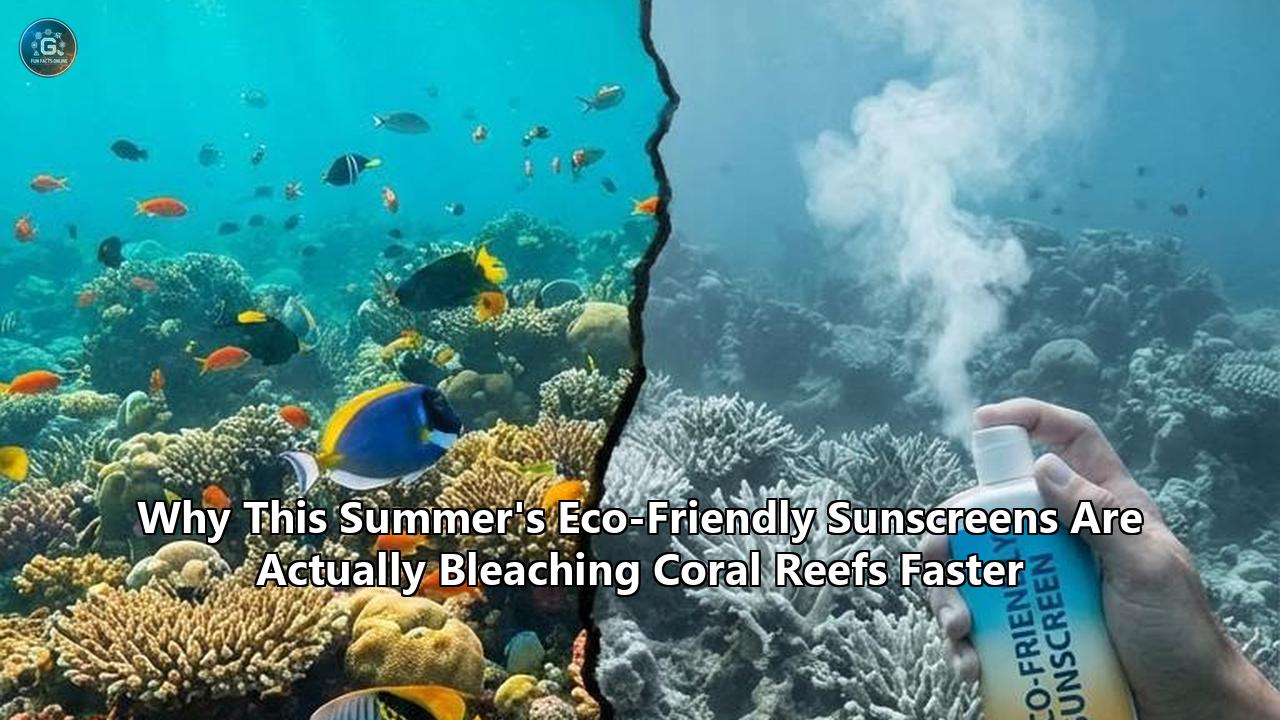
As coastal tourism surges in the spring of 2026, a bitter ecological paradox is washing over the world’s most fragile marine environments. For the past half-decade, environmentally conscious consumers have dutifully swapped their traditional chemical sunblocks for mineral alternatives, confident that ingredients like zinc oxide were the key to protecting vulnerable marine ecosystems. Millions of bottles stamped with the words "reef-safe" have been applied on the beaches of Hawaii, the Florida Keys, and the Great Barrier Reef. Yet, recent marine toxicology data reveals a devastating reality: the very formulations engineered to serve as an eco friendly sunscreen coral reefs defense mechanism are, under specific conditions, accelerating coral bleaching faster than the chemicals they replaced.
The revelation hinges on the complex behavior of mineral nanoparticles when exposed to ultraviolet radiation in marine environments. While the cosmetic industry successfully eliminated older, highly scrutinized chemical filters from their "green" product lines, they replaced them with active ingredients that trigger a distinctly different, yet equally lethal, biological cascade in reef-building corals.
As regulators, marine biologists, and dermatologists scramble to address this formulation crisis, a fierce debate has emerged. By comparing the mechanisms of traditional chemical filters with those of modern mineral nanoparticles, analyzing the sluggish pace of federal regulatory approvals for safer synthetic alternatives, and evaluating the extreme tradeoffs between human dermatological protection and ecological preservation, a clear picture forms. The crisis facing coral reefs in 2026 is not merely a failure of consumer choice, but a catastrophic misalignment between chemical engineering, environmental testing, and federal policy.
The Anatomy of a Sunscreen Ban: How We Arrived at the Mineral Mandate
To understand the current crisis, one must examine the baseline from which the cosmetic industry pivoted. For decades, the global sunscreen market relied heavily on organic (carbon-based) chemical filters, most notably oxybenzone and octinoxate. These compounds are highly efficient at absorbing ultraviolet radiation and dissipating it as low-level heat, providing excellent, cosmetically elegant protection for human skin without leaving a visible residue.
However, early ecotoxicology studies, gaining intense momentum around 2008 and peaking in legislative action by 2018, exposed the severe collateral damage these chemicals inflicted on marine life. Oxybenzone, in particular, operates as a potent skeletal endocrine disruptor in corals. When planulae (swimming coral larvae) are exposed to oxybenzone, the chemical forces them to encase themselves in their own skeletons prematurely, a fatal deformation that entirely halts reef regeneration. Furthermore, these traditional chemical filters were shown to induce DNA damage in adult corals and activate latent viral infections within the zooxanthellae—the symbiotic microalgae that live within coral tissues and provide them with both their vibrant colors and their primary source of photosynthetic energy.
The response was swift and definitive. Jurisdictions deeply reliant on reef tourism, beginning with the state of Hawaii and followed by municipalities like Key West, Florida, enacted sweeping bans on the sale of sunscreens containing oxybenzone and octinoxate. This legislative action forced an unprecedented industry pivot. Cosmetic formulators abandoned the scrutinized chemical filters and rushed toward inorganic (mineral) physical blockers, primarily zinc oxide (ZnO) and titanium dioxide (TiO2).
The contrast between the two approaches seemed straightforward: while chemical filters absorb into the skin and chemically neutralize UV rays, mineral filters were designed to sit on top of the skin, acting as a physical shield that scatters and reflects UV radiation. Because these minerals are naturally occurring earth elements, they were universally branded as the ultimate eco friendly sunscreen coral reefs solution. Consumers were taught a simple binary: chemical equals toxic, mineral equals safe. The reality of nanomaterial physics, however, has proven to be far more destructive.
The Nanoparticle Compromise: Invisible Protection, Visible Destruction
The primary tradeoff of mineral sunscreens has always been aesthetic. In their natural, macroscopic form, zinc oxide and titanium dioxide are highly opaque, leaving a thick, chalky white cast on the skin. For lifeguards and surfers, this was acceptable; for the mass consumer market, it was a commercial death sentence. To resolve the white cast dilemma while maintaining the mineral classification, cosmetic chemists turned to nanotechnology.
By milling zinc oxide down to the nanoparticle level—often less than 35 nanometers in diameter—formulators achieved the holy grail of physical sunscreens: a mineral lotion that applies entirely clear. But this engineering triumph introduced a fatal ecological flaw. When particle sizes drop below 100 nanometers, they cross a critical biological threshold in the marine environment.
Microscopic coral polyps, which feed by capturing passing particles in the water column, cannot distinguish between suspended organic matter and nano-zinc. The nanoparticles are ingested directly into the coral tissue. While non-nano formulations (particles larger than 100 nanometers) simply sink into the sediment and remain largely biologically inert, nano-sized mineral filters are highly bioavailable, accumulating rapidly within the delicate tissues of the reef.
Once inside the coral, the true destructive potential of zinc oxide is unleashed. A landmark 2018 study led by marine researcher Roberto Corinaldesi, which serves as the foundation for the current 2026 data, demonstrated the severe toxicity of uncoated zinc oxide nanoparticles. When exposed to concentrations of just 6.3 milligrams per liter—half of the maximum inorganic UV filter limit permitted in US and European sun creams—corals experienced a catastrophic release of zooxanthellae within 48 hours. The rapid expulsion of these symbiotic algae results in severe, accelerated bleaching, stripping the coral of its primary nutrient source.
The Chemistry of Betrayal: Reactive Oxygen Species and Persistent Free Radicals
The biological rejection of zooxanthellae is not a random reaction to heavy metals; it is the result of intense oxidative stress triggered by the specific photocatalytic properties of zinc oxide. Comparing the mechanism of oxybenzone damage with that of nano-zinc reveals a dark irony. While oxybenzone poisons the coral's genetic and hormonal pathways, nano-zinc effectively burns the coral from the inside out using the very sunlight it is meant to block.
Zinc oxide and titanium dioxide are semiconductors. When these nanoparticles are illuminated by ambient ultraviolet light in shallow reef waters, the UV energy excites electrons within the mineral lattice, causing them to jump across the band gap. This creates what physicists call "electron-hole pairs." In the surrounding aqueous environment, these excited electrons react aggressively with water (H2O) and dissolved oxygen (O2) to generate Reactive Oxygen Species (ROS), primarily superoxide anions and highly destructive hydroxyl radicals.
These free radicals are violently unstable, tearing through the cellular membranes of the coral host and its symbiotic algae in a process known as lipid peroxidation. The coral, overwhelmed by the sudden spike in cellular toxicity, ejects the damaged zooxanthellae in a desperate bid to survive, resulting in the ghostly white appearance of a bleached reef.
But the situation escalated late last year. In late 2025, environmental chemists discovered a secondary, even more insidious mechanism of mineral sunscreen toxicity. While previous models assumed that ROS generation stopped the moment the sun went down or the nanoparticles drifted into shaded waters, new data revealed that commercial mineral formulations generate substantial amounts of Persistent Free Radicals (PFRs). Unlike transient ROS, which last only fractions of a second, PFRs remain active and destructive long after light exposure ends.
Strikingly, while water exposure typically reduces radical formation in most chemical mixtures, the 2025 research demonstrated that in zinc-oxide-only mineral sunscreens, the generation of Persistent Free Radicals actually increases in an aqueous environment. When irradiated underwater, zinc-only formulas produced twice the radical signal observed under ambient air. This discovery shattered the foundational premise of the mineral mandate. The "reef-safe" zinc oxide washing off millions of swimmers was not only generating oxidative stress during the heat of the day, but it was actively continuing to degrade coral tissue through the night.
Climate Synergy: The Thermal Accelerator
The toxicity of these new-generation sunscreens cannot be viewed in a vacuum. The Spring of 2026 is seeing ocean temperatures operating at the upper thresholds of historical norms. When evaluating the impact of any chemical pollutant on a coral reef, one must compare the baseline tolerance of a healthy reef to the severely compromised tolerance of a thermally stressed reef.
Coral bleaching is fundamentally a generalized stress response. When ocean temperatures rise just 1 to 2 degrees Celsius above the normal summer maximum, the photosynthetic machinery of the zooxanthellae begins to malfunction, producing excess oxygen radicals even without the presence of pollutants. When thermal stress is combined with the photocatalytic oxidative stress generated by zinc oxide nanoparticles, a lethal synergy occurs.
In laboratory conditions with optimal water temperatures (around 25°C), studies have shown that corals can sometimes tolerate low-level zinc exposure (up to 10 micrograms per liter) with only mild alterations to photosynthetic efficiency. However, as temperatures approach 30°C, the coral's natural antioxidant defenses—specifically enzymes like superoxide dismutase—are already stretched to their absolute limits fighting thermal oxidative stress.
Introducing a surge of zinc-generated Persistent Free Radicals into this precarious environment collapses the coral's remaining defenses. The threshold for toxicity plummets. Concentrations of nanoparticles that would be considered sublethal in cool water become rapidly fatal in the warm waters of 2026. This dynamic explains why the sudden influx of "eco-friendly" mineral sunscreens in highly trafficked, thermally stressed tourist zones like the Florida Keys is triggering highly localized, hyper-accelerated bleaching events that outpace regional thermal bleaching models. The cure is acting as a catalyst for the disease.
The Regulatory Mirage: What Does "Reef Safe" Actually Mean?
If the science is clear that certain mineral formulations are actively harming the reefs, why are they still universally marketed as ecological saviors? The answer lies in a staggering regulatory vacuum.
In the United States, and across much of the globe, there is absolutely no standardized, legally enforceable definition for an eco friendly sunscreen coral reefs product. The term "reef-safe" is a marketing invention, not a toxicological certification. When local jurisdictions like Hawaii banned oxybenzone, cosmetic brands simply replaced the illegal chemical with zinc oxide, slapped a green turtle logo and the words "Reef Safe" on the bottle, and shipped them back to the islands.
Compare this purely reactive, localized legislative approach with the rigorous drug approval frameworks required for human safety. The U.S. Food and Drug Administration (FDA) stringently regulates sunscreen as an Over-the-Counter (OTC) drug. A manufacturer cannot simply invent a new UV filter and sell it for human use without years of clinical trials proving it does not cause skin irritation or systemic toxicity. Yet, when it comes to environmental impact, the FDA requires virtually no ecotoxicity testing for OTC sunscreen monographs.
This has left local lawmakers in a terrible bind. Municipalities that proudly passed "mineral-only" sunscreen ordinances just a few years ago are now confronted with the reality that they may have mandated the use of a photo-toxicant. The regulatory strategy of banning specific ingredients one by one—often derisively called "chemical whack-a-mole"—has failed. By demonizing carbon-based filters and providing a blanket endorsement of mineral filters without regard to particle size, coating stability, or photocatalytic potential, policy outpaced the science.
Attempts to mitigate the danger of nano-zinc have focused on surface coatings. Cosmetic chemists have tried coating titanium dioxide and zinc oxide nanoparticles with inert substances like silica, magnesium, or aluminum to suppress their UV reactivity and prevent the generation of free radicals. While laboratory tests initially showed that these coatings successfully reduced ROS production, real-world marine conditions in 2026 are proving far harsher. The physical abrasion of sand, the high salinity of seawater, and the rapid pH fluctuations of warming oceans are degrading these thin chemical coatings much faster than anticipated, exposing the raw, highly reactive metal oxide core directly to the coral tissue.
Competing Solutions Part I: The European Chemical Import (Bemotrizinol)
With old chemical filters acting as endocrine disruptors and new mineral nanoparticles acting as photocatalytic stressors, the sunscreen industry is desperately searching for a third path. The most viable, immediate alternative involves importing advanced synthetic UV filters that have been utilized safely in Europe, Asia, and Australia for over two decades, but have been historically blocked by American regulatory inertia.
At the center of this paradigm shift is a compound called Bemotrizinol (BEMT), heavily marketed by its manufacturer, DSM-Firmenich, under the trade name PARSOL Shield. Bemotrizinol is a highly efficient, broad-spectrum chemical UV filter that represents a massive evolutionary leap over first-generation chemicals like oxybenzone.
By comparing Bemotrizinol to both the old villains (oxybenzone) and the new villains (nano-zinc), its advantages become clear. Unlike oxybenzone, which has a very low molecular weight and easily absorbs through human skin into the bloodstream (and subsequently into coral tissues), Bemotrizinol is a massive, bulky molecule. Its large molecular size means it sits on the surface of the skin with negligible systemic absorption. Furthermore, because it does not possess the phenolic structures prone to radical formation, it does not generate the Persistent Free Radicals that make zinc oxide so dangerous in aqueous environments. It is incredibly photostable, meaning it does not break down and release toxic byproducts when bombarded by sunlight.
So why is Bemotrizinol not currently on the shelves of American drugstores? The delay is entirely regulatory. In the U.S., the FDA has not updated its list of approved sunscreen filters since 1999. For 25 years, American formulators have been restricted to an aging, flawed roster of UV actives.
However, the regulatory ice is finally breaking. In November 2025, Congress passed the SAFE Sunscreen Standards Act, which allowed applicants to use real-world evidence from international markets to prove the safety and efficacy of new filters. Capitalizing on this, the FDA announced a formal proposal on December 11, 2025, to add Bemotrizinol to the over-the-counter sunscreen monograph—granting it Generally Recognized as Safe and Effective (GRASE) status.
If the FDA finalizes this proposal, which industry experts widely expect by June 2026, Bemotrizinol will become the first new chemical sunscreen agent available in the U.S. in nearly 30 years. If approved, Bemotrizinol will also be the first chemical-based ingredient to ever receive GRASE status, joining only the mineral filters zinc oxide and titanium dioxide.
The tradeoff with Bemotrizinol is one of public perception. Consumers have spent the last five years being heavily conditioned by marketing campaigns to equate "chemical" with "toxic" and "mineral" with "safe." Reintroducing a synthetic organic filter—no matter how robust the safety profile and lack of ecotoxicity data—will require a massive re-education campaign. Formulators will have to convince wary tourists that this specific, massive chemical molecule is actually the true eco friendly sunscreen coral reefs solution they have been looking for.
Competing Solutions Part II: Biomimetics and Algal Extracts
While Bemotrizinol represents the immediate regulatory fix for the late 2020s, marine biologists and biochemists are looking further ahead to a completely different approach: biomimetics. Instead of engineering earth metals or synthesizing novel petrochemicals, researchers are studying how the reef protects itself.
Corals and marine algae have survived under the relentless ultraviolet bombardment of shallow tropical waters for hundreds of millions of years. They achieve this without zinc nanoparticles or bemotrizinol. Instead, they synthesize highly specialized biological compounds known as Mycosporine-like Amino Acids (MAAs).
MAAs are small, water-soluble molecules that act as natural, biological sunscreens. They absorb ultraviolet radiation with stunning efficiency and dissipate the energy as harmless heat, entirely without the generation of Reactive Oxygen Species or Persistent Free Radicals. Because they are naturally synthesized by marine cyanobacteria and algae, they are completely biodegradable and inherently non-toxic to the coral ecosystem.
Contrasting the biomimetic approach with current commercial formulations highlights severe technological tradeoffs. While MAAs are the theoretically perfect eco friendly sunscreen coral reefs ingredient, they are currently an economic and logistical nightmare for the cosmetic industry. Synthesizing MAAs in a laboratory setting at commercial scale is astronomically expensive. Extracting them directly from red algae requires vast amounts of biomass, presenting its own ecological extraction issues.
Furthermore, biological molecules are notoriously unstable when removed from living cells and mixed into commercial lotion bases containing emulsifiers, preservatives, and fragrances. While a tube of zinc oxide sunscreen can sit in the trunk of a hot car for two years and remain physically unchanged, an MAA-based lotion currently breaks down and loses its UV protective capabilities within weeks. While heavily funded biotech startups are working furiously to stabilize these compounds, the biomimetic revolution remains a promise for the 2030s, not a solution for the summer of 2026.
The Dermatological Pushback: Human Health vs. Ecological Survival
As the alarming data surrounding zinc oxide nanoparticles circulates through the scientific community in the spring of 2026, a fierce tension has developed between marine biologists and dermatologists. The mandate to protect coral reefs is colliding head-on with the mandate to prevent human skin cancer.
Dermatologists are deeply concerned that the constantly shifting narrative surrounding sunscreen safety is generating "sunscreen fatigue" among the general public. First, consumers were told that PABA was dangerous. Then, oxybenzone was banned. Now, the very mineral sunscreens they were forced to switch to are being implicated in coral bleaching. The medical community fears that consumers, overwhelmed by conflicting environmental mandates, will simply stop wearing sunscreen altogether.
Melanoma remains a deadly and immediate threat to human health, particularly in the high-UV coastal environments where reef tourism thrives. From a purely clinical perspective, mineral sunscreens—even the nano-formulations that damage corals—are incredibly effective at preventing ultraviolet DNA damage in human epidermis. The generation of Reactive Oxygen Species occurs primarily on the dead stratum corneum layer of human skin, posing minimal systemic risk compared to the catastrophic damage it inflicts on the naked, single-cell-thick tissues of coral polyps.
The cosmetic industry emphasizes this human health priority in its defense. Formulators point out that rapidly reformulating products away from nano-zinc is not as simple as flipping a switch. Creating a stable, aesthetically pleasing, broad-spectrum sunscreen requires years of stability testing. If local municipalities were to abruptly ban nano-zinc in the same aggressive manner they banned oxybenzone, the market would be left with a severe shortage of cosmetically acceptable sun protection options just as the summer tourist season peaks.
Marine biologists counter this argument with cold ecological math. The Great Barrier Reef and the Florida Reef Tract are currently experiencing back-to-back bleaching events driven by oceanic heatwaves. The resilience of these ecosystems is nearing absolute zero. While human beings have alternative methods of sun protection—seeking shade, avoiding peak UV hours, wearing clothing—the corals cannot escape their environment. To the marine biology community, continuously discharging metric tons of photocatalytic zinc nanoparticles into a thermally compromised ecosystem because tourists dislike the "white cast" of non-nano zinc is an unacceptable vanity tradeoff.
The Ultimate Tradeoff: Shifting Consumer Behavior
As we navigate the revelations of 2026, the search for the perfect eco friendly sunscreen coral reefs product is revealing an uncomfortable truth: there may be no such thing as a completely consequence-free topical lotion. Any exogenous chemical or mineral, manufactured by the millions of gallons and introduced into a hypersensitive, thermally stressed marine ecosystem, carries an inherent risk of unintended biological disruption.
Comparing the competing responses—the push for FDA approval of Bemotrizinol, the distant promise of algal biomimetics, and the aggressive defense of the mineral status quo—makes it clear that technological innovation alone cannot solve this crisis rapidly enough. The most effective immediate response requires a fundamental shift in consumer behavior and the very definition of sun protection.
The path forward relies on physical barriers that do not wash off into the water column. Ultraviolet Protection Factor (UPF) clothing has advanced significantly, with modern rash guards and swim leggings utilizing tightly woven, lightweight synthetic fibers to provide total UVA and UVB blockade without the use of chemical or mineral lotions. By shifting the primary method of sun defense from topical applications to UPF apparel, consumers can drastically reduce the chemical load introduced to the reef environment. Sunscreen can then be relegated to its proper, secondary role: applied sparingly only to exposed areas like the face, neck, and back of the hands, rather than slathered over the entire body.
For those exposed areas, the tradeoffs remain stark. Until advanced filters like Bemotrizinol receive final FDA approval and achieve market penetration later this year or in 2027, conscious consumers must navigate a flawed market. The safest current option for the reef remains non-nano mineral sunscreens (particles strictly larger than 100 nanometers). These larger particles do not penetrate coral tissues and generate significantly fewer free radicals. However, the tradeoff is absolute: consumers must accept the heavy, chalky white cast on their skin as the visible cost of ecological preservation.
The Next Phase of Sun Protection
The summer of 2026 stands as a pivotal transition point in the history of marine conservation and cosmetic chemistry. The naive optimism that simply swapping chemical filters for natural minerals would solve the sunscreen pollution crisis has been comprehensively dismantled by the complex realities of nanoparticle physics and persistent free radical generation.
Looking ahead, the regulatory landscape is poised for seismic shifts. Watch for the FDA's final ruling on Bemotrizinol expected in June 2026, which will likely trigger a massive wave of product reformulations and marketing campaigns introducing Americans to the European standard of chemical protection. In tandem, expect forward-thinking local municipalities—those that previously banned oxybenzone—to begin drafting nuanced legislation that differentiates between nano and non-nano zinc oxide, moving away from blanket mineral endorsements.
Furthermore, the late 2020s will likely see the introduction of standardized, internationally recognized ecotoxicity testing for the "reef-safe" label. Currently, a chaotic free-for-all allows any brand to claim ecological harmony. Future regulations must require mandatory testing for photocatalytic reactivity, ROS generation, and bioaccumulation in coral tissues before a product can legally market itself as safe for the marine environment.
The destruction of coral reefs by "eco-friendly" sunscreens is a stark reminder of the law of unintended consequences. We attempted to engineer our way out of a chemical crisis, only to introduce a physical one. As ocean temperatures continue to test the thermal limits of marine survival, the margin for error has vanished. The next generation of sun protection cannot simply be less toxic than the last; it must be fundamentally re-imagined. Whether through the approval of advanced European filters, the long-term development of biomimetics, or a cultural shift toward UPF clothing, the goal remains the same: keeping the burden of sun protection squarely on humanity, rather than offloading it onto the fragile, fading architecture of the reefs.
Reference:
- https://www.marketorganics.com.au/the-impact-of-sunscreen-on-coral-reefs
- https://earth.org/reef-safe-sunscreen/
- https://coralvita.co/coral-cafe/reef-safe-sunscreen/
- https://www.coralguardian.org/en/mineral-uv-filters-sunscreen-coral-reefs/
- https://pubs.acs.org/doi/10.1021/acs.est.3c04603
- https://pmc.ncbi.nlm.nih.gov/articles/PMC12613795/
- https://icriforum.org/wp-content/uploads/2019/12/ICRI_Sunscreen_0.pdf
- https://www.researchgate.net/publication/366982323_TOXICITY_OF_ZINC_OXIDE_TO_SCLERACTINIAN_CORALS_AND_ZOOXANTHELLAE_A_BRIEF_REVIEW
- https://www.healio.com/news/dermatology/20260128/what-to-know-about-bemotrizinol-the-first-proposed-us-sunscreen-ingredient-in-two-decades
- https://www.healthcentral.com/condition/skin-cancer/new-sunscreen-formulas-are-on-the-way
- https://certified-laboratories.com/blog/bemotrizinol-in-the-u-s-why-spf-product-manufacturers-should-prepare-now/
- https://pmc.ncbi.nlm.nih.gov/articles/PMC12332967/
- https://www.nevadacancercoalition.org/blog/what-fdas-bemotrizinol-proposal-means-nevada