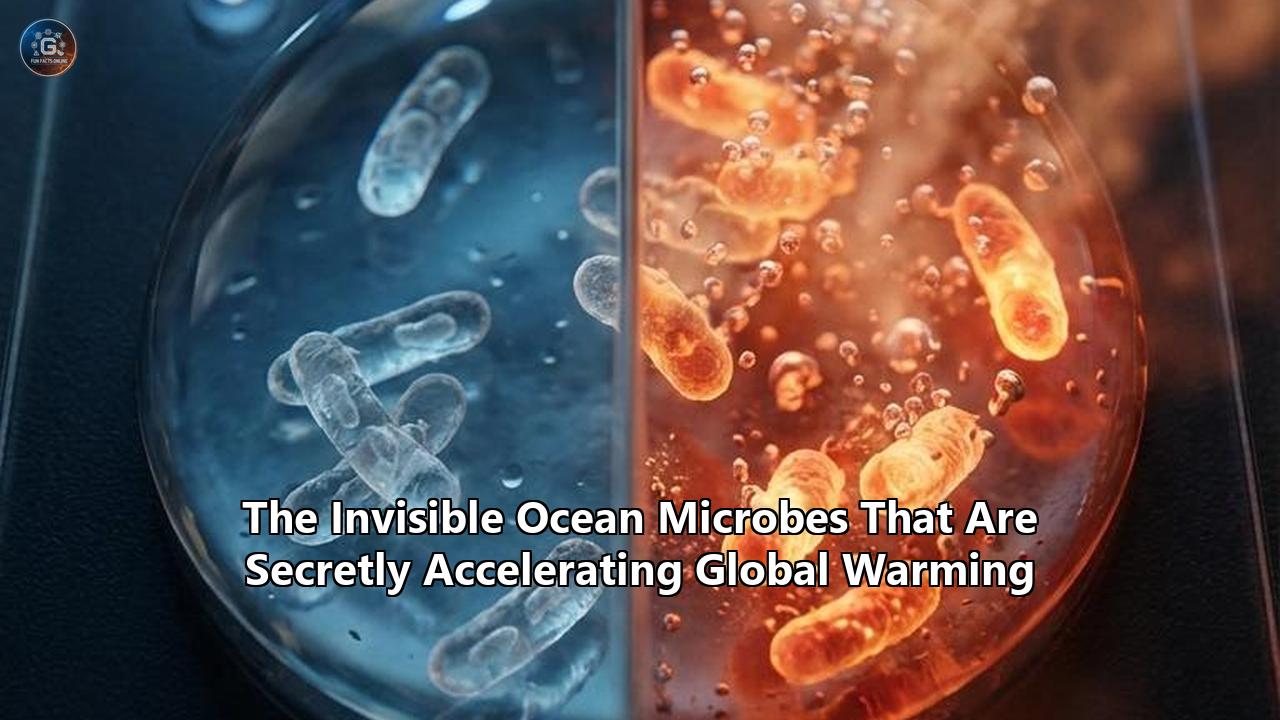
A previously unrecognized climate feedback loop has just been identified in the open ocean, and it relies on organisms so small that billions can fit into a single drop of seawater.
According to a study published in the Proceedings of the National Academy of Sciences (PNAS) in mid-April 2026, researchers at the University of Rochester have uncovered a mechanism by which surface-dwelling marine bacteria actively produce methane—a greenhouse gas 80 times more potent than carbon dioxide over a 20-year period—when deprived of essential nutrients. Slower vertical mixing in the water column, a direct physical consequence of rising global temperatures, is starving these surface waters of phosphate. In response, specific microbial communities are breaking down dissolved organic compounds to survive, releasing vast quantities of methane as a metabolic byproduct.
The findings resolve a decades-old mystery regarding why highly oxygenated open-ocean waters emit methane, a process traditionally associated with oxygen-free environments like wetlands, bogs, and deep-sea sediment. But more critically, the discovery establishes a dangerous new climate multiplier. As atmospheric temperatures rise, the ocean's surface heats up, increasing the density disparity between the upper ocean and the cold, nutrient-rich depths. This thermal stratification acts like a physical lid, preventing deep-water phosphate from upwelling. The more the ocean warms, the more phosphate-starved the surface becomes, triggering a continuous surge in microbial methane production.
Because this biological process operates entirely under the radar of current Intergovernmental Panel on Climate Change (IPCC) forecasts, the actual pace of climate change may be severely underestimated. Thomas Weber, an associate professor in the Department of Earth and Environmental Sciences at the University of Rochester and lead author of the study, noted that phosphate scarcity functions as the "primary control knob" for methane emissions in the open ocean. By omitting the complex metabolic responses of ocean microbes, global warming projections fail to account for biological variables that are highly reactive to thermal stress.
This breaking research arrives on the heels of a cascade of recent marine microbiology data published between late 2025 and early 2026, all pointing to a synchronized disruption at the very base of the marine food web. From tropical cyanobacteria reaching their lethal thermal limits to deep-sea archaea rewriting the nitrogen cycle, the ocean's microscopic regulators are responding to anthropogenic heat in ways that accelerate the very conditions destroying their habitats.
Decoding the Marine Methane Paradox
For years, chemical oceanographers have measured persistent methane outgassing from the sunlit, oxygen-rich surface waters of the global ocean. This geographic and chemical anomaly, referred to in the scientific literature as the "marine methane paradox," baffled researchers because methanogenesis—the biological production of methane—is notoriously anaerobic. It requires an environment entirely devoid of oxygen.
Weber, alongside graduate student Shengyu Wang and postdoctoral research associate Hairong Xu, utilized highly localized physical sampling alongside expansive global datasets and computer modeling to finally isolate the biochemical pathway responsible for this anomaly. The team discovered that methanogenesis in the open ocean is not a fluke or an error in satellite telemetry, but a widespread survival strategy employed by specific aerobic bacteria.
When marine bacteria are suspended in nutrient-poor environments, particularly where phosphate is critically scarce, they are forced to scavenge for alternative sources of phosphorus to synthesize DNA, RNA, and ATP (adenosine triphosphate), the primary energy currency of the cell. The microbes turn to dissolved organic phosphorus compounds suspended in the water column. As the bacteria enzymatically cleave the phosphorus from these complex organic molecules, they generate methane as a waste product.
The Rochester study emphasizes that this process only activates when phosphate levels drop below a highly specific threshold. In a stable ocean, winds, tides, and seasonal temperature shifts drive vertical mixing, churning deep, nutrient-dense water up to the surface to replenish the biological demands of plankton and bacteria. Under these optimal conditions, microbes consume readily available inorganic phosphate, and surface methane production remains negligible.
However, anthropogenic heat has fundamentally altered the hydrodynamics of the water column. "Climate change is warming the ocean from the top down, increasing the density difference between surface and deep waters," Weber stated in the publication. "This is expected to slow the vertical mixing that carries nutrients like phosphate up from depth."
The cascading effect is a textbook positive feedback loop. Rising greenhouse gas concentrations heat the marine surface. The surface becomes excessively buoyant, resisting the mechanical forces that usually drive mixing. The upper ocean enters a state of nutrient starvation, activating the microbial phosphorus-scavenging pathway. Methane is expelled into the atmosphere, trapping more heat and exacerbating the initial stratification.
The Physics of Stratification: A Top-Down Seal
To fully grasp the magnitude of the University of Rochester findings, one must look at the physical mechanics of ocean stratification. Water density is dictated by two primary variables: temperature and salinity. Cold, salty water is dense and sinks; warm, fresh water is less dense and floats.
Historically, the ocean has operated as an immense, interconnected conveyor belt. Surface waters cool at the poles, become denser, and sink to the abyssal plains, while deep waters rich in decayed organic matter and accumulated nutrients (like nitrate, phosphate, and iron) are pushed upward in upwelling zones, such as the coasts of Peru, California, and West Africa.
But the oceans have absorbed more than 90% of the excess heat generated by human activity since the dawn of the industrial age. This thermal energy is heavily concentrated in the top 700 meters of the water column. As the surface layer absorbs this heat, it undergoes thermal expansion, creating a steep temperature gradient known as the thermocline. In a rapidly warming world, the thermocline becomes a rigid, impenetrable barrier.
This physical separation essentially bifurcates the ocean. The deep ocean holds the biological raw materials necessary for life, while the sunlit surface layer (the epipelagic zone) holds the solar energy required for photosynthesis. Without vertical mixing to bridge the gap, the surface ocean transforms into a biological desert.
It is within these expanding, nutrient-depleted oceanic deserts that the methane-producing bacteria thrive. As researchers map out the influence of ocean microbes, global warming projections must be updated to reflect the reality that vast swaths of the Pacific and Atlantic gyres are rapidly transitioning into methane-generating factories. The sheer volume of water involved—the open ocean covers more than 60% of the Earth's surface—means that even microscopic, low-level methane production scales up to massive atmospheric impacts.
Nitrous Oxide and the Expansion of Oxygen Minimum Zones
Methane is not the only catastrophic byproduct of shifting microbial metabolisms. In a parallel discovery published in late 2025, an international research team led by biogeochemist Claudia Frey at the University of Basel documented a severe escalation in marine nitrous oxide (N2O) emissions. Nitrous oxide is a highly stable greenhouse gas with approximately 273 times the heat-trapping capacity of carbon dioxide over a 100-year timescale, and it is a potent ozone-depleting substance.
Frey’s research focused on Oxygen Minimum Zones (OMZs)—layers of seawater located between 200 and 1,000 meters deep where dissolved oxygen is naturally scarce due to poor ventilation and high rates of bacterial respiration. These zones, found predominantly off the western coasts of North and South America, the Arabian Sea, and the Bay of Bengal, host highly specialized, anaerobic microbial communities.
The Basel study upended a long-held assumption regarding marine N2O production. Previously, models dictated that denitrifying bacteria only produced nitrous oxide when dissolved oxygen levels plummeted below a strict, near-zero threshold. Consequently, climate modelers only mapped N2O emissions against the strictest boundaries of oceanic dead zones.
Frey's team discovered that marine microbes are far more versatile—and dangerous—than expected. The bacteria actively produce nitrous oxide at much higher oxygen concentrations if they are supplied with fresh organic particles, such as sinking dead algae and fecal pellets from surface plankton. These organic particles create microscopic, localized oxygen-depleted microenvironments. The bacteria colonize the sinking organic matter, deplete the immediate oxygen through rapid respiration, and then switch their metabolic pathways to denitrification, releasing nitrous oxide into the surrounding water even if the broader water column is highly oxygenated.
This finding is alarming because Oxygen Minimum Zones are aggressively expanding due to both warming and coastal nutrient runoff. Warm water inherently holds less dissolved oxygen than cold water. Furthermore, agricultural runoff loaded with nitrogen and phosphorus triggers massive algal blooms on the surface. When these blooms die, they sink into the OMZ, providing the exact fresh organic particulate matter that Frey's study identifies as the trigger for elevated nitrous oxide production.
The research establishes a complex ecosystem where food supply, particle quality, and microbial competition share control over greenhouse gas emissions, replacing the outdated model of a simple oxygen threshold. The margins of these low-oxygen zones are creeping outward, encroaching on coastal ecosystems and vastly increasing the total oceanic volume capable of supporting N2O-producing bacteria.
The Thermal Collapse of the Ocean's Primary Carbon Sink
While certain bacteria are thriving and producing greenhouse gases, the ocean's most critical biological carbon sinks are facing imminent collapse. In September 2025, Nature Microbiology published a decade-long, exhaustively detailed study by researchers at the University of Washington, led by François Ribalet. The team analyzed over 800 billion microbial cells collected across 150,000 miles of ocean to determine the thermal limits of Prochlorococcus.
Prochlorococcus is the smallest and most abundant photosynthesizing organism on Earth. A single drop of seawater can contain tens of thousands of these cyanobacteria, and they blanket more than 75% of the ocean's surface. Despite their microscopic size, they are an ecological titan: Prochlorococcus is responsible for an estimated 5% of all global photosynthesis, making it a critical driver of the planet's carbon cycle and the absolute foundational base of the marine food web.For years, climate scientists assumed that because Prochlorococcus flourishes in the warm, nutrient-poor waters of the tropics and subtropics, it would naturally adapt to and even thrive in a warming ocean. The University of Washington study proved this assumption catastrophically wrong.
Ribalet’s team discovered that Prochlorococcus operates within a highly restricted thermal envelope. The microbe multiplies with maximum efficiency in waters between 66°F and 84°F (18.8°C to 28.8°C). However, the moment ocean surface temperatures hit 86°F (30°C), the cyanobacteria cross a critical physiological threshold. At this "burnout temperature," their cell division rates do not just slow down; they plummet to merely one-third of their optimal levels, causing populations to crash dramatically.
"Their burnout temperature is much lower than we thought," Ribalet explained in the study's release. "For a long time, scientists thought Prochlorococcus was going to do great in the future, but in the warmest regions, they aren't doing that well, which means that there is going to be less carbon—less food—for the rest of the marine food web."
The projections mapped out by the University of Washington are stark. Current climate models indicate that tropical and subtropical surface waters will reliably exceed the 86°F threshold within the next 75 years. Under a moderate-warming trajectory, the productivity of Prochlorococcus will decline by 17% in the tropics and 10% globally. Under a high-warming scenario—which current global emission rates are closely tracking—the tropics would see a devastating 51% decline in productivity, resulting in a 37% plunge worldwide.
This is a structural failure of the biological carbon pump. When Prochlorococcus draws down atmospheric carbon dioxide through photosynthesis, it converts that carbon into organic biomass. This biomass is then consumed by heterotrophic nanoflagellates, which are eaten by zooplankton, which are then consumed by small fish, cascading up to apex predators and marine mammals. A 37% global drop in the primary producer equates to a massive reduction in the ocean's capacity to absorb CO2, leaving millions of tons of carbon dioxide in the atmosphere to accelerate warming further.
Furthermore, if Prochlorococcus dies off, the ecological void will likely be filled by other, more heat-tolerant microbes like Synechococcus. However, marine ecosystems have evolved over millions of years around the specific biochemical outputs of Prochlorococcus. As Ribalet warned, there is no guarantee that higher trophic levels can seamlessly switch to consuming different microbial species without systemic disruptions to marine fisheries and global food security.
Deep-Sea Adaptations and the Ammonia-Oxidizing Archaea
While surface waters face stratification and thermal collapse, the profound depths of the ocean are undergoing their own invisible transformations. In March 2026, a research group co-led by the University of Illinois Urbana-Champaign (UIUC) published groundbreaking findings in PNAS regarding the adaptability of deep-ocean archaea.
Archaea are single-celled microorganisms that are genetically and biochemically distinct from bacteria. In the dark, crushing pressures of the deep ocean, one specific species reigns supreme: Nitrosopumilus maritimus. This species and its close relatives account for approximately 30% of the entire marine microbial plankton population in the deep sea. They are chemolithoautotrophs, meaning they derive their energy not from sunlight, but from the oxidation of inorganic compounds—specifically, by oxidizing ammonia into nitrite.
This ammonia-oxidizing activity is the linchpin of the marine nitrogen cycle. By altering the chemical state of nitrogen in the water column, N. maritimus dictates the availability of nutrients that eventually upwell to support surface plankton.
Historically, scientists feared that as heat waves push thermal energy deeper into the ocean, the delicate chemical balance required by these iron-dependent archaea would shatter. However, the UIUC study, spearheaded by microbiology professor Wei Qin, revealed that N. maritimus is already adapting to warmer, low-nutrient conditions.
Through highly controlled laboratory cultures and advanced genomic sequencing, Qin's team discovered that these archaea possess highly plastic metabolic networks. They are capable of adjusting their enzyme expression to maintain ammonia oxidation even as water temperatures rise and iron availability drops.
To understand the global ramifications of this adaptation, the UIUC team collaborated with Alessandro Tagliabue, an ocean biogeochemical modeler from the University of Liverpool. Tagliabue integrated the experimental metabolic rates of the adapted archaea into global ocean simulations.
"The results suggest that deep-ocean archaeal communities may maintain or even enhance their role in nitrogen cycling and primary production support across vast iron-limited regions in a warming climate," Qin stated.
On the surface, enhanced nitrogen cycling sounds like a rare piece of positive environmental news. If archaea can continue to process nitrogen, the deep ocean might maintain some degree of nutrient stability. However, the ecosystem-level implications are vastly more complicated. The acceleration of deep-water ammonia oxidation alters the isotopic signature and the exact ratios of nitrate and nitrite available in the water column. If the deep ocean exports a different chemical profile to the surface during upwelling events, it will fundamentally change the competitive dynamics of surface phytoplankton, potentially favoring toxic algal blooms over benign, carbon-sequestering species.
To validate these laboratory and modeling results, Qin and a team of 20 other scientists will serve aboard the research vessel Sikuliaq in the summer of 2026, conducting deep-water sampling to measure the real-time metabolic rates of these adapted archaea in the open ocean.
The Biological Carbon Pump at a Breaking Point
The intersection of these localized microbial shifts paints a dire picture for the ocean's "biological carbon pump"—the mechanism by which organic matter is transported from the surface to the deep ocean, effectively removing carbon from the atmosphere for centuries or millennia.
To quantify how rising temperatures impact this pump, researchers at the Helmholtz Centre for Ocean Research Kiel (IFM-GEOMAR), led by Professor Ulf Riebesell, constructed massive mesocosms—1,400-liter miniature ecosystems housed in temperature-controlled climate chambers. The tanks were filled with unfiltered seawater from the Kiel Fjord, containing a natural winter-to-spring plankton community. The researchers subjected these mesocosms to temperature increases mirroring the IPCC’s worst-case warming scenarios (up to 6°C by 2100) and monitored the life cycle of a phytoplankton spring bloom for a month.
The results were a stark demonstration of biological imbalance. As expected, higher temperatures accelerated the metabolic rates of all organisms in the water. However, they did not accelerate equally. The photosynthetic build-up of biomass by planktonic algae (carbon drawdown) only increased slightly, while the consumption and respiration of that organic matter by heterotrophic bacteria skyrocketed.
Because the bacteria were eating and respiring the organic carbon much faster than the algae could produce it, the net sequestration of carbon dropped drastically. "What came as a surprise to us was that the plankton consumed up to one third less CO2 at elevated temperatures," Riebesell reported. "Ultimately, this may cause a weakening of the biological carbon pump."
Instead of sinking to the deep ocean as particulate organic carbon, the biomass was rapidly degraded by hyperactive bacteria at the surface, converted back into CO2, and immediately outgassed into the atmosphere. In this context of ocean microbes, global warming acts as an accelerant to bacterial respiration, effectively short-circuiting the ocean's ability to act as a carbon sink.
This bacterial hyperactivity also disrupts other vital climatic mechanisms, such as cloud formation. Phytoplankton produce vast amounts of a chemical called dimethylsulfoniopropionate (DMSP). A landmark study by MIT researchers, including Cherry Gao and Roman Stocker, quantified how marine bacteria process this chemical. DMSP is highly abundant, accounting for 10% of the carbon taken up by phytoplankton and satisfying up to 95% of the sulfur demand for marine bacteria.
When bacteria consume DMSP, they use two distinct chemical pathways: demethylation (which keeps sulfur in the marine food web) or cleavage (which releases dimethyl sulfide, or DMS, into the water). DMS is a highly volatile gas that escapes into the atmosphere, where it oxidizes to form sulfate aerosols. These aerosols act as cloud condensation nuclei, helping to form the thick, reflective marine stratocumulus clouds that deflect solar radiation away from the Earth—a natural cooling mechanism.
The MIT researchers used genetically modified marine bacteria (Ruegeria pomeroyi) to track which pathway the microbes preferred. They found that the pathway choice is entirely dependent on the concentration of DMSP in the immediate microenvironment surrounding the phytoplankton. As warming temperatures stress phytoplankton and shift their distribution, the micro-scale hotspots of DMSP are altered, directly impacting the bacteria's decision to release cloud-forming DMS. If the cleavage pathway is suppressed due to changing microbial dynamics, the ocean will produce fewer clouds, allowing more solar radiation to strike the surface, creating yet another warming feedback loop.
Anthropogenic Pollutants and the Coastal Acidification Multiplier
The crisis in the open ocean is being matched by an equally complex microbial breakdown along the coastlines. Estuaries and coastal waters are bearing the brunt of human activity, absorbing massive amounts of agricultural nitrogen, heavy metals, and microplastics. When these local pollutants combine with global climatic stressors—specifically ocean acidification resulting from massive CO2 absorption—the results are disastrous.
A study published in Nature Communications by researchers Jie Zhou and Yanling Zheng from East China Normal University evaluated the impact of acidification on the nitrogen cycle in estuarine environments. Coastal waters are urbanizing rapidly, receiving immense loads of watershed nutrients. The researchers conducted extensive field and laboratory experiments to observe how a dropping pH (higher acidity) affected nitrification processes.
Nitrification is a two-step aerobic process where microbes convert toxic ammonia into nitrite, and then into nitrate. The East China Normal University team utilized advanced metagenomics to monitor gene expression in coastal microbes under acidification stress. They discovered that as the water becomes more acidic, the microbes actively alter their gene expression to survive. This genetic adjustment significantly reduces the rate of nitrification, leaving toxic ammonia to build up in the water column.
More alarmingly, this suppression of nitrification triggers a secondary metabolic pathway that drastically increases the production of nitrous oxide (N2O). The study proved that acidification fundamentally disrupts the coastal nitrogen cycle by slowing the beneficial conversion of ammonia while supercharging the emission of greenhouse gases.
This data is further contextualized by a 2025 comprehensive review published in Critical Reviews in Microbiology by Sonalin Rath, Sourav Kumar Panda, and Surajit Das from the National Institute of Technology in Rourkela, India. The review analyzed the multifactorial effects of climate change on marine bacteria during the Anthropocene epoch. The authors detailed how the interaction between anthropogenic pollutants (specifically organic pollutants, heavy metals, and microplastics) and climatic stressors (warming and acidification) amplifies the damage to microbial resilience mechanisms.
Microplastics, for instance, provide novel, artificial surfaces for bacteria to colonize—creating what marine biologists call the "plastisphere." These floating plastic habitats selectively harbor highly resilient, often pathogenic bacteria that disrupt natural nutrient cycling. When these plastisphere communities are subjected to warming temperatures and lower pH, their metabolic outputs become highly unpredictable, frequently leaning toward the elevated release of biogenic greenhouse gases.
The Blind Spot in Global Climate Projections
The sheer scale and complexity of these newly discovered microbial pathways point to a massive vulnerability in how international bodies model the future of the planet. Current climate projections, including the heavily relied-upon Coupled Model Intercomparison Project (CMIP) frameworks used by the IPCC, are exceptional at predicting physical and chemical oceanography. They accurately model thermal expansion, current velocity, ice melt, and inorganic carbon solubility.
However, they treat the biological components of the ocean as mostly static mathematical constants. The models assume that as physical conditions change, biological carbon drawdown will shift along predictable, linear gradients.
The research published between 2025 and 2026 shatters the illusion of biological linearity. The ocean's microbial engine is heavily nonlinear. Prochlorococcus does not slowly decline as temperatures rise; it functions perfectly until 86°F and then experiences a catastrophic demographic collapse. Ammonia-oxidizing archaea do not just die in warmer water; they genetically adapt their enzyme networks to aggressively alter the nitrogen cycle. Open ocean bacteria do not passively starve when phosphate disappears; they actively pivot to breaking down organic compounds, releasing potent methane in the process.
Because these highly reactive, tipping-point biological mechanisms are absent from major climate models, humanity's current "carbon budget"—the amount of CO2 we can still emit before triggering catastrophic warming thresholds—is likely highly overestimated. If the ocean's biological carbon pump is consuming one-third less CO2 due to bacterial hyperactivity, and surface waters are independently generating massive plumes of methane and nitrous oxide, the ocean is transitioning from a reliable climate buffer into an active climate threat.
"Our work will help fill a key gap in climate predictions, which often overlook interactions between the changing environment and natural greenhouse gas sources to the atmosphere," noted Weber regarding his methane findings.
Incorporating these microbial feedback loops requires a massive leap in computational biology. Modelers must transition from simple empirical algorithms to dynamic, trait-based ecosystem models that can simulate enzyme kinetics, genomic adaptations, and inter-species microbial competition on a global scale. Until these updates are integrated, policymakers are effectively flying blind, making mitigation decisions based on models that ignore the metabolisms of the most abundant organisms on Earth.
Expeditions, Interventions, and the 2027 Horizon
Addressing the microbial acceleration of climate change presents a unique logistical nightmare. We cannot easily engineer or treat the open ocean to suppress methane-producing bacteria or protect Prochlorococcus from thermal stress. The sheer volume of the marine environment renders targeted biological interventions—like dumping iron to stimulate algal blooms (ocean fertilization)—highly risky and largely ineffective, as artificial blooms often die quickly, exacerbating deep-water oxygen depletion.
However, the latest scientific data provides clear directives for targeted mitigation, particularly in coastal zones. To prevent the artificial expansion of Oxygen Minimum Zones and the subsequent explosion of nitrous oxide emissions, environmental protection agencies must aggressively regulate agricultural runoff. By drastically cutting the flow of synthetic nitrogen fertilizers and industrial phosphates into river networks, policymakers can starve the coastal algal blooms that eventually sink, decay, and fuel anaerobic N2O production.
Furthermore, the recognition of microbial plasticity emphasizes the urgent need for real-time, deep-ocean monitoring. In the summer of 2026, the deployment of the R/V Sikuliaq to study deep-water archaea in situ represents a critical step in verifying laboratory models against the chaotic reality of the open ocean. These autonomous sensors, flow cytometers, and metagenomic sampling arrays must be scaled up and permanently deployed across the Pacific and Atlantic gyres to monitor phosphate-starved methane production zones before they expand entirely out of control.
Scientific recognition of these microorganisms is also accelerating. In 2025, the prestigious Frontier Planet Prize was awarded to a Japanese research team at the Okinawa Institute of Science and Technology (OIST), led by Professor Paola Laurino. The team mapped the evolutionary adaptations of SAR11—the most abundant group of bacteria in the ocean—demonstrating how they maintain incredibly efficient nutrient uptake in extreme, nutrient-poor environments. Laurino's work bridges the gap between molecular protein engineering and global ecological impact, providing a crucial framework for predicting how the entire marine ecosystem will restructure itself as climate change limits nutrient availability.
As the scientific community prepares for the next comprehensive cycle of IPCC climate assessments, the integration of microbial data is no longer optional. The relationship between ocean microbes, global warming physics, and biogeochemical cycles dictates the exact speed at which the planet will heat up over the next century.
The ocean has shielded humanity from the worst consequences of industrialization, absorbing heat and carbon at the expense of its own chemical stability. But that shielding capacity is now breaking down at the cellular level. As marine bacteria pivot their metabolisms toward survival, they are releasing hidden reserves of methane and nitrous oxide, while the microscopic algae that supply the planet's oxygen flirt with their lethal thermal limits.
The microscopic world is signaling a systemic collapse. If current emission trajectories remain unaltered, the thermal barriers locking up the ocean's nutrients will solidify, expanding the biological deserts of the surface and guaranteeing that the ocean's smallest inhabitants become the architects of a dramatically warmer planet.
Reference:
- https://www.the-microbiologist.com/news/hidden-ocean-feedback-loop-could-accelerate-climate-change/8551.article
- https://www.sciencedaily.com/releases/2026/04/260415043615.htm
- https://skepticalscience.com/deep-sea-microbes-key-ocean-climate-feedback.html
- https://www.earth.com/news/how-ocean-microbes-are-secretly-contributing-to-global-warming/
- https://www.earth.com/news/climate-change-threatens-the-oceans-most-vital-microbes/
- https://www.sciencedaily.com/releases/2025/09/250909031505.htm
- https://scitechdaily.com/deep-ocean-microbes-may-already-be-adapting-to-climate-change/
- https://news.illinois.edu/new-study-finds-deep-ocean-microbes-already-prepared-to-tackle-climate-change/
- https://cordis.europa.eu/article/id/30740-study-shows-how-marine-microorganisms-affect-ocean-warming
- https://pmc.ncbi.nlm.nih.gov/articles/PMC2880134/
- https://news.mit.edu/2020/ocean-microbes-role-climate-effects-0423
- https://marinescience.utexas.edu/news/research/positive-feedback-loop-suggested-ocean-acidification-and-global-warming
- https://pubmed.ncbi.nlm.nih.gov/41283734/
- https://www.miragenews.com/tiny-ocean-microbes-have-big-ecological-impact-1459799/