The global agricultural community is currently navigating a crisis that exposes the profound fragility of the modern food system. Following emergency summits held by the Food and Agriculture Organization (FAO) and the World Banana Forum, officials have issued stark, coordinated warnings regarding the imminent collapse of the world’s most exported fruit. The catalyst for this escalated alarm is the late-2025 detection of Fusarium oxysporum f. sp. cubense Tropical Race 4 (TR4) in Ecuador.
As the world’s largest banana exporter—shipping nearly six million metric tons annually and commanding a third of global trade—Ecuador was long considered the final fortress against the pathogen. Its breach signals that the disease has officially circumvented the globe.
Simultaneously, a breakthrough published in February 2026 in the journal Horticulture Research by scientists at the University of Queensland has mapped disease resistance to a specific chromosome in a wild banana subspecies. Meanwhile, the Brazilian agricultural research agency Embrapa is actively concluding field trials in infected Colombian soils, preparing to commercialize resistant hybrids by the end of 2026.
We are witnessing a high-stakes race between a relentless soil pathogen and advanced agricultural science. However, analyzing this event purely as a botanical emergency misses the broader point. The escalating banana extinction risk serves as a flawless case study in supply chain architecture, illustrating the terminal vulnerability of prioritizing absolute uniformity over biological resilience.
By dissecting the anatomy of the current banana crisis, we can extract vital principles about global logistics, climate multipliers, and the future of monoculture-dependent commodities like coffee, cacao, and wheat.
The Architecture of an Illusion: The Cavendish Supply Chain
To understand how a single fungus could threaten a $25 billion global industry, one must first understand the staggering logistical machinery built around the Cavendish banana.
While there are over 1,000 varieties of bananas cultivated globally, the Cavendish accounts for roughly 47% of all bananas grown and a staggering 99% of those exported. The global north’s grocery stores rely entirely on this specific variety because it was explicitly selected for its ability to survive an arduous, intercontinental supply chain.
The journey of an export banana is a marvel of highly calibrated logistics. Bananas are harvested at "Stage 1" of the ripeness scale, meaning they are completely dark green, hard, and starchy. They are immediately washed, packed into 40-pound corrugated cardboard cartons, and loaded onto refrigerated ocean containers known as reefers.
During maritime transport, the ambient temperature inside these reefers must be maintained precisely between 56 and 58 degrees Fahrenheit (13.3 to 14.4 degrees Celsius). A deviation of just a few degrees downward results in "chilling injury," causing the peel to turn a dull, unappetizing gray and the cellular structure to break down. A deviation upward triggers premature ripening, turning the cargo into unsalable mush before it reaches port. In transit, the fruit is essentially put to sleep using "Banavac" packaging—thick polyethylene bags where carbon dioxide is artificially raised to 5% and oxygen reduced to 2%, with potassium permanganate added to absorb naturally occurring ethylene gas.
Once the ships dock in locations like Rotterdam or Philadelphia, the fruit is transferred to specialized distribution centers equipped with pressurized ripening rooms. Here, the environment is warmed, and the rooms are flooded with synthetic ethylene gas. Over a carefully monitored four-day cycle, the starches convert to sugars, and the peel transitions to the familiar "Stage 4" yellow before being dispatched to supermarkets.
This hyper-optimized, just-in-time logistics network functions flawlessly on one non-negotiable condition: absolute product uniformity. Every single banana must respond to exact concentrations of ethylene and exact temperature thresholds in the exact same way.
To achieve this, the agricultural industry relied on a biological extreme. Every Cavendish banana on earth is a sterile, triploid clone. They produce no seeds and are propagated entirely through vegetative suckers (cuttings). Because they share an identical genetic sequence, they share an identical vulnerability. If a pathogen evolves to bypass the defenses of one Cavendish plant, it has successfully bypassed the defenses of all of them.
The Ghosts of the Gros Michel: A Failure to Learn
The most alarming aspect of the current banana extinction risk is that the industry has experienced this exact catastrophe before.
In the first half of the 20th century, the global export market was entirely dominated by a different variety: the Gros Michel, affectionately known as "Big Mike". The Gros Michel was larger, possessed a thicker skin that made it highly resistant to bruising during transport, and had a richer, more concentrated flavor profile than the Cavendish.
Then came Race 1.
A specific strain of the Fusarium oxysporum fungus emerged and began tearing through the massive, corporate-owned monoculture plantations of Central and South America. Because the Gros Michel was also a genetically identical clone, it possessed no natural defense against the pathogen. Despite staggering financial losses, growers remained in a state of denial, expanding deeper into virgin rainforests to outrun the disease rather than changing their agricultural models. By the late 1950s, the strategy failed, and the Gros Michel was rendered functionally extinct as a viable commercial export.
The industry’s salvation came in the form of a minor botanical curiosity residing in a greenhouse in England: the Cavendish. Initially dismissed by fruit executives as inferior due to its thinner skin and blander taste, the Cavendish possessed one redeeming quality that overrode all its flaws—it was naturally immune to Race 1 of the Fusarium wilt.
Instead of restructuring the underlying flaws of global banana production, agricultural conglomerates simply swapped out the hardware. They uprooted the dead Gros Michel plants, planted Cavendish clones in the exact same soil, and rebuilt the exact same monoculture system. They treated a systemic architectural failure as a temporary software bug. The industry did not solve the vulnerability; they merely reset the clock, ensuring that when the pathogen inevitably mutated, the devastation would repeat itself on an even larger scale.
Anatomy of an Unstoppable Pathogen
That biological timer has now run out. The pathogen driving the current crisis is Tropical Race 4 (TR4), a mutated, highly aggressive strain of the exact same soil-borne fungus that eradicated the Gros Michel.
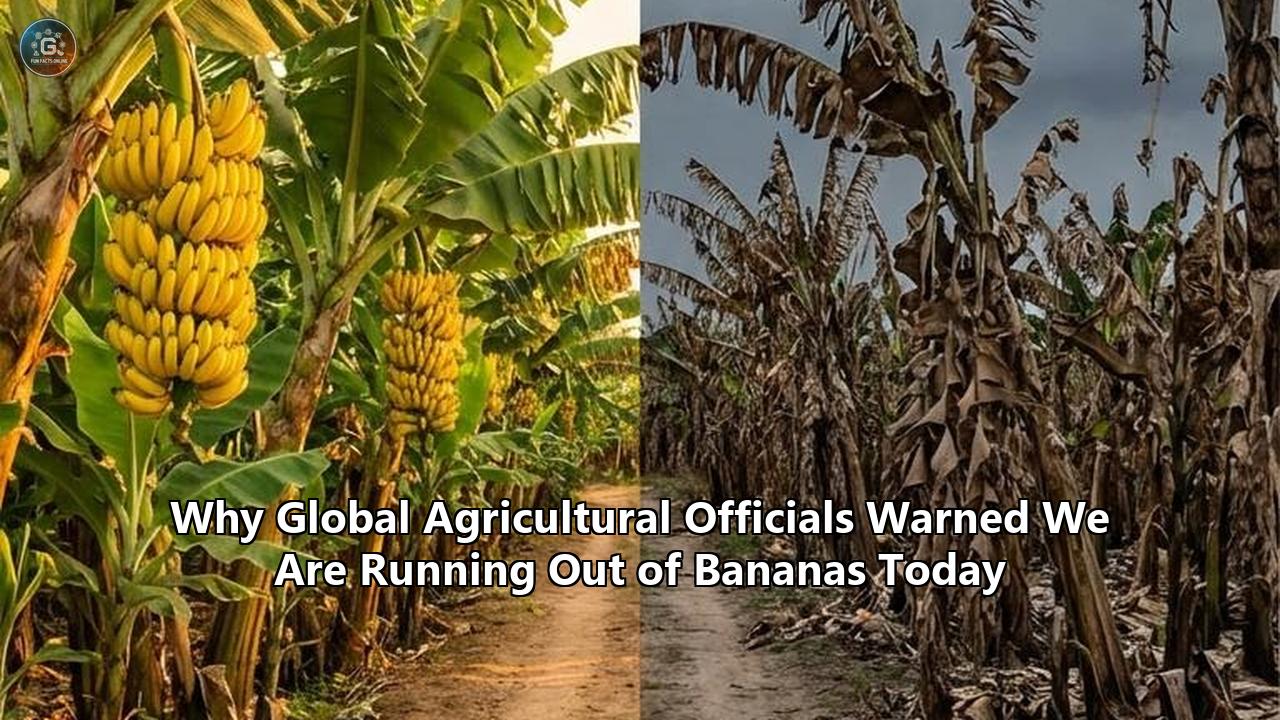
TR4 is a masterclass in pathogenic efficiency. It operates by infiltrating the banana plant through its root system, traveling up into the pseudostem, and systematically colonizing the xylem—the vascular tissue responsible for transporting water and vital nutrients from the soil to the leaves. As the fungal hyphae multiply, the plant’s own defense mechanisms attempt to block the spread, effectively clogging its own vascular system. The plant literally starves and suffocates itself. The broad leaves turn a sickly yellow, the stem blackens and splits, and the plant collapses before it can yield a marketable bunch.
What makes TR4 an existential threat to global agriculture is its sheer physical resilience. The fungus produces thick-walled resting spores called chlamydospores. These spores can survive dormant in the soil for decades, completely independent of a host plant.
There is currently no chemical intervention capable of neutralizing TR4. Fungicides are entirely useless. Soil fumigation fails to penetrate deeply enough to eradicate the dormant spores. Once TR4 is confirmed on a plantation, the protocol is draconian: the infected plants must be incinerated, deep trenches are dug, and the immediate acreage is placed under strict, indefinite quarantine. The land becomes permanently useless for Cavendish cultivation.
The secondary crisis is the ease of transmission. TR4 does not require complex biological vectors to spread. It hitchhikes on contaminated microscopic soil particles. A single microscopic spore embedded in the mud on a plantation worker's boot, trapped in the tread of a tractor tire, or floating in shared irrigation drainage is sufficient to spark a massive regional outbreak.
The pathogen’s march has been slow, silent, and entirely unstoppable. First identified in Taiwan in the 1970s, TR4 slowly decimated Cavendish crops across Asia and Australia. By 2013, it had crossed the Indian Ocean, establishing a foothold in northern Mozambique, Africa. In 2019, the global market’s worst nightmare materialized when Colombia confirmed the presence of TR4, signaling the pathogen's arrival in Latin America—the beating heart of the export industry. Subsequent detections in Peru (2020), Venezuela (2023), and ultimately the massive 2025 outbreak in Ecuador have demonstrated that standard biosecurity protocols, while necessary, are insufficient to halt the spread of a microscopic, soil-borne pathogen in an interconnected world.
The Climate Multiplier
While TR4 operates as the primary executioner of the Cavendish, climate change is acting as the ultimate threat multiplier. A major 2025 report published by Christian Aid, drawing on data from the journal Nature, projects that rising temperatures and erratic weather patterns could render 60% of current export banana regions in Latin America and the Caribbean completely unsuitable for cultivation by 2080.
The climate crisis intersects with the banana extinction risk on multiple fronts:
- Pathogen Dispersal via Extreme Weather: TR4 spores are easily carried by water. The increasing frequency of extreme weather events—specifically severe flooding, torrential erratic rainfall, and hurricanes—physically washes contaminated topsoil from infected zones into pristine, uninfected plantations downstream. A single typhoon can bypass years of strict biosecurity checkpoints in a matter of hours.
- Thermal Stress and Yield Collapse: Bananas require a highly specific, narrow temperature band for optimal physiological development. Prolonged heatwaves push the plants beyond their thermal limits. At higher temperatures, the rate of photosynthesis drops, the fruit's post-harvest quality degrades, and the internal sugar content severely diminishes. A 30-year study tracking output across Colombia, Costa Rica, the Dominican Republic, and Ecuador confirmed that short-term thermal fluctuations are already triggering annual yield losses.
- The Rise of Black Sigatoka: While TR4 dominates the headlines, Cavendish plants are also highly susceptible to Black Sigatoka (Black Leaf Fungus). This airborne fungal disease attacks the foliage, destroying the plant's ability to photosynthesize by up to 80%. Black Sigatoka thrives in hot, hyper-humid environments. As global temperatures rise and rainfall patterns become increasingly volatile, the geographic footprint conducive to Black Sigatoka expands, forcing growers to blanket their crops in costly aerial fungicides up to 60 times a year just to keep the plants alive.
When a genetically uniform, sterile crop is subjected to simultaneous attacks from a soil-borne vascular wilt, an airborne foliage disease, and shifting atmospheric baselines, structural collapse is no longer a theoretical projection. It is a mathematical certainty.
The Economic and Social Shockwaves
If the Cavendish fails, the fallout will extend far beyond Western consumers paying premium prices for their morning smoothies. The socioeconomic destabilization will be profound and immediate.
Bananas are the fourth most important food crop on the planet, trailing only wheat, rice, and maize. They represent a $140 billion total global industry, with approximately 80% of all production earmarked for domestic consumption in the countries where they are grown. Over 400 million people across the global south rely on bananas and plantains for 15% to 27% of their daily caloric intake.
Furthermore, the export market—valued at over $10 billion annually—is the financial bedrock for hundreds of rural municipalities. The FAO notes that for smallholder farmers in developing nations, income derived from banana cultivation can account for up to 75% of their total monthly household revenue. In regions like India's Maharashtra state or the rural provinces of Guatemala, agricultural employment is the solitary economic pillar.
If TR4 sterilizes the soil across the Guayas province of Ecuador or the Mindanao region of the Philippines, the secondary effects will be catastrophic. We will witness mass agricultural unemployment, localized caloric deficits, and the cascading default of rural credit systems. The collapse of the Cavendish is not merely an agricultural issue; it is a catalyst for localized economic depressions and accelerated climate migration.
The Scientific Counter-Offensive: 2026 Breakthroughs
Recognizing that the conventional model is failing, agronomists and geneticists are racing to engineer a viable successor. Recent developments in 2025 and early 2026 suggest that survival is possible, provided the industry is willing to radically alter its approach.
The most promising development stems from the Brazilian Agricultural Research Corporation (Embrapa). Leveraging a decades-long genetic improvement program, Embrapa researchers deployed thousands of hybrid banana seedlings to TR4-infected soil in Colombia, ground zero for the South American outbreak.
Two specific cultivars—BRS Princesa and BRS Platina—have demonstrated astonishing field resilience. BRS Princesa is an "apple-type" (Maçã) banana, genetically distinct from the Cavendish. Following four rigorous production cycles in highly contaminated soil, less than 1% of the Brazilian plants exhibited any symptoms of Fusarium wilt—a staggering success rate given that the baseline for high-risk failure is between 5% and 8%. Embrapa, working in tandem with the Colombian Agricultural Institute (ICA), is fast-tracking one of these hybrids for commercial launch by the end of 2026.
Simultaneously, genomic science achieved a major milestone. In February 2026, geneticists at the University of Queensland published findings in Horticulture Research detailing the exact molecular mechanisms of wild banana resistance. After five years of complex cross-breeding programs, researchers successfully mapped resistance to Sub Tropical Race 4 (STR4) directly to chromosome 5 of the Calcutta 4 wild banana subspecies.
This is a monumental achievement. The Calcutta 4 banana is commercially useless—it is filled with hard seeds and tastes terrible—but its genetic code holds the blueprint for survival. By identifying the specific molecular markers on chromosome 5, plant breeders can now rapidly screen thousands of seedlings in a laboratory setting without waiting 12 months for the plants to mature and face physical inoculation.
The ultimate goal of this research is precision gene editing. Using CRISPR technology, scientists aim to isolate the resistance gene from the wild Calcutta 4 and splice it directly into the Cavendish genome. This would, in theory, create a TR4-resistant Cavendish that maintains the exact yield, transport durability, and flavor profile that the global logistics network demands.
However, integrating genetically modified organisms (GMOs) into the global food supply chain introduces severe regulatory hurdles, particularly in the European Union, one of the largest banana importers in the world. Furthermore, gene-editing the Cavendish to resist TR4 risks repeating the exact same historical error made during the Gros Michel crisis. It creates a new, heavily armored monoculture, waiting for the pathogen to inevitably mutate into "Race 5."
Supply Chain Principles Extracted from the Crisis
The banana extinction risk operates as a masterclass in modern systemic vulnerability. By using this agricultural emergency as a lens, we can extract critical principles applicable to almost every global supply chain, from semiconductor manufacturing to the distribution of pharmaceuticals.
1. The Peril of Extreme Optimization
Supply chains naturally trend toward efficiency. By selecting the Cavendish, the industry optimized for yield, uniform ripening, and bruising resistance. They stripped away all genetic variance to ensure that a shipping container leaving Guayaquil would arrive in Hamburg with zero deviance in product behavior. However, absolute optimization mandates absolute rigidity. When you remove all redundancies and variances from a system to maximize profit margins, you destroy the system's ability to absorb an asymmetric shock.
2. Monoculture is a Default State of Corporate Logistics
The vulnerability of the Cavendish is not an accident; it is a direct requirement of the business model. Centralized distribution centers running automated ethylene ripening rooms cannot process 50 different varieties of bananas that ripen at different speeds and require different humidity levels. The physical infrastructure of global trade heavily incentivizes biological monoculture. If we wish to diversify our crops to protect against pathogens, we must first accept slower, decentralized, and less efficient supply chains.
3. The Illusion of Isolation
For decades, Latin American growers believed oceanic distance would protect them from a soil fungus ravaging Southeast Asia. This assumption fatally underestimated the velocity of global trade. In an era of interconnected global logistics, a localized pathogenic outbreak is effectively a global outbreak with a delayed delivery date. Biosecurity checkpoints at national borders are filters, not walls.
What Happens Next: The Era of the Expensive Banana
As we move deeper into 2026, the global market is entering an unavoidable transitional phase. The era of the ubiquitous, cheap, structurally flawless yellow banana is coming to an end.
During the World Banana Forum in Rome, economists from the FAO explicitly warned that global banana prices must and will rise. The immediate cost increases will be driven by the exorbitant expenses of implementing strict farm-level quarantines, increased fungicide applications for Black Sigatoka, and complex soil management protocols. Dan Bebber, a leading academic on crop pathogens, noted that elevated retail prices are actually necessary to mitigate these risks, funneling much-needed capital back to the equatorial nations fighting the disease on the front lines.
Over the next decade, consumers will be forced to adapt their expectations. The grocery store of the 2030s will likely feature a fragmented banana market. We will see the introduction of distinct cultivars—like the BRS Princesa or the Goldfinger—that may be shorter, possess a slightly different texture, or carry an apple-like tartness. We will see premium-priced, gene-edited Cavendish variants marketed explicitly for their disease resistance. We will also witness a heavier reliance on decentralized, regional fruit production as the massive, monolithic plantations of the 20th century become biologically unviable.
The ongoing battle to save the world's most consumed fruit is not merely about preserving a breakfast staple. It is a real-time stress test of humanity’s ability to rectify the architectural flaws of globalization. The banana extinction risk has explicitly outlined the terms of survival for the modern agricultural system. We optimized our planet for scale, uniformity, and profit, forgetting that biology eventually demands a reckoning. If we are to secure the future of our food supply, we must transition from a model of fragile efficiency to one of dynamic, complex resilience. Diversity is no longer an environmental buzzword; it is a mathematical prerequisite for survival.
Reference:
- https://www.ecofinagency.com/news/1210-49478-tr4-the-fungus-threatening-banana-and-its-global-supply
- https://www.popsci.com/environment/banana-extinction-discovery/
- https://www.freshfruitportal.com/news/2025/09/04/tr4-resistance-trials/
- https://www.iisd.org/system/files/2023-03/2023-global-market-report-banana.pdf
- https://plentiful-lands.com/bananas-as-we-know-them-are-doomed/
- https://www.fao.org/markets-and-trade/commodities-overview/bananas-tropical-fruits/bananas/en
- https://www.freightamigo.com/en/blog/logistics/the-banana-supply-chain-challenges-and-solutions-in-modern-logistics/
- https://www.shipabco.com/the-essential-guide-to-shipping-bananas/
- https://www.cargohandbook.com/Bananas
- https://lidd.com/banana-supply-chain/
- https://www.business.qld.gov.au/industries/farms-fishing-forestry/agriculture/biosecurity/plants/priority-pest-disease/panama-disease
- https://www.fao.org/tr4gn/tr4-basics/ru/
- https://www.freightamigo.com/en/blog/logistics/the-banana-supply-chain-a-tale-of-triumph-and-looming-crisis/
- http://www.cropdevelopment.org/docs/Banana_History-Impact.pdf
- https://visualizingtheamericas.utm.utoronto.ca/fairtrade-1
- https://www.bayer.com/en/news-stories/TR4-fungus-disease
- https://www.cbsnews.com/news/bananas-cost-price-climate-change-experts-say-too-cheap-now/
- https://www.worldbank.org/en/news/feature/2023/01/30/bananas-and-blight-an-illustration-in-the-complexity-of-global-trade
- https://folhaagricola.com.br/2025/09/04/duas-cultivares-da-embrapa-sao-resistentes-a-mais-grave-doenca-mundial-das-bananeiras/
- https://traveltomorrow.com/climate-change-is-coming-for-the-banana-researchers-say/
- https://www.freshfruitportal.com/news/2025/05/16/climate-change-is-killing-bananas/
- https://medium.com/pesa-check/missing-context-climate-change-does-pose-a-threat-to-bananas-ad9046cb6723
- https://www.freshplaza.com/north-america/article/9780165/claim-that-climate-change-does-not-affect-bananas-lacks-context/
- https://www.theguardian.com/environment/2025/may/12/climate-crisis-threatens-the-banana-the-worlds-most-popular-fruit-research-shows
- https://www.fao.org/world-banana-forum/en/
- https://ab.gov.ag/pdf/4th_World_Banana_Forum_Conf.pdf?ref=pesacheck.org