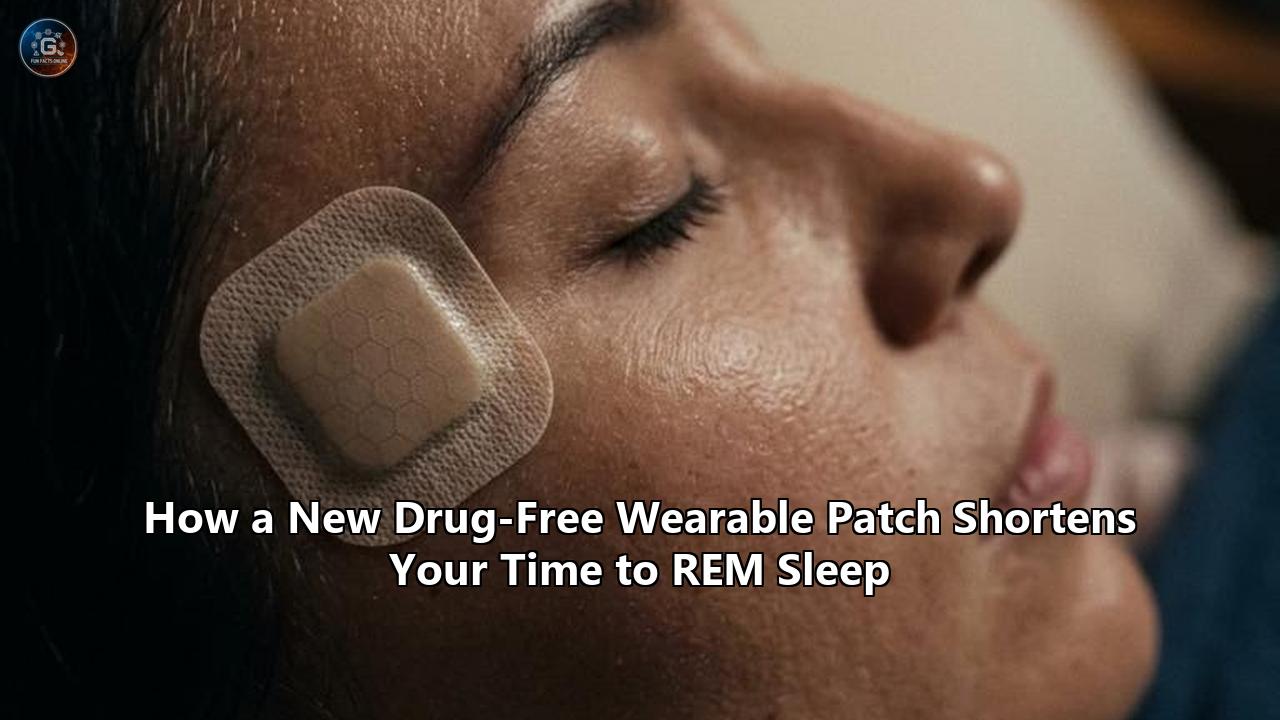
Researchers at the University of Texas at Austin have developed a soft, skin-attached wearable patch that uses closed-loop ultrasound stimulation to significantly shorten the time it takes to enter Rapid Eye Movement (REM) sleep. Published in Nature Communications, the study reveals that the noninvasive bioelectronic patch—dubbed NEUSLeeP—helped trial participants reach REM sleep an average of 43 minutes faster while extending their overall time in the stage by approximately 16 minutes.
The device, created by a multi-disciplinary team led by biomedical engineering researcher Dr. Kai Wing "Kevin" Tang and Assistant Professor Dr. Huiliang "Evan" Wang, represents a shift in neurostimulation technology. By combining low-intensity focused ultrasound transducers with real-time electroencephalography (EEG) sensing electrodes into a single flexible patch, the device directly targets subcortical brain regions responsible for sleep cycle transitions without medication or invasive surgical implants.
Beyond simply altering sleep architecture timing, neuroimaging and physiological monitoring during the study demonstrated that the patch increased heart rate variability (HRV)—a primary indicator of parasympathetic nervous system recovery—and altered neural connectivity across emotional processing networks in the brain.
With sleep medicine long reliant on blunt pharmacological sedatives that often disrupt natural sleep cycles, the NEUSLeeP clinical trial offers the first concrete evidence that closed-loop mechanical energy can precisely steer human sleep architecture in real-world settings.
                     +---------------------------------------+
                     |        NEUSLeeP WEARABLE PATCH        |
                     +---------------------------------------+
                                    |        ^
   Real-Time Bioelectric           |        | Closed-Loop Neural
   Monitoring (EEG/EMG)            v        | Feedback Signal
                     +---------------------------------------+
                     |    SUB-DENTAL / TEMPORAL PLACEMENT    |
                     +---------------------------------------+
                                        |
                                        | Low-Intensity Focused
                                        | Ultrasound (tFUS) Waves
                                        v
                     +---------------------------------------+
                     |   DEEP SUBCORTICAL BRAIN TARGETS      |
                     |  (Pedunculopontine Tegmental Nucleus / |
                     |     Sublaterodorsal Nucleus / SLD)    |
                     +---------------------------------------+
                                        |
                                        v
                    +-----------------------------------------+
                    |        PHYSIOLOGICAL & BRAIN IMPACT     |
                    |  * REM Latency Reduced by ~43 Minutes   |
                    |  * REM Duration Increased by ~16 Min    |
                    |  * Elevated Heart Rate Variability (HRV)|
                    |  * Modulated Limbic/Prefrontal Circuits |
                    +-----------------------------------------+
How Low-Intensity Ultrasound Reaches Subcortical Sleep Nodes
For decades, noninvasive brain stimulation devices relied almost exclusively on transcranial electrical stimulation—specifically transcranial direct current stimulation (tDCS) or transcranial alternating current stimulation (tACS). While these modalities can modulate cortical excitability near the surface of the scalp, they suffer from physical limitations. Electrical currents applied to the skin disperse across the highly resistive human skull and high-conductivity cerebrospinal fluid (CSF) layer. By the time electrical signals penetrate deep beneath the cortex, their spatial focus is lost, making it virtually impossible to stimulate specific deep-brain structures without activating overlying brain tissue.
To bypass this hurdle, the UT Austin team turned to Transcranial Focused Ultrasound (tFUS). Unlike electrical currents, acoustic waves travel through soft tissue and bone as mechanical pressure vibrations. By carefully shaping the geometry of piezoelectric transducers within the patch, researchers can focus mechanical acoustic energy into a tight millimeter-scale focal spot deep within the brain stem and subcortical nuclei.
ELECTRICAL STIMULATION (tDCS/tACS)   vs.   FOCUSED ULTRASOUND (NEUSLeeP tFUS)
----------------------------------         ----------------------------------
[Scalp Electrode]                          [Piezoelectric Transducer Array]
       |                                                  |
       v (Current Diffuses)                               v (Acoustic Pressure Column)
( High Skull Resistance )                  ( Focused Mechanical Wave Propagation )
       |                                                  |
       v (Broad, Shallow Field)                           v (Pinpoint Subcortical Focus)
 Shallow Cortical Surface                   Deep Pontine/Limbic Nuclei (SLD/PPT)
The primary neural targets for steering sleep stages sit far below the cerebral cortex. Transitioning into REM sleep is driven by a specialized "switch" in the brainstem, comprising cholinergic regions such as the pedunculopontine tegmental nucleus (PPT), the laterodorsal tegmental nucleus (LDT), and the sublaterodorsal nucleus (SLD). These deep subcortical structures are unreachable by superficial electrical stimulation.
By transmitting low-frequency ultrasound pulses (typically between 200 kHz and 500 kHz), the NEUSLeeP patch delivers focused mechanical waves directly to these pontine structures. The acoustic waves interact with cell membranes, activating mechanosensitive ion channels—such as Piezo1 and transient receptor potential (TRP) channels—and altering lipid bilayer capacitance. This localized mechanical nudge depolarizes specific targeted neurons, triggering the biological cascade that initiates REM sleep without thermal damage or invasive deep brain stimulation (DBS) implants.
To achieve efficient acoustic coupling through skin and hair without bulky gel setups, the researchers engineered micro-machined hydrogel interfaces embedded directly within the patch matrix. These hydrogels match the acoustic impedance of human skin, preventing sound wave reflections at the tissue interface and ensuring high energy transmission into cranial bone.
Inside the Closed-Loop Algorithmic Engine
Stimulating the brain blindly with continuous ultrasound is ineffective for managing sleep stages. Sleep is a dynamic, highly regulated cycle that progresses through specific non-REM (NREM) phases—Stage N1, Stage N2, and Stage N3 slow-wave sleep—before transitioning into REM. Blasting acoustic waves into the brain stem at the wrong time can cause micro-arousals, disrupting sleep continuity and triggering stress responses.
The core engineering advance of NEUSLeeP lies in its closed-loop bioelectronic architecture. The device combines focused ultrasound emitters with flexible skin-conformal electrodes that continuously monitor local electrophysiological activity.
+-----------------------------------------------------------------------+
|                    CLOSED-LOOP SLEEP REGULATION                       |
+-----------------------------------------------------------------------+

   [1. Sense]     Continuous EEG/EOG/EMG recording via skin electrodes
       |
       v
   [2. Analyze]   Real-time FFT algorithms compute power spectral density
       |          * Detect Alpha decay, Theta rise, K-Complexes, Spindles
       v
   [3. Identify]  System detects optimal Stage N2 transition window
       |
       v
   [4. Trigger]   Acoustic engine fires low-intensity ultrasound micro-bursts
       |
       v
   [5. Modulate]  Mechanosensitive ion channel activation in SLD/PPT nuclei
       |
       v
   [6. Validate]  EEG confirms shift to saw-tooth REM rhythms; stimulation pauses
Engineering a bi-directional patch capable of sensing micro-volt electroencephalographic (EEG) signals while simultaneously emitting acoustic power waves presents significant signal processing challenges. The mechanical vibrations and electrical switching noise from ultrasound transducers can easily drown out tiny brainwave signals, causing amplifier saturation.
The UT Austin team resolved this problem through multi-layer hardware shielding and active digital filtering:
- Piezoresistive Isolation: Spatial separation between low-noise recording electrodes and piezoelectric elements reduces near-field cross-talk.
- Hardware Notch Filtering: Differential pre-amplifiers selectively filter out high-frequency acoustic driving signals while preserving low-frequency biopotentials (0.5 Hz to 40 Hz).
- Adaptive Artifact Cancellation: On-chip digital signal processors run real-time algorithms that estimate ultrasound-induced stimulation artifacts and subtract them from raw EEG data within milliseconds.
By maintaining clean brainwave readings during active operation, the onboard micro-controller analyzes power spectral density in real time. The algorithm tracks key sleep onset markers: the drop in occipital alpha waves (8–12 Hz), the emergence of theta activity (4–7 Hz), and the appearance of sleep spindles (11–16 Hz) and K-complexes during Stage N2 sleep.
When the system detects that the user has consolidated light non-REM sleep, it fires tailored micro-bursts of ultrasound aimed at the pontine REM-on circuitry. By monitoring micro-volt shifts in brainwave power spectra, the device delivers precise acoustic stimulation only when neural conditions are ripe, enabling sleepers to get to rem sleep faster. Once electrophysiological readings confirm the presence of rapid eye movements and muscular atonia—hallmarks of active REM sleep—the system automatically scales back stimulation to allow natural sleep progression.
The Neurobiology of REM Latency: Why Drugs Can't Match Neuromodulation
In healthy adults, REM latency—the time elapsed between initial sleep onset and the first appearance of REM sleep—typically ranges from 60 to 120 minutes. During a normal sleep cycle, the brain spends significant time in NREM stages before executing a controlled neurochemical switch.
This switch depends on a delicate balance between two opposing populations of brainstem neurons:
- REM-Off Neurons: Monoaminergic populations located in the locus coeruleus (norepinephrine) and dorsal raphe nucleus (serotonin) that actively suppress REM sleep during wakefulness and early NREM stages.
- REM-On Neurons: Cholinergic populations located in the pedunculopontine tegmental (PPT) and laterodorsal tegmental (LDT) nuclei, along with glutamatergic neurons in the sublaterodorsal nucleus (SLD), which fire rapidly to initiate and sustain REM sleep.
       +---------------------------------------------------------+
       |               THE REM NEUROCHEMICAL SWITCH              |
       +---------------------------------------------------------+

            REM-OFF NEURONS                      REM-ON NEURONS
     (Locus Coeruleus / Raphe)               (PPT / LDT / SLD Nuclei)
        [Norepinephrine / 5-HT]                  [Acetylcholine / Glu]
                  |                                       |
                  |--- (Inhibits)           (Inhibits) ---|
                  v                                       v
        +-------------------+                   +-------------------+
        | Suppresses REM    |                   | Promotes REM      |
        | Maintains NREM/Wake|                  | Muscular Atonia   |
        +-------------------+                   +-------------------+
                  ^                                       ^
                  |                                       |
           Pharmaceuticals                         NEUSLeeP tFUS
         (Z-Drugs / Benzos)                     Targeted Stimulation
        * Suppresses REM                         * Activates Cholinergic
        * Distorts Architecture                    Nodes Safely
In conditions such as chronic stress, insomnia, post-traumatic stress disorder (PTSD), and major depressive disorder, this regulatory switch becomes severely impaired. Patients frequently suffer from fragmented REM sleep or delayed REM onset, which limits emotional memory processing and psychological recovery.
Historically, clinical attempts to alter sleep stages turned to pharmacology. However, traditional sleep medications are notoriously blunt instruments:
- Benzodiazepines and Z-Drugs (e.g., Zolpidem, Eszopiclone): Positive allosteric modulators of GABA-A receptors, these drugs act as broad central nervous system sedatives. While they reduce sleep onset latency (how long it takes to fall asleep), they distort overall sleep architecture. They prolong Stage N2 sleep while suppressing both deep slow-wave sleep (N3) and REM sleep.
- Orexin Receptor Antagonists (e.g., Suvorexant, Lemborexant): By blocking wake-promoting orexin neuropeptides, these medications help initiate general sleep. However, because orexin receptors are distributed widely across the central nervous system, these drugs cannot selectively shorten REM latency without causing lingering daytime sedation and sleep paralysis risks.
Pharmaceuticals flood the entire brain with chemical agents, which can lead to receptor downregulation, physiological tolerance, and rebound insomnia upon withdrawal. In contrast, non-invasive acoustic neuromodulation applies localized physical force directly to subcortical REM-on nodes.
Unlike pharmaceutical sedatives that alter chemical cascades across the entire central nervous system, localized acoustic neuromodulation allows the brain to get to rem sleep faster through natural physiological pathways. By activating mechanosensitive ion channels in target pontine pathways, ultrasound mimics the brain's native cholinergic signaling, nudging neural circuits into dream sleep without altering systemic neurotransmitter levels or leaving behind morning drug residues.
Dissecting the Nature Communications Human Trial
To evaluate the real-world performance of the NEUSLeeP device, the UT Austin team conducted a human trial involving 28 participants, encompassing both healthy individuals and subjects experiencing subclinical sleep disturbances. The study utilized a double-blind, sham-controlled crossover design, ensuring that neither the participants nor the technicians operating the trial were aware of when active acoustic stimulation was applied versus sham pulses.
+-------------------------------------------------------------------------+
|                  SUMMARY OF NEUSLeeP CLINICAL RESULTS                  |
+-------------------------------------------------------------------------+
| Metric                           | Control / Sham    | Active NEUSLeeP  |
+----------------------------------+-------------------+------------------+
| Average REM Latency              | ~90–105 minutes   | Reduced by 43 min|
| Total REM Sleep Duration         | Baseline          | Increased +16 min|
| N3 Slow-Wave Sleep Duration      | Preserved         | Preserved        |
| Heart Rate Variability (RMSSD)   | Baseline          | Significantly Up |
| Emotional Network Connectivity   | Baseline          | Downregulated    |
| (fMRI Amygdala Hyperactivity)    |                   | Hyperactivity    |
+-------------------------------------------------------------------------+
The quantitative metrics extracted from overnight polysomnography (PSG) and functional Magnetic Resonance Imaging (fMRI) demonstrated significant improvements across sleep timing and brain network parameters:
- Shortened REM Latency: Participants in the active stimulation group entered REM sleep an average of 43 minutes faster compared to sham nights.
- Increased Total REM Duration: Overall time spent in REM sleep increased by approximately 16 minutes per session. Crucially, this gain occurred without reducing N3 slow-wave sleep, maintaining essential physical recovery processes.
- Enhanced Autonomic Tone: During active stimulation nights, participants exhibited elevated heart rate variability (specifically, the root mean square of successive differences, or RMSSD). Elevated RMSSD reflects heightened parasympathetic nervous system dominance, indicating better physiological stress recovery during sleep.
- Limbic Circuit Modulation: Post-sleep fMRI brain scans revealed reduced hyperactivity in the basolateral amygdala and altered functional connectivity between the anterior cingulate cortex (ACC) and ventromedial prefrontal cortex (vmPFC). These prefrontal-limbic pathways play a primary role in emotional regulation and fear extinction.
In clinical testing, this closed-loop approach did more than simply help subjects get to rem sleep faster; it preserved the integrity of deep non-REM stages while lowering autonomic stress profiles across the board.
Commenting on the technical achievement, lead author Dr. Kai Wing "Kevin" Tang noted, "This is the first time we've been able to noninvasively target deep brain regions involved in REM sleep, while simultaneously monitoring brain activity".
Principal Investigator Dr. Huiliang "Evan" Wang highlighted the clinical versatility of skin-conformal bioelectronics, emphasizing that "our skin-attached NEUSLeeP patch opens up new possibilities for understanding sleep and treating sleep disorders in home settings".
Dr. Gregory Fonzo, an assistant professor of psychiatry at UT’s Dell Medical School and co-PI on the project, underscored the psychological implications of these findings: "REM sleep is not just about dreaming—it's about emotional reset and stress adaptation. By enhancing REM, we may help people better cope with stress and improve their overall well-being".
Adding a clinical sleep perspective, Dr. Vincent Mysliwiec, a sleep medicine specialist at UT Health San Antonio and co-PI, stated: "Our vision is a future where patients with mental health disorders can optimize their sleep with a noninvasive and safe treatment. This technology could help millions of people get the restorative sleep they need".
Engineering and Manufacturing Realities
Moving a brain stimulation system from a specialized neuroscience research lab to a comfortable, skin-mounted patch requires solving complex bioengineering and materials science challenges.
+--------------------------------------------------------------------+
|               NEUSLeeP BIOELECTRONIC LAYER STACK                   |
+--------------------------------------------------------------------+
  [Layer 1] Skin-Safe Silicone Adhesive & Impedance-Matched Hydrogel
  --------------------------------------------------------------------
  [Layer 2] Ag/AgCl EEG Bio-Sensing Electrodes (Low-Noise)
  --------------------------------------------------------------------
  [Layer 3] PZT / PVDF-TrFE Piezoelectric Transducer Micro-Array
  --------------------------------------------------------------------
  [Layer 4] Liquid Metal Interconnects & Stretchable Polyimide Substrate
  --------------------------------------------------------------------
  [Layer 5] Encapsulated Micro-Controller & Low-Power RF Circuitry
+--------------------------------------------------------------------+
Traditional ultrasound transducers are rigid, heavy, and require continuous power supplied by bulky tabletop amplifiers. To create a sleep-friendly wearable, the researchers had to redesign acoustic emitters from the ground up:
Transducer Miniaturization and Flex-Electronics
The patch uses thin-film piezoelectric elements—primarily composed of lead zirconate titanate (PZT) micro-disks or flexible polyvinylidene fluoride-trifluoroethylene (PVDF-TrFE) polymers—arranged in a phase-steered array. This array structure allows acoustic waves to be electronically steered to deep subcortical coordinates without physically moving the patch.
Stretchable Interconnects and Elastomeric Substrates
To withstand nocturnal tossing and turning, electronic components are mounted on soft polydimethylsiloxane (PDMS) or Ecoflex elastomeric substrates. Circuit traces use liquid metal alloys (such as EGaIn, eutectic gallium-indium) printed in serpentine patterns. This design allows the patch to stretch, twist, and deform with skin movement without breaking electrical connectivity or altering acoustic beam focus.
Thermal Management and Safety Compliance
Ultrasound energy naturally generates friction as sound waves pass through biological tissues. The U.S. Food and Drug Administration (FDA) enforces strict safety limits for diagnostic and therapeutic ultrasound, restricting spatial-peak temporal-average intensity ($I_{spta}$) to prevent thermal damage. The NEUSLeeP system operates at acoustic intensities far below the FDA limit of $720\text{ mW/cm}^2$, keeping localized tissue temperature rises below 0.1°C throughout the night. Onboard thermal sensors continuously monitor patch-to-skin contact temperature, shutting down power instantly if skin temperature rises beyond safe thresholds.
Power Management and Wireless Telemetry
The current lab prototype utilizes lightweight flexible ribbon cables connected to a bedside control unit. However, the commercial manufacturing roadmap aims for complete miniaturization: an all-in-one patch housing ultra-low-power application-specific integrated circuits (ASICs) powered by thin-film rechargeable lithium-polymer batteries, communicating wirelessly via Bluetooth Low Energy (BLE) to a smartphone app.
The Regulatory Matrix: FDA Pathways and Clinical Translation
The pathway from an academic prototype published in Nature Communications to an over-the-counter or prescription medical device involves navigating complex regulatory requirements.
                        REGULATORY & COMMERCIALIZATION ROADMAP
                                          |
                                          v
      +-----------------------------------------------------------------------+
      | PHASE 1: Nature Communications Proof-of-Concept Trial (28 Cohort)      |
      | * Validated 43-minute REM latency drop & safe ultrasound parameters   |
      +-----------------------------------------------------------------------+
                                          |
                                          v
      +-----------------------------------------------------------------------+
      | PHASE 2: Broad Multi-Center Clinical Trials & FDA Breakthrough Status |
      | * Testing in PTSD, MDD, and Chronic Insomnia clinical cohorts         |
      | * Rigorous double-blind sham controls to prove therapeutic efficacy   |
      +-----------------------------------------------------------------------+
                                          |
                                          v
      +-----------------------------------------------------------------------+
      | PHASE 3: De Novo Classification & Hardware Miniaturization            |
      | * Transition to fully wireless, self-contained adhesive patch system   |
      | * Target FDA De Novo Clearance as Class II Neuromodulation Medical    |
      |   Device for At-Home Prescriptive Use                                 |
      +-----------------------------------------------------------------------+
Because the NEUSLeeP device delivers energy into the human central nervous system to alter physiology, it falls outside the category of standard "general wellness" consumer wearables (such as Apple Watch, Oura Ring, or Whoop). General wellness devices are legally restricted to non-invasive monitoring or passive tracking; they cannot claim to treat, cure, or actively manage clinical medical conditions like insomnia, depression, or sleep disorders without FDA clearance.
Instead, the patch is being navigated through the FDA Medical Device pathway:
De Novo Classification Strategy
Because there is no pre-existing, legally marketed predicate device that uses transcutaneous acoustic focused ultrasound for sleep stage modulation, NEUSLeeP cannot take the traditional 510(k) clearance route. Instead, developers are preparing for an FDA De Novo classification request, establishing a brand-new medical device category for active acoustic sleep therapeutics.
Shamrock-Controlled Validation Requirements
To satisfy FDA efficacy standards, future pivotal trials must overcome the placebo effect. Bioelectronic sleep interventions are prone to strong placebo responses, as participants often sleep better simply because they believe they are receiving a novel treatment.
To eliminate bias, researchers must implement true sham controls. In ultrasound trials, this involves firing the patch at ultra-low, sub-therapeutic intensity levels or steering the acoustic beam away from pontine sleep centers into inactive brain regions, ensuring that any observed reduction in REM latency is caused purely by active target stimulation.
Variability in Cranial Bone Thickness
A major technical challenge for home deployment is inter-individual skull variation. Human skull thickness and bone density vary based on age, sex, and genetics. Bone absorbs and refracts ultrasound waves significantly more than soft tissue.
For the patch to function reliably across diverse populations without requiring personalized CT or MRI scans for every user, engineers are developing adaptive acoustic auto-calibration algorithms. These algorithms measure acoustic reflections back to the patch, estimating cranial thickness and automatically adjusting ultrasound frequency and power output to ensure precise energy delivery to subcortical target structures.
Psychiatric Therapy, PTSD, and Beyond
While initial media coverage has focused on consumer sleep optimization, the clinical potential of closed-loop REM neuromodulation extends far beyond consumer wellness.
The ability to noninvasively adjust REM sleep timing offers new therapeutic options for severe psychiatric and neurological conditions:
+--------------------------------------------------------------------------+
|                  CLINICAL APPLICATIONS BEYOND LATENCY                    |
+--------------------------------------------------------------------------+
| Condition                 | Neurobiological Target Mechanism             |
+---------------------------+----------------------------------------------+
| Post-Traumatic Stress     | Restores disrupted REM sleep to process      |
| Disorder (PTSD)           | affective traumatic memories and extinguish   |
|                           | visceral fear responses                      |
+---------------------------+----------------------------------------------+
| Major Depressive Disorder | Normalizes fragmented sleep architecture and |
| (MDD)                     | modulates overactive prefrontal-limbic       |
|                           | emotional circuits                           |
+---------------------------+----------------------------------------------+
| Chronic Insomnia          | Lowers nocturnal sympathetic arousal and     |
|                           | accelerates Stage N2 to REM transitions      |
+---------------------------+----------------------------------------------+
| Memory & Cognitive Decline| Enhances neuroplasticity and overnight       |
|                           | procedural memory consolidation              |
+---------------------------+----------------------------------------------+
Post-Traumatic Stress Disorder (PTSD)
PTSD is characterized by persistent, severe sleep disruptions. Traumatic memories are normally processed and stripped of their emotional pain during REM sleep, when norepinephrine levels in the brain naturally drop. In PTSD patients, elevated nocturnal sympathetic arousal fragments REM sleep, trapping traumatic memories in an un-integrated, emotionally charged state. By accelerating REM onset and extending total REM duration, the NEUSLeeP patch could provide a novel adjunctive treatment to help patients process trauma and desensitize fear responses.
Major Depressive Disorder (MDD)
Depression is linked to altered sleep architecture—often characterized by shortened REM latency accompanied by fragmented, low-quality REM episodes and reduced slow-wave sleep. By restoring structured sleep cycles and modulating prefrontal-limbic emotional circuits, closed-loop ultrasound therapy offers a drug-free method for regulating mood-related neural pathways.
Memory Consolidation and Cognitive Health
REM sleep plays a key role in procedural memory, motor skill learning, and creative problem-solving. As larger multi-center trials begin, researchers plan to evaluate whether targeted acoustic stimulation during sleep can improve cognitive retention and slow age-related neurodegenerative decline.
As the UT Austin team expands its clinical testing into larger patient cohorts, the NEUSLeeP patch marks an important shift in sleep science. By moving beyond passive tracking wearables and blunt pharmacological sedatives, closed-loop bioelectronic patches offer a new way to interact with human brain architecture—allowing users to target deep subcortical brain circuits safely from home.
Reference:
- https://news.utexas.edu/2026/07/07/get-better-sleep-with-ultrasound-patch-that-boosts-rem-rest/
- https://www.sciencedaily.com/releases/2026/08/260806050709.htm
- https://scitechdaily.com/new-wearable-patch-boosts-rem-sleep-without-drugs-or-surgery/
- https://sleepreviewmag.com/sleep-treatments/therapy-devices/emerging-technology/ultrasound-patch-rem-sleep/
- https://pmc.ncbi.nlm.nih.gov/articles/PMC12089259/
- https://www.miragenews.com/wearable-patch-enhances-rem-sleep-drug-free-1723813/
- https://www.researchgate.net/publication/356705943_Low_Frequency_Transcranial_Alternating_Current_Stimulation_Accelerates_Sleep_Onset_Process
- https://ubiehealth.com/doctors-note/sleep-disrupt-instant-dream-rem-latency-fatigue-4223e1
- https://lifeboat.com/blog/2026/08/wearable-ultrasound-patch-boosts-rem-sleep-without-drugs-or-surgery
- https://pmc.ncbi.nlm.nih.gov/articles/PMC9233949/
- https://clinicaltrials.gov/study/NCT06505005
- https://www.thatrecoveryroom.com/super-patch-rem-review