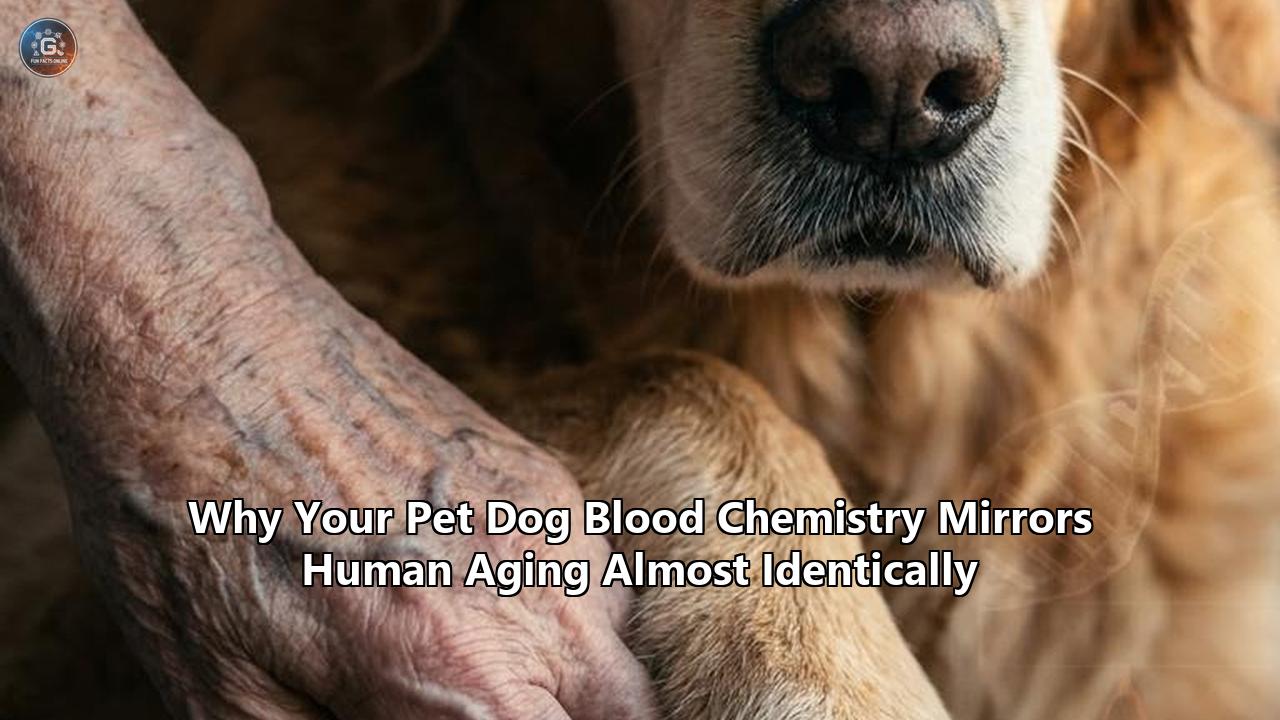
In late 2025 and early 2026, researchers analyzing data from the Dog Aging Project—a nationwide consortium tracking more than 50,000 companion animals—published a series of landmark investigations in The Journals of Gerontology and Aging Cell. The findings confirmed an astonishing biological reality: the biochemical profile of an aging pet dog's blood mirrors the molecular progression of human aging with near-perfect fidelity.
By evaluating the plasma metabolomes, epigenetic methylation patterns, and routine hematological panels of deeply phenotyped companion dogs, scientists discovered that the molecular markers predicting frailty, organ decline, and mortality in dogs are virtually identical to those established across decades of human epidemiological studies.
                    SHARED BIOCHEMICAL AGING DYNAMICS

   Human Aging Timeline (Decades)          Canine Aging Timeline (Years)
   0 -------- 20 -------- 50 -------- 80   0 --- 2 --- 5 --- 10 --- 15
   │          │          │          │     │   │   │    │    │
   ├──────────┴──────────┴──────────┤     ├───┴───┴────┴────┤
   │  • Declining Glomerular Rate   │     │  • Rapid ptmAA Clearance Loss
   │  • Uremic Catabolite Rise      │ ──> │  • Identical Catabolite Spikes
   │  • Kynurenine/Tryptophan Shift │ <── │  • Identical Inflammaging Markers
   │  • Conserved Epigenetic Drift  │     │  • Dual-Species Methylome Clocks
   └────────────────────────────────┘     └────────────────────────────────┘
The implications ripple across veterinary practice, human medicine, and the biotechnology industry. For decades, biomedical research has foundered in the "translational valley of death," where more than 90 percent of longevity and metabolic drugs that succeed in laboratory mice subsequently fail in human clinical trials. The newly characterized canine blood chemistry proves that pet dogs, who share human environments, tap water, sleep interruptions, and microplastic exposures, serve as an extraordinarily accurate translational bridge.
Because domestic dogs progress through their lifespan roughly seven to ten times faster than humans, biological shifts that take up to 30 years to manifest in human blood panels can be evaluated in canines within two to three years. This parallel allows scientists to compress decades-long clinical longevity trials into rapid, actionable interventional studies.
The Biochemical Mirror: Decoding the Aging Plasma Metabolome
The core of this discovery lies within the metabolome: the complete inventory of low-molecular-weight metabolites circulating in the bloodstream that represent the functional end-products of cellular processes. When researchers surveyed 133 distinct plasma metabolites within the Dog Aging Project's Precision Cohort—a subset of 937 dogs undergoing intense annual clinical profiling—they found that approximately 36 to 40 percent of all measured molecules exhibited significant, age-dependent alterations.
          METABOLIC DERANGEMENT SPECTRUM IN AGING CANINES

  Plasma Concentration
  ▲
  │                                     [ptmAAs & Uremic Solutes]
  │                                        / (Kidney clearance loss)
  │                                       /
  │                                      /   [Kynurenine / Inflammatory]
  │                                     /   /  (Immune senescence)
  │                                    /   /
  │   [Essential Amino Acids]         /   /
  │   [Phospholipids/Sphingomyelins] /   /
  │         \                       /   /
  │          \                     /   /
  │           \                   /   /
  │            ▼                 /   ▼
  └─────────────────────────────┴─────────────────────────►
  Early Life / Adulthood                        Senior / Geriatric
When these metabolic profiles were benchmarked against human datasets—including cohorts from the UK Biobank, the Framingham Heart Study, and the Atherosclerosis Risk in Communities (ARIC) study—the directional correlation of mortality-associated metabolites reached Pearson correlation coefficients between $r = 0.37$ and $r = 0.85$ ($p < 0.05$). The chemicals that signal impending organ decline or protective resilience in an 80-year-old human are the very same molecules doing so in an 11-year-old Golden Retriever.
+------------------------------------+---------------------------------------+---------------------------------------+
| Biochemical Pathway                | Canine Plasma Signature               | Human Plasma Signature                |
+------------------------------------+---------------------------------------+---------------------------------------+
| Protein Catabolism (ptmAAs)        | Marked elevation of methylarginines,  | Equivalent accumulation of modified   |
|                                    | hydroxyproline, and acetyllysines.   | amino acids from proteasomal breakdown|
+------------------------------------+---------------------------------------+---------------------------------------+
| Renal Clearance & Glomerular Flow  | Progressive accumulation of indoxyl   | Retention of uremic toxins driving    |
|                                    | sulfate, p-cresol sulfate, and BUN.   | cardiorenal metabolic decline.        |
+------------------------------------+---------------------------------------+---------------------------------------+
| Tryptophan / Kynurenine Pathway    | Increased kynurenine-to-tryptophan    | Elevated IDO-1 activity signaling     |
|                                    | ratio signaling chronic inflammation. | systemic low-grade inflammaging.      |
+------------------------------------+---------------------------------------+---------------------------------------+
| Lipid Homeostasis & Acylcarnitines | Depletion of polyunsaturated lipids,  | Accumulation of incomplete fatty acid |
|                                    | elevation of short-chain carnitines.  | oxidation products and ceramides.     |
+------------------------------------+---------------------------------------+---------------------------------------+
| Epigenetic DNA Methylation         | Conserved CpG methylation drift across| Linear methylation changes across     |
|                                    | polycomb repressive complexes.        | Horvath & GrimAge epigenetic domains. |
+------------------------------------+---------------------------------------+---------------------------------------+
Protein Catabolites and Post-Translationally Modified Amino Acids
A primary driver of the aging blood signature in both species is the accumulation of post-translationally modified amino acids (ptmAAs). These molecules—including asymmetric dimethylarginine (ADMA), symmetric dimethylarginine (SDMA), 3-methylhistidine, and mono-methyllysine—are produced exclusively when cellular proteins are degraded via autophagy and proteasomal pathways.
Under normal physiological conditions in young dogs and humans, intact cellular machinery hydrolyzes damaged proteins, and the resulting ptmAAs are processed by the liver or cleared by the renal glomeruli. With advancing age, two parallel events occur across both species:
- Cellular Protein Turnover Alterations: Structural proteins, particularly collagen in the extracellular matrix and skeletal muscle actomyosin, suffer cumulative oxidative and non-enzymatic glycation damage. The rate of proteolysis increases to clear this dysfunctional structural debris.
- Declining Glomerular Filtration Rates (GFR): As renal nephrons undergo age-associated sclerosis, the clearance rate of these modified residues drops precipitously.
The Dog Aging Project team demonstrated that clinical measures of kidney function mediated roughly half of the elevated ptmAA concentrations in older dogs. The identical phenomenon occurs in aging humans, where circulating ADMA and SDMA serve as independent risk factors for endothelial dysfunction, arterial stiffness, and all-cause cardiovascular mortality.
The Kynurenine-to-Tryptophan Inflammatory Axis
The blood chemistry of aging canines reveals deep immunological remodeling, closely matching the chronic, low-grade systemic inflammation known in human medicine as "inflammaging."
Central to this process is the tryptophan metabolic cascade. As dogs age, the essential amino acid tryptophan is progressively shunted away from the serotonin and melatonin pathways and directed into the kynurenine pathway. This enzymatic conversion is catalyzed by indoleamine 2,3-dioxygenase (IDO-1), an enzyme directly upregulated by pro-inflammatory cytokines such as interferon-gamma (IFN-$\gamma$) and interleukin-6 (IL-6).
                      TRYPTOPHAN DEGRADATION DYNAMICS

                             [ L-Tryptophan ]
                                    │
                  ┌─────────────────┴─────────────────┐
                  │ (Healthy Youth)                   │ (Inflammaging / Aging)
                  ▼                                   ▼
          Serotonin / Melatonin               Indoleamine 2,3-dioxygenase
        (Neurotransmitter Balance)                     (IDO-1)
                                                      │
                                                      ▼
                                               [ Kynurenine ]
                                                      │
                                      ┌───────────────┴───────────────┐
                                      ▼                               ▼
                              Kynurenic Acid                  Quinolinic Acid
                           (Neuroprotective)                 (Neurotoxic NMDA
                                                              Agonist / ROS)
In older dogs, the circulating kynurenine-to-tryptophan ratio rises steadily. This shift produces downstream neurotoxic metabolites, such as quinolinic acid, while depleting kynurenic acid. In human clinical neurology, this exact shift correlates with Alzheimer's disease, vascular dementia, and sarcopenia. In dogs, this metabolic fingerprint tracks the clinical onset of Canine Cognitive Dysfunction (CCD)—a neurodegenerative disorder that mirrors human Alzheimer’s neuropathology, complete with cerebral amyloid-$\beta$ plaques and tau hyperphosphorylation.
Lipidomic Remodeling and Mitochondrial Exhaustion
The lipidomic profile in canine blood chemistry undergoes a systemic shift that closely tracks human metabolic decline. Young canines maintain high levels of long-chain polyunsaturated fatty acids (PUFAs) integrated into circulating phosphatidylcholines and sphingomyelins. In senior dogs, mass spectrometry reveals an accumulation of medium-chain and short-chain acylcarnitines alongside elevated ceramides.
Acylcarnitines serve as molecular transport vehicles, moving fatty acids across the inner mitochondrial membrane for $\beta$-oxidation. When mitochondrial respiratory chains become uncoupled or structurally compromised due to reactive oxygen species (ROS) accumulation, fatty acid oxidation stalls midway.
Incomplete oxidation products leak back into the blood plasma as circulating acylcarnitines. In human geroscience, elevated plasma acylcarnitines represent a clinical hallmark of insulin resistance, heart failure with preserved ejection fraction (HFpEF), and frailty. Its emergence in older dogs confirms that mitochondrial energetic failure follows a shared evolutionary blueprint.
Epigenetic Alignment: The Conserved Mammalian Clock
Metabolite levels fluctuate in response to transient physiological states, but DNA methylation provides a permanent record of biological age. Comparative genomic studies by Dr. Trey Ideker and Dr. Steve Horvath have revealed that DNA methylation patterns in companion dogs mirror human epigenetics with high fidelity across millions of conserved cytosine-phosphate-guanine (CpG) sites.
  Methylation Level (CpG Islands)
  ▲
  │                                    / [Polycomb Target Genes / Developmental]
  │                                   /   (Progressive Hypermethylation)
  │                                  /
  │                                 /
  │   [Active Promoters / Tissue-Specific]
  │         \
  │          \
  │           \   (Progressive Hypomethylation / Loss of Heterochromatin)
  │            ▼
  └──────────────────────────────────────────────────────────►
  Birth / Development                                Advanced Age
When comparing dog aging vs human aging, classical lore has relied on the "multiply by seven" heuristic. Epigenetic sequencing proves this linear calculation is biologically inaccurate. Instead, methylome alignment demonstrates that the relationship between canine and human biological age follows a logarithmic curve defined by shared evolutionary milestones.
$$\text{Human Age Equivalent} = 16 \times \ln(\text{Dog Age}) + 31$$
+---------------+-----------------------------+-----------------------------+------------------------------------+
| Dog Age (Yrs) | Classical Myth (x7 Model)   | Epigenetic Reality (Log)    | Shared Physiological Milestone     |
+---------------+-----------------------------+-----------------------------+------------------------------------+
| 0.2 (8 weeks) | 1.4 years                   | 0.8 years (9 months)        | Deciduous tooth eruption, weaning  |
+---------------+-----------------------------+-----------------------------+------------------------------------+
| 1.0           | 7.0 years                   | 31.0 years                  | Post-pubertal skeletal maturity    |
+---------------+-----------------------------+-----------------------------+------------------------------------+
| 2.0           | 14.0 years                  | 42.1 years                  | Full adult cellular consolidation  |
+---------------+-----------------------------+-----------------------------+------------------------------------+
| 5.0           | 35.0 years                  | 56.7 years                  | Mid-life metabolic inflection point|
+---------------+-----------------------------+-----------------------------+------------------------------------+
| 8.0           | 56.0 years                  | 64.3 years                  | Onset of chronic multi-morbidity   |
+---------------+-----------------------------+-----------------------------+------------------------------------+
| 12.0          | 84.0 years                  | 70.8 years                  | Advanced senescent frailty         |
+---------------+-----------------------------+-----------------------------+------------------------------------+
| 16.0          | 112.0 years                 | 75.4 years                  | Centenarian-equivalent survival    |
+---------------+-----------------------------+-----------------------------+------------------------------------+
The mathematical model highlights a fundamental dynamic: dogs age at an accelerated rate during their first two years of life, establishing adult epigenetic marks quickly, after which their biological epigenetic clock slows to a steady, predictable pace.
Dual-species epigenetic clocks constructed from conserved mammalian methylation arrays achieve correlation coefficients of $R = 0.97$. This concordance confirms that identical gene networks undergo epigenetic silencing or activation over time.
Genes controlled by Polycomb group protein targets—which govern developmental patterning, stem cell pluripotency, and tissue regeneration—undergo hypermethylation in both dogs and humans. Concurrently, globally active promoter regions lose methylation marks, leading to genomic instability and the activation of transposable elements.
The Breed Size Longevity Divergence and IGF-1 Signaling
The domestic dog presents an evolutionary paradox: unlike most mammalian classes where larger species outlive smaller ones (an elephant outlives a mouse), small dog breeds live up to twice as long as giant breeds. A Chihuahua frequently reaches 16 to 18 years, whereas an English Mastiff or Great Dane often succumbs to age-related degenerative conditions by age 7 or 8.
Blood chemistry and epigenetic analysis explain the drivers of this divergence. Epigenetic profiling across 864 dogs showed that large-breed dogs accumulate approximately 0.37 additional years of epigenetic aging per chronological calendar year compared to small breeds. For every additional year of residual epigenetic age acceleration, a dog faces an approximate 34 percent increase in mortality risk.
  Epigenetic Age Acceleration
  ▲
  │                                              / Giant Breeds (Mastiff, Great Dane)
  │                                             /  [Elevated Basal IGF-1 / GH Axis]
  │                                            /   [Rapid Telomere Attrition Rate]
  │                                           /
  │                                          /
  │                                         /    Medium Breeds (Retriever, Collie)
  │                                        /
  │                                       /
  │                                      /       Toy Breeds (Chihuahua, Toy Poodle)
  │                                     /        [Low Basal IGF-1 / Conserved Repair]
  │                                    /
  └───────────────────────────────────┴───────────────────────►
  Chronological Lifespan (Years)
At the biochemical level, this disparity is driven by the Insulin/Insulin-Like Growth Factor 1 (IGF-1) signaling axis. Large and giant breeds possess specific single-nucleotide polymorphisms (SNPs) within the IGF1 gene and its receptor (IGF1R) that maintain high circulating concentrations of serum IGF-1 throughout adulthood.
While elevated IGF-1 drives rapid skeletal growth and massive cell proliferation during puppyhood, it permanently suppresses defensive cellular maintenance mechanisms in adult life. The persistent activation of downstream mammalian Target of Rapamycin (mTOR) complexes downregulates macroautophagy, diminishes cellular proteostasis, accelerates stem cell pool exhaustion, and triggers early-onset cellular senescence.
             IGF-1 / mTOR SIGNALING DRIVERS OF AGING

                     [ Elevated Serum IGF-1 ]
                                │
                                ▼
                       [ PI3K / AKT Cascade ]
                                │
                                ▼
                       [ mTORC1 Hyperactivation ]
                                │
        ┌───────────────────────┼───────────────────────┐
        ▼                       ▼                       ▼
Autophagy Arrest        SASP Secretion           Stem Cell Exhaustion
(Misfolded protein       (Pro-inflammatory        (Loss of regenerative
 accumulation)           cytokine storm)          capacity in tissues)
        │                       │                       │
        └───────────────────────┼───────────────────────┘
                                ▼
                   Accelerated Canine Aging
Stakeholder Impact Analysis
+--------------------------+------------------------------------+-------------------------------------------+
| Affected Group           | Immediate Operational Shift        | Strategic / Long-Term Impact              |
+--------------------------+------------------------------------+-------------------------------------------+
| Companion Pet Owners     | Access to pre-symptomatic lifespan | Evolution from reactive treatment to      |
|                          | diagnostics via routine vet bloods.| preventative longevity interventions.     |
+--------------------------+------------------------------------+-------------------------------------------+
| Veterinary Practitioners | Expansion of standard biochemistry | Adoption of geroscience-guided medicine,  |
|                          | into multi-omic longevity profiles.| biological age staging, and senolytics.   |
+--------------------------+------------------------------------+-------------------------------------------+
| Longevity Biotech Firms  | Shift from non-predictive rodents  | Multi-million-dollar clinical trial       |
|                          | to canine clinical platforms.      | de-risking and accelerated FDA approval.  |
+--------------------------+------------------------------------+-------------------------------------------+
| Human Longevity Sciences | Utilization of dual-species trials | 10x compression of human translation      |
|                          | to establish primary endpoints.    | timelines (evaluating efficacy in 3 yrs). |
+--------------------------+------------------------------------+-------------------------------------------+
Companion Pet Owners
For decades, dog owners managed pet health reactively: a dog developed osteoarthritis, began coughing from congestive heart failure, or presented with jaundice from hepatic carcinoma, prompting acute clinical intervention.
The mapping of the canine aging blood metabolome upends this model. Pet owners now face a fundamental change in veterinary care:
- Pre-symptomatic Interventions: Systemic metabolic decline can now be detected via specialized blood chemistry panels up to three years before clinical symptoms manifest.
- Biomarker-Driven Lifestyle Management: Pet owners can modify diets, adjust exercise regimens, and begin targeted metabolic supplements while cells are still capable of repair.
- Informed End-of-Life and Healthspan Choices: Quantifiable biological age data provides objective guidance on frailty, moving beyond subjective assessments of quality of life.
Veterinary Medicine and Clinical Practitioners
Primary care veterinarians operate on the front lines of canine geriatrics, where senior animals make up more than 44 percent of the patient population. Veterinary practices face an operational shift:
- Redefining the "Senior Chem Panel": Routine testing, historically limited to broad measures like Blood Urea Nitrogen (BUN), alkaline phosphatase (ALP), and basic creatinine, is expanding to incorporate targeted biomarker profiling, including SDMA ratios, ptmAA concentrations, and high-sensitivity C-reactive protein (c-CRP).
- Managing Biological vs. Chronological Age: Veterinarians must interpret discordances where an 8-year-old dog presents with the biological methylome of a 12-year-old, demanding aggressive, specialized clinical monitoring.
- Prescribing Geroprotectors: Clinicians are transitioning toward prescribing direct longevity interventions, including mTORC1 inhibitors, caloric restriction mimetics, and metabolic modulators.
Longevity Biotechnology Companies
Biotech firms developing anti-aging therapies previously faced an agonizing choice: spend three to four years running murine studies with poor translational predictive power, or commit hundreds of millions of dollars to human clinical trials lasting decades.
Canine geroscience provides an efficient alternative:
- De-risking Drug Pipelines: Companies such as Loyal (Cellular Longevity, Inc.) and institutions running the TRIAD trials utilize companion dogs to validate efficacy, pharmacokinetic profiles, and biomarker modulation in real-world environments.
- Conditional Regulatory Pathways: By working through the FDA Center for Veterinary Medicine's Expanded Conditional Approval (XCA) pathway, biopharma can commercialize animal healthspan therapies upon proving safety and demonstrating a "reasonable expectation of effectiveness," generating revenue while continuing pivotal longitudinal lifespan studies.
       CONVENTIONAL VS. COMPANION CANINE TRANSLATIONAL PIPELINES

  Traditional Mouse-to-Human Route (High Failure Rate):
  [ Inbred Lab Mice ] ──► [ Phase I Human ] ──► [ Phase II/III Human ] ──► 90%+ Failure
  (Sterile environment)   (High variability)    (10-30 Years / $1B+)       (Translational gap)

  Modern Dual-Species Route (High Predictive Fidelity):
  [ Companion Dogs ]  ──► [ Parallel Veterinary ] ──► [ Accelerated Human ] ──► Validated Success
  (Shared exposome,        (3-Year Trial Windows,      (De-risked targets,     (Shared molecular
   identical blood chem)    XCA FDA pathway)            validated biomarkers)   pathology)
Human Longevity Researchers
Human clinical gerontologists face an evidentiary bottleneck: proving that a drug extends human life requires decades of observational study. Because all-cause mortality biomarkers in companion dogs match human mortality markers with high statistical concordance, geroscience researchers can run prospective, placebo-controlled longevity trials in dogs to generate high-confidence predictions for human trials within a three-year window.
The Root Causes: Why Dogs Mirror Humans While Mice Do Not
Biomedical science has relied on rodent models for over a century, yet interventions that reliably extend mouse lifespan—such as extreme caloric restriction, methionine restriction, or specific genetic knockouts—rarely produce equivalent benefits in human trials. Understanding the shared blood chemistry between dogs and humans requires examining why dogs mirror human aging biology while laboratory rodents fail to do so.
+------------------------------+---------------------------+---------------------------+---------------------------+
| Physiological Feature        | Laboratory Rodent         | Companion Canine          | Human                     |
+------------------------------+---------------------------+---------------------------+---------------------------+
| Genetic Background           | Inbred, isogenic lines    | Outbred, high phenotypic  | Outbred, high phenotypic  |
|                              | (near-zero diversity)     | and genetic diversity     | and genetic diversity     |
+------------------------------+---------------------------+---------------------------+---------------------------+
| Living Environment           | Pathogen-free barrier,    | Real-world shared home    | Real-world complex modern |
|                              | constant 20°C ambient     | environment (exposome)    | environment (exposome)    |
+------------------------------+---------------------------+---------------------------+---------------------------+
| Telomere Biology             | Ultra-long telomeres      | Regulated telomere lengths| Regulated telomere lengths|
|                              | with active telomerase    | matching human dynamics   | with gradual attrition    |
+------------------------------+---------------------------+---------------------------+---------------------------+
| Multi-morbidity Architecture | Specific strain-dependent | Spontaneous multi-organ   | Spontaneous multi-organ   |
|                              | single-neoplasm failures  | comorbidity networks      | comorbidity networks      |
+------------------------------+---------------------------+---------------------------+---------------------------+
| Immune System Profile        | Immature, naive immune    | Antigen-experienced,      | Antigen-experienced,      |
|                              | system lacking exposures  | true memory T-cell drift  | true memory T-cell drift  |
+------------------------------+---------------------------+---------------------------+---------------------------+
The Shared Human Exposome
Laboratory mice live in hyper-controlled, artificial environments. They are housed in sterile, pathogen-free micro-isolator cages, maintained at constant temperatures below their thermoneutral zone, fed identical grain chow ad libitum, and shielded from external disruptions.
Companion dogs live inside human homes and experience the human exposome:
                          THE SHARED HUMAN EXPOSOME

                      ┌─────────────────────────────┐
                      │    Shared Physical Home     │
                      │  • Indoor VOCs & Solvents   │
                      │  • Microplastic Particles   │
                      │  • Flame Retardants (PBDES) │
                      └──────────────┬──────────────┘
                                     │
         ┌───────────────────────────┼───────────────────────────┐
         ▼                           ▼                           ▼
[ Dietary Exposures ]       [ Circadian & Social ]      [ Environmental Water ]
 • Ultra-processed foods     • Secondhand stress /        • Municipal water
 • Variable feeding times      cortisol dynamics          • Fluoride / trace metals
 • Shared human table food   • Artificial lighting        • Shared microbiome
This shared exposome ensures that the non-genetic drivers of cellular aging—oxidative stress, environmental endocrine disruptors, chemical carcinogens, and erratic physical activity—operate identically in canine and human bodies. When a dog's blood shows elevated inflammatory markers, dyslipidemia, or kidney decline, it reflects physiological adaptations to the real-world environments that human bodies navigate.
Spontaneous Pathology and Multi-Morbidity Networks
Laboratory rodents rarely develop the complex, interconnected chronic diseases typical of human aging. A C57BL/6 mouse typically dies of strain-specific lymphomas or histiocytic sarcomas rather than atherosclerotic vascular collapse, sporadic Alzheimer's disease, or complex osteoarthritis.
Companion dogs develop spontaneous age-associated diseases that form intricate comorbidity networks matching those observed in human geriatric medicine. A 2026 analysis of 26,614 dogs from the Dog Aging Project demonstrated that diseases cluster together in older canines in clear networks:
- Cardiorenal-Metabolic Syndrome: Chronic kidney disease (CKD), systemic arterial hypertension, and degenerative mitral valve disease (DMVD) progress together, driven by identical renin-angiotensin-aldosterone system (RAAS) overactivation.
- Musculoskeletal and Neurocognitive Decline: Severe osteoarthritis tracks directly with Canine Cognitive Dysfunction, reflecting shared systemic inflammatory cascades and central nervous system microglial activation.
- Endocrine-Ocular Dysfunction: Spontaneous canine diabetes mellitus triggers rapid diabetic cataract formation, microvascular retinopathy, and peripheral neuropathies matching human type 1 and late-stage type 2 diabetic sequelae.
When testing a geroprotective compound on canine blood chemistry, researchers evaluate its effect on a complex multi-organ system rather than a simplified, isolated laboratory phenotype.
Interventional Longevity: Clinical Trials Reshaping Medicine
The realization that canine blood mirrors human aging has shifted geroscience from observational biology into active interventional trials. Multiple drug classes designed to slow, pause, or reverse biological aging markers are currently undergoing evaluation in companion dogs.
       CANINE INTERVENTIONAL GEROSCIENCE LANDSCAPE (2025–2026)

  Intervention Pipeline:

  TRIAD Trial (Rapamycin)
  [ Low-dose Intermittent mTORC1 Inhibition ]
  └── Status: Multi-center phase running via DAP / NIA funding
  └── Target: Cardiac remodeling, cognitive scores, all-cause mortality

  LOY-001 / LOY-003 (Loyal / Cellular Longevity)
  [ Long-Acting Injectable / Daily Pill targeting IGF-1 Axis ]
  └── Status: FDA RXE completed; XCA approval pathway for large dogs
  └── Target: Normalizing GH/IGF-1 signaling to rescue lifespan deficit

  LOY-002 (Loyal / Cellular Longevity)
  [ Daily Metabolic Caloric Restriction Mimetic ]
  └── Status: FDA TAS & RXE accepted; 1,300-dog STAY clinical trial
  └── Target: Insulin sensitivity, mitochondrial recovery in senior dogs
The TRIAD Trial: Testing Rapamycin in Aging Dogs
The primary interventional study in veterinary geroscience is the Test of Rapamycin in Aging Dogs (TRIAD), a double-blind, randomized, placebo-controlled multicenter trial conducted under the Dog Aging Project.
Funded by a $7 million grant from the National Institute on Aging (NIA), the trial evaluates healthy, middle-aged companion dogs receiving either low-dose, intermittent oral rapamycin (sirolimus) or a placebo for one year, followed by two years of close clinical monitoring.
Rapamycin specifically inhibits mammalian Target of Rapamycin Complex 1 (mTORC1), a master nutrient-sensing protein kinase that, when hyperactive, blocks autophagy, impairs mitochondrial turnover, and accelerates cell senescence.
              MECHANISM OF ACTION: RAPAMYCIN (TRIAD TRIAL)

                         [ Low-Dose Rapamycin ]
                                    │
                                    ▼
                         [ mTORC1 Direct Inhibition ]
                                    │
         ┌──────────────────────────┼──────────────────────────┐
         ▼                          ▼                          ▼
[ Autophagy Activation ]   [ SASP Suppression ]       [ Proteostasis Rescue ]
 • Clearance of damaged     • Reduction of IL-6,       • Prevention of ptmAA
   mitochondria (Mitophagy)   TNF-α, systemic CRP        accumulation
 • Left ventricular         • Reversal of microglial   • Preservation of
   systolic improvement      activation in brain        skeletal muscle mass
Early results from TRIAD and its preparatory cohorts demonstrate measurable physiological reversals:
- Cardiac Functional Rejuvenation: Echocardiographic tracking revealed significant improvements in left ventricular systolic function and reductions in age-associated ventricular wall hypertrophy after ten weeks of low-dose intermittent treatment.
- Cognitive Function Stabilization: Dogs receiving active treatment showed an approximate 30 percent improvement in cognitive assessment scores relative to control animals.
- Metabolomic Normalization: Serum blood chemistry panels in treated canines exhibited downward corrections in circulating inflammatory metabolites and stabilizing ptmAA clearance curves.
Loyal's LOY-001, LOY-002, and the STAY Study
Biotechnology startup Loyal (Cellular Longevity, Inc.) has built an advanced pipeline targeting canine longevity, achieving major regulatory milestones through the FDA's Center for Veterinary Medicine:
- LOY-001 / LOY-003: Formulated for large and giant breeds (dogs $\ge 40$ lbs and $\ge 7$ years old for LOY-001; $\ge 60$ lbs and $\ge 5$ years old for LOY-003), this drug downregulates the hyperactive growth hormone/IGF-1 axis. In 2023, the FDA formally accepted the Reasonable Expectation of Effectiveness (RXE) technical section for LOY-001—the first time any regulatory body acknowledged that a drug could be developed and approved to target biological aging and extend lifespan.
- LOY-002: Designed for senior companion dogs of any breed (aged 10+ and weighing $\ge 14$ lbs), LOY-002 acts as a caloric restriction mimetic, targeting age-associated metabolic dysfunction, peripheral insulin resistance, and blood glucose volatility.
In December 2025 and January 2026, the FDA completed reviews for both the Reasonable Expectation of Effectiveness and the Target Animal Safety (TAS) dossiers for LOY-002. This cleared two of the three main hurdles required for conditional market approval under the Expanded Conditional Approval (XCA) pathway.
Loyal's parallel STAY study—a double-blind, placebo-controlled trial enrolling more than 1,300 companion dogs across 70 independent veterinary hospitals—stands as the largest prospective clinical longevity trial in veterinary history.
          LOYAL FDA EXPANDED CONDITIONAL APPROVAL (XCA) ROADMAP

  [ Reasonable Expectation of Effectiveness (RXE) ] ──► ACCEPTED BY FDA
                           │
  [ Target Animal Safety Submission (TAS) ]        ──► ACCEPTED BY FDA
                           │
  [ Chemistry, Manufacturing & Controls (CMC) ]    ──► PENDING FINAL REVIEW
                           │
                           ▼
     [ FDA Expanded Conditional Approval (XCA) Granted ]
                           │
         ┌─────────────────┴─────────────────┐
         ▼                                   ▼
[ Commercial Veterinary Access ]   [ STAY Study Completion (2029) ]
(Prescription availability)        (Full Lifespan Efficacy Data -> Full Approval)
Direct Biological Parallels Across Key Organ Systems
To appreciate how canine blood chemistry tracks human aging, it is helpful to examine the organ-specific degradation cascades shared by both species.
       ORGAN-SPECIFIC AGING CASCADES: CANINE VS. HUMAN

                     [ Brain / CNS ]
                     • Amyloid-β accumulation
                     • Microglial inflammaging
                     • Blood-brain barrier leakage
                            │
                            ├──────────────────────────┐
                            │                          │
                            ▼                          ▼
               [ Cardiovascular System ]      [ Renal Architecture ]
               • Left ventricular stiffness   • Glomerulosclerosis
               • Endothelial dysfunction      • Decreasing GFR
               • Loss of arterial compliance  • Accumulation of uremic toxins
                            │                          │
                            └─────────────┬────────────┘
                                          │
                                          ▼
                             [ Musculoskeletal System ]
                             • Sarcopenic muscle wasting
                             • Extracellular matrix fibrosis
                             • Proteasomal ptmAA shedding
Cardiovascular Pathophysiology
Aging in both dogs and humans involves progressive left ventricular remodeling, arterial stiffening, and myocardial fibrosis:
- Endothelial Nitric Oxide Depletion: Elevated asymmetric dimethylarginine (ADMA) uncouples endothelial nitric oxide synthase (eNOS), causing baseline vasoconstriction and systemic hypertension.
- Matrix Metalloproteinase (MMP) Dysregulation: MMP-2 and MMP-9 activity increases in circulating serum, degrading the elastin scaffold of central arterial walls while driving the interstitial collagen deposition that leads to cardiac stiffness and diastolic dysfunction.
- Biomarker Parallels: N-terminal pro-B-type natriuretic peptide (NT-proBNP) and cardiac troponin I (cTnI) show identical age-related baseline elevations in older dogs and humans, serving as quantitative indicators of ongoing subclinical cardiomyocyte stress.
Central Nervous System and Cognitive Decline
The blood-brain barrier (BBB) degrades as both species age, allowing systemic inflammatory molecules to penetrate the central nervous system:
- Neurofilament Light Chain (NfL): When cortical neurons experience axonal degeneration or demyelination, NfL leaks across the disrupted blood-brain barrier into the bloodstream. Serum NfL levels rise in direct proportion to cognitive decline in both Alzheimer’s patients and dogs with Canine Cognitive Dysfunction.
- Systemic Uric Acid and Purine Catabolites: Derangements in circulating purines correlate with microglial activation, astrogliosis, and oxidative cerebral damage in both species.
Renal and Hepatic Functional Decay
The metabolic processing capacity of the kidneys and liver defines the biochemical composition of aging blood:
- Symmetric Dimethylarginine (SDMA): In both veterinary and human nephrology, SDMA serves as an accurate, muscle-mass-independent biomarker for glomerular filtration rate (GFR). SDMA begins rising when approximately 25 to 40 percent of renal function is lost, long before traditional serum creatinine levels exceed reference intervals.
- Hepatic Cytochrome P450 Clearance: Phase I and Phase II hepatic biotransformation pathways decline with age in both canines and humans, reducing the clearance of xenobiotics, lipid peroxides, and endogenous steroid metabolites.
Immediate Diagnostic Transformations in Veterinary Medicine
The realization that canine blood chemistry mirrors human aging is transforming standard veterinary clinical diagnostics. The traditional annual wellness panel is being replaced by predictive longevity profiles designed to measure biological age and identify micro-metabolic failure.
  TRADITIONAL VS. NEXT-GENERATION VETERINARY BLOOD TESTING

  Traditional Wellness Panel:
  [ BUN / Creatinine ] ──► Detects failure ONLY after 75% nephron death
  [ Gross ALT / ALP  ] ──► Detects gross, acute liver cell destruction
  [ Total White Count] ──► Detects active, high-grade systemic infection

  Next-Generation Biological Longevity Panel:
  [ SDMA & ptmAA Assay] ──► Detects early glomerular decline at 25% loss
  [ Kyn / Trp Ratio   ] ──► Quantifies chronic neuro-inflammatory shift
  [ High-Sensitivity c-CRP] ──► Measures low-grade vascular inflammaging
  [ Epigenetic Methylation] ──► Quantifies true biological vs chronological age
Next-Generation Canine Longevity Panels
Veterinary diagnostic laboratories are deploying next-generation blood panels that incorporate systems-biology biomarkers:
- Quantified ptmAA Profiles: High-throughput liquid chromatography-tandem mass spectrometry (LC-MS/MS) measures circulating ADMA, SDMA, and 3-methylhistidine to assess systemic protein catabolism and early-stage renal filtration decline.
- Inflammatory Cytokine Mapping: Multi-analyte immunoassay panels quantify canine interleukin-6 (cIL-6), tumor necrosis factor-alpha (cTNF-$\alpha$), and high-sensitivity canine C-reactive protein (c-CRP) to compute an individualized "Inflammaging Index."
- Direct Epigenetic Biological Age Testing: Commercial sequencing panels evaluate conserved CpG island methylation from peripheral blood leukocytes, giving veterinarians and owners a precise biological age metric compared to breed-specific chronological baselines.
Long-Term Implications for Human Longevity and Geroscience
The shared blood chemistry of dogs and humans bridges a crucial gap in biomedical research, establishing a unified cross-species framework for longevity science.
                  THE UNIFIED GEROSCIENCE FLYWHEEL

                    ┌────────────────────────────┐
                    │ High-Throughput Screening  │
                    │ (AI platforms, C. elegans, │
                    │  cell senescence assays)   │
                    └─────────────┬──────────────┘
                                  │
                                  ▼
                    ┌────────────────────────────┐
                    │ Companion Canine Validation│
                    │ • 2 to 3-year trial window │
                    │ • Shared human exposome    │
                    │ • Identical blood chemistry│
                    └─────────────┬──────────────┘
                                  │
                                  ▼
                    ┌────────────────────────────┐
                    │ Human Translation (Phase 3)│
                    │ • De-risked targets        │
                    │ • Validated multi-omics    │
                    │ • High approval success    │
                    └────────────────────────────┘
Accelerating Human Drug Development
The most important long-term outcome of this biological mirror is the transformation of human clinical trial design:
- Compressing Translation Timelines: Rather than waiting 20 to 30 years to assess whether a candidate geroprotector lowers all-cause human mortality, researchers can conduct fully powered, randomized trials in companion dogs within 24 to 36 months.
- De-risking Capital Allocation: Interventions that successfully normalize canine blood chemistry, preserve cardiac elasticity, and extend healthy life in companion dogs can enter human Phase II/III trials with a far higher probability of clinical success.
- Validating Multi-Species Surrogate Endpoints: Finding identical metabolic mortality fingerprints across species provides regulatory bodies like the FDA with the confidence needed to accept surrogate multi-omic biomarkers in place of multi-decade lifespan trials for human anti-aging drugs.
Future Frontiers: What to Watch Next in Comparative Geroscience
The mapping of canine blood chemistry marks the beginning of a broader convergence between human and veterinary medicine. Several key developments will shape the field over the next few years:
+------------------------------------+---------------------------------------+---------------------------------------+
| Milestone / Research Vector        | Anticipated Timeline                  | Core Scientific Objective             |
+------------------------------------+---------------------------------------+---------------------------------------+
| Final Reporting of TRIAD Trial     | Late 2026 – 2027                      | Definitively prove if mTOR inhibition |
| Primary Endpoints                  |                                       | extends median lifespan in dogs.      |
+------------------------------------+---------------------------------------+---------------------------------------+
| FDA XCA Commercial Determination   | 2026 – 2027                           | First formal commercial availability  |
| for LOY-002 & LOY-001              |                                       | of an FDA-reviewed longevity drug.    |
+------------------------------------+---------------------------------------+---------------------------------------+
| Single-Cell Immune Atlas of        | 2027                                  | Map single-cell transcriptomics across|
| Aging Canine Leucocytes            |                                       | canine CD4+/CD8+ T-cell subsets.     |
+------------------------------------+---------------------------------------+---------------------------------------+
| Canine Blood-Brain Barrier         | 2027 – 2028                           | Validate blood biomarkers to detect   |
| Disruption Profiling               |                                       | pre-symptomatic cognitive decline.    |
+------------------------------------+---------------------------------------+---------------------------------------+
| Dual-Species Epigenetic Reprogram- | 2028 and beyond                       | Test Yamanaka factor (OSK) mRNA therapy|
| ming & Partial Reversal            |                                       | to reset methylation age in vivo.     |
+------------------------------------+---------------------------------------+---------------------------------------+
As the Dog Aging Project, biotechnology leaders, and academic medical centers expand their multi-omic datasets, the relationship between pet and owner is taking on profound scientific significance.
The domestic dog is no longer just a beloved household companion; it has become an indispensable partner in solving the biological mysteries of aging. By looking into our dogs' bloodstream, we see an exact reflection of our own cellular journey—and discover the keys to extending healthy life at both ends of the leash.