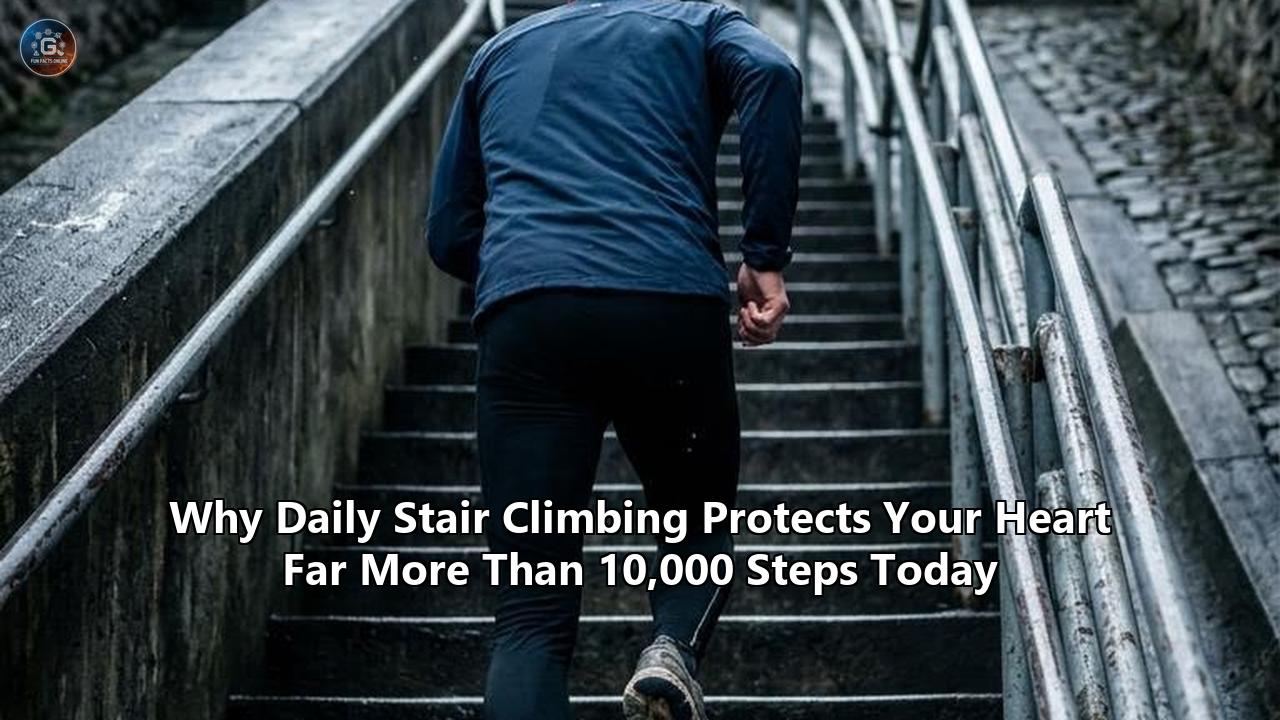
For decades, the standard benchmark for preventive cardiovascular health has been fixed at 10,000 steps per day. Yet expansive epidemiological and clinical datasets have challenged the supremacy of this flat-surface milestone.
A landmark investigation led by researchers at the Tulane University School of Public Health and Tropical Medicine, published in Atherosclerosis, analyzed over 450,000 adult participants from the UK Biobank across a median follow-up of 12.5 years. The findings revealed that ascending just five flights of stairs daily—roughly 50 individual steps—reduced the risk of atherosclerotic cardiovascular disease (ASCVD) by 20%.
This was reinforced by a comprehensive meta-analysis presented at the European Society of Cardiology’s ESC Preventive Cardiology congress by Dr. Sophie Paddock of the University of East Anglia and the Norfolk and Norwich University Hospital Foundation Trust. Evaluating data across 480,479 individuals, Dr. Paddock’s team demonstrated that regular stair climbing was associated with a 39% reduction in cardiovascular mortality and a 24% decrease in all-cause mortality compared to avoiding stairs.
+-----------------------------------------------------------------------------+
|               CARDIOVASCULAR MORTALITY & RISK PROFILE:                     |
|                   FLAT WALKING VS. STAIR CLIMBING                           |
+-----------------------------------------------------------------------------+
| METRIC                       | 10,000 FLAT STEPS       | 50+ STAIR STEPS    |
|------------------------------+-------------------------+--------------------|
| ASCVD Risk Reduction         | 8% - 14% (variable)     | 20%        |
| Cardiovascular Mortality Cut | ~15% - 22%              | 39%        |
| Metabolic Intensity          | 3.0 - 3.5 METs          | 8.5 - 10.0 METs    |
| Daily Time Required          | 75 - 100 minutes        | 3 - 6 minutes      |
| Muscular Activation Profile  | Low concentric load     | High concentric /  |
|                              | Minimal vertical torque | eccentric load     |
+-----------------------------------------------------------------------------+
These investigations establish that cardiovascular protection is driven far more by gravitational resistance, hemodynamic shear stress, and rapid metabolic demand than by simple, horizontal step accumulation. The physiological divide between logging miles on flat pavement and climbing against gravity reveals why public health guidelines are pivoting toward vertical intensity over horizontal volume.
The Tulane UK Biobank Investigation: Quantifying Vertical Load Against Genetic Risk
The Tulane University study led by Dr. Lu Qi, HCA Regents Distinguished Chair and professor at the Tulane University School of Public Health and Tropical Medicine, analyzed a cohort of 458,860 adult participants. Researchers evaluated the relationship between daily stair climbing and the incidence of major cardiovascular endpoints: coronary artery disease, ischemic stroke, and acute myocardial infarction.
                      TULANE STUDY: ASCVD HAZARD RATIOS
   +-----------------------------------------------------------------------+
   | Baseline Profile              | Daily Flights | Hazard Ratio (95% CI) |
   +-------------------------------+---------------+-----------------------+
   | Non-Climbers                  | 0 flights     | 1.00 (Reference)      |
   | Low Volume                    | 1-5 flights   | 0.97 (0.91 - 1.03)    |
   | Target Threshold              | 6-10 flights  | 0.84 (0.78 - 0.89)    |
   | High Volume                   | 11-15 flights | 0.78 (0.71 - 0.86)    |
   | Maximum Frequency             | 16-20+ flights| 0.76 (0.68 - 0.85)    |
   | Discontinued Habit at Re-test | Stopped       | 1.32 (1.07 - 1.61)   |
   +-------------------------------+---------------+-----------------------+
To isolate the specific effect of stair climbing, Dr. Qi’s team cross-referenced participant lifestyle patterns with genetic susceptibility scores derived from single nucleotide polymorphisms (SNPs) known to increase coronary artery disease risk, alongside traditional clinical markers such as baseline systolic pressure, high-sensitivity C-reactive protein (hs-CRP), and lipid ratios.
The data yielded three structural findings:
- The Threshold Effect: A clear dose-response relationship emerged between vertical ascent and cardiovascular protection. Climbing more than five flights daily (approximately 50 to 70 steps) reduced ASCVD risk by approximately 20% compared to non-climbers.
- Genetic Risk Attenuation: Among participants categorized in the highest tertile of genetic risk for cardiovascular disease, consistent daily stair climbing effectively attenuated the excess risk, bringing their clinical outcome profile closer to non-climbers in the low-risk genetic tier.
- The Penalty of Cessation: Participants who regularly climbed stairs at baseline but ceased the habit during the median 12.5-year follow-up exhibited a 32% higher risk of ASCVD compared to individuals who had never engaged in regular stair climbing at all.
"Short bursts of high-intensity stair climbing are a time-efficient way to improve cardiorespiratory fitness and lipid profile, especially among those unable to achieve the current physical activity recommendations," Dr. Qi stated upon releasing the findings. "These findings highlight the potential advantages of stair climbing as a primary preventive measure for ASCVD in the general population."
The cessation data underscores a fundamental rule of vascular biology: vascular adaptations derived from concentric high-resistance cardiovascular activity require persistent mechanical stimulus. When that stimulus disappears, vascular compliance degrades rapidly.
Hemodynamics and Shear Stress: The Vascular Mechanics of Vertical Work
Understanding why vertical displacement outperforms horizontal step volume requires looking at the hemodynamic forces exerted on the vascular endothelium.
Walking on a flat surface at a standard pace of 3.0 miles per hour produces an energetic expenditure of approximately 3.3 Metabolic Equivalents of Task (METs). This pace elicits a modest rise in heart rate and pulse pressure, generating low-to-moderate, laminar shear stress along the endothelial walls of the arterial tree.
Stair climbing, by contrast, demands 8.5 to 10.0 METs, instantly tripling energy expenditure over flat-ground ambulation. The biomechanics of lifting the body's total mass against gravity demands high force production from the quadriceps, gluteal complex, gastrocnemius, and soleus muscles.
          HEMODYNAMIC & VASCULAR ADAPTATION CASCADE

   [Vertical Ascent Against Gravity]
                 |
                 v
   [Rapid High-Metabolic Motor Recruitment (Type IIa/IIx Fibers)]
                 |
                 v
   [Sharp Increase in Stroke Volume & Left Ventricular End-Diastolic Volume]
                 |
                 v
   [Elevated Pulsatile Blood Flow & Elevated Endothelial Shear Stress]
                 |
                 v
   [Upregulation of Endothelial Nitric Oxide Synthase (eNOS) Phosphorylation]
                 |
                 v
   [Increased Systemic Bioavailability of Nitric Oxide (NO)]
                 |
                 v
   [Reduction in Carotid-Femoral Pulse Wave Velocity (cfPWV)]
                 |
                 v
   [Reversal of Arterial Stiffness + Lower ASCVD Incident Risk]
This sudden spike in muscular exertion forces an immediate hemodynamic shift. Stroke volume rises alongside an accelerated pulse rate, elevating systemic blood flow velocity.
This high-velocity flow produces pronounced frictional drag—known as fluid shear stress—across the endothelial cells lining the blood vessels.
Endothelial shear stress serves as the primary biochemical trigger for the phosphorylation of endothelial nitric oxide synthase (eNOS). Increased eNOS activation amplifies the local release of nitric oxide (NO) into the vascular tunica media, which drives several key protective changes:
- Sustained Vasodilation: Smooth muscle cells relax, lowering peripheral vascular resistance and systemic blood pressure.
- Suppression of Vascular Inflammation: Nitric oxide downregulates vascular cell adhesion molecule-1 (VCAM-1) and intercellular adhesion molecule-1 (ICAM-1), preventing circulating monocytes from adhering to arterial walls and forming atherosclerotic plaques.
- Reduction in Arterial Stiffness: Longitudinal studies show that repeated high-intensity vertical loading decreases carotid-femoral pulse wave velocity (cfPWV), a principal clinical marker of arterial aging and central aortic stiffness.
Walking 10,000 steps on flat terrain rarely reaches the shear stress threshold needed to activate this vascular cascade. While flat walking burns calories and improves basal glucose uptake, it does not consistently generate the mechanical shear rates required for rapid arterial remodeling.
Metabolic Substrate Switching and Glycemic Regulation
Beyond its hemodynamic impact, vertical stair climbing drives distinct metabolic adaptations. Lifting the body vertically activates high-threshold motor units containing Type IIa and Type IIx fast-twitch muscle fibers, which remain largely dormant during low-intensity flat walking.
+-----------------------------------------------------------------------------+
|           MUSCULAR & METABOLIC PROFILES: FLAT VS. VERTICAL WORK             |
+-----------------------------------------------------------------------------+
| PARAMETER                    | HORIZONTAL WALKING     | STAIR CLIMBING      |
|------------------------------+------------------------+---------------------|
| Primary Muscle Fiber Type    | Type I (Slow-twitch)   | Type I + Type IIa/x |
| Glucose Transporter 4 Action | Baseline insulin-dep.  | High calcium/AMPK-  |
|                              | pathway                | stimulated GLUT4    |
| Arterial Shear Stress Profile| Low, steady laminar    | High, pulsatile     |
| Lactate Production           | Negligible             | Transient moderate  |
| Post-Exercise Oxygen Demand  | Minimal (0 - 2%)       | Elevated (EPOC)     |
| Caloric Burn Rate (kcal/min) | 3.5 - 4.5              | 9.5 - 13.0          |
+-----------------------------------------------------------------------------+
When recruitment transitions to fast-twitch fibers, the muscular energetic demand shifts from free fatty acid oxidation to rapid intra-muscular glycogenolysis. This dynamic alters cardiometabolic health across several specific pathways:
Non-Insulin-Mediated Glucose Disposal
Muscular contraction against gravitational load induces rapid intracellular calcium release and activates 5' AMP-activated protein kinase (AMPK). This process triggers the translocation of Glucose Transporter Type 4 (GLUT4) vesicles to the sarcolemma membrane independent of circulating insulin.
For individuals with peripheral insulin resistance or type 2 diabetes, brief bouts of stair climbing clear glucose from the bloodstream more effectively per unit of time than prolonged moderate-intensity walking.
Postprandial Lipid Clearance
The activation of skeletal muscle lipoprotein lipase (LPL) is directly related to the intensity of muscular contractions. Elevated LPL activity accelerates the breakdown of triglyceride-rich lipoproteins and very-low-density lipoproteins (VLDL).
This clear metabolic acceleration explains the improved circulating lipid profiles documented in Dr. Qi's cohort, including higher concentrations of high-density lipoprotein cholesterol (HDL-C) and lower circulating triglycerides.
Excess Post-Exercise Oxygen Consumption (EPOC)
Because stair climbing relies partly on anaerobic pathways, it creates an oxygen deficit.
Post-exercise recovery requires sustained oxygen consumption to replenish intramuscular phosphocreatine stores, metabolize lactate, and re-oxygenate myoglobin. This elevated resting metabolic rate persists long after climbing ends, an effect largely absent with low-intensity horizontal walking.
The ESC Meta-Analysis and the Physiology of "Exercise Snacks"
The evidence supporting short, intense vertical efforts extends beyond baseline observational cohorts. The systematic review and meta-analysis led by Dr. Sophie Paddock, presented at ESC Preventive Cardiology 2024, compiled data from nine studies comprising 480,479 participants. The study population spanned both healthy individuals and patients with established histories of myocardial infarction or peripheral arterial disease, ranging in age from 35 to 84 years.
                ESC META-ANALYSIS: CLINICAL OUTCOMES
                    (Paddock et al., 480,479 Subjects)

   [Stair Climbing Cohort vs. Non-Climbing Cohort]
   |
   +---> All-Cause Mortality Reduction:         -24% (RR: 0.76, 95% CI: 0.62-0.94)
   |
   +---> Cardiovascular Mortality Reduction:    -39% (RR: 0.61, 95% CI: 0.48-0.79)
   |
   +---> Major Adverse Cardiac Events (MACE):   Significant reductions across
                                                infarction, stroke, and heart failure
"If you have the choice of taking the stairs or the lift, go for the stairs as it will help your heart," Dr. Paddock remarked. "Even brief bursts of physical activity have beneficial health impacts, and short bouts of stair climbing should be an achievable target to integrate into daily routines."
These findings align with experimental laboratory trials evaluating Vigorous Intermittent Lifestyle Physical Activity (VILPA) and "exercise snacks."
At McMaster University, a research team led by Dr. Martin Gibala investigated whether breaking up sedentary periods with stair climbing could improve cardiorespiratory fitness (measured by peak oxygen uptake, $\text{VO}_2\text{ peak}$) in sedentary adults.
+-----------------------------------------------------------------------------+
|       MCMASTER UNIVERSITY PROTOCOL: STAIR-BASED EXERCISE SNACKS             |
+-----------------------------------------------------------------------------+
| Protocol Parameter           | Experimental Design                          |
|------------------------------+----------------------------------------------|
| Frequency                    | 3 bouts per day, separated by 1 - 4 hours    |
| Bout Structure               | Ascending 3 flights (60 steps) at brisk pace |
| Total Active Time per Day    | ~60 seconds total active vertical work       |
| Duration of Intervention     | 6 weeks                                      |
| Primary Outcome Measure      | Peak Oxygen Uptake (VO2 peak) via metabolic  |
|                              | cart testing                                 |
| Secondary Outcome Measure    | Peak cycling power output & mechanical work  |
| Results Observed             | +5% to +7% increase in VO2 peak;             |
|                              | Significant improvement in cycling power     |
+-----------------------------------------------------------------------------+
The physiological significance of a 5% to 7% increase in $\text{VO}_2\text{ peak}$ from approximately 60 seconds of daily physical effort is substantial.
In clinical cardiology, cardiorespiratory fitness is one of the strongest independent predictors of all-cause and cardiovascular mortality. Every 1-MET increase in functional capacity ($\approx 3.5 \text{ mL } \text{O}_2\cdot\text{kg}^{-1}\cdot\text{min}^{-1}$) provides an estimated 12% to 15% reduction in cardiovascular mortality risk.
Flat walking can generate similar improvements in cardiorespiratory fitness, but it requires continuous sessions of 30 to 45 minutes at sustained speeds. Stair climbing achieves these adaptations in short intervals because the gravitational load forces the cardiorespiratory system to reach high-fractional oxygen utilization almost instantly.
The metabolic and functional benefits of stair climbing stem from this high-intensity cardiovascular engagement, which flat walking cannot replicate in equal timeframes.
Biomechanical Load Profiles: Ascending Versus Descending
Stair navigation involves two distinct mechanical processes: concentric ascent against gravity and eccentric descent with gravity. Each mode engages the musculoskeletal and cardiovascular systems differently, offering complementary physiological adaptations.
+-----------------------------------------------------------------------------+
|              MECHANICAL PHASES OF DAILY STAIR NAVIGATION                    |
+-----------------------------------------------------------------------------+
| BIOMECHANICAL PARAMETER     | ASCENT (Concentric)    | DESCENT (Eccentric)  |
|-----------------------------+------------------------+----------------------|
| Primary Muscle Action       | Muscle shortening      | Muscle lengthening   |
|                             | against resistance     | under tension        |
| Metabolic Cost              | High (~8.5 - 10.0 METs)| Lower (~2.5 - 3.5    |
|                             |                        | METs)                |
| Primary Drivers             | Gluteus maximus,       | Quadriceps femoris,  |
|                             | quadriceps, soleus     | patellar tendon      |
| Structural Remodeling Target| Left ventricular       | Tendon stiffness,    |
|                             | volume, eNOS synthesis | cross-bridge density |
| Microtrauma Profile         | Minimal muscle damage  | Controlled micro-    |
|                             |                        | tears; hypertrophy   |
+-----------------------------------------------------------------------------+
The Concentric Ascent Phase
Ascending requires the muscular generation of sufficient force to lift the entire center of mass vertically over the lead limb. The gluteus maximus, quadriceps femoris, and calf complex (soleus and gastrocnemius) perform primary concentric contractions.
This phase drives rapid cardiovascular strain, elevates left ventricular end-diastolic volume, triggers eNOS synthesis, and stimulates fast-twitch muscle glycogen depletion.
The Eccentric Descent Phase
Descending stairs presents a different mechanical demand. The quadriceps femoris and soleus undergo controlled lengthening under tension to decelerate the body's mass against gravity.
Eccentric contractions generate substantial mechanical tension per muscle unit at a lower overall metabolic and oxygen cost. This dynamic creates distinct health advantages:
- Muscle Fiber Remodeling: Controlled eccentric load creates functional mechanical strain, inducing muscle hypertrophy and increasing tendon stiffness without high metabolic strain.
- Improved Insulin Sensitivity: Clinical trials comparing isolated eccentric stair descent with concentric ascent demonstrate that eccentric muscle work also improves glucose tolerance and resting lipid parameters.
- Neuromuscular Coordination: Descending stairs challenges proprioception, vestibular balance, and lower-limb motor unit synchronization, helping preserve neuromuscular function with age.
Maximizing the benefits of stair climbing means embracing both phases of movement: ascent drives high cardiovascular and metabolic adaptations, while descent strengthens muscles and tendons through controlled eccentric deceleration.
Why the 10,000-Step Standard Remains Incomplete
The 10,000-steps-a-day recommendation did not originate from a clinical trial or an epidemiological threshold study.
It began as a commercial marketing initiative launched by the Yamasa Clock and Instrument Company in Japan ahead of the 1964 Tokyo Olympics. The company manufactured a pedometer named Manpo-kei, which translates directly to "10,000-steps meter." The round number was chosen for its marketing simplicity, not its biological precision.
       1965: Yamasa "Manpo-kei" Pedometer (10,000-Step Marketing Goal)
                                  |
                                  v
       Unexamined Global Adoption across Fitness Trackers & Guidelines
                                  |
            +---------------------+---------------------+
            |                                           |
            v                                           v
   [Horizontal Step Paradigm]                  [Vertical Resistance Paradigm]
   - Assumes all steps are equal               - Measures mechanical load & intensity
   - 10,000 steps = 75-100 mins                - 50-70 stairs = 3-5 mins
   - 3.0 - 3.5 METs (Low-Intensity)            - 8.5 - 10.0 METs (High-Intensity)
   - Weak shear-stress stimulus                - High shear stress & eNOS activation
   - High time-cost barrier                    - High compliance & zero equipment cost
While achieving 10,000 steps daily correlates with better health outcomes compared to sedentary behavior, public health data highlights critical limitations with this metric:
- The Time Barrier: Covering 10,000 steps requires the average adult to walk roughly four to five miles, taking between 75 and 100 minutes of daily activity. Population surveys consistently identify lack of time as the primary barrier preventing sedentary individuals from meeting exercise guidelines.
- The Intensity Blind Spot: Standard pedometers and step algorithms treat every step equally. A slow, shuffling step across a living room is counted the same as an explosive step up a flight of stairs. This masks the reality of cardiovascular conditioning: physiological adaptation depends on intensity, not just volume.
- Plateau of Returns: Large-scale prospective cohort studies, including analyses published in The Lancet Public Health, show that the mortality benefit of flat walking plateaus between 6,000 and 8,000 steps for adults aged 60 and older, and between 8,000 and 10,000 steps for younger adults. Adding more flat steps past this ceiling yields diminishing cardiovascular returns compared to increasing movement intensity.
By shifting public focus from horizontal volume to vertical intensity, clinical guidelines can offer more time-efficient, accessible health targets. Climbing 50 to 100 steps daily takes less than five minutes of total active time, broken into short bursts throughout the day, while delivering distinct vascular and metabolic protections.
   TIME INVESTMENT VS. CARDIOVASCULAR MORTALITY RISK REDUCTION

   10,000 Flat Steps [75 - 100 Minutes/Day]
   ========================================> ~20% Risk Reduction

   50-100 Stair Steps [3 - 5 Minutes/Day]
   ====> 20% to 39% Risk Reduction

   (Intensity per unit time drastically favors vertical resistance)
Architectural and Public Health Case Study: Structural Interventions
The preventive power of stair climbing has direct applications in public health and urban design. If vertical movement provides clear cardiovascular benefits over flat walking, built environments can be structured to encourage it naturally.
+-----------------------------------------------------------------------------+
|            URBAN & ARCHITECTURAL STAIR INTERVENTION STRATEGIES              |
+-----------------------------------------------------------------------------+
| INTERVENTION TYPE            | MECHANISM            | MEASURED EFFECT       |
|------------------------------+----------------------+-----------------------|
| Motivational Point-of-Choice | Signage placed at    | +50% to +200%         |
| Prompting                    | elevator/stair banks | stair-use conversion  |
| Skip-Stop Elevator Systems   | Elevators stop only  | Baseline stair usage  |
|                              | on select floors     | rises systematically  |
| Ambient Architectural Design | Well-lit, open-air,  | Up to 3.5x higher     |
|                              | visible staircases   | sustained daily use   |
| Corporate Incentive Tracking | Wearable-tracked     | Reductions in cohort  |
|                              | vertical elevations  | resting BP and hs-CRP |
+-----------------------------------------------------------------------------+
A field trial conducted by the Centers for Disease Control and Prevention (CDC) across multiple municipal buildings evaluated "Point-of-Choice" motivational prompts—simple signage placed directly between escalators/elevators and stairwells that displayed the health advantages of climbing.
The results showed that visible prompts consistently increased stair usage by 50% to 200% across diverse workplace populations.
More modern structural strategies involve "skip-stop" elevator programming, where elevators only open on every third floor, making stair use a natural part of navigating multistory buildings.
   TRADITIONAL BUILDING FLOW               ACTIVE DESIGN FLOW

   [Building Entrance]                     [Building Entrance]
            |                                       |
            v                                       v
   [Central Elevator Bank]                [Prominent Open Central Staircase]
            |                                       |
            +--> (100% Passive Lift)                +--> (Spontaneous Vertical Transit)
                                                    |
                                          [Restricted/Skip-Stop Elevator]
                                                    |
                                                    +--> (Reserved for Mobility Needs)
When buildings make stairs visually prominent, well-lit, and immediately accessible upon entry—rather than hiding them behind heavy fire doors in concrete shafts—occupants regularly use vertical transit.
These architectural changes illustrate a core public health principle: the built environment can integrate high-intensity cardiovascular conditioning directly into daily routines, removing the need for dedicated gym visits or 90-minute walking sessions.
Clinical Implementation: Protocols, Biomechanics, and Risk Stratification
Transitioning patients or sedentary individuals from flat walking to vertical climbing requires proper risk stratification and progression. Because stair climbing is an 8.5 to 10.0 MET activity, it must be prescribed thoughtfully.
       CLINICAL STAIR PRESCRIPTION FLOWCHART

            [Patient Assessment & Screening]
                           |
            +--------------+--------------+
            |                             |
            v                             v
   [Active Knee Osteoarthritis    [No Severe Joint Limitations;
    or Symptomatic Stenosis]       Sedentary to Moderately Active]
            |                             |
            v                             v
   [Modified Protocol]            [Standard Ascending Protocol]
   - Use elevators for DESCENT    - Week 1-2: 2 flights/day (20-25 steps)
   - Concentric-only climbing     - Week 3-4: 4-6 flights/day (40-60 steps)
   - Low-impact handrail use      - Target: 6-10+ flights/day (60-100+ steps)
   - Non-weight-bearing cycling   - Ascend briskly; descend at steady pace
Orthopedic Considerations and Joint Forces
While stair climbing strengthens the vastus medialis and stabilizes patellofemoral tracking, descending stairs generates compressive forces on the patellofemoral joint approximately 3 to 4 times body weight.
For patients with grade III/IV knee osteoarthritis, severe chondromalacia patellae, or symptomatic spinal stenosis, adjustments are essential.
These patients should utilize a concentric-focused protocol: climb the stairs to capture the cardiovascular and metabolic stimulus, then take the elevator down to eliminate high-load eccentric deceleration across the knee joints.
The 4-Flight Functional Cardiac Capacity Screen
In preoperative and preventive cardiology, functional stair capacity serves as a diagnostic tool.
The European Society of Cardiology notes that the ability to climb four flights of stairs (approximately 60 to 80 steps) without stopping in under one minute indicates good functional capacity, corresponding to an exercise capacity of 7 to 10 METs.
Patients who cannot achieve this threshold face higher risks of perioperative adverse cardiac events and long-term ASCVD mortality. This simple test offers a quick, equipment-free functional assessment for clinical checkups.
Progressive Loading Protocol
For sedentary individuals looking to capture the documented benefits of stair climbing, training volume should progress systematically over several weeks:
- Phase 1 (Weeks 1–2: Base Conditioning):
Volume: 2 flights per day (approx. 20–25 steps total).
Cadence: Self-paced, one step at a time, light handrail support as needed.
Objective: Neuromuscular familiarization and connective tissue adaptation.
- Phase 2 (Weeks 3–4: Cardiovascular Threshold):
Volume: 4 to 6 flights per day (approx. 40–60 steps), split into morning and afternoon intervals.
Cadence: Brisk ascent without pauses.
Objective: Stimulate endothelial shear stress and non-insulin-dependent glucose uptake.
- Phase 3 (Week 5 and Beyond: Target Cardiometabolic Maintenance):
Volume: 6 to 10+ flights per day (approx. 60–100+ steps).
Cadence: Brisk vertical ascent; take stairs across workplace, transit, and residential settings.
* Objective: Maintain vascular compliance, support lipid clearance, and secure long-term ASCVD risk reduction.
Future Directions in Vertical Exercise Science
The shift toward measuring physical activity by intensity rather than volume is reshaping exercise research and wearable fitness technology. Several key developments are currently underway:
+-----------------------------------------------------------------------------+
|             ADVANCEMENTS IN VERTICAL EXERCISE INVESTIGATION                 |
+-----------------------------------------------------------------------------+
| RESEARCH FRONTIER            | TECHNOLOGY / METHOD  | CLINICAL OBJECTIVE    |
|------------------------------+----------------------+-----------------------|
| Continuous Altimeter Sensor  | Real-time barometric | Quantify exact daily  |
| Integration                  | altimeters & IMUs    | vertical displacement |
| Molecular Transducer Mapping | Multi-omic tracking  | Profile exerkine &    |
| (MoTrPAC Alignments)         | of vertical bouts    | myokine signatures    |
| Digital Twin Hemodynamic     | AI flow simulation   | Model patient-specific|
| Modeling                     | via biosensor feeds  | shear-stress response |
| Orthopedic-Spared Vertical   | Incline variable-load| Deliver high MET load |
| Ergometry                    | vertical steppers    | with low joint stress |
+-----------------------------------------------------------------------------+
Wearable Altimetry and Smart Sensor Algorithms
Commercial fitness wearables are updating their health tracking algorithms to move beyond flat step counts. By integrating barometric altimeters with six-axis inertial measurement units (IMUs), next-generation wearables can track vertical displacement in real time.
Future digital health platforms will likely award higher activity scores for 100 vertical steps than for 2,000 flat steps, matching the physiological demands shown in recent research.
Molecular Transducers of Physical Activity
Clinical trials supported by the National Institutes of Health (NIH) Common Fund through the Molecular Transducers of Physical Activity Consortium (MoTrPAC) are analyzing the molecular signals generated by short, intense exercise bouts.
Researchers are mapping the myokines, exerkines, and circulating microRNAs released by high-resistance vertical loading compared to low-intensity walking.
Early data suggests that high-intensity vertical movement triggers unique systemic signaling cascades that lower visceral inflammation, improve hepatic insulin sensitivity, and accelerate protective vascular remodeling.
Personalized Prescriptions in Digital Cardiology
As continuous glucose monitors (CGMs) and photoplethysmography (PPG) sensors become more interconnected, digital cardiology applications can offer dynamic, real-time activity prompts.
Instead of generic step targets, these systems can guide users to complete 90 seconds of stair climbing when they experience a postprandial glucose spike or prolonged vascular inactivity.
                  THE EVOLUTION OF DAILY MOVEMENT METRICS

   [1965 - 2020: The Step Volume Paradigm]
   - Goal: 10,000 Steps Daily (Flat Ground)
   - Measurement: Simple Accelerometer Step Count
   - Drawbacks: High Time Demand (90 min), Low Intensity, Diminishing Returns

                                    |
                                    v

   [Modern Era: The Vertical Resistance Paradigm]
   - Goal: 50 - 100+ Stairs Daily (5 - 10 Flights)
   - Measurement: Barometric Altimetry + Shear Stress Equivalents
   - Benefits: 20% to 39% CVD Reduction, 3 - 5 min Active Time, High Shear Rate
The long-standing standard of walking 10,000 steps daily provided a simple, accessible goal during the early days of personal fitness tracking.
However, modern exercise physiology and large-scale epidemiology have clarified what matters most for heart health: vertical displacement against gravity provides more substantial vascular protection, metabolic improvements, and mortality reductions in a fraction of the time.
Choosing the stairs over the elevator is not just an alternative to logging miles on flat pavement—it is an efficient, targeted tool for long-term cardiovascular health.
Reference:
- https://sph.tulane.edu/walking-more-five-flights-stairs-day-can-cut-risk-heart-disease-20-study-says
- https://www.sciencedaily.com/releases/2023/09/230929131402.htm
- https://www.news-medical.net/news/20240426/Stair-climbing-linked-to-longer-life.aspx
- https://www.escardio.org/news/press/press-releases/Climb-stairs-to-live-longer/
- https://www.emjreviews.com/cardiology/news/climbing-stairs-reduces-risk-for-cardiovascular-death/