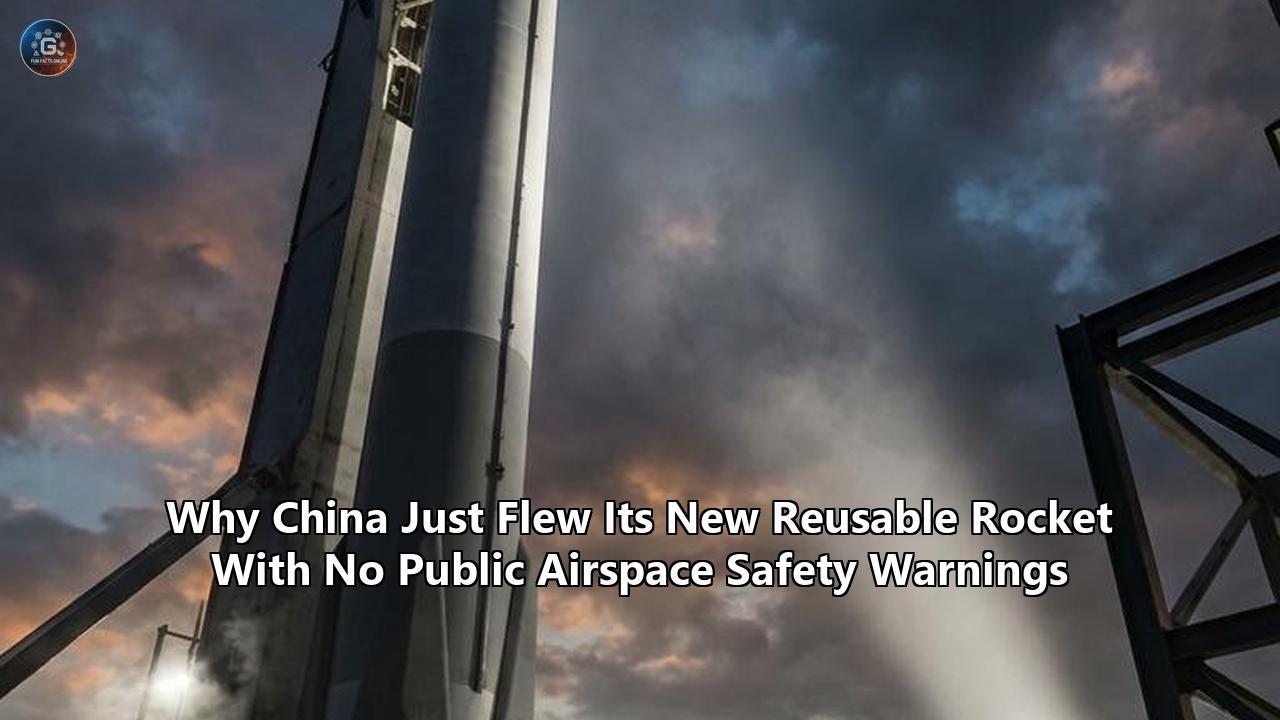
On June 1, 2026, a 72-meter-tall column of stainless steel and aerospace-grade aluminum rose from the desert floor of northwestern China. The maiden flight of the Long March 12B carrier rocket was a resounding technical success, placing two operational satellites for the Qianfan (“Thousand Sails”) broadband megaconstellation into their precise polar orbits. Yet, in the global aerospace community, the launch sparked intense scrutiny for what was missing: there were no public, internationally registered airspace safety warnings, commonly known as Notices to Air Missions (NOTAMs).
To the casual observer, a rocket launch is a spectacle of fire and thrust. To military planners, air traffic controllers, and intelligence agencies, however, a launch is a highly coordinated logistical event governed by strict international safety protocols. Standard global spaceflight norms mandate that launch operators issue advance NOTAMs and maritime hazard warnings to prevent civilian airliners from crossing flight corridors where falling booster debris, first-stage separation, or high-altitude structural failures could result in catastrophic mid-air collisions.
By launching a Falcon 9-class rocket carrying live customer payloads with zero public airspace warnings, China did something almost unprecedented for a modern spacefaring nation. While officially designated as the maiden flight of a next-generation launcher, the mission represents a highly calculated phase in the broader China reusable rocket test campaign.
Unpacking this event reveals a complex interplay of Chinese military airspace dominance, the geopolitical panic driving the country's answer to SpaceX’s Starlink, and a radical shift in how Beijing manages the development cycles of its commercial aerospace fleet.
The Airspace Anomaly: Why the Skies Remained Silent
To understand why the Long March 12B flew without the standard international warnings, one must look closely at how airspace is managed, partitioned, and controlled within the borders of the People's Republic of China (PRC).
The Airspace Paradigm: PLAAF vs. CAAC
In the West, civil aviation authorities like the Federal Aviation Administration (FAA) in the United States manage the vast majority of national airspace, coordinating with military units to carve out temporary restricted areas for launches. In China, this paradigm is entirely inverted.
The People’s Liberation Army Air Force (PLAAF) exercises absolute, de facto control over approximately 70% to 80% of Chinese airspace. The civilian aviation regulator, the Civil Aviation Administration of China (CAAC), operates on highly restricted, narrow, predetermined corridors resembling celestial highways. Because the military is the primary landlord of the sky, domestic airspace coordination does not require the transparent, multi-agency regulatory approvals common in Western democracies.
WESTERN AIRSPACE MODEL                   CHINESE AIRSPACE MODEL
┌─────────────────────────────────┐     ┌─────────────────────────────────┐
│       CIVILIAN CONTROL          │     │        MILITARY CONTROL         │
│         (FAA / EASA)            │     │             (PLAAF)             │
│            ~80%                 │     │             ~80%                │
│  (Open skies, flexible routing) │     │   (Highly restricted zones)     │
└────────────────┬────────────────┘     └────────────────┬────────────────┘
                 │                                       │
┌────────────────▼────────────────┐     ┌────────────────▼────────────────┐
│       MILITARY RESERVES         │     │        CIVILIAN CORRIDORS       │
│            ~20%                 │     │             ~20%                │
│ (Restricted testing zones)      │     │ (Rigid, narrow transit airways) │
└─────────────────────────────────┘     └─────────────────────────────────┘
When a launch takes place from the newly designated Dongfeng Commercial Space Innovation Pilot Zone—a dedicated commercial facility located within the sprawling, heavily militarized Jiuquan Satellite Launch Center in the Gobi Desert—the entire flight corridor is managed internally through the PLA’s unified command and control networks.
For the June 1 launch, the PLAAF simply closed the domestic air corridors along the rocket’s southwest polar trajectory. Because the rocket’s first stage was flying over sparsely populated, desolate stretches of Inner Mongolia and Gansu, and because the domestic military commands had directly coordinated the airspace shutdown internally, the Chinese government bypassed the standard procedure of filing international civil aviation NOTAMs.
The Tactical Logic of Secrecy
Bypassing public NOTAM registries serves a clear tactical purpose. International intelligence agencies meticulously monitor public NOTAM databases to predict the exact timing, trajectory, and performance profiles of foreign space launches.
By withholding these notices, China denied Western military intelligence—including the U.S. Space Force’s Space Delta 4 and regional RC-135 reconnaissance aircraft—the precise lead times needed to position radar ships, optical tracking satellites, and electronic eavesdropping assets to intercept the rocket’s telemetry. The launch took place in what was, to the outside world, a state of complete radio and warning silence. Only localized tour agencies operating near Jiuquan, who relied on word-of-mouth chatter regarding road closures and local security movements, correctly predicted the liftoff window.
Indeed, the lack of coordination highlights how the China reusable rocket test campaign operates under an entirely different risk tolerance framework than Western commercial programs. In China, the integration of spaceports into national defense zones means that operational speed and security-derived stealth routinely override international transparency norms.
Inside the Long March 12B: Falcon 9 Under the Hood
The Long March 12B (CZ-12B) is not merely another entry in China's aging, toxic hydrazine-fueled rocket inventory. It is a modern, high-performance, kerosene-liquid oxygen (kerolox) medium-lift launcher designed from the ground up to achieve high-frequency orbital access.
┌────────────────────────────────────────────────────────┐
│             LONG MARCH 12B SPECIFICATIONS               │
├───────────────────────┬────────────────────────────────┤
│ Height                │ 72 meters (~236 feet)          │
├───────────────────────┼────────────────────────────────┤
│ Core Diameter         │ 4.37 meters                    │
├───────────────────────┼────────────────────────────────┤
│ Fairing Diameter      │ 5.2 meters                     │
├───────────────────────┼────────────────────────────────┤
│ Propellant            │ RP-1 Kerosene / Liquid Oxygen  │
├───────────────────────┼────────────────────────────────┤
│ Lift-Off Mass         │ ~433 metric tons               │
├───────────────────────┼────────────────────────────────┤
│ First Stage Power     │ 9 x YF-102R Engines            │
├───────────────────────┼────────────────────────────────┤
│ Second Stage Power    │ 1 x YF-102RV Vacuum Engine     │
├───────────────────────┼────────────────────────────────┤
│ Payload to LEO        │ ~20,000 kg (Expendable)        │
└───────────────────────┴────────────────────────────────┘
A structural breakdown of the vehicle reveals a striking technological convergence with SpaceX’s workhorse, the Falcon 9.
Core Diameter and the 3.35-Meter Railway Barrier
For decades, Chinese rocket design was bottlenecked by a physical constraint: the country's national railway tunnels. To transport rocket stages from manufacturing plants in coastal provinces to inland launch sites like Jiuquan, Taiyuan, and Xichang, the stages could not exceed a diameter of 3.35 meters. This restriction forced Chinese engineers to rely on clustering strap-on boosters around narrow core stages, a complex and aerodynamically inefficient configuration.
The Long March 12B shatters this paradigm with a core diameter of 4.37 meters. This wide-body configuration was made possible by bypassing the traditional railway system entirely. Instead, the components are transported via upgraded heavy-duty road networks and coastal shipping lanes, allowing for larger, structurally superior single-core architectures.
The 4.37-meter diameter was specifically chosen to accommodate a cluster of nine engines in its base. This is the exact architectural choice SpaceX made for the Falcon 9, allowing the rocket to lose an engine during flight without risking mission failure (engine-out capability) and providing the throttling range necessary for propulsive landings.
The YF-102R Propulsion System
The beating heart of the Long March 12B’s first stage is a cluster of nine YF-102R engines, which burn a highly refined rocket-grade kerosene (RP-1) and liquid oxygen (LOX).
- The Cycle: The YF-102R utilizes an open-cycle gas generator design, making it structurally simpler and cheaper to manufacture than China's advanced closed-loop staged combustion engines (such as the YF-100 series). While gas generator engines have a slightly lower specific impulse (efficiency), they are far easier to throttle, reignite in mid-air, and refurbish for subsequent flights—making them the ideal choice for a reusable first stage.
- Thrust and Throttling: Combined, the nine engines produce approximately 7.5 to 8.1 meganewtons (MN) of liftoff thrust. Crucially, the YF-102R can deeply throttle its thrust output. During a landing sequence, a returning booster is incredibly light because it has burned 90% of its propellant. If the engines cannot throttle down to a fraction of their maximum output, the booster would accelerate upward rather than descend smoothly. The 12B’s propulsion computer is designed to shut down eight of the nine engines during descent, performing the final landing burn on a single, deeply throttled center engine.
- Dual Brains: The rocket features a highly advanced, redundant avionics architecture described by developers as "dual brains". The first and second stages are equipped with independent, high-performance flight computers that can process navigation, guidance, and control telemetry autonomously in real-time. If the primary control link between the stages fails, or if an engine anomaly occurs during staging, each section of the vehicle can independently recalculate its flight path to save the mission or guide the booster safely back to a designated recovery zone.
While the June 1 maiden flight flew in an expendable configuration with its landing legs and grid fins deactivated, CASC officials clarified that although this particular maiden flight bypassed booster recovery to guarantee orbital insertion of the payloads, future iterations of this China reusable rocket test series will focus entirely on propulsive touchdown.
The Pressure Cooker of the "Thousand Sails" Constellation
Western aerospace companies typically reserve the maiden flight of a brand-new, unproven rocket for dummy payloads—such as the block of cheese flown on the first SpaceX Dragon, or inert steel mass simulators. Yet, China put operational, multi-million-dollar communication satellites on the very first flight of the Long March 12B.
This decision was not born out of reckless arrogance; it was driven by sheer, desperate mathematical necessity.
     15,000 ────────────────────────────────────────────── (2030 Target)
            │
            │
            │
            │
            │
            │
            │
        164 ──■ (June 2026 Active)
            └──────────────────────────────────────────────
The Orbital Real Estate Grab
The target for the Long March 12B was the deployment of the Qianfan (Spacesail) megaconstellation. Designed as China’s direct geopolitical and commercial competitor to SpaceX’s Starlink, Qianfan is projected to eventually comprise over 15,000 low-Earth orbit (LEO) satellites.
The strategic urgency of this project is difficult to overstate. LEO orbital planes and electromagnetic spectrum allocations are finite resources governed on a "first-come, first-served" basis by the International Telecommunication Union (ITU). With SpaceX already operating more than 6,000 active Starlink satellites and launching new batches weekly, Beijing is facing a rapidly closing window of opportunity to secure its own slice of the orbital commons.
Furthermore, from a national security perspective, the PLA views Starlink as a powerful dual-use military tool, pointing to its extensive use by Ukrainian forces for secure command, control, and drone targeting. To counter what it perceives as an American military monopoly over LEO satellite communications, China must establish its own sovereign, highly resilient space-based internet architecture.
The Launch Cadence Deficit
The math behind deploying a 15,000-satellite constellation by 2030 is brutal. If China relies on traditional, single-use, expendable rockets, the sheer manufacturing throughput required would bankrupt the program and overwhelm the country's launch infrastructure.
To build out the network, China must transition to a high-cadence, reusable launch model.
- As of June 2026, the Qianfan constellation has only about 164 active satellites in orbit.
- To reach its phase-one goal of 1,296 satellites, China needs to launch hundreds of satellites annually.
- The Long March 12B is designed to carry up to 36 Qianfan satellites in a single mission when flying in its fully optimized configuration.
Because the launch sector is under intense pressure to scale the constellation, the state-owned space conglomerate CASC could not afford to waste a single heavy-lift orbital slot on a dummy payload. They accepted the risk of a maiden flight failure, choosing to fly real hardware because the cost of delay was deemed higher than the cost of losing two satellites.
The Crucible of Chinese Reusability: State Giants vs. Private Mavericks
The development of the Long March 12B is part of a chaotic, highly competitive ecosystem where state-owned defense giants and private aerospace startups are racing to master vertical takeoff, vertical landing (VTVL) technology.
Analyzing the trajectory of any recent China reusable rocket test reveals that while progress is rapid, the path to matching SpaceX’s operational maturity is littered with spectacular failures.
┌────────────────────────────────────────────────────────────────────────┐
│               THE CHINESE REUSABLE ROCKET COMPETITORS                  │
├─────────────────┬───────────┬────────────┬─────────────┬───────────────┤
│ Vehicle         │ Developer │ Propellant │ Max Payload │ Recovery Tech │
├─────────────────┼───────────┼────────────┼─────────────┼───────────────┤
│ Long March 12B  │ CASC      │ Kerolox    │ 20,000 kg   │ VTVL legs     │
│                 │ (State)   │            │             │               │
├─────────────────┼───────────┼────────────┼─────────────┼───────────────┤
│ Long March 10A  │ CALT      │ Kerolox    │ 14,000 kg   │ Tensioned wires│
│ (Lunar)         │ (State)   │            │             │ / Catch nets  │
├─────────────────┼───────────┼────────────┼─────────────┼───────────────┤
│ Zhuque-3        │ LandSpace │ Methalox   │ 18,300 kg   │ VTVL legs     │
│                 │ (Private) │            │             │               │
├─────────────────┼───────────┼────────────┼─────────────┼───────────────┤
│ Tianlong-3      │ Space     │ Kerolox    │ 17,000 kg   │ VTVL legs     │
│                 │ Pioneer   │            │             │               │
├─────────────────┼───────────┼────────────┼─────────────┼───────────────┤
│ Nebula-1        │ Deep Blue │ Kerolox    │ 8,000 kg    │ VTVL legs     │
│                 │ Aero      │            │             │               │
└─────────────────┴───────────┴────────────┴─────────────┴───────────────┘
The State Sector's Dual Approach
The state-backed space program, led by CASC, is not putting all of its eggs in one basket. It is pursuing two distinct recovery methodologies:
- The Classic Legged Landing (Long March 12B/12A): This approach mimics the Falcon 9, utilizing deployable landing legs at the base of the booster and aerodynamic grid fins at the top to steer the vehicle through supersonic reentry.
- The "Tethered Net" System (Long March 10/10A): Developed by the China Academy of Launch Vehicle Technology (CALT) for China's upcoming crewed lunar missions, the Long March 10A utilizes an entirely different recovery mechanism. Instead of heavy landing legs, the returning booster deploys structural "hooks" near its top. As the booster hovers over the landing pad, a highly advanced, tensioned wire and "net" system on the ground catches the rocket mid-air. This system removes the weight penalty of landing legs from the rocket, transferring the structural recovery hardware to the ground station to maximize payload capacity.
The Private Sector Mavericks
Spurred by Beijing’s 2014 policy shift that opened the commercial space sector to private capital, a parallel class of private rocket companies has emerged, heavily supported by local provincial governments and military-civil fusion funding.
LandSpace and the Zhuque-3
The December 2025 launch of LandSpace’s Zhuque-3 was the first true China reusable rocket test to attempt an orbital-class booster recovery.
Constructed of thin-walled stainless steel and powered by liquid methane and liquid oxygen (methalox)—a highly advanced propellant combination also used by SpaceX’s Starship—the Zhuque-3 successfully placed its second stage into orbit. However, during the first stage's controlled return descent, the booster suffered an abnormal combustion event in its landing burn, losing engine control and crashing in a fiery explosion just meters from the recovery pad in the Gobi Desert.
Despite the crash, LandSpace hailed the test as a major step forward, as it successfully validated the closed-loop thrust throttling software and attitude control during hypersonic reentry.
Space Pioneer and the Tianlong-3
Space Pioneer represents both the immense promise and the terrifying, unregulated risks of China's commercial space boom. The company’s Tianlong-3 rocket, a direct structural analog to the Falcon 9, suffered a catastrophic system failure during a ground-based static-fire test in June 2024.
The structural restraints holding the fully fueled first stage to the launch pad failed under the intense thrust of its engines. The rocket accidentally launched itself into the sky, flying over a mile before crashing into a mountainous area near Gongyi in central China. The incident highlighted a worrying lack of safety oversight within the private launch sector. Subsequent test flights in early 2026 also ended in failure, leaving Space Pioneer lagging behind its state-owned competitors.
Deep Blue Aerospace and the Nebula-1
Deep Blue Aerospace has taken an incremental approach, focusing on low-altitude and high-altitude VTVL hop tests.
In late September 2024, the company’s Nebula-1 booster completed a 180-second high-altitude test, hovering perfectly over its landing pad before a thrust control anomaly in the final three seconds caused the engine to shut down early, resulting in a hard landing that crumpled the booster's top.
The company's struggles continued into mid-2025, when public satellite imagery revealed extensive scorch marks at its Inner Mongolia test pad, indicating another high-altitude VTVL test had veered off course, ending in a catastrophic crash landing 600 meters from the pad.
The collective failures of LandSpace, Space Pioneer, and Deep Blue Aerospace underscore the immense engineering hurdle that is vertical rocket recovery. Decelerating a 70-ton, highly aerodynamic structure from supersonic speeds, navigating it through unpredictable atmospheric crosswinds, and landing it softly on a designated pad requires millisecond-level precision from engine-throttling software—a technological threshold that China is rapidly approaching but has not yet routinely mastered.
The Military-Civil Fusion Doctrine: The Dual-Use Shadow
To truly understand why the Long March 12B can fly without standard public warnings, one must look past the "commercial" branding of its developer, the China Aerospace Science and Technology Commercial Launch Vehicle Group (CACL).
In China, the distinction between "commercial," "civilian," and "military" space assets is practically non-existent, a reality governed by the national doctrine of Military-Civil Fusion (MCF).
                  ┌────────────────────────────────┐
                  │     MILITARY-CIVIL FUSION      │
                  │             (MCF)              │
                  └───────────────┬────────────────┘
                                  │
         ┌────────────────────────┴────────────────────────┐
         │                                                 │
┌────────▼────────┐                               ┌────────▼────────┐
│ CIVIL SECTOR    │                               │ MILITARY SECTOR │
│ * Commercial Satellites                         │ * PLA Command   │
│ * Civilian Port Infrastructure                  │ * Intelligence  │
│ * Private Launch Tech                           │ * Target Tracking│
└────────┬────────┘                               └────────┬────────┘
         │                                                 │
         └────────────────────────┬────────────────────────┘
                                  │
                        ┌─────────▼─────────┐
                        │ INTEGRATED METRO  │
                        │    ECOSYSTEM      │
                        └───────────────────┘
The Strategic Blueprint of MCF
Elevated to a top-tier national strategy by President Xi Jinping in 2015, Military-Civil Fusion is a systematic effort to ensure that all civilian scientific and industrial innovations directly support the modernization of the People's Liberation Army.
Under MCF, private rocket companies and state-owned commercial spin-offs are heavily subsidized, provided access to restricted military test facilities, and staffed by former PLAAF or state-institute rocket scientists. In return, the technologies they develop are designed from inception to be dual-use.
The Qianfan satellites carried by the Long March 12B are a prime example. While officially intended to provide commercial broadband internet to remote rural areas and global markets, the orbital architecture of the constellation is highly valuable to the military. A LEO communications network composed of thousands of highly proliferated satellites offers several critical military capabilities:
- Anti-Satellite (ASAT) Resilience: Traditional military communications rely on a small number of massive, expensive geostationary satellites. If an adversary destroys one of these key satellites, entire military networks go dark. In contrast, a LEO megaconstellation like Qianfan is virtually immune to physical ASAT attacks. Destroying a dozen satellites does not disrupt the network, as the remaining hundreds of interconnected spacecraft simply reroute the data packets.
- Real-Time Battlefield Intelligence: By integrating high-resolution optical cameras, synthetic aperture radar (SAR), and signals intelligence sensors directly into the commercial satellite chassis, the Qianfan network can provide the Chinese military with near-continuous, real-time monitoring of global hot spots—such as the Taiwan Strait or the South China Sea.
- Hypersonic Target Tracking: In April 2023, intelligence reports revealed that Chinese private space firms were actively designing satellite communication protocols specifically optimized to track and guide hypersonic glide vehicles. The ultra-low latency and wide-area coverage of a LEO network are essential for maintaining continuous telemetry links with weapons maneuvering at Mach 5+ through the upper atmosphere.
The Pentagon's June 8, 2026 update of its Section 1260H list—which designates Chinese commercial firms as military-linked—reflects this reality. By adding major Chinese technology, robotics, and aerospace companies to the list, Washington is signaling that it no longer views China's commercial space sector as separate from Beijing’s broader military apparatus.
The Long March 12B’s zero-warning launch is a direct operational symptom of this fusion: when a rocket serves both a commercial and a highly sensitive national defense goal, the state-military apparatus will prioritize tactical stealth and speed over the regulatory transparency expected of a purely civil commercial space program.
Technical Comparison: Falcon 9 vs. Long March 12B
To see how closely CASC has aligned its designs with the global gold standard of reusable rocketry, it is highly instructive to compare the technical parameters of the Long March 12B directly with SpaceX’s Falcon 9.
┌────────────────────────────────────────────────────────────────────────┐
│                     FALCON 9 vs. LONG MARCH 12B                        │
├──────────────────────────┬──────────────────────┬──────────────────────┤
│ Parameter                │ SpaceX Falcon 9      │ CASC Long March 12B  │
├──────────────────────────┼──────────────────────┼──────────────────────┤
│ Height                   │ 70 meters            │ 72 meters            │
├──────────────────────────┼──────────────────────┼──────────────────────┤
│ Core Diameter            │ 3.7 meters           │ 4.37 meters          │
├──────────────────────────┼──────────────────────┼──────────────────────┤
│ First Stage Engines      │ 9 x Merlin 1D        │ 9 x YF-102R          │
├──────────────────────────┼──────────────────────┼──────────────────────┤
│ Propellant               │ RP-1 Kerosene / LOX  │ RP-1 Kerosene / LOX  │
├──────────────────────────┼──────────────────────┼──────────────────────┤
│ Liftoff Thrust           │ ~7.6 MN              │ ~7.5 - 8.1 MN        │
├──────────────────────────┼──────────────────────┼──────────────────────┤
│ LEO Payload (Expendable) │ 22,800 kg            │ ~20,000 kg           │
├──────────────────────────┼──────────────────────┼──────────────────────┤
│ LEO Payload (Reusable)   │ ~17,500 kg (Droneship)│ ~14,000 kg (Projected)│
├──────────────────────────┼──────────────────────┼──────────────────────┤
│ Structural Material      │ Aluminum-Lithium     │ Stainless Steel      │
│                          │ Alloy                │ / Aluminum           │
└──────────────────────────┴──────────────────────┴──────────────────────┘
The data shows that on paper, the Long March 12B is a highly credible peer competitor to the Falcon 9. The slightly lower payload fraction of the Chinese rocket is largely due to its heavier structural mass and the lower efficiency of the open-cycle YF-102R engines compared to the highly optimized, closed-cycle Merlin 1D engines.
However, SpaceX's true advantage is not merely hardware; it is operational experience. SpaceX has successfully landed Falcon 9 first stages more than 600 times, refining a massive logistical machine for rapid refurbishment, inspection, and reuse. Until China successfully lands and reflown a single orbital booster, the cost savings of its reusable program remain entirely theoretical.
What to Watch Next in the Chinese Reusable Rocket Race
The surprise debut of the Long March 12B has fundamentally shifted the timeline of the global space race. As China moves aggressively to close the gap with Western launch providers, several key milestones, technical developments, and geopolitical flashpoints will define the coming months.
       MID-2026                       LATE 2026                      EARLY 2027
┌──────────────────────┐       ┌──────────────────────┐       ┌──────────────────────┐
│  Long March 12B      │       │  First VTVL Orbital  │       │  Hainan Launch Pads  │
│  Maiden Flight       │──────►│  Recovery Attempt    │──────►│  Scale to 4 active   │
│  (Expendable)        │       │  (CASC / LandSpace)  │       │  commercial sites    │
└──────────────────────┘       └──────────────────────┘       └──────────────────────┘
1. The First Successful Orbital VTVL Recovery
The most critical milestone to watch is China’s first successful, soft vertical landing of an orbital-class booster. While the June 1 launch was expendable, CASC is expected to attempt a propulsive return of a Long March 12B or 12A first stage before the end of 2026.
Simultaneously, LandSpace is preparing for a second flight of the methane-fueled Zhuque-3, aiming to resolve the combustion anomaly that ruined its December 2025 landing. The company that sticks this landing will earn a permanent place in aerospace history, breaking the US monopoly on orbital booster recovery.
2. The Launch Pad Infrastructure Boom
Keep a close eye on the physical construction of new launch pads along China's coastline. Because recovering boosters on land requires a flight trajectory that circles back to the launch site (which uses substantial fuel and limits payload capacity), both CASC and private startups are building massive offshore recovery platforms and floating sea-landing barges.
At the Hainan International Commercial Aerospace Launch Site in Wenchang, work is underway to double the number of operational launch pads from two to four by the end of 2026. This coastal hub will allow rockets to launch over the South China Sea, dropping their reusable boosters onto floating drone ships similar to SpaceX's autonomous spaceport drone ships.
3. Diplomatic Friction Over Airspace Safety
The practice of launching rockets without public NOTAM warnings is highly likely to trigger severe international diplomatic pushback. As China’s commercial launch cadence increases to support the deployment of the Qianfan and Guowang constellations, the potential for a catastrophic incident involving international civilian flights increases exponentially.
If Chinese boosters continue to fly through busy regional flight corridors in East Asia without advance coordination, international bodies like the International Civil Aviation Organization (ICAO) and neighboring nations—including Japan, South Korea, and Taiwan—will likely press the United Nations to enforce stricter transparency regulations on sovereign space launches.
4. The Megaconstellation Deployment Curve
Ultimately, the success of China's rocket development will be measured by the growth curve of its satellite constellations. Watch the satellite catalog registries. If China can successfully transition the Long March 12B to a reusable, rapid-turnaround operational model, the deployment speed of the Qianfan network will skyrocket.
If they succeed, LEO will become a highly congested, contested, and complex domain, turning the high skies into the ultimate arena for 21st-century strategic competition.
Reference:
- https://www.livescience.com/space/space-exploration/china-launches-new-long-march-12b-rocket-reportedly-without-any-safety-warning
- https://www.globaltimes.cn/page/202606/1362521.shtml
- https://www.space.com/space-exploration/launches-spacecraft/china-launches-debut-mission-of-falcon-9-like-rocket-with-no-advance-notice-video
- https://spacedaily.com/sd-in-june-2026-china-rolled-its-brand-new-long-march-12b-onto-a-pad-in-the-gobi-desert-told-no-one-loaded-the-maiden-flight-with-paying-customers-satellites-and-the-rocket-built-to-lan/
- https://www.livescience.com/space/space-exploration/china-launches-new-long-march-12b-rocket-reportedly-without-any-safety-warning
- https://english.news.cn/20260601/07a188c35411425da7236cdaaecee71b/c.html
- https://spacetechchronicles.com/long-march-12b-constellation-cadence-signal/
- https://www.bioscience.com.pk/en/subject/space-science/china-launches-long-march-12b-rocket-without-prior-safety-warnings-marking-a-new-era-in-satellite-deployment
- http://www.uscc.gov/sites/default/files/Research/China%27s%20Airspace%20Management%20Challenge.pdf
- https://www.uscc.gov/sites/default/files/Research/China%27s%20Airspace%20Management%20Challenge.pdf
- https://www.reddit.com/r/flightradar24/comments/1f88ys3/is_this_a_chinese_airspace_thing/
- https://www.chinacivilaviation.com/articles/ccar_1260.html
- http://en.sasac.gov.cn/2026/06/10/c_20814.htm
- https://www.youtube.com/watch?v=XAoig8KmztU
- https://sattrackcam.blogspot.com/2017/05/analysis-re-entry-of-cz-4b-rb-2014-049c.html
- https://www.reddit.com/r/spaceflight/comments/1tucufb/album_chinas_long_march12b_rocket_made_successful/
- https://www.isdp.eu/wp-content/uploads/2025/07/files_chinas-military-civil-fusion-in-space-strategic-transformations-and-implications-for-europe.pdf
- https://en.wikipedia.org/wiki/Long_March_12
- https://www.reddit.com/r/spaceflight/comments/1er7o9l/first_image_of_chinas_long_march_12_launch_vehicle/
- https://news.cgtn.com/news/2026-06-03/Behind-China-s-tallest-rocket-Long-March-12B-1NEDU9SrSHm/p.html
- https://www.space.com/space-exploration/launches-spacecraft/china-launches-debut-mission-of-falcon-9-like-rocket-with-no-advance-notice-video
- https://spacetodaypt.wordpress.com/2021/05/01/china-spacial-report%F0%9F%87%A8%F0%9F%87%B3%F0%9F%9A%80%F0%9F%91%A8%F0%9F%8F%BB%E2%80%8D%F0%9F%9A%80%F0%9F%91%A9%F0%9F%8F%BB%E2%80%8D%F0%9F%9A%80/
- https://en.wikipedia.org/wiki/Long_March_12B
- https://www.channelnewsasia.com/east-asia/china-landspace-reusable-rocket-test-failure-space-ambitions-5530156
- https://www.space.com/space-exploration/launches-spacecraft/chinas-1st-reusable-rocket-explodes-in-dramatic-fireball-during-landing-after-reaching-orbit-on-debut-flight
- https://en.wikipedia.org/wiki/Long_March_10
- https://www.globaltimes.cn/page/202510/1346178.shtml
- https://www.space.com/space-exploration/launches-spacecraft/record-launches-reusable-rockets-and-a-rescue-china-made-big-strides-in-space-in-2025
- https://table.media/en/china/feature/space-industry-chinas-rocket-builders-set-their-sights-on-spacex
- https://www.scmp.com/news/china/science/article/3321091/scorch-marks-deep-blues-test-site-china-point-reusable-rocket-failure
- https://www.channelnewsasia.com/east-asia/chinas-second-attempt-completing-reusable-rocket-test-fails-5680101
- https://itif.org/publications/2026/06/08/how-innovative-is-chinas-space-industry/
- https://www.dailymotion.com/video/xae1z8u
- https://www.thinkchina.sg/technology/complex-impact-chinas-military-civil-fusion-space
- https://www.space.com/space-exploration/launches-spacecraft/chinese-company-landspace-fires-up-its-reusable-rocket-ahead-of-debut-flight-video
- https://www.livescience.com/space/space-exploration/china-launches-new-long-march-12b-rocket-reportedly-without-any-safety-warning
- https://www.youtube.com/shorts/ZNmMe-5tveo
- https://www.leonarddavid.com/chinas-new-generation-reusable-rocket-maiden-flight-of-long-march-12b-yi/
- https://asiatimes.com/2023/04/military-civil-fusion-powering-chinas-hypersonic-edge/
- https://www.fdd.org/analysis/2026/06/09/updated-pentagon-list-targets-chinas-military-civil-fusion-program/
- https://en.isna.ir/news/1405031307481/China-launches-rocket-without-prior-notice
- https://www.thestandard.com.hk/china/article/318412/Chinas-LandSpace-fails-to-complete-reusable-rocket-test
- https://www.landspace.com/en/news-detail.html?itemid=18
- https://www.trtworld.com/article/9fb32eb1c1f3
- https://ops.group/blog/author/chris-shieff/page/3/?print=print-search