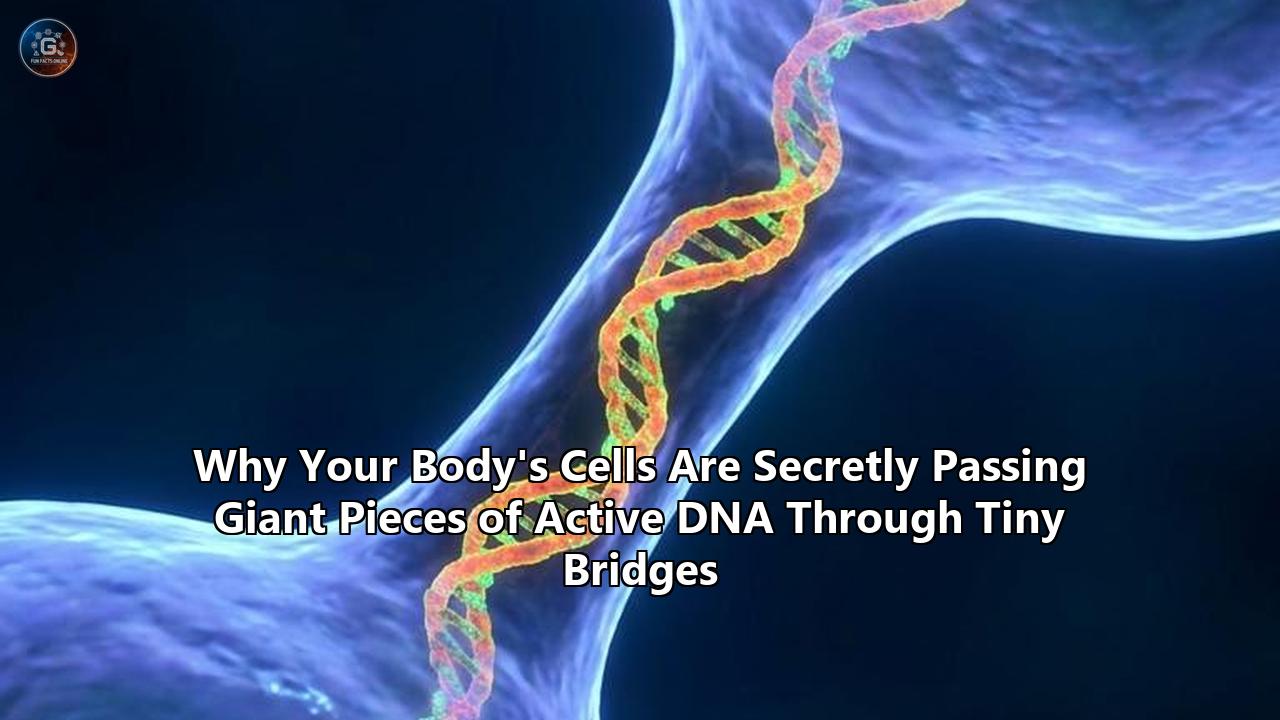
A landmark study published in the journal Cell has unveiled an unexpected and highly unusual biological phenomenon occurring within human tissues. Researchers at UT Southwestern Medical Center, led by cell biologist Peter Ly, have demonstrated that human cells suffering from genomic instability can physically package and transport massive pieces of active, functional DNA directly to neighboring cells. This transfer occurs through ultrathin, temporary physical bridges called tunneling nanotubes (TNTs). The study, titled "Genome instability triggers intercellular DNA transfer between human cells," marks the first time that direct, horizontal transfer of large chromosomal segments has been definitively captured and verified in human cells.
For decades, the scientific consensus held that horizontal genetic exchange was a biological mechanism reserved almost exclusively for bacteria, archaea, and unicellular parasites. Human cells were believed to keep their genetic secrets locked securely behind the double-membrane vault of the nucleus, sharing DNA only vertically during cell division. The discovery of cellular DNA transfer between human somatic cells shatters this classical boundary, revealing that our tissues behave far more like an open, communicative network than a collection of self-contained genetic islands.
The implications of this discovery are profound, particularly for oncology. Rather than evolving in isolation, cancer cells may actively share functional pieces of their mutated genomes with surrounding healthy cells or other sub-clones within a tumor. This lateral genetic commerce offers a direct mechanism for the rapid propagation of treatment resistance, genomic chaos, and metastatic potential throughout a tissue microenvironment. By examining this specific news event as a lens, we can uncover a broader pattern of cellular cooperation and extract vital lessons about how genomes interact in health and disease.
Inside the Lab: The Mechanics of the UT Southwestern Experiment
To appreciate the scale of this finding, it is necessary to examine the elegant experimental design crafted by Elizabeth G. Maurais and her colleagues at UT Southwestern’s Children's Medical Center Research Institute. The researchers set out to solve a long-standing mystery: what happens to the chromosomal debris generated when a human cell experiences severe genomic instability?
The team co-cultured two distinct populations of human cells in vitro—specifically, non-transformed retinal pigment epithelial cells (RPE-1) and HeLa cancer cells. To track the movement of genetic material, they utilized advanced live-cell fluorescence microscopy and tagged the genomic DNA with a double-stranded DNA-specific dye called SiR-DNA. They then induced genomic instability using a variety of triggers, including low-dose radiation, mitotic stress, chromosome segregation errors, and targeted CRISPR-Cas9 genome editing.
What they observed under the microscope was a scene resembling a cellular prison break. When the donor cells underwent abnormal divisions or suffered DNA breaks, fragments of chromosomes escaped the nucleus and became trapped in the surrounding cytoplasm as micronuclei. Rather than being degraded by the cell's internal recycling machinery, these genetic fragments migrated toward the cell membrane. There, the cells constructed wispy, thread-like conduits—tunneling nanotubes—that reached across the intercellular space to fuse with neighboring recipient cells.
The researchers watched in real-time as these fluorescently labeled, cytosolic DNA fragments traveled through the hollow interiors of the nanotubes, crossing from the cytoplasm of the damaged donor cell directly into the cytoplasm of the healthy recipient.
[Donor Cell]                                                      [Recipient Cell]
  +-------+                                                           +-------+
  |  ( )  | <--- Damaged Nucleus                                      |  ( )  |
  |  DNA* | ---> Escapes as Micronucleus                              |       |
  |   \   |                                                           |       |
  |    \======= Tunneling Nanotube (F-Actin Core) ==================> |  DNA* | (Active)
  +-------+       [ 50 to 1500 nanometers wide ]                      +-------+
To prove that this was not merely the passive transport of inert cellular debris, Ly’s team designed a genetic selection assay. They inserted an antibiotic-resistance gene (conferring resistance to the drug G418) onto the Y chromosome of male donor cells. These cells were then mixed with female recipient cells. After inducing genomic instability, the researchers applied the G418 antibiotic to the culture.
A cohort of female cells survived the treatment. Genetic analysis confirmed that these surviving female cells had acquired the male Y-chromosome fragments containing the active resistance gene. Even more remarkable was the finding that the transferred DNA remained biologically active; the male-specific genes were actively transcribed and translated by the female cells' machinery. The transferred genomic elements did not simply degrade; they persisted across multiple subsequent cell generations, occasionally integrating directly into the recipient cell’s own host chromosomes during subsequent mitoses.
The Classical Dogma vs. The Networked Reality
To understand the conceptual impact of this research, we must contrast it with the foundational laws of eukaryotic genetics. Since the late 19th century, biology has operated under the assumption of genetic isolationism. In multicellular organisms, the nuclear envelope serves as an absolute barrier designed to protect the integrity of the genome from external viruses, transposable elements, and cytoplasmic clutter.
Genetic inheritance was understood to be strictly vertical. A cell replicates its DNA during the S-phase of the cell cycle, separates the sister chromatids during mitosis, and divides into two genetically identical daughter cells. Any variation in this process was assumed to occur through mutation or chromosomal rearrangement within that single, isolated lineage. If a cell sustained catastrophic DNA damage, it was expected to activate apoptosis (programmed cell death) or enter senescence (permanent growth arrest) to prevent the damaged genome from propagating.
This newly documented mechanism of cellular DNA transfer introduces a lateral dimension to human genetics. It suggests that human cells possess an innate, structurally supported pathway to export genomic material when under duress. This behavior mirrors horizontal gene transfer (HGT), a phenomenon well-documented in prokaryotes. Bacteria routinely share plasmids—small, circular DNA molecules—via physical conjugation tubes, allowing them to rapidly spread antibiotic resistance genes through a population.
While mammalian cells have long been known to swap signaling proteins, microRNAs, and even entire organelles like mitochondria through tunneling nanotubes, the idea that they could exchange large, functional segments of nuclear genomic DNA was met with deep skepticism. The cell nucleus was considered too secure, and the cytoplasm was thought to be too hostile, packed with defensive nucleases designed to destroy foreign or misplaced DNA. The UT Southwestern study forces a reassessment of this paradigm. It reveals that human tissues are not collections of independent cellular silos, but rather a dynamic, cooperative network capable of genetic sharing.
The Physics of the Bridge: Tunneling Nanotubes (TNTs)
The physical conduits mediating this genetic trade are tunneling nanotubes (TNTs). First described in 2004 by researchers observing rat pheochromocytoma cells, TNTs are long, thin, membrane-bound cylinders containing an F-actin cytoskeletal core. They differ fundamentally from other structures like filopodia or microvilli because they are open-ended; they establish a continuous, shared cytoplasm between two distinct cells.
TNTs are incredibly dynamic structures. They can extend over distances of up to 100 micrometers—many times the diameter of a single cell—yet their width is miniscule, typically ranging from 50 to 1,500 nanometers. They are constructed in two primary ways:
- De Novo Outgrowth: A cell projects a thin, actin-rich filopodium that travels across the extracellular matrix until it meets and fuses with the membrane of a neighboring cell.
- Cell-Cell Detachment: Two cells in close physical contact begin to migrate away from one another, leaving a thin, stretched strand of membrane and cytoplasm connecting them.
Once a TNT is established, it acts as a molecular highway. Motor proteins, such as myosins, crawl along the internal actin tracks, hauling heavy cellular cargo across the bridge. Previously, TNTs were shown to transport calcium ions, metabolic signals, pathogens like HIV and prions, and even whole mitochondria. The transfer of mitochondria is particularly well-documented: cells suffering from metabolic or oxidative stress can emit TNTs to "steal" healthy mitochondria from their neighbors, restoring their own energy production.
What makes the UT Southwestern study so striking is the sheer size of the cargo being moved. A single chromosome segment can contain millions of base pairs of DNA. For such a massive macromolecule to squeeze through a tube less than a micrometer wide and survive the journey requires a highly coordinated biophysical process. The DNA must be tightly packaged, likely in the form of condensed chromatin or encapsulated within membranous envelopes derived from the nuclear membrane, protecting it from cytosolic nucleases during its transit.
Escaping the Sentinels: How DNA Evades the Cytoplasmic Defense System
To fully appreciate how cellular DNA transfer occurs, one must address a fundamental mystery of cell biology: why doesn't this stray DNA trigger an immediate immune response?
Under normal physiological conditions, the presence of double-stranded DNA in the cytoplasm is a catastrophic warning sign. It typically indicates a viral infection or severe nuclear damage. Human cells are equipped with a highly sensitive surveillance system designed to detect and destroy cytoplasmic DNA. The primary sensor in this pathway is cyclic GMP-AMP synthase (cGAS). When cGAS binds to double-stranded DNA in the cytoplasm, it triggers the STING (stimulator of interferon genes) pathway, launching a powerful inflammatory response that leads to cell death or alerts the immune system to destroy the compromised cell.
How does the transferring genomic DNA bypass this cellular alarm system? The UT Southwestern study suggests several co-existing explanations:
- Shielding by Nuclear Envelopes: The transferred DNA often originates from micronuclei—small, aberrant nuclear structures that form when chromosomes fail to segregate properly during cell division. While micronuclei are prone to envelope rupture, they can retain a semi-intact membrane barrier during their transit, shielding the DNA from cGAS detection.
- Rapid Transit: The movement through tunneling nanotubes is direct and rapid. By bypassing the open cytoplasm of the donor cell and transitioning straight into the recipient cell’s cytoplasm via a closed, membrane-bound channel, the DNA minimizes its exposure to cytosolic sensors.
- Impaired cGAS-STING in Target Cells: Many of the recipient cells, particularly in a tumor microenvironment, have mutated or downregulated cGAS-STING pathways, allowing them to tolerate high levels of cytosolic DNA without initiating self-destruction.
Case Study Analysis: Extracting Principles of Tumor Collusion
Using the UT Southwestern discovery as a lens, we can extract several critical principles that reshape our understanding of oncology, genetics, and therapeutic resistance.
Principle 1: The Fallacy of the Monoclonal Tumor
Historically, cancer biology has viewed tumor progression through a Darwinian lens of clonal selection. In this model, a single cell acquires a driver mutation, giving it a selective advantage. It divides, producing a clone of identical cells. Over time, subsequent mutations occur in individual cells, creating sub-clones. These sub-clones compete with one another for resources, and the fittest clone eventually dominates the tumor.
This model treats individual cancer cells as isolated competitors. However, the discovery of TNT-mediated DNA transfer reveals that tumors function as highly collaborative, physical networks. Rather than competing in a zero-sum game, cancer sub-clones can actively share successful genetic adaptations with one another. This suggests that a mutation arising in a single, isolated cell can be distributed horizontally across the tumor population, rapidly homogenizing advantageous traits without requiring generations of cell division.
Principle 2: The Communal Shield of Drug Resistance
The clinical implications of this lateral sharing are devastating. Consider a scenario where a patient is treated with a targeted chemotherapy drug. In a tumor consisting of billions of cells, a tiny fraction may possess a mutation that confers resistance to the drug—for instance, an amplification of a drug-pumping gene.
In the classical model, the chemotherapy kills all sensitive cells, leaving only the resistant clone to slowly rebuild the tumor. This process takes months or years.
However, if cellular DNA transfer occurs within the tumor, the resistant cell can rapidly distribute copies of its resistance gene directly to neighboring, sensitive cells through tunneling nanotubes. The UT Southwestern team demonstrated this exact mechanism in their G418 antibiotic-resistance experiment. By sharing the genetic blueprint for survival horizontally, the tumor can establish a communal shield against therapeutics in a matter of days, completely bypassing the temporal constraints of standard cell division and clonal expansion.
Principle 3: Extrachromosomal DNA (ecDNA) as a Mobile Element
In many aggressive cancers, oncogenes are not located on the standard 23 pairs of chromosomes. Instead, they reside on circular, highly active pieces of DNA called extrachromosomal DNA (ecDNA). Unlike normal chromosomes, ecDNA lacks centromeres. This means that during cell division, ecDNA does not segregate evenly; one daughter cell might receive dozens of copies, while the other receives none.
Because ecDNA is small, circular, highly abundant, and floats freely in the nucleus and cytoplasm, it is uniquely suited for physical transit through tunneling nanotubes. The discovery of TNT-mediated DNA transfer suggests that ecDNA is not just highly mobile within a single cell lineage, but highly mobile between cell lineages. A highly aggressive cancer cell packed with ecDNA can serve as a genetic hub, exporting copies of these oncogenic circles to nearby cells, essentially infecting them with malignant traits.
The Evolutionary Riddle: Why Does This Mechanism Exist?
The discovery of horizontal somatic gene transfer in humans raises an evolutionary puzzle. Why would a multicellular organism, which relies on strict cellular discipline and genetic consistency to prevent cancer, maintain a mechanism that allows cells to swap large chunks of active DNA?
One possibility is that this pathway is a vestigial survival mechanism, conserved from our distant unicellular ancestors. In single-celled organisms, horizontal gene transfer is a primary strategy for surviving environmental crises. When exposed to extreme stress, such as UV radiation or heat shock, archaea like Sulfolobus acidocaldarius form physical aggregates and exchange chromosomal markers to repair damaged DNA via homologous recombination.
In humans, a similar "SOS response" may be triggered when tissues suffer severe damage. When a localized group of cells is exposed to radiation, toxic chemicals, or physical trauma, the damaged cells may emit tunneling nanotubes as a desperate bid for survival. By establishing cytoplasmic bridges, they can pool resources. They can import healthy mitochondria from intact neighbors to restore their energy, and they may export damaged or fragmented genomic DNA to distribute the genetic load or search for templates to guide DNA repair.
In a healthy tissue, this cooperative sharing might help coordinate wound healing, tissue regeneration, or immune responses. However, in the context of cancer, this ancient survival mechanism is hijacked. Malignant cells exploit these cytoplasmic highways to survive therapies, evade the immune system, and fuel their own growth.
The CRISPR Caveat and the Hazards of Modern Therapies
A highly concerning detail from the UT Southwestern study is the specific triggers that initiate cellular DNA transfer. The researchers found that genomic instability caused by CRISPR-Cas9 gene editing, low-dose radiation, and mitotic stress dramatically increased the frequency of DNA transfer events between cells.
This finding introduces a critical safety consideration for modern gene-editing therapies. CRISPR-Cas9 works by generating double-stranded breaks at specific locations in the genome. While the goal is to edit a target gene, these double-stranded breaks can sometimes lead to unexpected chromosomal rearrangements, micronuclei formation, and localized genomic instability.
If CRISPR-Cas9 editing inadvertently triggers the formation of tunneling nanotubes and subsequent cellular DNA transfer, the consequences could be highly unpredictable. An edited cell, or a cell that suffered off-target genomic damage during the editing process, could transfer altered, damaged, or active gene fragments to surrounding healthy cells. This lateral dissemination of edited or damaged DNA could lead to unintended genetic modifications in bystander cells, raising the risk of oncogenic transformation or tissue-wide dysfunction.
Similarly, standard cancer treatments like radiation therapy and chemotherapy operate by causing catastrophic DNA damage in cancer cells. If this damage triggers the release of TNTs and the transfer of active oncogenes and resistance factors to surviving cells, our primary cancer therapies may be unwittingly accelerating the genetic evolution and diversification of the very tumors we are trying to eradicate.
[Standard Therapy (Radiation/Chemotherapy)]
                  |
                  v
       [Severe Genomic Instability]
                  |
                  v
    [Micronuclei & Chromosome Damage]
                  |
                  v
[Trigger: Tunneling Nanotube (TNT) Formation]
                  |
                  v
    [Lateral Cellular DNA Transfer]
                  |
                  v
[Spread of Therapy Resistance & Malignancy]
Therapeutic Interventions: Severing the Lines of Cellular Collusion
If cancer cells are using tunneling nanotubes as a secretive communications network to share genetic survival guides, then blocking this network represents a highly promising therapeutic strategy. By severing these physical bridges, we could isolate cancer cells, preventing the spread of drug resistance and forcing them to face therapies as vulnerable, individual units.
Several potential avenues for targeting TNT-mediated DNA transfer are currently under investigation:
1. Inhibiting F-Actin Polymerization
Because tunneling nanotubes rely on a continuous core of polymerized F-actin for their structure and stability, drugs that target actin dynamics could effectively dismantle these cellular bridges. Compounds such as Cytochalasin B or Latrunculin B have been shown to inhibit TNT formation in vitro. However, because actin is a fundamental component of the cytoskeleton in all human cells (crucial for muscle contraction, cell division, and structural integrity), systemic inhibition of actin polymerization is highly toxic. Researchers are currently looking for ways to selectively deliver actin-disrupting agents directly to tumor sites using targeted nanoparticle drug delivery systems.
2. Targeting TNT-Specific Proteins
A more precise approach involves identifying and targeting the specific molecular machinery that regulates TNT biogenesis and cargo transport. Several key proteins have been implicated in the formation of these connections:
- M-Sec (TNFIP2): A protein that plays a pivotal role in remodeling the plasma membrane and initiating the outgrowth of TNTs.
- Myosin X (Myo10): A motor protein that facilitates the movement of cargo along the actin tracks within the nanotubes.
- LST1 (Leukocyte-Specific Transcript 1): A transmembrane protein that recruits actin-remodeling proteins to promote TNT assembly.
By developing small-molecule inhibitors or monoclonal antibodies that specifically block these proteins, it may be possible to selectively inhibit TNT formation in tumor cells while leaving the general cytoskeletal architecture of healthy tissues intact.
3. Restoring Cytosolic DNA Surveillance
Another strategy involves reinforcing the cell's natural defenses against foreign DNA. In many cancers, the cGAS-STING pathway is silenced, allowing the cells to tolerate cytosolic genomic fragments and facilitate their cellular DNA transfer without consequence. By using STING agonists—drugs that artificially activate this pathway—therapists could force cells that receive transferred DNA to undergo apoptosis. This would transform the transfer mechanism from a survival strategy into a lethal trigger, effectively turning the cancer cells' cooperative network against them.
Mapping the Unseen Network
The discovery by Elizabeth G. Maurais, Peter Ly, and their colleagues at UT Southwestern has opened a major new frontier in cell biology. It challenges the fundamental assumption of genetic isolation in multicellular organisms, revealing that our cells possess an active, contact-dependent system for lateral genetic trade.
As researchers look to the future, several crucial questions remain unanswered:
- How widespread is this lateral gene transfer in living, healthy human tissues? Does it play a role in normal physiological processes, such as embryonic development, immune system coordination, or tissue regeneration?
- How do the transferred DNA fragments integrate into the recipient cell’s genome? Is the integration random, or are there specific genomic hotspots that favor the insertion of these mobile segments?
- Can we develop diagnostic tools to detect and monitor TNT-mediated DNA transfer in patients undergoing cancer therapies? By tracking the movement of circulating ecDNA or monitoring the physical connectivity of tumor cells, doctors might be able to predict and prevent the onset of therapy resistance.
What is certain is that our understanding of cellular communication is undergoing a profound shift. The boundaries that once defined individual cellular identity are beginning to blur, revealing a deeply interconnected biological network where genetic information is not just inherited, but shared. By exposing these secret bridges and learning how to dismantle them, science may soon unlock a powerful new weapon in the fight against our most resilient diseases.
References
- Maurais, E. G., et al. (2026). "Genome instability triggers intercellular DNA transfer between human cells." Cell, 189(11), 2435-2451.
- Driscoll, J., Gondaliya, P., & Patel, T. (2022). "Tunneling Nanotube-Mediated Communication: A Mechanism of Intercellular Nucleic Acid Transfer." International Journal of Molecular Sciences, 23(10), 5487.
- Rustom, A., et al. (2004). "Nanotubes: A Structure for Intercellular Communication." Science, 303(5660), 1007-1010.
Reference:
- https://www.trialsitenews.com/a/human-cells-found-to-exchange-damaged-dnawhy-scientists-are-paying-attention-3f8dbd6d
- https://www.discovermagazine.com/human-cells-can-pass-dna-to-each-other-through-tiny-tubes-here-s-how-it-may-fuel-cancer-growth-49163
- https://www.thecooldown.com/green-tech/dna-transfer-cancer-research/
- https://www.sciencenews.org/article/damaged-dna-spread-nanotubes-cells-cancer
- https://pmc.ncbi.nlm.nih.gov/articles/PMC13193222/
- https://singularityhub.com/2025/10/07/a-mysterious-we-of-tunnels-connects-brain-cells-like-the-network-of-trees-in-a-forest/
- https://en.wikipedia.org/wiki/Tunneling_nanotube
- https://www.researchgate.net/publication/394561781_Mitochondrial_Transfer_Between_Cancer_and_T_Cells_Implications_for_Immune_Evasion
- https://www.researchgate.net/figure/Key-mechanisms-and-molecular-regulators-of-intercellular-mitochondrial-transfer-This_fig2_394561781
- https://fileserver-az.core.ac.uk/download/pdf/232415876.pdf
- https://pubmed.ncbi.nlm.nih.gov/35628298/