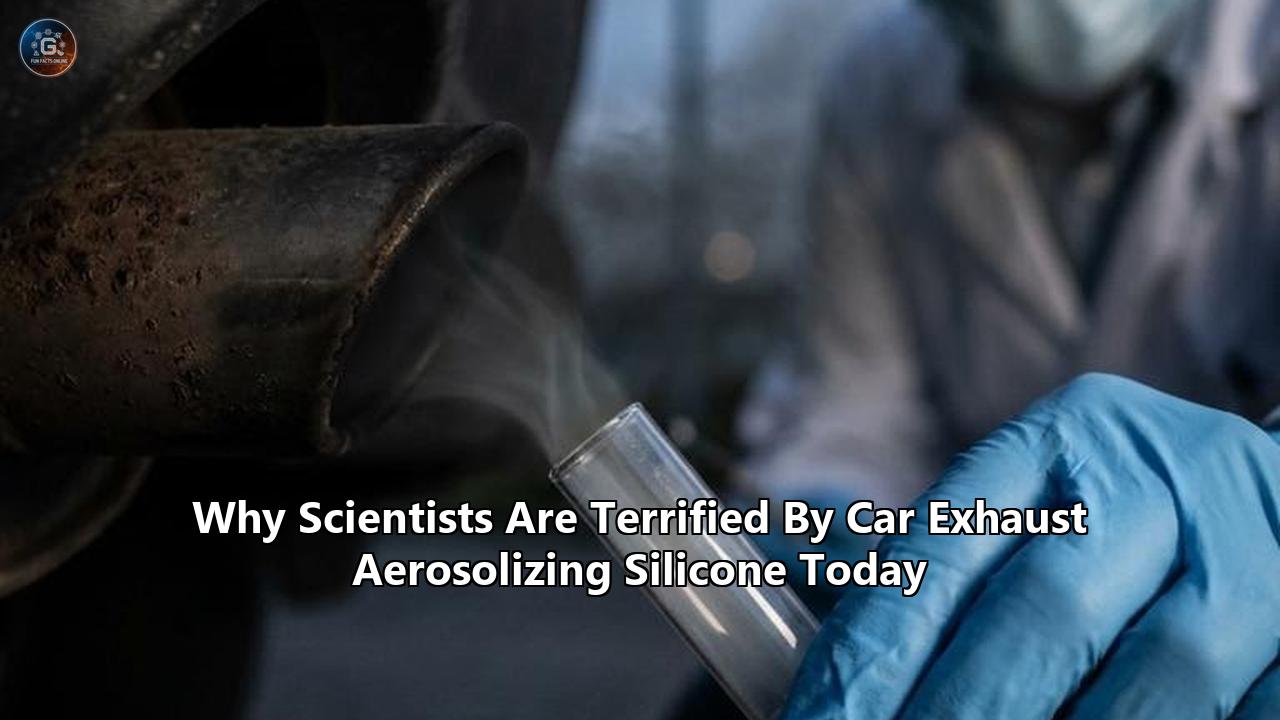
Atmospheric chemists and emissions regulators are facing a newly identified global pollutant that fundamentally alters our understanding of vehicle emissions. According to a massive multinational atmospheric sampling study published on May 13, 2026, by a research team led by Rupert Holzinger at Utrecht University, synthetic silicone compounds known as methylsiloxanes now constitute an astonishing 2.0 to 4.3 percent of the total organic aerosol mass in the Earth's atmosphere.
The source is not industrial leakage or the evaporation of cosmetics, which were previously assumed to be the primary culprits of airborne silicone. Instead, the origin is internal combustion. High-temperature lubricants and oil additives are slipping into engine combustion chambers, surviving the violent detonation process, and being expelled into the air.
The discovery of globally dispersed car exhaust silicone particles has triggered immediate alarm across the environmental and automotive sectors. Because these large-molecular compounds are chemically stable and highly persistent, they do not break down in the lower atmosphere. Consequently, they are not confined to heavily trafficked urban corridors. While sensors in the São Paulo metropolitan area recorded peak concentrations of 98 nanograms per cubic meter, the exact same synthetic pollutants were logged at 2 nanograms per cubic meter in rural Netherlands agricultural zones, and 0.9 nanograms per cubic meter in completely remote Lithuanian forests.
Regulators, automotive engineers, and climate scientists are now forced to confront a pollutant that has entirely bypassed decades of emissions monitoring. Addressing this crisis requires navigating a labyrinth of competing technologies, chemical tradeoffs, and conflicting regulatory philosophies.
The Combustion Paradox: Engine Survival vs. Atmospheric Contamination
To understand why this chemical crisis exists, one must examine the competing demands placed on modern internal combustion engines. Over the past two decades, automakers have prioritized fuel efficiency and power density, leading to the widespread adoption of turbocharging and Gasoline Direct Injection (GDI). These technologies operate at extreme temperatures and immense cylinder pressures.
To prevent catastrophic metal-on-metal wear under these conditions, petrochemical companies formulate synthetic engine oils with complex additive packages. Methylsiloxanes are frequently utilized as high-temperature stabilizers and anti-foaming agents. Their job is to ensure that ultra-thin, low-viscosity oils (such as 0W-16 or 0W-20) do not froth or degrade when subjected to the extreme shear forces of a modern valvetrain.
The tradeoff for this mechanical protection is atmospheric contamination. In any internal combustion engine, perfect sealing is a physical impossibility. Piston rings must allow a microscopic film of oil to coat the cylinder walls; otherwise, the piston would seize. During the combustion stroke, this oil film is exposed to the thousands of degrees generated by the igniting air-fuel mixture.
Standard long-chain hydrocarbon lubricants either combust entirely, turning into carbon dioxide and water vapor, or partially combust into treatable soot. Methylsiloxanes react differently. Because they are engineered specifically for extreme thermal resistance, they do not burn. Instead, the intense heat vaporizes them. They pass through the exhaust valves, travel down the exhaust manifold, and condense as they hit the cooler outside air, forming persistent aerosols.
Automotive engineers are now caught in a severe mechanical paradox. If chemical manufacturers remove silicone-based anti-foaming agents and stabilizers from engine oil to protect the atmosphere, engines risk accelerated wear, reduced lifespan, and a drop in fuel efficiency that would conversely raise carbon dioxide emissions.
The Contaminant Matrix: Contrasting Silicone, PFAS, and Microplastics
The Utrecht University data forces a radical recalibration of environmental priorities. For years, public and regulatory attention has been fiercely directed at two primary synthetic contaminants: PFAS (per- and polyfluoroalkyl substances) and microplastics. When measuring the immediate atmospheric threat, scientists are evaluating the tradeoffs in how we allocate monitoring resources among these three highly distinct pollutants.
- PFAS (The Aquatic and Biological Threat): Often labeled "forever chemicals," PFAS are notorious for their strong carbon-fluorine bonds. However, they are primarily water-soluble contaminants that accumulate in groundwater, soil, and human bloodstreams. According to the recent atmospheric sampling, the concentration of PFAS in the air is actually more than a thousand times lower than that of methylsiloxanes. The regulatory response to PFAS has been aggressive because the contamination pathway (drinking water) is easily measurable, even if remediation is difficult.
- Microplastics (The Physical Degradation Threat): Microplastics enter the environment through the physical weathering of larger plastic goods, including synthetic textiles and tire wear. These particles are solid, jagged fragments. While dangerous when inhaled, they are relatively heavy and tend to settle out of the atmosphere, depositing into soil and marine environments relatively close to their origin.
- Methylsiloxanes (The Aerosolized Vapor Threat): Unlike physical plastic fragments or waterborne PFAS, aerosolized silicone operates as a suspended gas and fine particulate. Because of their thermal stability and chemical inertness, large-molecular methylsiloxanes remain suspended in the atmospheric boundary layer for weeks, traveling across oceans and continents.
The scientific community is alarmed because the estimated daily human inhalation of large-molecule methylsiloxanes now vastly exceeds the inhalation rates of both PFAS and microplastics. Yet, the biological effects of drawing raw, uncombusted silicone compounds deep into human lung tissue remain completely undocumented. Researchers must now decide whether to divert vital funding away from mature PFAS studies to rapidly launch inhalation toxicity trials for methylsiloxanes.
Exhaust Aftertreatment vs. Chemical Substitution
As governments demand immediate mitigation strategies, the automotive and chemical industries are proposing two vastly different engineering approaches to the crisis. Each pathway presents severe technical tradeoffs and massive financial implications.
Approach A: Advanced Exhaust Filtration (Hardware Mitigation)
The immediate reaction from the petrochemical sector is to place the burden of mitigation on the vehicle itself. Modern vehicles are already equipped with Catalytic Converters, Diesel Particulate Filters (DPFs), and increasingly, Gasoline Particulate Filters (GPFs).
Proponents of hardware mitigation argue that we should design new, ultra-fine particulate filters capable of trapping car exhaust silicone particles before they leave the tailpipe. However, automotive engineers point out a devastating chemical flaw in this approach: catalyst poisoning.
Silicone is historically the absolute worst enemy of automotive emissions systems. When siloxanes are subjected to extreme heat inside a specialized filter or catalyst, and are forced to oxidize, they do not turn into harmless gas. They convert into silicon dioxide ($SiO_2$)—the chemical equivalent of glass or sand.
If engineers attempt to trap and burn off aerosolized silicone in the exhaust stream, the resulting silicon dioxide will instantly coat the porous ceramic honeycomb of the catalytic converter. This "glazing" effect permanently blinds the precious metals (platinum, palladium, rhodium) responsible for scrubbing nitrogen oxides ($NO_x$) and carbon monoxide ($CO$) from the exhaust.
The tradeoff is stark: attempting to filter out the silicone at the tailpipe will likely destroy the vehicle's ability to filter out highly toxic smog-forming gases, rendering the entire emissions control system useless within a few thousand miles.
Approach B: Lubricant Reformulation (Source Mitigation)
Recognizing the impossibility of tailpipe filtration, automakers are lobbying to force chemical companies to fundamentally reformulate engine lubricants, stripping out methylsiloxanes entirely.
The chemical industry has competing additives available, such as advanced polyalkylene glycols (PAGs) or complex ester-based synthetics, which do not rely on silicone for high-temperature stability. However, swapping base chemistry at a global scale introduces its own cascade of negative consequences.
First, non-silicone high-temperature stabilizers are significantly more expensive to manufacture, which would drastically increase the cost of routine vehicle maintenance for billions of global consumers. Second, esters and PAGs are inherently more susceptible to hydrolysis—breaking down in the presence of moisture. Engine oil naturally accumulates moisture from condensation during short trips. If the oil degrades faster, the interval between mandatory oil changes shrinks.
This presents a deeply complex environmental tradeoff: eliminate the atmospheric silicone, but vastly increase the volume of waste oil generated globally, while simultaneously increasing the energy footprint of manufacturing replacement lubricants.
The Dual Threat: Biological Toxicity vs. Climate Dynamics
The panic rippling through the scientific community is amplified by the fact that aerosolized silicone presents two entirely different categories of threat, each requiring distinct fields of study to understand and combat.
The Direct Human Health Implication
From a biological perspective, the human respiratory system is designed to filter out natural dust and biological matter. It struggles immensely with synthetic nanoparticles. When large molecular methylsiloxanes are inhaled, they bypass the cilia in the upper respiratory tract and settle deep within the alveolar region of the lungs.
Because silicone is inherently hydrophobic (water-repelling) and chemically stable, the body's natural macrophage cells—which typically engulf and dissolve foreign particles—may be completely unable to break down these compounds. Competing medical hypotheses suggest that chronic exposure could lead to localized inflammation, reduced lung capacity, or the long-term scarring of lung tissue similar to early-stage silicosis. Epidemiologists are racing to cross-reference areas with high airborne silicone concentrations (like the 98 ng/m³ recorded in São Paulo) with unexplained spikes in respiratory illnesses, though separating the effects of silicone from standard hydrocarbon smog remains a massive statistical challenge.
The Macro-Climate Implication
Conversely, atmospheric physicists are far more concerned with how car exhaust silicone particles are altering the fundamental mechanics of the Earth's climate system.
Clouds do not form spontaneously; water vapor requires microscopic particles, known as Cloud Condensation Nuclei (CCN), to condense around. Historically, natural aerosols like sea salt, volcanic ash, or organic forest emissions served this purpose. In the industrial age, sulfate aerosols and soot took over.
Now, billions of hydrophobic silicone particles are acting as a global aerosol layer. Because methylsiloxanes dramatically alter the surface tension of any particle they coat, they change how water interacts with those aerosols.
Meteorologists warn of a dual-edged climate tradeoff. On one hand, silicone-coated aerosols may inhibit the condensation of water vapor, suppressing low-level cloud formation. Fewer low-level clouds mean a lower planetary albedo—allowing more solar radiation to hit the Earth's surface and accelerating localized warming.
On the other hand, in the frigid upper atmosphere, these exact same particles might act as hyper-efficient ice nucleating agents, artificially stimulating the formation of high-altitude cirrus clouds. Cirrus clouds are known to trap heat radiating up from the Earth, functioning like a thermal blanket.
Researchers are now fiercely debating which of these threats—direct biological damage or systemic climate alteration—warrants immediate emergency intervention, as the solutions required to address them operate on entirely different timelines.
The Regulatory Collision: Precautionary Bans vs. Burden of Proof
The discovery of a globally dispersed, unregulated pollutant guarantees a major collision between the world's leading environmental regulatory bodies. The European Union and the United States operate on diametrically opposed philosophies regarding chemical regulation, and their impending responses to the methylsiloxane crisis will highlight the profound tradeoffs inherent in global environmental policy.
The European Union: The Precautionary Principle
The EU operates under the REACH framework (Registration, Evaluation, Authorisation, and Restriction of Chemicals), which is governed by the precautionary principle. Under this doctrine, regulators do not need definitive proof of severe human harm to restrict a chemical; they only need credible evidence of environmental persistence and potential risk.
Given that the Utrecht University data unequivocally demonstrates that methylsiloxanes are persistent, widespread, and accumulating in the atmosphere (even over EU territory like the Netherlands and Lithuania), the European Chemicals Agency (ECHA) is highly likely to move aggressively. We can expect swift proposals to classify large molecular methylsiloxanes as Substances of Very High Concern (SVHC).
The likely regulatory maneuver will be a targeted ban on siloxane additives in any lubricants sold within the European single market. While this approach prioritizes immediate environmental protection, the tradeoff is a massive supply chain shock. European automakers and lubricant refiners will be forced into a rapid, costly redevelopment phase, potentially leaving European consumers with inferior or highly expensive engine oils compared to the rest of the world.
The United States: Cost-Benefit and Proven Harm
In stark contrast, the US Environmental Protection Agency (EPA) regulates existing chemicals under the Toxic Substances Control Act (TSCA). The TSCA framework requires a rigorous demonstration of "unreasonable risk" to human health or the environment before a substance can be banned. Furthermore, the EPA is legally obligated to weigh the economic cost of a ban against the projected benefits.
Because the toxicity profile of inhaled methylsiloxanes is currently a blank slate, the EPA cannot instantly ban the compounds. Chemical manufacturers in the US will leverage this requirement, demanding years of peer-reviewed toxicological studies and animal testing before agreeing to phase out their highly profitable additive packages.
This creates a dangerous regulatory asymmetry. If the EU bans siloxane additives while the US, China, and India continue to permit them, the global nature of atmospheric transport means the chemical will persist worldwide regardless. The atmospheric data from remote forests proves that localized bans are deeply ineffective against an aerosolized pollutant that survives for weeks in the atmospheric boundary layer. The tradeoff of the American evidentiary approach is that by the time definitive proof of lung damage or climate alteration is established, the atmospheric saturation of the chemical may be irreversible.
The Electric Vehicle Transition: Solution or Deflection?
In the immediate fallout of the May 2026 data, proponents of rapid electrification have seized upon the silicone aerosol crisis as yet another reason to aggressively mandate Battery Electric Vehicles (BEVs).
The logic is unassailable on its face: Battery Electric Vehicles do not utilize internal combustion chambers, they do not burn engine oil, and therefore, they physically cannot emit car exhaust silicone particles. From the perspective of atmospheric methylsiloxanes, the transition from ICE (Internal Combustion Engine) vehicles to BEVs represents a total, absolute eradication of the emission source at the tailpipe.
However, a closer comparison reveals complex environmental tradeoffs that prevent electrification from being a flawless panacea for airborne synthetics.
While BEVs solve the engine oil aerosolization problem, their unique physical characteristics exacerbate a different category of particulate pollution: non-exhaust emissions (NEE). Battery electric vehicles are generally 20% to 30% heavier than their internal combustion counterparts due to the massive density of lithium-ion battery packs. Furthermore, electric motors deliver instant, massive torque to the wheels.
The combination of extreme weight and high torque vastly accelerates tire wear. Modern tires are not simple rubber; they are highly complex chemical composites containing specialized anti-degradants, most notably 6PPD. When 6PPD reacts with atmospheric ozone, it creates 6PPD-quinone, a highly toxic chemical that washes off roads and has been definitively linked to mass die-offs in aquatic ecosystems. Furthermore, the friction of EV tires generates millions of airborne microplastic fragments per mile.
Environmental scientists are essentially weighing a brutal substitution effect. If we accelerate the phase-out of internal combustion engines, we will successfully halt the injection of aerosolized silicone vapor into the global cloud layer. However, by replacing those vehicles with heavy EVs, we will exponentially increase the volume of microplastics and 6PPD-quinone deposited into our immediate soil and waterways.
It is a choice between poisoning the upper atmosphere with vaporized lubricants, or polluting local ecosystems with physical tire dust. Neither technology offers a zero-impact reality, underscoring the severe limitations of trying to engineer our way out of mass automotive transit without reducing vehicle miles traveled.
Corporate Accountability: The Blame Game Begins
Behind closed doors, the revelation of widespread silicone exhaust pollution has triggered a fierce battle over corporate liability. The automotive industry and the petrochemical sector are actively preparing competing narratives, each designed to shift the immense financial burden of remediation onto the other.
Automakers argue that they are victims of chemical suppliers. Their defense hinges on the assertion that vehicle emissions systems are designed, tested, and certified to scrub the natural byproducts of gasoline and diesel fuel. They maintain that motor oil is an aftermarket consumable—a fluid outside their direct control. If chemical companies chose to lace those fluids with highly stable, non-combustible synthetic polymers that bypass catalytic converters, the automakers claim they cannot be held responsible for the resulting atmospheric fallout.
The petrochemical industry’s counter-argument is deeply technical and equally aggressive. Oil refiners point out that they do not formulate lubricants in a vacuum. Every drop of engine oil is engineered to meet ultra-specific OEM (Original Equipment Manufacturer) requirements.
Chemical engineers argue that it was the automakers who designed tightly wound, high-compression engines that run so hot they require silicone-based thermal stabilizers just to survive the warranty period. Furthermore, they point out that the ejection of oil into the exhaust stream is fundamentally a mechanical flaw—a failure of the engine's piston rings and Positive Crankcase Ventilation (PCV) systems to keep fluids where they belong. From the perspective of the chemical companies, if the engine was properly sealed, the silicone would never reach the atmosphere.
This corporate standoff ensures that any voluntary industry action is highly unlikely. Without a unified approach, neither sector is willing to take the first, profit-damaging step toward chemical substitution or mechanical redesign, leaving the public entirely reliant on slow-moving regulatory interventions.
What Comes Next: The Looming Milestones
The discovery detailed by the Utrecht University researchers is merely the opening sequence of a protracted scientific and regulatory battle. Over the next 18 to 36 months, several critical milestones will determine how severely car exhaust silicone particles impact global health and industry.
First, global air quality monitoring networks—which currently calibrate their sensors to detect PM2.5 soot, sulfur dioxide, and nitrogen oxides—must undergo a massive hardware and software overhaul to begin actively tracking large-molecule methylsiloxanes. Until daily, localized tracking is established in major metropolitan areas like Los Angeles, London, and Beijing, health agencies will lack the granular data necessary to model the exact exposure rates of the urban public.
Second, the World Health Organization (WHO) and independent toxicological boards are expected to launch emergency, fast-tracked inhalation studies. By the end of 2027, the medical community will likely release the first definitive reports detailing exactly what happens when synthetic silicone polymers interact with human macrophages and alveolar tissue over prolonged periods. If these studies reveal a high potential for fibrotic lung disease or carcinogenic activity, the regulatory timeline will compress violently, forcing immediate governmental bans regardless of the economic fallout.
Third, we must watch the reaction of the global atmospheric modeling community. As supercomputers ingest the new data regarding silicone-coated aerosols and their impact on cloud surface tension, the Intergovernmental Panel on Climate Change (IPCC) may be forced to issue addendums to their current climate models. If it is proven that siloxanes are actively manipulating the Earth's albedo, the chemical will instantly transition from a mere air quality nuisance to a top-tier climate security threat.
Ultimately, the revelation of May 2026 shatters the illusion that we fully understand the chemical footprint of our transportation networks. The internal combustion engine has been scrutinized, regulated, and refined for over a century. Yet, despite trillions of dollars in research and policy, humanity managed to blindly pump a synthetic, unburnable polymer into the global atmosphere at a scale that dwarfs our most feared chemical contaminants. As researchers scramble to understand the biological and meteorological consequences, the automotive and chemical industries must reckon with a failure of oversight that has left the world breathing the invisible, unintended exhaust of modern engineering.
Reference:
- https://www.tbsnews.net/science/scientists-find-widespread-silicone-pollutant-air-raising-health-and-climate-concerns
- https://news.ssbcrack.com/hidden-silicone-pollution-found-worldwide/
- https://bytepith.com/article/silicone-pollutants-car-exhaust-found-globally
- https://www.sciencedaily.com/releases/2026/05/260512202353.htm
- https://unb.com.bd/category/Science/scientists-find-widespread-silicone-pollutant-in-air-raising-health-and-climate-concerns/185811