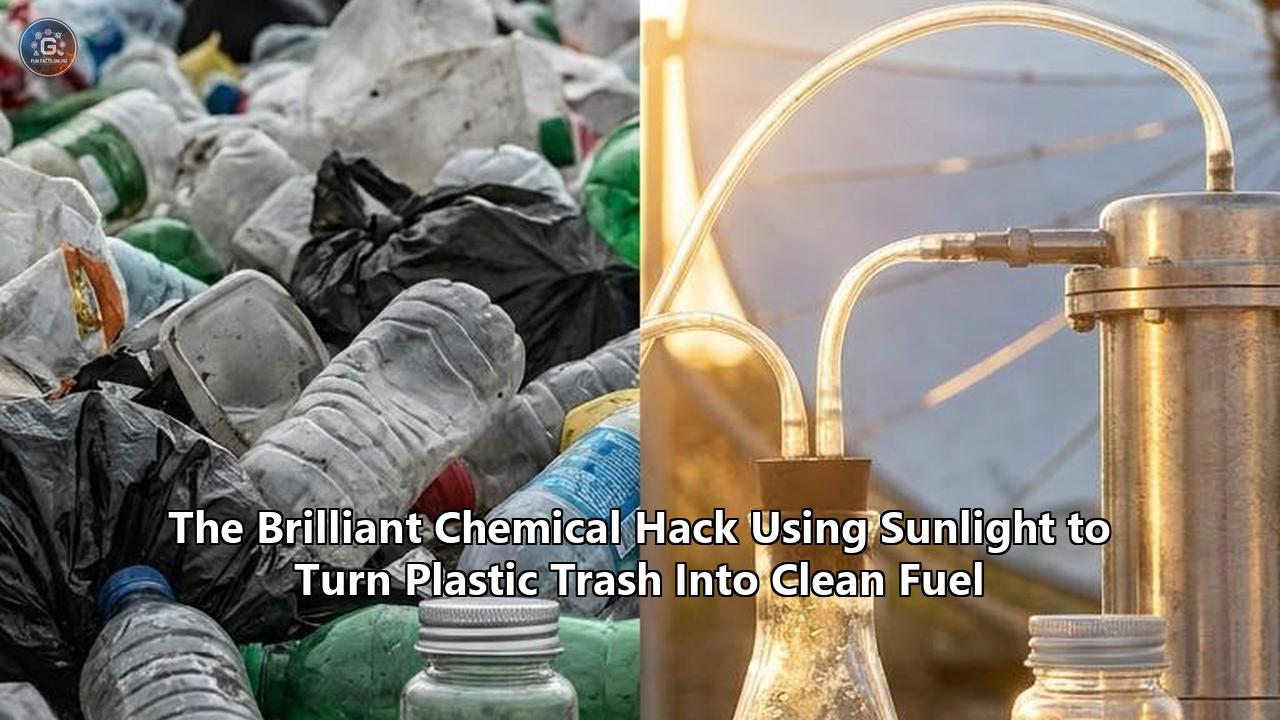
On April 28, 2026, researchers at the University of Adelaide published findings in Chem Catalysis detailing a continuously operating, solar-powered system capable of breaking down highly toxic, carbon-rich plastics into hydrogen, syngas, and liquid chemicals at ambient temperatures. Led by PhD candidate Xiao Lu and senior researcher Professor Xiaoguang Duan, the team successfully utilized non-toxic, metal-free carbon photocatalysts to initiate oxidative cleavage in polyethylene (PE) and polypropylene (PP)—two of the most resilient and ubiquitous polymers in the global waste stream.
The experimental reactors ran continuously for over 100 hours without a drop in performance, demonstrating high yields of hydrogen gas and valuable industrial byproducts like acetic acid and diesel-range hydrocarbons. This achievement bypassed the massive thermal energy requirements historically associated with chemical recycling.
"Plastic is often seen as a major environmental problem, but it also represents a significant opportunity," Lu noted upon the study's publication. "If we can efficiently convert waste plastics into clean fuels using sunlight, we can address pollution and energy challenges at the same time".
This development is not an isolated laboratory trick. It represents a fundamental realignment in how materials science approaches the carbon cycle. By analyzing the Adelaide breakthrough as a case study, we can extract critical principles about the future of waste management, energy arbitrage, and industrial chemistry. The attempt to turn plastic into fuel is transitioning from an energy-intensive brute-force process into a precise, light-driven chemical intervention.
Principle One: Thermodynamic Favorability Over Brute ForceTo understand why the Adelaide case study matters, one must examine the baseline of legacy plastic recycling. Currently, the world produces over 460 million tonnes of plastic annually, with less than 18% undergoing any form of recycling. The vast majority of recycled plastic undergoes mechanical processing: sorting, washing, shredding, melting, and reforming. This process destroys polymer integrity. A plastic bottle can only be mechanically recycled a handful of times before the molecular chains become too short to form a durable product, eventually dooming the material to a landfill or an incinerator.
Chemical recycling was proposed as the definitive solution. Methods like pyrolysis and hydrothermal processing revert plastics back to their foundational petrochemical building blocks. However, these methods suffer from severe energetic penalties. Pyrolysis requires heating plastics in an oxygen-free environment to temperatures exceeding 500 degrees Celsius. Purdue University previously developed hydrothermal processing, which involves submerging plastics in water and heating the reactor to between 380 and 500 degrees Celsius under extreme pressure. Both methods require burning massive amounts of fossil fuels just to generate the heat necessary to break the carbon-carbon bonds.
The Adelaide photoreforming breakthrough changes the thermodynamic equation. Instead of using thermal energy to forcefully crack polymer chains, researchers utilized photons to trigger a catalytic reaction.
Photoreforming works by adding light-sensitive materials—photocatalysts—to the plastic waste. When photons from sunlight hit these materials, they excite electrons, moving them from the valence band to the conduction band. This creates an electron-hole pair. The localized energy from this pair is highly reactive. The holes act as powerful oxidizing agents, tearing electrons away from the plastic polymers and causing the long carbon chains to break apart into smaller molecules. Simultaneously, the excited electrons reduce the protons in the surrounding aqueous solution to generate pure hydrogen gas.
What makes this system particularly elegant is the realization that plastics are chemically easier to oxidize than water. Traditional green hydrogen production relies on water electrolysis, splitting H2O into hydrogen and oxygen. That process requires immense electrical input. Because polymer chains have a lower oxidation potential than water, using waste plastic as the feedstock rather than pure water significantly reduces the overall energy requirement for hydrogen generation. The chemical hack is simple but profound: use the stored chemical energy already residing in the plastic waste to subsidize the energy cost of making hydrogen.
Principle Two: Designing for ContaminationWhen researchers attempt to turn plastic into fuel, the primary obstacle in real-world applications is the complexity of post-consumer waste. Laboratory environments utilize virgin, pristine polymers. The municipal recycling bin is a chaotic mix of food contamination, adhesives, dyes, flame retardants, plasticizers, and multilayered laminates.
A critical lesson extracted from the Adelaide study—and corroborated by concurrent research at the University of Cambridge—is that robust catalyst design must treat contamination as a baseline condition, not an anomaly.
In the Cambridge parallel case, researchers engineered a system capable of operating for 260 continuous hours without performance degradation. To prove its resilience against real-world chemical chaos, the Cambridge team utilized highly corrosive acid extracted from old car batteries as the acidic medium for the photoreforming process. By intentionally introducing harsh, non-pristine chemicals into the reactor, they demonstrated that modern photocatalysts can withstand the chemical stress that typically poisons traditional industrial catalysts.
The Adelaide researchers similarly highlighted catalyst durability as a central metric. Their choice of a non-toxic, metal-free carbon catalyst is a direct response to the vulnerability of earlier systems. In 2018, early iterations of this concept at Cambridge relied on cadmium sulphide quantum dots—highly effective, but heavily reliant on toxic heavy metals that pose their own environmental risks at scale. By shifting to carbon-based metal-free catalysts, the Adelaide team removed a significant supply chain and toxicity bottleneck.
Yet, Professor Duan cautioned that the variability of municipal waste remains a formidable engineering hurdle. Additives like UV stabilizers—chemicals intentionally embedded in plastics to prevent them from degrading in sunlight—actively fight the photoreforming process. Sorting and pre-treatment remain mandatory. The future of this technology will not rely solely on chemical innovation, but on mechanical pre-processing systems capable of filtering out extreme chemical inhibitors before the plastic slurry enters the solar reactor.
Principle Three: The Output Arbitrage and Industrial SyngasThe economic viability of an emerging technology relies on the value of its outputs compared to its inputs. The input here is negative-value municipal waste. The outputs are where the economic arithmetic becomes compelling.
The Adelaide system does not produce a single, monolithic fuel. Instead, it generates a tunable output of hydrogen, synthesis gas (syngas), acetic acid, and liquid hydrocarbon chains. This multiproduct yield is vital for risk mitigation in industrial scaling.
Hydrogen is the headline product, prized for its zero-emission profile at the point of combustion. However, hydrogen is famously difficult and expensive to store and transport. If a solar recycling plant produces pure hydrogen, it requires immediate access to high-pressure storage infrastructure or a co-located industrial buyer.
By also producing syngas—a mixture of carbon monoxide and hydrogen—the process taps directly into the existing petrochemical value chain. Syngas is the foundational precursor for the Fischer-Tropsch process, a century-old industrial method used to manufacture synthetic diesel, aviation fuel, and methanol. A facility that can turn plastic into fuel via syngas generation does not need to wait for the broader hydrogen economy to mature; it can sell its chemical intermediates directly to existing refineries today.
Furthermore, the generation of acetic acid presents a high-margin chemical product. Acetic acid is a vital industrial solvent and chemical building block used in the production of polymers, paints, and adhesives. By treating the photoreactor not just as a fuel generator, but as a biochemical refinery, operators can pivot their output based on real-time commodity pricing, maximizing their margins against the volatile energy market.
The Economics of Scale and Infrastructure RequirementsThe gap between a 100-hour laboratory success and a continuous commercial operation is vast. To extract structural lessons from the Adelaide announcement, one must map the required infrastructure for deployment at the megatonne scale.
Traditional petrochemical facilities, like steam crackers or pyrolysis plants, benefit from massive economies of scale. They are centralized, vertically integrated behemoths operating at extreme temperatures and pressures. A solar-driven photoreforming plant operates on an entirely different architectural model.
Because the process relies on ambient temperature and sunlight, it requires significant surface area. Like a solar farm, a photoreforming facility must maximize light exposure to the catalytic slurry. This suggests a decentralized, horizontal infrastructure model. Instead of shipping municipal waste hundreds of miles to a massive centralized incinerator or pyrolysis plant, municipalities could build modular, flat-panel photoreactors at local waste transfer stations.
The Plug and Play Tech Center, an innovation accelerator, estimates that the broader plastic-to-fuel transformation sector has the potential to generate upwards of 39,000 new jobs and $9 billion in economic output. Reaching those numbers requires solving the multiphase separation challenge highlighted in the Adelaide study.
When the photoreactor breaks down the polymer chains, it generates a mixture of gases (hydrogen, carbon monoxide) and liquids (hydrocarbons, acetic acid, water). Separating these outputs efficiently without consuming excess energy is the next great engineering bottleneck. Membrane separation technology, cryogenic distillation, and pressure swing adsorption are existing industrial solutions, but miniaturizing and integrating them into a decentralized solar facility presents a complex capital expenditure challenge.
Professor Duan noted explicitly that while the early results are highly promising, achieving continuous industrial-scale operation requires smarter reactor engineering and an integrated approach to system monitoring. Industrial buyers will not purchase green hydrogen or syngas if the purity levels fluctuate based on cloud cover or the specific mix of plastics dumped into the reactor on a given Tuesday. Reliability and exact chemical specifications are the lifeblood of commodity chemical trading.
Corporate Buyers and the Demand for Green MoleculesThe demand side of this equation is evolving rapidly, driven by corporate decarbonization targets and changing regulatory frameworks. The aviation and maritime shipping sectors are actively seeking "drop-in" fuels—liquid fuels that can be poured directly into existing jet engines or marine diesel engines without requiring hardware modifications.
Currently, Sustainable Aviation Fuel (SAF) is predominantly sourced from hydroprocessed esters and fatty acids (HEPA), which rely on limited supplies of agricultural waste and used cooking oil. There is simply not enough used cooking oil in the world to decarbonize the global aviation fleet.
Waste plastic represents a massive, untapped carbon reservoir. By breaking down PE and PP into syngas, and subsequently upgrading that syngas into synthetic kerosene, the aviation sector gains access to a theoretically inexhaustible feedstock. Major airlines and global shipping conglomerates are already signing off-take agreements for synthetic fuels produced from captured CO2 and waste carbon. If a commercial operator can successfully scale the Adelaide photoreforming process, the corporate off-takers are already lined up at the door, willing to pay a "green premium" for fuels derived from diverted municipal waste.
Policy and Extended Producer ResponsibilityThe technological viability of solar-driven upcycling cannot be separated from the legislative environment governing plastic waste. How regulatory bodies define "recycling" directly impacts the financial backing these projects receive.
In many jurisdictions, turning plastic into fuel is legally classified as "recovery" rather than "recycling." Because the plastic is ultimately combusted (if used as fuel) rather than being turned back into another plastic product, critics argue it does not contribute to a true circular economy. However, when the output is directed toward chemical feedstocks (like acetic acid or platform chemicals for new polymers), it crosses the threshold into true circular upcycling.
This distinction is critical for Extended Producer Responsibility (EPR) programs. EPR laws require the original manufacturers of plastic packaging to pay for its end-of-life management. If photoreforming is legally recognized as a high-tier recycling mechanism, consumer goods conglomerates will be incentivized to directly fund the construction of solar photoreactor facilities to meet their statutory EPR obligations.
Furthermore, carbon accounting standards will dictate the ultimate value of the hydrogen produced. Green hydrogen is currently defined by its reliance on renewable electricity and water electrolysis. Hydrogen derived from plastic waste via sunlight introduces a new category. While the energy source (sunlight) is renewable, the feedstock (plastic) is derived from fossil fuels. Yet, because the plastic was destined for a landfill or an incinerator—where it would eventually release greenhouse gases or microplastics—the lifecycle emissions of this "waste-derived hydrogen" present a highly favorable carbon intensity score. Regulatory bodies will need to establish clear taxonomies for this specific class of fuel to allow it to participate in lucrative low-carbon fuel standard (LCFS) credit markets.
Looking Ahead: The Trajectory of Solar UpcyclingThe publication of the Adelaide findings in April 2026 marks the closing of one scientific chapter and the opening of an industrial one. The fundamental chemistry is now proven: it is entirely possible to use photons, rather than extreme heat, to cleave the stubborn carbon bonds of commercial plastics. The system can operate at room temperature, it can run continuously for days, and it yields high-value industrial chemicals.
The next five years will be defined by three distinct milestones.
First, the development of continuous-flow reactor systems. Laboratory success often relies on batch processing—putting a set amount of material into a beaker, running the reaction, and emptying it. Industrial viability requires a continuous flow of plastic slurry entering the system while hydrogen and liquid chemicals are continuously extracted. Engineering these multiphase reactors to handle the inevitable buildup of solid residues and inert additives will dominate the next wave of chemical engineering publications.
Second, the maturation of machine learning in catalyst discovery. While the metal-free carbon catalyst developed by the Adelaide team is highly effective, the universe of possible photocatalysts is vast. Computational chemistry and artificial intelligence are accelerating the discovery of new materials that can absorb a broader spectrum of sunlight (particularly in the visible and near-infrared bands, rather than just UV), thereby increasing the overall photon-to-chemical conversion efficiency.
Finally, the establishment of pilot-scale commercial facilities. Moving from a university laboratory to a multi-ton demonstration plant requires tens of millions of dollars in capital expenditure. We will likely see joint ventures between academic institutions, waste management conglomerates, and petrochemical giants aiming to build the first modular photoreforming units by the late 2020s.
The attempt to turn plastic into fuel has evolved past the realm of high-heat thermal destruction. The use of sunlight to systematically deconstruct environmental waste into zero-emission fuels represents a sophisticated alignment of chemical physics and global supply chain realities. The challenge moving forward is no longer proving that the reaction works, but proving that the infrastructure can scale to meet the millions of tonnes of plastic waiting in the world's landfills.
Reference:
- https://www.google.com/search?q=time+in+Boston,+MA,+US
- https://www.thenews.com.pk/latest/1401667-new-solar-powered-process-turns-plastic-waste-into-clean-hydrogen
- https://www.gktoday.in/plastic-waste-converted-into-hydrogen-fuel-using-sunlight/
- https://www.indiatoday.in/science/story/plastic-waste-to-fuel-sunlight-photoreforming-hydrogen-clean-energy-study-2904156-2026-05-01
- https://timesofindia.indiatimes.com/science/plastic-waste-to-biofuel-scientists-use-sunlight-to-turn-discarded-plastic-into-clean-hydrogen-fuel/articleshow/130886349.cms
- https://www.plugandplaytechcenter.com/insights/converting-plastic-waste-fuel
- https://pubs.acs.org/doi/10.1021/bk-2024-1490.ch008
- https://propakistani.pk/2026/05/01/new-tech-can-convert-plastic-trash-into-petrol-and-gas-using-sunlight/
- https://www.ch.cam.ac.uk/news/sunlight-converts-waste-plastics-fuel
- https://www.intelligentliving.co/global-plastic-into-fuel-industry-buying/