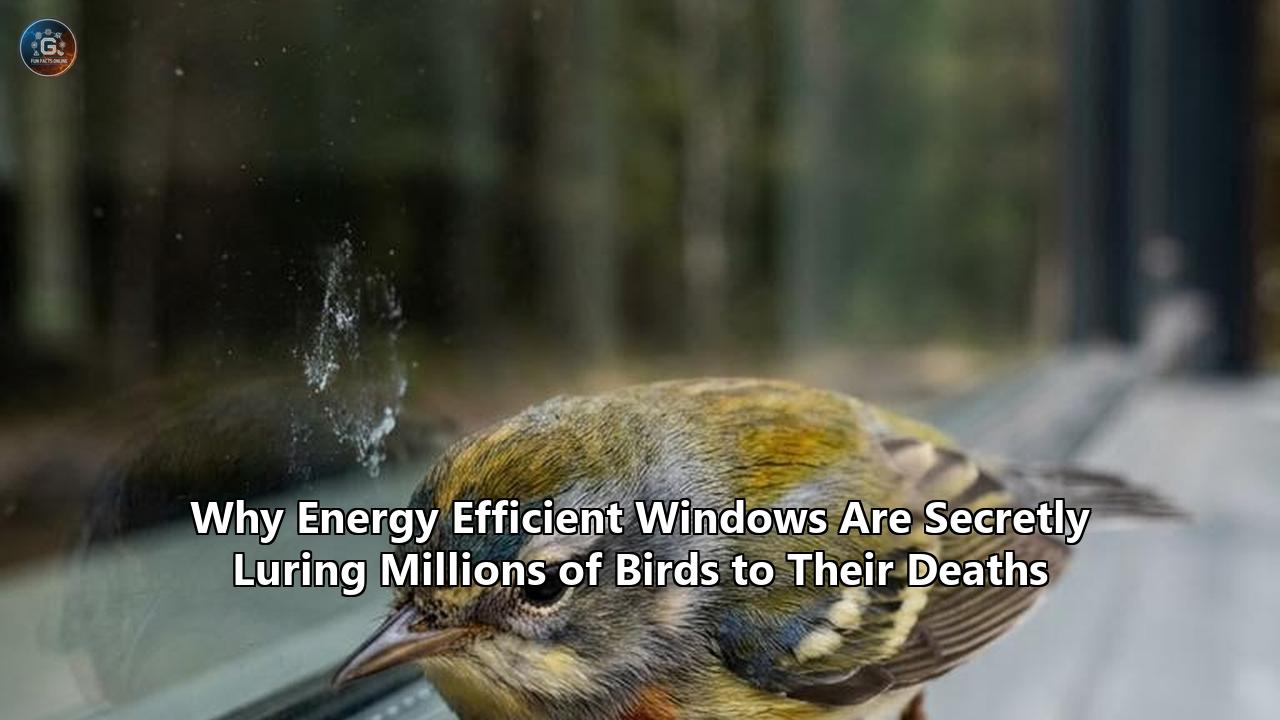
As dawn breaks over North America this May, an invisible crisis is unfolding on the sidewalks of the continent's major cities. Millions of migratory songbirds—warblers, thrushes, and kinglets—are navigating the final, most treacherous legs of their vernal journey north. Volunteers with organizations like the Chicago Bird Collision Monitors and Fatal Light Awareness Program (FLAP) Canada are currently walking the streets of downtown cores, equipped with paper bags and nets, engaging in a grim morning ritual: collecting the bodies of birds that have struck commercial and residential buildings overnight.
Earlier this year, FLAP Canada held its 2026 Annual Bird Layout, an emotive exhibition showcasing approximately 3,000 dead birds recovered from the Greater Toronto Area during the previous year's migration. The bodies were arranged meticulously on the floor, a stark visual representation of a crisis that claims up to one billion avian lives annually in North America alone. But the tragedy carries a bitter irony that is forcing architects, urban planners, and environmentalists into an uncomfortable reckoning. The very building materials designed to combat climate change are inadvertently escalating a biodiversity crisis.
The push for sustainable, LEED-certified architecture has led to the widespread adoption of advanced glazing technologies. We are wrapping our skylines in glass that traps heat, reflects solar radiation, and bathes interiors in natural daylight, drastically reducing the carbon footprint of modern skyscrapers. Yet, the optical physics that make these materials so environmentally friendly to human habitats turn them into perfect, impenetrable mirrors to wildlife. The link between bird collisions energy efficient windows is now triggering fierce legislative battles, driving frantic metallurgical research, and forcing cities to choose between two competing environmental priorities.
The urgency of this conflict was cemented recently by a mass-casualty event at Chicago's McCormick Place. In a single night, a toxic combination of low cloud cover, rain, bright internal lighting, and the convention center's sprawling glass facade resulted in the deaths of over 1,000 birds. The sheer volume of carcasses recovered in a 1.5-mile radius shocked seasoned researchers. McCormick Place has since begun the laborious process of retrofitting its two football fields’ worth of exterior glass with dotted decals to break up the reflectivity. But this reactive measure highlights a systemic failure in how modern cities are engineered. We are building invisible walls across the sky.
The Physics of the Illusion: Why High-Performance Glass is a Death Trap
To understand the mechanics of this crisis, one must examine the chemical engineering behind modern facades. A standard pane of clear glass allows thermal energy to pass through easily, making a building swelter in the summer and freeze in the winter. To counteract this, manufacturers developed Low-E (low-emissivity) coatings. These microscopically thin, transparent layers of silver or other metals are baked into the glass. They act as a thermal mirror, bouncing interior heat back inside during the winter and reflecting the sun’s infrared radiation away during the summer.
While these coatings are virtually invisible to the human eye, they drastically alter the exterior reflectance of the window. Depending on the lighting conditions, a highly insulated, energy-efficient window transforms into a high-definition mirror. For a migrating Tennessee Warbler flying at twenty miles per hour, this surface does not register as a solid boundary. The bird processes the reflection of the adjacent tree canopy, the passing clouds, or the open sky as a continuation of its habitat.
Compounding the problem is the architectural trend of "fly-through conditions". Many modern corporate campuses and luxury condominiums utilize parallel glass elements, glass walkways, or transparent courtyards to maximize natural light. A bird sees a clear line of sight through the building to the foliage on the other side and attempts to fly through the structure at full speed. The impact is almost always fatal. Even if the bird does not die on contact, the blunt force trauma often leads to internal hemorrhaging or leaves the animal stunned on the pavement, vulnerable to urban predators or exposure.
There is a widespread public misconception that this is exclusively a skyscraper problem. In reality, the towering financial districts of New York, Chicago, and Toronto account for a fraction of the total fatalities. The vast majority of collisions occur at tree-canopy height, typically on the first three to four stories of a building, or at low-slung suburban office parks and residential homes featuring expansive, energy-efficient bay windows. Research data compiled by conservationists indicates that homes and mid-rise buildings nestled in heavily wooded suburbs are the true frontlines of this ecological disaster.
The Regulatory Battleground: Mandates, Pushback, and Backsliding
As the death toll mounts, cities situated along primary migration routes are attempting to legislate a solution, though the political friction is intense. New York City, which sits directly beneath the Atlantic Flyway, took a decisive step by enacting Local Law 15, which took effect in 2021. The measure requires that any new building, or any major alteration that replaces all exterior glazing, must use bird-friendly materials on 90 percent of the exterior envelope for the first 75 feet above grade. Glass installed adjacent to green roofs must also be treated.
However, Local Law 15 only applied to new construction. The city's one million existing buildings were grandfathered in, leaving a massive gap in the protective net. Late in 2024, a sweeping new proposal introduced by City Council members Tiffany Cabán and Shaun Abreu sought to close this loophole. The proposed legislation would mandate large existing buildings across New York City to retrofit their windows with bird-friendly materials by 2030.
The pushback from the real estate sector has been swift and fierce. The Real Estate Board of New York (REBNY) expressed deep skepticism, calling the potential mandate a severe financial burden. Retrofitting existing structures is notoriously expensive. Post-installation solutions, such as exterior films or dot patterns, require scaffolding, extensive labor, and ongoing maintenance. For a luxury building like Circa Central Park on the Upper West Side—a site heavily plagued by collisions—installing basic dot stickers on problem windows cost the condominium board $60,000. Real estate advocates argue that expanding this mandate across thousands of large buildings by 2030 could cripple property owners already struggling with inflation and commercial vacancy rates, citing cost increases ranging from 12 percent for adhesive films to 50 percent for specialty replacement glass.
North of the border, the legislative momentum has actually reversed. Ontario, which had previously seen progressive municipal actions like the Toronto Green Standard, recently enacted provincial legislation that curtailed the ability of local municipalities to enforce mandatory green building standards. FLAP Canada has vocally criticized these provincial policies, warning that stripping municipalities of the authority to mandate bird-friendly designs will result in millions of preventable deaths. The organization is now pivoting to advocate for a province-wide standard in the Ontario Building Code, hoping to bypass the municipal blockades.
On the federal level in the United States, conservationists are throwing their weight behind the Federal Bird Safe Buildings Act of 2025. If passed, the bipartisan bill would require the General Services Administration (GSA) to incorporate bird-safe materials and design features in all newly constructed, acquired, or significantly altered public buildings. Proponents highlight that the bill would have minimal impact on the federal budget if integrated during the design phase, while serving as a massive proof-of-concept for the commercial sector.
Species in the Crosshairs: The Biological Toll
The impact of this infrastructure is not distributed evenly across the avian kingdom. Urban-adapted species like pigeons and house sparrows have largely learned to navigate the glass canyons of the modern metropolis. The true victims are the migratory species, many of which travel thousands of miles at night from Central and South America to breeding grounds in the boreal forests of Canada.
When these migrants land in urban areas at dawn to rest and forage, they find themselves trapped in a reflective maze they have never encountered in their evolutionary history. According to data collected by FLAP Canada in the Greater Toronto Area, the most frequent victims of building collisions include the White-throated Sparrow, Golden-crowned Kinglet, Ovenbird, Ruby-crowned Kinglet, and Brown Creeper.
More alarming is the rate at which endangered and at-risk species are being decimated by modern architecture. The Wood Thrush, Canada Warbler, Eastern Whip-poor-will, and Rusty Blackbird consistently rank among the top ten species-at-risk killed in these impacts. These are populations already reeling from habitat destruction, climate change, and pesticide use. Adding millions of annual window collision fatalities to their attrition rate pushes several of these species closer to a critical collapse.
The biological mechanics of a collision are brutal. Birds have a different skeletal and muscular structure than mammals, optimized for weightlessness and aerodynamics, not blunt force resistance. When a warbler strikes a rigid pane of double-glazed glass at twenty miles per hour, its beak and skull absorb the kinetic energy. Even if the skull does not fracture, the brain frequently hemorrhages. Many birds found stunned at the base of buildings are collected by well-meaning citizens and placed in bushes, only to succumb to internal bleeding hours later.
Engineering the Invisible Barrier: The Tech Race
Faced with a mounting public relations disaster and encroaching mandates, the global glass manufacturing industry is rapidly accelerating its research and development. The goal is to create a product that satisfies strict municipal energy codes, provides architects with clear, aesthetically pleasing sightlines, and definitively alerts birds to a physical barrier.
Historically, the most effective method has been the application of visible markers, typically governed by the "2x4 rule"—meaning patterns must be placed no more than two inches apart horizontally and four inches apart vertically. Recent research has refined this to an even stricter maximum spacing of five centimeters (about two inches) in any direction. These patterns are often achieved through ceramic fritting, a process where a ceramic enamel is fused into the glass surface during the manufacturing process.
The Javits Center in Manhattan stands as the preeminent case study for this technology. Once notorious for being one of the deadliest buildings in New York City for migratory birds, the convention center underwent a massive renovation that replaced its dark, highly reflective glass with fritted glass. The ceramic dots are easily perceived by birds but blend into the background for human occupants. The result was a 90 percent reduction in bird fatalities, proving that the technology works at scale.
However, architects frequently resist fritted glass for luxury residential or high-end commercial projects, arguing that visible dots or lines obstruct views. This aesthetic resistance has spurred the development of ultraviolet (UV) reflective technologies. Birds can see light in the ultraviolet spectrum, a biological adaptation used for foraging and identifying plumage, while human vision cannot perceive it.
Leading manufacturers have introduced products that exploit this biological divergence. Guardian Glass offers its Bird1st collection, which utilizes UV-reflective coatings that appear as solid, glowing patterns to avian eyes while remaining completely transparent to human occupants. Vitro Architectural Glass recently launched BirdSmart, a proprietary product combining laser-etched patterns with energy-efficient performance metrics.
Innovation in this space is moving rapidly. In 2025, glass fabricator Andluca won a prominent industry R&D award for its Innovio with Safelight UV system. This laminated system not only incorporates a transparent UV pattern to deter bird strikes, but it also functions as photovoltaic glass, generating solar energy for the building. This type of multi-functional technology represents the holy grail for sustainable architecture: mitigating bird collisions energy efficient windows while actively contributing to a building's renewable energy grid.
The Retrofit Dilemma: Films, Solar Control, and Compromise
While new constructions can seamlessly integrate UV glass or fritted panes at a marginal cost premium, existing buildings require a different approach. Replacing thousands of structurally sound glass panels strictly for bird safety is economically unfeasible for most property owners. Instead, the industry is pivoting toward high-performance external window films.
Window films have long been used in commercial real estate to reduce solar heat gain and minimize glare. Traditionally, these were simple, dark tints that did nothing to stop bird strikes, and in some lighting conditions, actually increased the reflectivity of the window, making the problem worse.
Today, manufacturers are producing patterned, exterior-applied window films that serve a dual purpose. These anti-collision films feature subtle stripes or dot patterns that break up the reflection of the sky and trees. Because they are applied to the exterior surface, they completely eliminate the mirror effect, regardless of the lighting conditions inside or outside the building. Crucially for property managers, these patterned films retain excellent solar control properties. They block harmful UV rays that fade interior furnishings, reduce cooling costs during summer heatwaves, and improve visual comfort for office workers.
This "two-for-one" benefit is becoming the primary selling point for retrofits. A property manager may balk at a $100,000 installation bill strictly to appease local wildlife advocates. But if that same patterned film installation reduces the building's summer HVAC expenditure by 15 percent and helps the property meet new local carbon emission caps, the investment suddenly holds a measurable return on investment.
The Fatal Light Attraction: How We Draw Them In
It is impossible to comprehensively address the collision crisis without analyzing the role of artificial light. The glass is the physical mechanism of death, but nighttime lighting is the lure that brings migratory birds into the urban labyrinth in the first place.
The majority of songbirds migrate at night to avoid predators and capitalize on cooler, stable air currents. They navigate using a complex array of biological systems, including the earth's magnetic field and celestial cues from the stars and moon. The intense ambient glow of metropolitan areas drowns out these natural cues, deeply disorienting the migrating flocks.
When low cloud cover forces birds to fly closer to the ground, the upward-facing lights of skyscrapers, decorative facade lighting, and brightly illuminated empty office floors act as a magnet. Birds become trapped in the beam, circling endlessly until they drop from exhaustion, or they land on urban trees and ledges to wait for morning.
When the sun rises, they find themselves surrounded by high-performance glass. Attempting to forage for food, they launch themselves toward the reflection of a nearby tree in a lobby window, resulting in a fatal strike.
This lethal sequence has sparked international "Lights Out" campaigns. Organizations urge building managers and residents to turn off unnecessary lighting from midnight to dawn during the peak weeks of spring and fall migration. A comprehensive 2021 study in Chicago demonstrated that simply halving the number of lit windows at a major lakeside building reduced fatal bird collisions by 60 percent.
Cities like Philadelphia and New York have initiated voluntary dark-sky pledges, though enforcement relies heavily on corporate goodwill. When a massive weather front pushes hundreds of thousands of birds into a city on a single night—as predicted by radar systems like Cornell Lab of Ornithology’s BirdCast—even a few brightly lit architectural features can cause a localized massacre.
The Intersection of Landscaping and Glazing
Architectural intent often collides violently with landscaping choices, compounding the danger. A perfectly designed LEED-certified building featuring highly insulated windows can become a hazard simply based on what is planted in front of it.
Urban planners often attempt to soften the harsh concrete aesthetic of a city by planting native trees, constructing reflective water features, or designing elaborate green roofs. If a tree is planted ten feet from a highly reflective, Low-E glass facade, it creates a perfect, high-definition mirror image of a safe landing spot.
Conservation guidelines stress that landscaping must be integrated with facade planning. If dense vegetation is placed directly adjacent to ground-floor glazing, that specific glazing must be treated with dense visual markers. Furthermore, as green roofs become mandated in cities like New York to manage stormwater and reduce urban heat islands, they inadvertently create high-altitude habitats. Birds are attracted to the vegetation on the 40th floor, only to strike the glass penthouses immediately adjacent to the green space. Local Law 15 specifically recognized this threat, dictating that exterior walls adjacent to a green roof system must utilize bird-friendly materials up to 12 feet above the walking surface.
Moving Toward a Sustainable Coexistence
As the 2026 spring migration continues, the volunteers picking up the casualties on the sidewalks are a testament to a broader systemic failure in how we define "green" architecture. True sustainability cannot operate in a vacuum where reducing a building's thermal footprint is achieved at the expense of a billion regional animals. The ongoing friction surrounding bird collisions energy efficient windows is forcing the real estate and manufacturing sectors to expand their definition of environmental stewardship.
The technological pathways to resolve this crisis already exist. The integration of UV-reflective coatings, precision-etched frits, and multi-functional solar-control window films proves that building efficiency and biodiversity protection do not have to be mutually exclusive. The challenge is no longer one of engineering, but of political will, economic prioritization, and the modernization of building codes.
Looking ahead, the momentum appears to be shifting from voluntary guidelines to strict legal mandates. As public awareness grows—fueled by the visceral imagery of events like the FLAP Canada Bird Layout and the McCormick Place fallout—legislators are increasingly willing to challenge the real estate sector's resistance. The potential passage of the Federal Bird Safe Buildings Act of 2025, alongside localized battles over retrofitting mandates in cities like New York, will likely dictate the architectural standards of the next decade.
The transition will be costly, and the debates over the economic burden of retrofitting existing megacities will be fierce. But the alternative—a future where our cities stand as highly efficient, climate-controlled fortresses surrounded by silent, lifeless skies—is an outcome that conservationists, urban planners, and the public are no longer willing to accept. The skyline of tomorrow will need to be legible not just to the humans who build it, but to the wildlife that must navigate through it.
Reference:
- https://www.theguardian.com/us-news/2023/oct/07/chicago-mccormick-place-building-bird-deaths-windows
- https://www.audubon.org/magazine/more-1000-birds-collided-single-chicago-building-one-night
- https://www.youtube.com/watch?v=zAVoJ9HZitg
- https://flap.org/
- https://www.glassmagazine.com/article/clear-views-and-safe-skies
- https://www.guardianglass.com/us/en/why-glass/build-with-glass/applications-of-glass/glass-for-facades/bird-friendly-glass
- https://www.thepetitionsite.com/904/965/146/chicagos-new-bird-friendly-building-is-saving-thousands-of-birds.-new-york-city-must-follow-suit./
- https://www.route-fifty.com/infrastructure/2024/09/deadly-bird-collisions-buildings-mount-cities-look-solutions/399397/
- https://nycbirdalliance.org/our-work/advocacy/advocacy-accomplishments/bird-friendly-materials-bill-local-law-15
- https://metropolisny.com/2020/12/bird-friendly-construction-required-as-of-january-10/
- https://www.milrose.com/insights/nyc-mandates-use-of-bird-safe-glass
- https://therealdeal.com/new-york/2024/10/14/radical-bill-would-require-bird-friendly-glass-across-nyc/
- https://flap.org/year-end-recap-policy-changes-impacting-bird-building-collisions/
- https://flap.org/blog/
- https://www.nycbar.org/reports/support-for-the-federal-bird-safe-buildings-act-of-2025/
- https://flap.org/data/
- https://solarscreen.eu/en/blog/combining-bird-safety-solar-performance-patterned-films/
- https://www.axios.com/local/chicago/2025/09/24/chicago-bird-collisions-migratory-deaths-data-advocates