April 2026: The Microscopic Engine Driving Agricultural Emissions
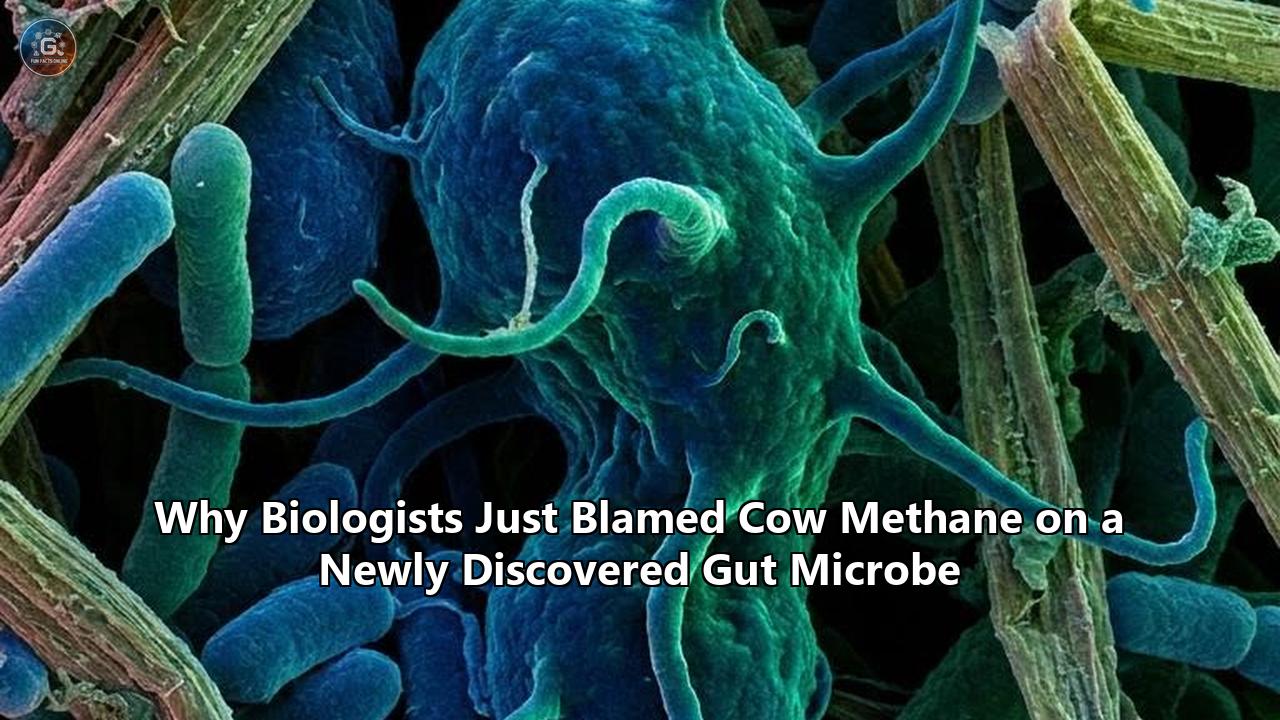
On April 30, 2026, researchers published a study in the journal Science that finally pinpointed the exact biological machinery responsible for one of the world's most stubborn climate challenges: cattle emissions. The paper detailed the discovery of a previously unknown organelle, dubbed the "hydrogenobody," hidden inside fuzzy, single-celled protozoa called ciliates. These microorganisms inhabit the complex stomach compartments of cud-chewing animals.
The revelation structurally changes how climate scientists and biologists approach agricultural greenhouse gases. For years, the specific ecosystem of cow methane gut microbes remained a frustrating black box. Researchers knew that cattle themselves do not produce methane. Instead, the gas is manufactured by microscopic archaea living in the animal's rumen, the first of four stomach chambers. However, these archaea do not generate methane from scratch; they require a steady supply of hydrogen gas to fuel their chemical reactions.
The newly discovered hydrogenobody is the missing link in this metabolic supply chain. Functioning much like a cell's mitochondria—which produces energy—the hydrogenobody specifically manufactures hydrogen gas as a metabolic byproduct. By tracing the internal structure of rumen ciliates, biologists proved that these specific protozoa act as the primary fuel pumps for the methanogenic archaea.
Ivan Čepička, a protistologist at Charles University in Prague who reviewed the findings, noted the historical blind spot in this area of microbiology. "Ciliates make up about a quarter of the microbes that live in the rumen but have not been studied much," Čepička observed, adding that previous studies failed to definitively show exactly where these microbes generated hydrogen. The new 3-D mappings finally illustrate the precise cellular location of hydrogen production.
This discovery did not happen in a vacuum. It is the culmination of more than a decade of escalating scientific intervention, tracing back to the initial realization of the rumen's climate impact, through early dietary hacks, and finally into the realm of precision genetic engineering.
2015–2020: The Anatomy of a 200-Pound Burp
To understand the urgency behind finding the hydrogenobody, one must look at the sheer scale of ruminant biology. A single dairy cow contains a rumen that functions as a 50-gallon fermentation vat. Inside this heavily localized environment, grass and fibrous plant matter are broken down by billions of bacteria, fungi, and protozoa.
During this digestive process, the average cow burps out roughly 200 pounds of methane every single year. Because methane is 27 times more potent than carbon dioxide at trapping atmospheric heat, this biological exhaust has severe global implications.
Ermias Kebreab, an investigator at the Innovative Genomics Institute (IGI) and UC Davis, quantified the stakes of this microbial process. "From the pre-industrial period, we had a 1.1 degree centigrade increase, and we want to try to keep it up to 1.5," Kebreab stated in a project overview. "Almost half of it is because of methane. If you look at the anthropogenic sources of methane, about 35% is from livestock".
Throughout the late 2010s, agricultural scientists faced a brick wall. While the transportation and energy sectors could transition to solar, wind, or battery alternatives, agriculture dealt with living organisms. You cannot simply turn off a cow's digestive system without stunting its growth, halting milk production, or killing the animal. The methanogens were deeply integrated into the animal's ability to extract nutrients from tough forage. The primary strategy during this era was largely observational: cataloging the output, measuring the emissions, and attempting to selectively breed cattle that naturally emitted slightly less gas. But incremental breeding was outpaced by the rapid warming of the climate. A direct intervention into the microbiome was required.
2021–2024: The Seaweed Intervention and the Acidosis Problem
The first major breakthrough in actively disrupting this methane supply chain came from an unlikely source: the ocean. Researchers discovered that certain types of red seaweed, specifically of the genus Asparagopsis, contained compounds that could interrupt the methanogens' chemical processes.
When researchers at UC Davis added small amounts of this red seaweed to the diet of dairy cattle, the results were immediate and drastic. Real-world trials demonstrated a 60% reduction in methane emissions, with some controlled studies showing reductions as high as 98%. The seaweed worked by delivering bromoform, a compound that directly blocked a key enzyme the archaea needed to synthesize methane.
For a brief period, red seaweed was hailed as the ultimate fix. But as field testing expanded, severe biological and logistical limitations emerged. Cultivating enough Asparagopsis to feed the world's 1.5 billion cattle was economically and agriculturally unfeasible. Furthermore, the seaweed additive only worked as long as the cow was actively eating it; skip a dose, and the methane production immediately resumed.
More critically, researchers uncovered a dangerous chemical bottleneck. When the seaweed blocked the archaea from converting hydrogen into methane, the raw hydrogen gas had nowhere to go. It began to build up rapidly inside the rumen.
Matthias Hess, a microbiologist and professor in the UC Davis Department of Animal Science, identified the severe risk this posed to the livestock. "Too much hydrogen can lead to acidosis in the rumen, which can harm the animal," Hess explained. Rumen acidosis drastically lowers the pH of the stomach, causing systemic inflammation, suppressed appetite, and reduced milk yields. The seaweed was successfully silencing the methanogens, but it was inadvertently turning the cow's stomach into a highly pressurized hydrogen balloon.
Late 2025: The Hydrogen Bottleneck and the CRISPR Pivot
The acidosis crisis forced a hard pivot in late 2025. If blocking the methane created toxic levels of hydrogen, scientists needed to find a biological "sink" to consume the excess gas. They also realized that superficial dietary additives were fundamentally inadequate for global scaling. The focus shifted toward permanently altering the community of cow methane gut microbes using CRISPR genome-editing tools.
In November 2025, a collaborative team from UC Davis, UC Berkeley, and the IGI published a critical study in the journal Microbiome. By extracting fluid from the rumens of cattle fed the seaweed diet, they observed how the massive hydrogen buildup—a 367% increase in internal hydrogen production—triggered dormant genetic pathways. The team successfully reconstructed the genome of a highly elusive rumen bacterium belonging to the genus Duodenibacillus.
Crucially, this bacterium had never been isolated in a laboratory setting. Through advanced metagenomics, the team realized that Duodenibacillus was naturally capable of consuming raw hydrogen.
This discovery laid out a new theoretical blueprint. If researchers could use precision CRISPR editing to suppress the methanogenic archaea, they could simultaneously promote the growth of Duodenibacillus to safely eat the displaced hydrogen. Hess outlined the endgame of this genetic strategy: "The ideal outcome of that project really would be that we could alter the microbiome in cattle really early in life as a calf, and then that microbiome would remain stable and would produce very little if no methane at all, so we're not touching the animal. We basically change only what these microbes can do".
Despite this theoretical framework, the editing process was stalled by a missing variable. To execute a precise CRISPR intervention, scientists needed to know exactly which microbes were generating the initial hydrogen payload. They had the consumer (Duodenibacillus), and they had the byproduct (methane), but the primary manufacturers remained obscured in the complex soup of the rumen.
Early 2026: Mapping the Rumen’s Dark Matter
To locate the origin of the hydrogen, the scientific community had to map the rumen at an unprecedented scale. In January 2026, Leluo Guan, a researcher at the University of British Columbia, launched a massive $7.9 million, federally-funded initiative to systematically catalog the genetic dark matter of the bovine stomach.
Operating out of the UBC Dairy Education and Research Centre in Agassiz, B.C., Guan’s team established Canada's first national rumen microbiome database. The logistics of the operation were staggering. The team collected and sequenced fluid samples from more than 10,000 cattle nationwide, utilizing machine learning and predictive modeling to track how specific microbes interacted with cattle genetics to influence feed efficiency and gas production.
"We're creating innovative biotech tools to fine-tune the microbes in a cow's stomach so less methane is produced and more energy is available for animal growth," Guan detailed during the project's rollout.
As the data from the 10,000 cattle poured in, a distinct pattern emerged. The archaea producing the methane were heavily concentrated around specific populations of single-celled protozoa known as ciliates. Using 3-D fluorescent microscopy, researchers identified and cataloged 65 distinct ciliate species native to the rumen, including Isotricha prostoma, Entodinium caudatum, and Dasytricha ruminantium.
These fuzzy, highly mobile protozoa made up roughly 25% of the total microbial population in the rumen. For decades, their exact metabolic function had been ignored in favor of studying the bacteria and archaea. But the UBC database models suggested that ciliates were the foundational architects among cow methane gut microbes, operating upstream of the entire greenhouse gas reaction. The data strongly pointed to the ciliates as the source of the hydrogen, but biological proof of exactly how they produced it remained elusive.
The Breakthrough: Unmasking the Hydrogenobody
The suspicions generated by the Canadian mapping database were definitively proven just months later with the April 30, 2026, publication in Science.
An independent research team investigated the internal anatomy of these specific ciliates across a cohort of 100 dairy cows. By isolating the protozoa and running high-resolution intracellular scans, they discovered the "hydrogenobody".
This organelle operates as a dedicated microscopic factory. Unlike typical hydrogen-producing organisms that utilize organelles called hydrogenosomes—which are closely related to energy-producing mitochondria—the hydrogenobody is a distinct, specialized structure highly adapted to the unique, oxygen-deprived environment of the rumen.
The 100-cow study provided undeniable, quantifiable proof of the escalation chain. The data showed a perfect linear correlation: cattle hosting higher populations of ciliates in their rumen possessed proportionally higher numbers of methane-producing archaea. Consequently, these specific animals burped out significantly higher volumes of methane. The ciliates were consuming the fermented plant matter, processing it through their hydrogenobodies, and venting massive plumes of hydrogen gas directly into the surrounding rumen fluid. The archaea were simply feeding on the exhaust.
By isolating this organelle, biologists fundamentally shifted the target of agricultural climate intervention. The archaea were no longer the sole suspects; the ciliates were the enablers. If researchers could target the hydrogenobody—either by introducing natural inhibitors, editing the genetic code of the ciliates, or vaccinating the cattle against specific ciliate populations—they could starve the methanogens of their fuel source before the methane was ever synthesized.
2027 and Beyond: Engineering the Net-Zero Herd
The unmasking of the hydrogenobody rapidly accelerates the timeline for deploying practical climate interventions. With the complete metabolic pathway now mapped—from ciliate to hydrogenobody to archaea to methane—the disparate research tracks are converging into a unified strategy.
Guan’s team at UBC is already utilizing this biological blueprint to finalize early formulations of targeted microbiome interventions. The group is on track to begin large-scale, real-world trials by 2027 at the Agassiz facility, which houses nearly 500 working dairy cows equipped with state-of-the-art emissions tracking infrastructure.
The strategy moving into 2027 relies on a multi-pronged biological assault. "These tools give farmers a comprehensive strategy – combining the right genetics, microbiome interventions and management practices – to cut methane emissions by up to 30 per cent in dairy cows and 40 per cent in beef cattle," Guan projected, noting that these reductions are critical for achieving national net-zero economy targets by 2050.
Simultaneously, the CRISPR teams at the Innovative Genomics Institute are incorporating the ciliate data into their genetic models. Armed with the knowledge of exactly where the hydrogen originates, they can refine their approach to engineering cow methane gut microbes. Instead of broadly suppressing all methanogens and risking deadly acidosis, future edits can precisely downregulate the activity of the hydrogenobody, gently lowering the hydrogen supply while ensuring that bacteria like Duodenibacillus consume the remaining excess.
The eventual goal remains the development of a localized, stable edit: a single oral treatment administered to young calves that durably rewires their internal ecosystem for life. As agricultural scientists prepare for the upcoming 2027 field trials, the focus has entirely shifted away from mitigating the symptoms of ruminant digestion. By targeting the microscopic engine deep inside the ciliate, researchers are finally in a position to dismantle the cattle methane supply chain at its absolute source.
Reference:
- https://www.sciencenews.org/article/cows-methane-burps-may-be-fueled-by-a-newfound-organelle-in-gut-microbes
- https://www.ucdavis.edu/food/news/engineering-cow-gut-microbe-reduce-methane
- https://innovativegenomics.org/news/a-microbial-blueprint-for-climate-smart-cows/
- https://innovativegenomics.org/news/cow-burp-methane/
- https://www.eurekalert.org/news-releases/1114287
- https://www.youtube.com/watch?v=PsqEn2tvREc
- https://www.feedstuffs.com/dairy/gut-microbes-to-reduce-methane-in-cows-identified