In the spring of 2026, an international team of archaeologists brushing away the dust of four millennia in southern Uzbekistan uncovered a find that has disrupted our understanding of ancient medicine. Deep within the ruins of the prehistoric settlement of Jarkutan (also known as Djarkutan), the joint Italian-Uzbek expedition discovered the shared grave of two young children. While double burials from this period are always of great interest to physical anthropologists, it was the skull of the older child—who died at approximately five years of age—that immediately halted the excavation.
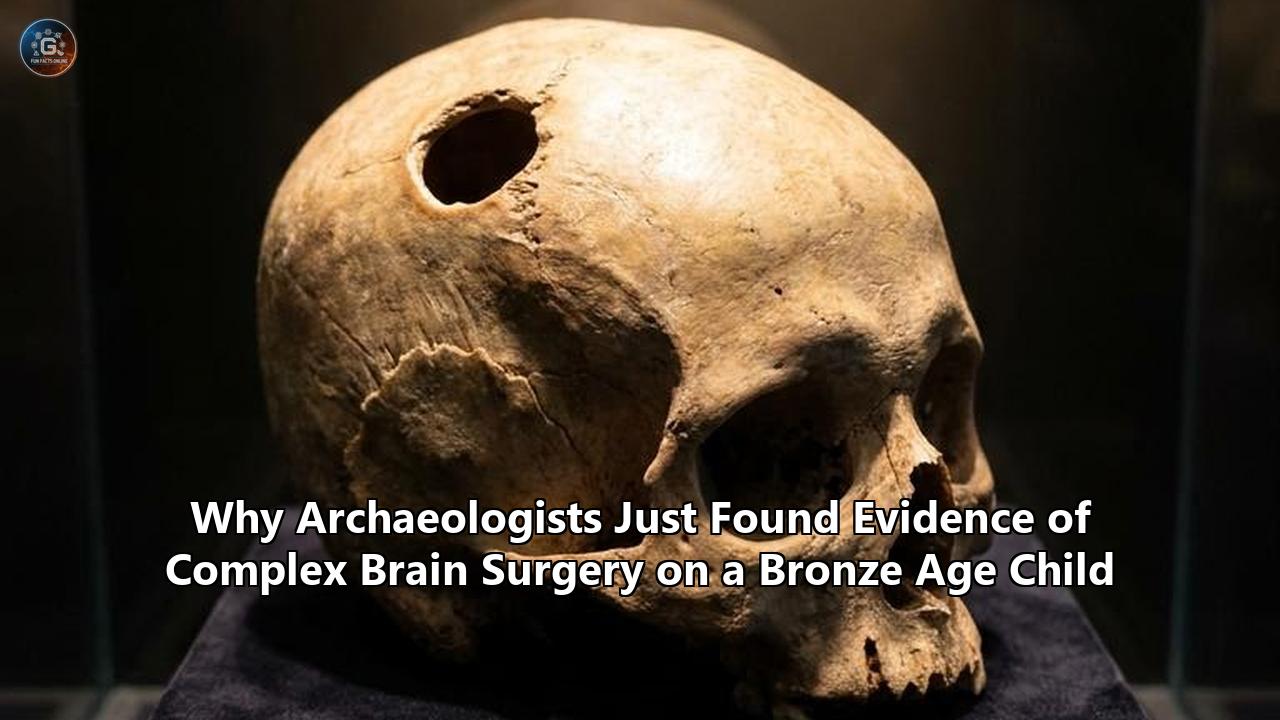
Etched into the delicate bone of the child’s cranium were unmistakable marks of a highly deliberate, invasive cranial procedure.
This discovery represents the earliest documented evidence of surgery in Central Asia and stands as one of the oldest known examples of such complex medical intervention across the entire Asian continent. For decades, historians assumed that early cranial operations were restricted to the elite warriors of Western Europe, the Mediterranean, or South America who suffered traumatic head injuries in battle. The realization that a community in Northern Bactria was executing what is now recognized as the earliest documented evidence of bronze age brain surgery on a toddler has forced a massive reassessment of the intellectual and scientific achievements of the ancient East.
To understand how this story developed, we must trace a chronological line of escalation—from the early archaeological surveys of Uzbekistan to the multidisciplinary breakthroughs of May and June 2026. This is not merely a tale of an ancient bone with a hole in it; it is a story of how modern science, international cooperation, and a series of dramatic archaeological turning points revealed an astonishing level of medical sophistication at the dawn of urban civilization.
The Pre-2024 Foundations: Jarkutan and the Mystery of the Oxus
To understand the context of this surgical discovery, one must look to the history of the site itself. Located in the Surkhandarya Region of southern Uzbekistan, near the modern border with Afghanistan, Jarkutan was once a thriving urban node of the Oxus civilization. Also known as the Bactria-Margiana Archaeological Complex (BMAC), this Early Bronze Age culture dominated the fertile oases and river valleys of Central Asia between roughly 2500 and 1500 BCE.
  ==============================================================
                    CHRONOLOGY OF ESCALATION
  ==============================================================
  [ Pre-2024 ]  • Initial excavations map Jarkutan's urban grid
                • Focus remains on pottery, architecture, and trade
                ------------------------------------------------
  [ 2024 ]      • Multidisciplinary Italian-Uzbek Coalition formed
                • Focus shifts to bioarchaeology and paleomedicine
                ------------------------------------------------
  [ April 2026] • Double child grave unearthed (5yo and 3yo)
                • Field observations note unique skull perforations
                ------------------------------------------------
  [ May 2026 ]  • Lab analysis confirms osteological surgery marks
                • Earliest evidence of surgery in Central Asia confirmed
                ------------------------------------------------
  [ June 2026 ] • Public announcement sparks global debate on BMAC
                • Focus shifts to paleogenomics and organic residue
  ==============================================================
Prior to 2024, Jarkutan was primarily celebrated for its architectural and social achievements. Archaeologists had mapped a sprawling proto-urban settlement complete with:
- A monumental mud-brick palace
- A highly fortified "temple of fire"
- Specialized residential quarters for craftspeople and potters
- Advanced irrigation networks tapping into the local river systems
For over half a century, excavations at Jarkutan focused on the material culture—exquisite wheel-made ceramics, bronze mirrors, cosmetic bottles, and intricate stone seals that proved the BMAC traded extensively with the Indus Valley Civilization, the Iranian Plateau, and the early dynasties of Mesopotamia.
Yet, the biological reality of the people who built this city remained largely in the background. While thousands of graves were cataloged over the decades, the physical remains were often poorly preserved due to the highly alkaline soil and the shifting water tables of the Surkhan Darya valley. The prevailing scholarly consensus was that while these people were master farmers, metalworkers, and architects, their medical practices were likely limited to rudimentary herbalism and shamanic spiritual rituals. The concept of complex, physical neurosurgery occurring in this region during the third millennium BCE was considered an impossibility.
Understanding the socio-cultural fabric of Jarkutan is vital to grasping how and why bronze age brain surgery could even be attempted. This was not a nomadic band moving through the steppe, but a highly stratified, sedentary society with an abundance of resources, a specialized class of intellectuals, and a structured system of civic life that could support individuals dedicated to studying the human body.
The 2024 Turning Point: Launching the Multidisciplinary Coalition
The trajectory of research at Jarkutan changed dramatically in 2024. Recognizing that traditional, object-focused archaeology was missing the deeper story of human life, health, and diet in Northern Bactria, an ambitious international partnership was forged.
The Jarkutan Archaeological Project was launched as a joint mission. It brought together:
- The University of Salento in Lecce, Italy, under the direction of Professor Enrico Ascalone, an expert in the Bronze Age systems of the Near East and Central Asia.
- Termez State University, led by Professor Alisher Shaidullaiev, who brought decades of regional expertise and local field knowledge.
- The Samarkand Archaeological Institute, represented by Dr. Komil Rakhimov, providing state-of-the-art conservation and archival support.
                     JOINT MISSION STRUCTURE (2024)

                 +-----------------------------------+
                 |    Jarkutan Archaeological Project |
                 +-----------------+-----------------+
                                   |
         +-------------------------+-------------------------+
         |                         |                         |
+--------v--------+       +--------v--------+       +--------v--------+
| Univ. of Salento|       |Termez State Univ|       | Samarkand Inst. |
|  (Italy)        |       |  (Uzbekistan)   |       |  (Uzbekistan)   |
| Enrico Ascalone |       | A. Shaidullaiev |       | Komil Rakhimov  |
+-----------------+       +-----------------+       +-----------------+
This was not a standard dig. Ascalone and his colleagues designed the project to be strictly interdisciplinary from the ground up. They integrated physical anthropology, paleogenetics, archaeobotany, archaeozoology, and high-resolution chemical analysis (archaeometry).
The team’s primary objective was to move away from looking at graves as merely "depositories of grave goods" and instead treat the human skeletons themselves as primary historical texts. Physical anthropologists were brought directly to the trenches to examine bones in situ before they could degrade or suffer damage during excavation and transport.
Throughout 2024 and 2025, the team systematically cleared domestic sectors and cemetery zones. They analyzed the dental plaques of the ancient inhabitants to reconstruct their diet, studied bone lesions to map out prehistoric epidemics, and traced genetic lineages to understand the migration patterns of the Oxus people. The scientific infrastructure was now in place. All that was needed was a singular find to completely upend the history of ancient medicine.
April 2026: Unearthing the Dual Child Grave
The critical moment of escalation arrived in April 2026. During excavations in the residential and burial sectors of the Jarkutan settlement, the Italian-Uzbek team cleared a grave that, on the surface, appeared modest. It was a single, earthen burial pit dug into the alluvial soil.
As the excavators carefully swept away the packed clay, they realized they were looking at a double burial—the skeletal remains of two young children laid side-by-side.
Osteological analysis quickly established the ages of the deceased. One child had died at approximately three years of age, while the older companion had passed away at about five years of age. Double burials of children in Bronze Age contexts often point to catastrophic events: a sudden localized epidemic, nutritional stress, or accidental poisoning. The skeletons did not show any signs of interpersonal violence or trauma to the postcranial bones.
However, as the physical anthropologists began the delicate process of cleaning and consolidating the older child’s skull, they noticed a highly unusual feature on the cranial vault.
On the surface of the bone, there was a neat, circular opening with clearly defined margins. The edges were not jagged, shattered, or collapsed, which ruled out a post-mortem break caused by the weight of the overlying soil. It was also situated in a region of the skull that did not naturally possess any sutures or fontanelles that might have failed to close.
The field team documented the find with high-resolution photogrammetry, mapping the exact position of the skull in the grave. Recognizing the extreme sensitivity of the find, the cranium was stabilized with specialized resins, wrapped, and transferred to the laboratory for advanced physical and microscopic analysis.
May 2026: The Laboratory Breakthrough and confirmation of Trepanation
In May 2026, the analysis of the five-year-old’s skull moved from the field to the laboratory, marking the turning point where speculation became hard scientific data. Physical anthropologists and paleopathologists subjected the cranium to digital microscopy, X-ray imaging, and 3D CT scanning.
The results were unequivocal: the child had undergone a cranial trepanation, a surgical procedure involving the deliberate opening of the skull vault.
  +-------------------------------------------------------------+
  |               OSTEOLOGICAL SURGERY SIGNATURES               |
  |                                                             |
  |   [ Skull Outer Table ]                                     |
  |   =============\\  //===================                    |
  |                 \\//   <-- Beveled edge from scraping/cut   |
  |                  ||                                         |
  |   [ Diplöe ]     ||    <-- Intact middle bone layer          |
  |                  ||                                         |
  |   [ Inner Table ] \\   <-- Absence of radiating fractures   |
  |   ======================================                    |
  |                                                             |
  |   * Verification Criteria:                                  |
  |     - Smooth, beveled margins (rule out violent trauma)     |
  |     - Lack of radiating fracture lines (rule out impact)   |
  |     - Micro-striations from stone/bone tools                |
  +-------------------------------------------------------------+
To confirm that this was a genuine surgical intervention and not a post-mortem alteration or a taphonomic accident (such as rodent gnawing or acidic root damage), the researchers looked for several key osteological signatures:
- Beveled Margins: The edges of the opening showed a distinct, uniform slope. This indicates that the practitioner did not simply smash the bone, but carefully scraped or carved away the outer table of the skull, the middle spongy layer (diplöe), and the inner table.
- Tool Striations: High-power microscopic examination revealed microscopic, parallel grooves along the cut edges. These micro-striations are the classic "fingerprints" left behind by the repeated movement of a sharp, hand-held tool.
- Absence of Radiating Fractures: When a blunt-force blow splits a skull, it leaves radiating fracture lines stretching away from the impact zone. The child's skull lacked these lines entirely, proving that the force applied to the bone was highly controlled, localized, and incremental.
The tools used in the procedure were determined to be crafted from stone or bone—most likely highly refined flint or obsidian blades, which can be knapped to an edge sharper than modern steel surgical scalpels.
The most pressing question for the paleopathologists was whether the child had survived the operation. In many cases of ancient trepanation, researchers can see signs of bone remodeling or osteogenesis—the growth of new, smooth bone tissue along the cut margins, which indicates the patient lived for months or even years after the surgery.
In the case of the Jarkutan child, the microscopic analysis revealed that while the surgery was executed with incredible precision, there were no substantial signs of long-term healing. This suggests that the child died either during the operation or very shortly thereafter, likely from the primary condition that prompted the surgery, blood loss, or surgical shock.
The announcement of these findings in late May 2026 sent shockwaves through the international archaeological community. Enrico Ascalone expressed the sheer scale of the revelation:
"Djarkutan continues to surprise us. A cranial trepanation on a child, four thousand years ago, in Central Asia: until yesterday it was unthinkable. Today it is in our data."
Behind the Blade: Why Perform Brain Surgery on a Five-Year-Old?
The revelation that Bronze Age doctors were operating on the skulls of toddlers raises a profound question: what could possibly compel a community to perform such a high-risk, agonizing procedure on a five-year-old child?
To answer this, modern paleopathologists look to the known clinical reasons for trepanation, as well as the unique cultural worldview of the Bronze Age.
The Medical Hypotheses
From a purely bio-medical standpoint, there are several reasons why ancient practitioners, even with their limited understanding of internal anatomy, would realize that opening the skull could save a life or alleviate extreme suffering:
- Intracranial Pressure and Trauma: Children are highly susceptible to head injuries from falls. A severe blow to the head can cause a middle meningeal artery to rupture, leading to an epidural or subdural hematoma. As blood pools inside the rigid skull, it exerts immense pressure on the brain, causing severe headaches, loss of consciousness, seizures, and eventually death. An ancient doctor, seeing a child slip into a coma after a fall, might have realized that making an opening in the bone directly over the injury could relieve the pressure, allowing the trapped blood to escape and instantly saving the patient’s life.
- Epilepsy and Convulsions: Severe, recurring seizures would have been terrifying to ancient families. If a child suffered from violent epileptic fits, a medical practitioner might have attempted trepanation to "let out" the pressure or the internal fluids they believed were causing the brain to misfire.
- Severe Infections: Conditions like severe otitis media (middle ear infection) or mastoiditis can easily spread to the cranial vault in the absence of modern antibiotics. This causes agonizing pain, swelling, and localized bone infection. A physical intervention to drain pus or scrape away infected bone would have been a desperate, last-ditch effort to stop the spread of a fatal cranial infection.
The Blurry Boundary Between Medicine and Ritual
While we distinguish clearly between physical medicine and spiritual belief, the researchers at Jarkutan emphasize that for the Oxus civilization, the "frontier between medicine and ritual" was likely non-existent.
   ==============================================================
                    THE BRONZE AGE MEDICAL COSMOLOGY
   ==============================================================

          PHYSICAL PATHOLOGY                SPIRITUAL REALITY
        +--------------------+            +--------------------+
        |  Intracranial      |            |  Intrusive Spirit  |
        |  Pressure / Fluids |            |  or Bad Air        |
        +---------+----------+            +----------+---------+
                  |                                  |
                  +----------------+-----------------+
                                   |
                                   v
                      [ THE HOLE IN THE CRANIUM ]
                                   |
                  +----------------+-----------------+
                  |                                  |
                  v                                  v
        * Venting of blood/pus             * Escape route for
        * Physical decompression             spiritual pathogens
   ==============================================================
In this ancient worldview, a physical ailment like epilepsy or a brain tumor was not just a malfunction of cells, but an invasion of "bad air," a spiritual pathogen, or a localized curse. The physical act of cutting a hole in the skull served a dual purpose: it acted as a physical vent for fluids and pressure, while simultaneously providing a literal "escape hatch" for the spiritual entity or negative energy trapped inside the child's head.
Performing bronze age brain surgery on a patient so young represents an extraordinary level of risk, indicating that the child’s condition must have been incredibly severe, leaving the family and the local specialists with absolutely nothing to lose.
The Technical Execution: How Was It Done?
Even with sharp stone tools, the technical challenges of cutting into a living child's skull without instantly killing them are monumental. The human scalp is one of the most vascularized areas of the body; a simple incision can lead to rapid, life-threatening blood loss, especially in a five-year-old with a low blood volume. Furthermore, the skull bone itself lies directly over the dura mater—the tough, fibrous membrane enveloping the brain—and the massive venous sinuses that drain blood from the head.
To successfully perform this operation, the Jarkutan practitioner had to navigate several terrifying hurdles:
1. Pain Management and Anesthesia
Without modern chemical anesthetics, how did they keep a five-year-old child still enough to perform precision cranial carving? The archaeobotanical studies conducted by the joint mission since 2024 offer some fascinating clues.
The surrounding Surkhandarya region is rich in wild plants with powerful psychoactive, analgesic, and sedative properties. These include:
- Ephedra, a powerful stimulant and vasoconstrictor that can help maintain blood pressure and reduce bleeding.
- Species of Papaver (poppies) and Cannabis, which were widely utilized across Bronze Age Central Asia for ritual and medicinal purposes.
- Local nightshades containing scopolamine and atropine, which can induce deep, twilight sleep and amnesia.
It is highly likely that the child was administered a potent herbal concoction to dull the pain and induce a state of deep sedation before the operation began.
2. Hemostasis (Stopping the Bleeding)
To prevent the child from quickly bleeding to death from the scalp incision, the practitioner must have used localized pressure, styptic clays, or specialized herbal packs designed to contract blood vessels. The use of certain mineral-rich muds or plant resins with natural astringent properties is well-documented in early medical traditions.
3. Precision Bone Removal
The surgeon had to be incredibly careful not to plunge their flint or bone blade too deeply. If the tool slipped and punctured the underlying dura mater or severed a major blood vessel like the superior sagittal sinus, death would have been instantaneous from catastrophic internal hemorrhaging or air embolism.
The microscopic beveled edges on the Jarkutan skull reveal that the bone was likely removed through a patient process of scraping or groove-carving. Rather than drilling straight down, the practitioner slowly thinned the bone in a circular pattern, gently rocking the central disc of bone until it could be pried free without tearing the delicate tissues underneath.
Rewriting the Ancient Map of Medical Knowledge
The Jarkutan discovery is not an isolated curiosity; it is a major piece of evidence that changes our entire perspective on how medical knowledge was shared and developed across the ancient world.
Until the spring of 2026, the history of early cranial surgery in Asia was dominated by a few scattered, highly famous finds:
- The Megiddo Brothers (Israel): In 2023, archaeologists published a study on the remains of two elite, 15th-century BCE brothers excavated in Megiddo. One of the brothers had undergone a highly specific "angular notched trephination"—a procedure where four intersecting cuts were made to carve out a square piece of skull. This was hailed as the earliest example of its kind in the Ancient Near East, dating to around 1500 BCE.
- The Indus Valley (Harappa and Lothal): Isolated skulls from Harappa and Lothal dating to the Bronze Age showed potential signs of cranial drilling, but many were highly contested by anthropologists who argued the holes could have been caused by post-mortem erosion or violent injuries.
- Burzahom (Kashmir): A Neolithic skull from Kashmir was found with multiple perforations, suggesting early, albeit crude, attempts at trepanation.
  ====================================================================
                  COMPARATIVE TIMELINE OF ANCIENT SURGERY
  ====================================================================

  [ Neolithic Kashmir ] ~3000 BCE
  • Burzahom: Multiple crude perforations on a single skull
  --------------------------------------------------------------------
  [ Jarkutan, Uzbekistan ] ~2100 BCE <-- (THE 2026 BREAKING FIND)
  • Earliest confirmed surgical intervention in Central Asia
  • Performed on a 5-year-old child using bone/stone tools
  --------------------------------------------------------------------
  [ Megiddo, Israel ] ~1500 BCE
  • Elite brothers; angular notched (square) trephination
  --------------------------------------------------------------------
  [ Classical Greece ] ~400 BCE
  • Hippocratic treatises codify skull trepanation techniques
  ====================================================================
The Jarkutan child’s skull, securely dated to the late third millennium BCE (circa 2100–2000 BCE), predates the Megiddo find by more than half a millennium and represents a far more delicate operation performed on a much younger patient.
This discovery proves that the Oxus civilization was not a scientific backwater waiting for medical knowledge to diffuse from Egypt or Mesopotamia. Instead, it highlights Northern Bactria as an independent hub of empirical medical experimentation and highly specialized intellectual practice.
It also raises fascinating questions about the transmission of medical skills. The BMAC was connected to a vast network of trade routes—often referred to as the proto-Silk Road or the Great Khorasan Road—that linked the steppes of Siberia to the urban centers of Iran and the Indus Valley. Is it possible that specialized "wandering surgeons" traveled these trade routes, offering their highly sought-after skills to elite families across different civilizations? Or did this complex medical knowledge develop independently in the oases of Uzbekistan, sparked by the practical demands of a densely populated urban center?
The Next Frontier: Paleogenomics and Residue Analysis
The announcement of the Jarkutan child's skull is not the end of this story; rather, it is the starting point for an entirely new phase of scientific investigation that will unfold throughout late 2026 and into the coming years.
The multidisciplinary nature of the Italian-Uzbek mission means that the child's bones are currently undergoing a battery of cutting-edge scientific tests that promise to resolve many of the lingering mysteries.
   ==============================================================
                FUTURE SCIENTIFIC TESTING PIPELINE
   ==============================================================

     [ Step 1: Paleogenomics ]
     • Extract ancient DNA (aDNA) from petrous bone
     • Determine biological sex and genetic familial relationship
     • Scan for genetic markers of chronic conditions
     ------------------------------------------------------------
     [ Step 2: Pathogen Screening ]
     • Isolate microbial DNA (e.g., Mycobacterium leprae)
     • Identify if the child suffered from meningitis or tuberculosis
     ------------------------------------------------------------
     [ Step 3: Archaeometry & Organic Residue ]
     • Test interior skull bones for chemical traces of plants
     • Identify ancient anesthetics, sedatives, or antiseptics
   ==============================================================
1. Paleogenomics and Kinship Analysis
Researchers are currently extracting ancient DNA (aDNA) from the petrous bone of both children found in the shared grave. This will allow scientists to determine:
- If the two children were genetically related (e.g., siblings or cousins).
- Their exact biological sex.
- If they possessed any genetic predispositions to chronic neurological disorders or systemic bone diseases.
2. Pathogen DNA Screening
Just as Rachel Kalisher’s team tested the Megiddo skeletons for the ancient DNA of Mycobacterium leprae (the bacterium that causes leprosy), the Jarkutan team is screening the child's bones for ancient bacterial and viral pathogens. If they find traces of bacterial DNA related to meningitis, tuberculosis, or localized bone infections, it will provide direct, physical proof of the medical diagnosis that prompted the ancient doctor to pick up their surgical blade.
3. Organic Residue Analysis
By utilizing high-performance liquid chromatography and mass spectrometry (HPLC-MS) on microscopic scrapings from the interior of the skull and the accompanying grave offerings, scientists hope to detect chemical residues of prehistoric medicines. Finding traces of specific alkaloids from plants like Ephedra or wild opium would provide the world’s first direct evidence of Bronze Age surgical pharmacology.
A New Perspective on Prehistoric Life
The discovery of bronze age brain surgery in Uzbekistan adds a massive, previously missing piece to the puzzle of human intellectual development. It serves as a powerful reminder that our ancestors were not passive victims of their environment, nor were they intellectually simple.
Four thousand years ago, in a bustling mud-brick city along the tributaries of the Amu Darya, a family faced every parent's worst nightmare: a gravely ill five-year-old child. Rather than simply giving up or resigning themselves to fate, they turned to a specialized group of practitioners who possessed the anatomical knowledge, the technical skill, and the courage to attempt an operation that would be considered high-risk even in a modern hospital.
The child did not survive, but the physical record of their final struggle has survived, preserved in the dry earth of Uzbekistan to rewrite the history of science and medicine for the modern world. As Enrico Ascalone and his team continue to clear the ruins of Jarkutan, we can only watch with anticipation to see what other long-forgotten secrets this ancient oasis of the Oxus civilization is waiting to reveal.
Reference:
- https://timesca.com/bronze-age-trepanation-in-uzbekistan-may-be-central-asias-oldest-evidence-of-surgery/
- https://www.livescience.com/archaeology/bronze-age-5-year-olds-skull-found-in-uzbekistan-is-the-oldest-known-evidence-of-surgery-in-central-asia
- https://daryo.uz/en/2026/06/04/4000-year-old-skull-surgery-remains-discovered-in-uzbekistan
- https://zamin.uz/en/society/204766-ozbekistonda-4000-yil-avval-bosh-suyagida-operaciya-qilingan-bola-topildi.html
- https://arkeonews.net/4000-year-old-childs-skull-in-uzbekistan-reveals-earliest-evidence-of-surgery-in-central-asia/
- https://archaeology.org/news/2026/06/02/evidence-of-surgery-4000-years-ago-uncovered-in-central-asia/
- https://dunyo.info/en/news/v-uzbekistane-obnaruzheny-sledy-hirurgicheskoy-operacii-bronzovogo-veka
- https://caliber.az/en/post/fossilized-bones-discovery-serve-as-oldest-evidence-of-surgery-in-central-asia
- https://www.esteri.it/en/sala_stampa/archivionotizie/diplomazia-culturale/2026/05/djarkutan-importante-scoperta-degli-archeologi-delluniversita-del-salento/
- https://yuz.uz/en/news/145251
- https://www.researchgate.net/publication/236331781_First_evidence_of_brain_surgery_in_Bronze_Age_Harappa
- https://archaeology.org/news/2026/06/02/evidence-of-surgery-4000-years-ago-uncovered-in-central-asia/
- https://greekreporter.com/2026/06/04/child-skull-oldest-surgery-central-asia/
- https://www.eurekalert.org/news-releases/979871
- https://greekreporter.com/2026/06/04/child-skull-oldest-surgery-central-asia/