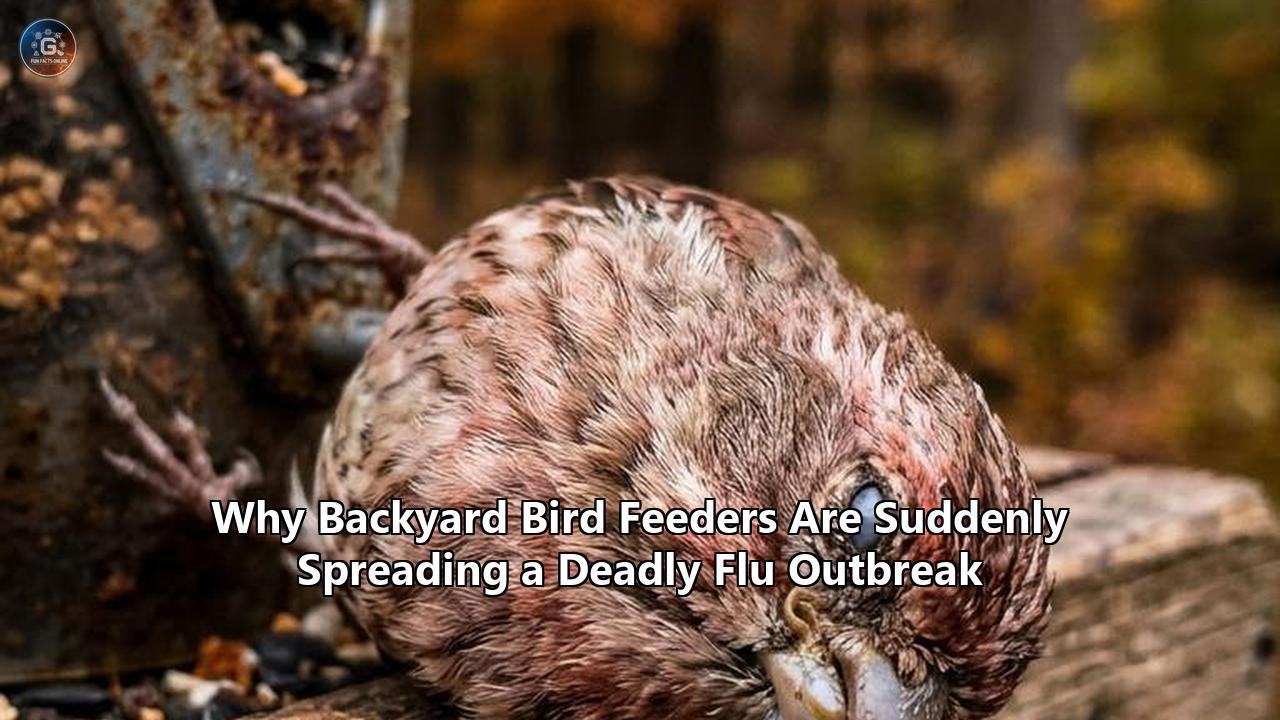
State wildlife health laboratories and veterinary epidemiologists are confronting a silent vectoring crisis in residential backyards. Across North America, Europe, and newly affected regions in the Southern Hemisphere, genetic sequencing of wild bird isolates has revealed that Highly Pathogenic Avian Influenza (HPAI) H5N1—specifically evolving reassortants of clade 2.3.4.4b—is penetrating urban and suburban ecosystems. For decades, wildlife management guidelines operated on the working consensus that common passerines, or perching songbirds, were epidemiologically insignificant dead-end hosts for waterfowl-adapted flu viruses.
That assumption has collapsed under the weight of new surveillance data.
Suburban feeding stations, once viewed merely as benign hobby installations, have emerged as concentrated epicenters of cross-species pathogen amplification. By drawing dozens of avian species into millimeter-scale proximity over saliva-coated seeds and fecal-laden platform trays, backyard bird feeding creates artificial ecological crossroads that rarely occur in undisturbed habitats. As state wildlife agencies quietly revise their biosecurity advisories and wildlife rehabilitation centers shutter intake facilities under quarantine protocols, an examination of the viral mechanics, behavioral ecology, and institutional dynamics reveals why the modern bird feeder flu outbreak poses an unprecedented challenge to avian conservation and public health surveillance.
┌─────────────────────────────────────────────────────────────────────────────┐
│                 BACKYARD FEEDING TRANSMISSION DYNAMICS                      │
├────────────────────────────────┬────────────────────────────────────────────┤
│ ECOLOGICAL VECTOR              │ TRANSMISSION MECHANISM                     │
├────────────────────────────────┼────────────────────────────────────────────┤
│ Seed Hopper / Tubes            │ Oral-salivary deposition on perches & ports│
│ Seed Hull Ground Blanket       │ Fecal accumulation; cold-moisture stability│
│ Multi-Species Mixing           │ Passerines, Columbiformes, Corvids, Anatids│
│ Syndemic Interactions          │ Co-infections: Mycoplasma, Trichomonas     │
│ Terrestrial Mammal Spillover   │ Carnivore scavenging & feline predation    │
└────────────────────────────────┴────────────────────────────────────────────┘
The Molecular Architecture of Passerine Spillover
To understand how suburban feeding stations become bio-amplification hubs, researchers must dismantle the long-standing virological model of avian influenza transmission. Historically, influenza A viruses in wild birds have been primarily gastrointestinal pathogens adapted to Anseriformes (waterfowl such as ducks, geese, and swans) and Charadriiformes (gulls, terns, and shorebirds). In these aquatic reservoirs, the virus replicates predominantly in the epithelial lining of the intestinal tract and is excreted in high concentrations into water bodies via the cloaca.
Passerines—including finches, sparrows, chickadees, cardinals, and thrushes—possess an entirely distinct physiological and anatomical blueprint.
               [ INFLUENZA A VIRION ]
                         │
        ┌────────────────┴────────────────┐
        ▼                                 ▼
[ α-2,3 Sialic Acid ]             [ α-2,6 Sialic Acid ]
(Avian Intestinal / Respiratory)  (Mammalian Upper Airway)
        │                                 │
        ├─ Passerines: Upper Trachea      └─ Emerging Clade Mutations:
        │  & Oral Cavity (Salivary)          Expanded Mammal Tropism
        └─ Anseriformes: Lower Gut           (PB2 E627K / D701N)
           (Cloacal / Fecal)
Sialic Acid Receptor Distribution and Tissue Tropism
Influenza viral entry relies on the binding of viral hemagglutinin (HA) glycoproteins to host cell surface glycans terminating in sialic acid. Avian-origin viruses universally target $\alpha\text{-2,3-linked}$ galactose configurations. In waterfowl, these $\alpha\text{-2,3}$ receptors saturate the lower intestinal tract. In passerine species, however, histological mapping shows a stark divergence: $\alpha\text{-2,3}$ receptors are heavily distributed throughout the upper respiratory tract, the nasal turbinates, the pharynx, and the conjunctival membranes, with substantially lower expression in the lower digestive tract.
This receptor topography fundamentally alters viral shedding:
- Waterfowl shedding profile: High cloacal shedding ($10^4\text{–}10^7 \text{ EID}_{50}/\text{mL}$ in feces), moderate to low oral shedding.
- Passerine shedding profile: High oropharyngeal shedding ($10^3\text{–}10^6 \text{ EID}_{50}/\text{mL}$ in saliva and nasal secretions), minimal or intermittent cloacal excretion.
When an infected passerine visits a feeding port, it manipulates sunflower or thistle seeds using its bill, tongue, and salivated pharyngeal tissue. In doing so, it deposits high titers of live, infectious virions directly onto the seed surface, the plastic feeding portal, and the surrounding mechanical perches. The transmission mode flips from waterborne fecal-oral spread to direct oral-fomite inoculation.
[Infected Songbird] ──(Oropharyngeal Exudate)──> [Seed / Feeder Port]
                                                         │
                                             (Direct Bill Contact)
                                                         ▼
                                            [Susceptible Flockmate]
Polybasic Cleavage Sites and Systemic Replication
Low pathogenic avian influenza (LPAI) strains carry a monobasic amino acid motif at the hemagglutinin cleavage site, which restricts viral activation to localized tissue environments where host trypsin-like proteases are present (namely, the respiratory and digestive tracts).
Contemporary H5N1 clade 2.3.4.4b variants possess a polybasic cleavage site—typically characterized by multi-basic amino acid insertions such as $-(\text{Arg-X-Lys/Arg-Arg})-$. This motif allows the hemagglutinin molecule to be cleaved and activated by intracellular, ubiquitous subtilisin-like endoproteases, notably furin. Furin is expressed throughout all vital organ systems of avian species.
Once the virus breaches the mucosal barriers of a passerine host, viral replication is no longer locked within the superficial epithelium. It disseminates systemically, replicating within:
- Vascular endothelial cells, inducing diffuse microvascular hemorrhage;
- Myocardial tissue, leading to acute necrotic myocarditis;
- Cerebral and cerebellar parenchyma, triggering severe encephalomalacia and acute neurological collapse.
Because replication is rapid and systemic, birds shedding virus from their upper respiratory tract may exhibit high viral loads within 24 to 48 hours of exposure, shedding infective virions onto communal feeding apparatuses before overt clinical morbidity incapacitates them.
Anatomy of an Artificial Superspreader Node
Natural avian foraging behaviors are structured around territorial spacing, temporal segregation, and patchy resource distribution. Supplementary backyard feeding alters these evolutionary dynamics. By concentrating high-calorie sustenance in static geometric locations, bird feeding stations construct a localized ecosystem characterized by extreme artificial densities and cross-species mingling that would never materialize in undisturbed wilderness.
                     [ FEEDER CONGREGATION HUB ]
                                   │
      ┌────────────────────────────┼────────────────────────────┐
      ▼                            ▼                            ▼
[Small Passerines]         [Bridging Vectors]          [Ground Foragers]
House Finches              European Starlings          Mourning Doves
Goldfinches                Brown-headed Cowbirds       Mallards / Geese
Chickadees                 American Crows              Pigeons
      │                            │                            │
      └──────────────┬─────────────┴─────────────┬──────────────┘
                     ▼                           ▼
            [Fomite Inoculation]        [Mammalian Scavenging]
            Communal Perches/Seed       Feral Cats, Foxes, Skunks
High-Density Crowding and Niche Breakdown
Under typical ecological conditions, a flock of American goldfinches (Spinus tristis) or black-capped chickadees (Poecile atricapillus) disperses across acres of meadow, canopy, and scrubland. A standard backyard hopper or tube feeder collapses that spatial distribution into an area spanning less than two square feet.
At peak feeding hours—early morning and late afternoon—inter-individual bird spacing drops from tens of meters to fractions of an inch. Agonistic interactions, bill-wiping behaviors, aggressive displacement, and rapid succession perching mean that consecutive birds come into direct contact with the exact same physical substrates within seconds of each other.
| Species Category | Representative Backyard Species | Primary Feeding Niche | Viral Transmission Role |
|---|---|---|---|
| Primary Feeder Passerines | House Finch (Haemorhous mexicanus), Goldfinch (Spinus tristis) | Elevated tube perches, hopper ports | Direct oral-salivary fomite deposition on seed |
| Synanthropic Bridging Hosts | European Starling (Sturnus vulgaris), House Sparrow (Passer domesticus) | Platforms, suet, agricultural co-foraging | Epidemiological bridge between farms and gardens |
| Corvids & Scavengers | American Crow (Corvus brachyrhynchos), Blue Jay (Cyanocitta cristata) | Ground, elevated large platforms | High-susceptibility amplification and regional spread |
| Ground Foragers | Mourning Dove (Zenaida macroura), Canada Goose (Branta canadensis) | Feeder drop zones, fallen hulls | Ingestion of fecal-contaminated organic mats |
| Terrestrial Scavengers | Raccoon (Procyon lotor), Feral/Pet Cat (Felis catus) | Base of feeding station | Mammalian predation on lethargic/dead birds |
The Mechanics of "Bridging" Species
The true danger in the backyard dynamic is not merely the transmission of virus from finch to finch, but the intersection of distinct ecological guilds. Suburban feeding stations act as bridging junctions where synanthropic generalists interact with both agricultural reservoirs and woodland species.
European starlings (Sturnus vulgaris) and house sparrows (Passer domesticus) frequently transit between industrial dairy operations, concentrated animal feeding operations (CAFOs), open wetlands, and suburban garden feeders. In agricultural zones, starlings feed directly from open cattle feeding bunks and poultry waste lagoons, where they can pick up clade 2.3.4.4b virions shed by waterfowl or infected livestock.
When these birds move into suburban neighborhoods to exploit residential suet cakes and grain hoppers, they shed viral particles into feeding environments frequented by woodland passerines, creating secondary transmission chains far removed from the original agricultural or aquatic epicenter.
[Dairy Barn / Wetland] ──(Infected Starling)──> [Backyard Feeder] ──(Fomite Transmission)──> [Songbird Community]Substrates, Fomites, and Environmental Persistence
Influenza A viruses are enveloped viruses protected by a host-derived lipid bilayer containing viral glycoproteins. While this structural envelope renders the virus susceptible to lipid solvents, detergents, and heat, it provides substantial resilience in cold, damp, UV-protected microclimates—the precise conditions created by wet supplementary bird seed and shaded garden hardware.
┌─────────────────────────────────────────────────────────────────────────────┐
│                    H5N1 VIRAL STABILITY BY SUBSTRATE                        │
├───────────────────────────────┬─────────────────┬───────────────────────────┤
│ MATRIX / SUBSTRATE            │ TEMPERATURE     │ INFECTIOUS RETENTION TIME │
├───────────────────────────────┼─────────────────┼───────────────────────────┤
│ Aqueous Media (pH 7.2)        │ 4°C (39°F)      │ > 30 days                 │
│ Aqueous Media (pH 7.2)        │ 20°C (68°F)     │ 4 to 7 days               │
│ Wet Hull Detritus / Mud Base  │ 4°C to 10°C     │ 14 to 21 days             │
│ Dry Plastic / Steel Surfaces  │ 20°C (68°F)     │ 24 to 48 hours            │
│ Porous Timber Perches         │ Damp / Shaded   │ 72 to 120 hours           │
└───────────────────────────────┴─────────────────┴───────────────────────────┘
The Micro-Environment of Seed Accumulation
Standard seed formulations—composed of black oil sunflower seeds, white proso millet, safflower, and cracked corn—readily trap moisture. When rain or morning condensation penetrates hopper ports or open trays, the internal seed volume enters a state of slow biological decay.
As birds crack hulls, they deposit viscous salivary secretions loaded with glycoproteins, electrolytes, and shed epithelial cells directly into the remaining grain matrix. This organic slurry acts as a stabilizing colloid for viral envelopes. In cold weather (sub-$10^\circ\text{C}$ or $50^\circ\text{F}$), the structural degradation of the influenza hemagglutinin trimer is heavily retarded, allowing infectious viral particles to persist in damp seed reservoirs for days.
[Moisture + Seed Dust + Saliva] ──> [Protective Organic Biofilm] ──> [Extended H5N1 Half-Life]The Ground Drop Zone
The highest viral loads at a feeding site are rarely found within the suspended feeder itself; they concentrate in the benthic debris layer below. Birds selectively discard low-value grains and cracked seed hulls, which fall directly onto the soil or turf beneath the apparatus.
Over weeks of feeding, this accumulates into a thick, damp mat of organic detritus saturated with bird droppings, saliva, and feather dander.
This drop zone serves as a secondary biohazard zone:
- Low Solar Radiation: Shaded by the feeder canopy or surrounding trees, the ground mat is shielded from solar UV-C and UV-B radiation, which otherwise rapidly inactivates viral RNA.
- Moisture Retention: The decomposing hull matrix retains ground moisture, buffering against ambient desiccation.
- Cross-Guild Ingestion: Species that rarely use elevated perches—such as mourning doves (Zenaida macroura), native sparrows (Melospiza melodia), wild turkeys (Meleagris gallopavo), and wandering waterfowl (Anas platyrhynchos)—forage exclusively in this dropped hull layer. They ingest seeds heavily contaminated with fecal and salivary residues shed by the birds feeding above.
Syndemic Amplification: When Endemic Diseases Meet Avian Flu
A critical factor accelerating the spread of influenza at backyard stations is the high baseline prevalence of other infectious avian diseases. Suburban feeding stations have long been recognized as hotbeds for bacterial, parasitic, and poxvirus infections. When an influenza virus enters a bird population already dealing with chronic endemic infections, the outcome is a syndemic: a synergistic interaction of co-occurring diseases that amplifies host susceptibility and pathogen shedding.
                     ┌────────────────────────────────┐
                     │     PRE-EXISTING CO-INFECTIONS │
                     │  • Mycoplasma gallisepticum    │
                     │  • Salmonella typhimurium      │
                     │  • Trichomonas gallinae        │
                     └───────────────┬────────────────┘
                                     │
                 Induces Mucosal Damage, Ocular Discharge,
                      Coughing, and Bill Regurgitation
                                     │
                                     ▼
                     ┌────────────────────────────────┐
                     │       HPAI H5N1 INFECTION      │
                     │  • Hyper-viral shedding        │
                     │  • Rapid cross-transmission    │
                     │  • Accelerated mortality       │
                     └────────────────────────────────┘
1. Mycoplasma gallisepticum (House Finch Conjunctivitis)
Mycoplasma gallisepticum (MG) is a wall-less bacterium that targets the mucosal epithelium of the upper respiratory tract and conjunctiva in cardueline finches. Birds with mycoplasmal conjunctivitis develop profound swelling of the periorbital tissues, copious serous ocular discharge, and severe rhinitis.- The Syndemic Mechanism: Infected finches experience continuous bill-wiping behavior across perches to clear exudates from their eyes and nares. This mechanical rubbing coats feeder surfaces with mucus.
- The Viral Consequence: If a finch co-infected with HPAI visits the feeder, the inflamed, disrupted epithelial lining of its respiratory tract provides no barrier to viral proliferation, leading to hyper-shedding of influenza virions directly into the mucus deposited on the perches. Furthermore, birds blinded by conjunctivitis spend disproportionately long periods sitting stationary on feeders, increasing contact intervals with visiting birds.
2. Salmonella enterica serovar Typhimurium (Salmonellosis)
Salmonella enterica causes acute enteritis and systemic septicemia in passerines, especially pine siskins (Spinus pinus) and common redpolls (Acanthis flammea). Infected birds display severe lethargy, ruffled feathers, diarrhea, and prolonged intervals sitting directly inside open feed trays.- The Syndemic Mechanism: Salmonellosis causes massive enteric shedding, leaving sticky, bacteria-laden feces across platform trays.
- The Viral Consequence: The simultaneous presence of Salmonella degrades the intestinal mucosal lining and suppresses systemic immunity. Co-infected birds experience accelerated morbidity, and the combination of watery diarrhea and respiratory discharge creates a contaminated bio-layer on seed trays that exposes every subsequent bird to high infectious doses of both pathogens.
3. Trichomonas gallinae (Trichomonosis)
Trichomonas gallinae is a protozoan parasite that causes necrotic, fibrinous lesions in the upper digestive tract (mouth, pharynx, esophagus, and crop) of finches, doves, and raptors.- The Syndemic Mechanism: As lesions occlude the esophagus, infected birds become unable to swallow. They repeatedly regurgitate whole, saliva-soaked seeds back into the feeder hopper or tray.
- The Viral Consequence: This regurgitation process provides an immediate, highly concentrated vehicle for H5N1 transmission. An influenza-positive bird suffering from trichomonosis can seed an entire feeder hopper with virus-laden vomitus within minutes, exposing every bird that consumes those rejected seeds to instant oral challenge.
[Trichomonas Lesion] ──> [Regurgitation of Seed] ──> [Feeder Hopper Contamination] ──> [Mass Oral Inoculation]The Cross-Taxa Cascade: Mammals at the Base of the Feeder
The implications of a bird feeder flu outbreak extend far beyond the avian tree of life. The most concerning developments in clade 2.3.4.4b epidemiology involve its expanding host range and repeated spillover into terrestrial mammalian carnivores. Backyard feeding environments construct a localized trophic chain that draws mammalian predators directly into high-density viral contamination zones.
                      [ BACKYARD TROPHIC CASCADE ]

                          [ Contaminated Feeder ]
                                     │
                   ┌─────────────────┴─────────────────┐
                   ▼                                   ▼
          [Lethargic Songbird]               [Dropped Seed / Feces]
                   │                                   │
      ┌────────────┴────────────┐             ┌────────┴────────┐
      ▼                         ▼             ▼                 ▼
[Domestic Cat]            [Wild Carnivore] [Small Rodents] [Urban Skunks]
(Hunting Instinct)       (Fox / Raccoon)   (Mice/Rats)     (Scavenging)
      │                         │             │                 │
      ▼                         ▼             ▼                 ▼
[Severe Neuro-Infection] [Systemic Encephalitis] ───> [Suburban Viral Amplification]
Scavenging and Predation Dynamics
When wild songbirds contract HPAI H5N1, the neurological phase of the disease induces lethargy, torticollis (twisting of the neck), tremors, loss of flight response, and sudden death. A neurologically compromised songbird fluttering helplessly on a suburban lawn or perched unresponsive on a low feeder fence is an effortless target for mammalian predators.
Field data and post-mortem analyses conducted across wildlife pathology centers have confirmed fatal H5N1 clade 2.3.4.4b infections across a wide spectrum of suburban mesopredators:
- Red foxes (Vulpes vulpes)
- Striped skunks (Mephitis mephitis)
- Raccoons (Procyon lotor)
- Virginia opossums (Didelphis virginiana)
- Domestic cats (Felis catus)
[Infected Ground Bird] ──(Direct Ingestion)──> [Mesopredator] ──> [Neuro-Invasive H5N1 Encephalitis]Neuropathology in Felines and Wild Mesopredators
In mammals, the pathogenesis of H5N1 ingested via infected avian prey differs markedly from aerosolized mammalian transmission. Ingestion of brain, lung, and thoracic tissue of infected birds leads to direct viral entry through the mucosal lining of the pharynx and cranial nerves.
The virus demonstrates high neurotropism in carnivores. Post-mortem histopathology on domestic cats and foxes dying from feeder-associated avian flu reveals:
- Severe, non-suppurative meningoencephalitis with widespread neuronal necrosis;
- Massive microglial activation and perivascular cuffing throughout the cerebral cortex;
- Extensive alveolar damage, interstitial pneumonia, and multifocal hepatic necrosis.
       INGESTED AVIAN TISSUE (High Viral Titer)
                         │
                         ▼
           Cranial Nerves / Mucosal Entry
                         │
                         ▼
        Retrograde Axonal Transport to CNS
                         │
        ┌────────────────┴────────────────┐
        ▼                                 ▼
[Fulminant Encephalitis]        [Systemic Endothelial Breakdown]
(Seizures, Ataxia, Death)       (Pulmonary Hemorrhage)
The domestic cat interface represents a severe domestic-wildlife epidemiological vulnerability. Feral and outdoor domestic cats regularly hunt beneath bird feeders, which serve as predictable bait stations. Felines that consume infected passerines develop acute, fatal neurological disease within 3 to 5 days, frequently shedding high titers of virus in nasal secretions, saliva, and feces before death—introducing high-pathogenicity avian influenza directly into domestic households.
Behind the Bureaucratic Curtain: The War Over Public Messaging
Behind the public-facing alerts released by state and national wildlife agencies lies a longstanding institutional and scientific dispute over how to message bird feeder risks to the public. The debate pits agricultural regulators, conservation non-profits, wildlife veterinarians, and ornithological research institutions against one another, each operating under diverging mandates and risk thresholds.
┌─────────────────────────────────────────────────────────────────────────────┐
│                   INSTITUTIONAL PERSPECTIVES AND MANDATES                   │
├─────────────────────────┬──────────────────────┬────────────────────────────┤
│ INSTITUTION / SECTOR    │ CORE MANDATE         │ POLICY STANCE ON FEEDERS   │
├─────────────────────────┼──────────────────────┼────────────────────────────┤
│ Depts. of Agriculture   │ Agricultural trade,  │ Aggressive removal;        │
│ (USDA / CFIA / DEFRA)   │ poultry protection   │ eliminate wild-flock bridge│
├─────────────────────────┼──────────────────────┼────────────────────────────┤
│ Ornithological NGOs     │ Public engagement,   │ Reluctance to ban;         │
│ (Cornell, Audubon, BTO) │ bird conservation    │ emphasize feeder hygiene   │
├─────────────────────────┼──────────────────────┼────────────────────────────┤
│ Wildlife Rehab Centers  │ Animal welfare,      │ Total intake shutdowns;    │
│                         │ wildlife pathology   │ strict quarantine demands  │
├─────────────────────────┼──────────────────────┼────────────────────────────┤
│ Public Health Agencies  │ Human zoonosis       │ Passive monitoring;        │
│ (CDC / ECDC / WHO)      │ risk containment     │ domestic cat/mammal alerts │
└─────────────────────────┴──────────────────────┴────────────────────────────┘
The Agricultural Imperative vs. The Conservation Ethos
Agricultural agencies operate with zero tolerance for avian influenza introduction. A single positive H5N1 detection in a commercial poultry operation triggers the mandatory depopulation of every bird on the premises—often hundreds of thousands of animals—and places an immediate international quarantine on poultry and egg exports from that agricultural zone.
For state veterinarians and agricultural inspectors, wild bird feeders located in residential backyards, especially those in peri-urban areas near poultry facilities or residential backyard chicken coops, are clear biosecurity hazards. Their perspective is straightforward: take every feeder down immediately to disperse wild birds and eliminate the vector bridge.
[Wild Passerine Hub] ──(Feces / Movement)──> [Backyard Flock] ──> [Commercial Poultry Incursion] ──> [Mass Culling]Conversely, ornithological organizations and bird-conservation NGOs historically pushed back against broad feeding bans. Their position was rooted in three distinct arguments:
- Passerine Surveillance Data: Historical testing databases show that passerines accounted for less than 2% to 3% of confirmed wild bird mortalities during early outbreak waves, leading to the public conclusion that songbirds were at "low risk".
- Citizen Science and Engagement: Tens of millions of people engage with conservation programs exclusively through feeder observation (such as Project FeederWatch and the Great Backyard Bird Count). Shutting down feeding operations disrupts citizen-science population monitoring.
- Public Compliance Fatigue: Conservation scientists argue that issuing blanket feeding bans during periods of low local transmission creates public apathy, making backyard owners less likely to comply when severe, localized emergencies occur.
This divide has created conflicting public guidance. During active spikes in transmission, residents in neighboring jurisdictions have received entirely contradictory instructions: agricultural extension offices demanded that all feeders be removed immediately, while state wildlife societies announced that feeding was safe provided platforms were cleaned periodically.
┌─────────────────────────────────────────────────────────────┐
│                THE JURISDICTIONAL CONFLICT                  │
├──────────────────────────────┬──────────────────────────────┤
│ State Agricultural Agency    │ State Ornithological Society │
│ "Take all feeders down       │ "Keep feeders filled; risk   │
│ immediately to protect       │ to songbirds is low, clean   │
│ domestic poultry."           │ perches bi-weekly."          │
└──────────────────────────────┴──────────────────────────────┘
The Backyard Poultry Collision
The suburban biosecurity equation is further complicated by the growth of urban chicken-keeping. Millions of suburban homeowners manage small flocks of laying hens (Gallus gallus domesticus) alongside decorative wild bird feeding stations in the same backyards.
Chickens are susceptible to HPAI clade 2.3.4.4b, exhibiting mortality rates approaching 95% to 100% within 48 hours of exposure.
The backyard pathway operates via mechanical transport:
- Wild songbirds, starlings, or cowbirds visit an elevated wild bird feeder.
- Droppings and saliva-coated seeds fall into the surrounding grass.
- Backyard chickens, let out to forage, scratch through the contaminated leaf litter and consume dropped seed.
- The chicken flock contracts HPAI, experiences mortality, and acts as a biological incubator that sheds viral plumes into neighboring residential environments.
[Wild Birds at Feeder] ──(Dropped Seed/Feces)──> [Yard Turf] ──(Foraging/Scratching)──> [Backyard Chickens] ──> [Flock Extermination]Inside the Laboratory: Surveillance Gaps and Diagnostic Blind Spots
The persistent belief that songbirds do not transmit avian flu is partly an artifact of diagnostic and surveillance design. Wildlife disease surveillance networks have historically suffered from structural blind spots that consistently undercount passerine infections.
┌─────────────────────────────────────────────────────────────────────────────┐
│                    SURVEILLANCE DESIGN COMPARISON                           │
├─────────────────────────────┬───────────────────────────────────────────────┤
│ PASSIVE SURVEILLANCE BIAS   │ ACTIVE SURVEILLANCE REALITY                   │
├─────────────────────────────┼───────────────────────────────────────────────┤
│ • Focus on large carcasses  │ • Small passerine carcasses decay or are      │
│   (Geese, Swans, Raptors)   │   scavenged within hours                      │
│ • Cloacal swabbing standard │ • Songbirds shed predominantly via            │
│   (Captures waterfowl)      │   oropharyngeal routes (missed by cloacal)    │
│ • Rapid death reporting     │ • Passive surveillance fails on dispersed,    │
│   concentrated at water     │   cryptic garden mortalities                  │
└─────────────────────────────┴───────────────────────────────────────────────┘
The Passive Surveillance Paradox
Most national wildlife surveillance programs rely primarily on passive monitoring—testing carcasses submitted by wildlife rangers or members of the public.
This methodology creates a significant reporting bias:
- A dead Canada goose (Branta canadensis), bald eagle (Haliaeetus leucocephalus), or mute swan (Cygnus olor) weighs several kilograms, lies openly in public parks or along shorelines, and is readily noticed and reported.
- A dead house finch (Haemorhous mexicanus), weighing 20 grams, drops into dense ground vegetation beneath a garden feeder, where it is consumed by a raccoon, cat, or scavenger within hours, or decomposes completely before detection.
Consequently, passive wild bird surveillance datasets are heavily skewed toward Anseriformes and large raptors, leading early epidemiologists to underestimate the true incidence of infection in passerine populations.
[Dead Waterfowl on Lake Shore] ──> (High Public Visibility) ──> [Sampled / Sequenced]
[Dead Finch in Backyard Scrub] ──> (Scavenged in < 4 Hours) ──> [Diagnostic Blind Spot]
Swabbing Protocols and Molecular Under-Detection
For decades, standard field biosurveillance protocols mandated cloacal swabs as the primary diagnostic sample for avian influenza screening in wild birds.
In waterfowl, cloacal swabs yield high viral RNA concentrations with low real-time reverse transcription-polymerase chain reaction (rRT-PCR) cycle threshold (Ct) values. However, because passerines shed H5N1 predominantly through the oropharynx, running a cloacal swab on a songbird frequently yields a false negative or a high Ct value ($>35$), which diagnostic protocols often categorize as inconclusive or negative.
[Infected Songbird] ──┬──> [Cloacal Swab] ───────> rRT-PCR Ct > 36 (False Negative)
                      │
                      └──> [Oropharyngeal Swab] ─> rRT-PCR Ct: 18-24 (True High Positive)
Laboratories that have updated their testing protocols to conduct paired oropharyngeal and tracheal swabbing have seen a clear rise in confirmed passerine positives, demonstrating that songbird involvement in the bird feeder flu outbreak was historically obscured by testing methodologies.
                     [ TOTAL VIRAL ISOLATE ]
                                │
               ┌────────────────┴────────────────┐
               ▼                                 ▼
      [Matrix (M) Gene]                 [HA Cleavage Typing]
      Broad Type A Detection             Multi-Basic Insert Verification
      (rRT-PCR Screen)                   (Sequencing / Pathotype)
               │                                 │
               └────────────────┬────────────────┘
                                ▼
                   [Whole Genome NGS Pipeline]
                   • Lineage: Clade 2.3.4.4b
                   • Genotype Tracking (B3.13, D1.1)
                   • Polymerase Mutations (E627K)
Biosecurity Mechanics: What Works, What Fails, and What Is Counterproductive
Managing the biosecurity of a supplementary feeding site requires applying strict veterinary disinfection principles to outdoor environments. Most home cleaning habits fail to neutralize influenza virions and can inadvertently exacerbate cross-contamination.
┌─────────────────────────────────────────────────────────────────────────────┐
│                    FEEDER SANITATION CHEMICAL PROFILES                      │
├─────────────────────────┬──────────────┬──────────────┬─────────────────────┤
│ DISINFECTANT CLASS      │ RECOMMENDED  │ MINIMUM      │ LIMITATIONS &       │
│                         │ CONCENTRATION│ CONTACT TIME │ DRAWBACKS           │
├─────────────────────────┼──────────────┼──────────────┼─────────────────────┤
│ Sodium Hypochlorite     │ 10% Aqueous  │ 10 to 15 min │ Inactivated by      │
│ (Household Bleach)      │ Solution     │              │ organic matter      │
├─────────────────────────┼──────────────┼──────────────┼─────────────────────┤
│ Potassium Peroxymono-   │ 1% to 2%     │ 10 min       │ Excellent organic   │
│ sulfate (Virkon S)      │ Solution     │              │ load tolerance      │
├─────────────────────────┼──────────────┼──────────────┼─────────────────────┤
│ Warm Water &            │ Standard     │ Ineffective  │ Removes dirt only;  │
│ Dish Soap Alone         │ Wash         │ for Virions  │ zero viral cidal efficacy│
└─────────────────────────┴──────────────┴──────────────┴─────────────────────┘
The Chemistry of Effective Disinfection
Influenza A viruses are susceptible to chemical oxidation, which denatures the external lipid membrane and disintegrates the hemagglutinin and neuraminidase surface spikes. However, the presence of organic debris—such as seed dust, dried mucus, and fecal matter—rapidly neutralizes many standard disinfectants.
- The Bleach Inactivation Problem: Sodium hypochlorite is a potent oxidizing agent, but it reacts immediately with free organic matter. If a backyard bird feeder covered in bird droppings and seed paste is placed directly into a 10% bleach bath without prior mechanical cleaning, the organic load depletes the available free chlorine before the hypochlorous acid can penetrate and lyse the viral capsids.
The Required Protocol: Feeders must be scrubbed with warm soapy water to mechanically remove all organic crusts, rinsed clean, and then fully immersed in a freshly mixed 10% sodium hypochlorite solution (1 part bleach to 9 parts water) for a minimum of 10 to 15 minutes of direct wet contact time, followed by complete drying.
- The Hazard of Kitchen Sink Cleaning: Bringing contaminated bird feeders into domestic kitchens or bathrooms creates high-risk cross-contamination hazards for residential occupants and domestic pets. Aerosolization during high-pressure tap rinsing can spread viral particles and co-pathogens like Salmonella enterica* across human food preparation surfaces. All cleaning operations must occur outdoors using dedicated buckets and protective gloves.
[Scrub Organic Residue with Detergent] ──> [Rinse] ──> [10% Bleach Soak (15 Min)] ──> [Complete Air Dry]Hardware Design: High-Risk vs. Lower-Risk Feeder Configurations
Feeder engineering directly dictates transmission potential. Certain feeder designs create dense transmission zones, while others incorporate spatial barriers that reduce cross-contamination.
      HIGH RISK                           LOWER RISK
┌──────────────────────┐            ┌──────────────────────┐
│  OPEN PLATFORM TRAY  │            │ ELEVATED TUBE FEEDER │
├──────────────────────┤            ├──────────────────────┤
│ • Birds stand on feed│            │ • Narrow perches     │
│ • Direct fecal drop  │            │ • Port segregation   │
│ • Saliva mixing pool │            │ • Minimal seed basin │
│ • Multi-species trap │            │ • Cleanable polymer  │
└──────────────────────┘            └──────────────────────┘
High-Risk Designs:
- Platform and Table Feeders: Flat, open wooden platforms are the most dangerous feeding hardware during an outbreak. Birds walk directly across the feed supply, defecating and salivating into the central grain pile where dozens of subsequent birds feed simultaneously.
- Porous Wooden Hopper Boxes: Raw timber cannot be chemically sanitized. The wood grain absorbs moisture, bird saliva, and viral particles, preserving them within microscopic cracks protected from chemical sanitizers.
- Mesh Thistle "Socks": Fabric mesh feeders cannot be scrubbed clean in the field. They retain dampness and collect nasal and ocular discharge as finches press their faces against the fabric to reach niger seeds.
Lower-Risk Designs:
- Segmented Tubular Feeders (UV-Resistant Polycarbonate / Metal): Feeders featuring individual perches aligned with discrete feeding ports prevent birds from standing directly on the food supply. Non-porous metal and plastic substrates tolerate repeated bleach or Virkon immersion without structural degradation.
- Weight-Sensitive Anti-Scavenger Units: Feeders engineered to lock shut under the weight of larger birds (like starlings, pigeons, and crows) restrict access to small passerines, eliminating the bridge vector between agricultural pests and garden songbirds.
                     FEEDER ARCHITECTURE RISK SCALE
[Open Wooden Table] ──> [Hopper Box] ──> [Mesh Sock] ──> [Polycarbonate Tube] ──> [No Feeder / Native Flora]
  (EXTREME RISK)                                                                  (ZERO RISK)
Ecological Countermeasures: Beyond the Plastic Feeder
For urban and suburban residents seeking to support native bird communities without sustaining an artificial transmission node, ecological habitat restoration presents an alternative to supplementary grain stations.
Supplementary feeding creates a single high-risk point source of food. Native vegetation, by contrast, disperses resources horizontally and vertically across the landscape, preserving natural territorial foraging spacing and preventing the pathological crowding that drives the bird feeder flu outbreak.
┌─────────────────────────────────────────────────────────────────────────────┐
│                 FEEDER REPLACEMENT: NATIVE FLORAL MATRIX                    │
├──────────────────────┬──────────────────────┬───────────────────────────────┤
│ TARGET AVIAN GUILD   │ NATIVE PLANT SPECIES │ ECOLOGICAL & BIOLOGICAL       │
│                      │                      │ BENEFIT                       │
├──────────────────────┼──────────────────────┼───────────────────────────────┤
│ Cardueline Finches   │ *Echinacea purpurea* │ Natural seed heads force      │
│ (Goldfinches, Siskins│ (Coneflower),        │ territorial dispersal; zero   │
│                      │ *Solidago rigida*    │ fomite buildup                │
├──────────────────────┼──────────────────────┼───────────────────────────────┤
│ Small Passerines     │ *Viburnum dentatum*, │ Widely spaced fruit nodes;    │
│ (Chickadees, Jays)   │ *Sambucus canadensis*│ natural weather/UV cleansing  │
│                      │ (Elderberry)         │                               │
├──────────────────────┼──────────────────────┼───────────────────────────────┤
│ Ground-Foraging      │ Native Warm-Season   │ Eliminates decaying hull mats;│
│ Sparrows & Doves     │ Grasses (*Schizachy- │ continuous micro-soil drainage│
│                      │ rium scoparium*)     │                               │
└──────────────────────┴──────────────────────┴───────────────────────────────┘
By transitioning backyard landscapes from plastic seed dispensers to structurally complex native plant gardens, homeowners can support native biodiversity while eliminating the high-density congregation points that fuel viral transmission.
                     DISPERSED NATIVE FORAGING

      [Echinacea]          [Elderberry]          [Native Grasses]
           │                    │                       │
      (1-2 Birds)          (1-2 Birds)             (1-2 Birds)
           │                    │                       │
           └────────────────────┼───────────────────────┘
                                │
                  [Horizontal Landscape Spacing]
                  • No Fomite Concentration
                  • Natural UV Breakdown
                  • Inter-Species Segregation
The Trajectory of Suburban Avian Epizootiology
The convergence of evolving HPAI genotypes, artificial feeder congregation, and suburban ecological dynamics marks a permanent shift in how wildlife health must be monitored. Clade 2.3.4.4b is no longer a remote pathogen restricted to wild marshes and industrial poultry sheds. It has adapted to a diverse array of global ecosystems, with residential backyards now serving as an active frontier in its evolution.
                     THE FUTURE SURVEILLANCE MATRIX
                                   │
      ┌────────────────────────────┼────────────────────────────┐
      ▼                            ▼                            ▼
[Genomic Tracking]       [Environmental eDNA]       [Integrated One Health]
Continuous monitoring    Wastewater and runoff      Coordinated protocols
of PB2 mutations and     surveillance targeting     uniting wildlife, vet,
mammalian host shifts    suburban bird hubs         and public health teams
Understanding this transmission network requires moving past simplistic public health slogans. Backyard feeding stations are not entirely harmless hobbies, nor can they be managed through broad, non-specific advisories. They operate as functional bio-amplification nodes where viral genetics, host immunology, hardware engineering, and human behavioral patterns intersect.
Resolving this crisis demands a clear-eyed reassessment of how humans interact with wild animals in residential spaces. The path forward relies on:
- Rebuilding wild bird disease surveillance around dual oropharyngeal and tracheal sampling;
- Resolving bureaucratic divisions between agricultural and wildlife conservation agencies;
- Educating the public on the chemical realities of pathogen transmission and fomite persistence;
- Transitioning urban and suburban landscapes away from artificial seed dispensers and toward resilient native ecosystems.
Until supplementary feeding practices adapt to the reality of contemporary avian pathogen evolution, the seed trays hanging outside suburban windows will remain active links in a lethal transmission chain. Understanding the real mechanics of that network is the first critical step toward breaking it.
Reference:
- https://www.audubon.org/magazine/what-does-avian-flu-surge-mean-your-bird-feeders
- http://www.sciencedaily.com/releases/2026/08/260824065519.htm
- https://www.fws.gov/avian-influenza
- https://pmc.ncbi.nlm.nih.gov/articles/PMC12172449/
- https://barrie.wbu.com/problem-solving-avian-influenza
- https://www.allaboutbirds.org/news/avian-influenza-outbreak-should-you-take-down-your-bird-feeders/
- https://www.facebook.com/EcoCentreGU/posts/do-you-feed-wild-birdsdid-you-know-bird-feeders-can-help-spread-bird-flu-and-oth/1054636063940427/
- https://naturecentergb.org/attention-backyard-bird-lovers-keep-filling-your-bird-feeders/
- https://valleyforgeaudubon.org/2025/03/08/what-to-know-about-avian-influenza/
- https://www.mdpi.com/2076-2615/14/9/1372
- https://digitalcommons.unl.edu/cgi/viewcontent.cgi?article=3819&context=icwdm_usdanwrc
- https://journals.asm.org/doi/10.1128/jvi.02209-24
- https://www.mdpi.com/2076-0817/12/1/36
- https://www.tandfonline.com/doi/full/10.1080/22221751.2025.2502005
- https://avian-diseases.kglmeridian.com/view/journals/avdi/63/3/article-p389.xml
- https://www.researchgate.net/figure/Geographic-locations-of-human-Salmonella-Typhimurium-cases-in-the-United-States_fig1_375176654
- https://eugene.wbu.com/avian-flu-information
- https://extension.msstate.edu/publications/biosecurity-measures-combat-avian-influenza-threat
- https://www.911poultryhealth.com/post/understanding-the-environmental-persistence-of-avian-influenza-in-farms
- https://www.biorxiv.org/content/10.1101/2025.03.23.644804v1.full
- https://www.researchgate.net/figure/Transmission-of-hypervirulent-MDV-to-modern-commercial-birds-Experiment-4-Groups-of-ten_fig3_280497969
- https://www.wbfi.org/hpai/
- https://pmc.ncbi.nlm.nih.gov/articles/PMC7541960/
- https://frontrangebirding.com/birding-library/avian-influenza-and-bird-feeding/
- https://journals.asm.org/doi/10.1128/cvi.00084-09
- https://www.facebook.com/61551986656720/videos/bird-diseases-spread-fastest-in-winter-because-birds-are-forced-to-share-fewer-f/2017097395502251/