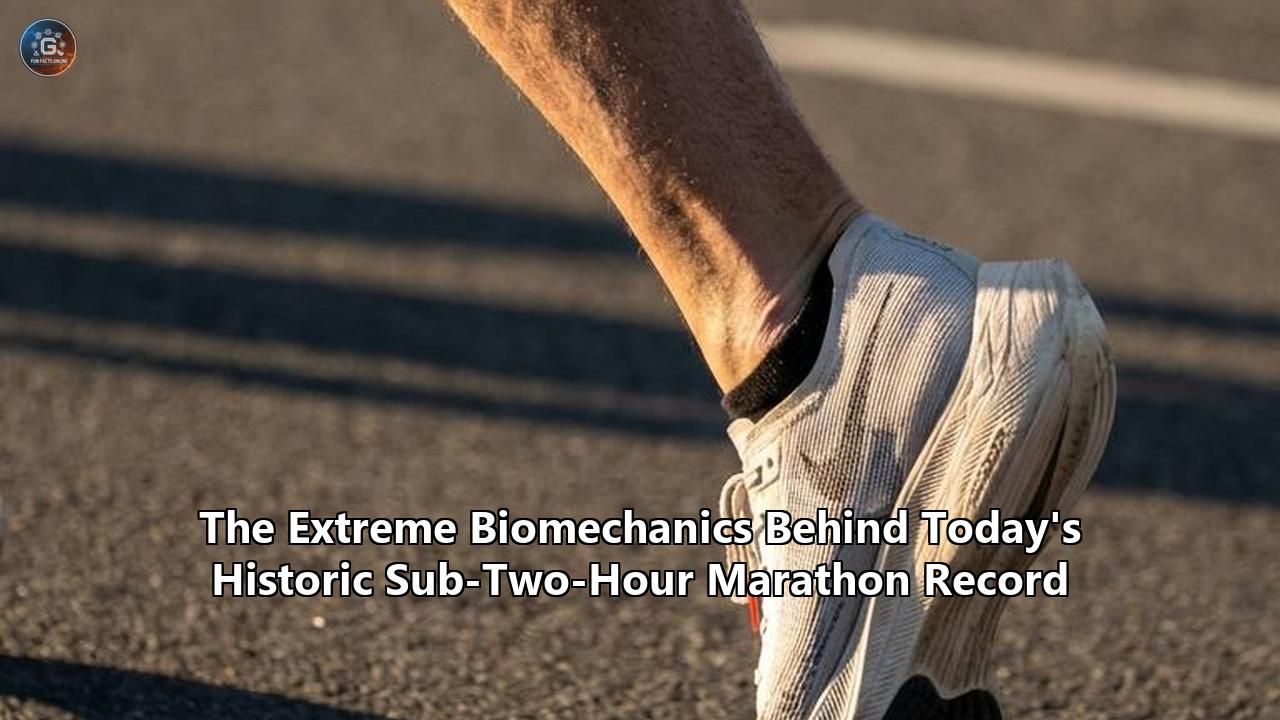
On the damp, flat asphalt of London’s The Mall, human endurance crossed a threshold once relegated to the realm of theoretical physiology. On Sunday, April 26, 2026, Kenyan runner Sabastian Sawe won the 46th London Marathon in an official, ratified time of 1:59:30. Yomif Kejelcha of Ethiopia followed just 11 seconds later, crossing the finish line in 1:59:41 to record the fastest non-winning time and the fastest marathon debut in history.
This was not a highly controlled, rotating-pacer exhibition like Eliud Kipchoge’s INEOS 1:59 Challenge in 2019. This was a raw, open-competition World Marathon Major featuring over 59,000 registered participants navigating the twists of Cutty Sark, Tower Bridge, and Canary Wharf before the final sprint past Buckingham Palace. Sawe and Kejelcha officially shattered the ratified world record of 2:00:35, set in 2023 by the late Kelvin Kiptum, achieving the holy grail of distance running under strict World Athletics regulations.
In the women's elite field, Ethiopia's Tigst Assefa further dismantled the record books, setting a new women-only world record of 2:15:41, besting a deeply competitive field that included Kenya's Hellen Obiri (2:15:53) and Joyciline Jepkosgei (2:15:55). The wheelchair races saw equally dominant performances, with Marcel Hug claiming the men's title in 1:24:13 and Catherine Debrunner securing the women's victory in 1:38:29.
Sawe’s sub-two-hour finish represents more than athletic grit; it is the ultimate realization of decades of research into marathon biomechanics, metabolic efficiency, and material science. For the 30-year-old Kenyan to cover 26.2 miles in under 120 minutes, he had to maintain an average velocity of 5.86 meters per second, or 21.1 kilometers per hour. At this speed, the margin between maximal aerobic output and structural failure is measured in millimeters and milliseconds. Breaking this barrier required the seamless alignment of genetics, kinematics, footwear technology, and race-day tactics.
The Mathematics of a 5.86 Meters-Per-Second Pace
To comprehend the magnitude of Sawe’s 1:59:30, one must analyze the physical requirements of his pace. Human running is essentially a series of controlled, bounding collisions with the earth. At 5.86 meters per second, a runner is airborne for the majority of the race. Researchers studying marathon biomechanics have long theorized that a sub-two-hour marathon required an average velocity that is 2.5% faster than Dennis Kimetto’s 2014 world record of 2:02:57 (5.72 m/s). Achieving this required a calculated 2.7% reduction in the metabolic cost of running.
Velocity in running is the product of two specific spatiotemporal variables: stride frequency (cadence) and stride length. Elite marathoners running at this vanguard pace typically maintain a cadence between 185 and 190 steps per minute. To hit 5.86 meters per second at 188 steps per minute, Sawe’s stride length had to average approximately 1.87 meters for the entirety of the race.
This requires an exquisitely tuned duty factor—the ratio of ground contact time to total stride time. At elite speeds, ground contact time drops below 160 milliseconds. During this microscopic window of time, the foot must absorb peak impact forces equivalent to three times the runner’s body weight, stabilize the skeletal structure, transition from braking to propulsion, and launch the body forward and upward. There is no time for mechanical slop. The aerial phase, or flight time, must be maximized to cover ground, meaning the force applied to the asphalt must be highly impulsive and perfectly directed.
Kinematics of the Stretch-Shortening Cycle
The secret to generating massive propulsive force without rapidly depleting chemical energy stores (glycogen) lies in the body’s elastic properties. The human lower leg functions as a highly sophisticated biological spring, relying heavily on the stretch-shortening cycle.
When Sawe’s foot strikes the ground, his calf muscles (the triceps surae) undergo eccentric contraction, lengthening under the load of his body weight. This action pulls on the Achilles tendon, stretching it like a heavy-duty rubber band. Kinetic energy from the downward fall of the body is converted into elastic strain energy and temporarily stored in the tendon’s collagen fibers. As the runner transitions to the toe-off phase, the calf muscles transition to a concentric contraction, and the Achilles tendon rapidly recoils, returning up to 35% of the energy required for the next stride.
The defining principle of modern marathon biomechanics is limiting energy waste during this cycle. If the foot lands too far ahead of the body’s center of mass (overstriding), the braking forces increase, meaning more energy must be expended to regain forward momentum. Sawe’s footstrike—a highly efficient midfoot-to-forefoot landing directly beneath his center of mass—minimized this braking impulse. His skeletal alignment allowed the ground reaction forces to travel cleanly up the tibia, into the femur, and through the pelvis without dissipating through lateral wobbles or excessive vertical oscillation.
Supershoe Architecture: Midsole Foam and Hysteresis
Biological perfection alone did not break the two-hour barrier. The final structural component was the highly engineered interface between Sawe’s foot and the London asphalt. The evolution of marathon racing shoes from the minimalist flats of the 2010s to the maximalist, carbon-plated models of 2026 has provided the exact metabolic savings researchers predicted.
Traditional running shoes utilized Ethylene Vinyl Acetate (EVA) foam, which provided cushioning but suffered from high hysteresis—the loss of energy in the form of heat during the compression and expansion cycle. EVA foams typically returned only 60-65% of the kinetic energy applied to them. The current generation of super-shoes utilizes polyether block amide (Pebax) and similar advanced copolymers, which are vastly lighter and more resilient.
Biomechanical testing of these foams demonstrates energy return rates exceeding 87%. When Sawe landed with hundreds of pounds of force, the highly compliant foam compressed, storing mechanical energy. Within milliseconds, the foam expanded, returning that energy directly back into the runner’s upward and forward trajectory. Furthermore, despite stack heights approaching the legal limit of 40 millimeters, these materials are so inherently light that modern super-shoes weigh under 150 grams. Studies have shown that adding just 100 grams to a shoe increases the metabolic cost of running by roughly 1%, making extreme weight reduction a non-negotiable factor in sub-two pacing.
The Carbon-Plated Lever and Joint Load Distribution
Embedded within this massive block of hyper-resilient foam is a curved, rigid carbon-fiber plate. Initially, the public believed these plates acted like physical springs, actively launching the runner forward. However, extensive kinematic studies, notably those led by researcher Wouter Hoogkamer, have clarified the exact mechanism: the plates act as stiff levers that fundamentally alter the joint mechanics of the foot and ankle.
During the stance phase of running, the metatarsophalangeal (MTP) joint—where the toes attach to the foot—bends extensively. In traditional shoes, this bending requires energy but returns almost nothing, acting as a metabolic black hole. The carbon-fiber plate drastically increases the longitudinal bending stiffness of the shoe, preventing the toes from over-bending. By stiffening the MTP joint, the shoe reduces the negative work performed at this joint to near zero.
Furthermore, the curved geometry of the plate creates a teeter-totter effect, artificially lengthening the runner's lever arm at the ankle. This reduces the peak ankle extensor moment—the maximum torque required by the calf muscles. By decreasing the workload on the easily fatigued distal muscles of the lower leg, the carbon plate shifts the mechanical burden upward to the massive, highly fatigue-resistant proximal muscles of the knee and hip (the quadriceps, hamstrings, and gluteals). The combination of energy storage in the midsole foam, the lever effects on ankle mechanics, and the stiffening of the MTP joint collectively reduces the metabolic cost of running by 4% or more.
Redefining Running Economy for the Sub-Two Athlete
The cumulative benefit of these biomechanical and technological optimizations is measured by a single overarching variable: running economy (RE). In physiological terms, running economy is the steady-state oxygen consumption required to run at a given submaximal speed. It is the miles-per-gallon rating of the human body.
Achieving an official sub-two-hour marathon demands a running economy of ≤ 190 milliliters of oxygen per kilogram of body weight per kilometer (mL·kg⁻¹·km⁻¹) at a speed of 21 km·h⁻¹. Even an athlete with an astronomically high aerobic capacity will fail to break the barrier if their running economy is poor, as they will simply burn through their limited oxygen and glycogen reserves too quickly.
Sawe’s physiological profile represents the zenith of running economy. He is able to translate internal metabolic energy into external mechanical work with almost zero leakage. Every milliliter of oxygen extracted from his blood by the mitochondria in his muscle cells is efficiently converted into ATP, which is then used specifically for forward propulsion rather than fighting internal friction or correcting postural imbalances.
Fractional Utilization and the Lactate Threshold
Running economy must operate in tandem with two other massive physiological pillars: VO2 max (maximal oxygen uptake) and fractional utilization. Elite male marathoners typically boast a VO2 max between 75 and 85 mL·kg⁻¹·min⁻¹. This indicates a massive cardiovascular engine, characterized by a highly compliant left ventricle capable of pumping massive stroke volumes of oxygen-rich blood to the working muscles.
However, a marathon is not run at VO2 max; it is run at the highest possible percentage of that maximum that can be sustained without crossing the lactate threshold—the point at which lactic acid accumulates in the blood faster than the body can clear it, leading to rapid muscular failure. This sustainable percentage is known as fractional utilization.
To run 1:59:30, Sawe had to sustain between 90% and 94% of his VO2 max for nearly two straight hours, balancing flawlessly on the razor’s edge of his maximum metabolic steady state. Running at 5.86 m/s, his muscle fibers were producing vast quantities of lactate, but his highly adapted slow-twitch (Type I) muscle fibers were simultaneously shuttling that lactate into adjacent cells and mitochondria to be oxidized and used as fuel. The moment a runner exceeds this threshold, blood pH drops, neuromuscular signaling is disrupted, and the pace inevitably collapses.
Anthropometric Advantages: The Leg as a Pendulum
The physiological capability to maintain such high fractional utilization is heavily supported by anthropometry—the specific physical dimensions and mass distribution of the athlete's body. Sawe, like many elite East African distance runners, possesses an optimal anthropometric profile for long-distance locomotion: a low overall body mass (under 60 kilograms) combined with long legs relative to his torso.
In the context of physics, the human leg acts as a pendulum swinging from the hip joint. The energy required to swing a pendulum forward is determined by its moment of inertia, which is heavily influenced by the distribution of mass. If mass is concentrated far from the axis of rotation (the hip), the energy cost of swinging the leg skyrockets.
Sawe possesses incredibly slender calves and ankles. By minimizing distal limb mass, he drastically reduces the moment of inertia of his legs. This means his hip flexors and core muscles expend significantly less metabolic energy pulling the leg through the swing phase of the stride 188 times a minute for two hours. Research indicates that adding just 50 grams of mass to the ankle increases the oxygen cost of running by roughly 0.5%. The natural evolutionary advantage of thin lower limbs cannot be replicated by training; it is a structural prerequisite for sub-two-hour pacing.
Transverse Plane Stability and Upper Body Mechanics
While the legs provide propulsion, the upper body acts as a crucial counterbalance, stabilizing the complex rotational forces generated by the lower limbs. When Sawe drives his right knee forward, his pelvis naturally rotates to the left. If left uncorrected, this torque would spin his entire body off its vertical axis, requiring constant, energy-wasting lateral corrections.
To counter this, the upper body rotates in the opposite direction. As the right leg swings forward, the left arm swings forward, driving the shoulders into counter-rotation against the pelvis. This dynamic opposition stabilizes the torso in the transverse plane, keeping the runner moving in a perfectly straight line.
Furthermore, this counter-rotation relies on the fascial slings of the core—specifically the anterior and posterior oblique systems, which connect the latissimus dorsi on one side of the back to the gluteus maximus on the opposite side. As the torso twists, elastic energy is stored in these diagonal bands of tissue and then released as the body snaps back in the opposite direction, aiding the forward drive of the leg without requiring additional muscular contraction. Sawe’s upper body mechanics in London were a masterclass in efficiency: his arm carriage remained low and compact, his shoulders relaxed, and his core rigid, ensuring that not a single watt of energy was lost to upper-body tension or excessive twisting.
Combating Structural Deterioration at Kilometer 35
The true test of marathon biomechanics does not occur in the first half of the race; it occurs after kilometer 30, when the body begins to break down. Exercise-induced muscle damage (EIMD) accumulates with every footstrike, causing micro-tears in the muscle fibers and triggering localized inflammation.
Recent studies utilizing Inertial Measurement Units (IMUs) under field conditions have mapped exactly how running mechanics deteriorate as fatigue sets in during prolonged endurance events. The data shows that exhausted runners typically experience a progressive increase in ground contact time and a decrease in flight time, driving up their overall duty factor. Peak tibial acceleration and peak rearfoot eversion velocity spike as the fatigued muscles lose their ability to stiffen the joints and absorb impact shocks gracefully. When the calf muscles fatigue, the Achilles tendon cannot store and return energy as effectively, forcing the runner to rely more on the oxygen-hungry muscles of the upper leg.
Sawe’s most profound achievement on the streets of London was his mechanical resilience. Even as his heart rate and ratings of perceived exertion undoubtedly peaked in the final kilometers, his biomechanical parameters refused to degrade. His foot strike angle, stride frequency, and stride length remained virtually unchanged from mile 5 to mile 25. He maintained the necessary stiffness in his lower limbs to preserve elastic energy return, preventing the dreaded biomechanical collapse that defines the marathon "wall."
Open-Road Aerodynamics and Tactical Drafting
Unlike Kipchoge’s 2019 exhibition, which utilized a rotating phalanx of pacers in an optimized V-formation, Sawe and Kejelcha had to navigate the aerodynamic realities of an open-road race. At 21.1 km/h, air resistance becomes a formidable opponent, accounting for roughly 8% of the total metabolic cost of running.
Overcoming this drag requires significant energy. However, running directly behind another athlete creates a slipstream—a pocket of low-pressure air that drastically reduces the aerodynamic drag on the trailing runner. Cooperative drafting was a critical tactical element of the 2026 London Marathon. For the first 35 kilometers, Sawe, Kejelcha, Kiplimo, and the lead pack operated with seamless synchronization, forming a tight, linear peloton.
By trailing just centimeters behind the leader, runners in the pack could reduce their aerodynamic drag by upwards of 40%, translating to a direct reduction in oxygen consumption and a preservation of vital glycogen stores. The athletes intuitively shared the pacing duties, rotating the lead position to distribute the aerodynamic burden, mirroring the peloton dynamics of professional cycling. It was only in the final, agonizing miles along the Victoria Embankment that Sawe stepped out of the slipstream, relying on the energy he had conserved through drafting to unleash his historic finishing kick.
Thermoregulation: Dissipating the Heat of a 21.1 km/h Pace
The biomechanical engine of the human body is remarkably inefficient in one specific regard: heat production. Only about 25% of the metabolic energy generated during running is converted into external mechanical work (forward movement). The remaining 75% is released as heat.
Running at 5.86 m/s generates a massive internal thermal load. If a runner's core temperature rises too high, the central nervous system intervenes, forcibly reducing muscle recruitment to prevent heat stroke—a biological failsafe that instantly derails world-record attempts. To prevent this, the body redirects blood flow away from the working muscles and toward the skin, where heat can be dissipated through the evaporation of sweat. However, this creates a physiological conflict: the muscles desperately need oxygenated blood, while the skin desperately needs blood for cooling.
The weather conditions in London on April 26 provided the perfect environmental counterbalance. With temperatures hovering around 10°C (50°F), low humidity (<60%), and thick cloud cover blocking direct solar radiation, the ambient air acted as a massive heat sink. Sawe’s sweat evaporated rapidly in the dry, cool air, allowing his cardiovascular system to prioritize oxygen delivery to his legs rather than thermal regulation at his skin. This environmental advantage is exactly why the sub-two barrier was broken on a brisk spring morning in the UK rather than a humid summer day.
Fueling the Engine: Carbohydrate Oxidation Rates
Biomechanics and thermoregulation are ultimately beholden to the availability of metabolic fuel. The human body stores energy primarily as fat and carbohydrates (glycogen). While fat stores are virtually unlimited, fat oxidation is a slow process that requires abundant oxygen—too slow to support a sub-two-hour pace. At 21.1 km/h, Sawe was relying almost exclusively on carbohydrate oxidation.
The human liver and muscles can only store about 500 to 600 grams of glycogen, which is typically depleted after roughly 90 minutes of high-intensity running. To survive the final 30 minutes of the race, Sawe had to rely on exogenous carbohydrates ingested during the run.
Modern endurance nutrition has evolved alongside footwear. While runners in previous decades struggled to digest more than 60 grams of carbohydrates per hour, the 2026 elite field utilizes highly concentrated hydrogel solutions containing a precise ratio of maltodextrin and fructose. This dual-source carbohydrate matrix utilizes multiple intestinal transporters, allowing athletes like Sawe to absorb upwards of 90 to 100 grams of carbohydrates per hour without suffering gastrointestinal distress. By successfully taking on fluid and fuel at precise intervals without breaking his aerodynamic stride, Sawe kept his blood glucose levels stable, ensuring his central nervous system continued firing at maximum capacity all the way to The Mall.
The Women's Field: Assefa’s Continued Dominance
While the men's sub-two finish captivated the headlines, the biomechanical masterclass extended to the women's elite field. Tigst Assefa’s astonishing 2:15:41 victory showcased a different, yet equally optimized, expression of marathon kinematics. The women-only world record requires runners to navigate the course without the aerodynamic advantage of male pacers, forcing athletes like Assefa to punch their own hole in the wind for the entire 26.2 miles.
Assefa’s running economy is legendary in the sport. While her absolute VO2 max may be marginally lower than her male counterparts due to biological differences in heart size and hemoglobin mass, her fractional utilization and biomechanical efficiency are unparalleled. Her ground contact times mirror those of the elite men, and her ability to sustain a high-cadence, low-oscillation stride through the perilous late stages of the race allowed her to systematically break down a phenomenal chase pack containing Hellen Obiri and Joyciline Jepkosgei. Her victory in London cements her legacy not just as a champion, but as a pioneer of female distance running physiology.
The Next Horizon of Human Locomotion
The barrier is broken. The clock at the London Marathon finish line reading 1:59:30 has answered a question that sports scientists have debated for over thirty years. But the resolution of one scientific mystery merely opens the door to the next.
Now that the psychological and physical barrier of the sub-two-hour open race has been dismantled, the parameters of what is physiologically possible must be recalibrated. Yomif Kejelcha’s 1:59:41 finish proves that Sawe’s performance was not an anomalous outlier, but rather the new standard for the vanguard of male distance running.
Future innovations in marathon biomechanics will likely focus on hyper-personalized interventions. Emerging technologies involving AI-assisted, real-time biomechanical feedback via wearable sensors integrated directly into the athlete’s apparel could allow runners to correct minor kinematic asymmetries mid-race before they manifest as fatigue. Furthermore, advancements in custom-molded carbon plates tailored precisely to the individual force-velocity curves of a runner's specific Achilles tendon could squeeze out the remaining fractions of a percent in running economy.
The human body is an infinitely complex machine, and for exactly one hour, fifty-nine minutes, and thirty seconds on the streets of London, Sabastian Sawe operated that machine perfectly. He did not defeat the laws of physics; he mastered them, executing the greatest display of applied biomechanics the sporting world has ever seen. The sub-two-hour marathon is no longer a theoretical projection on a researcher's whiteboard. It is a historical fact, carved into the asphalt of The Mall.
Reference:
- https://en.wikipedia.org/wiki/2026_London_Marathon
- https://www.runnersworld.com/news/a71127180/london-marathon-results-2026/
- https://www.theguardian.com/sport/live/2026/apr/26/london-marathon-2026-live-updates
- https://www.researchgate.net/publication/398409566_Toward_a_record-eligible_sub-2-hour_marathon_an_updated_integrative_framework_of_Physiological_technological_and_cognitive_determinants
- https://pubmed.ncbi.nlm.nih.gov/28255937/
- https://consensus.app/home/blog/is-a-sub-2-hour-marathon-possible/
- https://www.sportsperformancebulletin.com/training/base-endurance-training/a-sub-2-hour-marathon-what-will-it-take-and-what-can-we-learn
- https://www.mdpi.com/2673-7078/5/4/101
- https://www.wouterhoogkamer.com/science1
- https://pubmed.ncbi.nlm.nih.gov/30460454/
- https://www.youtube.com/watch?v=rwjPQo23uME
- https://pmc.ncbi.nlm.nih.gov/articles/PMC11116898/
- https://www.springermedicine.com/toward-a-record-eligible-sub-2-hour-marathon-an-updated-integrat/51800332