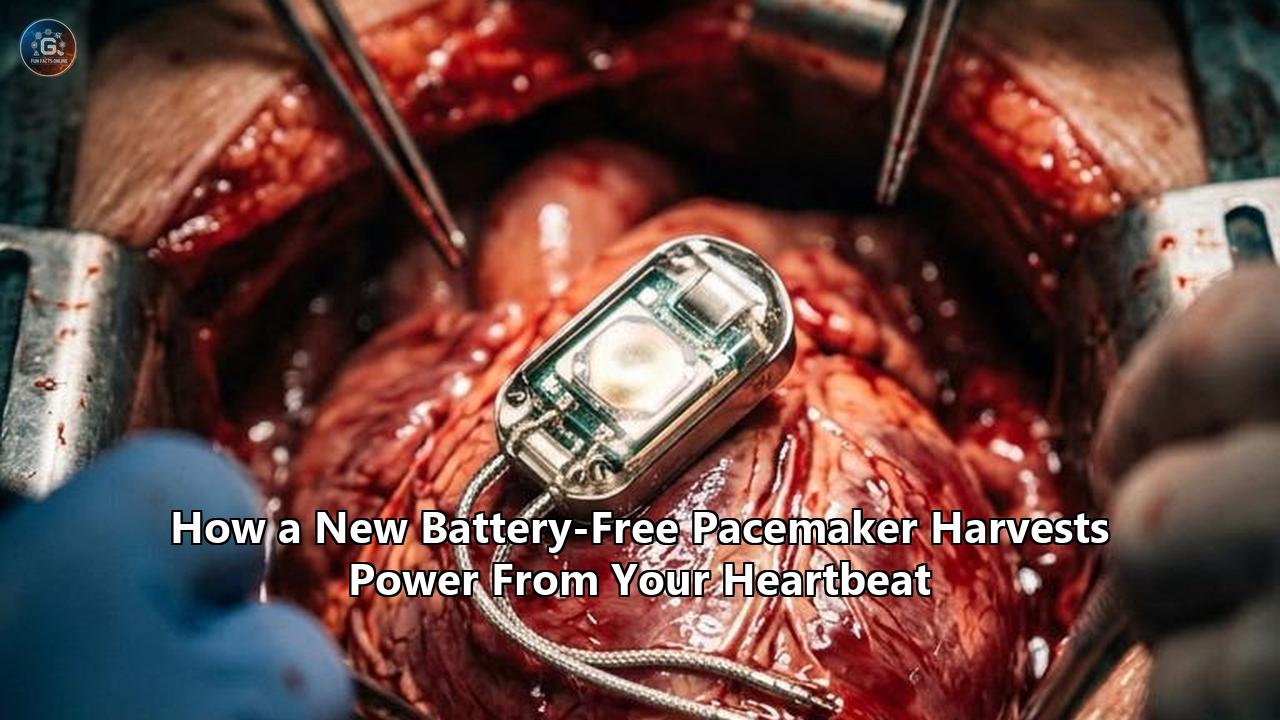
A research team led by Dr. Han Ouyang and Dr. Zhou Li from the Chinese Academy of Sciences, collaborating with researchers across bioengineering and clinical electrophysiology, reported the successful development of a self-sustaining, leadless symbiotic transcatheter pacemaker. The device, described in Nature Biomedical Engineering, harvests kinetic biomechanical energy directly from the cyclical contractions of the heart using an electromagnetic induction system suspended by magnetic levitation.
In preclinical porcine trials, the capsule-shaped device was delivered through the femoral vein directly into the right ventricle, where it continuously gathered mechanical energy from myocardial movement to power therapeutic pacing in animals with induced severe bradycardia. The harvester generated an average power output of up to 120 microwatts—more than ten times the approximately 10 microwatts required to sustain continuous cardiac pacing. Accelerated bench testing mimicking 300 million heartbeats, equivalent to roughly a decade of human cardiac activity, produced just 4 percent mechanical wear.
The development targets the fundamental vulnerability of modern cardiac rhythm management: chemical battery depletion. Every commercial pacemaker implanted worldwide relies on an onboard primary battery—typically lithium-iodine or lithium-carbon monofluoride—that exhausts its charge within 7 to 12 years. When the power source depletes, patients must undergo invasive surgical revisions to replace the generator. By converting intra-cardiac mechanical work into a continuous electrical reservoir, this battery-free pacemaker establishes a self-contained energy loop inside the myocardium, opening the door to cardiac implants that operate for the recipient's entire lifespan.
+--------------------------------------------------------------------------------+
|             THE PARADIGM SHIFT IN CARDIAC PACING ARCHITECTURE                  |
+--------------------------------------------------------------------------------+
|  CONVENTIONAL PACEMAKER             |  SYMBIOTIC TRANSCATHETER PACEMAKER       |
|  - Subclavicular surgical pocket    |  - Leadless intracardiac capsule         |
|  - Transvenous leads to myocardium  |  - Direct RV endocardial anchoring       |
|  - Chemical battery (7-12 yr life)  |  - Electromagnetic kinetic harvester     |
|  - Mandatory surgical revisions     |  - Continuous in vivo energy regeneration|
|  - Lead fracture & infection risks  |  - Lifelong operation target             |
+--------------------------------------------------------------------------------+
The Core Technical Innovation: How the Device Harvests Heartbeats
The human heart is an exceptional mechanical pump, contracting roughly 100,000 times a day and generating between 1 and 5 Watts of total mechanical work. Conventional pacing pulses require only 1 to 10 microwatts—less than one hundred-thousandth of the organ's kinetic output. Scavenging that power inside a dynamic, blood-filled chamber without compromising ventricular function, causing blood clotting, or wearing out moving parts has represented one of biomedical engineering's most stubborn puzzles.
+-----------------------------------------------------------------------------+
|             INTRACARDIAC KINETIC ENERGY CONVERSION PIPELINE                 |
+-----------------------------------------------------------------------------+
|                                                                             |
|  [ Myocardial Contraction ] ---> [ Dynamic Inertial Mass Displacement ]     |
|             |                                   |                           |
|             v                                   v                           |
|  [ Ventricular Systole ]        [ Frictionless Mag-Lev Oscillation ]        |
|             |                                   |                           |
|             v                                   v                           |
|  [ Micro-Coil Magnetic Flux Change ] ---> [ Faraday Induction (AC Current) ]|
|                                                 |                           |
|                                                 v                           |
|  [ Micro-Pacing Pulse Delivery ] <--- [ Ultra-Low-Loss PMIC / Capacitor ]   |
|                                                                             |
+-----------------------------------------------------------------------------+
Electromagnetic Induction Meets Magnetic Levitation
The symbiotic transcatheter pacemaker solves the friction and wear dilemma through an enclosed magnetic levitation energy cache. Previous attempts at kinetic harvesting within the body relied on mechanical springs, cantilever beams, or piezoelectric membranes subjected to repeated physical strain. Over hundreds of millions of cycles, mechanical fatigue causes material deformation, micro-fracturing, and catastrophic output degradation.
The architecture deployed by Ouyang and colleagues circumvents physical contact between moving mechanical components:
- The Levitation Core: A cylindrical permanent magnet is suspended between opposing magnetic fields inside a hermetically sealed titanium capsule.
- Inertial Response: As the right ventricular wall accelerates during isovolumetric contraction and rapidly decelerates during ejection, the suspended magnet shifts along its axis within the capsule.
- Electromagnetic Transduction: Surrounding micro-coils intercept the magnetic field changes induced by this displacement, generating alternating current (AC) through Faraday's law of induction.
- Near-Zero Startup Threshold: Because the levitating magnet floats in a frictionless magnetic field, even subtle, low-amplitude wall motions from weak cardiac cycles trigger relative movement and produce current.
Power Management and Intracardiac Pacing Circuits
The AC output produced during each systolic deflection cannot stimulate cardiomyocytes directly; it is erratic in voltage and discontinuous in timing. The device routes raw kinetic power through a specialized power management unit (PMU) integrated into the capsule's distal end:
- Active AC-to-DC Rectification: Custom low-forward-voltage diodes and active rectifiers convert irregular AC waveforms into direct current (DC) with minimal voltage drop.
- Dynamic Energy Storage: Power is routed into high-density solid-state micro-capacitors and a miniature rechargeable secondary buffer rather than a standard primary chemical cell.
- Impedance Matching: The power management integrated circuit (PMIC) dynamically tunes its input impedance to match the shifting biomechanical output of the heart across rest, exercise, and cardiac distress.
- Demand-Based Stimulation: An internal sensing circuit monitors intrinsic cardiac depolarization (R-waves). When the intrinsic rhythm drops below the programmed rate threshold (for example, 60 beats per minute), the pacemaker discharges a calibrated electrical pulse (0.5 to 2.5 volts with a pulse width of 0.2 to 0.4 milliseconds) through the tip electrode anchored into the endocardium.
The result is a closed, self-sustaining thermodynamic loop: the myocardium moves the generator, the generator produces electricity, the storage unit buffers the charge, and the circuit stimulates the myocardium whenever the intrinsic rhythm fails.
Anatomy of the Device: Form Factor and Catheter Delivery
A viable battery-free pacemaker must conform strictly to modern transcatheter delivery standards. Bulky historical prototypes required open thoracotomies to suture energy harvesters onto the epicardial surface of the left ventricle. By contrast, this design packages the entire generator, storage cache, microelectronics, and pacing electrode into a single capsule comparable in scale to commercial leadless devices such as Medtronic's Micra or Abbott's Aveir.
+-----------------------------------------------------------------------------+
|         INTERNAL ARCHITECTURE OF THE TRANSCATHETER HARVESTING CAPSULE        |
+-----------------------------------------------------------------------------+
|                                                                             |
|  +-----------------------------------------------------------------------+  |
|  | [Nitinol Fixation Tines]                                              |  |
|  |     |                                                                 |  |
|  |     v                                                                 |  |
|  | [Endocardial Stimulation Electrode & Bio-Sensing Tip]                 |  |
|  +-----------------------------------------------------------------------+  |
|  |                                                                       |  |
|  | [Power Management Integrated Circuit (PMIC) & Micro-Controller]       |  |
|  |                                                                       |  |
|  | [Solid-State Micro-Capacitor Energy Cache (Zero Chemical Degradation)] |  |
|  +-----------------------------------------------------------------------+  |
|  |                                                                       |  |
|  |  +-- HERMETIC TITANIUM HOUSING ------------------------------------+  |  |
|  |  |                                                                 |  |  |
|  |  |   [Coil Stator Array]   [Levitating Magnet]   [Coil Stator]     |  |  |
|  |  |        (==|==)             <--- [N S] --->        (==|==)       |  |  |
|  |  |                                                                 |  |  |
|  |  |   [Opposing Magnetic Field]             [Opposing Field]        |  |  |
|  |  +-----------------------------------------------------------------+  |  |
|  |                                                                       |  |
|  +-----------------------------------------------------------------------+  |
|  | [Catheter Docking Button & Radiopaque Retrieval Features]             |  |
|  +-----------------------------------------------------------------------+  |
|                                                                             |
+-----------------------------------------------------------------------------+
Component Breakdown
- Hermetic Outer Shell: Fabricated from medical-grade titanium alloy (Ti-6Al-4V) treated with an anti-thrombogenic fluoropolymer surface coating to resist platelet adhesion, clot formation, and chronic fibrous overgrowth.
- Distal Fixation Assembly: Nitinol retention tines extend outward upon deployment from the delivery sheath, engaging the trabeculae carneae of the right ventricular apex or interventricular septum to anchor the capsule securely against mechanical dislodgement.
- Delivery System: Integrated with a 23-to-27 French steerable transfemoral delivery catheter. The operator navigates the catheter through the inferior vena cava, traverses the tricuspid valve under fluoroscopic and echocardiographic guidance, and fastens the device into the right ventricular endocardium via a standard minimally invasive percutaneous procedure.
Comparative Engineering: Harvester Paradigms in Development
Energy harvesting within cardiovascular medicine spans several distinct transduction mechanisms. While the electromagnetic induction model demonstrated by Ouyang's team represents a functional milestone, other academic and corporate laboratories are advancing parallel harvesting strategies:
+-----------------------------------------------------------------------------------------------------+
|                             ENERGY HARVESTING METHOD COMPARISON                                     |
+------------------------------------+-------------------------+-------------------+------------------+
| MECHANISM                          | PRIMARY ADVANTAGES      | CORE CHALLENGES   | POWER OUTPUT     |
+------------------------------------+-------------------------+-------------------+------------------+
| Electromagnetic Mag-Lev Induction  | Zero mechanical wear;   | Scale limitations;| 80 - 150 uW      |
| (Ouyang et al. / CAS)              | high current conversion | coil density      |                  |
+------------------------------------+-------------------------+-------------------+------------------+
| Piezoelectric Nanogenerator (PENG) | Ultra-thin form factor; | Material fatigue; | 5 - 40 uW        |
| (PVDF-TrFE, PMN-PT, BaTiO3)        | high voltage output     | low current yield |                  |
+------------------------------------+-------------------------+-------------------+------------------+
| Triboelectric Nanogenerator (TENG) | High voltage density;   | Surface charge    | 10 - 60 uW       |
| (Polymer micro-patterned layers)   | lightweight materials   | decay; friction   |                  |
+------------------------------------+-------------------------+-------------------+------------------+
| Endocardial Pressure Harvesting    | Leverages fluid forces; | Dynamic response  | 1 - 10 uW        |
| (University of Washington Nazer Lab)| no moving internal mass| in low ejection   |                  |
+------------------------------------+-------------------------+-------------------+------------------+
1. Piezoelectric Transduction
Piezoelectric harvesters leverage materials such as polyvinylidene fluoride (PVDF), lead zirconate titanate (PZT), or lead-free barium titanate composites. When the cardiac muscle exerts mechanical stress or bending forces on the piezoelectric element, microscopic electrical dipoles align, generating a voltage across the material.
- Strengths: Piezoelectric materials can be formulated into flexible membranes or outer coatings wrapped directly around the capsule housing.
- Weaknesses: Piezoelectric crystals yield high open-circuit voltage but low current, requiring extensive step-down power conversion. Repeated cyclical flexing over hundreds of millions of heartbeats carries risks of structural delamination and material fatigue.
2. Triboelectric Nanogenerators (TENGs)
Triboelectric energy harvesting relies on contact electrification and electrostatic induction between two materials with opposing electron affinities (for instance, micro-patterned polytetrafluoroethylene and aluminium). As the heart beats, internal surfaces contact and separate, creating charge transfer.
- Strengths: TENGs offer high electrical conversion efficiency at low operating frequencies (1 to 2 Hz), which matches normal human heart rates.
- Weaknesses: Mechanical friction between contact layers leads to physical surface abrasion, electrostatic charge saturation loss in humid in vivo environments, and material degradation over multi-year periods.
3. Intracardiac Fluid Pressure Transduction
Developed by teams including Dr. Babak Nazer at the University of Washington, this approach embeds piezoelectric or electromechanical transducer elements directly into the outer housing of a leadless capsule. Rather than relying on internal moving parts, it captures the oscillating blood pressure shifts inside the right ventricle as fluid presses against the capsule wall during systole.
- Strengths: Eliminates all internal moving assemblies, maximizing structural simplicity.
- Weaknesses: The kinetic yield is lower, currently providing 10 to 20 percent of the energy required for complete pacing autonomy, serving primarily as a battery-life extender rather than a full primary replacement.
Systematic Impact Analysis: Who is Affected and What Changes?
The shift from disposable chemical batteries to perpetual biomechanical harvesters ripples across cardiology, medical device engineering, hospital economics, and patient care.
+--------------------------------------------------------------------------------+
|                        SYSTEM-WIDE STAKEHOLDER IMPACT                          |
+--------------------------------------------------------------------------------+
|                                                                                |
|  PATIENTS                                                                      |
|  * Elimination of repeat generator exchange surgeries every 7-12 years         |
|  * Avoidance of secondary infection, hematoma, and lead extraction risks       |
|  * Transformative benefit for pediatric and young adult recipients             |
|                                                                                |
|  ELECTROPHYSIOLOGISTS & CLINICIANS                                             |
|  * Zero pocket-site incisions; fully percutaneous catheter workflows           |
|  * Eradication of transvenous lead fracture and venous thrombosis complications|
|  * Transition from battery replacement clinics to pure algorithmic monitoring  |
|                                                                                |
|  HEALTHCARE SYSTEMS & PAYERS                                                   |
|  * Reduction in lifetime hospitalizations and post-revision complication costs |
|  * Restructuring of procedural reimbursement and diagnostic billing            |
|  * Broadened device access in underserved and developing regions               |
|                                                                                |
|  MEDICAL DEVICE MANUFACTURERS                                                  |
|  * Disruption of recurring 7-to-10 year device replacement revenue models      |
|  * Strategic pivot toward software updates, remote telemetry, and algorithms   |
|  * Complex regulatory requirements for validating 20+ year reliability         |
|                                                                                |
+--------------------------------------------------------------------------------+
1. Direct Impact on Patients
Worldwide, more than one million patients undergo pacemaker implantations every year. For these individuals, the presence of a pacemaker provides critical rate support, yet it comes with lifetime operational burdens tied directly to battery longevity.
+-----------------------------------------------------------------------------+
|                LIFETIME SURGICAL BURDEN: 30-YEAR SCENARIO                   |
+-----------------------------------------------------------------------------+
|  Age 40 Patient Implanted with Bradycardia Support                          |
|                                                                             |
|  CONVENTIONAL TRANSCATHETER PACEMAKER:                                      |
|  Year 0:   Primary Transcatheter Implantation                               |
|  Year 9:   Battery Depletion -> Secondary Implantation (Capsule 2 Added)    |
|  Year 18:  Battery Depletion -> Tertiary Implantation (Capsule 3 Added)     |
|  Year 27:  Right Ventricle Full -> High-Risk Percutaneous Extraction        |
|                                                                             |
|  BATTERY-FREE HARVESTING PACEMAKER:                                         |
|  Year 0:   Primary Transcatheter Implantation                               |
|  Year 1-30+: Continuous In Vivo Operation (Zero Revision Surgeries)         |
+-----------------------------------------------------------------------------+
Elimination of Generator Exchange Surgeries
In conventional transvenous pacing, replacing a battery requires reopening the surgical pocket in the upper chest, disconnecting the pulse generator from the implanted leads, and inserting a new unit. Although routine, secondary replacement procedures carry higher complication rates than primary implantations:
- Infection Rates: While initial implantation carries a surgical site infection risk of roughly 0.5 to 1.5 percent, generator exchange procedures carry infection risks between 2.0 and 4.5 percent.
- Lead Dislodgement and Insulation Failure: Manipulating older leads during replacement frequently causes lead fractures or dislodgement, requiring lead extractions that carry risks of superior vena cava tears and emergency open-chest surgery.
For a patient diagnosed with congenital complete heart block or symptomatic bradycardia in their thirties, a conventional device mandates four to six subsequent surgical revisions over their lifetime. A self-powered battery-free pacemaker eliminates these recurring surgical interventions entirely.
Resolution of the Leadless "Abandonment Paradox"
Modern leadless pacemakers (such as Micra) address lead complications by placing a small capsule entirely inside the heart, but they create a difficult long-term dilemma. Once placed inside the right ventricle, the heart tissue encapsulates the device in a fibrous sheath over 12 to 24 months.
When the internal battery runs out after 8 to 12 years:
- Retrieving an encapsulated capsule from inside the contracting right ventricle carries a high risk of tearing cardiac trabeculae or perforating the myocardial wall.
- Consequently, clinical practice often requires "abandoning" the depleted capsule inside the heart and anchoring a second (and eventually third) device adjacent to it.
- The right ventricle has limited anatomical space; housing multiple abandoned metallic capsules impairs hemodynamics, compromises tricuspid valve closure, and increases the risk of ventricular arrhythmias.
A self-recharging transcatheter capsule removes the need to leave inactive hardware behind by sustaining operation inside a single implanted unit.
Psychological Relief
Surveys conducted by cardiac patient advocacy groups show that device-dependent individuals experience measurable psychological distress regarding impending battery expiration and subsequent surgeries. Transitioning to a maintenance-free implant removes battery monitoring anxiety and eases concerns about sudden power failure.
2. Changes in Clinical Practice and Electrophysiology
The clinical specialty of electrophysiology faces major adjustments in procedural workflows, risk management, and long-term care delivery.
Shift in Procedural Training and Complication Profiles
- Transvenous Lead Management: The need for pocket dissections, subclavicular venipunctures, cephalic vein cutdowns, and surgical lead anchoring diminishes as self-powered transcatheter capsules mature.
- Reduction in Systemic Complications: Complications such as subclavian vein thrombosis, pneumothorax, pocket hematomas, and lead-associated tricuspid regurgitation decline.
- Focus on Structural Navigation: The electrophysiologist's procedural expertise shifts entirely toward structural catheter manipulation within the right ventricular anatomy, optimizing anchor sites along the muscular interventricular septum.
+--------------------------------------------------------------------------------+
|                   CLINICAL PATHOLOGY COMPLICATION REDUCTION                    |
+--------------------------------------------------------------------------------+
|  COMPLICATION TYPE         | TRANSLATION MECHANISM                             |
+----------------------------+---------------------------------------------------+
|  Venous Occlusion          | Eliminated (No transvenous lead in subclavian/SVC)|
|  Infective Endocarditis    | Reduced (No intravascular lead serving as nidus)  |
|  Pneumothorax              | Eliminated (Transfemoral delivery replaces thorax)|
|  Twiddler's Syndrome       | Eliminated (No subclavicular generator pocket)    |
|  Pocket Hematoma / Erosion | Eliminated (No subcutaneous tissue dissection)    |
+--------------------------------------------------------------------------------+
Transition to Purely Remote Algorithmic Management
In contemporary clinical practice, a large portion of outpatient electrophysiology visits focus on estimating remaining battery longevity, measuring lead impedance, and adjusting pacing voltages to stretch battery reserves.
With a continuous, kinetic energy source:
- Pacing threshold margins no longer need to be kept near minimal levels to conserve microamp-hours of chemical power. Clinicians can maintain safer, wider output margins without worrying about shortening device life.
- Device follow-ups shift entirely to remote telemetry, tracking rhythm trends, heart failure progression metrics, automated arrhythmia detection logs, and software algorithm updates.
3. Economic Repercussions for Healthcare Systems
The health economics of cardiac rhythm management will shift significantly as battery-free technology advances from preclinical models to market adoption.
+----------------------------------------------------------------------------------+
|                    HEALTH ECONOMICS: 20-YEAR COST PROJECTION                     |
+----------------------------------------------------------------------------------+
|                                                                                  |
|  CONVENTIONAL PACING REGIMEN (PER PATIENT OVER 20 YEARS)                         |
|  * Initial Transvenous/Leadless Device & Implantation:          $18,000 - $28,000 |
|  * Generator Replacement 1 (Year 9, Procedure + Hardware):      $12,000 - $18,000 |
|  * Generator Replacement 2 (Year 18, Procedure + Hardware):     $12,000 - $18,000 |
|  * 20-Year Cumulative Revision Complication Probability Cost:   $6,500 - $12,000  |
|  ------------------------------------------------------------------------------  |
|  ESTIMATED 20-YEAR TOTAL COST PER PATIENT:                      $48,500 - $76,000 |
|                                                                                  |
|  BATTERY-FREE TRANSCATHETER PACING (PROJECTED)                                   |
|  * Initial Battery-Free Transcatheter System & Implantation:     $22,000 - $32,000|
|  * Mid-Term Revisions:                                          $0                |
|  * Remote Monitoring Subscription (20 Years):                   $4,000 - $6,000   |
|  ------------------------------------------------------------------------------  |
|  ESTIMATED 20-YEAR TOTAL COST PER PATIENT:                      $26,000 - $38,000 |
|                                                                                  |
|  NET PROJECTED 20-YEAR SAVINGS PER PATIENT:                     $22,500 - $38,000 |
|                                                                                  |
+----------------------------------------------------------------------------------+
Short-Term Capital Costs vs. Long-Term Systemic Savings
The initial procurement cost of advanced micro-engineered transcatheter harvesting capsules will likely exceed standard transvenous systems. However, health technology assessments indicate that avoiding a single generator replacement procedure offsets initial device premiums within the first decade of use.
Savings stem directly from:
- Reduced Operating Room Utilization: Eliminating generator exchanges frees up catheterization and electrophysiology lab slots for diagnostic and interventional cases.
- Avoided Complication Treatments: The cost of managing an infected transvenous pacemaker pocket or an endocardial lead infection ranges from $45,000 to over $120,000 per episode, often requiring intensive care admissions, intravenous antibiotics, transvenous laser lead extraction, and secondary reimplantation.
- Optimized Global Resource Allocation: In developing healthcare systems where surgical replacement infrastructure is scarce, patients frequently suffer when their pacemaker batteries deplete. A device that functions without surgical battery maintenance provides continuous cardiac rhythm support without requiring periodic access to tertiary surgical centers.
Medtech Industry Business Model Transformation
For major cardiovascular device manufacturers (such as Medtronic, Abbott, Boston Scientific, and Biotronik), standard revenue streams rely heavily on predictable, recurring generator replacement sales every decade. The widespread arrival of a lifelong battery-free pacemaker disrupts this planned replacement cycle.
In response, commercial manufacturers are restructuring their commercial frameworks:
- Transitioning toward software-as-a-service (SaaS) and digital therapeutic models, where health systems pay recurring service fees for remote diagnostic algorithms, automated hemodynamics monitoring, and predictive heart failure modeling.
- Shifting research and development capital into advanced multi-chamber leadless communication networks where multiple kinetic harvesters interact across the atrium and ventricle.
Short-Term Consequences (1 to 5-Year Horizon)
While the preclinical results in swine models demonstrate therapeutic efficacy, several immediate engineering, clinical, and regulatory challenges must be resolved before widespread human implantation occurs.
+-----------------------------------------------------------------------------+
|             SHORT-TERM ROADMAP & TRANSLATIONAL MILESTONES (1-5 YRS)         |
+-----------------------------------------------------------------------------+
|                                                                             |
|  [ Engineering Refinement ]                                                 |
|  - Ultra-high-density micro-coils to shrink capsule diameter                |
|  - Magnetic levitation dampening optimization                               |
|                                |                                            |
|                                v                                            |
|  [ Extended Chronic Animal Trials (6 - 24 Months) ]                         |
|  - Verification of hemocompatibility and absence of micro-thrombi           |
|  - Assessment of tissue encapsulation on dynamic wall motion                |
|                                |                                            |
|                                v                                            |
|  [ Regulatory Stress-Testing & Standards Development ]                      |
|  - 600-million-cycle in vitro mechanical fatigue testing (ISO 14708)        |
|  - 1.5T / 3.0T MRI electromagnetic safety and heating characterization      |
|                                |                                            |
|                                v                                            |
|  [ Phase I First-in-Human (FIH) Clinical Feasibility Trials ]               |
|  - Small-cohort safety and pacing threshold evaluation                      |
|                                                                             |
+-----------------------------------------------------------------------------+
1. The Low-Ejection-Fraction Energy Deficit Challenge
The most critical clinical question facing kinetic harvesters is the "hemodynamic feedback paradox". If a patient experiences severe acute heart failure, cardiogenic shock, or severe ventricular hypokinesis, the mechanical contraction force of the myocardium drops significantly.
- Under severe hypokinesis, does the ventricular wall generate enough acceleration to trigger the magnetic levitation harvester?
- If energy harvesting yields decline precisely when the patient's heart needs rate stabilization, a pacing deficit could emerge.
- Engineering Solution: Researchers are designing secondary solid-state hybrid capacitors that maintain a 72-to-120-hour operational energy buffer, ensuring the system can deliver pacing support during prolonged periods of low cardiac output without interrupting pacing pulses.
2. Accelerated Fatigue Testing and Regulatory Clearance
Medical device regulatory bodies, including the US Food and Drug Administration (FDA), European Medicines Agency (EMA), and China's National Medical Products Administration (NMPA), enforce stringent validation standards for permanently implanted class III cardiac hardware:
- Under ISO 14708 standards, active implantable devices must demonstrate mechanical integrity under rigorous bench testing.
- For a lifelong kinetic device, manufacturers must demonstrate in vitro that the magnetic levitation assembly, internal suspension coils, and electrical contacts can withstand more than 600 million cycles without structural failure, output reduction, or casing micro-leaks.
3. Magnetic Resonance Imaging (MRI) Compatibility
Modern pacemakers are engineered to be "MR-Conditional," allowing patients to undergo 1.5-Tesla and 3.0-Tesla MRI scans without experiencing dangerous lead heating, unintended cardiac stimulation, or device displacement.
- Introducing an internal levitating magnetic core inside an MRI scanner presents serious technical challenges: the strong external static magnetic field ($B_0$) can pin the floating magnet against the capsule wall, halting energy harvesting during the scan.
- Radiofrequency (RF) energy and gradient magnetic fields can induce eddy currents within the micro-coils, causing localized heating.
- Engineering teams are optimizing shielding alloys, such as mu-metal and specialized ferrite geometries, to protect internal harvesters and ensure the device remains safe and operational in high-field MRI environments.
Long-Term Consequences (5 to 20-Year Horizon)
Looking beyond initial single-chamber pacing approvals, self-sustaining kinetic harvesting technology provides a foundational platform for broader implantable bioelectronics.
+-----------------------------------------------------------------------------------+
|               THE 20-YEAR TRAJECTORY OF SYMBIOTIC BIOELECTRONICS                  |
+-----------------------------------------------------------------------------------+
|                                                                                   |
|  [ PHASE 1: Single-Chamber Ventricular Support ]                                  |
|  - Self-powered right ventricular transcatheter pacing capsules                   |
|                                |                                                  |
|                                v                                                  |
|  [ PHASE 2: Multi-Chamber Synchronized Networks ]                                 |
|  - Intra-cardiac wireless communication between RV, LV, and Atrial modules        |
|  - Fully leadless Cardiac Resynchronization Therapy (CRT)                         |
|                                |                                                  |
|                                v                                                  |
|  [ PHASE 3: Continuous Hemodynamic Diagnostic Nodes ]                             |
|  - In vivo real-time monitoring of intracardiac pressures, blood gases, & enzymes |
|  - Edge-computing microchips running continuous arrhythmia predictive models      |
|                                |                                                  |
|                                v                                                  |
|  [ PHASE 4: Whole-Body Bioelectronic Symbiosis ]                                  |
|  - Self-powered deep brain stimulators driven by CSF / cerebral pulse             |
|  - Carotid artery vagus nerve stimulators powered by arterial expansion           |
|                                                                                   |
+-----------------------------------------------------------------------------------+
1. Multi-Chamber Leadless Cardiac Resynchronization Therapy (CRT)
Single-chamber right ventricular pacing is insufficient for patients suffering from advanced heart failure or atrioventricular dyssynchrony, who require dual-chamber pacing or biventricular Cardiac Resynchronization Therapy (CRT).
Currently, leadless dual-chamber pacing requires ultra-low-power radiofrequency or conductive intracardiac communication between separate capsules in the right atrium and right ventricle. These wireless communication protocols consume significant power, accelerating battery drain in conventional devices.
Integrating magnetic levitation kinetic harvesters into multiple transcatheter capsules removes these energy limitations:
- The ventricular device, harvesting abundant energy from high-velocity ventricular contractions, can generate enough excess power to wirelessly transmit synchronization pulses to an atrial capsule or an endocardial left-ventricular pacing node.
- This architecture would make fully leadless, lifetime biventricular pacing practical without placing leads in the coronary sinus or subclavicular tissue pockets.
2. High-Power Diagnostic Bioelectronics and In Vivo Edge Computing
Standard implantable pacemakers perform minimal onboard computational processing to conserve their limited battery reserves. They rely on simple threshold detection algorithms to identify arrhythmias.
A kinetic harvester that generates 120 microwatts provides a twelvefold power surplus over baseline pacing requirements. This excess energy can power:
- Continuous Intracardiac Hemodynamic Monitoring: Micro-transducers measuring direct pulmonary artery pressure, intracardiac impedance, real-time stroke volume, and core blood temperature.
- Onboard Edge AI Processing: Machine-learning microchips capable of analyzing raw electrocardiographic data beat by beat, predicting paroxysmal ventricular fibrillation or acute decompensated heart failure hours before symptoms appear.
- Direct Intracardiac Drug Infusion Micro-Pumps: Nanoscale drug reservoirs that release targeted micro-doses of antiarrhythmic agents directly into the myocardium during localized arrhythmias, avoiding systemic side effects.
3. Expansion to Systemic Bioelectronic Implants
The mechanical energy harvested from myocardial motion represents one manifestation of a broader physiological reality: the human body generates constant mechanical, thermal, and chemical energy. The principles demonstrated in this self-sustaining cardiac implant establish an engineering baseline for other bioelectronic therapies:
- Carotid Artery Vagus Nerve Stimulators (VNS): Flexible electromagnetic or piezoelectric cuffs wrapped around the common carotid artery can harvest electrical current from arterial diameter expansion during systole, providing continuous power for neural stimulation to treat refractory epilepsy, depression, or severe hypertension.
- Intracranial Neural Stimulators: Deep Brain Stimulation (DBS) units placed near the cerebral ventricles could harvest energy from cerebrospinal fluid pulsatility and brain tissue acceleration, eliminating the subcutaneous extension cables routed down the neck to pectoral battery packs.
- Gastrointestinal Motility Controllers: Self-powered pacing nodes anchored within the gastric and intestinal walls can generate electricity from smooth muscle peristalsis, using that energy to treat gastroparesis and severe metabolic disorders.
Detailed Chronology and Translational Milestones
The progression of heartbeat-powered cardiac stimulation has advanced through several clear stages over the past two decades, leading toward future human applications:
+-----------------------------------------------------------------------------+
|                  TIMELINE: THE ROAD TO LIFELONG CARDIAC PACING               |
+-----------------------------------------------------------------------------+
|                                                                             |
|  2010 - 2014: Proof of Concept                                              |
|  - Early in vitro tests of flexible piezoelectric membranes                 |
|  - Microwatt-scale energy generation verified on bench simulators           |
|                                                                             |
|  2015 - 2019: First In Vivo Animal Demonstrations                          |
|  - Epicardial energy harvesters sutured to open swine hearts                |
|  - Nature Communications publishes early symbiotic pacemaker concept        |
|  - Surgical trauma and open-chest requirements limit clinical use           |
|                                                                             |
|  2020 - 2024: Miniaturization & Transcatheter Development                   |
|  - Nanogenerators integrated into leadless capsule form factors             |
|  - Development of initial right ventricular endocardial prototypes          |
|                                                                             |
|  JANUARY 2026: The Mag-Lev Transcatheter Breakthrough                       |
|  - Nature Biomedical Engineering publishes Ouyang et al. study              |
|  - Frictionless magnetic levitation harvester achieves 120 uW output        |
|  - Month-long autonomous pacing demonstrated in swine disease models        |
|                                                                             |
|  2027 - 2029: Preclinical Scaling & Regulatory Testing (Projected)          |
|  - Long-term biocompatibility and hemocompatibility studies (6-24 months)   |
|  - ISO 14708 600-million-cycle accelerated durability verification          |
|                                                                             |
|  2030+: First-in-Human Clinical Trials (Targeted)                          |
|  - Multi-center Phase I feasibility studies in complete heart block         |
|  - Path toward commercial clinical application                              |
|                                                                             |
+-----------------------------------------------------------------------------+
Engineering Trade-Offs and Open Scientific Questions
Despite the performance metrics achieved in preclinical porcine testing, researchers and electrophysiologists must address key technical trade-offs before this technology enters routine clinical use:
Biomechanical Resistance vs. Ventricular Chamber Remodeling
- The Problem: The right ventricular apex and interventricular septum constantly remodel in response to hypertension, pulmonary vascular resistance, and natural aging. In patients who develop right ventricular dilation or wall thinning, the mechanical strain vectors acting across the device change.
- The Trade-Off: The magnetic levitation channel within the capsule is optimized for specific acceleration vectors. If ventricular geometry shifts significantly, the inertial mass may slide off-axis, increasing internal resistance and lowering electrical output.
- Research Focus: Current engineering efforts are evaluating multi-axis, spherical, or toroidal magnetic levitation channels capable of harvesting kinetic energy equally well across all three spatial planes ($X, Y, Z$), regardless of device orientation or ventricular remodeling.
Anti-Fibrotic Coatings vs. Structural Anchoring
- The Problem: To keep the internal components responsive to subtle wall motions, the outer titanium shell must avoid heavy fibrotic encasement that could restrict the transmission of kinetic energy. At the same time, the distal fixation tines need stable endocardial tissue integration to prevent device dislodgement into the pulmonary circulation.
- The Trade-Off: Applying anti-thrombogenic and anti-fibrotic coatings (such as zwitterionic polymer brushes) across the entire capsule prevents clot formation and excessive tissue buildup, but it could also slow the cellular anchoring process needed to keep the device securely in place.
- Research Focus: Investigators are testing dual-surface capsule designs. These apply osteomimetic and pro-integrative surface treatments to the distal fixation tip while coating the proximal floating capsule in non-fouling zwitterionic hydrogels to resist blood clotting and dense fibrous encapsulation.
+-----------------------------------------------------------------------------+
|                DUAL-SURFACE BIOCOMPATIBILITY STRATEGY                       |
+-----------------------------------------------------------------------------+
|                                                                             |
|  PROXIMAL SECTION:                                                          |
|  * Coated with zwitterionic polymer brushes & fluoropolymers                |
|  * Resists platelet adhesion, thrombus formation, & thick fibrous caps      |
|  * Preserves dynamic mechanical coupling to intracardiac blood flow         |
|                                                                             |
|  DISTAL FIXATION SECTION:                                                   |
|  * Micro-textured titanium with pro-integrative porous surface              |
|  * Promotes controlled, localized cellular ingrowth at anchoring tines      |
|  * Ensures permanent attachment to right ventricular trabeculae             |
|                                                                             |
+-----------------------------------------------------------------------------+
What to Watch Next
As this technology moves through translational pipelines toward initial clinical applications, several developments will signal its progress:
- Long-Term Porcine and Ovine Safety Data: Look for upcoming studies evaluating continuous in vivo operation past the six-month and twelve-month marks. Key metrics will include sustained power generation, stable pacing thresholds, and the absence of systemic micro-thrombi or pulmonary emboli.
- First-in-Human (FIH) Clinical Protocols: Watch for announcements regarding early safety and feasibility trials, likely targeted for patients with intermittent atrioventricular block who require ventricular rate support.
- Multi-Axis and Dual-Chamber Prototypes: Next-generation laboratory prototypes will demonstrate whether multi-directional kinetic harvesters can reliably supply enough power for real-time inter-device communication between the atrium and ventricle.
- Corporate Partnerships and Licensing: Track whether established medical device companies license these magnetic levitation designs or acquire emerging bioelectronic start-ups to integrate kinetic harvesters into commercial transcatheter product lines.
The demonstration of an intracardiac, leadless system capable of harvesting continuous power from the heart's natural movement marks a key technical turning point in cardiac rhythm management. By closing the gap between biological mechanics and active medical electronics, this self-sustaining battery-free pacemaker establishes a foundation for implants that operate reliably inside the body for the patient's entire life.
Reference:
- https://www.scilit.com/publications/c4fd41aa35f897c19a4a4162aee7762b
- https://www.semanticscholar.org/paper/Symbiotic-transcatheter-pacemaker-for-lifelong-and-Han-Jiang/e0bc2d8fb0a616aeb8b46b752bf69a5ae6aa1da0
- https://www.emjreviews.com/interventional-cardiology/news/symbiotic-pacemaker-promises-lifelong-heart-energy/
- https://pmc.ncbi.nlm.nih.gov/articles/PMC10787765/
- https://english.cas.cn/newsroom/cas-in-media/202601/t20260126_1146542.shtml
- https://pmc.ncbi.nlm.nih.gov/articles/PMC10249468/
- https://www.pbs.org/newshour/health/how-this-new-pacemaker-harvests-energy-from-the-heart
- https://www.emjreviews.com/interventional-cardiology/news/symbiotic-pacemaker-promises-lifelong-heart-energy/
- https://pmc.ncbi.nlm.nih.gov/articles/PMC13077134/
- https://www.facebook.com/ItisaScience/photos/biomedical-engineers-at-mits-research-laboratory-of-electronics-and-the-departme/122218213226051326/
- https://pubs.acs.org/doi/10.1021/acsaelm.3c01152
- https://www.facebook.com/ABC15/posts/cardiac-pacemakers-require-wires-to-be-implanted-in-the-chest-to-help-control-th/10158931666421359/
- https://www.mdpi.com/2673-706X/2/4/18
- https://www.researchgate.net/figure/Design-features-and-materials-of-a-self-powered-intracardiac-pacemaker-SICP-a-Schematic_fig1_377386504
- https://english.cas.cn/newsroom/news/201905/t20190505_209060.shtml
- https://jheor.org/post/2420-pacemaker-powered-by-light-eliminates-need-for-batteries-and-allows-the-heart-to-function-more-naturally-new-research
- https://www.sequencermag.com/a-heart-powered-pacemaker-could-free-patients-from-the-grips-of-medical-device-makers/
- https://newsroom.heart.org/news/experimental-pacemaker-converts-heartbeat-energy-to-recharge-battery
- https://www.mdpi.com/2673-706X/2/4/18
- https://pubs.acs.org/abseba/article/11/8/4570/3599553/Piezoelectric-Energy-Harvesting-for-Pacemaker
- https://www.miragenews.com/self-powered-pacemaker-breakthrough-by-engineers-1729962/
- https://insights.citeline.com/MT154335/News-Were-Watching-SelfPowered-Pacemakers-Artificial-Hearts-And-More/
- https://www.facebook.com/IEEE.Spectrum/posts/engineers-have-created-a-new-power-outlet-for-bioelectric-implants-accessible-wi/1440759004762777/