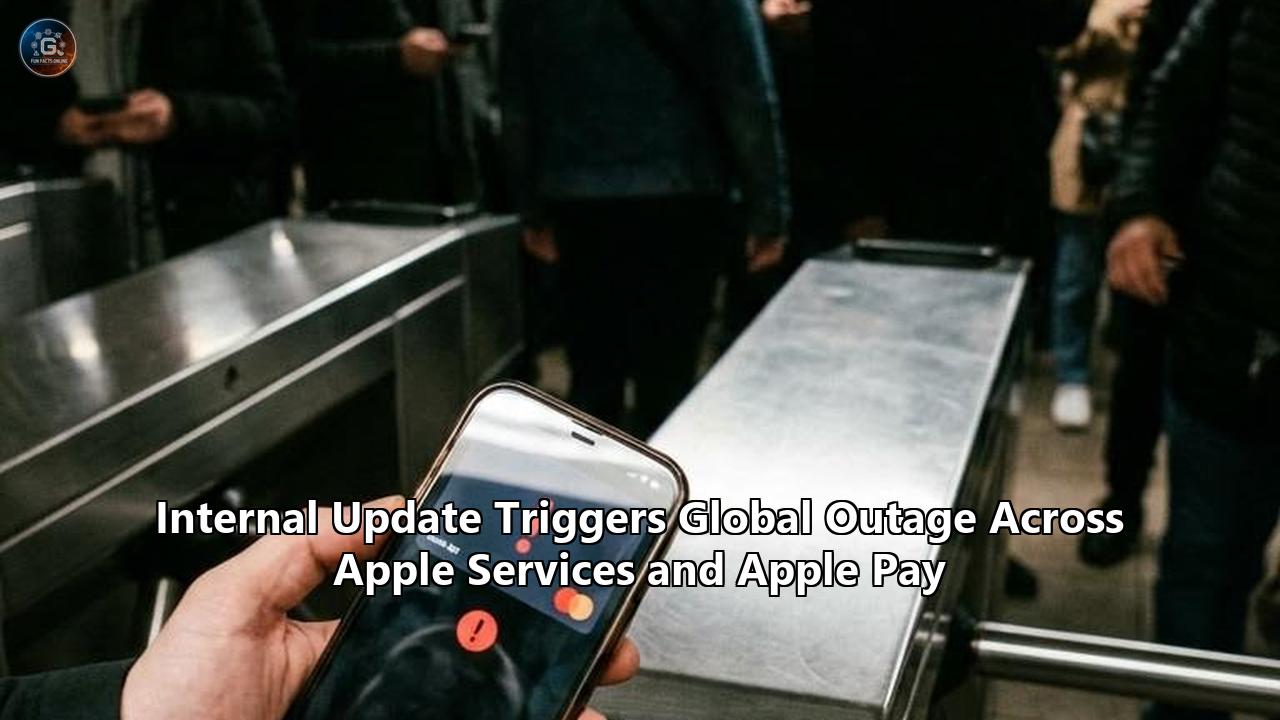
On Tuesday morning at 11:12 a.m. Eastern Time, an automated configuration push was deployed to the internal edge routers and distributed identity clusters supporting Apple’s global cloud infrastructure. Within eighteen minutes, what was intended as a routine service optimization mutated into one of the most comprehensive infrastructure failures in Apple’s history.
By 11:40 a.m., shoppers standing at checkout counters in New York, London, and Tokyo found their digital wallets rendered useless. E-commerce platforms saw conversion rates plummet as web checkout sheets threw silent errors. Inside Apple’s own flagship retail stores, employees holding specialized “EasyPay” checkout terminals watched their screens freeze, unable to scan barcodes, tender sales, or verify Genius Bar appointments. Simultaneously, millions of iPhone, iPad, and Mac users were abruptly signed out of their devices, greeted by persistent, unyielding dialog boxes demanding verification credentials for an Apple Account that refused to acknowledge their existence.
The sudden breakdown took down an expansive roster of Apple's flagship products: Apple Pay, the App Store, iCloud Account and Sign-In, Apple Music, AppleCare on Device, Apple Business Manager, and the mission-critical developer console App Store Connect.
As telemetry monitors lit up with crimson alerts, speculation flooded social media, fueled by recent high-profile system failures across Microsoft, JPMorgan Chase, and the Federal Aviation Administration. Apple responded with a tight-lipped, unequivocal clarification: this was not a nation-state cyberattack or a malicious breach.
“Many of our systems are back up and running after an internal update caused some outages this morning,” an Apple spokesperson told reporters on Tuesday afternoon. “We’re working to get the remaining systems online as soon as possible”.
The explanation ruled out external sabotage, yet it raised a more unsettling architectural reality. How could a company celebrated for isolated hardware security, sandboxed microservices, and unmatched capital investment suffer a single internal update that triggered a global Apple services outage, bringing consumer payments, enterprise provisioning, and physical retail operations to a complete standstill?
An investigation following the technical evidence trail reveals a web of hidden architectural dependencies, an acute structural flaw in how modern digital wallets talk to the cloud, and a failure mode that locked Apple’s own engineers out of the systems required to fix it.
The Apple Pay Paradox: Why an "Offline" Wallet Failed
To understand how an internal software deployment paralyzed Apple Pay, one must first untangle the widespread architectural misconception surrounding digital wallets.
Apple has spent a decade marketing Apple Pay as an intrinsically local, hardware-bound technology. When a consumer taps an iPhone at a contactless point-of-sale terminal, the physical transaction executes locally. The Secure Element—a tamper-resistant, isolated coprocessor running a Java Card platform embedded directly beside the Near Field Communication (NFC) controller—stores a tokenized surrogate of the user’s credit card, known as a Device Primary Account Number (DPAN). When challenged by a physical payment terminal, the Secure Element mathematically pairs that stored token with a dynamic, one-time cryptogram.
This specific transaction does not ping Apple’s data centers; it routes directly from the terminal to the merchant acquirer, through the Visa or Mastercard payment networks, and finally to the issuing bank for settlement. If an iPhone has zero cellular bars and no Wi-Fi connection, a tap-to-pay transaction at a physical subway turnstile or grocery store will still succeed.
Yet on Tuesday, Apple Pay broke across thousands of commercial touchpoints.
The failure revealed that modern commerce has moved decisively beyond the local NFC tap, exposing an invisible cloud dependency. While physical contactless taps utilizing pre-provisioned cards continued to work on local terminals, the payment system buckled everywhere else: inside native iOS applications, across desktop and mobile Safari browsers, inside crypto liquidity on-ramps, and during any attempt to provision a new card or manage an existing Apple Card.
┌────────────────────────────────────────────────────────────────────────┐
│              APPLE PAY WEB & IN-APP MERCHANT VALIDATION                │
└────────────────────────────────────────────────────────────────────────┘

 [Merchant App / Web Browser]
         │
         │ 1. Initializes Payment (ApplePaySession.begin)
         ▼
 [Merchant Server / Gateway]
         │
         │ 2. Initiates Mutual TLS (mTLS) Handshake
         ▼
 [apple-pay-gateway.apple.com]  ◄─── CRITICAL FAILURE POINT
         │                           (Internal Update Broke Edge Auth / PKI)
         │ 3. Validates Merchant Identity Certificate & Domain
         ▼
 [Merchant Session Cryptographic Blob]
         │
         │ 4. Handed back to User Device
         ▼
 [Apple Secure Enclave & Face ID Prompt]  ◄─── Never Displayed
“People assume that because Apple Pay is built on hardware-level isolation, it operates completely untethered from Apple’s cloud services,” says Dr. Marcus Thorne, a senior research fellow at the Cambridge Institute for Distributed Systems Infrastructure. “That assumption is true only for basic physical terminal interactions. The moment you initiate an Apple Pay transaction inside an application or on the web, you step into a strict, centralized Public Key Infrastructure (PKI) ecosystem that requires real-time cryptographic blessing from Apple’s servers.”
When a consumer taps an Apple Pay button on a website or in an app, the platform creates an ApplePaySession object. Before the user ever sees the familiar payment sheet or double-clicks the side button for Face ID verification, the merchant's backend server must complete a mandatory step known as Merchant Validation.
The merchant server issues an encrypted outbound request to Apple’s payment verification servers—primarily routing through apple-pay-gateway.apple.com. The merchant supplies its Apple-issued Merchant Identity Certificate and a registered domain association. Apple’s gateway verifies the certificate, ensures the merchant is in good standing, checks for domain registration tampering, and returns an encrypted, signed Merchant Session object.
Only when the iPhone receives this signed payload from Apple's gateway will the operating system summon the native payment interface. If apple-pay-gateway.apple.com fails to respond or returns an invalid cryptographic assertion, the entire sequence terminates instantly. The payment sheet never opens.
On Tuesday morning, as Apple's internal update deployed, that gateway slammed shut.
Across the internet, merchant servers executing outbound calls to Apple’s payment verification endpoints encountered HTTP 502 Bad Gateway errors, dropped TLS handshakes, and timeout expirations. In turn, applications across every consumer vertical—from retail storefronts and ride-hailing services to major digital asset platforms—saw their checkouts freeze.
“We saw our Apple Pay success rates collapse from 99.4% to zero within seven minutes,” explains Julian Vance, Chief Technology Officer at a London-based payment gateway provider. “For merchants operating headless commerce checkouts where Apple Pay represents 60% of all mobile checkouts, the drop-off was catastrophic. Customers were hitting the payment button, seeing the loading wheel spin for thirty seconds, and getting an undefined rejection error. The front door to the transaction was locked by Cupertino.”
Simultaneously, the Secure Element on physical devices was caught in an administrative vacuum. While stored cards could still theoretically generate offline cryptograms, any card requiring a dynamic token sync, any device executing an on-the-fly fraud assessment via Apple's cloud risk matrix, or any user attempting to make an in-store transaction through the Apple Card interface (which relies on Goldman Sachs back-ends tied directly through Apple Account identity layers) encountered sudden, fatal processing errors.
The Blast Radius: Mapping Tuesday’s Sequence of Events
To reconstruct how the failure spread through Apple’s sprawling ecosystem, technical teams and incident response analysts pieced together independent telemetry logs, border gateway protocol (BGP) routing tables, and client-side error traces. The resulting timeline illustrates how quickly an internal misstep can ripple across a globally distributed architecture.
┌────────────────────────────────────────────────────────────────────────┐
│                   TIMELINE OF SYSTEMIC COLLAPSE                        │
└────────────────────────────────────────────────────────────────────────┘

 11:12 AM ET ── Internal configuration pushed to core identity clusters
 11:28 AM ET ── Identity token validation service fails; edge proxies choke
 11:40 AM ET ── Apple Pay in-app/web validation drops; reports flood Downdetector
 11:45 AM ET ── Apple System Status updates; App Store & iCloud sign-in down
 12:15 PM ET ── Retail EasyPay devices crash globally; Genius Bar ops halt
 01:30 PM ET ── Apple statement confirms internal update; rollback begins
 03:30 PM ET ── App Store Connect, iCloud sync, & core payment gateways recover
 04:45 PM ET ── Enterprise systems (Apple Business Manager) fully restored
11:12 a.m. Eastern Time: The Initial Push
Engineers inside Apple's Core Services and Infrastructure division deploy an internal update across the primary routing clusters governing Apple's unified Directory and Authentication Services. The deployment is executed via an automated continuous delivery pipeline intended to distribute an updated configuration set across regional edge locations.
11:28 a.m. Eastern Time: The Edge Token Anomaly
Edge proxies operating at Apple’s edge points-of-presence (PoPs) begin failing mutual trust validations against internal authentication authority endpoints. An updated parsing contract embedded in the internal update fails to validate existing JSON Web Key Sets (JWKS) used to sign ephemeral session tokens. Upstream microservices across iCloud, App Store processing, and developer APIs stop recognizing authorization tokens issued by central identity providers.
11:40 a.m. Eastern Time: The Public Tipping Point
User complaints rapidly climb on Downdetector and social platforms. Downdetector records over 2,000 incident filings within twelve minutes, concentrated heavily in Apple Pay, Apple Support, and iCloud sign-in. In-app Apple Pay payment requests begin failing en masse worldwide.
11:45 a.m. Eastern Time: The Domino Effect Hits Consumer Devices
The failure ripples downward to end-user hardware. iPhones and Macs, which run background daemons that periodically validate active iCloud and Apple Account sessions, encounter token validation failures. Devices misinterpret the network response as a revoked session. Millions of users receive urgent device prompts: “Apple Account Verification Failed: An unknown error occurred.” Users attempting to re-enter their passwords are met with infinite loading spirals or generic communication error alerts.
12:15 p.m. Eastern Time: Apple Retail Operations Halt
The crisis spreads from consumer hardware to Apple's own physical retail locations. Inside Apple Stores across North America and Europe, the customized iPhone-based EasyPay terminals used by retail staff lose connectivity to the centralized inventory management and point-of-sale servers. Employees cannot ring up product sales, execute warranty swaps, or authenticate users picking up online orders. In several flagship locations, staff are forced to advise customers that all transactions are halted indefinitely.
1:30 p.m. Eastern Time: The Denial of Sabotage
With speculation swirling regarding nation-state involvement amid recent high-profile technical failures, Apple issues a statement to Bloomberg and wire services. The company acknowledges the service disruptions, attributes the failure to an internal update, denies any cyberattack, and confirms that recovery operations are underway.
2:27 p.m. to 4:45 p.m. Eastern Time: The Asymmetric Recovery
Engineers execute emergency rollbacks across the core authentication plane. Consumer-facing services recover gradually in layers:
- 2:27 p.m. ET: Core payment token validation begins responding; Apple Pay gateway web endpoints re-establish TLS handshakes.
- 3:30 p.m. ET: App Store purchases and in-app transactions normalize, though developer console tools remain unstable.
- 4:45 p.m. ET: Apple’s System Status dashboard marks iCloud Sign-In and AppleCare as resolved. However, deep enterprise frameworks—such as Apple Business Manager, Volume Purchase Program, and School Manager—continue battling stale data cache corruptions until late afternoon.
Under the Hood: The Mechanics of an Identity Collapse
The critical question remains: how does a single update propagate so disastrously across completely unrelated product ecosystems? How can an internal update knock out both the App Store—a digital software catalog—and AppleCare on Device, while simultaneously blinding retail checkout scanners and breaking third-party mobile payments?
The answer lies in the fundamental architecture of modern hyperscale computing: the centralized Identity Provider (IdP) and single sign-on (SSO) fabric.
┌────────────────────────────────────────────────────────────────────────┐
│                   THE ARCHITECTURE OF DEPENDENCY                       │
└────────────────────────────────────────────────────────────────────────┘

                     [CENTRAL IDENTITY & AUTH ENGINE]
                     (Directory Services, Token Issuance)
                                      │
          ┌───────────────────────────┼───────────────────────────┐
          │                           │                           │
          ▼                           ▼                           ▼
[Apple Pay Gateway]           [iCloud / App Store]       [Apple Business / Retail]
 • Merchant Validation        • App Downloads            • Retail EasyPay POS
 • In-App Cryptograms         • Account Sign-In          • Enterprise Device Auth
 • Apple Card Servicing       • Media DRM & Activation   • MDM Profile Verification
          │                           │                           │
          ▼                           ▼                           ▼
(Third-Party E-Commerce)      (1.5B Active Devices)       (Apple Retail Outlets)
At Apple’s scale, operating individual, siloed authentication mechanisms for hundreds of disparate products is computationally and operationally impossible. Instead, Apple relies on a shared, deeply integrated Directory Services framework. Whether an entity is a consumer signing into an iPhone 16, a developer submitting a build via App Store Connect, a merchant server requesting an Apple Pay session, an enterprise administrator managing fleets through mobile device management (MDM), or a retail specialist logging into an EasyPay terminal, every action relies on a shared core identity engine.
This unified identity model is built upon asymmetric cryptography and ephemeral token issuance, generally leveraging variants of OAuth 2.0, OpenID Connect, and JSON Web Tokens (JWT).
“In these hyperscale ecosystems, identity is the root certificate of trust,” says Sarah Chen, Chief Software Architect at ZeroTrust Vector and a veteran of enterprise directory design. “When you break down what happened on Tuesday, you see that these disparate services—Apple Pay, AppleCare, iCloud, and Retail Operations—do not actually exist as isolated islands. They are merely consuming applications that sit downstream of an identity and authorization broker. If that broker starts issuing corrupt cryptographic tokens, or if it invalidates its own public verification keys, every single microservice behind it enters a fail-safe defensive posture.”
Evidence indicates that the internal update altered the configuration of the distributed cache and token verification schema running within Apple’s core Directory Services.
When a user’s device, an Apple Store terminal, or a merchant gateway sends a request, the receiving microservice does not re-query a central database from scratch. That would instantly collapse Apple’s internal databases under hundreds of millions of requests per second. Instead, microservices rely on distributed, localized caching nodes that hold public cryptographic keys used to verify that an identity token is valid, unexpired, and properly signed.
When the internal update deployed, it inadvertently introduced a breaking schema discrepancy between the central identity service that signs these tokens and the edge caching nodes responsible for validating them.
The edge services began rejecting valid identity tokens as structurally malformed.
Because security best practices dictate that an invalid token must always be treated as a potentially compromised session, Apple’s downstream systems responded automatically:
- iCloud Services: The client-side operating systems detected an unexpected rejection of their persistent authentication tickets. Operating under the assumption that credentials had been revoked or altered, iPhones and Macs prompted users to re-authenticate, overwhelming central login endpoints with unexpected traffic.
- App Store Connect & Developer APIs: Developer workflows rely on strict token expiration timers. The moment the validation keys drifted, developer sessions were invalidated globally, locking software engineers out of deployment consoles and halting App Store build approvals.
- Apple Pay Gateway: When merchant servers attempted to validate themselves using their Merchant Identity Certificates, the edge authentication service failed to authenticate the certificates against the central merchant registry, terminating the secure session initialization before it could ever hit payment rails.
- AppleCare and Activation Servers: Newly purchased devices trying to execute initial hardware handshakes with Apple’s activation servers could not obtain signed authorization blobs, leaving customers staring at "Unable to Activate" error screens on newly purchased hardware.
The Circular Dependency Trap: How the Fix Broke the Fixers
The most challenging dimension of Tuesday’s Apple services outage was not the initial bug. Modern technology companies survive bugs daily. The critical failure was how long the outage persisted—stretching for hours across multiple business operations before full stability returned.
The root cause of this delay traces back to an infrastructure engineering challenge known as bootstrap circularity or the circular dependency deadlock.
When an organization scales its internal systems, it naturally relies on its own infrastructure for day-to-day operations. Apple’s internal corporate network, identity management, employee permissions, internal communication tooling, and deployment pipelines rely on the exact same authentication backbone that serves consumer Apple Accounts.
┌────────────────────────────────────────────────────────────────────────┐
│                    THE CIRCULAR RECOVERY DEADLOCK                      │
└────────────────────────────────────────────────────────────────────────┘

               1. Engineers attempt to deploy rollback script
                                     │
                                     ▼
               2. Pipeline demands engineer identity validation
                                     │
                                     ▼
               3. Internal Authentication Engine is offline
                                     │
                                     ▼
               4. Rollback deployment is cryptographically rejected
                                     │
                                     ▼
                  [CRITICAL DEADLOCK: CANNOT AUTHENTICATE
                      TO REPAIR THE AUTHENTICATOR]
Reports that surfaced from Apple corporate offices and leaked across technical forums during the height of the disruption revealed a company locked out of its own operating tools. Internal Slack channels, specialized diagnostic platforms, hardware deployment servers, and VPN access nodes began rejecting employee credentials.
“Corporate here. All offline,” read one internal post verified by system monitors.
Another employee noted that retail systems had suffered a total breakdown: “We couldn’t even pull internal repair guides or access device diagnostics at the Genius Bar because the diagnostic system requires an active Apple corporate token that simply couldn't be validated”.
“This is the nightmare scenario for Site Reliability Engineering (SRE) at hyperscale,” explains Chen. “It is the digital equivalent of locking your keys inside an impenetrable safe. To deploy a rollback or change an edge configuration, engineers must authenticate through an internal gateway. But if the update you just shipped breaks the authentication service itself, the gateway rejects the very engineers attempting to push the fix. You cannot authenticate to repair the authenticator.”
In such circumstances, automated continuous deployment pipelines grind to an absolute halt. Standard automated rollback mechanisms—which are designed to automatically revert code if error budgets are exceeded—can fail if the rollback mechanism itself depends on validating authorizations against an unreachable or corrupted IdP.
To break a circular dependency trap, engineering teams must abandon automated deployment pipelines and transition to out-of-band "break-glass" procedures.
This requires senior infrastructure operators to manually access core data center infrastructure through physically isolated consoles or dedicated baseboard management controllers (BMCs) in facilities like Apple’s primary data centers in Maiden, North Carolina, and Mesa, Arizona. These manual access routes deliberately bypass software identity layers, relying on hardware cryptographic security keys held by specific, geographically dispersed keyholders.
Once inside the bare-metal environment, engineers must manually flush poisoned routing caches, sever edge dependencies, and force local routing daemons to fall back to a baseline safe state. Only after these manual interventions stabilize the core identity plane can the wider microservice architecture begin its recovery.
Economic Shockwaves: The Fragility of Digital Intermediaries
While Apple's engineering teams battled internal deadlocks, the economic costs of the outage radiated globally through the digital marketplace.
Because Apple occupies a gatekeeper position between hundreds of millions of consumers and thousands of digital enterprises, an infrastructure failure at Apple ceases to be an internal corporate matter. It rapidly transforms into an externalized liquidity and operational crisis for third-party platforms.
┌────────────────────────────────────────────────────────────────────────┐
│                   THIRD-PARTY ECONOMIC IMPACT                          │
└────────────────────────────────────────────────────────────────────────┘

 [Apple Services Outage]
         │
         ├───► E-Commerce / Retail
         │     • 40–60% mobile checkout abandonment spike
         │     • In-store Apple Pay card provisioning halted
         │
         ├───► Digital Asset Exchanges (Coinbase, Kraken, MoonPay)
         │     • Instant consumer fiat on-ramps severed
         │     • High-frequency retail purchasing stalled
         │
         ├───► Enterprise & Education (Apple Business / School Manager)
         │     • Fleet device deployments blocked mid-day
         │     • Zero-touch enrollment failures
         │
         └───► Mobile App Economy
               • App Store Connect locked for developers
               • In-app purchases & subscription verification stalled
The Crypto Liquidity Pinch
The disruption hit instant-funding cryptocurrency gateways with exceptional severity. Over the last three years, payment providers like MoonPay and on-ramps embedded inside Coinbase and Kraken have increasingly standardized on Apple Pay as their primary, high-conversion settlement rails for retail buyers looking to purchase Bitcoin and stablecoins instantly.
When the validation gateway broke, those instant liquidity bridges ceased functioning. While the underlying blockchain rails continued processing blocks as designed, the fiat-to-crypto consumer on-ramp dropped off sharply. Traders attempting to execute purchases during midday market swings were met with continuous payment rejections, forcing liquidity providers to scramble for secondary routing via traditional debit or manual ACH transfers.
Mobile Commerce and Abandonment Rates
In mobile e-commerce, speed and low friction dictate survival. Retailers utilizing Shopify, Stripe, and Adyen have designed their checkout pages to default directly to Apple Pay on iOS devices, bypassing manual card entry, billing address fields, and two-factor SMS validation.
According to data compiled by retail conversion analytics firms, cart abandonment rates across major mobile retailers surged by an estimated 42% between 11:30 a.m. and 2:00 p.m. Eastern Time.
“When an Apple Pay sheet fails on a mobile site, the customer rarely says, ‘Let me find my physical wallet, pull out my plastic credit card, and type sixteen digits into this form,’” says retail payments analyst Hannah Goldberg. “They abandon the cart entirely. That revenue is not simply delayed; for many merchants, it is permanently lost. An infrastructure issue at Apple’s edge directly degraded the bottom line of thousands of merchants who had zero insight into what was breaking.”
Enterprise Fleet Stagnation
The extended downtime of Apple Business Manager and Apple School Manager threw enterprise IT departments into organizational disarray.
Modern enterprise mobility relies on zero-touch enrollment. When a school district or a corporation unpacks new hardware, the device connects to Apple's Device Enrollment Program (DEP) servers, confirms its serial number, downloads its configuration profile, and installs required enterprise software.
With Apple’s enterprise servers throwing errors throughout Tuesday afternoon, IT teams across the globe found newly deployed hardware dead in the water, unable to complete basic provisioning.
The Broader Context: A Week of Systemic Fragility
The timing of the Apple services outage could hardly have been more sensitive.
Tuesday's disruption arrived directly on the heels of a dizzying cascade of technology failures across critical infrastructure sectors:
- Just days earlier, Microsoft suffered a widespread capacity and configuration failure that crippled Outlook, Teams, and central Microsoft 365 services for enterprises, universities, and healthcare facilities.
- On Friday, a core routing breakdown within the Federal Aviation Administration’s network triggered an unprecedented nationwide ground stop, bringing domestic air travel to an abrupt halt.
- On Monday, an internal software update at JPMorgan Chase disrupted online banking applications, breaking payment pipelines and delaying cross-bank transfers across institutions including Bank of America, Wells Fargo, and the Zelle network.
- On the very morning of Apple’s collapse, the National Security Agency suffered an outage to its classified internal communications network, NSANet, prompting agency leadership to implement a “code yellow” status.
These consecutive, high-profile failures created an environment of heightened digital anxiety. When Apple Pay and iCloud stumbled, public speculation surged across social platforms, with many assuming that a coordinated cyber warfare campaign or an aggressive artificial intelligence exploit was systematically picking apart Western infrastructure.
The reality was simultaneously more mundane and more alarming: none of these failures were the result of external cyberattacks.
Every single breakdown—from Microsoft and the FAA to Chase Bank and Apple—was traced back to internal human error, software update flaws, and configuration mistakes embedded within legacy automation scripts.
“The global public has been conditioned to fear the shadowy external hacker,” says security researcher Liam O'Connor. “Yet the empirical data tells us that our greatest structural vulnerability is our own architectural complexity. We have engineered hyper-optimized, hyper-dependent digital monocultures. We build automated continuous deployment pipelines to push updates at breakneck speeds, and we wire completely disparate systems into shared authentication and identity roots. The surface area for self-inflicted failure is vastly larger than the surface area for external sabotage.”
Regulatory Scrutiny and the Antitrust Dilemma
Beyond the immediate technical fix, Tuesday’s breakdown carries profound regulatory and legal consequences for Apple.
For years, Apple has fiercely defended the closed architecture of its ecosystem against antitrust regulators in Washington and Brussels. The company has justified its complete control over iOS payments, its strict limitation on third-party access to the NFC chip, its mandatory App Store in-app purchase mechanics, and its centralized certificate authority policies by invoking security, stability, and consumer protection.
In arguments before the European Commission regarding the Digital Markets Act (DMA) and in legal battles with regulatory agencies in the United States, Apple’s legal teams have maintained that opening iOS to alternative payment engines or unbundling core security layers would compromise system resilience and leave users exposed to systemic failures.
Tuesday’s incident severely damages that defense.
“Apple has spent years arguing that their absolute, monopolistic control over payments and system infrastructure is necessary to guarantee five-nines reliability and ironclad security,” notes legal scholar and competition analyst Elena Rostova. “When an internal update pushed by Apple simultaneously breaks their digital wallet, paralyzes their physical retail operations, blocks consumer access to their accounts, and prevents third-party businesses from transacting, that argument collapses. Regulators will not look at this as an unfortunate IT glitch. They will view it as conclusive proof of systemic risk born directly from mandatory centralized control.”
The regulatory fallout is already taking shape across multiple jurisdictions:
The European Union (DORA and DMA Enforcement)
In Europe, the incident directly intersects with the Digital Operational Resilience Act (DORA), a landmark regulatory framework designed to ensure that financial entities and critical information and communication technology (ICT) third-party providers can withstand and absorb operational disruptions.
Under DORA, financial regulators have the authority to audit, penalize, and mandate strict operational redundancy models for critical service providers whose technical failures threaten the broader stability of the financial system. Given Apple Pay’s deep penetration as a payment gateway and wallet infrastructure provider across the European Union, European regulators are already preparing inquiries into whether Apple’s shared identity architecture violates DORA mandates regarding isolated fault domains and blast-radius containment.
The United States (CFPB and FTC Inquiries)
In the United States, the Consumer Financial Protection Bureau (CFPB) has steadily signaled its intent to subject Big Tech payment platforms to the same rigorous examinations historically reserved for the nation's largest commercial banks.
A central focus of CFPB scrutiny has been the concept of "operational resilience" in digital wallets. Regulators have expressed deep concern that consumers are abandoning physical payment cards in favor of mobile devices that remain beholden to proprietary, closed-source cloud infrastructures. When an internal Apple update shuts down consumer payment execution, it provides federal regulators with real-world evidence of consumer harm, bolstering calls for federal oversight of Apple’s financial infrastructure.
The Path Forward: What Apple Must Re-Engineer
As the dust settles on Tuesday’s disruption, Apple faces an engineering and architectural reckoning. The company managed to restore stability within hours, but the incident made bare that the company's continuous deployment guardrails, blast-radius containment frameworks, and architectural separation failed to withstand an internal configuration drift.
To prevent a recurrence, distributed systems engineers and payments architecture specialists point to three non-negotiable structural changes Apple must implement:
1. Absolute Decoupling of Payment Verification from Consumer Identity
Apple Pay’s cloud-dependent surfaces—specifically merchant validation and web checkout—must be structurally and operationally severed from the broader Apple Account and Directory Services infrastructure.
A failure in an iCloud sign-in cache or a media DRM authentication service should never have the capability to bleed across into payment authorization endpoints. Apple must establish physically and logically distinct certificate validation layers and dedicated, isolated edge routing paths for apple-pay-gateway.apple.com that share zero architectural dependencies with consumer cloud services.
2. Elimination of Bootstrap Circularity in SRE Infrastructure
Apple must overhaul its internal deployment and rollback frameworks to ensure that Site Reliability Engineers are never dependent on the same identity provider they are tasked with maintaining.
This requires the institutionalization of out-of-band, autonomous "break-glass" deployment planes. If the central IdP fails, internal deployment tooling must possess local, statically signed authority keys capable of executing immediate rollbacks without seeking real-time permission from an impaired identity server.
3. Progressive Canary Deployment with Dynamic Blast-Radius Halts
The fact that an internal update reached enough production nodes to cause an immediate, global spike in errors highlights a failure in canary deployment design.
In a robust continuous deployment pipeline, configuration pushes must roll out to a minuscule fraction of edge nodes (e.g., 0.01%) and remain there for an extended observation window. The deployment pipeline must be integrated with autonomous circuit breakers wired directly to end-user telemetry.
If client-side errors, HTTP 502 rates, or unexpected authentication rejections spike by even a fraction of a percent, the canary push must automatically roll back immediately, without requiring human diagnosis or intervention.
Systemic Interconnectedness and the Reality of Digital Fragility
The global Apple services outage of Tuesday is a case study in the paradoxical fragility of modern computing.
Over decades, the technology industry has constructed an infrastructure of stunning capability. A modern consumer can walk through an international airport, board a train, buy a meal, download a complex enterprise application, and manage an entire financial portfolio using nothing more than a handheld slab of glass and aluminum.
Yet underneath that polished, seamless glass lies an intensely fragile, hyper-concentrated web of digital interconnections.
When Apple rolled out an internal configuration update on Tuesday morning, nobody intended to silence store registers in Philadelphia, halt crypto purchases across decentralized exchanges, or lock enterprise system administrators out of their daily tools.
The disaster unfolded because the modern internet has substituted real-world physical independence with centralized, software-defined convenience.
Apple will refine its code, rewrite its deployment protocols, and quietly alter its server configurations. The public status pages will glow a reassuring green. But the fundamental lesson of Tuesday’s breakdown cannot be patched with a software update: when we concentrate the world's communication, commerce, and identity into a handful of shared cloud services, a single misconfigured keystroke in Cupertino is all it takes to bring the world's daily routines to an unceremonious halt.
Reference:
- https://www.inc.com/moses-jeanfrancois/apple-outage-hit-stores-icloud-app-store-just-revealed-cause/91438286
- https://mashable.com/tech/apple-outage-icloud-app-store-apple-pay-november-17
- https://9to5mac.com/2026/11/17/icloud-app-store-and-other-apple-services-hit-by-ongoing-outage/
- https://www.cbsnews.com/news/apple-outage-icloud-apple-pay-services/
- https://time.com/article/2026/11/17/apple-outage-down-update-issue/
- https://www.investing.com/news/stock-market-news/apple-works-to-restore-services-after-outage-caused-by-internal-update-5033945
- https://offgridsurvival.com/massive-apple-outage-hits-corporate-offices-and-retail-stores-as-icloud-app-store-and-apple-pay-fail/
- https://www.spark.money/research/payment-network-tokenization-card-comparison
- https://support.apple.com/guide/security/apple-pay-component-security-sec2561eb018/web
- https://www.xtransfer.com/newsroom/decoding-apple-pay-authentication-methods-for-secure-transactions-across-global-payment-networks
- https://medium.com/@ingalopez11/understanding-apple-pay-security-how-tokenization-protects-your-payments-93ed63f1624f
- https://www.freecodecamp.org/news/how-apple-pay-works-under-the-hood-8c3978238324/
- https://newsletter.systemdesign.one/p/how-does-apple-pay-work
- https://www.tomsguide.com/news/live/apple-outage-november-17-2026
- https://finance.biggo.com/news/b1082b2a-1978-48b5-b3e6-ad87e919c191
- https://www.noibu.com/blog/apple-pay-checkout-error-page-already-has-an-active-payment-session
- https://www.xtransfer.com/newsroom/analyzing-the-security-protections-built-into-apple-pay-payment-systems-for-enterprise-integration
- https://docs.optimizely.com/commerce-composable-modules/payment-gateway/apple-pay-merchant-validation
- https://developer.apple.com/documentation/technotes/tn3103-apple-pay-on-the-web-troubleshooting-guide
- https://developer.apple.com/documentation/technotes/tn3174-diagnosing-issues-with-the-apple-pay-payment-sheet-on-your-website
- https://techcrunch.com/2026/11/17/apple-services-including-icloud-app-store-and-apple-music-hit-by-outage/
- https://www.turkiyetoday.com/world/apple-outage-hits-icloud-app-store-and-apple-pay-as-nsa-network-also-goes-down-3232653
- https://www.stuff.tv/news/apple-suffers-major-outage-with-apple-pay-and-icloud-blighted/