A comprehensive genetic analysis published in Nature Ecology & Evolution by researchers at the Max Planck Institute for Marine Microbiology revealed that more than 66 animal species across nine distinct phyla produce endogenous enzymes that actively degrade and digest polyhydroxyalkanoates (PHAs)—a class of naturally occurring biopolymers. The investigation, led by marine microbiologists Nicole Dubilier and Caroline Zeidler, demonstrated that animals as evolutionarily divergent as mouthless marine worms (Olavius algarvensis), sponges, starfish, earthworms, and springtails carry functional depolymerases capable of breaking down biological plastics.
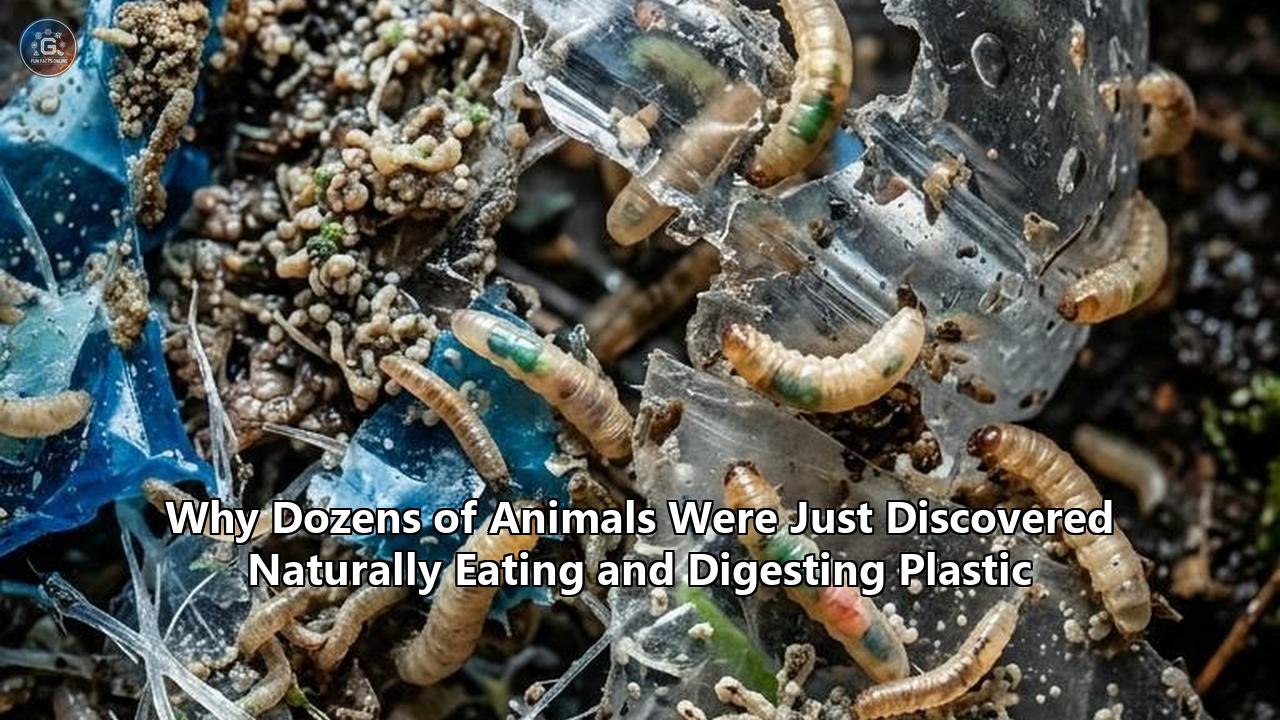
This discovery arrived alongside a surge of laboratory confirmations from entomology and biochemistry departments worldwide. Over the past 24 months, research teams from the International Centre of Insect Physiology and Ecology (ICIPE) in Nairobi to structural biology laboratories in Madrid and Stanford have confirmed that over two dozen insect species—including the larvae of Alphitobius diaperinus (the lesser mealworm), Tenebrio molitor (the yellow mealworm), Zophobas morio (the superworm), and Galleria mellonella (the greater wax moth)—can chew, ingest, depolymerize, and metabolize synthetic petroleum-derived plastics such as polyethylene (PE), polystyrene (PS), and polyurethane (PUR).
For decades, biological orthodoxy maintained that plastic breakdown was the exclusive domain of specialized single-celled microorganisms or slow abiotic weathering. Mainstream media reports often frame these animal discoveries as miraculous biological curiosities or propose that swarms of insects might soon consume the 400 million metric tons of plastic waste produced annually.
The underlying reality uncovered in laboratory cleanrooms and genomic databases reveals a completely different story: animals eating plastic is not an unprecedented evolutionary pivot to human pollution, but the activation of an ancient, highly conserved biochemical toolkit. Nature engineered complex polymers hundreds of millions of years before petrochemical refineries emerged, and animals evolved the metabolic machinery to consume them long ago.
Understanding the mechanisms, limits, and industrial realities behind these discoveries requires looking deep inside the gut physiology, protein crystallography, and ecotoxicology that headline coverage routinely overlooks.
┌─────────────────────────────────────────────────────────────────────────────┐
│                 METABOLIC PATHWAYS OF PLASTIC DECONSTRUCTION                │
├─────────────────────────────────────────────────────────────────────────────┤
│                                                                             │
│  [ Synthetic / Natural Polymers: PE, PS, PHA, PUR ]                         │
│                           │                                                 │
│                           ▼                                                 │
│       1. MECHANICAL COMMINUTION & BUCCAL OXIDATION                          │
│          • Mandibular shearing reduces polymer to micro/nanoparticles       │
│          • Salivary oxidases (Hexamerins: Demetra, Ceres, Cora)             │
│          • Introduction of polar functional groups (C=O, -OH)               │
│                           │                                                 │
│                           ▼                                                 │
│       2. INTESTINAL EMULSIFICATION & MICROBIAL CLEAVAGE                     │
│          • Biosurfactants decrease polymer surface hydrophobicity           │
│          • Bacterial consortia (Citrobacter, Kosakonia, Pseudomonas)        │
│          • Enzymatic hydrolysis / C-C backbone scission                     │
│                           │                                                 │
│                           ▼                                                 │
│       3. CELLULAR ASSIMILATION & MINERALISATION                             │
│          • Intermediates: Styrene monomers, fatty acids, 3-hydroxybutyrate  │
│          • β-oxidation and TCA cycle integration                            │
│          • End products: CO₂ expiration (40-50%), Biomass, Frass excretion  │
│                                                                             │
└─────────────────────────────────────────────────────────────────────────────┘
The Mechanical vs. Metabolic Divide: Redefining Ingestion
To grasp what researchers have actually confirmed, it is necessary to clarify a critical scientific distinction: the difference between passive, fatal plastic ingestion and active enzymatic digestion.
Marine biology literature has documented that roughly 1,300 wildlife species—from Laysan albatrosses and loggerhead sea turtles to pelagic copepods—routinely ingest synthetic debris. In these organisms, plastic ingestion is mechanical, non-nutritive, and often lethal. A 2025 multi-institution autopsy study published in the Proceedings of the National Academy of Sciences established that as little as three sugar cubes' worth of macroplastic causes fatal intestinal perforation or gut impaction in seabirds. In zooplankton, such as western English Channel copepods, microplastics pass through the gut in roughly 40 minutes, packaged into dense fecal pellets without undergoing any chemical modification.
                     INGESTION vs. DIGESTION

     PASSIVE INGESTION                      ACTIVE DIGESTION
 (Seabirds, Turtles, Fish)            (Larvae, Oligochaetes, Sponges)
┌─────────────────────────┐          ┌─────────────────────────────┐
│ • Accidental consumption│          │ • Targeted feeding behavior │
│ • Zero chemical change  │          │ • Enzymatic depolymerization│
│ • Intestinal blockage   │          │ • Isotopic carbon tracking  │
│ • Toxicity & starvation │          │ • Respiration of 13CO₂      │
│ • Mechanical egestion   │          │ • Energy/lipid assimilation │
└─────────────────────────┘          └─────────────────────────────┘
True digestion requires three precise biochemical benchmarks:
- Depolymerization: Long, high-molecular-weight polymer chains must be cleaved into shorter oligomers and monomers.
- Chemical modification: Functional groups such as carbonyls, esters, or hydroxyls must be introduced into previously unreactive hydrocarbon structures.
- Mineralisation and assimilation: The organism must convert the polymer carbon into metabolic energy, cellular tissue, and respired carbon dioxide ($\text{CO}_2$).
When investigating cases of animals eating plastic, researchers verify true digestion by deploying Carbon-13 ($^{13}\text{C}$) isotopic labeling. Synthetic polymers are synthesized with heavy carbon isotopes ($^{13}\text{C}$). When organisms digest this tagged plastic, researchers trace the release of $^{13}\text{CO}_2$ in respirometry chambers and measure the direct incorporation of $^{13}\text{C}$ atoms into the animal’s fatty acid profiles, phospholipid bilayers, and chitinous exoskeleton.
The experiments conducted by teams at Stanford University, Beihang University, and the Max Planck Institute have proven that specific invertebrates satisfy every single criterion of active metabolic digestion.
Inside the Insect Digestion Chamber: Hexamerins and Gut Consortia
The structural resilience of conventional plastics lies in their chemistry. Low-density polyethylene (LDPE) and high-density polyethylene (HDPE) consist of continuous carbon-carbon ($\text{C–C}$) single bonds with high bond dissociation energies (~347 kJ/mol). They lack hydrolyzable chemical functional groups and possess high hydrophobicity, preventing water-soluble digestive enzymes from binding.
Polystyrene (PS) features a bulky, hydrophobic aromatic benzene ring attached to every alternating carbon atom, presenting severe steric hindrance to conventional biological catalysts.
The discovery that insect larvae breach these chemical barriers relies on a two-step process: mechanical mastication coupled with buccal (salivary) oxidation, followed by specialized microbial fermentation in the midgut and hindgut.
       POLYMER CHEMICAL CONFIGURATIONS & ENZYMATIC ATTACK SITES

   Polyethylene (PE)                     Polystyrene (PS)
      H   H   H   H                         H   H   H   H
      │   │   │   │                         │   │   │   │
   ───C ─ C ─ C ─ C───                   ───C ─ C ─ C ─ C───
      │   │   │   │                         │   │   │   │
      H   H   H   H                         H   │   H   │
                                                │       │
   [Non-polar C-C Backbone]                  (C₆H₅)  (C₆H₅)
   Target of Salivary Hexamerins             [Steric Phenyl Rings]
   (Demetra, Ceres, Cora)                    Target of Monooxygenases
1. Salivary Oxidation in Waxworms: The Hexamerin Complex
In 2022 and 2023, a research group led by Federica Bertocchini at the Centro de Investigaciones Biológicas Margarita Salas (CSIC) in Madrid solved a major mechanistic mystery regarding Galleria mellonella. When waxworms chew through polyethylene films, oxidation occurs within hours—long before the polymer reaches the gut microbiome.
Using cryogenic electron microscopy (cryo-EM), the Madrid team analyzed native saliva secretions and identified four primary proteins belonging to the hexamerin/arylphorin superfamily:
- Demetra (NCBI accession: XP_026756396.1)
- Ceres (NCBI accession: XP_026756459.1)
- Cora (NCBI accession: XP_026749149.2)
- Cibeles (NCBI accession: XP_026756460.1)
These proteins assemble into macromolecular complexes that function similarly to multi-copper oxidases and phenoloxidases. When dropped onto unoxidized polyethylene film at room temperature and neutral pH, purified Demetra and Cora introduce carbonyl ($\text{C=O}$) and hydroxyl ($-\text{OH}$) functional groups into the carbon backbone, cleaving high-molecular-weight polymers into short oxidized aliphatic chains within two to four hours. This oxidation breaks the chemical inertness of the plastic, preparing it for subsequent gut assimilation.
2. The Larval Gut Microbiome Reactor
Once masticated and chemically softened, the polymer particles move into the insect gut. In larvae such as Tenebrio molitor, Zophobas atratus, and Alphitobius diaperinus, the gut environment functions like a plug-flow bioreactor. The digestive tract maintains distinct physiochemical gradients:
- High osmotic pressures
- Redox potentials dropping to microaerophilic or anaerobic states in the midgut
- Endogenous biosurfactants that emulsify the hydrophobic plastic shreds, increasing the surface area exposed to bacterial biofilms
Metagenomic sequencing across multiple entomology studies has isolated specific bacterial strains capable of depolymerizing synthetic plastics inside the insect gut:
| Insect Host | Target Polymer | Key Isolated Bacterial Strains | Observed Degradation Efficiency | Key Enzymes Identified |
|---|---|---|---|---|
| Galleria mellonella (Waxworm) | Low-Density Polyethylene (LDPE) | Enterobacter asburiae YT1, Bacillus sp. YP1, Acinetobacter sp. | 30–45% mass reduction in 24–48 hours | Salivary Hexamerins (Demetra, Ceres, Cora), Phenoloxidases |
| Tenebrio molitor (Yellow Mealworm) | Expanded Polystyrene (EPS) | Pseudomonas sp., Citrobacter sp., Kosakonia sp. | ~48% converted to $\text{CO}_2$, ~49% excreted as degraded frass | Serine hydrolases, Esterases, Alkane hydroxylases |
| Zophobas morio (Superworm) | Polystyrene (PS), Polyurethane (PUR) | Pseudomonas aeruginosa, Bacillus cereus, Klebsiella sp. | 4x faster consumption of PS than T. molitor; 11x faster on PUR | Lipases, Carboxylesterases, Laccase-like enzymes |
| Alphitobius diaperinus (Lesser Mealworm) | Polystyrene (PS) | Enterobacteriaceae consortia, Bacillus sp. | 11.7% to 50% degradation over 30 days | Bacterial Alkane monooxygenases, Hydrolases |
In superworms (Zophobas morio), researchers at the University of Queensland utilized metagenomics to reconstruct the microbial metabolic pathways. They showed that once bacterial hydrolases and lipases cleave the polystyrene backbone, the resulting styrene monomers undergo direct ring cleavage or vinyl side-chain oxygenation.
The bacteria convert these toxic monomers into central metabolites (such as phenylacetic acid and acetyl-CoA), which enter the citric acid cycle to generate cellular energy.
      THE BIOCHEMICAL CASCADE OF POLYSTYRENE METABOLISM

   Expanded Polystyrene (PS) Polymer Chain
                    │
                    ▼  [Mandibular Grinding + Biosurfactants]
   Micro-particulate PS (<50 μm)
                    │
                    ▼  [Bacterial Hydrolases & Serine Esterases]
   Styrene Monomers / Oligomers
                    │
                    ▼  [Vinyl Side-Chain Oxygenation Pathway]
   Phenylacetic Acid / Phenylacetyl-CoA
                    │
                    ▼  [Ring Hydroxylation & Cleavage]
   Acetoacetyl-CoA + Succinyl-CoA
                    │
                    ▼  [Tricarboxylic Acid Cycle]
   Cellular Energy (ATP) + Respired CO₂
The Max Planck Discovery: 66 Animal Species and Prehistoric Bioplastics
While insect research has concentrated on synthetic plastics, the Max Planck Institute for Marine Microbiology identified that animal digestion of polymers is an ancient biological phenomenon.
The team began their study by investigating Olavius algarvensis, a two-centimeter-long marine oligochaete worm that inhabits shallow hydrothermal and sulfide-rich marine sediments off the coast of Elba, Italy. Olavius algarvensis lacks a mouth, gut, stomach, and nephridial excretory system. It survives via a symbiotic relationship with extracellular sulfur-oxidizing and sulfate-reducing bacteria embedded directly beneath its outer cuticle.
                     OLAVIUS ALGARVENSIS ANATOMY

   Cross-Section of Epidermal Layer:
   ┌────────────────────────────────────────────────────────┐
   │ Outer Cuticle                                          │
   ├────────────────────────────────────────────────────────┤
   │ Bacterial Symbionts (Filled with dense PHA Granules)   │
   ├────────────────────────────────────────────────────────┤
   │ Epithelial Cells Producing Endogenous PHA Depolymerase │
   ├────────────────────────────────────────────────────────┤
   │ Worm Basal Tissue (Absorbing 3-hydroxybutyrate)        │
   └────────────────────────────────────────────────────────┘
The symbiotic bacteria store excess environmental carbon by synthesizing polyhydroxyalkanoates (PHAs)—polyesters accumulated intracellularly as insoluble energy storage granules. Using high-resolution isotopic secondary ion mass spectrometry (NanoSIMS) and fluorescence in situ hybridization (FISH), researchers observed that the host worm produces an endogenous PHA depolymerase directly in its sub-epidermal tissues.
The worm digests the bacterial bioplastic stores, hydrolyzing the ester bonds to yield 3-hydroxybutyrate monomers, which it consumes as its primary energy currency.
                 PHA HYDROLYSIS REACTION

           O                        O
           ║                        ║
   ───O ─ CH ─ CH₂ ─ C ───  +  H₂O  ───►  HO ─ CH ─ CH₂ ─ C ─ OH
          │                                   │
          CH₃                                 CH₃
    Poly(3-hydroxybutyrate)                3-Hydroxybutyric Acid
        (Bioplastic)                             (Monomer)
The researchers then expanded their search across universal eukaryotic genomic libraries. They identified functional PHA-degrading enzymes in more than 66 animal species across nine distinct phyla:
- Porifera (Marine sponges: Suberites domuncula)
- Echinodermata (Starfish: Asterias rubens)
- Annelida (Common earthworms: Lumbricus terrestris)
- Collembola (Terrestrial springtails: Folsomia candida)
- Mollusca (Bivalves and marine gastropods)
- Cnidaria (Sea anemones and reef-building corals)
     PHYLOGENETIC DISTRIBUTION OF ANIMAL PHA DEPOLYMERASES

                        Common Ancestor
                               │
       ┌───────────────┬───────┴───────┬───────────────┐
       ▼               ▼               ▼               ▼
   PORIFERA        ANNELIDA      ECHINODERMATA    ARTHROPODA
  (Sponges)      (Earthworms)     (Starfish)     (Springtails)
       │               │               │               │
  • Suberites     • Lumbricus     • Asterias      • Folsomia
    domuncula       terrestris      rubens          candida
       │               │               │               │
  [PHAase +]      [PHAase +]      [PHAase +]      [PHAase +]
Recombinant expression and enzyme kinetics assays confirmed that these animal enzymes rapidly cleave industrial microbial bioplastics.
This finding explains why instances of animals eating plastic have emerged across different habitats: animals did not abruptly evolve new metabolic capabilities over the last 70 years of human synthetic waste. Instead, their digestive biochemistry has metabolized natural, chemically identical polymers produced by microorganisms and plants for hundreds of millions of years.
The Evolutionary Origin: Exaptation of Ancient Enzymes
The discovery that animal genomes contain plastic-degrading enzymes relies on an evolutionary process called exaptation: a biological trait originally evolved for one function is co-opted for an entirely new one.
Synthetic plastics are structural analogs of natural polymers that organisms have interacted with throughout evolutionary history:
┌───────────────────────────────────┬───────────────────────────────────┐
│ NATURAL BIOLOGICAL POLYMER        │ SYNTHETIC PETROCHEMICAL ANALOG    │
├───────────────────────────────────┼───────────────────────────────────┤
│ **Beeswax**                       │ **Polyethylene (PE)**             │
│ Long-chain alkyl esters, unester- │ Unbranched or branched saturated  │
│ ified hydrocarbons (C21–C35)      │ hydrocarbon polymer (-CH₂-CH₂-)ₙ  │
├───────────────────────────────────┼───────────────────────────────────┤
│ **Cutin & Suberin**               │ **Polyhydroxyalkanoates / PET**   │
│ Cross-linked hydroxy fatty acid   │ Aliphatic & aromatic polyester    │
│ polyesters protecting plant walls │ chains with ester linkage bridges │
├───────────────────────────────────┼───────────────────────────────────┤
│ **Lignin & Chitin**               │ **Polystyrene (PS)**              │
│ Complex aromatic polymers with    │ Aromatic rings anchored to a      │
│ durable phenylpropane units       │ non-hydrolyzable alkyl backbone   │
└───────────────────────────────────┴───────────────────────────────────┘
The greater wax moth larva, Galleria mellonella, lives as a parasite inside honeybee hives. Its natural diet consists of honeycomb wax—a waterproof, hydrophobic, long-chain lipid polymer that honeybees synthesize using specialized abdominal glands.
To digest beeswax, waxworms evolved high concentrations of carboxylesterases, lipases, and salivary phenoloxidases capable of breaking unreactive aliphatic carbon chains. When placed on commercial low-density polyethylene, the waxworm's salivary hexamerins target the plastic's hydrocarbon backbone because its chemical structure mirrors the long-chain alkanes of beeswax.
                     STRUCTURAL CONVERGENCE

   Beeswax Alkane (Triacontane)
   CH₃–(CH₂)₂₈–CH₃
   [Hydrophobic, unbranched, highly reduced hydrocarbon]

   Polyethylene (PE)
   –(CH₂–CH₂)ₙ–
   [Identical chemical motif, higher molecular weight]
Similarly, darkling beetles (Tenebrio molitor and Zophobas atratus) are xylophagous and detritivorous scavengers whose digestive systems process decaying wood, rotten grain, and fungal mycelia.
Their gut microflora evolved laccases, lignin peroxidases, and cytochrome P450 monooxygenases to dismantle the aromatic rings of plant lignin. When these beetles encounter synthetic polystyrene foam, their gut bacteria utilize the same oxidative ring-opening pathways evolved for lignin to break down the styrene polymer.
The Industrial Reality: Why Insects Will Not Solve the Waste Crisis
The confirmation that insect larvae and marine worms can digest plastics has generated suggestions that industrial-scale insect farming could process municipal landfills. However, a mass balance and chemical engineering analysis exposes the severe physical and operational limits of such an approach.
         THE GLOBAL PLASTIC CRISIS vs. LARVAL CAPACITY

   Annual Global Plastic Waste:
   ████████████████████████████████████████ 400,000,000 Metric Tons

   Processing Potential of 1 Trillion Mealworms:
   █ 12,000 Metric Tons (0.003% of annual waste)
1. The Kinetic Mass Balance Bottleneck
The rate of larval plastic consumption is biologically constrained. In verified laboratory conditions:
- 100 yellow mealworms (Tenebrio molitor) consume between 34 and 39 milligrams of polystyrene foam per day.
- One individual mealworm consumes roughly 0.35 milligrams daily.
- To consume a single standard expanded polystyrene coffee cup (weighing roughly 3.5 grams), 1,000 mealworms must feed for an entire day.
Scaling this to an industrial dimension demonstrates the operational bottleneck:
- Processing 1 metric ton (1,000 kg) of plastic daily requires a standing colony of 2.85 billion living mealworms.
- To eliminate just 1% of the world's 400 million metric tons of annual plastic waste (4 million metric tons), facilities would need to house and maintain 31.3 trillion living insect larvae continuously.
Maintaining such insect colonies would require immense facility space, strict thermal and humidity climate controls (25°C to 28°C; 60% relative humidity), and massive supplemental inputs of water, co-nutrients, and bran. Without these additions, insect colonies collapse from nutritional exhaustion.
   OPERATIONAL COMPARISON: BIOLOGICAL vs. INDUSTRIAL SYSTEMS

                      1 Ton Plastic / Day
                               │
         ┌─────────────────────┴─────────────────────┐
         ▼                                           ▼
  Biological Route                            Enzymatic Bioreactor
  • 2.85 Billion living insects               • 5,000-liter stirred tank
  • 50,000 m² warehouse facility              • 200 m² footprint
  • Susceptible to cannibalism & pathogens    • Continuous biocatalysis
  • Generates toxic contaminated frass        • Generates pure monomer feedstocks
2. The Additive and Ecotoxicological Barrier
Commercial plastics are not pure polymers; they are chemical cocktails. Up to 50% of the total mass of commercial formulations consists of chemical additives:
- Halogenated flame retardants (e.g., Hexabromocyclododecane / HBCD)
- Phthalate plasticizers (e.g., DEHP, DINP)
- Heavy metal thermal stabilizers (lead, cadmium, barium)
- Alkylphenols and per- and polyfluoroalkyl substances (PFAS)
       CHEMICAL ANATOMY OF A COMMERCIAL POLYMER

   ┌────────────────────────────────────────────────────────┐
   │ Synthetic Polymer Matrix (50–90% w/w)                 │
   │ [PE, PS, PVC, Polyurethane Backbone]                   │
   ├────────────────────────────────────────────────────────┤
   │ Toxic Additives & Stabilizers (10–50% w/w)             │
   │ • Brominated Flame Retardants (HBCD)                   │
   │ • Ortho-Phthalate Plasticizers (DEHP, DINP)            │
   │ • PFAS Surfactants & Slip Agents                       │
   │ • Organotin & Heavy Metal Catalysts                    │
   └────────────────────────────────────────────────────────┘
When insect larvae consume commercial plastics, their digestive enzymes break down the polymer backbone, but they cannot neutralize the associated toxic additives.
Toxicological analyses show that substances like HBCD and phthalates bioaccumulate directly inside insect fat bodies (adipose tissue). If these insects are repurposed as protein meal for poultry, swine, or aquaculture feed, the accumulated endocrine disruptors and persistent organic pollutants bioamplify through the human food chain.
Furthermore, the excreted insect frass (feces) contains concentrated leachates of heavy metals, plasticizers, and non-biodegraded micro- and nanoplastic fragments, rendering it unsafe for use as agricultural fertilizer.
                BIOACCUMULATION FEEDBACK LOOP

   Commercial Plastic Waste (Contains HBCD Flame Retardants + PFAS)
                  │
                  ▼  [Ingested by Plastivorous Larvae]
   Insect Fat Body Accumulation (Biomagnification Factor: 3.2x–5.8x)
                  │
                  ▼  [Harvested for Animal Feed / Pet Nutrition]
   Aquaculture / Poultry Feed
                  │
                  ▼  [Trophic Transfer]
   Human Food Supply (Endocrine Disruptor Contamination)
3. Biological Exhaustion and Colony Crash
Relying on plastic as an exclusive carbon diet degrades the insect's biological health. Metagenomic and physiological assays reveal that insects restricted solely to a plastic diet suffer from:
- Severe gut microbiome dysbiosis (microbial diversity drops by up to 60%)
- Significant delays in pupation and high larval mortality rates
- Larval cannibalism triggered by nitrogen and micronutrient starvation
In the ICIPE study examining Alphitobius diaperinus, larvae provided with plastic combined with a 50% wheat bran supplement degraded 11.7% to 50% of the polystyrene while maintaining survival. When fed pure polystyrene alone, the mealworms rapidly perished or ceased feeding entirely. The insects require external organic nutrients to maintain the metabolic energy needed to express depolymerizing enzymes.
The Geopolitical Context: The UN Plastics Treaty and Downstream Distractions
The technical reality behind animals eating plastic carries significant geopolitical weight in international environmental policy negotiations.
At the United Nations Intergovernmental Negotiating Committee on Plastic Pollution (INC)—the diplomatic body drafting a legally binding global plastics treaty—the question of biological degradation sits at the center of negotiations between opposing blocs:
          THE DIPLOMATIC DIVIDE AT UN PLASTICS TREATY (INC)

   HIGH AMBITION COALITION            PETRO-STATE & INDUSTRY BLOC
  (EU, Small Island States, etc.)     (Oil Producers, Petrochemical Cos)
┌─────────────────────────────────┐  ┌─────────────────────────────────┐
│ • Legally binding production    │  │ • Focus exclusively on waste    │
│   caps on primary virgin polymer│    │   management downstream         │
│ • Phase-out of hazardous        │  │ • Emphasize "Bioremediation"    │
│   chemical additives            │    │   and insect/microbe solutions  │
│ • Redesign & reuse mandates     │  │ • Avoid upstream output caps    │
└─────────────────────────────────┘ └─────────────────────────────────┘- The High Ambition Coalition (led by the European Union, Rwanda, Norway, and small island developing nations) argues that biological degradation cannot meaningfully address runaway plastic production. They advocate for strict, legally binding caps on virgin polymer manufacturing, full bans on toxic additives, and mandatory packaging redesigns.
- The Petrochemical and Fossil-Fuel Producing Bloc frequently cites discoveries of microbial and insect-based bioremediation to promote voluntary downstream recycling and biological management, arguing that nature's evolving ability to degrade polymers makes upstream production limits unnecessary.
Industry lobbyists have funded venture capital startups focused on commercializing insect bioconversion facilities, presenting them as proof of a circular bioeconomy.
However, independent life-cycle analyses (LCAs) show that biological incineration or insect digestion of plastics generates carbon footprints comparable to direct thermal recovery, while failing to recover the high-value chemical capital locked inside petrochemical feedstocks.
From Live Insects to Recombinant Bioreactors: The Synthetic Biology Frontier
Because feeding whole plastics to living insect colonies faces biological bottlenecks, biotechnology laboratories are bypassing the insects entirely. Researchers are using structural biology, directed evolution, and synthetic protein engineering to harvest the enzymatic machinery uncovered in these animal systems and optimize it for cell-free industrial bioreactors.
                 SYNTHETIC BIOLOGY PIPELINE

   Wild Insect / Animal Discovery (*Galleria*, *Olavius*, *Zophobas*)
                      │
                      ▼  [Transcriptomics & Cryo-EM Analysis]
   Enzyme Target Identified (*Demetra*, PHA Depolymerase)
                      │
                      ▼  [AI-Driven Structural Engineering]
   In Silico Optimization (RFdiffusion / AlphaFold / Rosetta)
   • Thermostability increased (Tm: 35°C ──► 72°C)
   • Catalytic rate accelerated (kcat boosted 50x)
                      │
                      ▼  [Recombinant Heterologous Expression]
   Microbial Hosts (*Escherichia coli*, *Pichia pastoris*)
                      │
                      ▼  [Industrial Application]
   Cell-Free Enzymatic Depolymerization Reactor
1. Recombinant Expression and Structural Mutagenesis
The wild salivary hexamerins of Galleria mellonella (Demetra, Ceres, Cora) are unstable outside the insect's buccal cavity, denaturing at temperatures above 35°C.
Industrial biocatalytic reactors require enzymes that operate between 65°C and 75°C—the glass transition temperature ($T_g$) of amorphous plastics, where polymer chains become flexible and accessible to active site cleavage.
Biochemists are using structural data from cryo-EM models to clone insect-derived hexamerin genes into expression hosts, such as Escherichia coli and the methylotrophic yeast Pichia pastoris.
By deploying structural biology techniques (including disulfide bridge engineering, surface charge optimization, and deep-learning models like AlphaFold and RFdiffusion), researchers are creating thermal-tolerant enzyme variants capable of continuous biocatalysis.
                      ENZYME EVOLUTION TARGETS

      WILD INSECT ENZYME                  ENGINEERED SYNTHETIC ENZYME
┌───────────────────────────────┐      ┌───────────────────────────────┐
│ • Thermal denaturation at 35°C│ ───► │ • Thermostable up to 72°C     │
│ • Low catalytic turnover      │      │ • Catalytic turnover >500 s⁻¹ │
│ • Narrow pH stability (6.5–7.5)│      │ • Operates at extreme pH ranges│
│ • Substrate diffusion limited │      │ • Engineered binding clefts   │
└───────────────────────────────┘      └───────────────────────────────┘
2. Multi-Enzyme Cascade Systems
Breaking down complex plastics requires coordinated multi-enzyme systems. In nature, the insect secretes oxidases to prime the plastic, and its gut microbiome follows with hydrolytic cleavage.
Synthetic biology facilities are engineering cell-free multi-enzyme cascades in continuous stirred-tank reactors:
- Stage 1 (Oxidative Priming): Engineered insect-derived hexamerins or bacterial alkane hydroxylases oxidize the solid polymer surface, generating hydrophilic functional groups.
- Stage 2 (Endo-cleavage): Microbial esterases or engineered cutinases sever the internal bonds of the polymer chain, breaking it into short oligomeric fragments.
- Stage 3 (Exo-cleavage & Monomer Recovery): Specialized monomer-hydrolases process the oligomers into clean, recyclable chemical building blocks (such as ethylene glycol, terephthalic acid, styrene, and 3-hydroxybutyrate).
       THREE-STAGE CELL-FREE ENZYMATIC BIOREACTOR CASCADE

   Crushed Polymer Waste (Mixed PE / PS / PET)
                      │
                      ▼
   ┌─────────────────────────────────────────────────────────┐
   │ STAGE 1: SURFACE OXIDATION                               │
   │ Recombinant Hexamerins (Demetra/Cora variants)          │
   │ Introduces -OH and C=O groups; increases hydrophilicity │
   └─────────────────────────────────────────────────────────┘
                      │
                      ▼
   ┌─────────────────────────────────────────────────────────┐
   │ STAGE 2: BACKBONE CLEAVAGE                              │
   │ Engineered Hydrolases & Bacterial Serine Esterases      │
   │ Converts long polymers into short-chain oligomers       │
   └─────────────────────────────────────────────────────────┘
                      │
                      ▼
   ┌─────────────────────────────────────────────────────────┐
   │ STAGE 3: MONOMER RECOVERY                               │
   │ Recombinant Monomer Hydrolases / Lyases                 │
   │ Yields purified chemical feedstocks (Purity > 99.5%)   │
   └─────────────────────────────────────────────────────────┘
                      │
                      ▼
   Pure Monomers Ready for High-Value Virgin Polymer Resynthesis
This cell-free approach achieves what living insect colonies cannot: it operates under sterile, controlled parameters, tolerates high plastic concentrations, avoids generating toxic frass, and processes plastic in hours rather than weeks.
Key Takeaways: What the Science Confirms
To look past sensationalized claims regarding insect bioremediation, five scientific realities stand out:
- Digestion Is Evolutionary Exaptation: Invertebrates are not mutating on the fly to consume modern human garbage. They are deploying ancient, highly conserved digestive enzymes originally evolved over millions of years to break down natural polymers like beeswax, plant cutin, suberin, lignin, and microbial storage bioplastics (PHAs).
- Digestion Is Chemically Verified: By tracking $^{13}\text{C}$ isotopes, gas chromatography-mass spectrometry (GC-MS), and cryo-EM analysis, researchers have proved that insects and marine invertebrates chemically alter, depolymerize, and mineralize synthetic polymer backbones into $\text{CO}_2$ and biomass.
- Live Insect Farming Cannot Scale to Municipal Waste: The physical feeding rates of larvae (fractions of a milligram per insect per day) require trillions of living insects and extensive facilities just to process a fraction of global waste.
- Chemical Additives Pose a Major Food-Chain Hazard: Ingested plastics contain toxic flame retardants, plasticizers, and stabilizers that bioaccumulate in insect adipose tissues, preventing plastivorous larvae from safely entering the livestock feedchain.
- The Future Lies in Enzyme Engineering, Not Insect Farms: Industrial applications rely on isolating the genetic sequences of animal enzymes (Demetra, Cora, PHA depolymerases), re-engineering their thermal tolerance using computational protein design, and deploying them inside cell-free industrial depolymerization reactors.
The Horizon: Unresolved Questions in Animal Polymer Breakdown
As genomic technologies map deeper branches of the animal kingdom, researchers are focusing on several unresolved biochemical questions:
┌────────────────────────────────────────────────────────────────────────────┐
│                    ACTIVE RESEARCH FRONTIERS (2026–2030)                   │
├────────────────────────────────────────────────────────────────────────────┤
│                                                                            │
│  [ Structural Biology ]                                                    │
│  • Solving the catalytic triad of non-hydrolyzable PE-cleaving enzymes     │
│  • Resolving crystal structures of multimeric hexamerin complexes         │
│                                                                            │
│  [ Deep-Sea Geochemistry ]                                                 │
│  • Quantifying global benthic carbon flux from natural PHA breakdown       │
│  • Mapping animal depolymerase distribution in abyssal ecosystems          │
│                                                                            │
│  [ Ecotoxicology & Frass Forensics ]                                       │
│  • Measuring nanoplastic shedding rates during incomplete insect chewing   │
│  • Developing enzymatic techniques to degrade PFAS/HBCD inside bioreactors │
│                                                                            │
│  [ Industrial Biotechnology ]                                              │
│  • Expressing eukaryotic insect hexamerins in scalable yeast platforms     │
│  • Designing circular enzymatic recycling plants for mixed-stream plastics │
│                                                                            │
└────────────────────────────────────────────────────────────────────────────┘
The discovery that dozens of animal species naturally digest both synthetic and biological plastics has dismantled the long-held assumption that complex polymer breakdown belongs exclusively to microorganisms.
By uncovering the evolutionary origin of these enzymes, science has located nature's molecular catalysts for breaking stubborn chemical bonds.
Turning these biological discoveries into viable tools for the global plastic crisis requires moving past the fantasy of landfill-eating bugs, confronting petrochemical production realities, and translating animal biochemistry into high-efficiency industrial catalysts.
Reference:
- https://www.miragenews.com/animals-have-eaten-natures-bioplastic-for-1728198/
- https://www.facebook.com/victoria.parkanderson/posts/long-before-humans-discovered-biodegradable-plastics-microorganisms-had-already-/10244982240197726/
- https://www.mdpi.com/2073-4360/16/12/1671
- https://www.publishing.emanresearch.org/Journal/Abstract/microbbioacts-9110757
- https://pmc.ncbi.nlm.nih.gov/articles/PMC11856541/
- https://www.facebook.com/ScienceNaturePage/videos/plastic-eating-insects-have-been-discovered-in-kenya/1150785533382750/
- https://www.facebook.com/ScienceNaturePage/videos/plastic-eating-insects-have-been-discovered-in-kenya/651800044038594/
- https://bioengineer.org/natures-original-bioplastic-doubles-as-food-for-animals/
- https://pubs.acs.org/doi/10.1021/acs.estlett.4c00312
- https://phys.org/visualstories/2023-09-biologyplastic-degradation-wax-worm-saliva.amp
- https://marinedebris.noaa.gov/why-marine-debris-problem/ingestion
- https://www.smithsonianmag.com/smart-news/more-than-1200-marine-animal-species-eat-plastic-ingesting-even-a-tiny-amount-can-kill-them-a-new-study-suggests-180987737/
- https://www.discoverwildlife.com/animal-facts/marine-animals/zooplankton-microplastic
- https://waste-management-world.com/resource-use/enzymatic-recycling-a-gut-feeling/
- https://www.preprints.org/manuscript/202411.1632
- https://news.stanford.edu/stories/2015/09/worms-digest-plastics-092915
- https://pmc.ncbi.nlm.nih.gov/articles/PMC9455710/
- https://pmc.ncbi.nlm.nih.gov/articles/PMC11445424/
- https://scienceline.org/2024/01/insect-microbes-face-off-against-the-plastic-pollution-crisis/
- https://pmc.ncbi.nlm.nih.gov/articles/PMC10511194/
- https://www.scilit.com/publications/8b14b5de65770f57dbcdac2042bd9767
- https://www.frontiersin.org/journals/microbiology/articles/10.3389/fmicb.2022.1001750/full
- https://pubs.acs.org/doi/abs/10.1021/es504038a
- https://www.facebook.com/BBCnewsafrica/videos/kenyan-scientists-from-the-international-centre-of-insect-physiology-and-ecology/613946914419625/
- https://www.mpg.de/26911819/nature-s-original-bioplastic-is-food-for-animals
- https://scholarworks.indianapolis.iu.edu/server/api/core/bitstreams/aac1aa2c-1ba2-4dc1-abb7-d5333dc7f580/content
- https://www.facebook.com/groups/sciencesquadgroup/posts/1575629833059221/