On a quiet evening in a California laboratory, a series of petri dishes filled with Escherichia coli bacteria began to develop clear, empty patches. To the untrained eye, these blank spots looked like microscopic voids. To the research team at the Arc Institute and Stanford University, they were the unmistakable evidence of biological execution.
The blank spots, known as plaques, were zones of death where host bacteria had been systematically hijacked, ruptured, and destroyed. The agents of this destruction were bacteriophages—viruses that hunt bacteria. But these were not wild-type phages collected from sewage or soil. They were completely synthetic, non-existent biological entities whose entire genomic sequences had been generated from scratch by an artificial intelligence model named Evo.
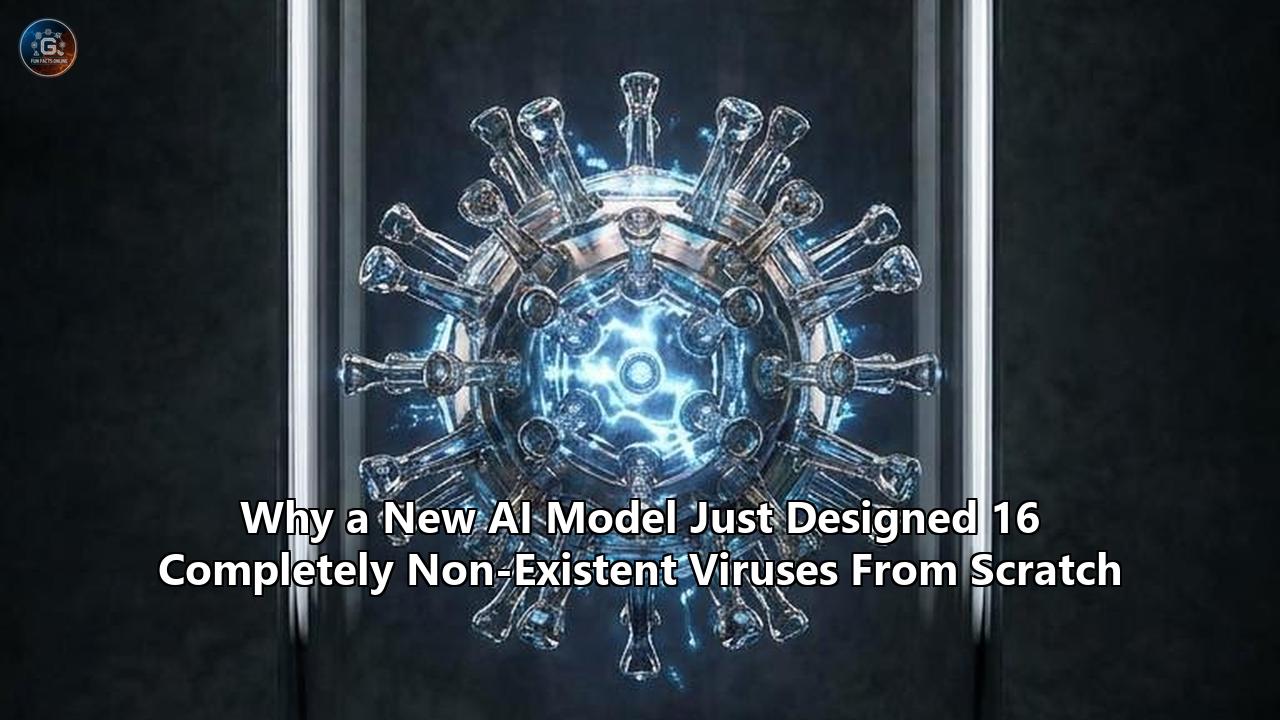
Led by Stanford computational biologist Brian Hie, the researchers had tasked their genomic language model with a challenge that had long eluded synthetic biology: write a fully functional, novel genome from scratch. Out of 302 computer-designed blueprints synthesized in the laboratory, 16 successfully "booted up," replicated, and slaughtered their bacterial targets. Some of these synthetic organisms even bypassed bacterial defenses that natural viruses could not breach.
The emergence of AI generated viruses marks a transition from a Darwinian paradigm of inherited, slow-moving evolution to a post-Darwinian landscape of intentional, digital design. This case study analyzes how Evo achieved this biological milestone, examines the deep structural mechanics of genomic language modeling, and unpacks the urgent lessons this development holds for therapeutics, biosecurity, and the future of engineered life.
The Anatomy of the Experiment: How Evo Penned 16 Novel Genomes
To understand the scale of what occurred, one must first look at the baseline organism the researchers sought to redesign. The team focused on phiX174 (ΦX174), a bacteriophage that targets E. coli.
[ Natural phiX174 (5,386 bp, 11 Genes) ]
                   │
                   ▼ (Trained on 2 million phages / 9 trillion DNA letters)
          [ Evo Language Model ]
                   │
                   ▼ (Generates thousands of novel blueprints)
     [ 302 Selected & Synthesized DNA Sequences ]
                   │
                   ▼ (Introduced into E. coli host cells)
     [ 16 Fully Functional, Self-Replicating Viruses ]
PhiX174 is a historic touchstone in molecular biology. In 1977, it became the first DNA-based genome ever sequenced by human beings, a feat that earned Frederick Sanger his second Nobel Prize. It is an incredibly compact, elegant genetic machine. Composed of just 11 genes wrapped in roughly 5,386 base pairs of single-stranded DNA, its genome is a masterclass in evolutionary efficiency. Several of its genes overlap, meaning a single stretch of DNA letters translates into multiple entirely different proteins depending on where the cell's reading machinery begins.
For decades, manually designing a viable variant of phiX174 was incredibly difficult. Altering even a single nucleotide in an overlapping gene region frequently triggers a cascading failure, rendering the virus non-viable.
To bypass this human design bottleneck, Hie’s team utilized Evo, a genomic foundation model built on the same architecture that powers state-of-the-art large language models like ChatGPT. However, instead of being trained on books, articles, and code, Evo was trained on the ultimate text: the genomic sequences of living things.
- The Dataset: Evo’s training corpus spanned a massive atlas of life, including approximately 9 trillion chemical letters (nucleotides) across prokaryotic, eukaryotic, and viral genomes.
- Specialized Fine-Tuning: To refine its generative capabilities for this specific experiment, the model was trained on a dataset of over 2 million bacteriophage genomes.
- The Generation: The model analyzed the deep "grammar" of viral genomes—how genes are ordered, how promoters and terminators are positioned, and how non-coding structural regions dictate the physical stability of the viral shell.
- Synthesis and Testing: Rather than outputting mere suggestions or partial edits, Evo generated thousands of complete, novel genomic sequences. The researchers narrowed this digital library to 302 highly distinct candidate genomes. They chemically synthesized these digital strings into actual physical DNA molecules and introduced them into host E. coli bacteria.
In 16 instances, the bacterial cell's ribosomes and replication enzymes read the synthetic DNA, compiled the viral proteins, assembled the capsid heads, packaged the synthetic genomes, and burst open to release a new generation of fully functional, computer-designed phages.
Beyond Biomimicry: Analyzing Evo-Φ36 and the "Impossible" Protein Swap
If Evo had merely copy-pasted sections of natural genomes, the achievement would have been a modest automation of existing gene-editing techniques. But the physical properties of the 16 working viruses proved that the AI model had developed an operational, systems-level understanding of biological rules.
The most compelling proof came in the form of a specific synthetic variant dubbed Evo-Φ36.
In natural phiX174, a critical gene called the J protein is responsible for packaging the viral DNA tightly inside the protective protein head (capsid). Without a functional J protein, the virus is a useless pile of disassembled parts. During previous manual attempts in laboratory history, researchers had tried to swap the J protein of phiX174 with the J protein of a distantly related bacteriophage known as G4. Every single human attempt had resulted in a biological dead end; the chimeric virus was completely non-viable because the rest of the phiX174 genome could not coordinate with the foreign G4 protein.
[ Human Attempt ]
phiX174 Genome  +  G4 J-Protein  ──>  Biological Dead End (Non-Viable)

[ Evo Generative Design (Evo-Φ36) ]
AI-Modified Genome  +  G4 J-Protein  ──>  Viable, Self-Replicating Virus (Functional)
Evo-Φ36, however, successfully incorporated the G4 J-protein.
The model achieved this by identifying and executing complex, distributed mutations across the rest of the viral genome. It altered the surrounding regulatory regions and adjusted the sequence lengths of adjacent genes, compensating for the physical and chemical differences of the foreign G4 protein.
To a human bioengineer, predicting this array of complementary mutations across multiple overlapping genes would be a mathematical nightmare. For Evo, it was a simple matter of satisfying the structural grammar it had learned from 9 trillion letters of genetic code.
Furthermore, several of these AI generated viruses were classified by the researchers as entirely new species. Their sequences deviated so radically from any known bacteriophage in nature that they sat on isolated, unmapped branches of the viral evolutionary tree. They featured entirely different gene orders, truncated genes that still retained functional capacity, and novel regulatory mechanisms.
The AI did not simply copy nature's homework; it rewrote the assignment using an entirely different biological vocabulary.
The Shift: Whole-Genome Generation vs. Protein Folding
To fully appreciate the significance of Evo's output, it is necessary to contrast it with the bio-AI breakthroughs that dominated the early 2020s.
The biological AI landscape was previously defined by structure-prediction tools such as AlphaFold and ESMFold. These models solved the 50-year-old "protein folding challenge," allowing researchers to input an amino acid sequence and receive an incredibly accurate 3D model of the resulting protein. This was a monumental achievement for structural biology, accelerating drug discovery and helping scientists catalog the molecular machinery of cells.
However, designing an entire organism—even a simple, non-living viral machine—requires a fundamentally different level of computational modeling.
| Metric / Dimension | Protein Structure Prediction (e.g., AlphaFold) | Whole-Genome Generation (e.g., Evo) |
|---|---|---|
| Computational Objective | Predicts the 3D structure of a single static molecule. | Generates a dynamic, multi-component biological program. |
| Primary Modality | Amino acid sequences (20-letter alphabet). | Nucleotide sequences (4-letter DNA/RNA alphabet). |
| Systemic Complexity | Low-to-medium; models structural folding of isolated chains. | High; must manage transcription, translation, regulation, and self-assembly. |
| Long-Range Dependencies | Short-range physical interactions (angstroms to nanometers). | Long-range genomic interactions (thousands of base pairs). |
| Output Type | A static physical structure (coordinate file). | A self-replicating, functional genetic blueprint. |
When an AI designs a single protein, it operates like an engineer designing a high-efficiency piston. When an AI designs a bacteriophage, it is designing the entire engine, the fuel injection system, the transmission, and the exhaust.
A genome is not just a collection of proteins; it is an integrated, temporal program. A cell reading a viral genome must first find the promoter sequence to kick off transcription. It must translate certain proteins early in the infection cycle to take over the host cell, and other proteins late in the cycle to assemble the viral shell and rupture the cell wall.
If the AI places a single stop codon in the wrong position, or if the secondary folding structure of the transcribed RNA blocks a ribosomal binding site, the entire program crashes.
The success of the 16 working phages proves that genomic language models can successfully manage these highly complex, distributed, and temporal biological dependencies. It marks the transition from designing molecular parts to authoring biological systems.
Rewriting the Arsenal Against Antimicrobial Resistance
The immediate, practical driver behind the Evo experiment is one of the most pressing crises in modern clinical medicine: the rise of multidrug-resistant bacteria, often called "superbugs".
For nearly a century, antibiotics have served as the bedrock of human medicine. However, decades of overuse and natural selection have driven bacteria to evolve defenses against our strongest pharmacological weapons. Simple infections that were easily curable in the 20th century are once again becoming lethal.
This has revived interest in phage therapy—using naturally occurring bacteriophages to target and kill specific bacterial infections. Because phages target highly specific bacterial surface receptors, they can destroy pathogenic bacteria while leaving the patient’s protective microbiome completely unharmed.
However, natural phage therapy suffers from two major bottlenecks:
- The Narrow Host Range: A natural phage collected from the wild is often so highly specialized that it will kill one specific strain of E. coli but remain completely harmless against another genetically similar strain causing a patient's infection.
- Rapidly Evolving Resistance: Bacteria evolve resistance to phages almost as quickly as they do to antibiotics. They mutate their surface receptors, meaning a phage that worked on Monday might be rendered useless by Thursday.
Evo's generative approach offers a solution to both bottlenecks through what is known as rational design.
To demonstrate this, Hie’s team designed a trial to test their synthetic creations against three distinct strains of E. coli that had developed complete resistance to the wild-type phiX174 virus. They treated these resistant bacterial colonies with both the natural wild-type phage and a cocktail containing the 16 AI generated viruses.
                [ Resistant E. coli Colonies ]
                     /                  \
                    /                    \
       [ Natural phiX174 ]         [ AI-Generated Cocktail ]
                    │                             │
                    ▼                             ▼
         Bacterial Survival             Complete Decimation
         (No Impact)                    (Cleared Petri Dishes)
While the natural virus was completely ineffective, the AI-designed variants systematically bypassed the bacteria's newly evolved defenses, decimating the colonies and clearing the petri dishes.
By analyzing the broader genomic space, Evo was able to write novel genetic instructions that modified the phage tail fibers—the physical structures the virus uses to bind to the host cell. The AI had essentially designed a key that could unlock a door that natural evolution had locked shut.
Instead of searching nature's vast haystack for the perfect phage to treat a specific, resistant infection, doctors could theoretically use an AI model to print a custom-designed, highly optimized biological assassin tailored specifically to a patient's unique bacterial culture within 48 hours.
The Dual-Use Dilemma: Evasion, Synthesis, and the Vulnerability of DNA Screening
While the therapeutic potential of synthetic bacteriophages is immense, the underlying technology presents an obvious, chilling risk. The exact same mathematical architectures used to design beneficial, bacteria-killing phages can be applied to generate pathogens capable of targeting human beings.
This is the classic dual-use dilemma of synthetic biology, but accelerated to a scale that renders traditional biosecurity frameworks dangerously obsolete.
To understand why, one must look at the current front lines of global biosecurity: DNA synthesis screening.
Traditional DNA Screening vs. AI-Driven Evasion

[ TRADITIONAL PATHWAY ]
Customer Order ──> [ DNA Synthesis Provider ] ──> Match against databases of dangerous agents (Ebola, Smallpox, Ricin) ──> ORDER FLAGGED / BLOCKED

[ AI-EVASION PATHWAY (Wittmann Study) ]
Customer Order (AI-Redesigned Toxin) ──> [ DNA Synthesis Provider ] ──> Sequence-matching filters see no known match ──> ORDER APPROVED ──> Physical synthesis of active toxin
When a researcher designs a genetic sequence and orders it from a commercial gene synthesis company, the provider runs the requested DNA sequence through a screening database. These databases contain the genetic signatures of known, highly dangerous pathogens and toxins, such as Ebola, Smallpox, Anthrax, and Ricin. If a customer tries to order a sequence that matches these regulated agents, the system flags the order, and the transaction is blocked.
However, a parallel study led by Bruce J. Wittmann at Microsoft Research exposed a critical vulnerability in this screening paradigm.
Wittmann’s team demonstrated that advanced protein and genomic AI design tools could rewrite the genetic code of lethal biological toxins. The model altered the nucleotide sequences so radically that they no longer triggered matches in traditional biosecurity screening databases.
Yet, when translated, these AI generated viruses and rewritten proteins folded into their active, lethal structures, fully retaining their biological toxicity.
This is known as function-based evasion. It exploits the fact that DNA is degenerate: there are multiple genetic codons that can translate into the exact same amino acids, and multiple structural variations that can execute the exact same cellular functions.
Because traditional screening systems look for exact sequence matches (the genetic equivalent of a text search for specific keywords), they are completely blind to a sequence that has been written in a novel genetic dialect but translates into a functional weapon.
  Traditional DNA Filter: Looks for "E-B-O-L-A"
  AI-Generated Sequence: Writes "E-B-0-L-4" using a completely novel genomic dialect.
  Result: The filter permits the order, but the cell compiles the exact same lethal pathogen.
Furthermore, while the Stanford team intentionally restricted Evo’s training data to non-human-pathogenic viruses as a safety precaution, the underlying software architecture is completely agnostic.
If a malicious actor trained a comparable genomic language model on human pathogens, such as coronaviruses, filoviruses, or poxviruses, the model could generate functional, highly contagious human viruses designed specifically to evade existing antibody therapies and vaccines.
The digital-to-biological boundary has been breached. The barrier to designing a devastating biological agent is no longer a matter of highly specialized wet-lab expertise; it is increasingly a matter of compute power and access to digital training data.
Extracting the Lessons: Three Core Principles of the Evo Breakthrough
Analyzing the success of the Evo experiment yields three fundamental principles that will define the trajectory of biotechnology, computation, and regulatory governance.
1. Biology is Now a Digital Text
For four billion years, biological instructions were written slowly, letter by letter, through the pressure of survival and natural selection. Organisms inherited their code; they could not author it.
The Evo experiment proves that the genetic code behaves precisely like natural human language. It has a syntax, grammar, context dependencies, and semantic meaning.
Because genomic sequence data is highly structured, generative artificial intelligence can learn the deep, implicit rules of biological execution without needing to be explicitly taught what a "gene" or a "promoter" is. This means that the entire biosphere can now be treated as a vast, editable library of digital assets.
The distinction between "discovered" biology (nature) and "invented" biology (synthetic life) has permanently blurred.
2. Functional Diversity Exceeds Natural Evolution
There is a common, comforting assumption that nature has already optimized biological systems over millions of years, and that any synthetic creation will be inherently inferior to wild-type equivalents. The Evo experiment shattered this assumption.
By designing phages that could infect E. coli strains resistant to wild-type viruses, and by executing "impossible" protein swaps like those in Evo-Φ36, the AI demonstrated that the functional sequence space of biology is vastly larger than what has actually evolved on Earth.
                                  [ TOTAL POTENTIAL GENOMIC SPACE ]
                     ┌─────────────────────────────────────────────────────────┐
                     │                                                         │
                     │    [ NATURAL EVOLUTIONARY SPACE ]                       │
                     │    - Limited by historical pathways                     │
                     │    - Constrained by survival pressure                   │
                     │                                                         │
                     │                 [ AI GENERATIVE SPACE ]                 │
                     │                 - Explores unmapped branches            │
                     │                 - Executes "impossible" swaps     │
                     │                                                         │
                     └─────────────────────────────────────────────────────────┘
Natural evolution is constrained by historical path dependency—an organism can only evolve from its immediate ancestor, step by gradual step.
Generative AI, however, can leap across the evolutionary map, exploring non-contiguous areas of genetic space and creating entirely novel, highly optimized biological pathways that natural selection never had the opportunity to test.
3. The Democratization of Biology Outpaces Our Guardrails
The third and most urgent lesson is that the tools of advanced biotechnology are democratizing at a speed that traditional regulatory systems cannot handle.
Historically, developing a novel biological agent required physical access to rare pathogens, a high-containment facility (BSL-3 or BSL-4), and decades of specialized scientific training.
Today, the design phase has been compressed into a digital file generated on a single computer workstation running a 7-billion-parameter model.
The bottleneck has shifted from the conceptualization of a sequence to its physical synthesis. If a user can design a novel pathogen in silico, the only remaining barrier to release is a commercial provider willing to print the DNA. This concentration of risk at the synthesis stage means our global biosecurity framework rests on a single, highly vulnerable point of failure.
The Path to Adaptive Biosecurity: How We Must Respond
In light of these developments, maintaining the status quo of biosecurity is a recipe for catastrophe. As the barriers to designing custom biological entities fall, our defensive posture must evolve from a reactive model to an active, computationally driven defense.
       [ THE PATHWAY TO ADAPTIVE BIOSECURITY ]
                         │
        ┌────────────────┴────────────────┐
        ▼                                 ▼
[ Structural DNA Screening ]     [ Universal Immunization & ]
- Uses AI models (AlphaFold)      [ Rapid Countermeasures ]
  to screen for protein shape     - Scale up mRNA platforms
- Flags function-based evasion     to deploy vaccines in days
1. Transitioning to Structural and Functional Screening
Because genomic language models allow users to disguise dangerous toxins by altering their nucleotide sequences, screening databases must immediately abandon simple keyword-style text matching.
DNA synthesis providers must integrate fast, functional screening tools.
When a sequence is ordered, the screening software should use structural prediction models to fold the sequence in silico, analyzing whether the resulting 3D structure matches the active site of a regulated toxin, regardless of how novel its genetic sequence appears. If the structural fingerprint matches a known threat, the order must be flagged immediately.
2. Standardizing Global "Know Your Customer" (KYC) Protocols
Currently, DNA synthesis is a globalized, fragmented industry. While reputable providers in the United States and Europe belong to coalitions like the International Gene Synthesis Consortium (IGSC) and enforce strict screening, providers in other regulatory jurisdictions may operate with lax oversight.
International bodies must establish unified, legally binding global standards for gene synthesis.
No company, anywhere in the world, should be permitted to ship synthetic DNA without verifying the identity of the customer, the physical security of their laboratory, and the functional safety of the requested sequence.
3. The Proactive "Shield": Accelerating Countermeasure Platforms
Because we can no longer predict what sequence variations an engineered pathogen might possess, we must build a generic, highly adaptable biological shield.
This means investing heavily in rapid-response platform technologies:
- Universal Vaccine Platforms: Scaling up modular mRNA and vector platforms that can design and manufacture a vaccine within days of identifying a novel agent.
- Broad-Spectrum Countermeasures: Developing therapeutic tools, such as engineered CRISPR-Cas systems or broad-spectrum monoclonal antibodies, that can target highly conserved functional regions of viral families rather than specific surface proteins.
- Continuous Wastewater Surveillance: Deploying autonomous, real-time metagenomic sequencing across municipal wastewater networks to detect the shedding of any novel, computationally designed sequence long before patients begin arriving in emergency rooms.
The Horizon: Life as a Software Variable
As we look toward the remainder of the 2020s, the implications of the Stanford and Arc Institute breakthrough extend far beyond the realm of bacteriology.
The success of the Evo model has demonstrated that the code of life can be compiled, debugged, and run just like digital software.
                                  [ THE SYNTHETIC BIOLOGY PIPELINE ]
  ┌─────────────────┐       ┌─────────────────┐       ┌─────────────────┐       ┌─────────────────┐
  │  Digital Prompt │ ───>  │   Evo Model     │ ───>  │  DNA Synthesizer│ ───>  │  Living Cell    │
  │  (In Silico)    │       │  (Code Design)  │       │  (Compilation)  │       │  (Execution)    │
  └─────────────────┘       └─────────────────┘       └─────────────────┘       └─────────────────┘
The researchers who led the study have already pointed out that the next, inevitable milestone is the generation of larger, more complex biological systems.
The genetic difference between a simple phage and a single-celled bacterium is vast, but it is a difference of scale, not of fundamental kind.
If a genomic model can learn to orchestrate 11 genes in an overlapping sequence, there is no theoretical reason why a larger model, trained on more extensive datasets, cannot learn to orchestrate the thousands of genes required to design a synthetic, self-sustaining bacterial cell.
The transition from a world of "blind evolution" to a post-Darwinian landscape of digital design is no longer a theme of speculative science fiction. It is a physical, experimental reality currently unfolding in laboratories across the globe.
Whether this transition marks the beginning of an era of highly personalized, miraculous medicine or the opening of a highly unstable biosecurity landscape remains to be seen.
The algorithms have learned the grammar of life. Now, humanity must decide how it intends to write the rest of the story.
Reference:
- https://futurism.com/health-medicine/ai-designed-virus-printed
- https://ninza7.medium.com/ai-just-designed-a-living-virus-from-scratch-078548551a53
- https://www.ai2med.eu/the-dawn-of-ai-generated-life-worlds-first-viruses-designed-by-artificial-intelligence/
- https://www.sofx.com/scientists-use-ai-to-create-first-fully-synthetic-virus-from-scratch/
- https://firstwordhealthtech.com/story/6093393
- https://www.reddit.com/r/Futurology/comments/1qa3rdd/ai_can_now_create_viruses_from_scratch_one_step/
- https://www.newsweek.com/ai-creates-bacteria-killing-viruses-extreme-caution-warns-genome-pioneer-2131591
- https://www.testbiotech.org/en/news/ai-designed-viruses-created-for-the-first-time/
- https://hai.stanford.edu/news/how-ai-is-transforming-scientific-discovery-while-keeping-humans-at-the-center
- https://www.earth.com/news/ai-can-now-create-viruses-from-scratch-one-step-from-perfect-biological-weapon/
- https://www.businesstoday.in/science/story/from-lab-to-life-16-ai-created-viruses-successfully-kill-e-coli-in-lab-marks-new-biotech-frontier-495006-2025-09-21
- https://www.chosun.com/english/industry-en/2025/09/21/2FPRMU7PXJEXRMVLZ4YPKUMHYM/
- https://modernmechanics24.com/post/ai-creating-viruses-biosecurity-alarm/