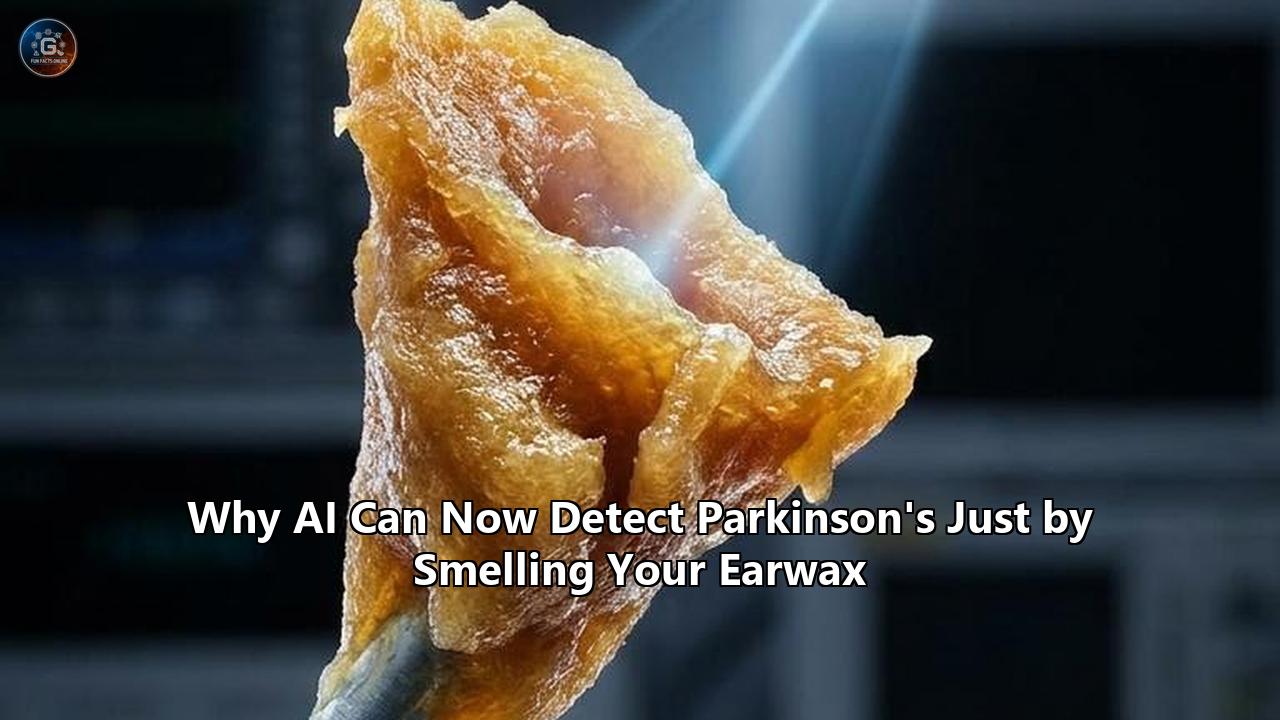
A simple cotton swab twisted gently inside the ear canal may soon replace some of the most expensive, invasive, and painful diagnostic procedures in modern neurology.
In a study published in the American Chemical Society’s journal Analytical Chemistry, researchers introduced a diagnostic model that screens for Parkinson's disease by analyzing the volatile organic compounds (VOCs) bound within human cerumen—more commonly known as earwax. Led by environmental and analytical chemists Hao Dong and Danhua Zhu, the team developed an Artificially Intelligent Olfactory (AIO) system. By coupling gas chromatography-surface acoustic wave (GC-SAW) sensors with a convolutional neural network (CNN), the diagnostic system distinguished between samples from Parkinson’s patients and healthy controls with an accuracy of 94.4%.
This diagnostic strategy marks a major shift in the ongoing search for early biomarkers of neurodegeneration. Currently, Parkinson’s disease is diagnosed primarily through clinical motor assessments, which only yield a definitive answer after massive neurological damage has already occurred. By the time a patient presents with classical motor symptoms like tremors, bradykinesia, or postural instability, up to 50% to 70% of the dopamine-producing neurons in the substantia nigra have already died. Catching the disease in its prodromal (pre-symptomatic) phase is the holy grail of neurodegenerative research, as early therapeutic interventions—ranging from dopaminergic therapies to neuroprotective lifestyles—are far more effective when started before widespread neuronal death.
The arrival of earwax-based AI Parkinson's detection has triggered a major debate within the medical community. Clinicians, biochemists, and software engineers are actively weighing the trade-offs of this olfactory approach against established and emerging diagnostic tools, including spinal fluid protein amplification assays, radioactive neuroimaging, and skin-surface sebum mapping.
The Evolution of Scent Diagnostics: From Joy's Nose to Mass Spec
The scientific foundation for smelling Parkinson's disease is rooted in an extraordinary human clinical observation. Years before her husband, Les, was clinically diagnosed with Parkinson's at the age of 44, Joy Milne, a retired nurse from Perth, Scotland, noticed a distinct change in his body odor. She described it as a heavy, musky, and waxy scent that she had never smelled on him before.
Years later, while attending a Parkinson's support group, Milne realized that the entire room smelled exactly like her husband. This observation eventually led her to Dr. Tilo Kunath at the University of Edinburgh, who subsequently paired with Professor Perdita Barran, a mass spectrometry expert at the University of Manchester.
[Systemic Neurodegeneration] ──> [Autonomic/Endocrine Shifts] ──> [Altered Sebum Secretion]
                                                                        │
                                   ┌────────────────────────────────────┴────────────────────────────────────┐
                                   ▼                                                                         ▼
                      [Forehead/Back Skin Sebum]                                                 [Ear Canal Cerumen (Earwax)]
                 - Exposed to smog, soaps, weather                                           - Vaulted, shielded environment
                 - High chemical noise / contamination                                       - Preserved volatile organic compounds
To test Milne’s claims, Barran’s team conducted a simple experiment: they had Parkinson's patients and healthy controls wear t-shirts overnight and presented the fabric to Milne. She successfully identified almost every Parkinson's patient. Crucially, she also flagged one control subject as having the disease. Though researchers initially assumed this was a false positive, the individual was clinically diagnosed with Parkinson’s nine months later, confirming that Milne’s nose had outperformed standard clinical examinations.
Barran’s subsequent chemical analyses revealed that the scent was not carried in sweat, but in sebum—an oily, lipid-rich biofluid secreted by the sebaceous glands to lubricate and protect the skin. Sebum production is heavily linked to the endocrine and autonomic nervous systems, both of which undergo systemic dysfunction during the earliest stages of Parkinson’s disease.
Using gas chromatography-mass spectrometry (GC-MS), Barran's laboratory mapped the complex lipid and volatile signature of sebum. This work eventually led to the development of skin-swab testing protocols, which utilize cotton swabs brushed across a patient's upper back or forehead.
By ionizing these swabs using paper spray ionization mass spectrometry (PS-MS), researchers could identify thousands of unique compounds and distinguish Parkinson's signatures in under three minutes. However, translating forehead and upper back skin-swabbing into a reliable, universal clinical standard revealed significant real-world challenges.
The Vault of the Ear: Why Earwax Is Chemically Superior to Skin Sebum
While skin-surface sebum tests offered a non-invasive, rapid screening tool, they suffered from high vulnerability to environmental interference. The skin on the forehead, face, and upper back is constantly exposed to the elements. Skincare products, cosmetics, daily soaps, perfumes, ambient air pollution, humidity, and sweat all introduce chemical "noise" into sebum samples.
For instance, a patient who uses a specific brand of facial moisturizer or lives in a highly polluted urban area could yield a mass spectrometry profile that masks or mimics the subtle metabolic shifts associated with neurodegeneration.
This is where the ear canal presents a distinct anatomical advantage. Earwax, or cerumen, is a highly complex substance composed of shed corneocytes (dead skin cells), sebum, and the secretions of ceruminous glands located inside the outer third of the ear canal.
Because the ear canal is a semi-enclosed, recessed structure, the cerumen within it remains shielded from the outside world. It is highly insulated from:
- Exogenous skincare chemicals: People rarely wash the deep interior of their ear canals with soap, face washes, or lotions.
- Atmospheric pollutants: The narrow physical architecture of the ear canal limits direct exposure to airborne particulates, vehicle exhaust, and industrial chemicals.
- Moisture and sweat fluctuations: The ear canal maintains a more stable, self-regulated microclimate of humidity and temperature compared to the exposed skin of the face or back.
As a result, earwax acts as a biological vault, preserving highly volatile organic compounds in their native, unpolluted state. The metabolic shifts occurring deep within the body—driven by systemic inflammation, cellular oxidative stress, and lipid peroxidation—are written directly into the chemical matrix of earwax, where they remain stable and protected over long periods.
The Machine Behind the Smell: How the AIO System Works
To unlock the diagnostic potential of this protected medium, Hao Dong and Danhua Zhu constructed a specialized dual-stage analytical protocol.
Phase 1: Biomarker Identification via GC-MS
The team first collected ear canal secretions from 209 human subjects, including 108 diagnosed Parkinson's patients and 101 healthy controls. The collected wax was subjected to gas chromatography-mass spectrometry (GC-MS) to separate and identify the exact volatile organic compounds present in the samples.
Through extensive statistical filtering, the researchers isolated four specific volatile compounds that showed massive, statistically significant differences between Parkinson’s patients and healthy controls:
- Ethylbenzene: A volatile aromatic hydrocarbon. While ethylbenzene is commonly associated with external chemical exposures, its elevated presence in Parkinson’s earwax points to altered metabolic detoxification pathways or long-term systemic accumulation linked to environmental risk factors.
- 4-Ethyltoluene: Another alkylbenzene derivative that serves as an indicator of systemic metabolic stress and altered aromatic hydrocarbon processing in the body.
- Pentanal: An alkyl aldehyde that is a well-established byproduct of lipid peroxidation. When oxidative stress damages the lipid membranes of cells throughout the body (a core feature of Parkinson's pathology), it degrades those lipids into small aldehydes like pentanal, which are then excreted via sebum.
- 2-Pentadecyl-1,3-dioxolane: A complex acetal compound that reflects altered lipid metabolism and systemic inflammatory signaling.
  [Earwax Swab]
        │
        ▼
   [GC-SAW Unit]  ──> Separates compounds by boiling point & physical properties
        │
        ▼
 [Sensor Frequency Shift] ──> Measures mass of deposition on acoustic crystals
        │
        ▼
 [Raw Chromatogram]  ──> Visualizes overlapping substance peaks
        │
        ▼
  [CNN Classifier]   ──> Detects multi-dimensional features in peak patterns
        │
        ▼
   [Diagnostic]      ──> 94.4% Accuracy (Parkinson's vs. Control)
Phase 2: Rapid Clinical Execution via GC-SAW and CNN
While GC-MS is excellent for identifying molecules in a research laboratory, it is far too slow, bulky, and expensive for routine clinical use. To build a practical bedside diagnostic device, the Chinese team integrated Gas Chromatography with Surface Acoustic Wave (GC-SAW) sensors.
A GC-SAW sensor operates on a unique physical principle:
- Volatile compounds from the earwax are evaporated and carried through a rapid-heating gas chromatography column, separating them based on their boiling points and chemical properties.
- As the separated chemical vapors exit the column, they deposit onto the surface of a temperature-controlled piezoelectric quartz crystal.
- Acoustic waves travel across the surface of this crystal. When molecules land on the quartz, the physical mass of the deposition slightly dampens the surface acoustic wave, causing a highly measurable shift in the wave's oscillation frequency.
- By tracking these frequency shifts over time, the system generates a highly precise "chromatographic curve" that acts as a digital scent fingerprint.
Because different volatile compounds emerge from the GC column at different times, the resulting curve exhibits a series of peaks and valleys. However, in clinical samples, these peaks often overlap, making manual interpretation incredibly difficult.
To overcome this, the researchers trained a Convolutional Neural Network (CNN) on the raw chromatographic frequency data. Rather than forcing a human technician to manually isolate and calculate the concentration of each chemical, the CNN analyzes the multi-dimensional geometric features of the entire curve.
It identifies subtle, non-linear relationships across the overlapping compound peaks that are unique to the metabolic state of Parkinson’s disease. When presented with validation samples, this AIO screening model classified the earwax scent profiles with a 94.4% accuracy rate.
Head-to-Head Comparison: Diagnostic Modalities
The development of the earwax-based AIO model adds a unique dimension to the competitive landscape of AI Parkinson's detection. To understand the clinical viability of this approach, we must contrast it directly with other primary diagnostic strategies currently used or in late-stage development.
| Diagnostic Method | Biomarker Checked | Invasiveness | Relative Cost | Diagnostic Accuracy | Major Advantages | Primary Drawbacks / Limitations |
|---|---|---|---|---|---|---|
| Earwax AI Olfactory (AIO) | Volatile Organic Compounds (Ethylbenzene, Pentanal, etc.) | Non-Invasive (Simple ear canal swab) | Low | ~94.4% | Fast, desktop-friendly, shielded from environmental skincare contamination. | Indirect marker of metabolic consequences; requires extensive multi-ethnic clinical validation. |
| Skin Sebum (Mass Spec) | Surface Lipids / Hydrophobic Metabolites | Non-Invasive (Back or forehead swab) | Low to Moderate (Requires mass spec lab) | ~90%+ (depending on model) | High molecular throughput, direct identification of up to 4,000 lipids. | Samples easily contaminated by lotions, soaps, weather, and air pollution. |
| Alpha-Synuclein SAA (CSF) | Pathological misfolded alpha-synuclein proteins | Highly Invasive (Lumbar puncture / spinal tap) | High (Requires specialized neurology care) | ~88% - 96% | Directly measures the root-cause pathology (Lewy bodies) of the disease. | Painful, carries procedural risks, difficult to implement as a first-line screening tool. |
| Syn-One Skin Biopsy | Phosphorylated alpha-synuclein in cutaneous nerve fibers | Moderately Invasive (Punch biopsy in clinic) | Moderate to High | ~92% - 95% | Highly objective, clinically accepted, directly identifies peripheral pathology. | Requires local anesthesia, surgical healing, and specialized pathological reading. |
| DaTscan (SPECT Imaging) | Dopamine Transporter Density in Basal Ganglia | Minimally Invasive (Intravenous injection of radioactive tracer) | Extremely High ($2,500 – $5,000+ out of pocket) | High for advanced cases; less sensitive for early stages | Excellent for distinguishing Parkinson's from essential tremors. | Highly expensive, exposes patient to radiation, only positive after substantial dopamine neuron loss. |
| Digital AI (Voice/Gait/Eye) | Motor tremors, micro-saccades, vocal cord stiffness | Non-Invasive (Passive smartphone/camera monitoring) | Low (Uses consumer hardware) | Highly variable (typically 80% - 90%) | Zero-touch, continuous home monitoring, highly scalable. | Susceptible to behavioral noise, mood, and secondary physical injuries; lacks biochemical specificity. |
Analytical Breakdown of Trade-offs: Scent vs. Substance
The debate surrounding these competing technologies highlights a fundamental division in modern diagnostics: surrogate metabolic signatures versus primary pathological markers.
The Specificity Dilemma of Pathological Assays
Tests like the Alpha-Synuclein Seed Amplification Assay (αSyn-SAA) are widely considered the gold standard for diagnostic confidence. Because Parkinson’s is defined by the toxic accumulation of misfolded alpha-synuclein proteins (which aggregate to form Lewy bodies in brain cells), directly detecting these "seeds" in cerebrospinal fluid strikes at the definitive root of the disease.
An αSyn-SAA test doesn't just indicate that a patient is sick; it proves that the specific physical engine of synucleinopathy is active in their nervous system.
However, the biological certainty of αSyn-SAA comes at a steep practical cost. Relying on cerebrospinal fluid requires a lumbar puncture—an invasive procedure where a needle is inserted between two lumbar vertebrae to withdraw fluid. It carries risks of severe post-spinal headaches, infection, and localized pain.
While researchers are making strides in adapting SAA technology to blood, saliva, and skin biopsies, these methods remain complex, highly expensive, and restricted to high-resource laboratory settings. They are fundamentally ill-suited for rapid, widespread population screening.
The Scalability Promise of Olfactory AI
In contrast, metabolic-based AI Parkinson's detection via earwax is designed from the ground up for low cost and high accessibility. Taking an earwax sample is incredibly easy, completely painless, and requires zero specialized clinical training.
A general practitioner, nurse, or even a patient at home can gather the sample using a basic cotton swab. The GC-SAW hardware required to analyze the sample is compact enough to sit on a standard office desk, providing an objective digital readout in a matter of minutes.
               [Diagnostic Modality Spectrum]

    Invasive / High-Cost / Pathological Focus
    ──────────────────────────────────────────
     ▲   [Alpha-Synuclein SAA (CSF)]
     │   - Directly measures misfolded proteins (Lewy pathology)
     │   - Requires painful lumbar puncture / spinal tap
     │
     │   [DaTscan SPECT / PET Imaging]
     │   - Visualizes physical dopamine transporter loss
     │   - High cost ($2,500+), requires radioactive tracers
     │
     │   [Syn-One Skin Biopsy]
     │   - Identifies cutaneous nerve protein aggregates
     │   - Requires minor surgical punch biopsy
     │
     │   [Skin Sebum Mass Spec]
     │   - Measures forehead/back lipid profiles
     │   - Exposed to high environmental/skincare noise
     │
     │   [Earwax AI Olfactory (AIO)]
     │   - Measures protected inner-ear volatile compounds
     │   - Desktop-ready, low-cost, completely painless
     ▼
    ──────────────────────────────────────────
    Non-Invasive / Low-Cost / Metabolic Focus
Yet, the primary trade-off of this olfactory method is its biological distance from the brain. The volatile compounds detected in earwax are chemical downstream consequences—surrogates for the metabolic stress, inflammation, and cellular breakdown occurring as a result of neurodegeneration.
This distance raises important questions about diagnostic specificity:
- Can the system reliably differentiate between Parkinson's disease and other atypical parkinsonian syndromes, such as Multiple System Atrophy (MSA) or Progressive Supranuclear Palsy (PSP)? These disorders often share similar downstream metabolic consequences but have different neurological causes and clinical trajectories.
- How do other chronic inflammatory diseases, metabolic syndromes, or severe ear canal conditions (such as otitis externa or heavy cerumen impaction) affect the volatile organic profile of earwax?
- Could long-term changes in a patient's diet, alcohol consumption, or medication use introduce systemic noise that shifts the four key biomarkers, leading to false positives?
The machine learning models used to process this data must be robust enough to handle these potential confounding factors without overfitting to their original training datasets.
Technical Obstacles in Deep Learning for Olfaction
Using machine learning to analyze raw gas chromatography data introduces a unique set of computational challenges. In classic image classification, a CNN looks for spatial edges, shapes, and textures. In the context of GC-SAW chromatographic data, the network is analyzing a one-dimensional time-series signal where the "features" are physical peaks of varying heights, widths, and retention times.
     Raw GC Frequency Signal (Overlapping Volatiles)

     Freq (Hz)
       ▲             Peak A (Ethylbenzene)
       │              /\
       │             /  \     Peak B (Pentanal)
       │   _________/    \____/\_____
       │  /                     \    \
       │ /                       \    \
       └──────────────────────────────────► Time (s)
                   [CNN Input Layer]
                           │
       [1D Convolutional Kernels (Feature Extraction)]
                           │
                 [Max Pooling Layers]
                           │
              [Fully Connected Classifier]
                           │
              ┌────────────┴────────────┐
              ▼                         ▼
         [Parkinson's]            [Non-Parkinson's]
To maintain diagnostic stability, the CNN must address several computational hurdles:
- Retention Time Shifting: Due to slight variations in ambient temperature, gas flow rates, or column aging, the exact second a specific molecule (like pentanal) exits the chromatography column can drift slightly between runs. The CNN must use robust alignment and feature extraction algorithms to ensure these minor physical shifts are not misinterpreted as entirely different chemical signatures.
- Signal Dampening and Noise: Samples with very low earwax volume will produce smaller peaks overall. The neural network must normalize the amplitude of the signal, focusing on the relative ratios of the identified biomarkers (ethylbenzene, 4-ethyltoluene, pentanal, and 2-pentadecyl-1,3-dioxolane) rather than absolute signal intensity.
- Class Imbalance and Overfitting: Because early clinical trials are often trained on small, highly curated cohorts, there is a risk that the AI will memorize specific, non-relevant chemical quirks of the study's control group (such as a shared regional diet or water source) rather than true biomarkers of neurodegeneration.
Resolving these issues requires moving beyond simple machine learning architectures to larger, highly diverse, and multi-centered training datasets.
The Path to Clinical Integration: Implementation Hurdles and Future Milestones
Before earwax-based AI Parkinson's detection can transition from a peer-reviewed paper to a routine tool in primary care clinics, several structural and scientific hurdles must be resolved.
Phase 1: Expanding the Demographic Training Pipeline
The 2025/2026 Chinese study was a small-scale, single-center pilot involving 209 participants. As lead researcher Hao Dong has noted, the team's immediate next phase is to initiate multi-center trials across diverse geographic regions and ethnic groups.
Genetic differences in cerumen type are well-documented; for example, people of East Asian descent predominantly possess dry, gray earwax, whereas individuals of European and African descent generally produce wet, honey-brown earwax.
These physical and chemical differences are determined by variation in the ABCC11 gene. Because dry and wet earwax have completely different baseline lipid and moisture ratios, the AI olfactory models must be trained and validated on diverse genetic cohorts to ensure the 94.4% accuracy rate remains stable worldwide.
Phase 2: Miniaturization of Desktop Diagnostics
To achieve true bedside utility, the physical GC-SAW hardware must be engineered for extreme reliability and ease of use by non-technical staff. Currently, gas chromatography still relies on carrier gases and precise heating elements.
Developing micro-fluidic "gas-chromatography-on-a-chip" systems would eliminate the need for heavy external gas tanks, allowing a small, plug-and-play desktop device to be operated in local family practices, rural community clinics, and long-term care facilities.
Phase 3: Longitudinal Cohort Studies
To prove that this diagnostic method can catch Parkinson’s before the onset of motor symptoms, researchers must deploy the earwax swab in large, longitudinal studies of asymptomatic older adults.
By tracking thousands of healthy volunteers over five to ten years, scientists can determine if a positive AIO screen can reliably predict who will eventually develop clinical Parkinson's, and how many years in advance that warning signal appears.
What to Watch Next
As we look toward the late 2020s, the intersection of volatile chemical sensing and artificial intelligence is poised to redefine early neurology screening. The ongoing development of non-invasive diagnostic platforms will likely focus on three primary milestones:
- Combination Diagnostics: Instead of relying on a single test, future clinical pathways will likely use earwax AI screening as a rapid, low-cost first-line filter. Patients who receive a positive earwax result would then be referred for highly specific, confirmatory secondary testing, such as blood-based alpha-synuclein assays or high-resolution neuroimaging. This tiered approach maximizes both cost-efficiency and clinical accuracy.
- Multi-Disease Olfactory Screening: Because the metabolic pathways of different neurodegenerative conditions are distinct, researchers are already investigating whether other diseases leave unique scent profiles in earwax. We may soon see unified AIO systems capable of simultaneously screening a single earwax sample for Parkinson's, Alzheimer's, and Amyotrophic Lateral Sclerosis (ALS).
- Clinical Trial Optimization: The ability to identify pre-symptomatic Parkinson's patients through a simple ear swab will dramatically accelerate clinical trials for disease-modifying therapies. Pharmaceutical companies can quickly screen and enroll high-risk, pre-symptomatic cohorts, allowing them to test the efficacy of neuroprotective drugs before irreversible brain damage occurs.
The idea of smelling earwax to diagnose a complex brain disease may sound unusual, but it highlights a powerful truth in modern medicine: the most elegant solutions to our most complex health challenges are often hiding in the most overlooked, everyday corners of human biology.
References
- [1] Dong, H., Zhu, D., et al. (2025). "An Artificial Intelligence Olfactory-Based Diagnostic Model for Parkinson's Disease Using Volatile Organic Compounds from Ear Canal Secretions." Analytical Chemistry.
- [2] Trivedi, D. K., Sinclair, E., Barran, P., et al. (2019). "Discovery of Volatile Biomarkers of Parkinson's Disease from Sebum." ACS Central Science.
- [3] Parkinson's Progression Markers Initiative (PPMI). (2023). "Evaluation of alpha-synuclein seed amplification assays (alphaSyn-SAA) for early Parkinson's diagnosis." The Michael J. Fox Foundation for Parkinson's Research.
- [4] Sarkar, D., Barran, P., et al. (2022). "Paper Spray Ionization Ion Mobility Mass Spectrometry of Sebum Classifies Biomarker Classes for the Diagnosis of Parkinson's Disease." JACS Au.
Reference:
- https://parkinsonsnewstoday.com/news/ear-wax-smell-test-using-ai-potential-diagnose-parkinsons-study/
- https://www.acs.org/pressroom/presspacs/2025/june/ear-wax-as-a-possible-screening-medium-for-parkinsons-disease.html
- https://www.icthealth.org/news/early-detection-of-parkinsons-disease-with-ai-earwax-analysis
- https://www.sciencedaily.com/releases/2025/06/250618094443.htm
- https://pubs.acs.org/doi/10.1021/acs.analchem.5c00908
- https://www.parkinson.org/blog/research/diagnosis
- https://www.zmescience.com/science/news-science/she-can-smell-parkinsons-now-scientists-are-turning-it-into-a-skin-swab/
- https://www.centerforneurologyandspine.com/post/breakthrough-parkinsons-diagnosis-from-earwax-a-new-hope-for-early-detection-in-phoenix-az
- https://www.mayoclinic.org/tests-procedures/parkinsons-testing-alpha-synuclein-seed-amplification/about/pac-20556191
- https://www.theguardian.com/society/2022/sep/07/woman-who-can-smell-parkinsons-helps-scientists-develop-test
- https://www.youtube.com/watch?v=IbmJ9eZpMJw
- https://www.youtube.com/watch?v=Xjo2M-XMYfs
- https://www.labmedica.com/pathology/articles/294794515/breakthrough-method-diagnoses-parkinsons-from-skin-swabs-in-three-minutes.html
- https://www.youtube.com/shorts/147TzmqHvMY
- https://www.discovermagazine.com/earwax-with-an-unusual-odor-may-help-detect-parkinsons-before-it-worsens-47710
- https://pubmed.ncbi.nlm.nih.gov/36186554/
- https://pubmed.ncbi.nlm.nih.gov/40558225/
- https://parkinsonsnewstoday.com/news/alphasyn-saa-test-accurately-detects-parkinsons-study-finds/
- https://parkinsonsroadmap.org/report/high-diagnostic-performance-of-independent-alpha-synuclein-seed-amplification-assays-for-detection-of-early-parkinsons-disease/
- https://www.youtube.com/watch?v=b6I1Q4hBT_s
- https://www.parkinson.org/blog/research/datscan-petscan
- https://www.independent.co.uk/bulletin/news/parkinsons-disease-signs-ear-wax-ai-b2773426.html