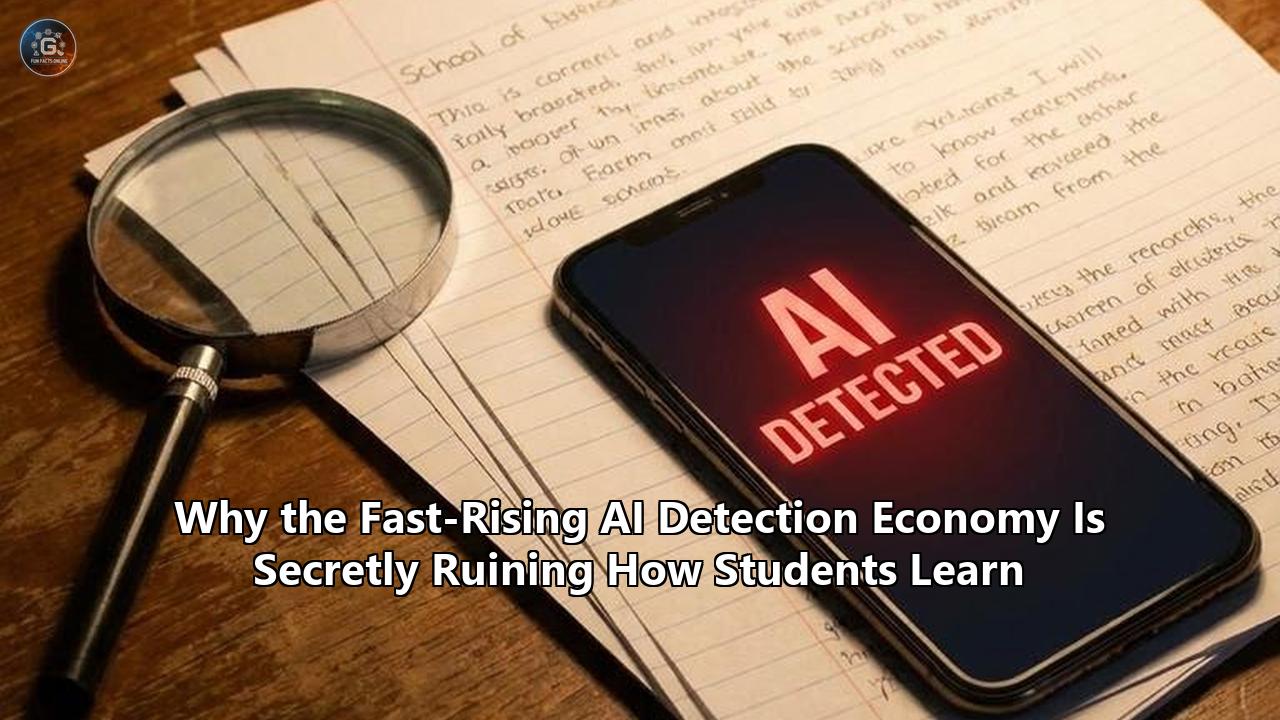
In February 2026, a federal judge in New York handed down a ruling that sent shockwaves through the administrative offices of higher education. The case, Orion Newby v. Adelphi University, represented the first time a student successfully sued a university over a false AI plagiarism accusation.
Orion Newby, a first-year student with autism, had enrolled in Adelphi's specialized support program designed for neurodevelopmental students. To organize his thoughts, he drafted his World Civilizations history paper with the aid of a university-appointed tutor, carefully assembling his sentences. But when he uploaded his final draft, Turnitin’s proprietary algorithm flagged the document as 100% AI-generated.
Despite Newby presenting independent scans from two other major detectors that cleared his paper, and despite his willingness to provide his draft histories, the university’s academic integrity board refused to overturn the charge. It took a federal lawsuit, six figures in legal fees, and a devastating emotional toll for a judge to finally step in, declaring the university’s plagiarism finding "without merit".
The Newby case is not an isolated anomaly. It is the flashpoint of a systemic crisis. Under the guise of defending academic integrity, a multi-million dollar "AI detection economy" has quietly colonized the educational landscape. The rapid, top-down deployment of ai detection in schools was heralded as the logical defense against ChatGPT and its successors. Instead, it has triggered a pedagogical emergency.
Behind the corporate marketing of "99% accuracy" lies a dark reality of mathematical flaws, systemic racial and linguistic bias, and a psychological chilling effect that is actively dismantling how students learn to think and write. Rather than fostering a culture of honesty, the AI detection panopticon is turning the classroom into an algorithmic courtroom, forcing students to write not for clarity or creativity, but to satisfy the opaque math of a proprietary classifier.
The Illusion of Certainty: The Flawed Mathematics of Detection
To understand why AI detectors fail so spectacularly, one must look beyond their simplified user interfaces. When an administrator or a high school teacher runs a student’s essay through a detector, they are presented with a clean, authoritative percentage score: 78% Probability of AI. To the untrained eye, this looks like a factual diagnosis.
In reality, AI detectors do not "read" text the way a human does, nor do they possess a database of AI-generated content to cross-reference. Instead, they run statistical classifiers that measure two primary mathematical metrics: perplexity and burstiness.
Perplexity: The Predictability Scale
Perplexity is a measure of how "surprised" a reference language model is by the sequence of words in a text. Large Language Models (LLMs) operate on statistical probability; they are trained to predict the most likely next token (word or sub-word) in a sentence.
Because an LLM's goal is to minimize surprise, its writing naturally has incredibly low perplexity. It chooses words that statistically "belong" together.
If a student writes:
"The economic policies of the late nineteenth century laid the groundwork for rapid industrial expansion."
An AI detector analyzes this sentence and finds that every word sequence aligns perfectly with highly probable linguistic distributions. The perplexity score drops, and the detector marks the text as machine-like.
Burstiness: The Rhythm of Prose
Burstiness measures the variance in sentence length and structure across a document. Human writers are naturally "bursty". We write in rhythms. We might start with a long, sweeping compound sentence that introduces a complex philosophical concept, and then follow it immediately with a short, punchy sentence that drives the point home.
AI-generated text, on the other hand, is highly uniform. Because of the RLHF (Reinforcement Learning from Human Feedback) training models use to sound professional and accessible, they generate sentences of relatively consistent length and grammatical complexity.
The technical baseline of the AI detection economy rests on a simple assumption: Low Perplexity + Low Burstiness = AI Content.
┌──────────────────────────────────────────────────────────┐
│             THE DETECTION ENGINE'S DECISION MATRIX       │
├──────────────────────────┬───────────────────────────────┤
│  Linguistic Metric       │  Algorithmic Interpretation   │
├──────────────────────────┼───────────────────────────────┤
│  Low Perplexity          │  Text is highly predictable;  │
│  (Highly predictable)    │  indicates machine generation.│
├──────────────────────────┼───────────────────────────────┤
│  Low Burstiness          │  Sentences are uniform;       │
│  (Lack of rhythm/length) │  signals robotic structure.   │
└──────────────────────────┴───────────────────────────────┘
The fundamental flaw in this mathematical model is that human writing and AI writing overlap extensively on these exact metrics. There is no clean, distinct boundary between a polished human essay and a high-quality machine output.
Formal academic writing, scientific research papers, and technical reports are, by design, structured to have low perplexity and low burstiness. They rely on standardized vocabularies, formal syntax, and precise, predictable sentence structures.
When a student spends two weeks researching a history paper, refining their vocabulary, and polishing their sentences to meet a strict academic rubric, they are systematically lowering the perplexity and burstiness of their writing. In doing so, they are inadvertently sculpting their essay to fit the exact mathematical profile of an LLM.
The Systemic Bias Against Second-Language Learners
The scientific failure of these tools is not distributed equally. It falls disproportionately on non-native English speakers.
A landmark Stanford University study led by researcher James Zou evaluated how seven popular commercial AI detectors processed essays written for the Test of English as a Foreign Language (TOEFL) by Chinese students. The results were damning: the detectors falsely flagged 61.3% of the non-native English speaker essays as AI-generated. When the same detectors analyzed essays written by US-native eighth-graders on identical prompts, the false positive rate was only 5.1%.
To understand why this happens, one must examine the language acquisition process. When a student is learning English as a second language (ESL), they are taught to rely on standardized templates, familiar vocabulary lists, and rigid grammatical formulas. They do not possess the expansive, colloquial vocabulary required to introduce "high perplexity" elements or idiomatic burstiness into their writing.
An ESL student writing an essay will naturally use the most common, statistically probable English words to express their thoughts. They write with simpler sentence structures.
Because their writing patterns closely mirror the training data of LLMs (which are also built on standard, grammatically correct, highly predictable English corpora), their genuine, hard-fought prose is systematically flagged as robotic.
                     ESL STUDENT WRITING PROCESS
                 (Relies on standard grammar templates)
                                │
                                ▼
                       LOW PERPLEXITY TEXT
                 (Predictable word-choice patterns)
                                │
                                ▼
               COMMERCIAL AI DETECTION PLATFORM
          (Scores low perplexity as "AI-generated")
                                │
                                ▼
                   FALSE ACCUSATION OF CHEATING
              (61.3% error rate in peer-reviewed tests)
The human cost of this mathematical bias is staggering. In 2025, at the University at Buffalo, a falsely flagged graduate student's case sparked an 1,100-signature petition demanding the university disable Turnitin's AI detection feature. The student, an international scholar, faced the immediate threat of visa revocation and academic dismissal because their natural, highly structured English writing style triggered a false positive.
By deploying these tools, schools have effectively built an algorithmic barrier that penalizes international students for writing with the precise, formal clarity they were explicitly instructed to master.
Neurodiversity and the Algorithmic Trap
The bias of the AI detection economy extends beyond language barriers into the realm of neurodiversity. Students with autism, ADHD, or learning disabilities frequently develop highly structured, formulaic writing styles as compensatory mechanisms.
As seen in the Orion Newby case, neurodivergent students often write in ways that are highly logical, incredibly consistent, and somewhat repetitive. They may rely heavily on transitions like "consequently," "furthermore," and "therefore," and structure their paragraphs with rigid, predictable topic sentences.
Another federal lawsuit filed in February 2026 against the University of Michigan highlights this specific technical conflict. An anonymous female student with diagnosed generalized anxiety disorder and Obsessive-Compulsive Disorder (OCD) was accused of using AI across three separate papers in a single semester by the same instructor. Her disorders directly impacted how she processed and organized information.
To manage her anxiety, her writing style was meticulously neat, relying on formulaic transitions and highly uniform sentence lengths to maintain control over her arguments.
To Turnitin, this pattern of writing—characterized by extreme consistency and low burstiness—was a smoking gun. To her academic integrity board, the detector's report was treated as objective, scientific proof.
The institutional response to these cases reveals a profound misunderstanding of how these tools operate. Academic integrity boards are largely composed of administrators and faculty members who have no training in natural language processing or machine learning. They treat a detector's percentage score not as a statistical estimate, but as a digital fingerprint.
When a student’s unique, neurodivergent cognitive pattern is translated into a low-perplexity score, the student is forced to defend their humanity to a board that trusts a proprietary algorithm over human testimony.
The Birth of the "Humanizer" Loop and Flagxiety
Rather than discouraging the use of AI, the aggressive push for ai detection in schools has generated a booming, unregulated shadow economy of counter-technology. This has created a bizarre, counterproductive loop that is actively destroying the writing process.
When students realize that original, human-written essays can easily trigger false positives, they experience a psychological phenomenon known as flagxiety. This is the persistent, low-grade dread that a student feels when submitting work they wrote entirely themselves, knowing that a commercial algorithm holds veto power over their academic standing, financial aid, and future.
To inoculate themselves against false accusations, students are turning to "AI Humanizers" or "bypass tools" like Undetectable AI, BypassGPT, and ToHuman.
The resulting workflow is a pedagogical tragedy:
- The Write: A student spends ten hours writing a thoughtful, original research paper.
- The Fear: Terrified of "flagxiety" and the potential of a false positive, they run their original paper through a free online AI detector.
- The Red Flag: The detector, misinterpreting the formal academic tone, flags their original human writing as "45% AI".
- The Corruption: The student is forced to purchase a monthly subscription to an "AI humanizer."
- The Safe Output: The humanizer takes their beautifully written, coherent human prose and deliberately introduces grammatical irregularities, awkward vocabulary shifts, and bizarre sentence structures to artificially inflate the perplexity and burstiness scores.
- The Submission: The student submits the degraded, less coherent version of their essay because it is the only version guaranteed to pass the school's detector.
┌─────────────────────────────────────────────────────────────┐
│             THE PEDAGOGICAL DEGRADATION LOOP                │
├─────────────────────────────────────────────────────────────┤
│  1. Student writes highly polished, coherent academic paper.│
│                                                             │
│  2. AI detector flags formal, structured prose as "AI".     │
│                                                             │
│  3. Terrified of false accusation, student uses "humanizer".│
│                                                             │
│  4. Software injects awkward grammar & strange vocabulary.  │
│                                                             │
│  5. Student submits degraded paper that passes detector.    │
└─────────────────────────────────────────────────────────────┘
This is not a hypothetical cycle. NBC News reported on a growing crisis where students who have never touched an AI tool in their lives are paying for "humanizers" just to survive academic integrity checks.
As one veteran high school English teacher noted off the record:
"We have reached a point where students are actively making their writing worse, more disjointed, and less analytical because they are terrified that sounding intelligent makes them look like a machine."
The AI detection economy is literally beating the voice out of students. It teaches them that the primary goal of writing is not to communicate an idea clearly, but to disguise their writing patterns. The writing process is no longer an act of self-discovery or critical thinking; it is a defensive exercise in statistical evasion.
The Political Economy of Academic Platforms
The rapid adoption of AI detection tools cannot be understood without examining the political economy of the educational technology market. In late 2022, when OpenAI released ChatGPT, educational administrators panicked. They envisioned an immediate collapse of academic integrity, with students outsourcing every assignment to algorithms.
EdTech giants, facing their own existential threat as AI threatened to make traditional learning management systems obsolete, moved quickly to capitalize on this administrative panic. Turnitin, which holds a near-monopoly on plagiarism detection in US schools, integrated its AI detection feature in April 2023, claiming a 98% accuracy rate with a false positive rate of less than 1%.
This marketing campaign was a masterstroke of corporate positioning. It assured school boards that they could purchase a quick, automated technical fix to a complex pedagogical problem.
Districts and universities, eager to demonstrate to parents and accrediting bodies that they were "on top" of the AI threat, rushed to sign multi-year contracts, integrating these tools directly into their submission portals.
               ADMINISTRATIVE PANIC (ChatGPT Release)
                                │
                                ▼
              EDTECH CORPORATE MARKETING CAMPAIGN
             ("99% Accuracy" & "Under 1% False Positives")
                                │
                                ▼
                 TOP-DOWN PROCUREMENT CONTRACTS
         (AI detectors embedded into submission portals)
                                │
                                ▼
               ADMINISTRATIVE LIABILITY SHIELD
          (Opaque algorithms treated as factual proof)
But there is a massive discrepancy between a company’s marketing materials and the legal fine print in their vendor agreements. While Turnitin and other detectors advertise near-perfect reliability to secure lucrative institutional contracts, their actual terms of service and internal documentations tell a different story.
Turnitin’s own documentation admits that its tool can have a "15% miss rate" and that its scores are merely "potential indicators—not conclusive evidence". Yet, because of understaffed departments and overwhelmed instructors, administrators routinely ignore these caveats. They treat the software as an objective, self-executing system of proof.
Furthermore, the benchmark datasets used by these companies to claim high accuracy are fundamentally flawed. They are typically composed of clear-cut, idealized binaries: essays written entirely by native-English-speaking college students versus essays generated entirely by GPT-3.5 with simple prompts.
These datasets bear almost no resemblance to the messy reality of 2026 classrooms, where students write drafts, receive feedback from peer editors, use built-in spelling assistants, translate research papers from their native languages, and collaborate with tutors.
By selling a tool designed for a simple binary world and deploying it in a complex, hybrid educational environment, the AI detection economy has built a massive liability shield for educational institutions.
When a student’s academic life is derailed by a false positive, the university can blame the vendor's software, and the vendor can point to the fine print stating the tool was never meant to be the sole basis of disciplinary action. The student is left crushed in the middle.
Pedagogy Under Siege: The Death of the Draft and the Rise of Suspicion
The most insidious damage caused by the rise of ai detection in schools is not the legal battles or the financial costs; it is the slow, quiet poisoning of the teacher-student relationship.
Writing is a deeply vulnerable act. To learn how to write well, a student must be willing to write poorly, to experiment with unfamiliar ideas, to make logical leaps that fail, and to find their voice through trial and error. This process requires a foundation of trust. A student must trust that their teacher is reading their work with empathy, looking for the human spark within the messy drafts.
The AI detection panopticon completely dismantles this trust. When every piece of writing is automatically routed through a surveillance algorithm before a teacher even lays eyes on it, the starting posture of the educator shifts from mentor to prosecutor.
Instead of reading a student’s paper to engage with their ideas, an instructor’s first interaction with the text is a color-coded percentage score. A high score immediately colors the teacher's perception, casting a shroud of suspicion over the entire grading process.
                 TRADITIONAL WRITING PEDAGOGY
   Student Drafts ──► Teacher Feedback ──► Revisions ──► Growth
                    (Built on mutual trust)

                AI-SURVEILLANCE WRITING PEDAGOGY
   Student Drafts ──► Algorithmic Scan ──► Suspicion ──► Defense
                 (Built on automated policing)
This structural shift has led to the death of the writing draft process. In many schools, teachers are now afraid to offer feedback on early drafts because they are worried the student might use generative tools to implement their suggestions.
Conversely, students are terrified to turn in rough drafts that might look "unpolished," fearing the choppy, mechanical transitions of a first draft will trigger an AI flag.
The pedagogical focus has shifted entirely from substance to provenance.
Consider the experience of a senior student at a private New York university, who shared their story anonymously on Reddit in early 2026. The student’s $45,000-per-year merit scholarship was revoked after a plagiarism detector flagged their senior thesis as AI-generated.
The academic integrity board refused to look at their extensive Google Docs edit history, which detailed every single keystroke, every late-night deletion, and every citation correction made over a six-month period.
The board’s reasoning? The proprietary software report said "AI," and that was the end of the inquiry.
When institutions value an algorithmic guess over verifiable, human-documented processes, they send a clear message to students: Your actual learning process does not matter. Only your statistical compliance does.
The Great Retreat: Universities Walk Away
As the legal, technical, and moral failures of the AI detection economy have become impossible to ignore, a significant course correction has begun.
By mid-2026, over 40 prominent universities—including MIT, Yale, Johns Hopkins, NYU, UC Berkeley, and Vanderbilt—have restricted or entirely disabled AI detection features within their learning systems.
  ┌─────────────────────────────────────────────────────────┐
  │     MAJOR UNIVERSITIES RESTRICTING AI DETECTORS         │
  ├─────────────────────────────────────────────────────────┤
  │  • Massachusetts Institute of Technology (MIT)          │
  │  • Yale University                                      │
  │  • Johns Hopkins University                             │
  │  • New York University (NYU)                            │
  │  • University of California, Berkeley                   │
  │  • Vanderbilt University                                │
  │  • Michigan State University                            │
  └─────────────────────────────────────────────────────────┘
The guidance issued by Michigan State University in late 2025 serves as a template for this institutional retreat. The university explicitly instructed faculty that AI detector outputs are "potential indicators—not conclusive evidence" and warned that they "should never serve as the sole basis" for academic misconduct charges.
This shift represents a fundamental transition from prohibition to disclosure and process-based verification.
Under the old, prohibitionist framework, the goal of detection was enforcement. A high score triggered an immediate investigation, placing the burden of proof on the student to prove a negative—that they did not use a machine.
Under the emerging disclosure framework, schools recognize that generative AI is already woven into the fabric of modern professional life. Students use AI for brainstorming, outlining, organizing citations, and editing.
Instead of banning the tools, schools are requiring students to document when, why, and how they utilized AI in their workflows.
In this new paradigm, detection software serves as a verification tool rather than a weapon of punishment. If a student claims they used no AI, but their submission displays the mathematical markers of a low-perplexity, low-burstiness machine output, it triggers a dialogue, not an indictment. The instructor sits down with the student, looks at their draft history, and asks them to explain their thesis in person.
The Digital Divide of Academic Integrity
While elite research universities have the resources to walk away from automated detectors and return to labor-intensive, human-centric assessments, a dangerous divide is widening.
Implementing a process-based assessment framework requires a massive investment of time and human labor. Instructors must have the bandwidth to:
- Conduct one-on-one writing conferences.
- Review digital draft histories.
- Grade oral defenses of student essays.
- Scaffold writing assignments into multiple, closely monitored stages.
For an elite private university with a 10:1 student-to-faculty ratio, this human-centric approach is highly feasible. But for underfunded community colleges, massive public state universities, and resource-starved public school districts, human-centric grading is an luxury they simply cannot afford.
An adjunct professor teaching five composition classes with 40 students each cannot review 200 Google Docs edit histories every week.
Consequently, the institutions that serve the most vulnerable student populations—first-generation college students, low-income students, and English language learners—are the ones most likely to remain dependent on cheap, automated, highly flawed AI detectors.
This creates a deeply unequal system of academic justice:
  ┌───────────────────────────────────────────────────────────┐
  │              THE TWO-TIERED EDUCATION SYSTEM              │
  ├───────────────────────────────────────────────────────────┤
  │  Elite Institutions (High Funding)                        │
  │  • Banned/restricted AI detectors.                        │
  │  • Process-based grading & oral defenses.                 │
  │  • Protected from algorithmic bias & false positives.     │
  ├───────────────────────────────────────────────────────────┤
  │  Underfunded Institutions (Low Funding)                   │
  │  • Reliant on automated, commercial AI detectors.         │
  │  • High student-to-faculty ratios prevent human review.   │
  │  • Vulnerable populations disproportionately flagged.      │
  └───────────────────────────────────────────────────────────┘
The very students who are already struggling to navigate the complexities of higher education are the ones most likely to have their academic journeys derailed by an opaque, proprietary algorithm.
Beyond the Algorithmic Panopticon
The fast-rising AI detection economy was built on a lie: that a complex, deeply human intellectual task like writing could be neatly policed by a statistical classifier.
By treating a machine’s guess as an objective truth, educational institutions have spent years punishing the exact qualities they should be cultivating: precise vocabulary, clean syntax, structured logic, and the hard-won clarity of neurodivergent and second-language writers.
The path forward requires a wholesale dismantling of this algorithmic panopticon. It requires a collective admission that there is no technical shortcut to academic integrity.
If we want to evaluate whether a student has learned, we must look at the student, not the software. We must prioritize the process of thinking over the static perfection of the final PDF.
As the legal precedents set by the Orion Newby case continue to wind their way through the courts, school boards and university administrators face a critical choice. They can continue to shield themselves behind the corporate marketing of flawed software, risking ruinous lawsuits, ruined lives, and the slow extinction of student voice.
Or, they can return to the foundational truth of education: that learning is not a transaction between a student and a portal, monitored by an algorithm, but a deeply human relationship built on trust, dialogue, and mutual respect.
The future of writing in the age of artificial intelligence depends on our ability to choose the human over the machine, starting in the classroom.
Reference:
- https://detectiondrama.com/ai-detection-lawsuits/
- https://medium.com/ai-ai-oh/guilty-until-proven-human-b0ce1a06a0cf
- https://copyleaks.com/blog/what-educators-should-know-about-ai-detection-in-2026
- https://www.winssolutions.org/ai-in-schools-practical-guide-2025-and-2026/
- https://tohuman.io/blog/ai-detection-false-positives-2026
- https://legitwrite.com/blogs/why-universities-are-banning-ai-detectors.html
- https://metric37.com/blog/how-ai-detection-works
- https://aifreetextpro.com/blog/how-ai-detectors-work
- https://humanizeai.now/blog/perplexity-burstiness-2025
- https://medium.com/illumination/best-ai-detector-for-teachers-in-2026-accurate-classroom-ready-and-fair-e47c1a16e3e5
- https://hub.paper-checker.com/blog/false-positive-ai-detection-defense-strategies-2026/
- https://gradpilot.com/news/ai-cheating-lawsuits-tracker
- https://www.evalhub.tech/en/blog/ai-detection-education-trends-policies-2026