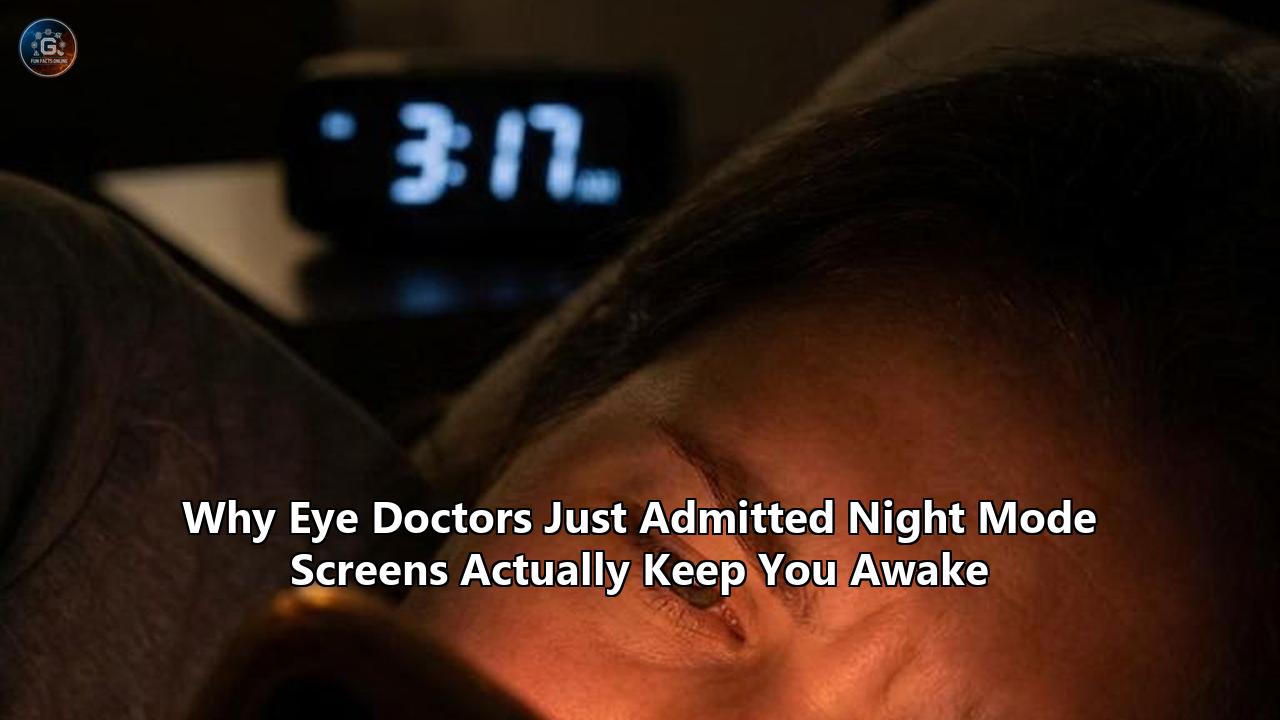
The medical consensus on digital eye strain and sleep hygiene just inverted. Following a joint assembly in late April 2026, the International Sleep Research Consortium (ISRC) and the Global Ophthalmological Task Force issued a definitive clinical directive that overturns over a decade of consumer tech advice: software-based "night mode" color-shifting features on smartphones, tablets, and computers do not improve sleep onset. In fact, they actively prolong wakefulness.
The task force’s 400-page report, supported by clinical data gathered over the last five years, strips away the perceived medical validity of turning digital screens a warm amber color after sunset. The findings reveal a dual failure in both biological science and behavioral psychology. By shifting screen hues from cool blue to warm yellow while maintaining high luminance, devices are inadvertently mimicking the spectral signature of midday sunlight, directly stimulating the eye's wakefulness receptors. Furthermore, the illusion of "safe" screen time has induced millions of users to extend their device usage deep into the night, compounding the neurological stimulation of digital content.
This announcement forces an immediate reckoning for tech giants like Apple, Google, and Microsoft, who have baked these features—such as "Night Shift" and "Night Light"—into the core architecture of their operating systems since 2016. It also sets off a cascade of consequences for the multi-billion-dollar blue-light blocking industry, occupational health guidelines, and the fundamental way we design modern display hardware.
The Biological Miscalculation: Color vs. Luminance
To understand the magnitude of this reversal, one must examine the specific mechanics of the human eye and the historical misunderstanding of how it interprets time.
In the early 2000s, researchers identified a third type of photoreceptor in the human retina, distinct from the rods and cones that process shapes and colors. These are intrinsically photosensitive retinal ganglion cells (ipRGCs). These cells express a photopigment called melanopsin, which acts as the body's primary environmental light sensor, relaying signals directly to the suprachiasmatic nucleus—the brain's master biological clock.
Initial research indicated that melanopsin was highly sensitive to short-wavelength light—specifically the blue light emitted by early LED screens. The tech industry quickly extrapolated a logical, yet ultimately flawed, solution: if blue light triggers melanopsin and suppresses the sleep hormone melatonin, then removing blue light via a software filter should solve the problem.
The 2026 ISRC report dismantles this assumption by highlighting a critical variable the tech industry ignored: brightness, or luminance. The task force relies heavily on foundational biological studies, including landmark research originating from the University of Manchester, which demonstrated that the human circadian system uses both color and brightness to determine the time of day.
In the natural world, twilight is actually dim and distinctly blue. Midday daylight, conversely, is incredibly bright and heavily skewed toward the yellow and white spectrum. When a user activates a smartphone's night mode, the screen shifts to a warm, yellowish-orange hue. However, because the backlight remains relatively intense to push light through the LCD or OLED pixel array, the device effectively blasts the retina with bright yellow light.
To the melanopsin receptors, this specific combination of high luminance and warm color does not signal a calming sunset; it signals a sunny afternoon. The Manchester researchers proved that when brightness is equalized, blue colors actually produce weaker effects on the mammalian body clock than equally bright yellow colors. By removing the blue but keeping the screen bright and turning it yellow, tech companies accidentally engineered the perfect artificial daytime signal.
The Behavioral Trap of "Safe" Screen Time
The physiological failure of color-shifting software is only half of the problem. The most damaging aspect of night mode, according to the new clinical consensus, is the behavioral shift it encouraged.
For years, the public has asked the same fundamental question: does night mode help sleep? The tech industry’s implicit answer was a resounding yes, marketed through intuitive UI toggles and wellness dashboards that categorized amber-tinted screen time as harmless. This created a profound psychological permission structure.
When users believe their device is actively protecting their sleep architecture, they engage in prolonged late-night usage. The ISRC report labels this the "Night Mode Placebo Effect." A user who might have previously turned off their phone at 10:00 PM due to eye strain or a conscious effort to wind down is now perfectly comfortable scrolling through social media, reading news, or watching videos until midnight, trusting the amber glow to shield their circadian rhythm.
Clinical psychologists involved in the task force pointed to the dopamine-driven nature of modern digital consumption. Whether a screen is emitting blue light or yellow light, the act of consuming highly stimulating, algorithmic content triggers a steady release of dopamine and cortisol. These neurotransmitters increase heart rate, elevate core body temperature, and suppress melatonin production entirely independently of photic stimulation. You cannot software-filter the neurological arousal of reading a stressful email or watching a rapid-fire video feed.
The data supporting this behavioral critique is extensive. Precursor studies, such as the 2021 research conducted by Chad Jensen at Brigham Young University, tested this exact dynamic. By tracking the sleep outcomes of adolescents using the iPhone's Night Shift feature, researchers found no significant improvement in sleep latency or quality compared to those who used their phones normally. The ultimate determining factor for sleep disruption was not the color of the screen, but the duration of screen engagement prior to bedtime. The 2026 data confirms this on a global scale: users utilizing night mode average 47 more minutes of pre-sleep device usage than those who do not, completely negating any theoretical photic benefit.
Who is Affected
The implications of this medical pivot are vast, impacting distinct demographics in different ways.
The Adolescent PopulationTeenagers are uniquely vulnerable to circadian disruption. Biological shifts during puberty naturally delay the onset of melatonin production, pushing adolescents toward a later sleep phase. Compounding this biological reality is the sheer volume of digital interaction required for modern socializing and academics. School districts and pediatricians have spent a decade advising parents to ensure their children use blue-light filters in the evening. The new data suggests this advice has inadvertently extended adolescent screen time, contributing to an ongoing epidemic of sleep deprivation that affects cognitive development, emotional regulation, and academic performance.
Shift Workers and Occupational HealthNight-shift workers—nurses, logistics personnel, emergency responders—rely heavily on precise light manipulation to manage their inverted sleep schedules. Many occupational health programs have historically recommended utilizing screen-tinting software to help workers wind down during their morning commutes or after returning home. The realization that these warm-tinted screens may actually be signaling "midday" to their brains forces a total rewrite of circadian management protocols in industrial and healthcare settings.
The General Consumer BaseOver four billion people currently use a smartphone operating system that features some form of automated evening color-shifting. This represents a massive, uncontrolled public health experiment. The general consumer has been operating under a false sense of digital security, organizing their evening routines around a feature that is scientifically counterproductive.
What Changes: The Hardware Reality
The ISRC’s admission immediately shifts the burden of responsibility from software engineers to hardware developers. Software cannot solve a hardware physics problem.
In standard LCD and OLED displays, creating an amber screen does not simply turn off light; it requires the continuous firing of photons from specific sub-pixels to mix a warm color, pushed outward by an aggressive backlight or individual pixel illumination. The retina is still receiving a massive bombardment of photonic energy.
As the medical community abandons the software approach, the tech industry must pivot to hardware-level interventions.
True Luminance DimmingThe immediate focus is shifting away from color temperature and toward absolute luminance reduction. Current smartphone screens struggle to drop below a certain brightness threshold without suffering from pulse-width modulation (PWM) flickering, which causes headaches and eye strain. Display manufacturers are now being pressured to develop new low-light architectures that allow screens to safely operate at sub-1-nit brightness levels. The goal is to drop the total light energy hitting the eye below the melanopic activation threshold, regardless of the color being displayed.
Spectral Notch Filtering in HardwareInstead of using software to alter the visible image, future display panels will likely incorporate hardware-level spectral notch filters. These physical layers would block specific, narrow wavelengths of light known to trigger ipRGCs without altering the overall color fidelity or requiring a yellow tint. By physically neutralizing the specific nanometer bands that suppress melatonin, manufacturers can offer actual circadian protection without the behavioral side effects of the amber glow.
The E-Ink IntegrationThe failure of traditional screens to accommodate human sleep biology is accelerating the development of secondary e-ink displays. We are already seeing prototypes of dual-screen devices that allow users to switch to a non-emissive, front-lit e-ink interface for evening reading. Because e-ink relies on reflected ambient light rather than a direct backlight, it mimics the photic profile of a physical book, bypassing the melanopsin trigger entirely.
Short-Term Consequences
The fallout from the April 2026 announcement is already materializing across several sectors.
Consumer Backlash and Legal VulnerabilityTech companies now face a distinct legal and public relations vulnerability. While Apple, Google, and Samsung have carefully avoided making explicit medical guarantees, their marketing materials have heavily implied that night mode features yield physiological benefits. Consumer protection agencies, particularly in the European Union, are already initiating inquiries into whether the marketing of "digital wellness" features constitutes false advertising. Class-action litigation regarding consumer deception is highly probable before the end of the year.
The Collapse of the Blue-Light Glasses MarketThe non-prescription blue-light blocking glasses industry, which surged to a multi-billion-dollar valuation in the wake of the pandemic, is facing an existential crisis. If shifting digital light to the warmer end of the spectrum fails to prevent melatonin suppression due to the overriding factors of luminance and behavioral stimulation, the core value proposition of these glasses evaporates. Optometrists are rapidly removing non-prescription blue-light frames from their displays, and major online retailers are heavily discounting inventory.
Rewriting Digital Hygiene StandardsThe immediate short-term consequence for the public is a jarring shift in medical advice. Pediatricians, sleep coaches, and general practitioners are urgently updating their patient materials. The nuanced debate of "does night mode help sleep" is being replaced by a much blunter, harder-to-swallow directive: absolute screen cessation. The new standard of care dictates complete separation from emissive digital displays at least 60 to 90 minutes prior to intended sleep onset. No filters, no dark modes, no amber tints.
Long-Term Consequences
The realization that our primary interface with the digital world is fundamentally incompatible with our evolutionary biology will drive significant long-term shifts in both technology and society.
The Evolution of "Dark Mode"It is critical to distinguish between "Night Mode" (the amber color shift) and "Dark Mode" (inverting the UI to feature white text on a black background). While color-shifting has been debunked, Dark Mode on an OLED screen—where black pixels are physically turned off—does legitimately reduce the total volume of photons entering the eye. Long-term software design will likely abandon color manipulation entirely and enforce mandatory, deep-black UI themes combined with extreme, flicker-free dimming protocols during evening hours.
Smart Home Lighting Re-evaluationsThe findings regarding luminance and yellow light extend beyond digital screens into environmental lighting. The trend of outfitting homes with "warm" 2700K LED bulbs for evening relaxation is now under scrutiny. If warm light combined with high brightness signals midday sun, home lighting systems will need to evolve. The future of evening illumination lies in hyper-dimmed, low-luminance lighting, potentially utilizing specific red wavelengths—which have the absolute lowest impact on melanopsin—rather than standard warm white or amber.
The Push for Algorithmic CurfewsBecause the behavioral stimulation of content is equally responsible for sleep disruption, the long-term tech response may move beyond display hardware and into algorithmic regulation. If a screen cannot be made safe for evening use, OS developers may face regulatory pressure to implement "friction" into nighttime scrolling. This could manifest as enforced delays in video loading, the disabling of infinite scroll mechanisms after 10:00 PM, or aggressive, un-bypassable lockout screens designed to break the psychological loop of bedtime procrastination.
Looking Ahead: The Next Phase of Digital Coexistence
The ISRC and Global Ophthalmological Task Force’s joint declaration marks the end of an era of convenient self-deception. The tech industry offered a simple, frictionless solution to a complex biological problem, and the public eagerly accepted it. We preferred a yellow screen to the much harder reality of simply turning the phone off.
As we move past the blue-light myth, several key milestones will define the next phase of this transition. Watch for the major developer conferences—Apple’s WWDC and Google’s I/O—later this year. How these companies quietly rebrand, deprecate, or entirely remove their color-shifting features will indicate how rapidly the industry is adapting to the new clinical reality.
Furthermore, keep an eye on the FTC and its European equivalents. If regulators decide to establish strict criteria for what can legally be marketed as a "sleep-aiding" technology, the entire digital wellness landscape will be radically restructured.
Ultimately, this reversal forces a necessary confrontation with our digital consumption habits. We now have conclusive proof that we cannot engineer our way out of evolutionary biology with a software patch. The screen is a stimulant, regardless of its hue. Understanding this allows consumers to make informed, albeit difficult, decisions about their evening routines, prioritizing genuine biological rest over the illusion of digital safety.