The scientific consensus regarding severe cognitive decline has long been governed by a stark, linear rule: neurons die, networks physically degrade, and the data stored within those networks is permanently deleted. This week, that foundational assumption fractured.
In two separate but philosophically linked announcements from Cold Spring Harbor Laboratory (CSHL) and the University of California, San Francisco (UCSF), researchers successfully reversed severe cognitive impairment in mammalian models. They did not merely slow the progression of brain aging. They did not just halt the accumulation of toxic proteins. By targeting specific, highly common metabolic proteins—enzymes that have existed in the crosshairs of diabetes and obesity research for decades—scientists prompted the brains of older, cognitively impaired mice to physically rebuild their neural circuits.
"It's a slow bereavement," Nicholas Tonks, a CSHL professor whose own mother lived with Alzheimer's, observed when discussing the nature of memory loss. "You lose the person piece by piece".
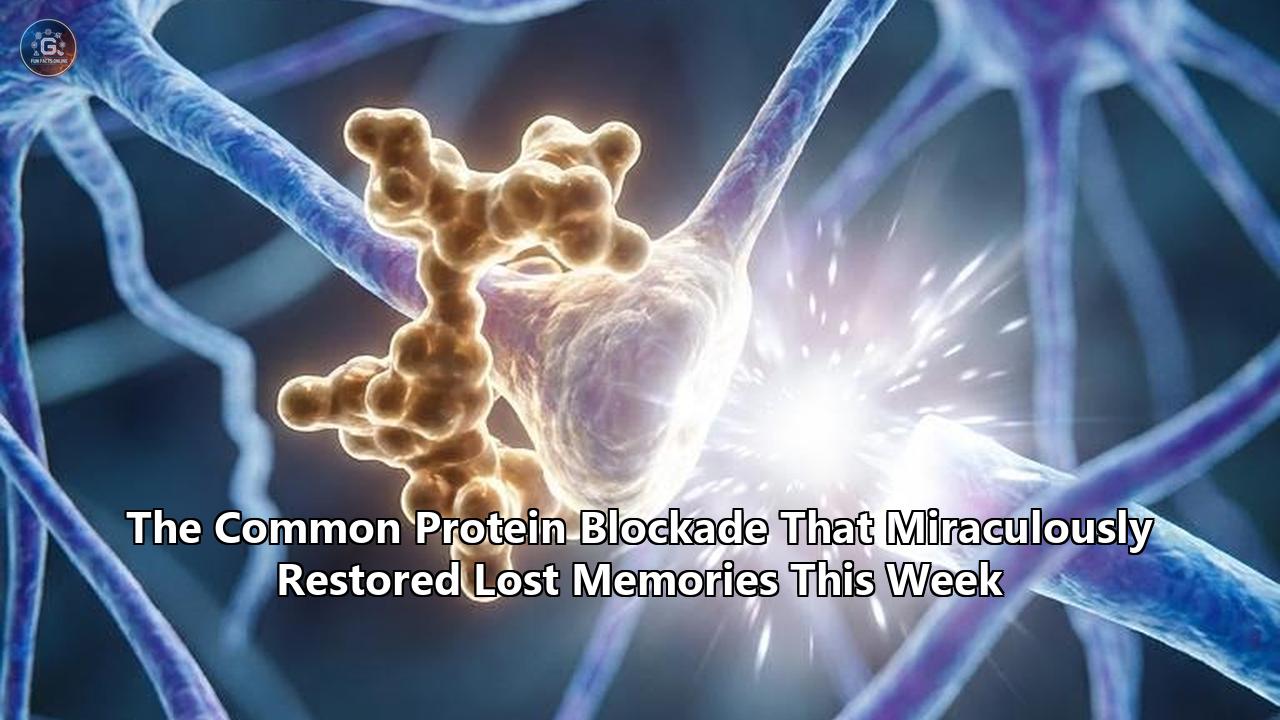
Yet, the data published this week offers an unprecedented counter-narrative to that slow bereavement. The research teams demonstrated that blocking a protein known as PTP1B alongside manipulating another age-associated protein called FTL1 fundamentally resets the brain's immune and energy pathways. When these protein blockades were applied, exhausted immune cells in the brain suddenly woke up and resumed clearing toxic debris. Simultaneously, cellular metabolism stabilized, and neurons began branching out to form new connections.
For the first time in modern neuropharmacology, researchers watched a biochemical intervention physically restore lost memories in subjects that had been stripped of their spatial and recognition abilities.
To understand the magnitude of this week's breakthrough, one must trace the timeline backward. The ability to flip a switch and bring a dying neural network back online did not emerge from a sudden stroke of genius in 2026. It is the culmination of a nearly four-decade pursuit that began far outside the realm of neuroscience, rooted instead in the quiet laboratories of metabolic research.
1988–1999: The Isolation of a Metabolic SwitchThe origin of this week's neurological breakthrough traces back to 1988, in a laboratory focused on cellular signaling rather than memory. It was there that a young Nicholas Tonks first identified and purified a protein called Protein Tyrosine Phosphatase 1B (PTP1B).
At the cellular level, biological instructions are frequently transmitted through a process called phosphorylation—the addition of a phosphate group to a protein, which typically turns a biological function "on." Phosphatases, conversely, remove these phosphate groups, turning the function "off." When Tonks isolated PTP1B, he uncovered one of the body's primary biological off-switches.
Throughout the 1990s, the medical community became intensely interested in PTP1B, but their focus was entirely metabolic. As the global rates of obesity and Type 2 diabetes began to climb exponentially, researchers realized that PTP1B played a dominant role in dampening insulin signaling. When insulin binds to a cell receptor, it initiates a cascade of signals that prompts the cell to absorb glucose. PTP1B is the enzyme that dephosphorylates the insulin receptor, shutting down that absorption pathway.
Pharmaceutical companies spent the late 1990s racing to develop PTP1B inhibitors. The logic was mathematically straightforward: if you block the enzyme that turns off insulin signaling, you can reverse insulin resistance in diabetic patients.
However, they immediately encountered a severe structural roadblock. The active site of the PTP1B enzyme—the physical pocket where the chemical reaction occurs—is highly charged. Any synthetic drug designed to fit into that active site had to be equally charged, which meant it could not easily pass through the lipid membranes of human cells, let alone the heavily fortified blood-brain barrier.
Because of this pharmacological hurdle, PTP1B was largely shelved as an "undruggable" target by major pharmaceutical companies by the early 2000s. The enzyme remained a well-understood biological mechanism, but clinically out of reach. Neuroscience, meanwhile, was entirely consumed by a different pursuit.
2000–2010: The Plaque Tunnel Vision and the Silent FailureWhile metabolic researchers were struggling to drug PTP1B, neuroscientists were locking into the "amyloid cascade hypothesis."
Since Alois Alzheimer first examined the brain of Auguste Deter in 1906, the disease has been physically characterized by the presence of amyloid-beta plaques and tau protein tangles. By the early 2000s, the prevailing wisdom in neuroscience dictated that the accumulation of amyloid-beta was the sole upstream driver of Alzheimer's disease. The assumption was that if a drug could sweep these plaques from the brain, the disease would be cured.
Billions of dollars were poured into developing monoclonal antibodies designed to bind to and clear amyloid plaques. From 2000 to 2010, trial after trial successfully cleared the plaque in animal models, and eventually in humans. Yet, the cognitive results were consistently devastating.
Clearing the plaque did not restore lost memories.
In some cases, the aggressive clearance of plaque led to severe brain swelling and microhemorrhages, a condition now known as ARIA (Amyloid-Related Imaging Abnormalities). Even when the drugs worked flawlessly to remove the toxic proteins, human patients continued to lose their cognitive faculties, albeit sometimes at a marginally slower rate.
Neurologists were forced to confront a grim reality: amyloid plaques might be the graveyard of dead neurons, but clearing the tombstones does not bring the dead back to life. The physical degradation of the dendritic spines—the branching structures that neurons use to communicate and store data—remained damaged.
The field needed a new target. They needed a mechanism that could not only clean the brain but actively repair the underlying structural damage.
2011–2018: The "Type 3 Diabetes" ConnectionAs the pure amyloid hypothesis began to show cracks, epidemiologists started publishing vast longitudinal datasets that revealed an undeniable pattern. Adults with Type 2 diabetes and chronic obesity were at a massively elevated risk of developing Alzheimer's disease—often showing risk profiles double or triple those of metabolically healthy individuals.
This overlap led to the colloquial, though clinically controversial, designation of Alzheimer's as "Type 3 Diabetes."
Researchers discovered that the brain is an incredibly energy-demanding organ, consuming roughly 20% of the body's glucose despite representing only 2% of its mass. Furthermore, the brain relies heavily on insulin signaling not just for energy uptake, but for synaptic plasticity—the physical process of learning and memory formation.
When the body becomes insulin resistant, the brain becomes insulin resistant.
This realization prompted a quiet but profound shift in neurological research. Scientists began combing through the archives of metabolic medicine, looking for targets that influenced both insulin resistance and cellular stress.
Nicholas Tonks' discovery from 1988, PTP1B, suddenly reappeared on the radar. Not only was PTP1B a negative regulator of insulin, but new assays revealed that it was heavily upregulated in the brains of Alzheimer's patients. As the brain became stressed by the early accumulation of amyloid, it produced more PTP1B, which in turn shut down insulin signaling, starving the neurons of energy and accelerating their collapse.
Simultaneously, researchers finally cracked the pharmacological puzzle that had halted PTP1B research in the 1990s. Rather than trying to force a drug into the highly charged active site of the enzyme, biochemists developed "allosteric inhibitors." These molecules bind to a different, less charged region of the PTP1B enzyme, physically altering its shape so that it can no longer function.
With a viable, brain-penetrating inhibitor finally in hand, the stage was set for a collision between metabolic science and neurology.
2019–2023: The Microglial Exhaustion CrisisAs Tonks' lab began testing these new PTP1B inhibitors, the broader neuroscience community uncovered another critical piece of the Alzheimer's puzzle: the role of microglia.
Microglia are the resident immune cells of the central nervous system. Under healthy conditions, they act as the brain's frontline maintenance crew. They patrol the neural tissue, sensing trouble, repairing damaged synapses, and physically engulfing and destroying cellular debris through a process called phagocytosis.
In the early stages of Alzheimer's, microglia are highly active. They recognize the buildup of amyloid-beta as a threat and swarm the area, effectively keeping the plaque growth in check. This is why many humans can harbor Alzheimer's pathology for a decade or more without showing a single cognitive symptom. The microglia are holding the line.
However, somewhere between the asymptomatic phase and severe cognitive decline, a catastrophic biological shift occurs. The microglia become exhausted.
Yuxin Cen, a graduate student working alongside Tonks, noted this phenomenon explicitly. "Over the course of the disease, these cells become exhausted and less effective," Cen explained.
When microglia reach this state of exhaustion, they stop clearing amyloid. Worse, they become chronically inflamed and begin releasing neurotoxic cytokines. Instead of protecting the neurons, the exhausted microglia actively contribute to the destruction of the synaptic networks. The environment of the brain becomes highly toxic, and memory circuits begin to physically dissolve.
From 2019 to 2023, the holy grail of Alzheimer's research shifted from simply attacking amyloid to finding a way to "rejuvenate" these exhausted microglia. If the brain's natural cleanup crew could be brought back online, they could theoretically clear the debris natively, without the severe side effects of synthetic monoclonal antibodies.
2024–2025: The Biochemical Bridges (SYK and FTL1)The escalating timeline reached a critical inflection point over the last 24 months, driven by two separate laboratories uncovering the exact mechanisms of brain cell exhaustion.
At Cold Spring Harbor Laboratory, Tonks, Cen, and postdoctoral fellow Steven Ribeiro Alves identified the missing molecular link between the metabolic enzyme PTP1B and the exhausted microglia. They discovered that PTP1B directly interacts with another protein called spleen tyrosine kinase (SYK).
SYK is the master switch that controls microglial phagocytosis. When SYK is phosphorylated (turned on), the microglia actively hunt and consume amyloid plaques. However, the researchers found that in the Alzheimer's brain, the overproduced PTP1B enzyme actively dephosphorylates (turns off) SYK.
The chain reaction was devastatingly clear: Metabolic stress increased PTP1B. PTP1B shut down SYK. SYK shutdown caused the microglia to stop eating plaque. The plaque accumulated, neurons died, and memories faded.
Meanwhile, 3,000 miles away at the University of California, San Francisco, Dr. Saul Villeda's team was uncovering a parallel pathway related to the sheer energy required to maintain memory circuits.
Villeda's team identified a separate protein, FTL1, that rises aggressively as the brain ages. By examining the hippocampus—the brain's primary engine for learning and memory formation—they noticed that older mice possessed significantly higher levels of FTL1.
To prove cause and effect, Villeda's team engaged in a radical experiment. They artificially elevated FTL1 levels in the brains of young, healthy mice. The results were instantaneous and severe. The young neurons lost their complex, branching structures, simplifying into rudimentary shapes that could no longer communicate effectively. Their metabolism plummeted, and the young mice began failing standard memory tests.
Villeda's team realized that FTL1 was actively disrupting the production of NADH, a helper molecule essential for creating ATP (cellular energy). Without energy, the neurons simply could not maintain the massive architectural networks required to hold memories.
By late 2025, the global neurological community had two distinct, highly actionable targets. CSHL had PTP1B, the enzyme shutting down the brain's immune system. UCSF had FTL1, the protein starving the brain's memory centers of energy.
The next step was to see what would happen if these proteins were blocked.
Early 2026: The Defining ExperimentsThe data that broke this week in late April 2026 was generated during rigorous animal trials conducted over the past few months.
At CSHL, Tonks' team utilized a specific mouse model of Alzheimer's disease—typically animals genetically engineered to overproduce mutant human amyloid and tau proteins, guaranteeing severe cognitive decline by a certain age.
Once the mice reached the stage of advanced pathology, exhibiting profound memory deficits and massive plaque accumulation, the researchers administered a PTP1B inhibitor.
The biological response was almost immediate. By blocking PTP1B, the suppression of SYK was lifted. The SYK signaling pathway roared back to life, and the microglia shook off their exhaustion. "Our results suggest that PTP1B inhibition can improve microglial function, clearing up Aβ plaques," Cen reported.
But clearing the plaque was only half the battle. The true test lay in the behavioral assays.
Researchers subjected the treated mice to a battery of cognitive tests, including the Morris Water Maze (which tests spatial memory and the ability to remember the location of a hidden platform) and Novel Object Recognition (which tests the ability to distinguish between familiar and new objects in an environment).
The mice that received the PTP1B inhibitor did not just stop deteriorating. They began passing the tests with metrics that mirrored healthy, non-diseased mice.
Simultaneously, Villeda's team at UCSF reduced FTL1 levels in their cohort of older, cognitively impaired mice. They also treated the cells with a compound that boosted NADH metabolism to counter the energy deficit.
The physical changes in the UCSF mice were equally astounding. Under the microscope, the neurons in the hippocampus began to build more connections again. The dendritic spines grew back, re-establishing the lost neural networks. On the behavioral front, the treated mice scored "significantly better" on their memory tests.
"It is truly a reversal of impairments," Villeda stated directly. "It's much more than merely delaying or preventing symptoms".
How the Common Protein Blockade Actually Restores MemoryTo comprehend why the phrase "restore lost memories" is being used by cautious scientists, it is necessary to examine the physical nature of memory itself.
A memory is not a file saved on a hard drive; it is a physical, architectural structure built from proteins and electrical potentials. When you learn something new, the neurons in your hippocampus strengthen their connections with one another through a process called Long-Term Potentiation (LTP). The neurons physically grow new dendritic spines, reaching out to touch neighboring cells, creating a dense, highly communicative web.
When a patient suffers from Alzheimer's or age-related cognitive decline, those dendritic spines retract. The connections break. The memory is not necessarily "deleted" in the software sense, but the physical hardware required to access and transmit that memory is dismantled.
Historical treatments that only cleared amyloid plaque failed to restore lost memories because removing the toxic environment did not provide the biological signal or the cellular energy required to rebuild the dismantled hardware.
The common protein blockades detailed this week represent a fundamental departure because they alter the intrinsic signaling of the cells.
When the PTP1B blockade lifted the suppression of the immune system, the microglia did not just eat the toxic plaque; they also secreted neurotrophic factors—chemical fertilizers that tell neurons to grow. When the FTL1 blockade restored NADH and ATP production, the neurons suddenly had the metabolic budget required to fund that growth.
With the toxic debris cleared, the immune system acting as a support structure, and the energy grid back online, the neurons naturally resumed their default biological imperative: they reconnected.
As the dendritic spines grew back and reattached to their original network pathways, the spatial and recognition abilities of the mice returned. The ability to restore lost memories depends entirely on this physical reconnections of the neural web, a feat that had never been so clearly triggered by targeting a single metabolic enzyme.
Late April 2026: The Shift to Human ApplicationsThe speed at which these findings are moving from academic discovery to clinical application is accelerating, driven by the sheer scale of the Alzheimer's crisis. The global cost of dementia is actively scaling past the $1 trillion mark, and demographic shifts guarantee that the patient population will only increase over the next decade.
Because PTP1B was originally targeted as a diabetes treatment, the pharmacological groundwork for inhibiting it is remarkably mature. The Tonks laboratory has already entered into a formal collaboration with DepYmed, Inc., a clinical-stage pharmaceutical company, to rapidly develop and refine PTP1B inhibitors for human medical applications.
The strategy moving forward is uniquely collaborative rather than competitive. Current therapies, specifically the recently approved monoclonal antibodies that clear amyloid, offer limited benefits for many patients and carry high risks. However, researchers view the PTP1B blockade as the perfect complementary therapy.
"Using PTP1B inhibitors that target multiple aspects of the pathology, including Aβ clearance, might provide an additional impact," noted postdoctoral fellow Steven Ribeiro Alves.
Tonks envisions a future where Alzheimer's treatment mirrors modern oncology or HIV management: a highly calibrated cocktail of drugs. A patient might receive a monoclonal antibody to perform the heavy lifting of clearing existing massive plaque deposits, while simultaneously taking an oral PTP1B inhibitor to keep the microglia awake, prevent future buildup, and provide the neuro-immunological support necessary to physically restore lost memories.
"The goal is to slow Alzheimer's progression and improve quality of life of the patients," Tonks stated. With the validation of this specific protein blockade, the definition of "improving quality of life" has fundamentally expanded to include the recovery of what was previously thought to be permanently gone.
Looking Ahead: Milestones for 2026 and BeyondThe escalation of this narrative over the last forty years—from a vague metabolic enzyme discovered in a placenta to a key that unlocks the brain's immune system—sets a demanding agenda for the remainder of 2026 and early 2027.
The immediate next step involves human safety and dosing trials. While DepYmed and the CSHL researchers possess highly refined small-molecule inhibitors, the human blood-brain barrier is notoriously unforgiving. Ensuring that an adequate, sustained concentration of the inhibitor reaches the hippocampus without disrupting the delicate metabolic balance of the rest of the body remains the primary pharmacological hurdle.
Similarly, Villeda's findings at UCSF regarding FTL1 require translation from murine models to human neural organoids. Medical progress on the energy deficit front will depend heavily on proving that human memory circuits respond to NADH metabolism boosts in the exact same manner that mouse circuits do.
There are also unresolved questions regarding the timeline of intervention. The current animal models proved that the common protein blockade could reliably restore lost memories in subjects that had already experienced significant decline. However, neurologists need to determine the absolute point of no return. If a neuron has completely undergone apoptosis (programmed cell death) rather than just synaptic retraction, no metabolic blockade can bring it back. The upcoming clinical trials will rely heavily on advanced PET imaging to identify exactly which patients retain enough dormant neural architecture to benefit from the treatment.
Despite these clinical hurdles, the announcements made this week shatter a decades-old psychological barrier in neurodegenerative research. By reframing brain aging and Alzheimer's disease not as an inevitable cellular death march, but as a reversible state of immune exhaustion and energy deprivation, researchers have charted a new course. The pursuit has officially moved past the desperate hope of merely freezing the disease in place. The science is now aimed directly at reclaiming what has been taken.
Reference:
- https://www.sciencedaily.com/releases/2026/04/260429102037.htm
- https://en.igihe.com/health/article/breakthrough-discovery-reveals-protein-behind-brain-agingoffers-potential-to-reverse-memory-decline
- https://www.miragenews.com/scientists-restore-memory-by-blocking-one-1665153/
- https://www.earth.com/news/scientists-found-a-protein-that-drives-memory-decline-and-blocking-it-restored-memory-in-old-mice/
- https://scitechdaily.com/a-new-alzheimers-target-emerges-blocking-one-protein-restores-memory-in-mice/
- https://www.thenews.com.pk/latest/1397910-new-aging-brain-study-finds-single-protein-behind-cognitive-decline-and-possible-reversal