For decades, the public panic surrounding oral hygiene tools focused entirely on the toilet. Mainstream coverage reliably resurrected the same anxiety-inducing narrative: an open toilet lid plus a flush equals a microscopic plume of enteric pathogens coating the bristles of your brush. But while consumers were busy buying plastic covers and UV sanitizers to fend off phantom fecal matter, environmental engineers and microbiologists were tracking a much more complex and aggressive biological reality occurring right on the sink edge.
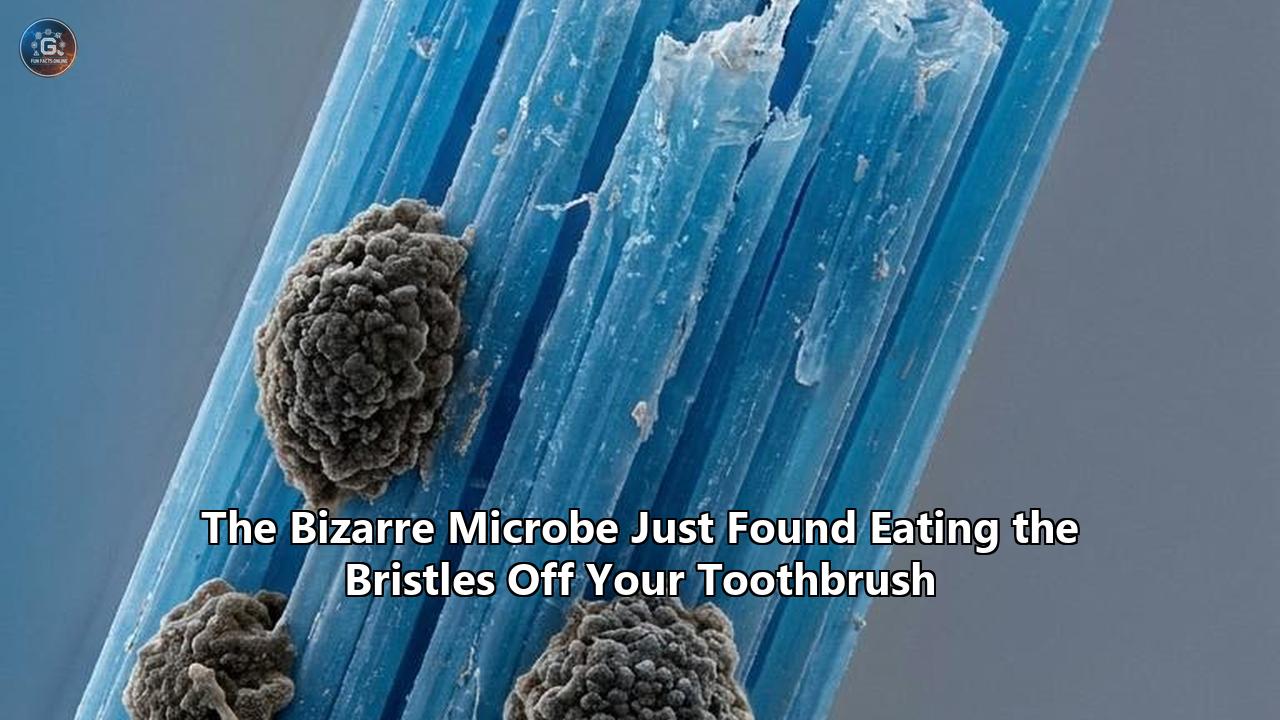
Recent metagenomic sequencing and materials science research have revealed that the bristles of your toothbrush are not merely an inert staging ground for transient mouth germs. They are a rapidly deteriorating, highly active ecosystem. The latest discoveries show that the synthetic polymers comprising the brush are actively shedding millions of microplastics—and that a newly identified consortium of environmental microbes and bacteria-eating viruses are quite literally consuming the microscopic landscape of the bristles themselves.
The convergence of high-throughput DNA sequencing and advanced Raman imaging has exposed a brutal microbial food web playing out twice a day. As mechanical friction fractures the nylon, specific enzymatic strains settle into the plastic fissures to metabolize the leached polymers, while hundreds of distinct predatory viruses hunt the bacteria that build their slime fortresses on the fraying plastic.
To understand the sheer scale of the biological and chemical warfare happening on this everyday object, you have to look past the clickbait headlines and examine the raw sequencing data, the material degradation rates, and the political economics of the modern dental industry.
The Myth of the Fecal Plume and the Real Oral Zoo
The pervasive fear that toothbrushes are coated in E. coli and other gut bacteria largely stems from hypothetical aerosol models rather than rigorous biological sampling. When environmental engineering researchers at Northwestern University launched "Operation Pottymouth," a massive citizen-science initiative to map the toothbrush microbiome, they sought to definitively identify the origins of the microbes residing on the bristles.
Participants mailed in used toothbrushes along with detailed metadata about their bathroom layouts, ventilation, and oral hygiene habits. The researchers extracted DNA from the bristled heads and ran the genetic material against the massive databases compiled by the National Institutes of Health’s Human Microbiome Project. The results completely dismantled the prevailing mainstream narrative.
The overwhelming majority of microbial communities found on the bristles mapped directly to the human mouth and skin, with virtually zero correlation to the human gut microbiome. Regardless of whether the brush was stored out in the open, next to the toilet, or behind a closed medicine cabinet door, the dominant taxonomic profiles remained oral. The fear of the toilet aerosol, while technically possible in heavily contaminated clinical environments, proved statistically irrelevant in standard domestic settings.
Instead, the sequencing revealed a high concentration of Streptococcaceae, Micrococcaceae, and Actinomycetaceae—organisms that are highly specialized to thrive in the oral cavity. But the bristles do not simply reflect the mouth; they heavily select for specific survival traits. The mouth is a dynamic, highly regulated environment constantly flushed by neutralizing saliva and immune responses. The toothbrush, left to sit in a damp, room-temperature bathroom, forces these oral microbes to adapt or die.
What survives is a rugged, highly resilient sub-population of the oral microbiome that quickly forms a defensive architecture on the synthetic plastic.
The Extracellular Fortress: Anchoring to the Plastic
Microbial survival on a synthetic surface dictates that solitary, planktonic cells perish. To survive the extreme environmental shifts between the warm, nutrient-rich mouth and the cold, dry bathroom air, bacteria must immediately construct an extracellular polymeric substance (EPS). This EPS, commonly referred to as a biofilm or slime matrix, is the same biological concrete that forms plaque on human enamel.
When you brush, the physical abrasion transfers millions of microbes into the tight, capillary-like spaces between the bristle tufts. Once lodged there, specific pioneer bacteria like Corynebacteria begin precipitating calcium from residual saliva. They act as microscopic masons, building a calcified structure that glues the microbial community directly to the nylon.
Within this matrix, bacteria radically alter their metabolic behavior. Genes that remain dormant when the cell is free-floating are suddenly activated. The EPS acts as a molecular sieve, trapping dietary proteins, residual sugars from your breakfast, and moisture, creating an isolated, self-sustaining micro-city.
This biofilm is incredibly difficult to penetrate. Rinsing the brush under a cold tap removes loose debris and unattached cells, but it does absolutely nothing to the established matrix. Inside this slime, oral commensal bacteria (the harmless or beneficial strains) engage in chemical warfare with opportunistic pathogens like Streptococcus mutans, the primary driver of tooth decay. When you consume high amounts of sugar, the biofilm on your teeth—and subsequently on your brush—becomes highly acidic. This acidic shift favors acid-tolerant pathogens, drastically altering the ratio of good-to-bad microbes loaded back into your mouth during the next use.
Chewing on Nylon: The Polymer Degradation Problem
The most disruptive revelation in recent toothbrush analysis has nothing to do with what the microbes are doing to your teeth, but rather what they are doing to the brush itself. For over eight decades, the dental industry has relied on petroleum-derived plastics for both the handle and the bristles. The vast majority of modern toothbrush bristles are extruded from Nylon-6 or polybutylene terephthalate (PBT).
These materials have historically been considered biologically inert. However, the mechanical realities of brushing combined with the enzymatic capabilities of environmental microbes have proven otherwise.
Every time you press the bristles against your teeth, the friction causes microscopic degradation of the plastic. Advanced ecotoxicology studies published in 2025 utilized Raman spectroscopy to quantify this wear, revealing that a standard nylon toothbrush sheds up to 2.3 million microplastic particles per year. These particles range from jagged microscopic fragments to elongated polymer fibers.
But this mechanical weathering is only half the equation. The micro-fractures created by your teeth provide the perfect, sheltered crevices for environmental bacteria to colonize. Among the dust and air particulates settling in your bathroom are highly adaptable environmental microbes. Some of these strains, related to species like Arthrobacter and Pseudomonas, possess specialized enzymes capable of cleaving synthetic polymer chains.
When these environmental microbes settle into the micro-tears of a wet toothbrush bristle, they do not just use the plastic as a mounting surface—they use it as a carbon source. The microbes secrete depolymerase enzymes that interact with the frayed, weakened ends of the nylon and PBT fibers. By breaking the molecular bonds of the polymer, the bacteria effectively "eat" the microscopic rough edges of the bristles.
While this localized plastic degradation will not cause the bristles to visually dissolve into thin air overnight, the microscopic enzymatic gnawing dramatically accelerates the physical wear of the brush. As the microbes metabolize the exposed plasticizers and polymer fragments, the surface area of the bristle becomes heavily pitted and scarred. This increased surface roughness creates even more anchoring points for the oral biofilm, creating a feedback loop of structural degradation and microbial colonization.
This mechanism completely reframes the timeline of toothbrush expiration. The American Dental Association's recommendation to replace a brush every three to four months is not just about the bristles visibly splaying; it is a critical intervention to discard a piece of plastic that has been micro-structurally compromised and fully colonized by polymer-degrading and plaque-forming microbes.
The Phage Invaders: Viruses Hunting on the Bristles
If the bacteria are eating the structural integrity of the toothbrush, what is eating the bacteria?
In late 2024, the microbiological community was stunned by a follow-up study out of Northwestern University that shifted the focus from bacteria to viruses. By swabbing showerheads and toothbrushes across the country, researchers identified more than 600 distinct viruses thriving in these bathroom micro-environments.
These are not the types of viruses that cause human respiratory illnesses. They are bacteriophages—highly specialized, alien-looking viruses whose sole biological imperative is to hunt, infect, and annihilate bacteria. The concentration and diversity of phages discovered on the bristles were unprecedented. The researchers noted that virtually every single toothbrush hosted a completely unique viral signature, with almost no overlap between different households.
The implications of this microscopic warzone are vast. The phages actively regulate the bacterial populations on the brush. When a specific bacterial strain, such as a mycobacterium, begins to dominate the biofilm, the local phage population that preys upon that specific strain rapidly multiplies. The phages attach their tail fibers to the bacterial cell wall, puncture the membrane, and inject their genetic material, turning the bacteria into a viral replication factory until the cell violently bursts.
This natural predator-prey dynamic is entirely invisible to the naked eye but acts as a critical biological balancer. More importantly, this discovery has massive clinical potential. With antimicrobial resistance accelerating globally, the medical establishment is desperately searching for alternatives to traditional antibiotics. The phages discovered feeding on the bacteria nestled in toothbrush bristles—particularly those that specifically target illness-causing mycobacteria, which are responsible for severe infections like tuberculosis and leprosy—represent a massive, untapped reservoir of potential phage therapies. The next great medical intervention against drug-resistant superbugs might literally be cultivated from the bristles sitting next to your bathroom sink.
Inside the Metagenomics Pipeline: How We Know What We Know
The ability to identify a previously unknown polymer-degrading bacteria or catalog 600 distinct bacteriophages from a piece of household plastic requires a sophisticated technical infrastructure. Mainstream articles rarely explain how a microbiologist goes from a wet, frayed piece of nylon to a comprehensive taxonomic map.
The process begins in the extraction hood. Because the biofilms are anchored so aggressively to the micro-fissures in the nylon, researchers cannot simply rinse the bristles into a petri dish. The bristles undergo mechanical lysis—often a process called "bead beating," where the plastic filaments are placed in a tube with microscopic glass or silica beads and violently agitated at thousands of oscillations per minute. This physical trauma shatters the extracellular matrix and breaks open the tough cell walls of the bacteria, spilling their raw DNA into a solvent solution.
From there, the genetic material must be purified and prepared for next-generation sequencing (NGS). To identify the exact composition of the bacteria on toothbrush surfaces, scientists utilize 16S rRNA sequencing. The 16S ribosomal RNA gene is highly conserved across all bacterial species, acting as a molecular barcode. By amplifying this specific gene and feeding it through an Illumina sequencing machine, the computer outputs millions of short genetic reads.
Bioinformatics pipelines then take over. Advanced algorithms clean the data, group similar sequences into Operational Taxonomic Units (OTUs), and compare them against massive global databases. This allows researchers to definitively state not just what families of bacteria are present (like Enterobacteriaceae or Lactobacillales), but exactly what percentage of the biofilm they occupy.
For a deeper look, researchers use shotgun metagenomics, which sequences all the genetic material in the sample, not just the bacterial barcodes. This is how the Northwestern team identified the bacteriophages—viruses do not have a 16S rRNA gene, so their presence only appears when you sequence the entire genomic soup. Shotgun metagenomics also allows researchers to map the "resistome"—the specific genes within the bacterial community that code for antibiotic resistance.
The Antimicrobial Resistance Trap
The identification of the resistome brings us to one of the most counterintuitive and dangerous aspects of modern oral care. When consumers realize their toothbrush is a heavily populated biological habitat, their first instinct is aggressive sterilization. They soak the bristles in mouthwash, blast them with ultraviolet (UV) light, or buy toothpaste loaded with antimicrobial agents.
Genomic sequencing proves that this hyper-vigilance often creates a much worse problem.
When you apply harsh chemical antimicrobials to the complex biofilm on the bristles, you rarely achieve total sterilization. The extracellular matrix physically shields the deepest layers of the bacteria. The chemicals wipe out the weakest, most benign commensal strains, leaving behind only the organisms that naturally possess genetic resistance.
By analyzing the bacteria on toothbrush bristles belonging to users with pristine oral hygiene habits, researchers uncovered a disturbing paradox: the toothbrushes of frequent brushers who utilized heavy antimicrobial interventions actually hosted a higher proportion of antimicrobial resistance genes (ARGs).
These surviving microbes are pushed through an evolutionary bottleneck. They upregulate multidrug efflux pumps—microscopic mechanical valves in their cell walls that literally pump the antimicrobial chemicals back out before they can cause damage. When you continuously expose the bristles to sublethal doses of antiseptics, you are effectively running a selective breeding program for superbugs right on your bathroom counter.
Furthermore, consumer-grade sterilization tech often fails to deliver on its marketing promises. UV sanitizing cases rarely output enough wattage or maintain enough exposure time to fully penetrate the three-dimensional geometry of a tightly packed bristle head. Microwaving the brush or running it through the dishwasher destroys the structural integrity of the nylon, drastically increasing the micro-fractures and surface pitting, which in turn accelerates microbial colonization and plastic shedding.
The scientific consensus from periodontists and microbiologists is absolute: regular toothpaste is sufficient, and allowing the brush to air-dry in an open, upright position is the safest and most effective way to regulate the microbial load. Drying deprives the biofilm of the moisture required for rapid cell division, stalling the colony's expansion without triggering the evolutionary panic that leads to chemical resistance.
The Material Science Dilemma: Greenwashing and the Bamboo Illusion
As the reality of microplastic shedding and polymer-degrading bacteria enters the clinical spotlight, consumer pressure has mounted against the traditional plastic toothbrush. This has given rise to a massive alternative market, spearheaded by the bamboo toothbrush.
Marketed as the ultimate zero-waste, eco-friendly solution, the bamboo handle does offer a genuine reduction in petroleum reliance. Bamboo possesses natural antimicrobial properties during its life as a plant, though extraction and processing heavily dictate whether these properties survive into the final consumer product.
However, looking closely at the engineering of these sustainable alternatives reveals a massive gap in materials science. The handle of the toothbrush is entirely irrelevant to the friction, degradation, and biological colonization happening inside the mouth. The working end of the tool—the bristles—remains the problem.
The overwhelming majority of commercial bamboo toothbrushes still utilize Nylon-6 or Nylon-4 bristles. The mechanical breakdown, the shedding of millions of microplastics into the user's gastrointestinal tract, and the enzymatic degradation of the polymer by opportunistic microbes still occur at the exact same rate. The brush is only biodegradable if you manually extract the synthetic bristles with pliers before composting the wooden stick.
Creating a truly microplastic-free, biodegradable bristle is an engineering nightmare. Historically, before DuPont introduced mass-produced nylon in 1938, the dental industry relied on Siberian boar hair or horsehair. While these natural fibers are completely free of synthetic plasticizers and do not shed petroleum fragments, they present an entirely different set of biological risks.
Animal hair is highly porous. Unlike extruded nylon, which is relatively smooth until fractured by mechanical wear, a natural hair follicle features a complex, overlapping scale structure. These natural crevices absorb and retain moisture far longer than synthetic materials, creating an ideal, permanent incubator for fungal and bacterial growth. Attempting to manage the bacteria on toothbrush heads made of natural hair requires exhaustive drying protocols, and even then, the natural degradation of the keratin protein by oral enzymes leads to rapid structural failure.
Biomass plastics—polymers derived from renewable sources like corn starch or sugarcane—offer a middle ground. However, studies comparing the hygiene and degradation rates of biomass plastics against traditional petroleum plastics show almost identical microbial colonization profiles after 12 to 24 hours of storage. A plastic surface, whether synthesized from ancient oil or modern corn, still provides the necessary scaffolding for biofilm architecture.
Clinical Realities: What the Dentist Actually Sees
For periodontists and dental hygienists, the microbiology of the toothbrush is not an academic abstraction; it directly informs patient outcomes. The physical state of the brush dictates the efficacy of plaque removal, and by extension, the progression of gingivitis and periodontitis.
The average consumer brushes for roughly 45 seconds, well under the required two minutes necessary for the mechanical disruption of dental plaque and the chemical action of fluoride. When this inadequate brushing time is combined with a degraded, micro-pitted toothbrush heavily loaded with a mature, acidic biofilm, the clinical results are immediate.
Calculus (tartar) buildup accelerates. If a toothbrush is allowed to harbor thick colonies of S. mutans and Corynebacteria, the brush loses its mechanical stiffness. Frayed, heavily degraded nylon bristles cannot penetrate the sulcus—the tight physical gap between the tooth and the gumline. This leaves undisturbed pockets of pathogenic bacteria to calcify beneath the gums, triggering a localized immune response. The gums become inflamed, pulling away from the tooth and creating deeper periodontal pockets, which in turn require invasive clinical scaling to resolve.
Furthermore, the timing of the mechanical abrasion is highly relevant to the degradation of both the tooth and the brush. Brushing immediately after a highly acidic meal or drinking a carbonated beverage is a critical error. The acid temporarily demineralizes and softens the tooth enamel. Dragging stiff nylon across softened enamel accelerates dental erosion. Simultaneously, introducing a massive spike in environmental acidity to the biofilm on the bristles triggers an immediate shift in the microbial hierarchy, heavily favoring the acid-producing strains that drive decay. Dentists mandate waiting 20 to 30 minutes after eating to allow saliva to neutralize the oral environment before introducing the brush.
Forward Perspective: Re-engineering the Oral Interface
The current state of the toothbrush is a collision of outdated material science and rapidly advancing microbiology. We are relying on a 1938 petroleum-derived architecture to scrub one of the most complex, microbially dense environments in the human body, and we are paying the price in microplastic ingestion and the localized cultivation of resistant biological networks.
So, where does the engineering go from here?
The immediate shift is toward smart sonic technology. High-frequency oscillating and sonic brushes, utilizing Maglev motors to generate upward of 60,000 movements per minute, fundamentally alter the physical interaction between the bristle and the tooth. Instead of relying on heavy mechanical pressure—which severely fractures the nylon and strips the enamel—the sonic vibrations agitate the surrounding fluids, tearing the bacterial biofilm apart via hydrodynamic sheer forces. This reduces the physical degradation of the bristle, theoretically limiting the micro-fissures available for environmental polymer-eating microbes to exploit.
On the materials front, the race is on to develop true, next-generation bio-resins that maintain the rigidity and moisture-repellency of Nylon-6 without leaching endocrine-disrupting plasticizers or lingering in the ecosystem for centuries. Some advanced prototypes are exploring the integration of localized, non-chemical surface topographies—microscopic physical patterns engineered into the bristle material that physically prevent the EPS matrix from anchoring, similar to how shark skin naturally resists barnacle adhesion. By making it geometrically impossible for the bacteria on toothbrush filaments to establish a base layer, the need for chemical antimicrobials is bypassed entirely.
Furthermore, the discovery of the localized phage ecosystem opens an entirely new vector for maintaining oral health. Instead of broad-spectrum antimicrobials that indiscriminately wipe out the oral microbiome, future dental therapeutics may utilize targeted phage delivery. By seeding a toothbrush or a specialized toothpaste with bacteriophages specifically calibrated to hunt S. mutans or Fusobacterium nucleatum, patients could actively weed out the pathogens driving decay and gum disease while leaving the beneficial, protective commensal bacteria completely intact.
Ultimately, the revelation that microscopic organisms and viruses are feasting on the fraying plastic of our bathroom tools should not cause panic. It is a testament to the inescapable resilience of the microbial world. The toothbrush is not a sterile scraper; it is a living, breathing extension of your own biology, constantly negotiating a truce with the surrounding environment.
The era of ignoring the chemistry and biology of the toothbrush is ending. As sequencing technology becomes cheaper and material sciences pivot away from traditional petroleum chains, the tools we use to clean our teeth will have to evolve. Until then, the most scientifically sound approach remains the simplest: let the brush dry completely, avoid the chemical arms race of harsh antimicrobials, and throw the plastic out the moment the microscopic architecture begins to fail.
Reference:
- https://news.northwestern.edu/stories/2021/01/your-toothbrush-reflects-you-not-your-toilet
- https://www.dentistrytoday.com/toothbrush-microbial-communities-resemble-the-oral-microbiome-not-the-toilet/
- https://pmc.ncbi.nlm.nih.gov/articles/PMC7563892/
- https://www.smithsonianmag.com/science-nature/studying-mouth-bacteria-scientists-hope-learn-secrets-microbiomes-180973509/
- https://joyfulmicrobe.com/tooth-decay/
- https://www.getquip.com/blogs/mouthoff-blog/your-oral-microbiome-explained
- https://primals.shop/blogs/wellness/microplastics-in-toothbrushes
- https://sarahs-world.blog/bacteria-degrade-plastic/
- https://davidmillerdds.com/articles/brushing-habits-that-can-harm-your-teeth/
- https://www.ada.org/resources/ada-library/oral-health-topics/toothbrushes
- https://futurism.com/neoscope/toothbrushes-hundreds-viruses
- https://www.researchgate.net/publication/344241929_The_Toothbrush_Microbiome_Impact_of_User_Age_Period_of_Use_and_Bristle_Material_on_the_Microbial_Communities_of_Toothbrushes
- https://www.researchgate.net/publication/376376402_Low-environmental-impact_Bamboo_Toothbrushes_Demonstrate_Comparable_Hygienic_Condition_to_That_of_Plastic_and_Biomass_Plastic_Toothbrushes_after_Use_and_Storage
- https://www.news-medical.net/news/20210201/Study-Bacteria-living-on-toothbrush-reflect-oral-hygiene-not-the-toilet-aerosols.aspx
- https://pmc.ncbi.nlm.nih.gov/articles/PMC3270454/
- https://www.dentistryshreveport.com/can-germs-live-on-my-toothbrush-2/
- https://www.umresearchplus.com/plastic-toothbrushes-are-forever/
- https://medium.com/@freerangethoughts/the-state-of-the-toothbrush-in-2025-soft-bristles-hard-truths-7a3105d7bd09
- https://www.dentistryforchildrenstl.com/blog/2024/09/my-toothbrush-did-what-2
- https://ee.oclean.com/blogs/nouanded/the-best-electric-toothbrushes-in-2025-features-that-actually-matter