The auditorium at the Global Summit on Artificial Intelligence in Oncology, which opened its doors this morning in Paris on April 26, 2026, went completely silent when Dr. Aris Vlahos projected a single, sparse timeline onto the main screen.
It was the anonymized medical history of a 61-year-old woman. In March 2021, she visited a general practitioner for a minor skin rash. In November 2022, she was prescribed a standard proton pump inhibitor for mild acid reflux. In early 2023, a physical therapy note mentioned intermittent, dull lower back pain. To any human physician, this sequence of events represents the standard background noise of aging—a collection of unrelated, highly common ailments spread across multiple years and different specialist silos.
But to the massive language model quietly processing the hospital network’s electronic health records (EHRs), this specific chronological clustering of symptoms was a glaring, flashing siren. The system outputted a warning with 87 percent confidence. The predicted diagnosis: pancreatic ductal adenocarcinoma.
The machine flagged the patient’s file exactly 475 days before a tumor ever appeared on a diagnostic scan, echoing early benchmark data established by researchers at the Mayo Clinic. By the time the patient underwent an endoscopic ultrasound in early 2025 based on the algorithm's prompt, the medical team located a pre-invasive lesion small enough to be surgically removed.
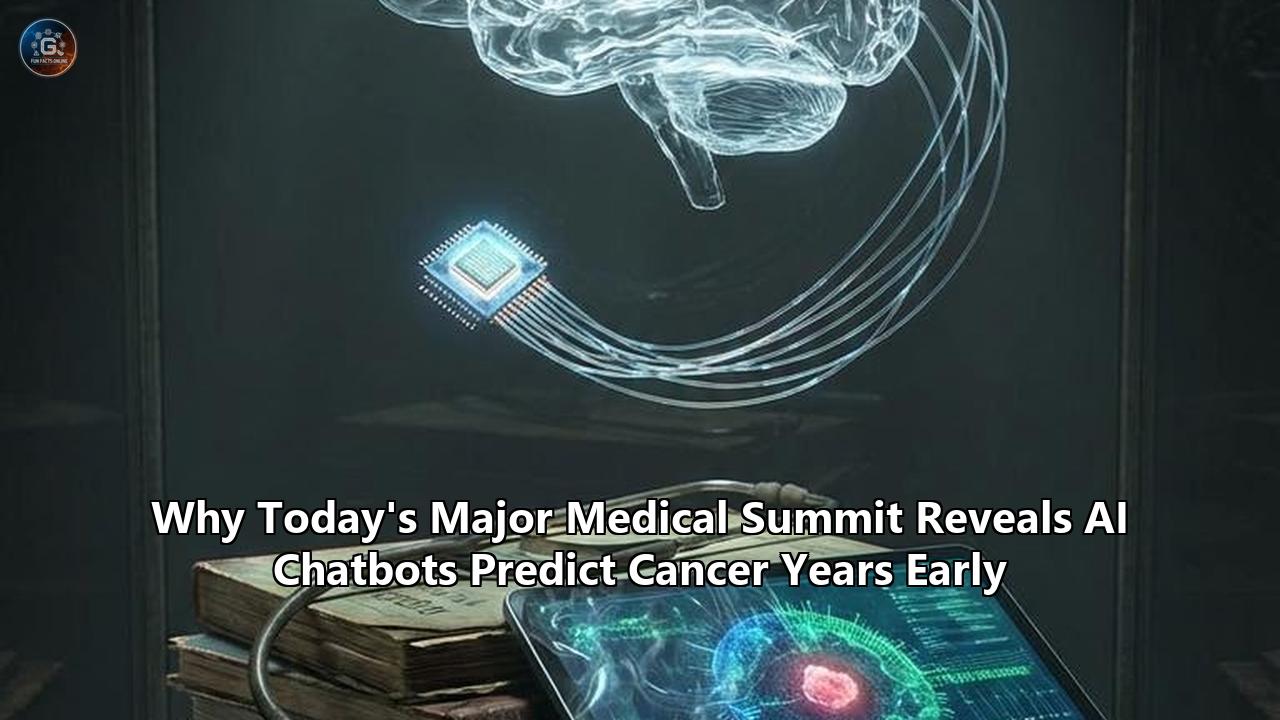
What the medical community witnessed today in Paris is the unmasking of the next phase in predictive medicine. For the past several years, oncologists have watched deep learning models analyze CT scans and MRIs with increasing, superhuman precision. But the data presented this morning represents a fundamental pivot. The same underlying transformer architecture that powers conversational chatbots is now digesting raw, unstructured clinical text and predicting aggressive, silent killers years before physical symptoms manifest.
The Breadcrumbs in the Data
To understand how text became the new tissue sample, one must trace the evidence trail back to the rapid sequence of breakthroughs between 2023 and 2025.
The initial clues emerged when researchers at Harvard Medical School and the University of Copenhagen demonstrated that an algorithm could identify patients at the highest risk for pancreatic cancer up to three years before clinical diagnosis. That early model relied on disease codes—the structured, standardized alphanumeric tags doctors use for billing and diagnosis.
However, the reality of global medical data is that it is profoundly disorganized. Doctors use regional shorthand, misspell complex pharmacological terms, copy and paste previous notes to save time, and bury crucial contextual clues in unstructured "free text" fields. Early predictive algorithms choked on this chaos. They required highly sanitized, neatly categorized data sets to function, limiting their utility in the messy reality of crowded urban hospitals and underfunded rural clinics.
The turning point, revealed in rigorous detail at today’s summit, was the application of Large Language Models (LLMs) to this unstructured chaos. Unlike traditional software that relies on explicit rules, these transformer-based networks thrive on massive, messy data. They do not need a standardized disease code; they can read a handwritten, digitized note from a triage nurse and extract the semantic weight of a patient’s offhand complaint.
"We spent a decade trying to teach algorithms how to read medical records the way a human doctor does," explained Dr. Elena Rostova, a computational biologist presenting at the summit. "That was our mistake. We shouldn't have been teaching the machine to think like a specialist. We simply needed to give it a hundred million lives, a billion data points, and allow it to find the mathematical rhythm of the disease itself. The model doesn't know what cancer is. It understands proximity, sequence, and probability."
This marks the true arrival of effective AI cancer prediction. The technology has moved rapidly from the visual realm of radiology to the linguistic realm of general practice, turning the despised, clunky electronic health record into an active surveillance network.
The Engine: How Chatbots Became Oracles
The mechanics of how a chatbot architecture transitions into a clinical oracle require peeling back the layers of how transformer models actually process information.
At its core, the architecture behind these predictive models utilizes an "attention mechanism." When a consumer uses a standard chatbot, this mechanism helps the software understand that the word "bank" means a financial institution rather than the side of a river, based on the surrounding words. When applied to medical records, this same attention mechanism weighs the relevance of disparate medical events across time.
Consider the complexity of pancreatic cancer. It is notoriously difficult to detect because the pancreas sits deep within the abdominal cavity, tucked behind the stomach and surrounded by the liver and spleen. It produces almost no localized symptoms until the tumor has grown large enough to obstruct bile ducts or press against major nerve bundles. By the time a patient presents with jaundice or severe abdominal pain, the cancer has typically metastasized, driving the five-year survival rate down to a grim 2 to 9 percent.
The text-based models presented today bypass the anatomical hiding place of the pancreas entirely by focusing on the systemic, biochemical shadows the tumor casts long before it is visible.
When a microscopic, undetectable pancreatic lesion begins to form, it subtly alters the body's metabolic processes. This might result in a transient spike in blood glucose, causing a doctor to note "mild insulin resistance" in a chart. Months later, the tumor might cause a slight, sub-clinical systemic inflammation, leading to a dermatology visit for unexplainable itching. The human specialists treating these isolated events have no reason to communicate with one another. The dermatologist is not looking at the endocrinologist's notes.
The algorithm, however, sees the entire timeline instantly. It maps the sequence of words—glucose, pruritus, fatigue, weight loss—into a high-dimensional vector space. Through the analysis of millions of historical patient records, the model has learned that this specific geometric clustering of terms in this exact chronological order carries a high probability of pancreatic malignancy.
"The architecture allows the system to hold a patient’s entire decade of medical history in its working memory simultaneously," noted one of the lead engineers during a technical breakout session. "It weighs the relevance of a 2018 appendectomy against a 2024 complaint of indigestion. It is performing a level of longitudinal analysis that a human physician simply does not have the biological bandwidth or the time to execute during a fifteen-minute consultation."
The Lung Cancer Anomaly and the Sybil Lineage
While pancreatic cancer provides the most dramatic proof of concept for text-based prediction due to its hidden nature, the summit heavily spotlighted the recalibration of lung cancer screening.
Lung cancer remains the deadliest cancer globally, responsible for more deaths than colon, breast, and pancreatic cancers combined. Historically, screening has been strictly gated behind specific demographic criteria: primarily individuals over 50 with a significant history of heavy smoking. But this criteria leaves a massive, fatal blind spot.
In emerging data presented from Asian medical networks, researchers highlighted a terrifying demographic shift: more than 60 percent of new lung cancer cases in certain Asian populations are occurring in individuals who have never smoked a day in their lives. Traditional screening guidelines, rigidly focused on pack-years, completely miss these at-risk individuals, leaving them to discover the disease only when they begin coughing up blood in stage IV.
The investigative trail for AI intervention in lung cancer began with Sybil, a deep-learning model developed by MIT and Harvard researchers in 2023. Sybil was designed to look at a single low-dose computed tomography (LDCT) scan and predict the risk of lung cancer up to six years in advance, without the need for a radiologist to manually annotate nodules. Sybil proved that the algorithms could see invisible structural changes in the lung tissue long before a tumor formed.
But the lingering logistical question remained: if a patient doesn't fit the traditional smoking criteria, how do they get approved for the LDCT scan in the first place?
This is where the new generation of LLM chatbots bridges the gap. By unleashing text-analysis models on general practice EHRs, the algorithms are identifying the non-smokers who require preemptive imaging. The models sift through environmental exposure histories, subtle respiratory complaints buried in urgent care visit notes, and familial health patterns, effectively creating a personalized risk score.
"We are using the text models as the ultimate triage mechanism," explained Dr. Yeon Wook Kim, referencing ongoing data from Seoul National University Bundang Hospital. "The chatbot reads the unstructured history and says, 'This 45-year-old non-smoker has a linguistic pattern matching our high-risk registry. Order the scan.' Then, a vision model like Sybil analyzes the scan. It is a seamless, AI-to-AI handoff that entirely circumvents the outdated, rigid screening guidelines of the past decade."
This dual-layered approach—where text-based AI cancer prediction flags the hidden risk, and vision-based models confirm the structural anomaly—is rapidly becoming the gold standard protocol discussed in the halls of the Paris summit today.
The Human Element: When the Machine Knows Your Future
Beneath the sterile glow of presentation slides and the hum of computational triumph, a deep unease permeated the afternoon sessions at the summit. The technological capability to predict cancer years before it happens forces the medical community into uncharted psychological and ethical territory.
What happens to the human being on the other side of the algorithm?
Dr. Aris Vlahos hosted a panel specifically addressing the psychological burden of "pre-cancerous certainty." He detailed the timeline of patients who are told by an algorithm that they have an 85 percent chance of developing a highly lethal cancer within three years, yet currently show no physical tumors on any available scan.
"We have created a new classification of patient," Vlahos told the silent room. "They are not sick, but they are no longer well. They are living in the algorithmic waiting room."
When the AI flags a patient for impending pancreatic cancer, the immediate clinical protocols are brutal and invasive. Doctors cannot simply wait and watch; the aggressive nature of the disease demands action. Patients are subjected to regular blood draws for biomarker analysis, frequent high-resolution MRIs, and endoscopic ultrasounds where a tube is snaked down the throat and into the stomach to get a closer look at the pancreas. The organ itself is notoriously irritable—often referred to as the "angry organ"—and prodding it with biopsy needles can induce severe pancreatitis.
If a patient is flagged by the chatbot but the endoscopic ultrasound reveals nothing, the psychological toll is immense. The patient goes home knowing the computer is waiting for the tumor to materialize.
"We interviewed forty patients who were part of an early retrospective flag study," shared a clinical psychologist from the Dana-Farber Cancer Institute. "The anxiety is absolute. Every stomach ache, every bout of fatigue is interpreted as the beginning of the end. We are delivering a diagnosis of future doom without always having a prophylactic intervention to offer."
This raises the most difficult clinical question of the decade: if the algorithm is highly confident, but the scans are clear, do you operate? Do you remove a healthy organ based entirely on the mathematical output of a language model?
Currently, surgical intervention without visual confirmation of a lesion is strictly prohibited by medical ethics boards. However, as the predictive accuracy of these models creeps past 90 percent, surgeons are beginning to quietly debate the threshold at which algorithmic certainty supersedes the need for visual proof.
The Black Box Dilemma and Regulatory Gridlock
As the investigative trail leads from the laboratory to the hospital floor, it inevitably collides with the massive, slow-moving apparatus of federal regulation. In the United States, the FDA classifies these predictive LLMs under the category of Software as a Medical Device (SaMD). But regulating a chatbot that predicts cancer is fundamentally different from regulating a traditional diagnostic tool like a digital thermometer or an ECG machine.
Traditional software is static. If you input X, it outputs Y, and it will do so exactly the same way a million times in a row. Large Language Models, due to their probabilistic nature, are dynamic. They learn, they adapt, and occasionally, they hallucinate.
A central tension at today’s summit revolved around the "black box" nature of deep learning. When a predictive model flags a patient for cancer, human doctors naturally want to know why. They want a clear, logical progression of symptoms to justify ordering a $4,000 MRI. But the model cannot easily explain itself in human terms. It reached its conclusion by analyzing millions of subtle variables across hundreds of dimensions—a mathematical reality that defies simple narrative explanation.
"The FDA requires explainability, but the very nature of these advanced transformers defies human-level explainability," argued a regulatory consultant during a heated afternoon breakout session. "If we force the AI to dumb down its reasoning so a human doctor can understand it, we actually degrade the model's predictive accuracy. We have to decide, right now in 2026, whether we value clinical explainability more than we value catching the cancer early."
To mitigate the risk of chatbot hallucinations—where the AI confidently fabricates a medical history or a nonexistent risk factor—developers are heavily relying on Retrieval-Augmented Generation (RAG). This technique effectively chains the LLM to the verified, immutable facts of the patient’s actual chart. The model is forbidden from extrapolating outside the specific boundaries of the recorded data, significantly lowering the risk of false positives generated by algorithmic imagination.
Liability remains the most tangled knot. If an AI cancer prediction tool flags a patient, and the human physician decides the AI is wrong and cancels the follow-up imaging, who is legally responsible when the patient dies of stage IV lung cancer two years later? Conversely, if the doctor follows the AI’s advice, orders invasive testing that results in severe complications, and no cancer is ever found, is the software developer liable for medical malpractice?
Currently, the consensus among hospital administrators is to frame the AI strictly as an "adjunct reviewer"—a high-tech second opinion rather than a primary diagnostician. But as the accuracy rates of the machines continue to outpace the diagnostic hit rates of human specialists, this legal fiction is becoming increasingly difficult to maintain in courtrooms.
The Economics of Early Detection in Emerging Markets
While regulatory battles dominate the discourse in Washington and Brussels, the most profound implications of today's revelations are aimed squarely at the developing world. The cost-benefit analysis of deploying these systems in resource-limited settings exposes a massive disparity in global healthcare, and simultaneously offers a scalable solution.
In high-income countries, the narrative around cancer is often focused on advanced therapies: personalized mRNA vaccines, highly targeted immunotherapies, and robotic surgeries. But these interventions are astronomically expensive and logistically impossible to scale in emerging markets.
In lower-income regions, the vast majority of cancer mortality is driven simply by delayed diagnosis. Patients do not see an oncologist until the tumor is visible through the skin or pain renders them immobile. By the time they enter the healthcare system, the only available treatments are palliative.
Guru Lakshmi Priyanka Bodagala, an expert in health informatics and AI deployment, presented compelling data demonstrating how text-based prediction models bypass the need for expensive physical infrastructure.
"You do not need a three-million-dollar MRI machine to run a cloud-based language model," Bodagala's research suggests. "If a rural clinic has a cellular internet connection and a basic electronic health record system, it can plug into the exact same predictive engine used by the Mayo Clinic."
The economic advantage is stark. Treating late-stage pancreatic or lung cancer can bankrupt families and severely strain national health budgets, often costing hundreds of thousands of dollars per patient for a few months of extended survival. In contrast, running a patient's EHR through a predictive chatbot costs mere fractions of a cent in computing power.
If the AI flags a high-risk individual early enough, interventions can be remarkably cheap. A localized, early-stage tumor can often be removed with a single, straightforward surgical procedure, eliminating the need for years of complex, systemic chemotherapy.
In this light, AI cancer prediction is not merely a tool for elite academic hospitals; it is emerging as the most viable strategy for democratizing oncology globally. By shifting the battleground from late-stage treatment to early-stage algorithmic detection, public health officials can allocate scarce resources precisely where they are needed, identifying the highest-risk individuals long before they require catastrophic care.
Uncovering the Next Layer: The Digital Twin
As the summit moved toward its evening sessions, researchers began pulling back the final layer of the current data, hinting at what lies just beyond the horizon of 2026. If a language model can trace the invisible preamble of pancreatic and lung cancers, the methodology is theoretically agnostic to the disease type.
Teams from several major pharmaceutical and tech partnerships shared preliminary data on applying the same EHR-reading models to predict severe autoimmune diseases, early-onset Alzheimer's, and aggressive ovarian cancers.
This is leading to the conceptual realization of the "digital twin." As a patient moves through life, generating a continuous trail of data—blood tests, wearable device metrics, genetic panels, and clinical notes—the AI constructs a simulated mathematical model of the patient in the cloud. The chatbot runs thousands of predictive simulations on this digital twin daily, constantly adjusting the probability matrices based on the latest input.
If the patient's real-world data begins to align with a simulation that ends in malignancy, the system alerts the human physician to intervene, effectively altering the future before it physically solidifies.
However, researchers were quick to highlight the immediate limitations blocking this utopian vision. The most pressing is the issue of data bias. The models presented today, while incredibly accurate, were trained predominantly on data sets from North America, Northern Europe, and specific regions in East Asia.
"A model trained on the health records of veterans in Boston and citizens in Copenhagen will not necessarily accurately predict disease progression in a population in Sub-Saharan Africa or rural South America," warned a lead epidemiologist from the World Health Organization during a closing panel. Differences in genetic baselines, endemic environmental exposures, and regional medical terminologies can cause the AI to misinterpret the data, leading to severe predictive failures. The frantic race currently underway is not just to refine the algorithm, but to aggressively diversify the training data to ensure global applicability.
The Road Ahead: Milestones and Unresolved Questions
As the attendees file out of the Paris summit tonight, the collective mood is a volatile mixture of awe and heavy responsibility. The theoretical phase of AI predictive medicine has officially ended. The era of implementation has begun.
The next major milestone to watch will arrive in late 2026, when several major hospital networks in the United States and Europe launch the first large-scale, prospective clinical trials of these text-based chatbots.
Up until this moment, the staggering success rates—like predicting pancreatic cancer 475 days early—have been based entirely on retrospective data. The AI was looking backward at the records of people who were already known to have developed cancer, proving it could have spotted the warning signs if it had been active at the time.
The prospective trials will turn the machines on in real-time. The algorithms will read the notes of patients walking into clinics tomorrow morning, issue predictions, and wait for the physical reality to catch up.
How human doctors react to these real-time alerts will determine the ultimate trajectory of the technology. Will they trust a chatbot that warns of a hidden tumor based on a sequence of seemingly mundane symptoms? How will insurance companies handle authorization requests for expensive scans based solely on algorithmic suspicion? And how will patients navigate the psychological tightrope of knowing their mathematical fate?
The summit today did not answer all of these questions. But it undeniably proved one thing: the data required to catch the deadliest cancers years before they strike has been hiding in plain sight, buried in the messy, human text of our medical records. We just finally built a machine that knows how to read it.
Reference:
- https://www.mayoclinic.org/medical-professionals/cancer/news/from-challenge-to-change-ais-leap-in-early-pancreatic-cancer-identification/mac-20558901
- https://hms.harvard.edu/news/ai-predicts-future-pancreatic-cancer
- https://www.uclahealth.org/news/article/researchers-use-ai-detect-pancreatic-cancer-sooner
- https://www.labmanager.com/mit-researchers-develop-a-model-for-predicting-lung-cancer-29667
- https://hms.harvard.edu/news/ai-tool-predicts-risk-lung-cancer
- https://lcfamerica.org/research-news/ai-model-predicts-future-lung-cancer-risk-from-a-single-low-dose-chest-ct-scan/
- https://news.mit.edu/2023/ai-model-can-detect-future-lung-cancer-0120
- https://www.techtimes.com/articles/310312/20250513/cost-benefit-analysis-ai-driven-cancer-prediction-models-emerging-markets-insights-guru-lakshmi.htm
- https://letswinpc.org/research/ai-earlier-detection/