Every time you press a glass against the lever of your kitchen’s water dispenser, you likely assume you are making a healthy choice. The machine whirs, the compressor hums, and out flows chilled, perfectly clear water, stripped of the harsh chemical taste of municipal tap. You trust the carbon block humming quietly inside the appliance to act as a steadfast guard against municipal contaminants.
Yet, an unsettling microbiological reality is playing out inside the dark, winding plastic tubing of your kitchen appliance. According to a striking study published in the American Journal of Infection Control by environmental engineers Clifford S. Swanson and Qiang He, passage through an in-refrigerator water dispensing system does not just fail to sterilize tap water—it actively amplifies opportunistic pathogens.
The researchers tracked the microbial communities in tap water before and after it passed through household refrigerator dispensers. The results dismantle decades of appliance marketing: the abundance of Mycobacterium surged by an astonishing 8,053-fold, while Pseudomonas increased by 221-fold.
Far from being a sterile oasis, the internal plumbing of the modern fridge is functioning as a highly efficient incubator for chlorine-resistant superbugs. To understand how an appliance designed to purify water ends up doing the exact opposite, we have to follow the evidence trail upstream, examining the chemical paradox of modern water filtration, the molecular defenses of premise plumbing pathogens, and the regulatory blindspots that leave consumers unwittingly drinking from a bacterial fortress.
The Chlorine Paradox
The story of how pathogens colonize a kitchen appliance actually begins miles away at a municipal water treatment plant.
City water infrastructure relies on a heavy, continuous application of chemical disinfectants—typically free chlorine or chloramine—to keep water biologically safe as it travels through miles of aging subterranean pipes. This chemical residual acts as a lethal bodyguard, oxidizing the cell walls of the vast majority of aquatic bacteria, viruses, and fungi.
However, this chemical warfare creates immense evolutionary pressure. When a municipality continuously bombs its water supply with chlorine, it selectively eradicates the weak microorganisms while leaving behind a resilient fraction of naturally chlorine-resistant bacteria. These survivors—often including non-tuberculous mycobacteria (NTM) like Mycobacterium avium complex (MAC), as well as Pseudomonas aeruginosa and Sphingomonas—have evolved thick, waxy, lipid-rich outer layers that repel chemical attacks.
When this heavily treated water enters your home, these hardy survivors are present, but their numbers are suppressed by the residual chlorine still lingering in the tap water.
Enter the refrigerator water filter.
The primary mechanism inside almost every commercial fridge filter is an activated carbon block. Activated carbon is a phenomenally porous material, possessing a massive internal surface area designed to trap heavy metals, volatile organic compounds, and sediment. Crucially, activated carbon also strips the chlorine and chloramine out of the water. This is highly desirable from a culinary perspective, as it eliminates the "swimming pool" odor and taste of city tap water.
But chemically speaking, the carbon block effectively disarms the water. As the liquid passes through the filter cartridge and sheds its chlorine residual, it enters the internal tubing of the refrigerator entirely unprotected. The chlorine-resistant bacteria that survived the journey from the municipal plant suddenly find themselves in a nutrient-rich, chlorine-free environment. The bodyguard is gone.
The Anatomy of the Downstream Biofilm
If the filter is the gateway, the miles of unseen plastic tubing hidden inside the refrigerator door serve as the breeding ground.
Once water exits the filter, it travels through narrow, ¼-inch supply lines to reach the dispenser nozzle. These lines are predominantly manufactured from thermoplastic elastomers (TPE), high-density polyethylene (HDPE), or cross-linked polyethylene (PEX). While manufacturers prefer these plastics because they are flexible, cheap, and resistant to corrosion, microbiologists view them entirely differently.
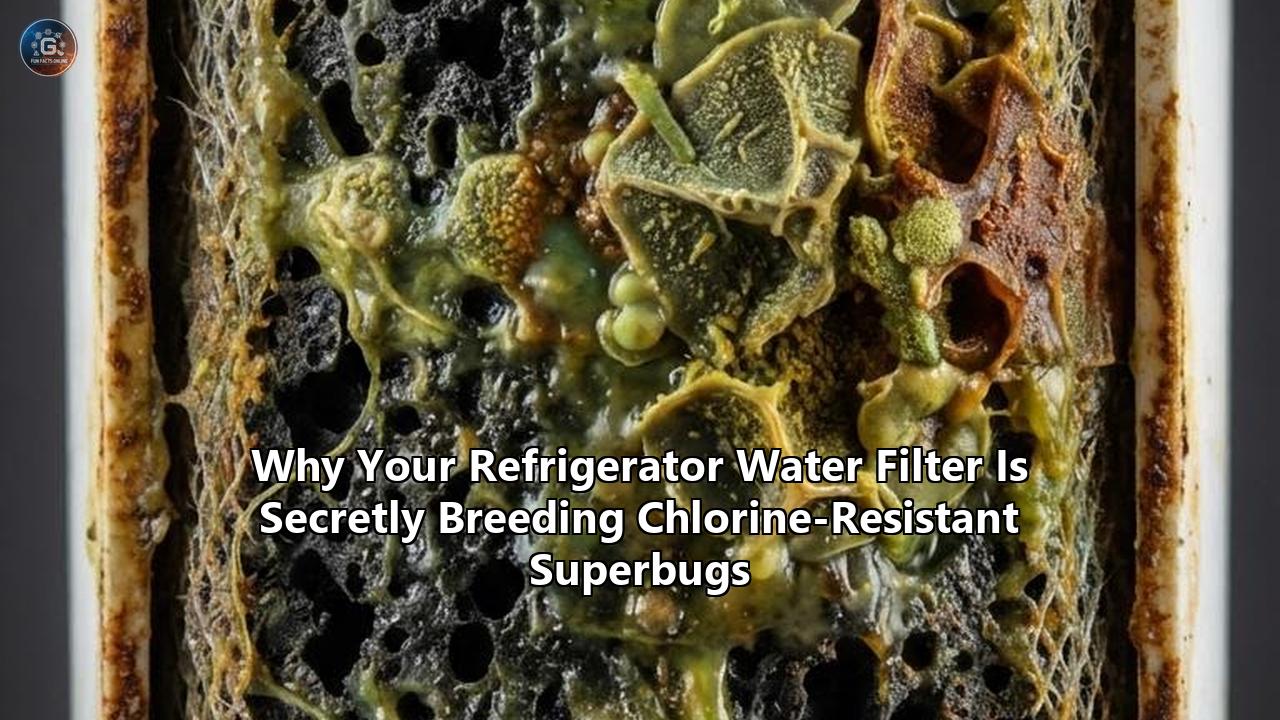
Under a scanning electron microscope, the inner wall of a polyethylene pipe is not perfectly smooth; it is rife with microscopic ridges, valleys, and manufacturing imperfections. When the de-chlorinated water flows through this tubing, rogue bacteria adhere to the plastic surface. Within days, these pioneer cells begin excreting sticky, glue-like substances known as extracellular polymeric substances (EPS).
This EPS matrix forms the foundation of a biofilm—a complex, highly organized microbial city. Inside the biofilm, bacteria are protected from external threats, fluid shear stress, and temperature fluctuations. They even communicate with one another using chemical signals in a process called quorum sensing, coordinating their growth and resource distribution.
The mechanics of refrigerator usage perfectly fuel this growth. Water dispensers experience intermittent flow. A family might draw a few glasses of water in the morning, leaving the water inside the tubing to sit completely stagnant for the next ten hours. This stagnation allows bacteria to multiply rapidly. Furthermore, the temperature inside the refrigerator door is rarely uniform. The water lines often run near the ambient-temperature hinges or the heat-generating compressor before passing through the chilled zones, creating a lukewarm aquatic environment that further accelerates microbial division.
When analyzing the root causes of contamination, engineers frequently discover that refrigerator water filter bacteria are not necessarily multiplying inside the filter block itself, but rather in this unprotected downstream tubing. The filter acts as the enabler; the plastic tubing acts as the host.
The Sloughing Phase and the "White Flakes"
Consumers rarely notice a biofilm in its early stages because the water continues to look and taste relatively normal. The matrix grows steadily, pulling trace minerals, organic carbon, and sediment out of the passing water to build its structural integrity.
Eventually, the biofilm reaches a critical mass. The physical drag of water rushing through the narrow tubing during a dispense cycle causes fragments of the bacterial colony to break off—a process microbiologists call "sloughing".
When this happens, the microbial load entering the user's cup spikes dramatically. If you have ever held a glass of fridge water up to the light and noticed tiny, translucent, gel-like blobs, iridescent sheens, or small white or gray flakes floating in the liquid, you are likely looking at chunks of mature, sloughed-off biofilm. Because these chunks are held together by the sticky EPS matrix, they contain massive concentrations of living bacteria.
By the time visual evidence appears in the glass, the contamination inside the appliance is severe. Lab tests of aged, poorly maintained refrigerator tubing have routinely returned heterotrophic plate counts (HPC) well into the tens of thousands of colony-forming units per milliliter (CFU/mL), drastically exceeding standard public health guidelines for potable water.
Unmasking the Culprits: Mycobacterium and Pseudomonas
To understand the health implications of drinking from a colonized system, we must examine the specific superbugs that thrive in these cold, plastic environments.
The Swanson and He study highlighted a catastrophic spike in Mycobacterium, specifically identifying species belonging to the non-tuberculous mycobacteria (NTM) family, such as Mycobacterium avium complex (MAC). NTM species are notorious premise-plumbing pathogens. They feature a distinct cell wall rich in mycolic acids, making them highly hydrophobic. This water-repelling property allows them to adhere easily to plastic pipes and makes them up to 100 times more resistant to chemical disinfectants than standard E. coli.
Also multiplying in these dispensers is Pseudomonas aeruginosa. An incredibly versatile opportunist, Pseudomonas is a primary architect of biofilm formation. It thrives in low-nutrient environments, using the trace organic carbon found in standard tap water to construct dense colonies.
In extreme cases of neglect, researchers have also isolated Legionella pneumophila from the stagnant reservoirs and drip trays of domestic refrigerators. Legionella requires slightly warmer temperatures to truly thrive, but it can persist in dormant states within the protective shelter of a refrigerator's biofilm matrix, waiting for the right conditions to aerosolize.
The Hidden Health Toll
For a healthy adult with a robust immune system, drinking water spiked with Pseudomonas or Mycobacterium might not result in acute illness. The human stomach acid provides a formidable barrier, and the immune system routinely clears low-level opportunistic pathogens. At worst, a healthy individual might experience mild, unexplained gastrointestinal distress or simply notice a "musty" or "earthy" off-taste in their water.
The equation changes drastically for vulnerable populations. For the elderly, individuals undergoing chemotherapy, organ transplant recipients, or those with underlying lung conditions like cystic fibrosis or chronic obstructive pulmonary disease (COPD), exposure to these specific pathogens poses a grave risk.
The primary danger is not always ingestion; it is aspiration. When we drink water, microscopic droplets can accidentally be inhaled into the respiratory tract. Furthermore, individuals suffering from gastroesophageal reflux disease (GERD) frequently experience silent micro-aspiration during sleep, where stomach contents—including recently consumed water—backwash into the esophagus and slip into the lungs.
If that water is laden with fragments of Mycobacterium avium complex (MAC) biofilm, the bacteria can colonize the lung tissue. NTM lung disease is a severe, chronic condition characterized by a persistent cough, fatigue, weight loss, and recurring respiratory infections. The disease is notoriously difficult to treat, often requiring a grueling, year-long regimen of multiple harsh antibiotics. Leading microbiologists, such as Dr. Joseph Falkinham of Virginia Tech, have repeatedly warned that MAC thrives in the biofilms of household premise plumbing, specifically pointing to refrigerators and showerheads as primary vectors for residential exposure.
The insidious nature of the exposure makes tracing the infection back to the kitchen appliance incredibly difficult. A patient may develop a chronic cough over several months, never suspecting that the "filtered" ice water they diligently drink every day is the source of the persistent bacterial assault.
The NSF Certification Illusion
If refrigerators are harboring such dense bacterial colonies, why don't the filters catch them? The answer lies in a pervasive misunderstanding of water quality certifications and the regulatory standards governing appliance manufacturing.
When consumers buy a replacement filter, they often look for the reassuring "NSF Certified" seal on the packaging. NSF International is a highly respected public health organization, and their standards are rigorous. However, the vast majority of original equipment manufacturer (OEM) and aftermarket refrigerator filters are only certified to two specific standards: NSF/ANSI 42 and NSF/ANSI 53.
NSF 42 covers aesthetic effects. It guarantees that the filter will reduce chlorine, particulate matter, and compounds that cause off-tastes and odors.
NSF 53 covers health effects, specifically testing the filter’s ability to reduce dissolved chemicals like lead, mercury, benzene, and certain physical cysts like Giardia and Cryptosporidium.
Crucially, neither NSF 42 nor NSF 53 requires the filter to eliminate or reduce bacteria or viruses.
The public health framework operating in the background assumes that municipal tap water is already microbiologically safe by the time it reaches your home. Appliance manufacturers design their filters based on this assumption. The micron rating of a standard carbon block fridge filter is typically around 0.5 to 1 micron. While this is tight enough to snag a bulky Giardia cyst, it is far too porous to catch Pseudomonas or Mycobacterium, which can measure as small as 0.2 microns in width. The superbugs simply slip right through the microscopic pores of the carbon block and enter the downstream tubing.
Marketers heavily lean into words like "pure," "clean," and "filtered," creating an illusion of sterility that the underlying engineering was never designed to provide. Consumers operate under a false sense of security, believing that as long as the filter indicator light is green, the water is biologically pristine.
The Maintenance Trap and Dormancy Risks
Even consumers who religiously follow maintenance schedules fall prey to the limitations of the technology. Manufacturers universally recommend replacing the filter cartridge every six months or every 200 to 300 gallons, whichever comes first.
This schedule is dictated by the adsorption capacity of the activated carbon. Over time, the microscopic pores of the carbon become fully saturated with trapped debris, lead, and organic compounds. Once saturated, the filter can no longer pull chemicals from the water.
Worse, an expired filter can become a bacterial liability on its own. The trapped organic material trapped inside the carbon block provides a massive food source for any microbes that manage to colonize the housing. If a filter is left in place for a year or more, the biofilm established inside the cartridge can begin dumping concentrated bursts of bacteria into the water stream, rendering the "filtered" water far more contaminated than the raw tap water flowing from the kitchen sink.
The concept of filter dormancy adds another layer of risk. Families often depart for week-long vacations, leaving the refrigerator completely unused. During this idle time, the de-chlorinated water sitting in the filter housing and the downstream tubing remains entirely stagnant, accelerating biofilm maturation. When the family returns and dispenses a glass of water, they are hit with a massive, concentrated dose of the microbial colony that bloomed during their absence.
This mechanism is why experts strongly advise purging the dispenser system. After any period of non-use exceeding 48 hours, homeowners should dispense and discard at least three to five gallons of water to flush out the stagnant lines before consuming the water.
The Drip Tray: A Forgotten Hazard
While the internal lines hide their contamination, the exterior components of the refrigerator water system actively display theirs.
The dispenser nozzle and the drip tray sitting beneath it represent the intersection of moisture, oxygen, and ambient air. The nozzle itself is frequently touched by dirty hands, rims of unwashed cups, or reused water bottles, introducing a secondary vector of external bacteria—such as Staphylococcus or E. coli—into the mouth of the tubing.
Because the nozzle remains wet, bacteria introduced from the outside can easily migrate backward into the tubing against the flow of water, joining the colonies forming from the inside.
Meanwhile, the drip tray catches small spills and ambient condensation. Because it is exposed to the air, it readily traps airborne mold spores and yeast. If left uncleaned, the drip tray quickly develops a slimy, pinkish-orange or black biofilm, releasing a musty odor and serving as a launchpad for fungal spores to colonize the ice maker chute positioned directly above it.
Interrupting the Cycle: Chemical Flushes and Point-of-Use Solutions
Recognizing the biological realities of these systems is the first step toward mitigating the risk. Because replacing the filter only addresses the carbon block, resolving the issue of refrigerator water filter bacteria requires attacking the downstream biofilm.
Unfortunately, because the internal tubing of a refrigerator is tightly integrated into the chassis and doors, physical scrubbing is impossible. Eradicating an established biofilm requires a strategic chemical approach.
To dismantle the EPS matrix without degrading the plastic tubing or the rubber solenoid valves inside the appliance, environmental cleaning experts recommend utilizing mild, food-safe acids, specifically 5% acetic acid (standard white household vinegar).
The procedure involves entirely bypassing the carbon filter—either by removing it and inserting the manufacturer-provided bypass plug, or utilizing a specialized cleaning syringe. By forcing undiluted white vinegar backward through the dispenser nozzle and into the internal reservoir, and allowing it to sit undisturbed for a minimum of thirty minutes, the acetic acid can penetrate the lipid layers of the bacteria and dissolve the mineral scale anchoring the biofilm to the plastic walls.
Following the acidic soak, the system must be rigorously flushed with several gallons of water to evacuate the sloughed-off biofilm chunks and residual vinegar. While this process does not guarantee total sterility, it actively breaks the exponential growth cycle of the microbial community, dropping the heterotrophic plate count back down to manageable levels.
The Technological Horizon: Re-engineering the Dispenser
The appliance industry is slowly awakening to the fundamental flaw of stripping chlorine without offering a secondary disinfection mechanism. As consumer awareness regarding premise plumbing pathogens grows, manufacturers are beginning to explore next-generation technologies designed to bridge the gap between chemical filtration and biological safety.
The most promising advancement is the integration of Point-of-Use (POU) Ultraviolet (UV-C) light emitting diodes (LEDs). UV-C technology has long been utilized in hospitals and municipal treatment plants, but recent breakthroughs have miniaturized the diodes, allowing them to be installed directly at the dispensing nozzle of a refrigerator or water cooler.
When water passes through the UV-C chamber, the intense light scrambles the DNA and RNA of the passing bacteria, rendering them incapable of reproduction. Because this physical disinfection occurs at the exact point of dispense—after the water has traveled through the vulnerable plastic tubing—it neutralizes the sloughed-off biofilm right before the water drops into the cup. Systems incorporating this technology, such as the Culligan Firewall, have demonstrated the ability to achieve a 99.9999% reduction in bacteria without relying on chemical additives.
Another area of active research involves material science. If standard polyethylene (HDPE) tubing acts as a fertile host for biofilms, altering the composition of the pipe could theoretically inhibit growth. Engineers are exploring the use of antimicrobial plastics infused with silver-ion technology, as well as testing internal copper-alloy tubing. Copper possesses natural biocidal properties, and studies have shown that biofilms struggle to adhere to and mature on copper surfaces compared to their explosive growth on PEX or PVC. However, retrofitting the global supply chain to replace cheap, flexible plastic tubing with expensive, rigid copper presents massive logistical and economic hurdles.
Reevaluating the True Cost of Convenience
The revelation that our kitchen appliances are secretly functioning as pathogen amplifiers forces a hard recalibration of how we view domestic water consumption. The modern refrigerator water dispenser is a marvel of convenience, seamlessly delivering chilled, crisp-tasting water on demand. But that convenience demands a biological compromise.
The activated carbon filter performs exactly as engineered, flawlessly removing the chemical trace of municipal infrastructure. Yet, in doing so, it exposes a critical vulnerability in the design of premise plumbing. We have successfully engineered the taste of the wild out of our water, only to allow the wild to quietly rebuild itself inside the plastic veins of our appliances.
Looking forward, consumers must shift their relationship with these appliances from passive trust to active maintenance. Simply swapping a cartridge every six months is no longer sufficient to guarantee safety, especially for households managing chronic health conditions or compromised immune systems.
As researchers continue to map the complex microbiomes that thrive just behind the dispenser lever, the onus falls on both the consumer to maintain rigorous hygiene protocols and the appliance industry to fundamentally redesign their internal plumbing architectures. Until those structural changes occur, the clearest water in your kitchen will remain, paradoxically, the most biologically complex. The superbugs have found their sanctuary; it is up to us to flush them out.
Reference:
- https://pubmed.ncbi.nlm.nih.gov/38460731/
- https://lifetips.alibaba.com/kitchen-hacks/how-to-clean-fridge-water-dispenser
- https://www.springwellwater.com/hidden-dangers-of-refrigerator-water-filters/
- https://www.mdpi.com/2076-2607/11/11/2680
- https://journals.plos.org/water/article?id=10.1371/journal.pwat.0000430
- https://www.ntminfo.org/wp-content/uploads/2020/11/Reducing-Exposure-oct-2020.pdf
- https://azbigmedia.com/lifestyle/home-and-design/do-refrigerator-water-filters-really-work-the-truth-about-clean-drinking-water/
- https://www.premierh2o.com/blogs/water-filtration/the-pros-and-cons-of-refrigerator-water-filters
- https://pmc.ncbi.nlm.nih.gov/articles/PMC4282696/
- https://www.researchgate.net/publication/240792553_Effect_of_temperature_and_pipe_material_on_biofilm_formation_and_survival_of_Escherichia_coli_in_used_dinking_water_pipes_A_laboratory-based_study
- https://connect.mayoclinic.org/discussion/bacteria-and-water-filter/
- https://www.reddit.com/r/Plumbing/comments/1pb9rrh/cleaning_biofilm_from_fridge_water_line/
- https://www.mdpi.com/2227-9717/12/2/280
- https://www.letsbecleartoday.com/be-clear-blog/drinking-water-and-aspiration
- https://water.viomi.com/blogs/hydration-lab/water-tastes-bad-after-filter-change
- https://www.tapwaterdata.com/blog/filters/best-refrigerator-water-filters-2025
- https://drinkoptimum.com/the-dangers-of-refrigerator-water-filters/
- https://www.frizzlife.com/fr/blogs/guide/refrigerator-water-filter-safety-is-your-fridge-water-safe-to-drink
- https://www.culligan.ie/the-dangers-of-refrigerator-water-filters/
- https://pmc.ncbi.nlm.nih.gov/articles/PMC7304319/