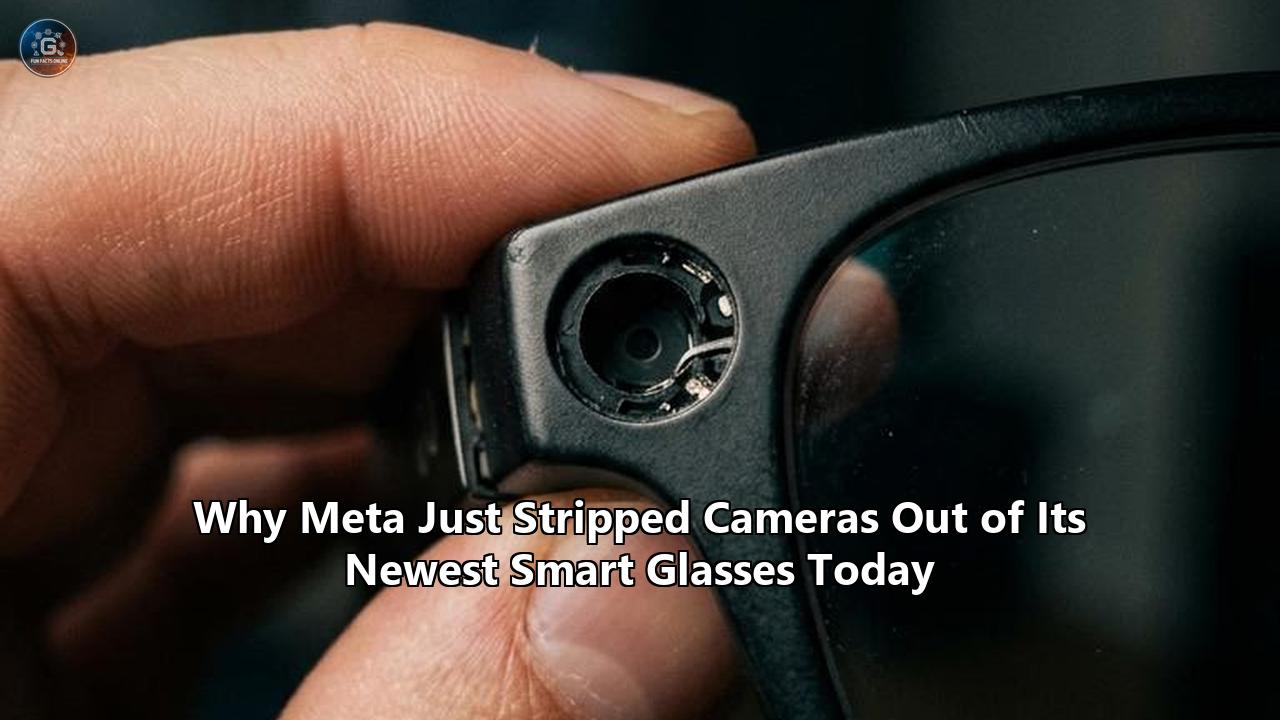
MENLO PARK, Calif. — On Wednesday at its annual Connect developer conference, Meta unveiled the Ray-Ban Meta Audio collection, a hardware line that deliberately strips out the outward-facing cameras that have defined the company’s smart eyewear efforts for half a decade. Beginning at $349 and scheduled to ship on October 13, the new frames—arriving in classic Ray-Ban Clubmaster and Burbank styles—abandon video capture, photo shooting, and multimodal computer vision in favor of a strictly acoustic and conversational computing architecture.
The announcement marks an abrupt strategic pivot. Since the 2021 release of Ray-Ban Stories, Meta has insisted that outward-facing image sensors are fundamental to the future of ambient computing. Yet after shipping more than 10 million pairs of camera-equipped frames—including over 7 million in 2025 alone—the tech giant has confronted a rising tide of venue bans, consumer unease, and high-profile hardware tampering.
Weighing just 43 grams, the camera-free frames are the lightest and thinnest connected glasses Meta has ever produced. They pack a custom six-microphone beamforming array, open-ear directional speakers, a tactile action button, and up to 12 hours of continuous mixed-use battery life. The device retains direct access to Meta AI and the company’s newly deployed autonomous voice agent, Muse, while integrating over-the-counter hearing enhancement capabilities.
By amputating the lens, Meta is making a calculated bet: that the fastest route to mass adoption is not turning consumers into walking recording rigs, but offering an invisible, socially acceptable conduit for conversational artificial intelligence.
This impact analysis examines the catalysts behind Meta’s retreat from optical capture, assesses the groups directly affected by the decision, breaks down the hardware and acoustic engineering transformations, and evaluates both the near-term market reception and the long-term future of ambient wearables.
The Catalysts: Backlash, Bricked Hardware, and Legal Exposure
Meta did not remove cameras from its flagship eyewear out of sudden design minimalism. The shift is the direct result of compounding cultural resistance, escalating user tampering, and expanding legal scrutiny that threatened to cap the total addressable market for wearable technology.
The Stigma of Covert Surveillance
Despite Meta’s marketing campaigns presenting smart frames as tools for point-of-view memory capture and hands-free video creation, public reception followed a decidedly darker trajectory. Across digital platforms, the devices increasingly acquired the derogatory moniker "pervert glasses".
The criticism was not theoretical. Content creators routinely used the glasses to film unsuspecting strangers in public for viral prank videos, gym interactions, and street-dating content. British cinema operators instituted blanket bans on smart glasses to combat bootlegging, while fitness chains across Europe and North America barred the devices from locker rooms and workout floors to protect member privacy. Similar bans proliferated across primary schools, university examination halls, and hospitality venues.
┌─────────────────────────────────────────────────────────────┐
│             THE SURVEILLANCE BACKLASH ESCALATION            │
├──────────────────────────────┬──────────────────────────────┤
│ 2021–2023                    │ 2024–2025                    │
│ • Launch of Ray-Ban Stories  │ • Sales pass 7 million units │
│ • Subtle white capture LED   │ • Viral "creeper" videos     │
│ • Minimal public awareness   │ • Gym & cinema venue bans    │
├──────────────────────────────┼──────────────────────────────┤
│ Early 2026                   │ September 2026               │
│ • Drilling/taping LED lights │ • Update v26 bricks cameras  │
│ • Black-market modifications │ • Ray-Ban Meta Audio debuts  │
│ • CA privacy class actions   │ • Hardware camera removed    │
└──────────────────────────────┴──────────────────────────────┘
The core friction stemmed from human psychology: people cannot easily discern whether a wearer is casually looking at them or surreptitiously broadcasting their image. While Meta engineered an outward-facing white LED to illuminate during capture, the light proved woefully insufficient in bright daylight, and observers routinely failed to register its significance.
The Hardware Hack and Firmware Crackdown
The privacy crisis reached a tipping point when users discovered workarounds to bypass the capture LED. Online tutorials demonstrated how to mask the light using black enamel paint, electrical tape, or 3D-printed clip-on covers. A niche secondary market emerged offering professional modification services that physically drilled out the LED from the frame temple.
Meta responded with aggressive software countermeasures. In software update v26, the company introduced continuous sensor loops that monitor ambient light reflection and electrical resistance across the LED circuit. If the system detects that the LED has been obstructed, the camera immediately halts recording. If the circuit detects that the LED has been severed or drilled out, the camera is permanently disabled, leaving the user with an expensive set of basic Bluetooth earphones.
Alex Himel, Meta’s Vice President of Wearables, acknowledged the severity of the conflict, noting that engineering teams found themselves trapped in a continuous cat-and-mouse dynamic against malicious actors. Meta confirmed that the enforcement action impacted thousands of units—roughly 0.1% of all devices deployed globally. Although Meta Chief Technology Officer Andrew Bosworth publicly defended the camera models as "the most privacy-forward camera" on the market due to the inclusion of an active recording light, internal executives recognized that defensive firmware patches could not solve a fundamental branding issue.
Legal and Regulatory Crosshairs
Mounting legal exposure exacerbated the hardware challenges. In California, plaintiffs filed a proposed class-action lawsuit alleging that Meta misled the public regarding device privacy protections. The complaint claimed that recorded clips uploaded to Meta’s cloud infrastructure for artificial intelligence training were accessed, reviewed, and labeled by human data annotators—capturing intimate moments, private residences, and changing spaces without informed third-party consent.
At the same time, European data privacy regulators under the European Data Protection Board (EDPB) began scrutinizing whether always-on camera glasses satisfy the strictures of the General Data Protection Regulation (GDPR), particularly regarding third-party biometric capture in public domains. Stripping the camera entirely presented Meta with an immediate escape valve from this mounting regulatory pressure.
Systematic Impact Analysis: Who Is Affected
The removal of the optical sensor reverberates across user segments, bystander populations, enterprise environments, and the competitive landscape of ambient technology.
                     ┌───────────────────────────────┐
                     │   CAMERA-FREE SMART GLASSES   │
                     │       SYSTEMIC IMPACTS        │
                     └──────────────┬────────────────┘
                                    │
       ┌────────────────────────────┼───────────────────────────┐
       ▼                            ▼                           ▼
┌──────────────┐             ┌──────────────┐            ┌──────────────┐
│  CONSUMERS   │             │  BYSTANDERS  │            │  ENTERPRISE  │
│ • No stigma  │             │ • Visual     │            │ • Cleanrooms │
│ • 43g weight │             │   privacy    │            │ • Hospitals  │
│ • 12hr power │             │ • Acoustic   │            │ • Boardrooms │
│ • Rx-ready   │             │   friction   │            │ • Bypasses   │
└──────────────┘             └──────────────┘            │   photo bans │
                                                         └──────────────┘
1. Consumers and Wearers: Erasing the Social Penalty
For everyday buyers, the primary benefit of the Ray-Ban Meta Audio line is the elimination of the "social penalty". Wearers of the camera-equipped models frequently reported feeling self-conscious in professional settings, social gatherings, public transit, and intimate environments. The fear of being perceived as intrusive or distrusted created a substantial behavioral barrier that discouraged day-long usage.
Without visible optical modules on the frame front, the Ray-Ban Meta Audio models visually match standard non-smart prescription eyewear. The frames return to the classic Ray-Ban aesthetic:
- Clubmaster: Features the traditional acetate browline anchored to a slim, wireframe lower rim—a mechanical design previously impossible to produce with camera sensors and ribbon cables.
- Burbank: Delivers a classic rectangular profile that integrates seamlessly into corporate and formal wardrobe palettes.
Prescription wearers, who comprise over 60% of the adult eyewear market, represent the largest domestic beneficiary. These users do not buy smart glasses as an occasional weekend novelty; they require comfortable, unobtrusive hardware capable of resting on their face for 16 consecutive hours. Dropping the weight to 43 grams reduces continuous pressure points across the nasal bridge and mastoid bone, bridging the comfort gap between dumb acetate frames and connected wearables.
2. Bystanders and the Public: Visual Relief vs. Acoustic Ambiguity
For bystanders, the elimination of the camera removes the acute anxiety of being unknowingly photographed, recorded, or indexed into computer vision training pipelines. Walkers in public parks, diners at restaurants, and commuters on trains no longer have to scan the upper corners of a stranger’s spectacles to check for glass apertures or blinking LEDs.
However, the change introduces a secondary, less obvious privacy dilemma: acoustic capture.
The Ray-Ban Meta Audio frames house a sophisticated six-microphone array designed to isolate speech, suppress environmental noise, and pick up faint vocal prompts directed at the assistant. While these microphones operate primarily for wake-word activation, phone calls, and live audio translation, nearby individuals have no visual indicator showing when the microphone channel is open.
Unlike video recording, which generally requires pointing one's head directly at a subject, modern microphone beamforming algorithms can capture ambient voices within a multi-meter perimeter. While this acoustic concern is broadly accepted in smartphones and wireless earbuds, embedding invisible microphones directly into classic optical frames presents fresh questions regarding ambient audio surveillance in private spaces.
3. Workplaces, Healthcare, and Secure Environments
The most pronounced operational transformation occurs within secured corporate and industrial environments. The broader category of Meta smart glasses had encountered strict institutional prohibitions across sectors handling sensitive intellectual property or protected personal information:
- Healthcare Systems: Hospitals and private medical practices universally banned camera-equipped eyewear under HIPAA rules to prevent the unauthorized capture of medical records, diagnostic screens, and patient identities.
- Financial Trading Floors and Legal Offices: Camera bans prevented wearers from accessing trading terminals, client dossiers, and privileged corporate communications.
- Industrial R&D and Cleanrooms: Semiconductor fabrication plants, aerospace engineering facilities, and automotive design studios treat camera devices as direct corporate espionage risks.
- Government and Defense: Military installations, embassies, and federal courthouses require all camera-enabled hardware to be checked at the perimeter.
Camera-free frames change this dynamic completely. By removing optical capture hardware at the physical assembly level, Meta allows corporate compliance departments to certify the glasses for enterprise usage. Knowledge workers can wear corrective lenses containing continuous audio connectivity, calendar notifications, and real-time voice assistance without violating trade-secret protocols or facility security clearances.
4. Hardware Competitors and the Wearable Ecosystem
Meta’s hardware bifurcation disrupts the smart eyewear competitive landscape, establishing two distinct categories: camera-equipped mixed-reality devices and audio-only intelligent frames.
┌────────────────────────────────────────────────────────────────────────┐
│               SMART EYEWEAR COMPETITIVE LANDSCAPE (2026)               │
├───────────────────┬─────────────┬───────────┬──────────────┬───────────┤
│ Model             │ Cameras     │ Weight    │ Battery Life │ Price     │
├───────────────────┼─────────────┼───────────┼──────────────┼───────────┤
│ Ray-Ban Meta Audio│ None        │ 43g       │ Up to 12 hrs │ $349      │
│ Ray-Ban Meta Gen 3│ Dual 12MP   │ 49g–53g   │ Up to 9 hrs  │ $449      │
│ Snap Spectacles   │ Dual RGB    │ 226g      │ ~45 mins     │ $2,195    │
│ Amazon Echo Frames│ None        │ 38g–42g   │ ~6 hrs       │ $269      │
│ Solos AirGo 3     │ None        │ 30g       │ ~10 hrs      │ $249–$299 │
└───────────────────┴─────────────┴───────────┴──────────────┴───────────┘
Amazon’s Echo Frames and niche offerings from Solos previously held the audio-only smart frame market without meaningful competition from tier-one hardware platforms. Meta’s entrance with EssilorLuxottica’s unmatched distribution footprint, iconic styling, and superior acoustic engineering immediately exerts severe pricing and retail pressure on these smaller players.
Conversely, Snap has doubled down on expensive, heavy, camera-centric developer hardware with its $2,195 AR Spectacles. By segregating audio frames from heavy mixed-reality development, Meta isolates Snap on the high-end developer fringe while capturing the lucrative volume of everyday eyewear consumers.
What Changes: Hardware Architecture, Acoustics, and the Loss of Vision
Stripping cameras out of an electronic device is rarely as simple as removing a sensor. It alters the entire internal architecture, changing thermal profiles, processing constraints, battery life, and user interaction mechanics.
┌──────────────────────────────────────────────────────────────┐
│       RAY-BAN META HARDWARE: CAMERA VS. AUDIO-ONLY           │
├───────────────────────────────┬──────────────────────────────┤
│ Camera Models (Gen 2/3)       │ Audio-Only Collection (Luna) │
├───────────────────────────────┼──────────────────────────────┤
│ • 12MP ultra-wide sensor      │ • No image sensors           │
│ • MIPI flex ribbon routing    │ • Standard hinge mechanicals │
│ • Dual thermal heat spreaders │ • Minimal heat dissipation   │
│ • Image Signal Processor (ISP)│ • Dedicated low-power DSP    │
│ • 49g to 53g total weight     │ • 43g ultralight weight      │
│ • 4 to 9 hours battery life   │ • Up to 12 hours battery life│
│ • Multimodal "Look and Ask"   │ • Voice-only conversational  │
└───────────────────────────────┴──────────────────────────────┘
1. The Teardown: Physical and Thermal Engineering
In standard smart eyewear, camera sensors dominate internal volume and mechanical layout. A modern 12-megapixel ultra-wide camera requires:
- A complex glass/plastic multi-element lens barrel.
- A dedicated CMOS image sensor board.
- Shielded MIPI flex circuits routed through the dynamic mechanical hinge of the glasses.
- An Image Signal Processor (ISP) capable of real-time image de-warping, color grading, and video encoding.
- Copper or graphite heat spreaders to sink the thermal dissipation of video capture away from the user’s temples.
Removing this hardware chain sheds significant mass. The Ray-Ban Meta Audio line reduces overall weight to 43 grams—an approximate 15% reduction compared to the 51-gram Wayfarer Gen 2 and up to 19% lighter than Gen 3 models.
Weight Comparison across Generations (Grams)
Ray-Ban Stories (Gen 1):  ██████████████████████████ 53g
Ray-Ban Meta (Gen 2):     █████████████████████████ 51g
Ray-Ban Meta (Gen 3):     ████████████████████████ 49g–53g
Ray-Ban Meta Audio:       █████████████████████ 43g
Standard Acetate Frame:   ████████████████ 32g–38g
Crucially, the temple arms are substantially thinner. In camera-equipped glasses, the temples must be thick and boxy to accommodate the compute engine and heat spreaders. Without video processing pipelines generating thermal spikes, the temple arms taper gracefully, closely mimicking traditional handmade Italian eyewear.
2. The Power Equation: Why Video Kills Batteries
Video processing is computationally expensive. Streaming continuous 1080p or 3K video, running digital stabilization algorithms, and encoding frames via onboard silicon demands between 1.2 to 1.8 watts of continuous power. Under active video capture, smart glasses batteries drain in less than 45 minutes of aggregate recording.
Audio processing, by contrast, operates in a vastly more modest power envelope. Modern low-power digital signal processors (DSPs) handle multi-microphone beamforming, noise cancellation, and voice encoding on tens of milliwatts.
By eliminating camera-related power spikes, Meta expanded continuous operational endurance to 12 hours on a single charge. This three-hour jump over the camera-equipped Gen 3 (9 hours) and massive improvement over Gen 2 (4 hours under mixed use) allows users to put the glasses on at 8:00 AM and navigate an entire workday without mid-afternoon charging breaks.
Battery Life Under Standard Mixed Use (Hours)
Ray-Ban Stories (2021):  ██ 4 hrs
Ray-Ban Meta (2023):     ██ 4 hrs
Ray-Ban Meta Gen 3:      ████ 9 hrs
Ray-Ban Meta Audio:      ██████ 12 hrs
3. Acoustic Architecture and Hearing Enhancement
With visual inputs gone, acoustic performance becomes the core value proposition of the hardware. The Ray-Ban Meta Audio integrates custom micro-transducers mounted in the temple arms directly above the user’s ears.
Meta utilizes a dual-driver acoustic design:
- Bass and Mid-Range Ports: Direct sound downward into the ear canal using phase-cancellation tuning to minimize sound leakage into the surrounding environment. At 70% volume, acoustic spillage drops by an estimated 14 decibels compared to Gen 1 hardware, preventing nearby coworkers from overhearing private phone calls or assistant replies.
- Beamforming Microphone Array: Six integrated microphones capture the user's voice through bone conduction filtering and directional phase alignment, eliminating wind noise during outdoor cycling or walking.
A central software addition is the Over-The-Counter (OTC) Hearing Enhancement feature unveiled by Mark Zuckerberg. Taking advantage of relaxed FDA guidelines surrounding direct-to-consumer hearing assistance devices, the glasses can amplify specific vocal frequencies while dynamically suppressing background room reverberation. For individuals with mild-to-moderate hearing loss, the frames double as prescription spectacles and discreet, stigma-free hearing amplifiers.
┌─────────────────────────────────────────────────────────────┐
│                 OPEN-EAR ACOUSTIC SYSTEM                    │
├─────────────────────────────────────────────────────────────┤
│                                                             │
│       [Microphone 1 & 2] -> Directional Speech Isolation    │
│       [Microphone 3 & 4] -> Wind & Noise Cancellation       │
│       [Microphone 5 & 6] -> Spatial Ear Reference           │
│                               │                             │
│                               ▼                             │
│       ┌───────────────────────────────────────────┐         │
│       │   Low-Power Acoustic DSP Architecture     │         │
│       └─────────────────────┬─────────────────────┘         │
│                             │                               │
│              ┌──────────────┴──────────────┐                │
│              ▼                             ▼                │
│   [Downward Audio Driver]       [Phase Anti-Sound Port]     │
│   Targets wearer's ear canal    Cancels exterior spillage   │
│                                                             │
└─────────────────────────────────────────────────────────────┘
4. The Functional Sacrifice: Losing Multimodal Vision
The fundamental drawback of the new hardware is the complete loss of multimodal intelligence.
On camera-equipped models, Meta’s "Look and Tell" AI feature allows users to query their surroundings:
- "Hey Meta, look and tell me what kind of plant this is."
- "Hey Meta, translate this Spanish menu for me."
- "Hey Meta, what tool do I need to fix this leaking pipe?"
On the Ray-Ban Meta Audio, that entire class of interaction disappears. The assistant is functionally blind. If a user asks what they are looking at, the AI has no sensor to query.
Interaction shifts entirely to voice-agent workflows. The glasses run Muse, Meta’s conversational agent designed for hands-free information retrieval, calendar coordination, phone calls, text messaging, and live spoken bilingual translation. A physical button positioned on the underside of the temple allows one-tap assistant activation, avoiding the need to speak public wake-words like "Hey Meta" in quiet environments.
Short-Term Consequences: The Immediate Market and Cultural Pivot
The launch of a camera-free smart glasses line introduces acute commercial challenges alongside distinct marketing advantages. Over the next six to twelve months, Meta must manage product positioning, channel relationships, and venue policies.
┌─────────────────────────────────────────────────────────────┐
│              SHORT-TERM COMMERCIAL CHALLENGES               │
├──────────────────────────────┬──────────────────────────────┤
│ The Differentiation Trap     │ The Optometry Channel        │
│ • Must justify $349 price tag│ • Educating retail opticians │
│ • Competing with $249 earbuds│ • Managing prescription fits │
│ • Lack of HUD visual display │ • Warranty & acoustic repair │
├──────────────────────────────┼──────────────────────────────┤
│ Policy Enforcement Lag       │ Consumer Cognitive Overhead  │
│ • Venue guards can't tell    │ • Explaining "camera-free"   │
│   audio vs. camera models    │ • Lost multimodal features   │
│ • Ongoing blanket bans       │ • Cannibalizing Gen 3 sales  │
└──────────────────────────────┴──────────────────────────────┘
The Differentiation Trap
The immediate obstacle facing the Ray-Ban Meta Audio line is value perception. At $349, the device is $50 more expensive than the entry price of the original Gen 2 camera-equipped frames ($299) and only $100 less than the brand-new Gen 3 camera line ($449).
Linda Sui, founder and principal analyst at market research firm Smart Analytics Global, highlighted this exact vulnerability following the Connect keynote:
"Removing the camera from glasses that also lack a heads-up display will create a product differentiation challenge. Consumers may ask why they need smart glasses rather than Bluetooth earbuds if the primary experience is limited to voice interaction, microphones and speakers."
If a consumer views the product purely as an audio conduit, Apple’s AirPods Pro ($249) or Bose’s Open Earbuds ($299) deliver superior acoustic bass response, active noise cancellation, and seamless mobile OS integration at a lower price point. Meta and EssilorLuxottica must convince consumers that wearing open-ear acoustics permanently integrated into high-end corrective lenses offers a vastly superior lifestyle experience compared to constantly inserting and removing plastic earbuds.
Retail Execution Across Optometry Channels
The sales pipeline for the Ray-Ban Meta Audio will rely heavily on EssilorLuxottica’s brick-and-mortar retail network, including LensCrafters, Pearle Vision, Target Optical, and thousands of independent optometrists.
Selling connected electronics through medical optical channels has historically created friction:
- Traditional opticians are trained to measure pupillary distance, fit progressive lenses, and balance bridge acetate—not troubleshoot Bluetooth pairing, explain firmware updates, or configure voice assistants.
- The absence of cameras simplifies the optician’s pitch. Eyecare professionals frequently hesitated to recommend camera-equipped frames to patients seeking everyday prescription glasses due to concerns over patient pushback and corporate liability.
- With camera sensors removed, opticians can market the Burbank and Clubmaster frames as high-utility corrective lenses with "smart audio" features, sidestepping surveillance debates entirely.
The Policy Enforcement Lag
While the removal of cameras theoretically resolves the justification for venue bans, real-world venue policies will lag significantly.
A gym front-desk attendant, a cinema usher, or a corporate security officer cannot easily distinguish between a Ray-Ban Meta Gen 3 Wayfarer (equipped with a 12MP camera) and a Ray-Ban Meta Audio Burbank (which has no camera) at a distance of five meters. Because both devices sport classic Ray-Ban styling and substantial temples, venues maintaining blanket bans against Meta smart glasses across corporate environments and recreational spaces are unlikely to rewrite policy handbooks immediately.
Early adopters of the audio-only frames may face awkward confrontations with security personnel who assume all connected eyewear retains covert recording capabilities. Meta will likely need to launch public education initiatives or introduce distinct external design signatures—such as specialized temple rivet styling—to signal the absence of optical capture hardware.
Long-Term Consequences: The Bifurcation of Wearable Computing
Looking beyond the immediate hardware release cycle, Meta’s decision signals a broader structural division in the evolution of ambient artificial intelligence.
                          ┌───────────────────────────────┐
                          │   THE BIFURCATION OF WEARABLE │
                          │       COMPUTING HARDWARE      │
                          └──────────────┬────────────────┘
                                         │
                 ┌───────────────────────┴───────────────────────┐
                 ▼                                               ▼
      ┌─────────────────────┐                         ┌─────────────────────┐
      │   AMBIENT AUDIO     │                         │   SPATIAL VISION    │
      │     (Track A)       │                         │     (Track B)       │
      ├─────────────────────┤                         ├─────────────────────┤
      │ • Ray-Ban Meta Audio│                         │ • Ray-Ban Gen 3     │
      │ • Sub-45g weight    │                         │ • Project Phoenix   │
      │ • 12+ hr battery    │                         │ • Orion True AR     │
      │ • Invisible styling │                         │ • Heads-Up Displays │
      │ • All-day social    │                         │ • Computer vision   │
      │   permission        │                         │ • Contextual overlay│
      │ • Voice-first AI    │                         │ • High compute/power│
      └─────────────────────┘                         └─────────────────────┘
The Splintering of the Wearables Road Map
For years, Silicon Valley pitched a unified hardware vision: lightweight eyeglasses would gradually integrate cameras, micro-displays, waveguides, cellular modems, and compute blocks until full augmented reality collapsed into a single pair of frames.
That monolithic roadmap is now dead. Meta has recognized that the physical constraints of battery chemistry, thermal dissipation, and social permission require a permanent division into two distinct product tracks:
- Track A: Ambient Audio Frames (The Social Utility Layer): Devices optimized for invisible design, sub-45-gram weight, multi-day standby, and frictionless social acceptance. These devices run conversational voice assistants, handle phone calls, provide subtle notification haptics, and deliver assistive hearing amplification. They do not record visual data, avoiding public scrutiny and venue prohibitions.
- Track B: Spatial Vision Glasses (The Immersive Computing Layer): Devices like the newly teased Project Phoenix and the experimental Orion prototype that prioritize cameras, eye tracking, waveguide optics, and microOLED displays. These systems will remain heavier, run hotter, require puck-tethered battery packs, carry premium price tags exceeding $1,000, and operate within explicit computing sessions rather than constant all-day public wear.
By establishing this clear boundary, Meta accelerates the sales trajectory of Meta smart glasses among prescription users who want ambient intelligence without surveillance baggage, while preserving its technical R&D track for immersive mixed reality.
Capturing the Auditory Real Estate
The strategic imperative driving the Ray-Ban Meta Audio is Meta’s urgent need to secure an ambient operating system interface before its rivals.
Meta has spent two decades at the mercy of mobile platform gatekeepers. Every feature, policy, and revenue cut on Instagram, WhatsApp, and Facebook is mediated through Apple’s iOS App Store and Google’s Android Play Store. In the emerging battle for consumer AI agents, Meta cannot afford to be trapped inside a third-party operating system.
Securing auditory real estate on the user's face provides direct, unfettered access to consumer intent. When a user asks an audio assistant to summarize an email, check a flight status, purchase an item, or translate a conversation, the company routing that query commands the primary platform relationship.
┌─────────────────────────────────────────────────────────────┐
│                 THE AMBIENT AI PLATFORM RACE                │
├───────────────────┬─────────────────────────────────────────┤
│ Meta              │ Ray-Ban Audio + Muse Agent              │
│                   │ • Leverages EssilorLuxottica styling    │
│                   │ • Direct bypass of mobile app stores    │
├───────────────────┼─────────────────────────────────────────┤
│ Apple             │ AirPods Pro + Apple Intelligence        │
│                   │ • Deep iOS ecosystem lock-in            │
│                   │ • Lacks prescription eyewear form factor│
├───────────────────┼─────────────────────────────────────────┤
│ Amazon            │ Echo Frames + Alexa Voice Services      │
│                   │ • Strong smart home integration         │
│                   │ • Lacks luxury optical brand equity     │
├───────────────────┼─────────────────────────────────────────┤
│ Google            │ Gemini Voice + Android Ecosystem        │
│                   │ • Vast search & knowledge graph access  │
│                   │ • Retains lingering Google Glass stigma │
└───────────────────┴─────────────────────────────────────────┘
Waiting for the public to accept outward-facing cameras would have delayed Meta’s ambient AI deployment by years. By removing the camera today, Meta accelerates its installation base, putting the Muse AI assistant onto millions of heads years ahead of Apple’s rumored smart eyewear initiatives.
Legal and Jurisprudential Precedents
The bifurcation of Meta smart glasses into distinct sensory tiers also sets significant precedents for privacy jurisprudence and surveillance legislation.
Historically, American privacy law has drawn a sharp line between visual capture in public spaces and audio recording:
- Under the First Amendment, individuals generally have a recognized right to photograph and film anything plainly visible from public vantage points (subject to specific private location rules like bathrooms and locker rooms).
- Audio interception, however, is governed by stringent federal and state wiretapping statutes. Twelve U.S. states—including California, Florida, Massachusetts, and Illinois—operate under "two-party consent" or "all-party consent" frameworks that make recording a confidential verbal conversation without all participants' permission a criminal offense.
As audio-first frames proliferate, courts will inevitably be forced to address the mechanics of continuous conversational AI. If a wearer's smart glasses continuously process ambient speech via local DSPs or stream acoustic buffers to cloud servers to detect conversational context or live-translate foreign dialogue, does that constitute unlawful acoustic interception under two-party consent regimes?
Meta emphasizes that the Ray-Ban Meta Audio processes wake words locally and only streams audio to the cloud when explicitly summoned via vocal command or the manual action button. Yet as voice agents become more proactive—listening continuously to offer timely contextual suggestions—the legal battlefield around smart wearables will pivot decisively from camera lenses to microphone diaphragms.
Strategic Foresight: What to Watch as Hardware Meets Social Etiquette
The arrival of camera-free intelligent frames shifts wearable technology into a pragmatic, socially conscious phase. Over the coming quarters, several milestones will determine whether this strategic sacrifice pays off:
- Holiday 2026 Sales Split: Financial analysts will closely track whether the Ray-Ban Meta Audio outsells its camera-equipped Gen 3 sibling during the Q4 retail window. If the camera-free model captures a commanding majority of sales, it will definitively prove that camera sensors were an active drag on mainstream consumer adoption rather than an essential selling point.
- Enterprise Device Certification: Watch for enterprise MDM (Mobile Device Management) software providers and corporate IT departments updating their allowable hardware lists to include camera-free connected eyewear. Corporate procurement contracts could open up a substantial, recurring B2B revenue stream that was completely inaccessible to camera-equipped models.
- Third-Party Hardware Responses: Attention now turns to Cupertino and Seattle. Will Apple mimic Meta’s strategy by framing its long-rumored smart glasses around audio and Siri rather than front-facing visual sensors? Will Amazon revamp its lagging Echo Frames line to match Meta’s open-ear acoustic fidelity and hearing enhancement features?
- Acoustic Privacy Disputes: As millions of camera-free frames enter circulation, watch for the first high-profile legal challenges regarding ambient voice capture, workplace audio privacy, and the adequacy of local data processing safeguards.
Meta spent five years trying to convince society that face-mounted cameras were harmless, fashionable, and progressive. By stripping the lens out of its hardware today, the company acknowledged that social norms cannot be easily re-engineered by corporate decree. In doing so, Meta may have surrendered computer vision in the short term, but it secured the one thing that has eluded smart eyewear since Google Glass first stumbled onto the scene: social permission to exist.
Reference:
- https://www.cnet.com/tech/mobile/meta-smart-glasses-without-cameras-announcement-imminent-reportedly/
- https://www.theguardian.com/technology/2026/sep/23/meta-smart-vr-glasses
- https://www.businessinsider.com/meta-ray-ban-audio-ai-glasses-without-camera-2026-9
- https://www.ray-ban.com/usa/ray-ban-meta-ai-glasses/audio
- https://gizmodo.com/meta-introduces-audio-only-smart-glasses-to-avoid-the-perv-problem-2000815782
- https://www.uploadvr.com/meta-to-launch-smart-glasses-without-camera-as-privacy-backlash-grows/
- https://www.businessinsider.com/meta-glasses-camera-disabled-tampering-recording-light-update-2026-9
- https://www.ksl.com/article/51627508/meta-expected-to-unveil-smart-glasses-without-camera-as-privacy-concerns-grow
- https://www.meta.com/ai-glasses/ray-ban-meta-audio-burbank/
- https://www.uniladtech.com/gadgets/meta-launching-smart-glasses-without-cameras-after-backlash-367777-20260921
- https://mashable.com/tech/meta-unveils-camera-free-audio-glasses
- https://www.gbnews.com/tech/meta-ai-smart-glasses-camera
- https://qz.com/meta-smart-glasses-camera-disabled-privacy-light-tampering-090226
- https://roadtovr.com/meta-smart-glasses-without-cameras-report/
- https://www.bgr.com/2267868/meta-smart-glasses-audio-only-no-camera/