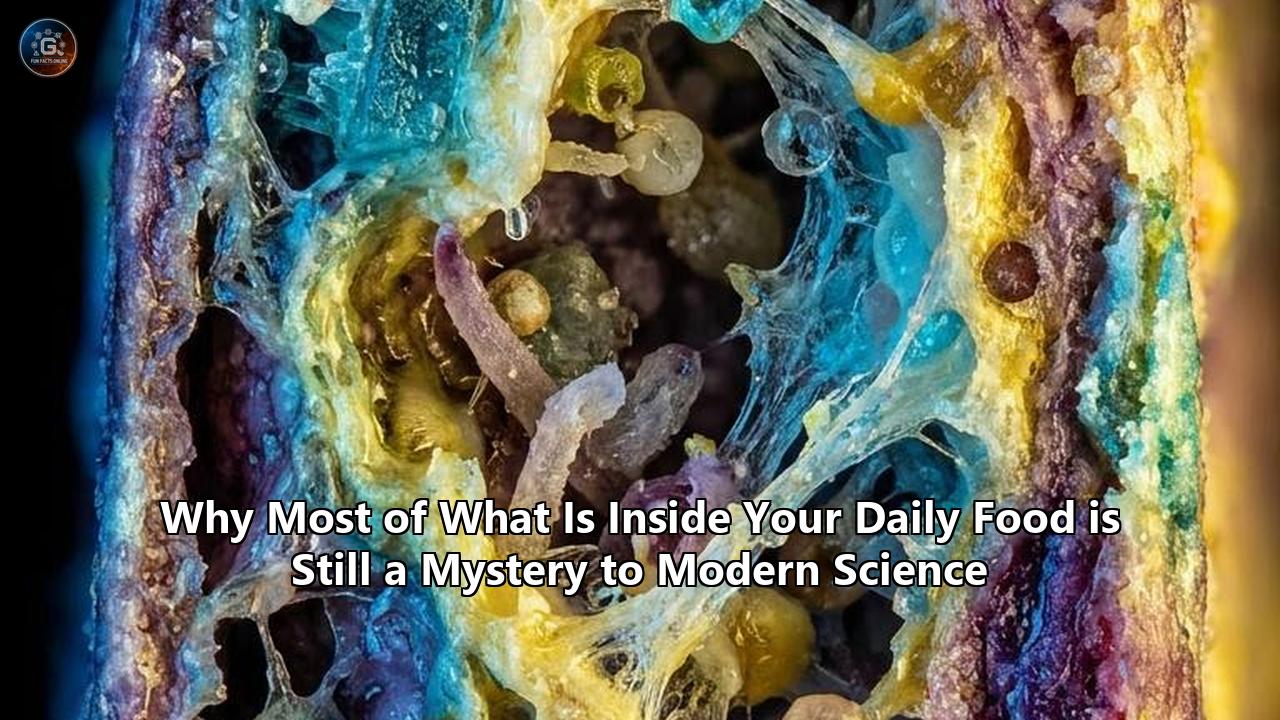
A quiet scientific movement is gathering pace across the globe, driven by a stark and unsettling revelation: modern science does not know what is inside our food.
While the nutrition facts panel on the back of a cereal box or a yogurt container lists a familiar, neat column of about a dozen components—calories, fats, proteins, carbohydrates, sodium, and a handful of vitamins—these represent less than 10% of the actual chemical compounds we consume. The remaining 90% is what researchers call "nutritional dark matter."
This molecular wilderness, containing tens of thousands of unmapped compounds, is finally being dragged into the light. Earlier this year, Google.org announced its "AI for Science" fund, selecting the Periodic Table of Food Initiative (PTFI) to build an advanced, AI-powered platform designed to map this dark matter of food. Powered by standardized multi-omics platforms developed at the Innovation Institute for Food and Health (IIFH) at the University of California, Davis, researchers have already characterized hundreds of foods, identifying more than half a million proteins alongside a vast sea of metabolites, lipids, and carbohydrates.
Yet, as databases expand and artificial intelligence begins to trace the links between these compounds and human biology, scientists are grappling with an uncomfortable reality. The vast majority of the food we consume contains compounds whose structures are unknown, whose physiological effects are unstudied, and whose origins are a mix of natural plant chemistry, intensive agricultural practices, industrial food processing, and environmental pollution. The current regulatory, agricultural, and clinical paradigms are built on a reductionist understanding of nutrition that is fundamentally incomplete.
The Molecular Wilderness of What We Eat
For more than a century, nutritional science has operated under a framework of scarcity and basic survival. This framework, established in the late 19th and early 20th centuries, sought to identify the minimum chemical inputs required to prevent acute deficiency diseases like scurvy, rickets, and pellagra. This reductionist approach was incredibly successful. By identifying vitamin C, vitamin D, and niacin, and subsequently fortifying the food supply, public health systems in developed nations largely eradicated these devastating conditions.
However, this initial success created a false sense of completion. Governments and scientific bodies standardized food databases—such as the United States Department of Agriculture (USDA) National Nutrient Database—around a tiny subset of key nutrients.
"We started digging and realized we have no clue what's in our food," says Albert-László Barabási, a professor of network science and physics at Northeastern University. Barabási, along with David Wishart, a professor of biological sciences and computing science at the University of Alberta, has pioneered the mapping of nutritional dark matter.
While an official government database might track roughly 150 distinct food components, Wishart estimates that an average food item actually contains between 20,000 and 50,000 unique chemical compounds. When we eat an apple, a slice of whole-grain bread, or a piece of salmon, we are not just consuming fuel and vitamins. We are ingesting an incredibly complex, highly concentrated chemical package.
This package focuses the environmental, agricultural, and metabolic history of the food into a single edible bite. As Wishart describes it, just as a magnifying glass focuses sunlight into a single pinpoint, food concentrates its chemicals and the external environmental effects—such as microbial activity, soil chemistry, weather patterns, insects, synthetic pesticides, industrial processing aids, and packaging contaminants—into a single edible morsel.
Traditional Food Databases             The Molecular Reality of Food
(Conventional Mapping)                (Nutritional Dark Matter / Multi-Omics)
┌──────────────────────────┐          ┌──────────────────────────────────────────────┐
│  ~150 Known Compounds    │          │  20,000 to 50,000 Unique Compounds           │
│  - Macronutrients        │   VS.    │  - Phenolic compounds & flavonoids           │
│  - Standard Vitamins     │          │  - Bioactive peptides & novel lipids         │
│  - Basic Minerals        │          │  - Agricultural & environmental residues      │
│  - Calories              │          │  - Neoformed processing chemicals            │
└──────────────────────────┘          └──────────────────────────────────────────────┘
    (Less than 10% of                          (Over 90% of food composition
     food composition)                           remains functionally unmapped)
The reason these tens of thousands of compounds have remained hidden for so long is analytical. Traditional food chemistry relied on targeted analysis, where scientists designed tests to look for specific, pre-determined compounds. If you set out to measure vitamin C in an orange, your analytical method would isolate and measure vitamin C, ignoring everything else.
Only recently, with the advent of high-resolution mass spectrometry and liquid chromatography, have scientists been able to conduct non-targeted metabolomics. This technology allows instruments like Orbitrap and Quadrupole Time-of-Flight mass spectrometers (LC-QTOFMS) to detect every single molecular mass in a sample, producing complex, multi-dimensional readouts of thousands of chemical "peaks."
The challenge is no longer detecting these molecules; it is identifying them. When researchers run food samples through these advanced instruments, they are met with a wall of "spectral dark matter." The instruments register the presence of thousands of distinct chemical structures, but when those structures are cross-referenced with global chemical databases, there are no matches. They are entirely unknown to modern science.
This vacuum of knowledge has left consumers highly susceptible to consuming unknown food ingredients without any systematic way of knowing how they interact with their bodies. From synthetic additives and crop treatment residues to compounds generated during industrial baking and frying, our daily diet is an ongoing, unmonitored chemistry experiment.
Stakeholder Analysis: Who Is Affected?
The realization that our food is a black box of unmapped chemistry has profound, cascading implications across multiple sectors of society. From the individual consumer trying to navigate chronic illness to the multinational food conglomerate modifying its supply chains, the impact is systemic.
The Consumer: Navigating Chronic Illness and Invisible Triggers
For the average consumer, the lack of chemical transparency in food is not an abstract academic concern—it is a daily health hazard. The rise of diet-related chronic conditions, including autoimmune disorders, severe gut dysbiosis, cardiovascular disease, and metabolic syndrome, has occurred in tandem with the rise of the ultra-processed diet. Because conventional food labels only list basic macronutrients and added ingredients, consumers have no way of identifying the specific chemical triggers that may be driving their symptoms.
Consider malabsorption and gastrointestinal conditions. Many patients suffer from chronic malabsorption syndromes, severe food sensitivities, or treatment-resistant anemias that persist despite seemingly healthy diets. In many of these cases, the underlying culprit may be unseen food chemical interactions.
Certain unmapped agricultural chemicals, preservation agents, or emulsifiers can degrade the protective mucosal barrier of the gut, rendering the intestinal lining permeable and interfering with the active transport of critical nutrients like iron, zinc, and magnesium. Because these compounds are not tracked or labeled, patients and their physicians are left to guess, cycling through restrictive diets without ever identifying the true molecular triggers.
Furthermore, consumers are increasingly exposed to "neoformed contaminants"—compounds that are not added to food intentionally but are generated during industrial processing, high-heat cooking, and long-term shelf storage. For example, when starches and amino acids are subjected to the extreme heat and pressure of extrusion (the process used to make breakfast cereals and puffed snacks), they undergo complex chemical reactions that create entirely new, unstudied molecular structures. The consumer ingests these compounds daily, completely unaware of their presence or their potential to trigger cellular inflammation and metabolic disruption.
The Food Industry: The Myth of the "GRAS" Loophole
For food manufacturers, the unmapped chemistry of food represents a growing regulatory and reputational liability. For decades, the global food industry has relied on a regulatory shortcut in the United States known as the "Generally Recognized as Safe" (GRAS) designation. Established by the Food Additives Amendment of 1958, the GRAS standard allowed common, long-used food ingredients (like salt, sugar, and vinegar) to bypass the rigorous, lengthy pre-market approval process required for new food additives.
Over time, however, the GRAS designation evolved into a massive loophole. Today, chemical manufacturers can self-certify that a new food additive or formulation is "safe" based on their own, often unpublished, scientific reviews. There is no statutory requirement for these companies to share their safety data with the Food and Drug Administration (FDA), nor is there a systematic, post-market review process to ensure that these compounds remain safe over decades of cumulative human consumption.
This has created a massive backlog of unmonitored chemistry in our food supply. Emulsifiers, texturizers, synthetic colorants, and preservation chemicals are added to foods with minimal understanding of how they affect the human microbiome or how they interact with other chemicals inside the digestive tract.
As high-resolution mass spectrometry and AI-driven toxicology platforms expose the cumulative effects of these compounds, the food industry is facing an era of unprecedented scrutiny. Chemical classes once thought to be completely inert, such as phthalates from plastic packaging or per- and polyfluoroalkyl substances (PFAS) from grease-resistant wrappers, are now known to migrate into food, acting as endocrine disruptors even at parts-per-billion concentrations.
The Agricultural Sector: The Cost of Breeding Out Chemistry
For farmers and agricultural scientists, the revelation of nutritional dark matter exposes the long-term consequences of prioritizing crop yield over nutritional complexity. For the past seventy years, industrial agriculture has focused almost exclusively on maximizing macronutrient output—specifically starch, protein, and oil—per acre of land. Through intensive selective breeding, chemical fertilization, and genetic modification, crops have been optimized to grow faster, resist pests, and survive long-distance transport.
However, in prioritizing bulk volume, agriculture has inadvertently bred out the rich, complex secondary chemistry of plants. Plants produce thousands of secondary metabolites—such as polyphenols, flavonoids, terpenoids, and glucosinolates—not for primary growth, but as a sophisticated defense system. These compounds protect the plant from ultraviolet radiation, insect attacks, and fungal infections.
When humans consume these secondary plant metabolites, they act as powerful bioactive agents, modulating our inflammatory pathways, activating cellular antioxidant defenses, and feeding beneficial gut microbes.
Industrialized Monoculture                Biodiverse Regenerative Agriculture
(Conventional Yield-Focused)              (Soil-Centric / Ecosystem-Focused)
┌───────────────────────────┐             ┌───────────────────────────┐
│ • Depleted Soil Microbiome│             │ • Rich, Diverse Soil      │
│ • High NPK Fertilizers    │             │ • Natural Pest Pressures  │
│ • Low Secondary Chemistry │             │ • High Secondary Chemistry│
└─────────────┬─────────────┘             └─────────────┬─────────────┘
              ▼                                         ▼
┌───────────────────────────┐             ┌───────────────────────────┐
│ Crop is structurally weak │             │ Crop produces complex     │
│ but physically massive.   │             │ metabolites to protect    │
│ Lacks molecular diversity.│             │ itself. Highly nutritious.│
└───────────────────────────┘             └───────────────────────────┘
Because modern industrial crops are grown in depleted soils and protected by synthetic chemical sprays, they no longer need to produce these defensive metabolites. They are, from a molecular standpoint, chemically empty. A modern, industrially grown tomato may look identical to a tomato grown in a biodiverse, regenerative system, but its molecular blueprint is radically different.
Farmers are now realizing that their product's true value may not lie in its weight, but in its unmapped chemical richness—a shift that could rewrite the entire economic structure of agricultural subsidies and crop pricing.
Healthcare Systems: The $1.1 Trillion Blind Spot
For healthcare systems, nutritional dark matter is the missing link in chronic disease prevention and management. In the United States alone, diet-related chronic illnesses, metabolic disorders, and the loss of economic productivity associated with poor nutrition cost a staggering $1.1 trillion annually, according to analysis by the Rockefeller Foundation.
Despite this immense financial and human toll, modern medicine remains largely powerless to prescribe precise, effective dietary interventions.
Physicians receive minimal training in nutrition, and the guidance they do provide is based on a highly generalized, outdated understanding of macronutrients and calories. Clinical nutrition studies frequently produce contradictory results—one year a high-fat diet is deemed dangerous, the next it is championed—because researchers are attempting to study human health while completely ignoring 90% of the chemical inputs their subjects are consuming.
Without mapping the chemical dark matter of food, trying to understand how diet influences cardiovascular disease, colon cancer, or neurological health is like trying to debug a complex software system while only being able to see 10% of the source code.
What Changes? The Shift from Reductionism to Systemic Foodomics
As the scale of this scientific blind spot becomes clear, the entire discipline of nutrition is undergoing a fundamental transformation. The traditional, reductionist framework is being replaced by a highly advanced, interdisciplinary field known as foodomics—the systematic study of food as a complex chemical environment analyzed through the lens of genomics, proteomics, metabolomics, and lipidomics.
This transition is characterized by three major shifts:
1. From "Nutrient Density" to "Molecular Complexity"
For decades, nutritionists evaluated the quality of a food based on its "nutrient density"—a simple ratio of vitamins, minerals, and protein relative to the food's caloric content. Under this model, an enriched, synthetic protein bar could appear healthier than a wild blackberry, simply because the bar was fortified with isolated vitamins and protein powders.
Foodomics completely upends this logic by focusing on molecular complexity. Researchers are discovering that the physical structure of food—the "food matrix"—and the thousands of trace compounds embedded within it are just as important as the macronutrient count.
For example, when we consume a whole piece of fruit, the sugar molecules are bound within a complex matrix of dietary fiber, micro-cellulose, and polyphenols. This matrix dramatically slows the rate of digestion, preventing insulin spikes and allowing trace compounds to reach the lower digestive tract, where they are transformed by gut bacteria into beneficial anti-inflammatory metabolites.
If you extract those same sugars and vitamins, discard the matrix, and package them into an ultra-processed food, the biological response is completely different—even if the chemical label claims identical nutrient values. Foodomics aims to map these complex, structural relationships, providing a scientific baseline that explains why whole, minimally processed foods are fundamentally different from their synthetic lookalikes.
Reductionist Nutrition (The Past)           Systemic Foodomics (The Present & Future)
┌─────────────────────────────────┐         ┌─────────────────────────────────┐
│ • Focuses on isolated compounds │         │ • Focuses on the food matrix    │
│ • Measures macronutrients/cals  │   ───►  │ • Maps tens of thousands of     │
│ • Promotes synthetic completion │         │   interactive compounds         │
│ • Assumes equal bioavailability │         │ • Examines microbiome-metabolite│
│                                 │         │   transformations in gut        │
└─────────────────────────────────┘         └─────────────────────────────────┘
2. The Integration of Artificial Intelligence and Machine Learning
Because the molecular blueprint of food is so vast, human researchers cannot analyze it using traditional methods. The number of possible chemical interactions between 50,000 food compounds, the human genome, and the trillions of microbes living in our digestive tract is mathematically astronomical.
This is where artificial intelligence and machine learning have become indispensable. Earlier this year, platforms like FoodAtlas and MarkerLab (developed by the PTFI) began using deep learning algorithms to crawl peer-reviewed research, map out biochemical pathways, and predict how specific food molecules interact with human cells.
Using these AI tools, scientists can conduct "in silico" screening—using computer models to test how thousands of unmapped food molecules might bind to inflammatory receptors or modulate metabolic pathways before ever conducting expensive, time-consuming human trials.
For example, researchers at UC Davis are using machine learning to rapidly analyze complex chromatographic-mass spectral data, separating natural, health-promoting plant compounds from synthetic contaminants and processing residues. This AI-driven triage allows scientists to identify high-priority compounds for clinical testing, bypassing years of manual laboratory isolation.
3. A Holistic "One Health" Approach to Nutrition
The foodomics revolution is dissolving the artificial boundary between agricultural science, environmental health, and human medicine. Under the "One Health" paradigm, researchers recognize that the molecular quality of our food is directly bound to the health of the soil, the biodiversity of the ecosystem, and the stability of the climate.
The PTFI, supported by the Rockefeller Foundation, is actively mapping how different agricultural systems shape the molecular makeup of staples like wheat, rice, corn, and beans.
"We’re not just measuring food; we’re discovering what’s in food," explains Selena Ahmed, global director of the PTFI. "In so many ways, we don't know the health attributes of many of these biomolecules. In some cases, there are lots of knowns in food, but most of what we see is unknown. It is dark matter."
By building a global, open-access atlas of molecular food composition, the initiative is showing how farming practices, climate stress, and soil health directly dictate the presence of protective, anti-inflammatory compounds in our daily diet. This shift connects the dots between environmental conservation and preventive medicine, demonstrating that we cannot heal the human body without also healing the agricultural systems that feed it.
Short-Term Consequences: Regulatory Friction and Market Turbulence
The scientific uncovering of nutritional dark matter is already causing immediate ripples across regulatory agencies, consumer markets, and food technology startups. Over the next one to three years, these shifts are poised to create significant friction as old systems clash with new, unassailable molecular data.
The Regulatory Crackdown on Food Chemistry
The immediate impact of foodomics is a major regulatory headache for agencies like the FDA. For years, the agency has operated on an ad hoc, reactive basis when it comes to post-market food safety, primarily monitoring scientific literature and taking action only when public outcry or overwhelming toxicological evidence forced their hand.
This passive approach is no longer tenable. With non-targeted mass spectrometry exposing thousands of unmonitored chemical compounds in daily groceries, the FDA is facing intense pressure to reform its post-market review processes.
Earlier this year, the agency began exploring the use of machine learning and AI data-crawling technology to systematically identify safety signals within the scientific literature, attempting to parse the thousands of new biochemistry papers published daily.
This shift is already leading to a wave of chemical bans and restrictions. High-profile actions to restrict Brominated Vegetable Oil (BVO) and phase out PFAS from paper packaging are merely the opening salvos of a much larger regulatory battle.
As databases map the presence of these unknown food ingredients inside everyday groceries, consumer advocacy groups are demanding the immediate re-evaluation of thousands of self-certified GRAS compounds, emulsifiers, and synthetic preservatives. The food industry is facing a future of rapid reformulation, as chemicals once deemed "inert" are revealed to have active, negative impacts on gut health and endocrine function.
The Food Safety Signal Detection Flow
┌─────────────────────────────────┐
│     Global Scientific Output    │  --> 4,000 to 7,000 new articles published daily
└───────────────┬─────────────────┘
                ▼
┌─────────────────────────────────┐
│  AI Data-Crawling & Literature  │  --> Systematically extracts chemical structures
│        Triage Systems           │      and toxicological markers
└───────────────┬─────────────────┘
                ▼
┌─────────────────────────────────┐
│ FDA Signal Detection and Active │  --> Isolates potential hazards, endocrine disruptors,
│      Post-Market Review         │      and unapproved GRAS compounds
└───────────────┬─────────────────┘
                ▼
┌─────────────────────────────────┐
│   Mandatory Reformulation or    │  --> Rapid restriction of compounds (e.g., BVO,
│       Market Withdrawal         │      phthalates, microplastics)
└─────────────────────────────────┘
The Consumer Friction Point: Neophobia and the Novel Food Barrier
At the same time, the market is experiencing a profound psychological tension. On one hand, consumers are demanding cleaner, simpler foods with fewer synthetic additives. On the other hand, the transition to a sustainable food system requires the introduction of novel, highly unfamiliar food sources—such as insect-based powders, agricultural byproducts, cell-cultured meats, and precision-fermented proteins.
This has created a massive barrier: consumer neophobia. One of the primary barriers to introducing novel or sustainable foodstuffs is the risk perceived for consuming unknown food ingredients, which frequently triggers feelings of fear, disgust, and physical rejection.
For example, while cricket flour or seafood processing byproducts (such as nutrient-rich fish bone powders) are incredibly sustainable and packed with beneficial, unmapped micro-nutrients, consumers often perceive them as dirty, unsafe, or unnatural.
To overcome this psychological barrier, food science companies are realizing they cannot simply dump these ingredients into the market. They must use foodomics to provide explicit, highly detailed educational, nutritional, and sustainability information. By showing the exact molecular profile of these novel ingredients—demonstrating that they are chemically clean, highly nutritious, and free from industrial contaminants—companies can help consumers overcome their emotional hesitation and view these novel ingredients as clean, sustainable powerhouses of nutrition.
The Rise of "AI-Washing" and Molecular Marketing
As foodomics enters the public consciousness, the commercial market is being flooded with a new wave of "molecular marketing." Food brands, quick to seize on scientific trends, are beginning to leverage early, unverified data to sell hyper-personalized, "AI-optimized" foods.
We are already seeing the emergence of products that claim to be formulated using machine learning to maximize specific "bioactive peptides" or "dark matter polyphenols". Consumers are being bombarded with advertisements for foods that promise to optimize their gut microbiomes, target specific cellular inflammatory pathways, or enhance cognitive function based on their unique genetic profiles.
However, much of this early commercialization is outpacing the actual science. While AI-driven databases like FoodAtlas and MarkerLab are making rapid strides, our fundamental understanding of how these molecules function in the human body is still in its infancy.
"We are just beginning to make sense of this," warns Selena Ahmed. "Translation needs to happen... we need to synthesize and simplify, and we have not yet approached this challenge. It’s a tricky question because we’re just beginning to make sense of this."
The short-term result is a highly confusing, often deceptive marketplace where consumers must navigate a minefield of "AI-washed" health claims, trying to separate genuine molecular breakthroughs from sophisticated marketing copy.
Long-Term Consequences: Redefining Agricultural Economics and Preventive Medicine
Over the next five to ten years, as the molecular mapping of food reaches maturity, the downstream consequences will permanently restructure global agricultural economics, consumer health technologies, and the entire philosophy of preventive medicine.
Redefining Agricultural Economics: Paying for Quality, Not Quantity
The most profound long-term consequence of mapping nutritional dark matter is the complete restructuring of agricultural economics. For nearly a century, the global food system has operated on a high-volume, commodity-driven model. Farmers are paid based on the physical weight or bushel volume of their crops. This economic structure directly incentivizes farmers to maximize yields using intensive chemical fertilizers, high-water irrigation, and fast-growing monoculture strains—practices that yield physically massive but molecularly depleted crops.
As multi-omics databases like the PTFI provide clear, unassailable evidence of the link between farming practices and molecular crop quality, this yield-only model will become obsolete.
In the future, agricultural commodities will be graded and priced based on their "molecular density index"—a holistic measure of their chemical complexity, including secondary metabolites, trace minerals, and bioactive compounds.
Current Agricultural Paradigm             Future Foodomics Paradigm
(Quantity-Driven)                         (Quality-Driven)
┌─────────────────────────────────┐       ┌─────────────────────────────────┐
│ • Farmers paid by bulk weight   │       │ • Farmers paid by molecular     │
│ • Incentivizes high-yield,      │ ───►  │   richness and chemical density │
│   depleted monocultures         │       │ • Incentivizes regenerative,     │
│ • High environmental cost,      │       │   biodiverse farming practices  │
│   low nutritional value         │       │ • High nutritional density,     │
│                                 │       │   low environmental footprint   │
└─────────────────────────────────┘       └─────────────────────────────────┘
This economic shift will make regenerative and biodiverse farming practices highly profitable. Food companies, eager to secure high-quality ingredients for health-conscious consumers, will contract directly with farmers who employ cover-cropping, minimal-tillage, and organic soil building.
Soil health will no longer be treated as an environmental luxury; it will be recognized as the primary engine of nutritional quality. Agriculture will shift from a system that produces cheap, empty calories to a system that produces rich, complex, preventive medicine at a massive scale.
Deciphering the Environment-Food Nexus
By mapping the complex trace chemistry of what we eat, scientists are also building an early-warning system for global environmental health. David Wishart expects to have a highly detailed portrait of 1,000 environmental chemicals that form a direct, toxicological bridge between our food and our environment.
This database will map how synthetic pesticides, heavy metals, microplastics, preservation chemicals, and industrial byproducts migrate into the agricultural food chain.
For the first time, we will be able to see the cumulative, multi-generational impact of these compounds on human physiology. Instead of evaluating pesticide safety based on whether a single chemical causes acute toxicity in laboratory mice, scientists will use AI models to analyze how hundreds of different environmental residues interact inside the human gut, disrupting the microbiome and triggering chronic cellular stress over decades.
This will lead to a revolutionary overhaul of environmental and chemical regulations. Industrial polluters will no longer be able to hide behind the safety of "parts-per-billion" concentrations; mass-spectrometry mapping will show exactly how these environmental toxins bioaccumulate inside our daily food, forcing governments to implement strict, systemic protections for our air, water, and soil.
The Realization of "Food is Medicine" and Precision Nutrition
The long-term maturity of foodomics will finally transform nutrition from a soft science of generalized guidelines into a highly precise branch of clinical medicine.
Historically, dietary advice has been frustratingly broad: "eat more fruits and vegetables, limit saturated fats, and drink plenty of water." This generalized advice completely ignores the massive genetic, metabolic, and microbial diversity of the human population.
In the future, healthcare systems will integrate deep molecular food databases directly with patients' electronic health records, genomic sequences, and gut microbiome analyses. This will allow clinicians to prescribe highly precise, personalized diets to target specific chronic diseases, metabolic conditions, and autoimmune disorders.
                       [Patient Personal Health Data]
                      - Genomic / DNA Sequence
                      - Gut Microbiome Profile
                      - Active Inflammatory Markers
                                     │
                                     ▼
                      ┌─────────────────────────────┐
                      │    AI Integration Platform  │
                      └──────────────┬──────────────┘
                                     ▲
                                     │
                       [Global Foodomics Database]
                      - 50,000+ Molecular Compounds
                      - Soil & Agricultural Metadata
                      - Bioactive Peptide Activity
                                     │
                                     ▼
                      ┌─────────────────────────────┐
                      │   Precision Diet Therapy    │
                      │   - Targeted Metabolites    │
                      │   - Specific Food Matrices  │
                      │   - Customized Therapeutics │
                      └─────────────────────────────┘
For example, instead of prescribing a generic "low-cholesterol" diet to a patient with cardiovascular disease, a cardiologist will prescribe a customized diet rich in specific, structurally intact plant matrices containing exact combinations of bioactive peptides and polyphenols known to down-regulate arterial inflammation in individuals with the patient's specific genetic profile.
Cancer therapies will be supported by precise dietary regimens designed to starve tumor cells of specific metabolic inputs while boosting the patient's immune function through targeted food metabolites. "Food is Medicine" programs, currently operating on the fringes of healthcare, will become the primary, evidence-based standard for preventing and reversing chronic disease, dramatically reducing global healthcare expenditures and saving millions of lives.
Future Milestones and the Unresolved Questions of Food Chemistry
As we look toward the future, the scientific community is racing to hit several critical milestones while wrestling with deep, structural questions that have no easy answers.
One of the most immediate milestones is the ongoing "Future Food + Nutrition Facts" data visualization challenge, sponsored by the American Heart Association and the Rockefeller Foundation. This competition, running through the year, invites interdisciplinary teams of public health experts, data scientists, and designers to completely reimagine the consumer food label.
The goal is to translate the staggeringly complex, multi-omics data generated by the PTFI into intuitive, clear, and actionable visual formats that everyday consumers and busy policymakers can easily understand. This challenge represents a crucial step in bridging the gap between high-level laboratory chemistry and the daily decisions made by consumers in supermarket aisles.
Simultaneously, researchers are working to finalize the world's first open-access molecular atlas of food, establishing a standardized, globally shared digital blueprint of human nutrition. This project, powered by standardized methodologies developed at UC Davis, ensures that food data collected by scientists in North America, Europe, Africa, and Australia can be directly compared and scaled.
By building a shared, global public good, the initiative aims to democratize food science, ensuring that researchers in developing nations have the same access to state-of-the-art molecular data as multinational food conglomerates.
Yet, as the technology races forward, several profound, unresolved questions remain:
- Can we truly regulate a system of 50,000 compounds? Current regulatory frameworks are built on a chemical-by-chemical safety assessment model. If a single strawberry contains thousands of trace metabolites, environmental residues, and natural compounds, how can regulatory agencies hope to evaluate the safety, toxicity, and interaction profiles of these molecules? Will we need to shift from regulating individual chemicals to regulating entire biochemical networks?
- Who owns this molecular data? As AI-driven foodomics becomes a highly lucrative industry, there is an intense, ongoing debate regarding Digital Sequence Information (DSI) and patent rights. Will multinational agricultural and pharmaceutical corporations be allowed to patent specific, newly discovered health-promoting plant molecules? How do we ensure that the traditional knowledge of indigenous communities—who have cultivated and used these biodiverse food plants for millennia—is protected, and that the financial benefits of these molecular discoveries are shared equitably with the regions of origin?
- How do we bridge the gap between computational models and human biology? While AI platforms can predict chemical-receptor interactions with incredible speed, human biology is notoriously unpredictable. A compound that shows powerful anti-inflammatory effects in a computer model or a petri dish may behave completely differently when consumed by a human with a damaged gut microbiome or a unique genetic mutation. How do we scale clinical testing to validate these AI predictions in diverse, real-world human populations without drowning in astronomical costs?
The coming decade will be defined by our struggle to answer these questions. We are standing on the brink of a scientific revolution that will permanently dismantle our simplistic, calorie-centric understanding of food. As we peer into the depths of nutritional dark matter, we are discovering that our daily meals are not just collections of fuel—they are highly complex, incredibly powerful informational packages that dictate the health of our bodies, our societies, and our planet. For the first time in human history, we are beginning to understand what we are truly eating.
References
- FDA Post-Market Chemical Safety Signal Detection and Machine Learning (2024).
- LSU AgCenter Research on Novel Food Perceptions and Unknown Ingredients (2023).
- Food Additives Amendment of 1958 and the GRAS Loophole Framework (2006).
- USDA AI Institute for Next Generation Food Systems (AIFS) & PTFI AI Collaboration (2024).
- FoodAtlas Evidence-Based Food Composition Database & Knowledge Graph Release (2026).
- Selena Ahmed on Translating Complex Biomolecular Food Data (2025).
- USDA Agricultural Research Service (ARS) Foodomics and Dark Matter Projects (2024).
- ICDAM Workshop on National Food Composition Databases and AI-Integration (2025).
- David Wishart and Albert-László Barabási on Nutritional Dark Matter mapping (2025).
- Menus of Change Summit: AI, Diet-Related Chronic Diseases, and the Rockefeller Foundation (2026).
- AI and Multi-Omics for Bioactive Peptide and Amino Acid Discovery (2025).
- UC Davis Innovation Institute for Food and Health (IIFH) on PTFI Standards (2025).
- Google.org AI for Science Fund Support of the Periodic Table of Food Initiative (2026).
- American Heart Association "Future Food + Nutrition Facts" Data Challenge (2025).
- Rockefeller Foundation and PTFI Framework for Environmental and Human Health (2026).
- PTFI MarkerLab Web-Based Food Visualization Platform (2026).
- PTFI Global Mission for Open-Access and Equitable Food Data (2026).
Reference:
- https://nautil.us/the-dark-matter-of-food-1255448
- https://www.eurekalert.org/news-releases/1101371
- https://blog.google/company-news/outreach-and-initiatives/google-org/announcing-ai-for-science-awardees/
- https://foodandhealth.ucdavis.edu/partner-highlight-the-dark-matter-of-food-collaborative-science-for-the-future-of-nutrition/
- https://www.nutritioninsight.com/news/food-composition-ptfi-uc-davis-innovation.html
- https://pubmed.ncbi.nlm.nih.gov/41473198/
- https://www.researchgate.net/publication/309890603_Determination_of_pharmaceutical_residues_in_wastewater_using_high_performance_liquid_chromatography_coupled_to_quadrupole-Orbitrap_mass_spectrometry
- https://orbit.dtu.dk/en/publications/maintaining-national-food-databases-to-enhance-precision-a-report/
- https://www.ars.usda.gov/research/project/?accnNo=445346
- https://foodandhealth.ucdavis.edu/integrate-a-growing-food-database-with-ai/
- https://foodtank.com/news/2026/06/asking-serious-questions-about-ais-role-in-food-is-medicine/
- https://www.fda.gov/apology_objects/abuse-detection-apology.html
- https://epdf.pub/handbook-of-brewing-second-edition-food-science-and-technology-157.html
- https://foodperiodictable.org/
- https://www.foodatlas.ai/
- https://foodperiodictable.org/explore/
- https://www.rockefellerfoundation.org/initiatives/periodic-table-of-food/
- https://repository.lsu.edu/cgi/viewcontent.cgi?article=6453&context=gradschool_theses