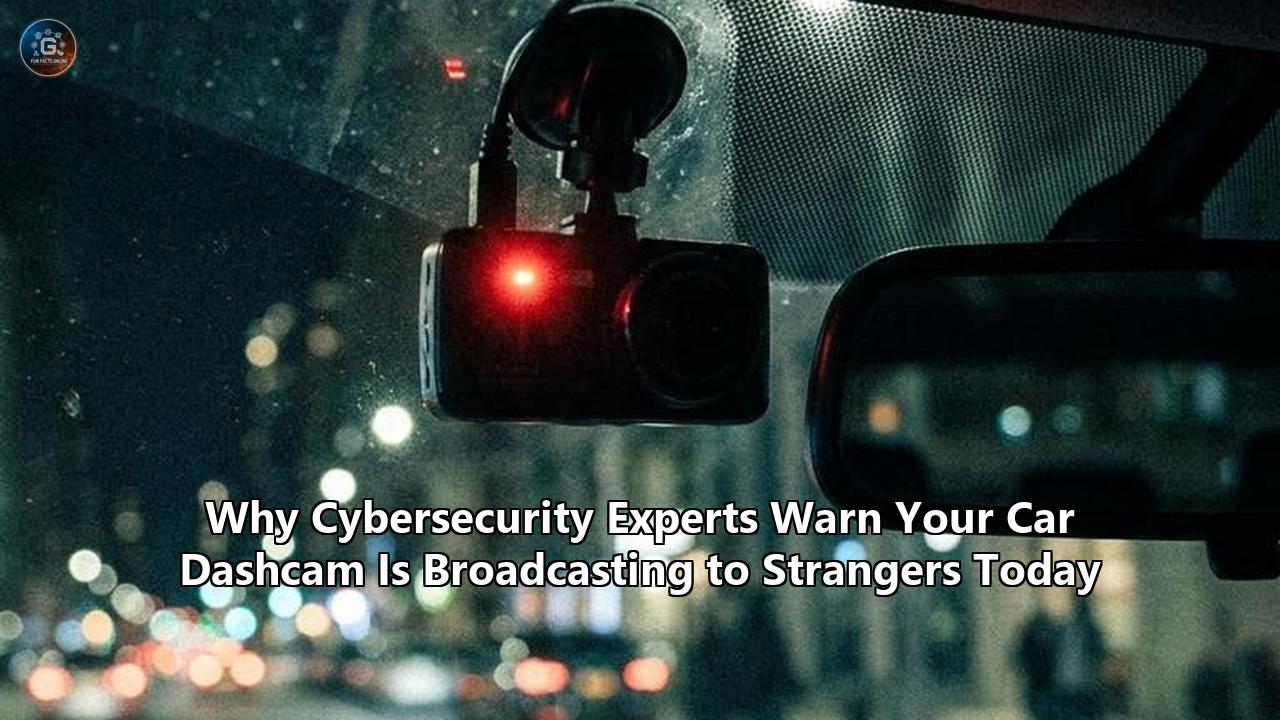
In late 2025 and escalating through early 2026, a string of critical Common Vulnerabilities and Exposures (CVEs) quietly dropped into the National Vulnerability Database. They targeted a piece of hardware mounted on millions of windshields: the connected dashcam. At recent cybersecurity summits, including Kaspersky’s Security Analyst Summit, researchers demonstrated a reality that most drivers are entirely unaware of. Modern, Wi-Fi and LTE-enabled dashcams from highly popular aftermarket brands—including IROAD and BlackVue—can be hijacked in seconds by anyone with a laptop in a nearby parking lot, or worse, accessed remotely over the internet without ever requiring a password.
The security research community has revealed that these devices are not simply recording video to a local SD card. They are functioning as open surveillance nodes, broadcasting live high-resolution video, unencrypted cabin audio, and precise GPS coordinates to unauthorized users. The fallout from vulnerabilities like CVE-2025-30131 (affecting IROAD devices) and CVE-2025-7076 (affecting BlackVue hardware) shows a systemic failure in automotive accessory design.
Attackers are exploiting unauthenticated file upload endpoints, weak default credentials, and poorly configured Real-Time Streaming Protocols (RTSP) to gain persistent root access to these devices. Once compromised, the cameras serve as a direct window into the driver’s life, tracking routines, recording private conversations, and mapping out logistical routes for corporate fleets.
To understand why this massive security oversight exists, you have to look past the branded plastic housing of the camera and examine the supply chain, the underlying software architecture, and the hidden data economy that subsidizes the hardware.
The Silicon Monoculture Behind the Glass
When consumers browse digital storefronts for a dashcam, they see dozens of competing brands boasting different features: 4K resolution, starvis night vision, cloud connectivity, and AI-powered parking modes. The reality of the electronics supply chain is far less diverse. The vast majority of these devices share the same internal organs.
The global dashcam market relies heavily on a handful of System-on-a-Chip (SoC) manufacturers based in Shenzhen and Hsinchu. Companies like Novatek, Ambarella, and SigmaStar produce the highly specialized silicon required to process continuous high-definition video while managing thermal output in a hot car interior. When these silicon vendors sell their chips to camera manufacturers, they do not just provide the hardware; they provide a comprehensive Software Development Kit (SDK) and a reference design.
This reference design typically includes a lightweight, embedded Linux operating system, a basic web server (often Lighttpd or a custom implementation), and pre-configured network interfaces for Wi-Fi and Bluetooth. Camera brands—from the cheapest white-label Amazon imports to premium models costing hundreds of dollars—frequently take this base SDK, slap a proprietary mobile app interface over it, and push it to market.
The cybersecurity implications of this practice are severe. If a vulnerability exists in the base SDK's web server or network configuration, it propagates across dozens of distinct brands and hundreds of models. Security researchers identified that approximately 15 different consumer brands currently on the market suffer from identical authentication bypass vulnerabilities because they share this underlying architecture. They inherited the same hardcoded administrative passwords, the same debug ports left open by factory engineers, and the same poorly secured API endpoints.
When a researcher discovers a way to drop a shell on a Thinkware or an IROAD camera, the exact same Python script will often execute flawlessly on a completely different brand simply because both devices are running the identical, unpatched Novatek SDK from three years ago. This hardware monoculture turns a single software flaw into a mass-market surveillance crisis.
Anatomy of an Unauthenticated Interface
The recent wave of CVEs highlights a specific, highly destructive pattern of software engineering failures within these devices. Examining CVE-2025-30131 provides a textbook case of how easily these systems fold under basic scrutiny.
The vulnerability stems from the way the camera’s internal web server handles local traffic. Most modern dashcams broadcast their own local Wi-Fi Access Point (AP). To view footage on your phone, you join the camera’s Wi-Fi network and open the companion app. The app communicates with the camera via standard HTTP requests and RTSP streams.
In the case of the IROAD FX2 and similar models, the developers failed to implement session management or access controls on critical administrative endpoints. The device features a Common Gateway Interface (CGI) script—a legacy method for web servers to execute scripts on the underlying operating system—intended for firmware updates and configuration changes.
Researchers discovered that the /upload.cgi endpoint did not require any authentication. An attacker sitting in a car parked next to the victim simply needs to join the dashcam’s publicly broadcasted Wi-Fi network (which often uses a default password like '12345678' or 'qwertyuiop') and send a specialized POST request to the camera.
Instead of uploading a firmware update, the attacker uploads a webshell—a malicious script that grants the attacker a command-line interface through the web browser. Because the embedded web server runs as the 'root' user (a common, dangerous shortcut in cheap IoT devices), the webshell immediately grants the attacker total administrative control over the underlying Linux operating system.
From there, the attacker can upload a netcat binary to establish a reverse shell, ensuring persistent, privileged access. The camera is entirely compromised. The attacker can silently siphon MP4 files off the internal SD card, alter the logs, or pull the live RTSP stream over port 8554, watching exactly what the camera sees in real-time, all without the driver ever seeing a warning light blink.
Another flaw, cataloged as CVE-2025-30135, revealed that simply navigating to a specific directory path (e.g., http://192.168.10.1/mnt/extsd/event/) allowed anyone connected to the local network to download all stored video recordings in plain text, entirely bypassing the mobile app’s intended security barriers. The lack of encryption at rest on the SD card means that if the data is accessible via the network, it is instantly readable.
The "Wormable" Traffic Jam Threat
While a hacker sitting in a parking lot pulling footage from a specific car is a targeted threat, cybersecurity researchers have outlined a far more systemic risk: wormable dashcam exploitation.
Because so many of these cameras operate as local Wi-Fi access points and share the identical underlying architecture, researchers demonstrated at the 2025 Security Analyst Summit that malicious code could be designed to propagate autonomously from vehicle to vehicle.
Imagine a dense urban environment—a massive traffic jam on the 405 freeway in Los Angeles or a crowded multi-story parking garage. A single compromised dashcam, injected with a tailored worm, can utilize its own Wi-Fi radio to scan for nearby SSIDs matching known default dashcam patterns (e.g., "IROAD_FX2_XXXX", "BlackVue_XXXXX").
The compromised camera automatically attempts to connect to the target vehicle using a dictionary of known default passwords. If the target owner has not changed the factory default—which telemetry suggests the vast majority of consumers do not—the infected camera connects, exploits the unauthenticated CGI endpoint, drops the webshell, and infects the new camera. The newly infected camera then begins scanning for its own targets.
Even if the owner has changed the default Wi-Fi password, researchers demonstrated the viability of MAC spoofing and replay attacks. The attacking script sniffs the local airspace for the legitimate owner’s smartphone MAC address, impersonates it, and replays previously captured authentication handshakes to trick the dashcam into granting access.
Modeling conducted by security analysts suggests that a single automated exploit package released in a highly congested area could compromise approximately 25% of all active, vulnerable dashcams within that immediate urban grid. This moves the threat from an isolated privacy breach to a localized botnet of mobile surveillance cameras, mapping city infrastructure, tracking civilian movement, and aggregating massive amounts of unauthorized telemetry.
The Cloud Telemetry Goldmine and Dashcam Privacy Risks
The local Wi-Fi vulnerabilities represent only half the problem. The push toward persistent, LTE-connected dashcams introduces a vastly more complex and lucrative attack surface. Modern premium cameras come equipped with SIM cards or e-SIMs, pushing data continuously to proprietary cloud servers to enable features like remote live-view, automated accident notification, and fleet tracking.
This constant stream of data fundamentally alters the economic model of the dashcam industry. Manufacturers are no longer just selling hardware; they are becoming data brokers. The terms of service that users blindly accept during the app installation process frequently grant the manufacturer broad rights to anonymize, aggregate, and monetize the vehicular telemetry.
This creates severe dashcam privacy risks. The data being beamed to the cloud includes precise GPS coordinates, velocity, acceleration and deceleration metrics (harsh braking, rapid cornering), cabin temperature, and in many cases, audio metadata and raw video snippets triggered by the G-sensor.
This telemetry is a goldmine for third parties. Automotive insurance companies are highly motivated to acquire this data to refine actuarial models and adjust premiums dynamically. Municipalities and urban planners purchase aggregated vehicular flow data to optimize traffic lights and road maintenance. Mapping companies utilize the outward-facing video feeds, analyzing them via machine learning to detect new speed limit signs, construction zones, or lane closures.
The security issue arises in how this data is stored and segregated in the cloud. Many of these backend APIs suffer from Insecure Direct Object Reference (IDOR) vulnerabilities. When the mobile app requests a video clip from the cloud, it might send an API call that looks like GET /api/v1/video?id=94827.
If the backend server fails to properly verify that the user requesting video 94827 actually owns the camera that generated it, an attacker can simply write a script to iterate through the numbers (94828, 94829, 94830...) and scrape millions of videos from other users' vehicles. Similar API flaws have been discovered repeatedly in consumer IoT ecosystems, and the rush to cloud-enable aftermarket automotive hardware has resulted in the exact same mistakes being made again.
Furthermore, the "anonymization" of this data is often a mathematical illusion. You cannot truly anonymize a dataset that inherently tracks a vehicle traveling from a specific residential driveway to a specific corporate parking lot every day at 8:00 AM and 5:00 PM. The geographical endpoints of the trips immediately de-anonymize the driver.
Weaponizing the Metadata
The raw data extracted from these cameras—whether pulled locally over the Wi-Fi or scraped from an insecure cloud API—is rarely reviewed manually by attackers. The real danger lies in how easily this data is ingested into modern artificial intelligence models for automated analysis and de-anonymization.
Researchers detailed how a script can harvest video and audio from hundreds of compromised cameras simultaneously and feed it directly into off-the-shelf AI tools. OpenAI’s Whisper, or similar highly accurate local audio transcription models, can chew through thousands of hours of stolen cabin audio, converting private phone calls, business meetings conducted on speakerphone, and conversations between passengers into searchable text databases.
Attackers can set keyword alerts for specific corporate names, financial terms, or personal identifiers. If an executive takes a sensitive call in an Uber equipped with a compromised dashcam, or in their personal vehicle, the transcript of that call is automatically parsed and flagged by the attacker's infrastructure.
Similarly, the video feeds are processed using computer vision frameworks like OpenCV. The scripts can automatically identify and log license plates of surrounding vehicles, read text on roadside billboards, and map the interior faces of the passengers.
In a demonstrated corporate espionage scenario, attackers compromised the aftermarket dashcams installed across a logistics company's delivery fleet. By mapping the GPS coordinates against the visual data of where the trucks were stopping, the attackers were able to reconstruct the logistics company's entire client list, exact delivery schedules, and warehouse layouts. This intelligence was then sold to a competing firm.
On a localized level, these vulnerabilities provide a terrifying tool for domestic abuse and stalking. A stalker does not need to attach a physical Apple AirTag or GPS tracker to a victim's car if they can silently compromise the vehicle's existing dashcam. They gain real-time location tracking, visual confirmation of who is in the car, and audio of where they are going, all powered by the vehicle's own battery.
The Regulatory Vacuum: OEM vs. Aftermarket
One of the most glaring questions raised by this crisis is why regulatory bodies have not stepped in to enforce baseline security standards. The answer lies in a massive jurisdictional loophole between the automotive industry and the consumer electronics market.
If you purchase a modern vehicle with built-in cameras—such as Tesla’s Sentry Mode or Rivian’s Gear Guard—the software managing those cameras falls under automotive cybersecurity regulations. Internationally, standards like the UN Economic Commission for Europe (UNECE) WP.29 regulation (specifically UN R155) mandate that Original Equipment Manufacturers (OEMs) implement strict cybersecurity management systems. Automakers must prove they have secured the vehicle’s architecture against remote exploitation, secured the over-the-air (OTA) update process, and isolated infotainment/camera systems from critical CAN-bus driving controls.
However, if you buy a $150 dashcam off the internet and stick it to the windshield of a 2012 Honda Civic, that device is not classified as automotive hardware. It is classified as consumer IoT (Internet of Things), placing it in the same regulatory category as a smart toaster or a Wi-Fi lightbulb.
The consumer IoT market operates in a state of near-total regulatory anarchy. In the United States, the Federal Trade Commission (FTC) has the authority to prosecute companies for deceptive practices if they blatantly lie about their security features, but there are no mandatory baseline engineering standards that a manufacturer must pass before selling a camera.
The Biden administration introduced the U.S. Cyber Trust Mark—a voluntary labeling program designed to show consumers which IoT devices meet basic security standards (like requiring unique default passwords and providing encrypted firmware updates). But because the program is voluntary, the manufacturers churning out cheap, vulnerable hardware simply ignore it. They compete entirely on price and feature lists, knowing that consumers prioritize 4K resolution and cheap cloud storage over invisible security architecture.
Furthermore, the supply chain obfuscation makes enforcement nearly impossible. If the FTC wanted to penalize the manufacturer of a severely vulnerable dashcam, they would likely find themselves chasing a shell company that licenses a brand name, uses a generic Shenzhen SoC, and contracts the cloud backend out to a third-party server farm in another jurisdiction. When vulnerabilities are exposed, these white-label brands often just abandon the product, spin up a new LLC, and start selling a "new" model with the exact same unpatched flaws.
DNS Hijacking and the Infrastructure of Exploitation
The technical failures extend beyond just local web servers. Recent disclosures, such as CVE-2025-30132, revealed severe networking oversights in how dashcams route their internal traffic.
In this specific exploit, researchers found that IROAD Dashcam V devices were utilizing an unregistered public domain name for internal routing purposes. The firmware was hardcoded to resolve a specific domain string to handle internal logic and API handshakes. The developers assumed this traffic would stay contained within the local network environment.
However, they never actually purchased or registered the domain on the public internet. Security analysts realized that any malicious actor could simply pay $10 to a registrar, buy the exact domain hardcoded into the firmware, and set up a rogue server.
If the dashcam is connected to a network with internet access—or if the mobile app attempts to resolve that domain over cellular data instead of routing it locally—the traffic is immediately redirected out to the public internet, straight into the attacker's server. This facilitates a massive, automated Man-in-the-Middle (MitM) attack.
The attacker can intercept authentication tokens, push malicious over-the-air firmware updates, and siphon data without needing to be anywhere near the physical vehicle. This type of amateur networking error demonstrates how profoundly immature the software development lifecycle is within this sector of the consumer electronics industry. Code is written to function, compiled, and shipped, with zero adversarial testing or architectural review.
Engineering a Hardened Edge
The mitigation of dashcam privacy risks cannot rely entirely on consumer vigilance. While security agencies release boilerplate advice urging drivers to change default passwords, disable Wi-Fi when not actively transferring files, and format their SD cards regularly, this places an unreasonable burden on the end-user. Most drivers want to install the camera, tuck the wire into the headliner, and forget it exists until they get into an accident.
Solving this systemic vulnerability requires a fundamental shift in how edge hardware is engineered. The industry must move toward Zero Trust architecture at the device level.
First, the implementation of Hardware Roots of Trust is essential. Modern dashcams need dedicated Trusted Platform Modules (TPMs) or secure enclaves integrated directly into the SoC. This ensures that the firmware cannot be modified or replaced by an unauthenticated script, neutralizing the threat of CGI webshell uploads. Cryptographic keys used for encrypting the local SD card data and establishing cloud connections should be generated and stored securely within this enclave, never exposed in plain text within the firmware.
Second, the networking protocols must transition from reactive to proactive security. Devices should utilize Mutual Transport Layer Security (mTLS) for all cloud communication. In an mTLS framework, it is not just the client verifying the server's identity; the server cryptographically verifies that the specific hardware device making the request is legitimate and authorized. This effectively neutralizes IDOR vulnerabilities and rogue API scraping, as the attacker cannot spoof the hardware's unique cryptographic certificate.
Locally, the broadcasting of open Wi-Fi access points must be deprecated. Dashcams should use out-of-band pairing methods—such as scanning a dynamic QR code displayed on the camera screen or utilizing Near Field Communication (NFC) taps—to establish an encrypted, temporary Wi-Fi Direct connection with the authorized smartphone. Once the file transfer is complete, the AP mode must programmatically shut down, drastically reducing the window of opportunity for localized attacks or worm propagation.
The Next Iteration of Vehicular Surveillance
The current landscape of insecure aftermarket dashcams is a precursor to a much larger conflict over vehicular data. The automotive industry is rapidly advancing toward 5G V2X (Vehicle-to-Everything) architecture. In this paradigm, vehicles will not just record their surroundings; they will actively broadcast telemetry to traffic lights, municipal infrastructure, and surrounding vehicles to coordinate autonomous driving systems and optimize traffic flow.
If the security culture of the aftermarket dashcam industry is allowed to persist into the V2X era, the privacy implications are catastrophic. We are moving toward a reality where millions of constantly recording, internet-connected optics systems are mapping the physical world in real-time, feeding that data into centralized, poorly secured databases.
The immediate next steps will likely play out in the courts and legislative chambers rather than just in firmware updates. As class-action lawsuits begin to target the manufacturers of devices that enabled stalking or corporate espionage due to gross negligence, the financial calculus of shipping insecure hardware will finally change. Insurance companies, currently eager buyers of anonymized telemetry, may also begin demanding strict security audits from hardware partners to shield themselves from liability regarding compromised driver data.
Until the regulatory framework catches up to the hardware capabilities, drivers are operating in a surveillance gray zone. The device engineered to provide absolute clarity and objective truth after a collision is simultaneously acting as a silent, vulnerable broadcaster. The lens facing the road is also a window into the vehicle, and right now, the lock on that window is broken by design. Users must scrutinize not just what their camera is recording, but exactly who it is engineered to share that data with when the engine turns on.
Reference:
- https://cybersecuritynews.com/hackers-can-hijack-your-dash-cams/
- https://www.cve.org/CVERecord?id=CVE-2025-30131
- https://www.tenable.com/cve/CVE-2025-7076
- https://www.incibe.es/en/incibe-cert/early-warning/vulnerabilities/cve-2025-30135
- https://iconext.co.th/2026/02/02/security-risk-in-your-dashcam/
- https://www.nccgroup.com/are-dash-cam-users-en-route-to-security-risks/
- https://wifidashcampro.com/password
- https://bsta.sa/en/blog/dash-cam/dash-cams-and-privacy-risks-how-to-protect-your-personal-data/
- https://nvd.nist.gov/vuln/detail/CVE-2025-30132